When it comes to getting the best sleep possible—the kind of deep, restorative rest your body needs to thrive—the answer is refreshingly simple: you need dim, warm-colored light. Think amber or red, like the gentle glow of a campfire or a sunset. This kind of light works with your body, encouraging the natural production of melatonin—the hormone that signals it's time to power down and rest.
On the flip side, bright and cool-toned lights, especially those loaded with blue light, send the complete opposite message. They tell your brain to stay awake, alert, and ready for action, directly interfering with the crucial sleep your body requires for daily repair.
We all know that deep, restorative sleep is a cornerstone of good health. It's not a luxury; it's the non-negotiable foundation for our daytime energy, sharp thinking, and emotional balance. And while plenty of things can mess with our sleep, one of the most powerful—and most overlooked—is our daily exposure to light.
Getting your lighting right isn't just a minor life hack. It's a fundamental strategy for improving just about every part of your well-being, because without quality sleep, your health will suffer.
Think of your body as having a highly precise internal clock. This is your circadian rhythm, a biological timer that runs in the background, managing everything from hormone release to body temperature. It’s designed to keep you on a consistent sleep-wake cycle, and the single most important cue it uses to set its time is light. Prioritizing this cycle is key to getting the important sleep you need every single night.
The kind of light you’re exposed to in the hours before bed sends a direct, powerful signal straight to your brain.
When your eyes register the long, gentle wavelengths of warm light, it’s a clear sign that the day is winding down. This prompts your brain to start producing melatonin, effectively prepping your body for a night of deep, uninterrupted rest—the very foundation of a healthy life.
But when you're hit with the short, intense wavelengths of blue light—the kind that radiates from the midday sun or your phone screen—it basically shouts "IT'S DAYTIME!" to your internal clock. This slams the brakes on melatonin production, which can delay sleep and leave you tossing and turning for hours, robbing you of essential rest.
Mastering your light environment really just means being intentional about the signals you send to your brain, and when you send them.
A consistent sleep schedule, backed by a smart lighting routine, is one of the most effective ways to sharpen your focus and boost your energy. Poor sleep, on the other hand, is tied to a whole host of problems, including memory issues, mood swings, and a weaker immune system. The importance of sleep cannot be overstated.
Making just a few small adjustments can lead to some seriously big improvements. The key is to be consistent.
To make it even clearer, let's break down how different colors of light can either help or hinder your journey to dreamland.
Here's a simple rundown of how different light colors impact your body's readiness for sleep.
| Light Color | Effect on Melatonin | Best Time to Use | Recommendation |
|---|---|---|---|
| Blue/White | Strongly Suppresses | Daytime Only | Avoid completely for 2-3 hours before bed. This includes most phone/TV screens. |
| Yellow | Mildly Suppresses | Early Evening | Better than blue, but still not ideal right before sleep. Good for "wind-down" time. |
| Orange/Amber | Minimal Effect | 1-2 hours before bed | Excellent choice for evening reading lamps and general room lighting. |
| Red | No Effect | Right before sleep | The absolute best for preserving melatonin. Perfect for nightlights and bedside lamps. |
As you can see, the shift from cool to warm colors throughout the evening is more than just an aesthetic choice—it's a biological command that helps prepare your mind and body for the restorative rest you need to function at your best.
To really get what light is best for sleep, we first need to look at the powerful connection between light and your body's built-in timing system. Getting quality sleep isn't just a perk; it's a non-negotiable biological need for your mind and body to repair, recharge, and work like they're supposed to.
Imagine your circadian rhythm as a huge orchestra playing inside you. Every organ and cell has its own part to play, and to keep everything in sync, you need a conductor. That conductor is a tiny bundle of nerve cells in your brain called the suprachiasmatic nucleus, or SCN for short.
This SCN is your body's "master clock," and it gets its main cues directly from the light your eyes see. When your eyes pick up light, they shoot signals straight to the SCN, which then tells the rest of your body what time it is and what it should be doing—like being alert during the day or starting to wind down for the night, initiating that all-important sleep phase.
But not all light sends the same message. Your master clock is incredibly sensitive to different colors, or wavelengths, of light. This is where the huge difference between daytime and nighttime light really matters for securing the sleep your body desperately needs.
Bright, blue-wavelength light—the kind you get from midday sun and, of course, our phone and computer screens—is a powerful "wake up!" signal. It basically yells at your SCN to be alert. In response, your brain slams the brakes on producing melatonin, the key hormone that makes you feel drowsy and ready for sleep.
On the other hand, warm, long-wavelength light, like the reds and ambers of a sunset, sends a much calmer message. This kind of light whispers, "It's time to wind down." It barely touches your melatonin production, letting your body's natural sleepiness build up as the evening goes on.
This next visual really nails the simple but critical link between your evening light choices and your chances of getting a good night's rest.
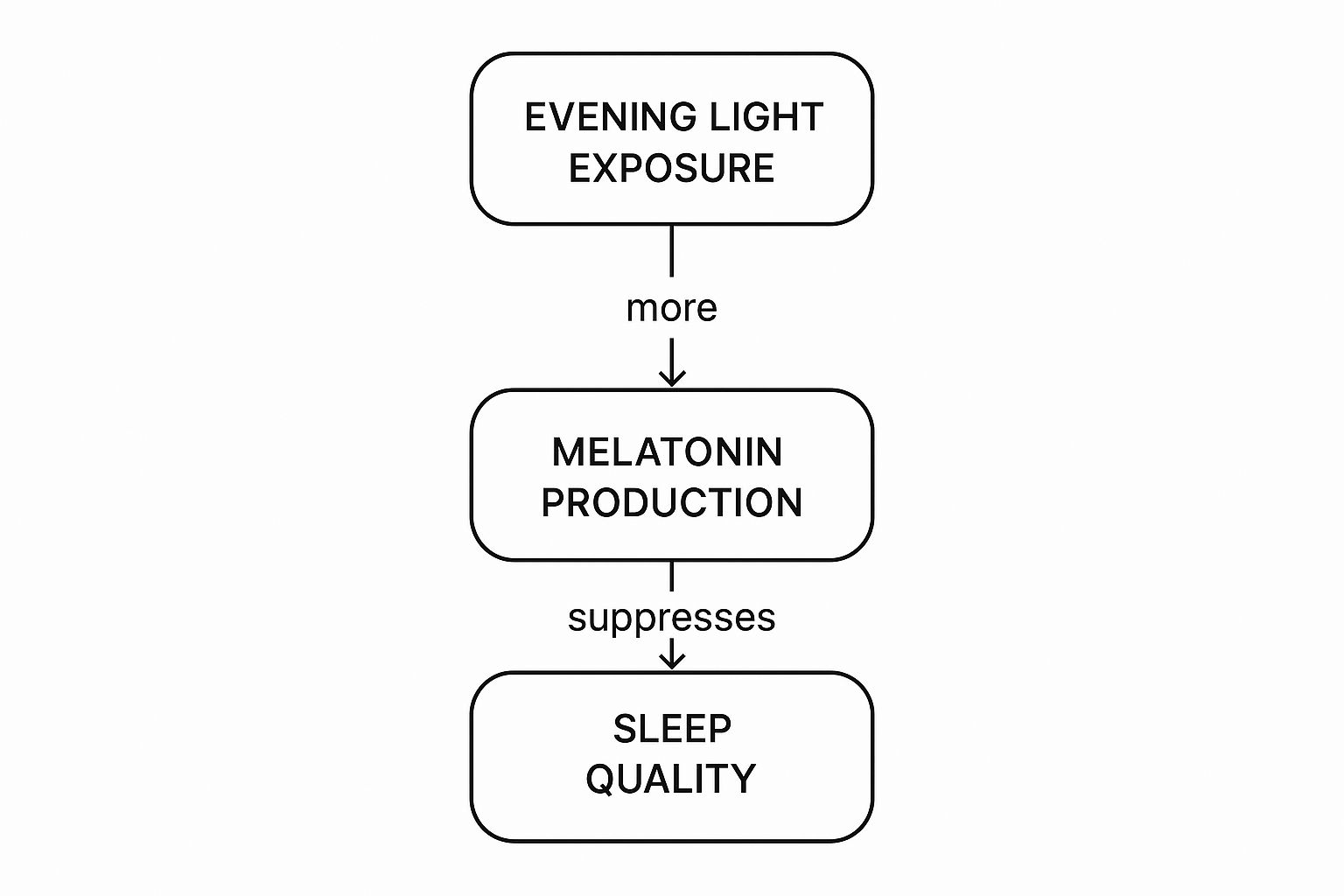
The infographic lays it out perfectly: when you expose your eyes to the wrong kind of light at night, you directly shut down the hormone you need to fall asleep. The end result? Your sleep quality takes a nosedive, and without quality sleep, your health is at risk.
Understanding this whole process is the first step to taking back your nights. It’s not just about the type of light you're around, but also the timing.
Your body is hardwired to respond to light cues. By intentionally managing your light exposure—getting bright light in the morning and switching to dim, warm light at night—you can reinforce your natural sleep-wake cycle for much better health.
When you consistently send the right signals to your master clock, you help every system in your body work together in harmony. It makes sure that when your head finally hits the pillow, your brain is already primed and ready to kick off a night of deep, restorative sleep. This foundation is essential for everything from mental sharpness and mood to physical recovery and a strong immune system.
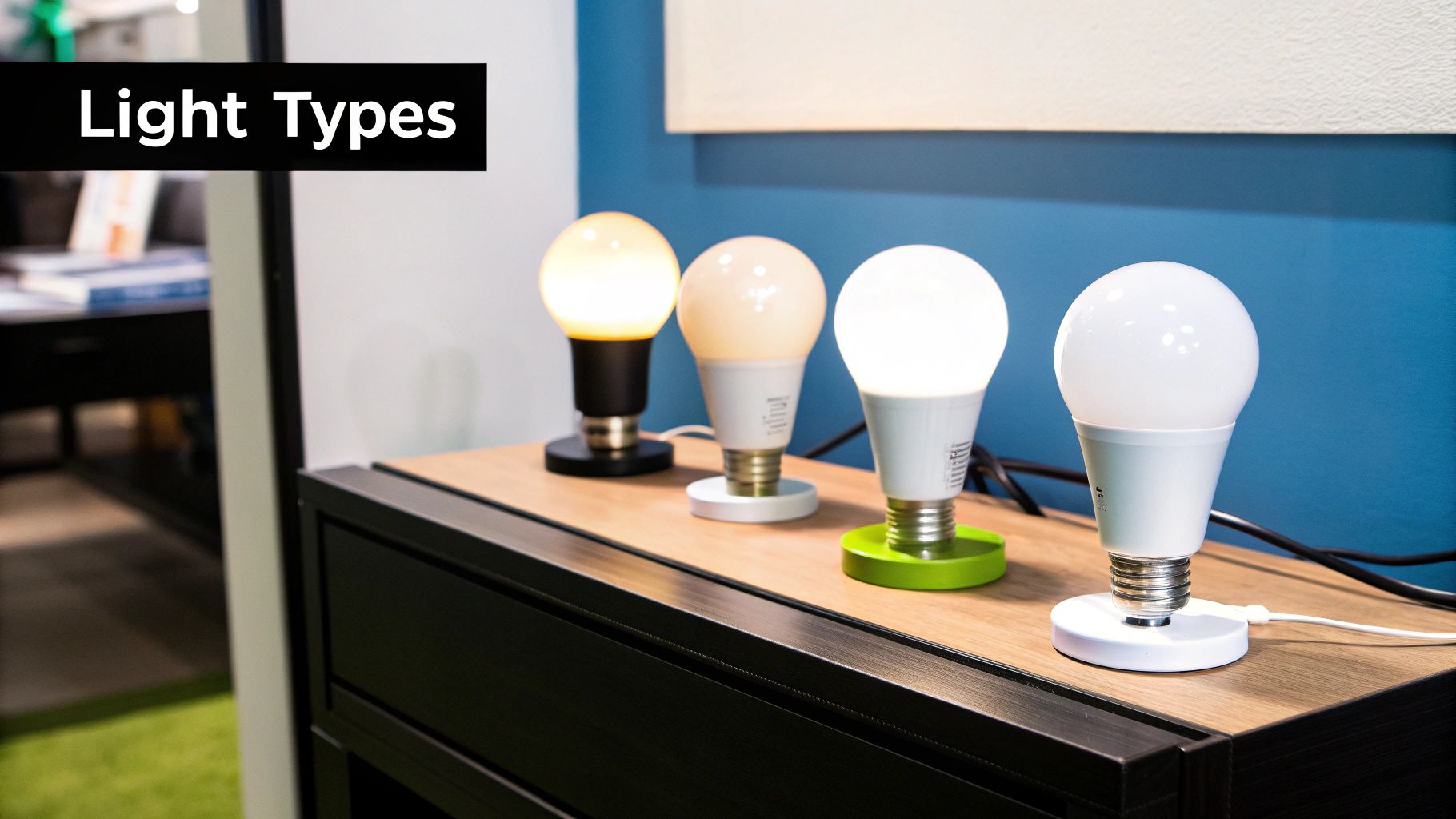
While the right kind of light can be a powerful tool for great sleep, the wrong kind can completely sabotage it. In our modern world, the number one culprit behind disrupted sleep cycles is artificial blue light. We all know that quality sleep is non-negotiable for our health, focus, and mood, but this specific type of light often gets in the way.
Now, blue light itself isn't the enemy. The sun is actually our biggest source of it, and during the day, those short, high-energy wavelengths are fantastic for keeping us alert and feeling good. The problem kicks in when we’re bathed in it long after sunset, right when our bodies should be preparing for vital rest.
Our brains are hardwired to see blue light and think, "Daytime!" When your eyes pick up these wavelengths in the evening, they send an urgent message to your internal clock that the sun is still up. This biological mix-up slams the brakes on melatonin production, the crucial hormone that signals to your body that it's time to power down.
You don’t have to go on a scavenger hunt to find this sleep-disrupting light. It's woven into our daily routines, especially in the evening hours when we’re supposed to be winding down.
Common culprits include:
This constant stream of "daytime" signals tricks our brains into staying on high alert, making the transition to rest feel nearly impossible. And the fallout goes way beyond just taking a little longer to doze off; it undermines the very importance of sleep itself.
Research paints a clear picture of the connection between evening blue light and melatonin. One study, for instance, found that people exposed to blue light before bed saw their melatonin levels slashed by about 50% compared to those who used warmer light. The result? Less REM sleep.
This melatonin suppression isn't just a clinical data point; it has very real effects on how you feel every single day. When your body misses its cue to prepare for rest, it sets off a chain reaction of negative consequences that highlight just how important sleep is.
Too much evening blue light leads to:
Understanding this is key. The light from your phone isn't just bright; it's sending a specific biological command: stay awake. By recognizing these sources and their impact, you can finally start to take back control. To learn more, you can check out our detailed guide on how blue light affects your brain.
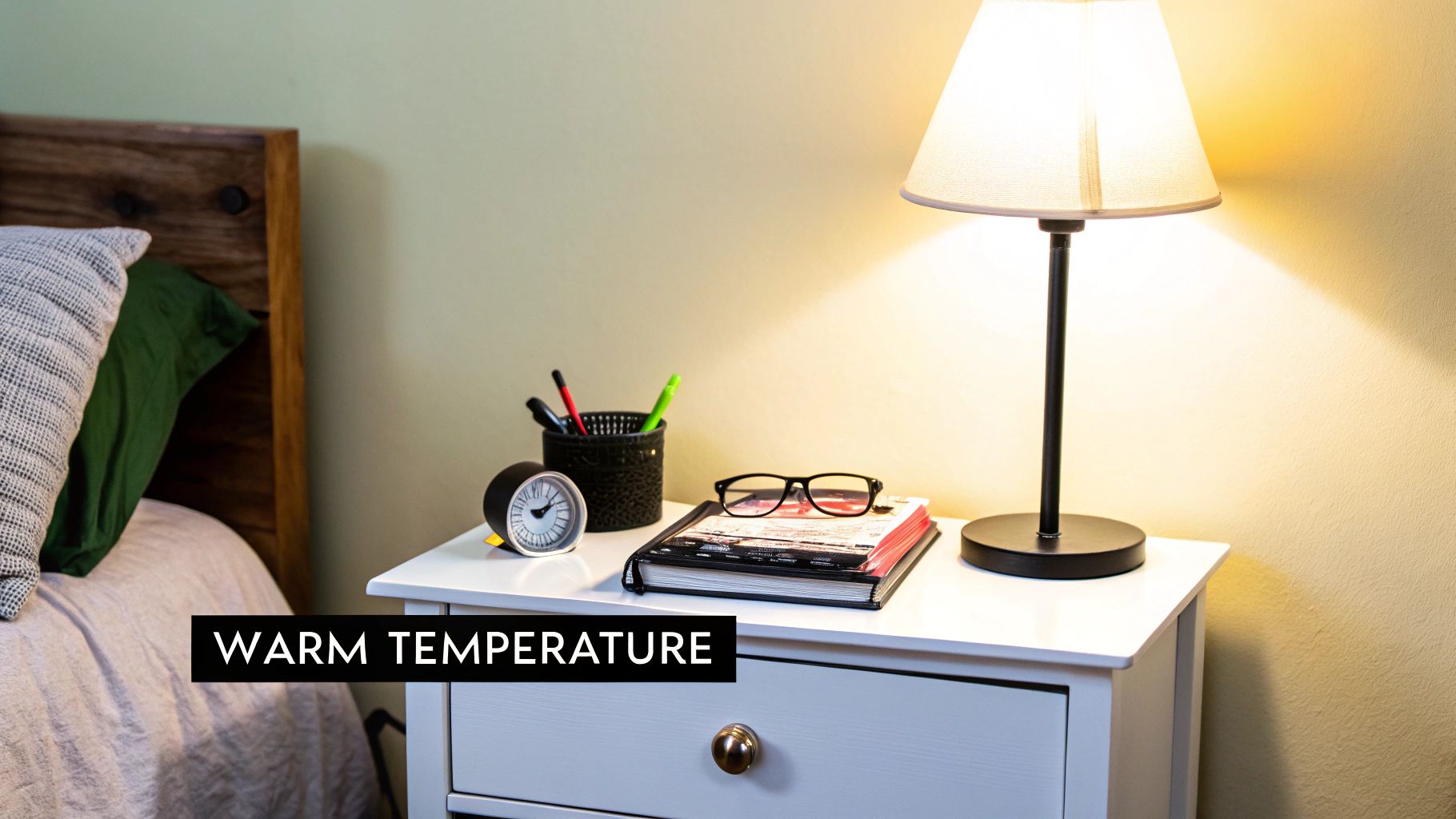
Okay, so you get it—blue light at night is bad news. Now for the fun part: building the solution. Transforming your home into a sleep sanctuary is one of the most powerful things you can do to protect your nightly rest, and it's way easier than you might think. Recognizing the importance of sleep is the first step, and acting on it is the next.
The whole idea is to create an environment that tells your brain it's safe to power down. This all starts by embracing warm-colored light, the undisputed hero of evening illumination.
When you're trying to nail down what light is best for sleep, the answer is all about color and wavelength. Red and amber lights are the champions of the evening because their long, gentle wavelengths barely make a dent in your melatonin production. They don't send your brain the same aggressive, "wake up!" signal that the short waves of blue light do.
Think of it like this: blue light is a blaring alarm clock for your brain, while red light is a soft, soothing lullaby. One jolts you into high alert, the other gently guides you toward rest. By strategically using red and amber hues, you’re working with your body’s natural wind-down process, not against it.
This simple switch helps ensure your brain pumps out the melatonin you need to not only fall asleep but stay asleep, letting you get that deep, restorative rest where all the good stuff—like repair and memory consolidation—happens.
Your body is hardwired to follow the sun. When you dim your lights and shift to warmer colors after sunset, you're essentially mimicking a natural dusk inside your home. This reinforces your body's innate rhythm and preps it for a full night of healing, emphasizing the critical importance of a healthy sleep cycle.
Creating this sleep-friendly haven doesn’t mean you need a major renovation. It’s really just about a few intentional changes you can start making tonight. Trust me, these small tweaks can lead to some seriously big improvements in your sleep quality.
Here are a few actionable strategies to get you started:
By making these simple yet powerful changes, you stop fighting your internal clock and start working with it. You're paving the way for the deep, uninterrupted sleep that fuels a healthy, energetic life.
A great night's sleep doesn't start when you hit the pillow—it begins the moment you wake up.
We talk a lot about creating the perfect dark, quiet environment for sleep, but the light you see in the morning is a powerful lever for setting your internal clock. Think of it as hitting the big "start" button on your circadian rhythm for the day. This simple morning habit underscores the importance of a 24-hour approach to sleep health.
Getting bright, natural sunlight in your eyes shortly after waking is one of the most important things you can do for your sleep. This powerful signal tells your brain's master clock that the day has officially begun, triggering a cascade of hormones that sharpen your focus and boost your energy.
More importantly, this simple act anchors your entire 24-hour cycle. It helps your body know exactly when to start winding down later that evening, so you're actually tired when bedtime rolls around.
Of course, getting natural sunlight isn't always an option, especially for early risers or anyone living through a dark, cloudy winter. Fortunately, a couple of clever gadgets can mimic that biological cue.
Two of the most effective tools are:
This gentle awakening process sets a calmer, more positive tone for your entire day. By avoiding a stressful start, you're not just improving your morning mood—you're supporting a healthier hormonal balance that directly contributes to better sleep quality that night.
It's no surprise that light therapy has become a popular, drug-free way to tackle sleep issues. The global market for these devices was valued at nearly USD 1 billion in 2022 and is expected to keep growing, which shows just how many people are looking for effective solutions beyond pills. You can check out more data on this growing market at Grand View Research.
By starting your day with the right light signals, you're programming your body for a successful night of sleep. And while morning light sets the stage, protecting your eyes from disruptive light at night is just as critical. The perfect one-two punch is bright mornings and dark evenings.
This is why so many people find blue light blocking glasses to be an essential tool for evening screen use. If you're curious, you can learn more about if these glasses help with sleep in our guide.
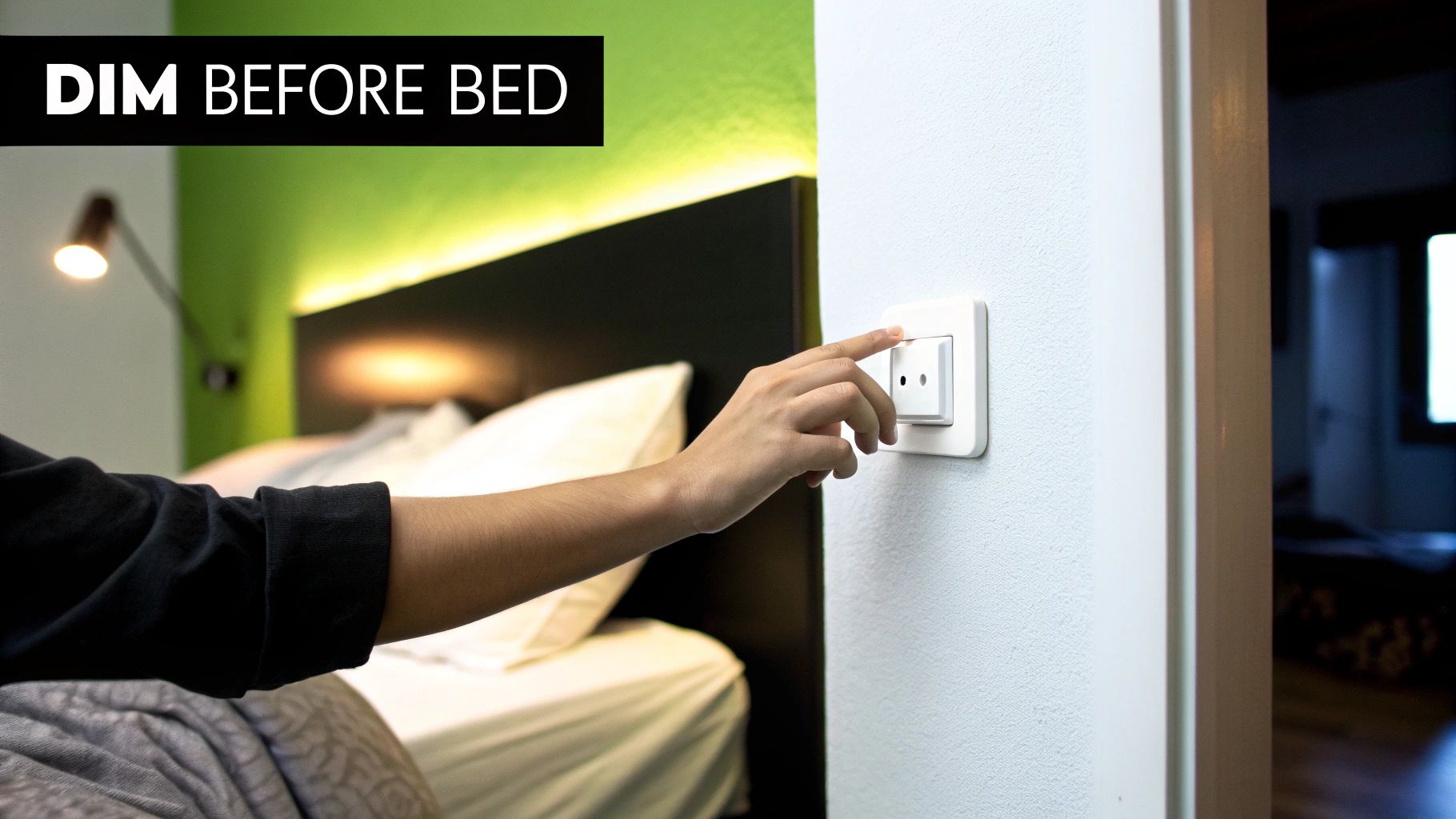
When you start digging into the world of sleep optimization, a lot of questions pop up. Getting clear, simple answers is key, because every smart change you make to your lighting environment is a direct investment in the restorative sleep your body and mind are craving.
Without that nightly repair cycle, everything from your mood to your immune system can take a hit. Let's tackle some of the most common questions about light and sleep to get you on the right track, because understanding these details reinforces the importance of sleep hygiene.
Not at all, but you do have to be a bit picky. The problem is that many standard, cool-white LEDs are packed with the kind of harsh blue light that kills melatonin production.
The good news is that LED technology has come a long way. You can now easily find "warm white" or "soft white" LEDs that give off a much gentler, yellowish glow. Even better are smart LEDs, which can be programmed to shift to a sleep-friendly red or amber color in the evening. This gives you the best of both worlds: energy-efficient light during the day and a sleep-promoting environment at night.
Yes, and the evidence is pretty solid. Wearing a good pair of blue light blocking glasses for a few hours before bed can dramatically reduce the melatonin suppression caused by screens and artificial lights.
Think of them as a shield for your eyes. They filter out the disruptive, short-wavelength light that tricks your brain into thinking it’s still midday. This makes them a super practical tool for anyone who needs to be on a computer or phone in the evening.
Using them means you can wind down without having to go completely screen-free. For a deeper look into picking the right pair and getting the most out of them, check out the helpful guides in our Element Lux resources section.
For the absolute best sleep quality, a pitch-black room is the gold standard. Seriously, even a tiny bit of light can mess with your sleep cycles, and protecting those cycles is vital for your health.
But we get it—sometimes a night light is a must for safety, especially for kids or older adults. If you need one, the color is everything. Always, always choose a night light that gives off a dim red or amber light. These long-wavelength colors are the least likely to disrupt melatonin and pull you out of crucial deep sleep stages.
Standard white or blue night lights, on the other hand, are far more stimulating to the brain. Making this one small change ensures safety without wrecking the quality of your rest.
At Element Lux, we’re all about helping you reclaim your nights. Our high-performance blue light blocking glasses are designed to protect your eyes and preserve your natural sleep cycle, allowing you to wind down peacefully even in a world full of screens.
