So, you’ve heard about blue light blocking glasses, but what exactly are they? Think of them as a shield for your eyes in our modern, screen-filled world. They're specially designed eyewear that filters out the high-energy blue light blasting from our phones, computers, and TVs.
The whole point is to give your eyes a break. This can lead to less digital eye strain and, most importantly, a serious improvement in your sleep quality, especially when you wear them before hitting the hay.
Every single day, we're surrounded by artificial blue light. It's coming from your laptop as you work, your phone as you scroll, and your TV as you unwind. All that exposure can leave you with tired eyes, nagging headaches, and a completely messed-up sleep schedule.
Blue light blocking glasses offer a super practical fix. They work by selectively filtering out the most disruptive wavelengths of light, helping both your eyes and your mind feel more relaxed and ready for rest.
To make it even clearer, here's a quick breakdown of what these glasses are all about.
This table helps you understand the core function and primary benefits at a glance.
| Feature | Description | Main Benefit |
|---|---|---|
| Specialized Lenses | Lenses are tinted (often amber or orange) to filter specific light wavelengths. | Filters out high-energy blue light before it reaches your eyes. |
| Melatonin Support | Blocks the blue light that can suppress your body's natural melatonin production. | Helps you fall asleep faster and achieve deeper, more restorative sleep. |
| Eye Strain Reduction | Reduces the harsh glare and high-energy light that fatigues your eye muscles. | Alleviates symptoms like dry eyes, headaches, and blurred vision from screen time. |
Essentially, they're a simple tool to help your body sync back up with its natural rhythm, even when you're surrounded by modern tech.
Heads up—not all blue light glasses are created equal. The color of the lens makes a huge difference.
Orange colored blue light glasses are your best friend for nighttime use. They're built to block a massive amount of blue light, which is exactly what you need to help your brain produce melatonin—the hormone that basically tells your body it's time to sleep. This powerful filtering also drastically reduces digital eye strain by cutting through harsh screen glare, letting your eye muscles relax. The result? You fall asleep faster and get more of that deep, restorative rest you've been missing.
For a more relaxed evening vibe, amber blue light glasses are a fantastic choice. They filter just enough blue light to help you relax and wind down without being as intense as the orange lenses. This makes them perfect for watching a movie or reading on your tablet before bed, gently easing you from a hectic day into a peaceful night.
A great night's sleep is about more than just glasses. Here are a few top-tier tips to improve your sleep hygiene:
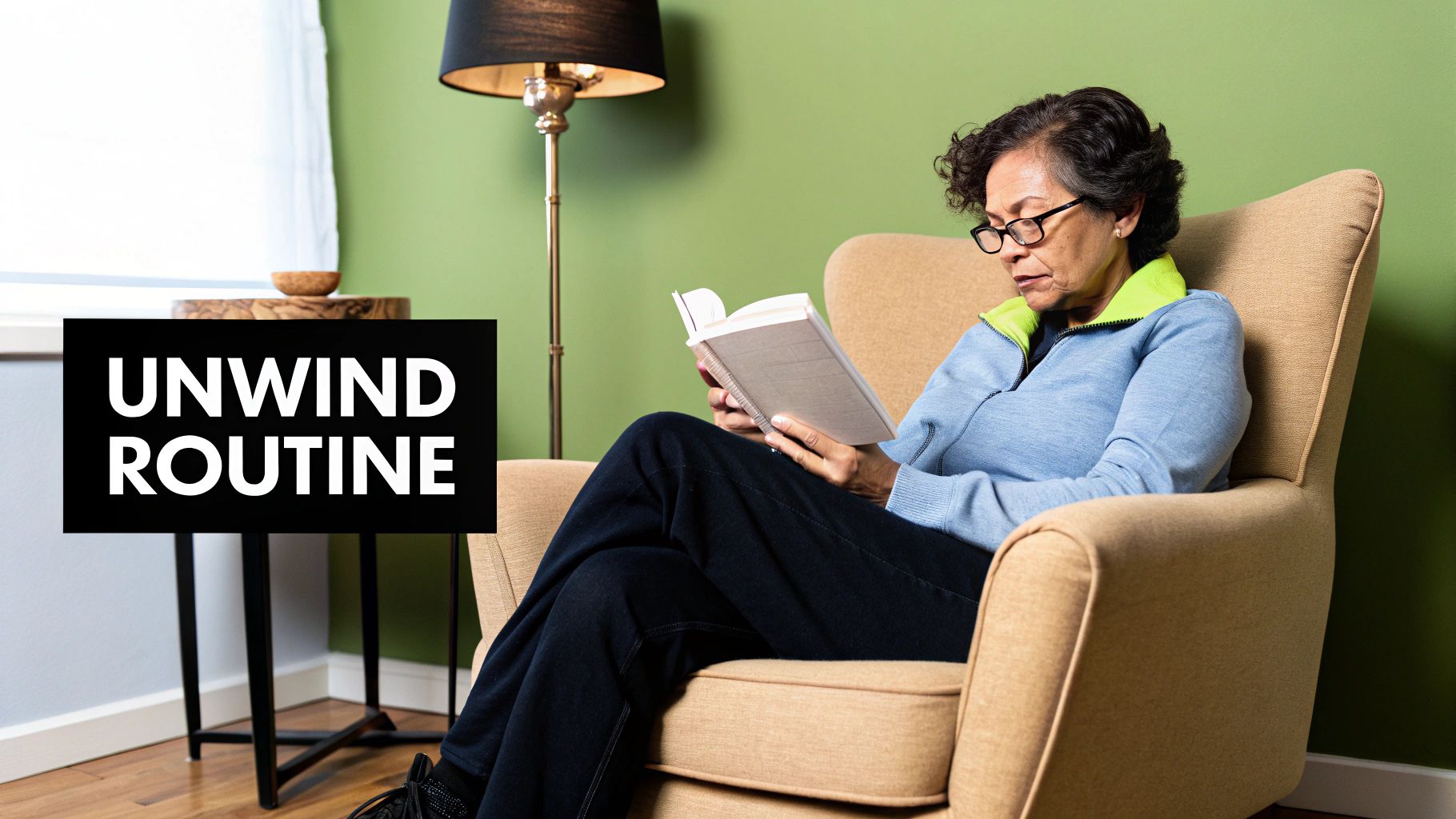
Feeling totally wired and overwhelmed? Integrating blue light glasses into your routine can also be a game-changer for unwinding.
To really get what blue light blocking glasses do, we first have to talk about blue light itself. Think of all the visible light you see as a rainbow, or a spectrum. Blue light is just one part of that spectrum—specifically, a high-energy, short-wavelength part that our eyes pick up.
You can see where it fits in with all the other colors below.
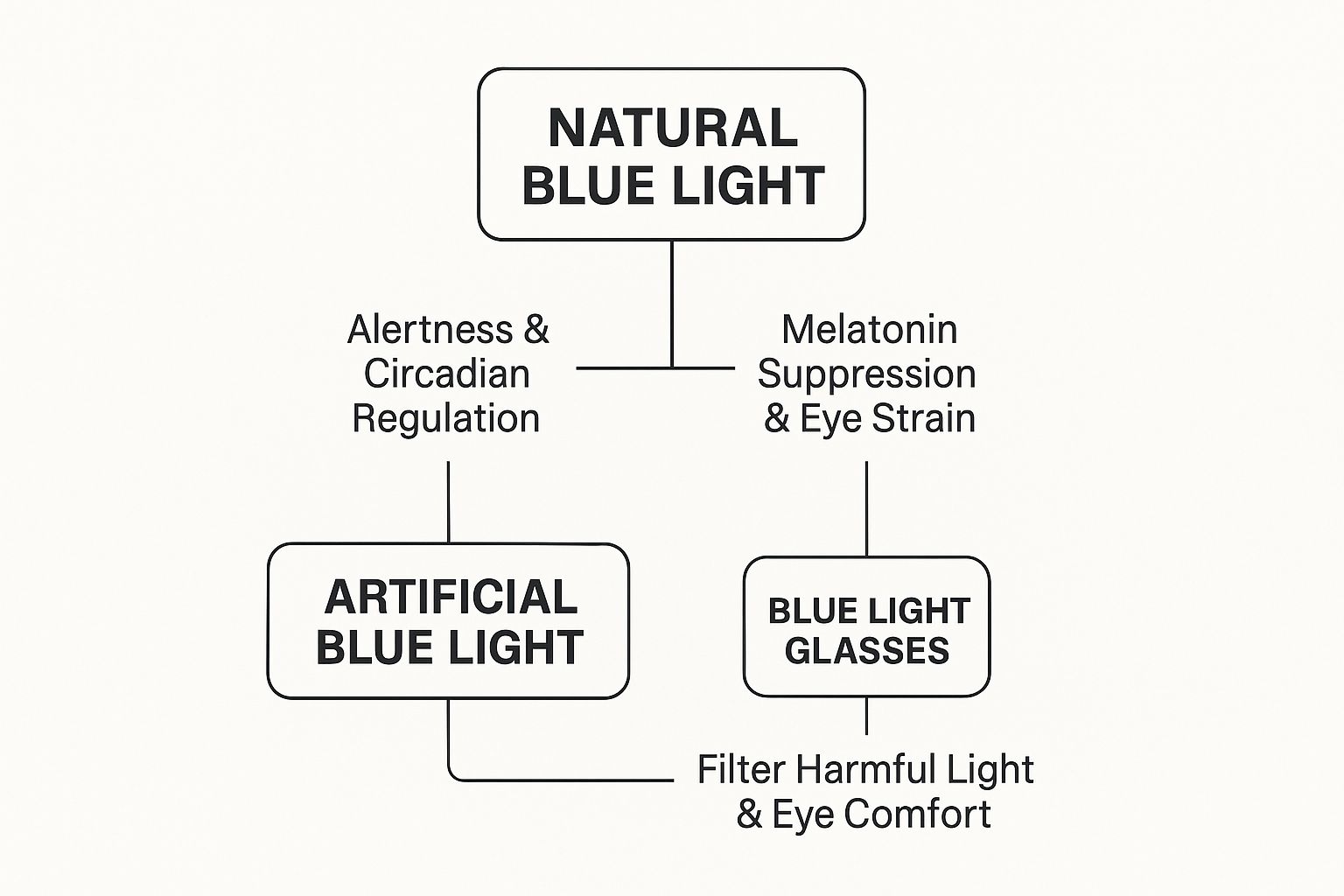
As the image shows, blue light sits at the energetic end of the spectrum, packing a bigger punch than warmer colors like red or orange. Now, the blue light we get from the sun is actually great for us. It helps set our internal body clock, known as our circadian rhythm, and keeps us alert and focused during the day.
The real problem starts when we're blasted with artificial blue light from our screens all day and, more importantly, all night. This constant, close-up exposure essentially tricks our brains into thinking it’s still high noon, even when it's well past sunset.
This non-stop signal can seriously mess with the production of melatonin, the hormone that tells your body it’s time to sleep. Filtering out this specific type of light is a huge step toward getting your natural sleep-wake cycle back on track.
When all that high-energy blue light hits your eyes for hours on end, you get digital eye strain. If you’ve ever had that feeling of sore, tired eyes, blurry vision, or even nagging tension headaches after a long day of screen time, you know exactly what I’m talking about.
This is where orange or amber-tinted blue light glasses come in. They are designed specifically to filter out those harsh wavelengths that make our eye muscles work overtime and feel fatigued.
By slipping on a pair in the evening, you’re creating a much warmer, more calming visual environment. It's a simple cue to your brain and body that it’s time to relax, wind down, and get ready for a good night's sleep.
And it seems a lot of people are catching on. The global market for blue light blocking glasses was valued at around USD 35.26 million in 2025 and is expected to climb to USD 65.61 million by 2034. That's a clear sign that people everywhere are feeling the strain and looking for a real solution.
For more deep dives into the science and benefits, check out our articles on the Element Lux blue light blog.
When it comes to blue light glasses, the color of the lens makes all the difference—especially when your goal is a good night's sleep. Not all tints are created equal. For nighttime, orange and amber lenses are your best bet for telling your brain it's time to power down.
Think of orange lenses as the heavy-hitters in your sleep toolkit. They're engineered to block the most disruptive wavelengths of blue light, which is crucial for sleep. Slipping on a pair from Element Lux for an hour or two before bed is like putting up a "Do Not Disturb" sign for your brain. It stops those activating visual signals from screens, letting your body produce the melatonin it needs to fall asleep faster and sink into a more restorative, deep sleep. This intense filtering also significantly cuts down on digital eye strain, making late-night screen time much more comfortable.
Amber lenses are the perfect "wind-down" accessory for your evenings. They filter a serious amount of blue light, giving everything a warm, calming glow without the full intensity of orange lenses.
This makes them perfect for relaxing with a movie, reading on a tablet, or doing some light scrolling before you're ready to call it a night. They're fantastic for easing digital eye strain and helping your mind shift gears from a hectic day to a state of calm.
Your glasses are powerful, but they work best when paired with other healthy habits. It’s all about creating a solid sleep routine.
By combining these habits, you’re creating a comprehensive approach to sleep hygiene. The glasses tackle the light-based disruption, while the routine reinforces your body's natural sleep-wake cycle for maximum benefit.
That same evening routine can also be a game-changer for managing stress.
Ever wrap up a long day at your computer with tired, burning, or aching eyes? That’s digital eye strain, and you're definitely not alone. It happens because blue light has a short, high-energy wavelength that scatters more easily than other light, creating a kind of visual "noise." This forces the tiny muscles in your eyes to work overtime just to stay focused.
All that constant effort is what leaves you feeling fatigued and uncomfortable. This is where orange and amber blue light blocking glasses, like the ones from Element Lux, come in. They act as a filter, cutting straight through that visual noise by blocking the most scattered, high-energy wavelengths. The result? A sharper, higher-contrast image that finally lets your eye muscles relax.
It’s a simple change that can make your screen time feel so much more comfortable. Besides wearing glasses, another great strategy is simply adjusting your screen's settings. Learning about taking control of your screen brightness can provide another layer of protection.
As more people understand these issues, the demand for a real solution has skyrocketed. The global market for these glasses hit roughly $2.5 billion in 2025 and is only expected to keep growing. It's clear that people everywhere are looking for relief.
Beyond just making your eyes feel better, managing your blue light exposure is a surprisingly powerful tool for lowering daily stress and anxiety. Here are a few ways you can help your mind and body unwind more effectively.
Think of blue light blocking glasses as your secret weapon for a better night's sleep. They're a powerful tool, but they deliver the best results when you make them part of a smart evening routine.
Putting on a pair of orange or amber glasses is a simple but critical first step. It sends a clear signal to your brain that it’s time to wind down for the night. By filtering out the specific blue light that messes with your melatonin, they help you fall asleep faster and get the kind of deep rest your body is craving.
This one simple act can make a massive difference, especially if you have a hard time disconnecting from your screens in the evening. If you want to dive into the details, you can learn more about how our glasses help with sleep and see the science for yourself.
Ready to truly transform your sleep? Combine your glasses with these essential habits to create a rock-solid nighttime ritual.
While glasses are a game-changer for managing light exposure, they are just one piece of the puzzle. It's always a good idea to explore other strategies for alleviating sleep disorders to build a complete and effective sleep hygiene routine.
Living in a world that’s always "on," finding simple ways to actually switch off is a bigger deal than ever for our mental health. It might sound surprising, but managing your blue light exposure with the right pair of glasses is a powerful first step in helping your mind and body unwind at the end of the day.
Of course, this simple habit is most effective when you pair it with other techniques that quiet your nervous system and help release all that pent-up tension.
Think of these four strategies as a complete toolkit. They help frame what blue light blocking glasses truly are: not just an eye-care gadget, but a central piece of your daily relaxation ritual.
Switch to Amber Glasses in the Evening: Make it a habit to put on your amber-tinted glasses from Element Lux a few hours before you plan to sleep. This simple swap creates a warm, calming visual environment, dialing down the stimulating glare from your screens. It’s like sending a clear signal to your brain that it's time to shift out of high-alert mode and into a state of rest.
Take a Five-Minute Breathing Break: It's easy to get lost in your screen for hours. Step away and focus on nothing but your breath for just five minutes. A guided breathing exercise can instantly calm your nervous system, slowing your heart rate and taking the edge off any anxiety you’re feeling.
Do Some Gentle Stretching: We all hold stress in our bodies—usually in the neck, shoulders, and back. Get up and do a few gentle stretches. Releasing that physical tension does wonders for helping your mind feel more at ease, too.
Trade Your Phone for a Screen-Free Hobby: At least an hour before bed, make a conscious choice to put your phone away. Out of sight, out of mind. Pick up a book, listen to some music, or write in a journal. Giving your brain a break from the constant feed of digital information is crucial for truly disconnecting.
By bringing these practices together, you create a powerful routine that actively pushes back against daily stress. The glasses set the relaxing tone, and the other habits build on it, helping you genuinely unplug and recharge for the next day.
This isn't just a niche idea; it's a global one. The Asia-Pacific region, for example, accounted for 32.10% of the anti-blue light glasses market back in 2025, showing just how mainstream this has become. You can explore more about the global market trends on Cognitive Market Research to see the full picture.
Let's clear up a few of the most common things people ask about blue light blocking glasses. Getting the facts straight will help you feel confident you're picking the right pair for your needs.
The color of the lens tells you everything about its job. Orange and amber lenses aren't just for style—they're specifically engineered to tackle the problems that come with screen time, especially after the sun goes down.
Orange lenses are your heavy-hitters for protecting sleep. Think of them as the ultimate nighttime shield. They block a very high percentage of blue light, which is exactly what you need to keep your body's natural melatonin production on track. This helps you fall asleep faster and get the kind of deep, restorative rest your body craves. As a bonus, filtering out those harsh wavelengths also dramatically reduces digital eye strain during late-night screen use.
For a softer touch, amber lenses are perfect for helping you relax and wind down. They filter just enough blue light to create a warm, calming visual experience that eases eye fatigue. It’s a great way to signal to your brain that the busy day is over and it's time to shift into a peaceful evening. To dig deeper into this, we have more helpful info waiting for you in our online resources section.
Glasses are a fantastic tool, but they work best when they're part of a solid sleep routine.
Ready to take back your evenings and improve your sleep? The Element Lux collection of blue light blocking glasses is designed to help you unwind naturally and wake up refreshed. Shop now and feel the difference for yourself.
