Working the night shift is a tough but essential job in our 24/7 world. The problem is, it puts you in direct conflict with your body's most basic programming, leading to a whole host of night shift health problems. This isn't just about feeling tired; it's about the long-term toll that fighting your natural rhythm takes on your health, primarily by disrupting the restorative sleep you desperately need.
Think of your body as having an internal master clock, fine-tuned over thousands of years to a simple, powerful rhythm: wake with the sun, sleep when it's dark. This is your circadian rhythm, and it doesn't just manage when you feel drowsy—it directs everything from hormone production to your metabolism, all anchored around a consistent sleep-wake cycle.
When you work through the night, you're essentially forcing this finely-tuned system to run completely backward. It's a profound biological mismatch that goes way beyond simple fatigue. The constant battle against your own biology can leave you feeling perpetually jet-lagged, making that deep, restorative sleep you need feel completely out of reach.
If there's one thing you can do to protect your health as a night-shifter, it's prioritizing sleep. It’s the foundation for everything. Without enough quality sleep, your body simply can't repair itself, manage stress, or keep your immune system in fighting shape. Every biological process suffers when sleep is compromised.
This is where the real challenge lies. Sleeping during the day is often lighter and more easily interrupted, which means you're rarely getting the deep rest needed to recover from an upside-down schedule. Over time, this sleep debt becomes the main driver behind many of the health issues that creep up on night workers, as the body never gets the downtime it needs to heal.
A lot of shift workers end up with something called Shift Work Sleep Disorder. It’s a recognized circadian rhythm problem that triggers insomnia when you try to sleep and overwhelming drowsiness when you need to be awake. It's a clear sign that your body is struggling to adapt and your sleep quality is critically low.
Understanding what you're up against is the first step toward protecting yourself. The health problems tied to long-term night work aren't just minor annoyances; they are serious risks that stem directly from the chronic disruption of your sleep cycle.
To give you a quick snapshot, here’s a breakdown of the major health concerns researchers have linked to chronic night shift work.
| Health Category | Specific Risks | Primary Cause |
|---|---|---|
| Metabolic Health | Obesity, Type 2 Diabetes, Metabolic Syndrome | Disruption of hormones that regulate appetite and blood sugar, worsened by poor sleep. |
| Cardiovascular Health | High Blood Pressure, Heart Disease, Increased Stroke Risk | Elevated stress hormones and inflammation from sleep deprivation. |
| Mental & Cognitive Health | Anxiety, Depression, Mood Swings, Brain Fog | Lack of restorative sleep and social isolation. |
| Digestive System | Irritable Bowel Syndrome (IBS), Ulcers, Acid Reflux | Eating at irregular hours when the digestive system is less active due to a disrupted sleep-wake cycle. |
| Immune Function | Increased Susceptibility to Colds, Flu, and Infections | Suppression of immune cells due to chronic sleep loss. |
These risks really drive home just how important it is to be proactive about managing your health and your environment, with a primary focus on improving sleep quality.
One of the most powerful strategies you have is learning to control your light exposure to help signal to your body when it's time to be awake and when it's time to sleep. We dive deep into this topic on our blue light blog. Think of this guide as your roadmap—we'll walk you through the science and give you actionable steps to start protecting your sleep and your health today.
Picture your body as a sprawling city that never completely shuts down. Tucked away deep in your brain is the city’s master control center, a tiny command post called the suprachiasmatic nucleus (or SCN for short). This is your body's internal clock, and it’s in charge of everything. It meticulously coordinates every operation, from when your organs should be most productive to when your alertness levels should dim for the night to promote sleep.
This incredible internal timing system is what we call your circadian rhythm. And it’s not just about feeling sleepy or awake. It's a powerful 24-hour cycle that directs thousands of different functions in your body, like a master conductor ensuring every instrument in your biological orchestra plays in perfect time.
So, what's the conductor's main cue? Light. For basically all of human history, the rising and setting of the sun has been the unwavering metronome for our biology. When light hits your eyes in the morning, it’s a direct signal to the SCN to kickstart all daytime operations. As darkness falls, the SCN cues the release of melatonin, the famous sleep hormone, telling your body it’s time to power down and repair. This is precisely why getting enough quality sleep is the single most important thing you can do for your health; it is the fundamental state in which your body heals.
Working the night shift throws a wrench into this ancient, hardwired programming. It forces you to live in direct opposition to your own biology.
When you’re trying to stay sharp and focused at 2 AM, your body clock is screaming that it’s time for deep rest and cellular repair—processes that only happen during quality sleep. It’s a fundamental biological tug-of-war, and you’re caught in the middle. This isn’t a battle of willpower or something you can just “get used to.” You're asking your body to perform its most demanding work when its internal operating system is in shutdown mode. The constant fight to override these powerful biological signals and sacrifice sleep puts immense stress on your entire system.
Your circadian rhythm is so precise that different organs have their own peak performance times. Your liver, for example, is programmed for intense metabolic activity during the day and detoxification at night during sleep. Eating a large meal in the middle of the night forces it to work overtime when it's supposed to be resting.
When your master clock is out of sync, the disruption sends a ripple effect through your entire body. The carefully timed release of hormones becomes chaotic, throwing everything from your mood to your appetite completely off-kilter, all because your sleep pattern is unnatural.
This desynchronization can trigger several immediate issues:
Getting your head around this core concept is key. The health challenges you’re facing aren't just from being tired; they are the direct result of a body-wide system thrown into chaos by a lack of proper sleep.
Feeling tired, foggy, and having an upset stomach are the immediate struggles of working nights. But the real night shift health problems are the ones that build up silently over the years, all because your body's internal clock is constantly thrown off, leading to chronic sleep deprivation. This is more than just feeling tired; it's about how that relentless biological stress can set the stage for serious, long-term diseases.
When your sleep-wake cycle is always fighting the natural rhythm of day and night, it creates a domino effect of stress inside your body. It’s like flooring the gas on an engine 24/7 without ever letting it cool down for sleep. Eventually, that constant strain starts to wear down critical systems, leading to a state of chronic, low-grade inflammation—a known trigger for many major health conditions.
Your metabolism is one of the first systems to feel the heat. Your body is hardwired to process food during the day and shift into a rest-and-repair mode at night during sleep. Working against that natural programming sends your entire digestive system and metabolic hormones into a state of confusion.
This ongoing misalignment can lead to a dangerous condition known as insulin resistance. Normally, the hormone insulin acts like a key, letting glucose from your blood enter your cells for energy. But when you’re eating and active at night—and not getting enough quality sleep—your cells start to ignore its signal. To compensate, your pancreas has to work overtime, pumping out more and more insulin to keep your blood sugar in check. This is a one-way street to type 2 diabetes and obesity.
The image below shows exactly how a disrupted body clock and subsequent poor sleep kick off this process.
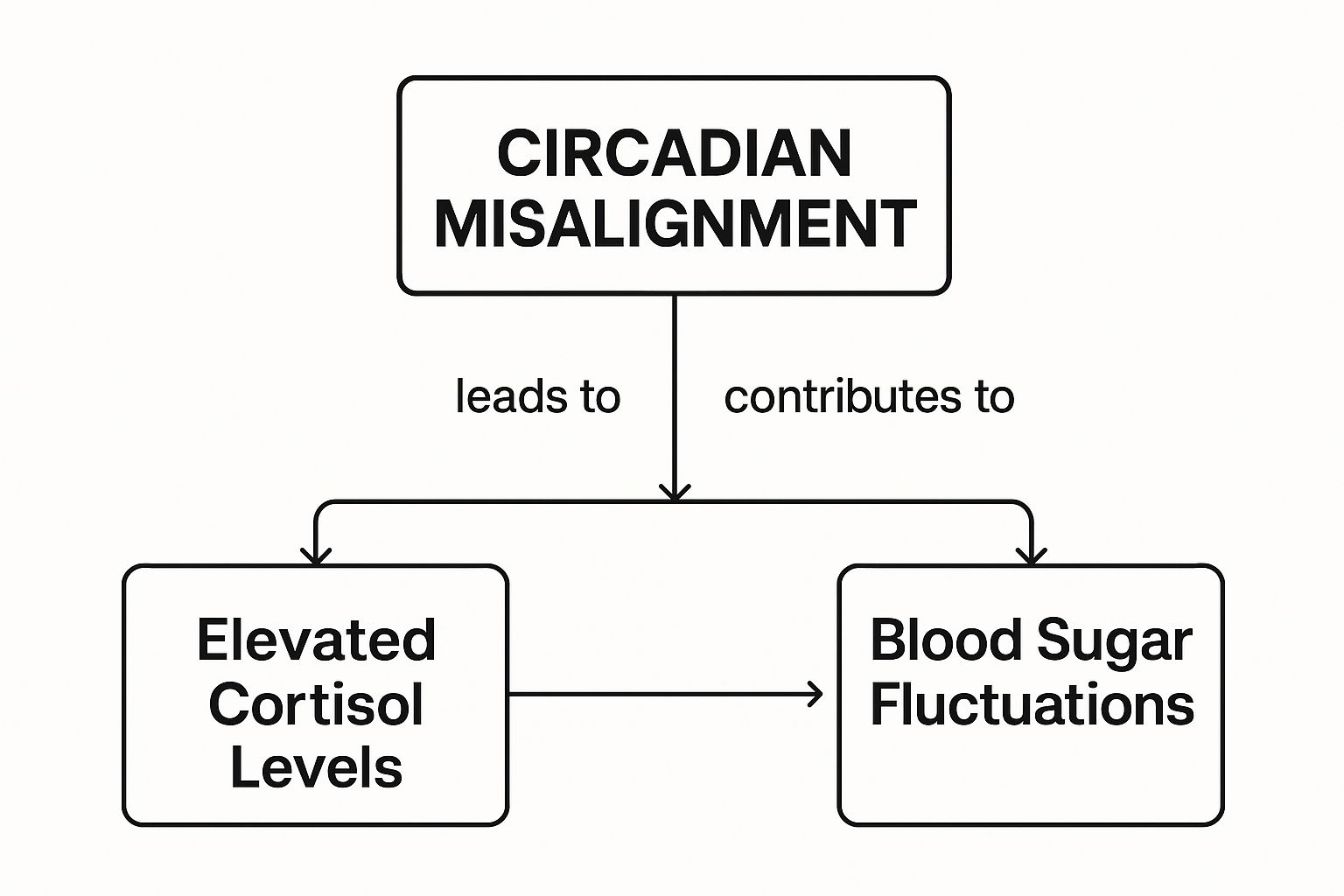
As you can see, it all starts with circadian misalignment. That's the root cause that triggers the hormonal and metabolic imbalances, creating a negative chain reaction for your health, all driven by the lack of restorative sleep.
Your cardiovascular system is also carefully timed by your circadian rhythm. Blood pressure is supposed to take a natural dip while you sleep, giving your heart and blood vessels a much-needed break. For night shift workers, this crucial rest period is often shorter or completely disappears.
This means your heart and arteries are under constant pressure, with no downtime. Over many years, this can lead to chronically high blood pressure (hypertension), which dramatically increases your risk for heart disease, heart attacks, and strokes. The lack of deep, restorative sleep also fuels inflammation and spikes stress hormones like cortisol, piling even more strain on your heart.
The link is undeniable: when your sleep is consistently out of whack, your heart never gets the nightly break it was designed for. This relentless demand is a huge reason why long-term night shift work is a recognized risk factor for cardiovascular disease.
Perhaps the most alarming long-term concern is the link between night shift work and a higher risk for certain cancers. This connection is so well-established that the National Toxicology Program has classified persistent, rhythm-disrupting night shift work as a probable human carcinogen. The problem lies in the disruption of your body's natural defense and repair crews, which do their most important work while you're in a deep sleep.
One major concern is that working nights interferes with fundamental processes like DNA repair and cell regulation, all of which are governed by the circadian clock and rely on quality sleep. Research has found that for every five years of continuous night shift work, the risk of breast cancer increases by about 3.3%. You can explore the full study about night shift work and cancer risk to get a deeper understanding.
This happens for a couple of reasons. Melatonin, the sleep hormone that light exposure at night shuts down, also helps slow the growth of tumors. At the same time, the cellular repair mechanisms that fix DNA damage are seriously compromised without proper restorative sleep. It’s a dangerous combination: your body's ability to fight off cancerous cells is weakened, leaving you more vulnerable over time. Understanding these stakes makes it clear that prioritizing sleep isn't just about feeling better tomorrow—it's about protecting your health for decades to come.
We all know the immediate hits from working nights: the crushing fatigue, the brain fog, the gut issues. But there's a quieter, more serious problem lurking beneath the surface—how this schedule can actually fast-track the aging process by robbing you of essential sleep. We're talking about accelerated aging at a deep, cellular level. It's less about looking older and more about a faster wear-and-tear on your body's resilience.
At its heart, healthy aging is about staying physically sharp, mentally clear, and free from chronic illness for as long as you can. The absolute cornerstone of that process is your body's ability to repair itself, which happens almost entirely during deep, restorative sleep. When your job forces you to be wide awake while your body is screaming for rest, you're essentially canceling that nightly maintenance window.
Think of it this way: your body is a high-performance machine scheduled for a self-repair cycle every single night during sleep. During that downtime, your cells are busy clearing out junk, fixing DNA damage, and tamping down inflammation. But when you're constantly fighting your internal clock, you interrupt this crucial work, letting damage pile up way faster than it should.
Working against your body's natural rhythms puts you in a constant state of low-grade stress. This isn't just a feeling; it's a physiological reality. Your systems are running under conditions they were never designed for, leading to a spike in something called oxidative stress.
Oxidative stress is what happens when there's an imbalance between cell-damaging molecules (free radicals) and the antioxidants that keep them in check. And guess what one of the best antioxidant promoters is? Quality sleep. Without it, free radicals run wild, damaging cells, proteins, and even your DNA. This slow-burn damage is a primary driver of aging and is tied to everything from skin aging to serious disease.
This constant, low-level stress from insufficient sleep sets off a dangerous chain reaction:
The goal isn't just to live longer (lifespan), but to live more years in good health (healthspan). And the research is becoming crystal clear: long-term night shift work, and the sleep disruption it causes, can seriously shorten that healthspan.
A major 24-year study tracking over 46,000 female nurses hammered this point home. The researchers found that women who worked rotating night shifts for years were far less likely to achieve "healthy aging"—which they defined as living free of major chronic diseases while keeping good mental and physical health. The study showed that the combined toll of a scrambled body clock and poor sleep directly sped up their health decline. You can dig into the full research on night shifts and aging to see the data for yourself.
What this means is that the daily battle against your body clock has real, long-term consequences. It slowly chips away at your body's ability to keep you healthy and functional, all because you are not getting the sleep your body needs.
But knowing this is incredibly empowering. Every step you take to protect and improve your sleep is a direct investment in your future health. Guarding your sleep is the single most powerful defense you have against the aging effects of a tough schedule, helping you hold onto your vitality for decades to come.
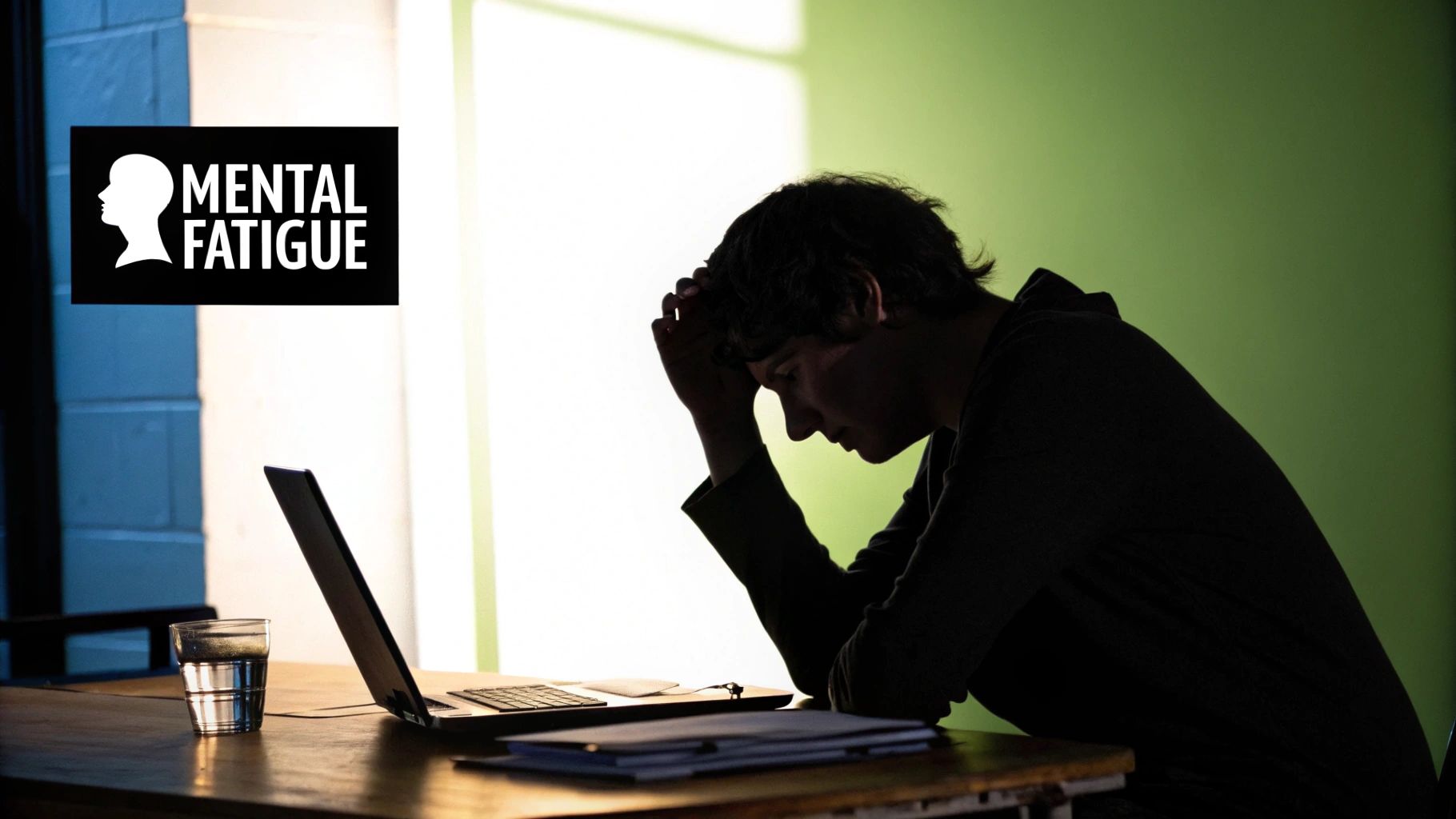
Knowing the risks is one thing. Doing something about them is what really counts. It's time to build a real-world plan to protect your health. This isn't about some massive overhaul. It's about small, consistent habits that add up to a powerful defense against the most common night shift health problems.
The absolute cornerstone of this whole plan? Sleep. Everything else—from what you eat to how you exercise—depends on getting enough quality rest. If you don't, your body simply can't handle the stress of an inverted schedule. Think of this as your personal toolkit for a more resilient night shift life, and it all starts with mastering the art of sleeping during the day.
Your bedroom needs to be a sanctuary for sleep, not a battlefield where daylight and noise are constantly trying to wake you up. Creating the perfect "sleep cave" is non-negotiable if you need to sleep while the sun is shining. The mission is simple: trick your brain into thinking it's the dead of night so you can achieve restorative sleep.
Your internal clock is incredibly sensitive to light and sound. Even tiny slivers of light sneaking past your eyelids can mess with your sleep cycle, preventing you from hitting those deep, restorative stages of rest. You have to be ruthless about eliminating these disruptions.
Here’s how to build the ultimate sleep cave:
Light is the single most powerful lever you can pull to manage your circadian rhythm and protect your sleep. When you work nights, you have to become the master of your light exposure—seeking it out when you need to be alert and aggressively avoiding it when it’s time to wind down for sleep.
That commute home in the morning? It's a critical danger zone for your sleep. Bright morning sun screams "Wake up!" to your brain, which is the exact opposite of what you need. This is where blue-light blocking glasses become an essential piece of gear. Wearing them on your drive home stops the sun from shutting down your melatonin production, making it far easier to fall asleep once you walk in the door.
"Managing your light exposure is like having a manual override for your body clock. Wearing blue-light blocking glasses after your shift tells your brain, 'Ignore that sunrise; it's our nighttime now.' This simple habit can dramatically improve your ability to fall asleep and stay asleep during the day."
By taking charge of the light you see, you help align your body with your work schedule, not the sun's. Learning how blue light blocking glasses help with sleep is one of the biggest leaps forward a night worker can make.
Eating a big meal at 3 AM is something your body was never designed to do. Your digestive system is basically in low-power mode overnight, which makes it a struggle to process heavy, greasy, or sugary foods. This can interfere with sleep quality later on.
The trick is to eat smarter. Focus on smaller, nutrient-packed meals and snacks that give you sustained energy without bogging you down.
Caffeine can be your best friend on a long night, but timing is everything. A coffee at the start of your shift? Great for boosting alertness. But drinking caffeine within 6-8 hours of when you plan to sleep can seriously sabotage your rest.
A good rule of thumb is to cut off all caffeine by the halfway point of your shift. This gives your body plenty of time to clear it from your system so it won't be keeping you awake when you need to sleep. For the second half of the night, switch to water to stay hydrated.
Turning these ideas into daily habits is the key to making them stick. This simple checklist can help you build a routine that supports your health and helps you get the restorative sleep you need.
| Timeframe | Action Item | Health Benefit |
|---|---|---|
| Before Your Shift | Eat a balanced, protein-rich meal. | Provides sustained energy to prevent mid-shift crashes and poor food choices. |
| Before Your Shift | Engage in 20-30 minutes of moderate exercise. | Boosts alertness, improves mood, and can even improve subsequent sleep quality. |
| During Your Shift | Consume caffeine only in the first half of your shift. | Improves focus when needed without disrupting your ability to sleep later. |
| During Your Shift | Stay consistently hydrated with water. | Fights fatigue, prevents headaches, and supports overall bodily functions. |
| After Your Shift | Wear blue-light blocking glasses on the commute home. | Prevents morning light from suppressing melatonin, making it easier to fall asleep. |
| After Your Shift | Go to bed as soon as possible in your "sleep cave." | Minimizes daytime disruptions and maximizes your opportunity for deep, restorative rest. |
By following this checklist, you’re not just surviving the night shift—you're actively taking control of your health and well-being, starting with sleep.
Trying to figure out the world of night shifts naturally brings up a lot of questions about your health, your schedule, and what it all means for the long haul. Let's dig into some of the most common concerns.
The health effects of night shifts can sneak up on you in two ways: right away, and over time. The short-term stuff—like feeling drained, dealing with brain fog, or having digestive trouble—can pop up within just a few weeks of flipping your schedule. That’s your body’s immediate cry for help as it struggles with disrupted rhythms and poor daytime sleep.
The more serious, chronic night shift health problems are a different beast. Things like a higher risk for heart disease or certain cancers are usually tied to long-term exposure, which many studies define as working nights for five or more years. How hard it hits you really depends on your genetics, your lifestyle, and most importantly, how seriously you take your sleep.
This is a big one. While neither schedule is easy, most sleep experts agree that a stable, permanent night shift is generally the lesser of two evils. Why? Because it gives your body a chance to at least partially adapt to a consistent, even if it's inverted, sleep-wake cycle.
A rapidly rotating schedule, on the other hand, throws your body into a constant state of "jet lag," which is incredibly stressful on your system. The main takeaway here is that consistency is your greatest ally. No matter which schedule you’re on, creating a rock-solid sleep routine is the single most important thing you can do to minimize the health risks.
For more tips on building a routine that works for you, check out the guides and articles in our resources section.
Yes, absolutely—but it takes real dedication. While some of the cellular wear-and-tear from long-term disruption might stick around, you can make a massive difference by switching back to a day-oriented schedule and doubling down on restorative habits. The single most powerful step you can take is re-aligning your sleep with the natural light-dark cycle of the sun.
Getting your sleep schedule back in sync with the sun is the most effective way to reset your circadian rhythm. This one change can help lower inflammation, improve your metabolism, and kickstart your body’s natural repair processes. It’s the foundation for true, long-term recovery.
Protecting your sleep isn't just a good idea—it's your most powerful defense against the health risks of night shift work. At Element Lux, we designed our blue light blocking glasses specifically to help you get that deep, restorative sleep you need, even when the sun is up.
Our glasses block over 99% of disruptive blue light, signaling to your brain that it's time to rest. This helps you fall asleep faster and stay asleep longer. Take back control of your health and start getting the sleep you deserve.
