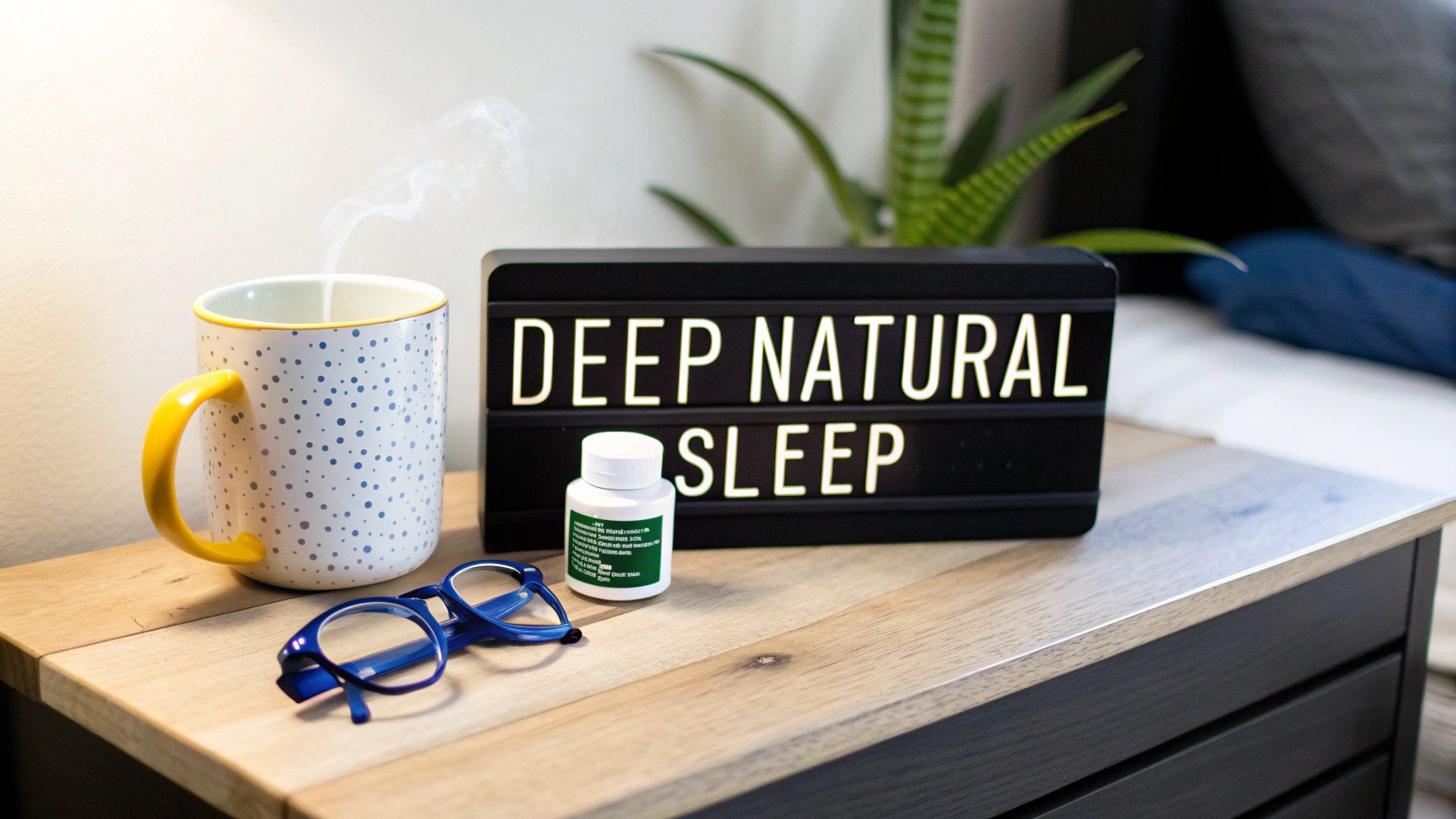
If you’re on the hunt for natural sleep aids that work, you might be surprised by the answer. The most powerful solutions aren't found in a bottle, but in how you manage light and support your body’s internal clock. While supplements have their place, creating a sleep-friendly environment is always the best first step, because quality sleep is the cornerstone of a healthy, productive life.
Let's be clear: good sleep isn't a luxury. It's a non-negotiable pillar of your health. All too often, we treat it like a passive activity—something we get to only after everything else is checked off the list. This completely misses the point. Sleep is an active, restorative process that keeps our minds sharp and our bodies running smoothly. Without it, every aspect of our well-being suffers.
Think of a sleep-deprived brain like a smartphone with way too many apps open. It’s slow, buggy, and just keeps crashing. When you don't get enough quality rest, your cognitive performance tanks. You’ll struggle with focus, your memory feels hazy, and making good decisions becomes a real challenge. Searching for effective sleep solutions isn't just about feeling less tired; it's a critical investment in your long-term health and daily performance.
Restorative sleep is the bedrock of mental clarity and physical energy. While you’re resting, your brain is anything but quiet. It’s busy consolidating memories, clearing out metabolic junk, and repairing cellular damage from the day. This nightly tune-up is so important because it's essential for:
The modern struggle for rest has kicked off a massive demand for solutions. The U.S. sleep aids market was valued at USD 19.04 billion and is on track to more than double by 2034.
This incredible growth isn't random. It’s fueled by modern life—high stress levels and constant screen time are throwing our natural sleep patterns completely out of whack. This is what's driving so many of us to find natural sleep aids that work. The trend makes one thing obvious: people are finally waking up to the fact that better sleep is the first, most fundamental step toward better health. You can discover more about the sleep aid market's growth and trends here.
Before you can fix your sleep, you have to understand what’s breaking it. Deep inside your brain, there's a master clock, a tiny pacemaker that runs your daily cycles of sleepiness and alertness. This is your circadian rhythm, and it's the bedrock of a healthy sleep-wake schedule. Honoring this rhythm is crucial because it governs the very processes that make sleep restorative.
Think of it like a conductor leading an orchestra. Its main job is to keep every part of your body—from your hormones to your digestion—playing in perfect time. And the conductor’s number one tool for leading this orchestra? Light.
When natural light hits your eyes in the morning, the conductor signals the orchestra to play a lively, energetic tune. When darkness falls, it calls for a slow, calming melody, getting your entire body ready for rest. This natural cycle is the key to unlocking the deep sleep that is so important for your health.
This internal orchestra has two star players: the hormones melatonin and cortisol. They’re designed to work in a delicate see-saw balance all day long, guided by light exposure. Getting a grip on their roles is the key to finding natural sleep aids that work and achieving the revitalizing sleep your body needs.
Cortisol (The 'Wake-Up Call'): Often unfairly labeled the "stress hormone," cortisol is actually crucial for getting you going. Its levels peak in the morning, giving you that get-up-and-go energy to start your day. As the hours tick by, cortisol should naturally taper off.
Melatonin (The 'Sleep Signal'): On the flip side, melatonin is the hormone of darkness. As the sun goes down and light fades, your brain starts pumping it out, signaling to your body that it's time to wind down. Melatonin levels hit their high point in the middle of the night, helping you stay asleep.
This whole elegant system is built to sync your internal world with the one outside. Your body is biologically wired to be awake during the day and asleep at night, all orchestrated by the natural rise and fall of these hormones.
But modern life throws a massive wrench in the works: artificial light. When you're staring at bright screens and sitting under harsh overhead lighting late into the evening, you’re basically yelling confusing directions at your internal conductor.
The blue light blasting from your phone, tablet, and TV sends a powerful "it's daytime!" signal to your brain, even if it's 10 p.m. This artificial glare slams the brakes on melatonin production, throwing your entire hormonal symphony completely out of tune.
Your cortisol might stay high while your melatonin stays low, leaving you in that frustrating state of feeling both wired and tired. This single disruption is the root cause of why so many of us struggle to fall asleep, and it's exactly why managing your light environment is one of the most powerful things you can do to reclaim the important, healing power of sleep.
If your body’s internal clock is an orchestra conductor, then the blue light blasting from your screens is the one rogue trumpet player throwing the entire performance into chaos. This specific wavelength of light is the number one culprit behind our modern sleep struggles, and it’s pouring out of every screen you own—your phone, TV, laptop, and tablet. It's a key reason why achieving deep, restorative sleep is so challenging today.
This isn't just any old light. Blue light has a uniquely high energy level, and our brains are incredibly sensitive to it. During the day, that's a good thing. Sunlight is packed with blue light, which is fantastic for keeping you alert and focused. The problem kicks in when you’re still bathing your eyes in it long after the sun has gone down.
Here’s the thing: your brain can't tell the difference between blue light from the sun and blue light from your Instagram feed. To your internal clock, it's all the same signal: "It's the middle of the day! Stay awake!" This exposure directly slams the brakes on your body’s production of melatonin, the crucial hormone that tells your body it’s time for sleep.
Think of staring at your phone in bed as giving your eyes a silent shot of caffeine. It keeps your mind buzzing and alert at the exact moment it needs to be winding down for the night. This is why you can feel completely exhausted after a long day, yet find yourself staring at the ceiling, wide awake, after an hour of scrolling.
Your body gets caught in a frustrating biological tug-of-war. The natural drive for sleep is pulling you in one direction, while the artificial light from your screen is yanking you in the other. This deep-seated biological confusion is a key reason so many people search for natural sleep aids that work, not realizing the solution starts with managing their light environment to get the sleep they so badly need.
The connection is direct and powerful: evening screen time actively suppresses your natural sleep signals. Studies have shown that just two hours of screen time before bed can significantly delay the release of melatonin, making it harder to fall asleep and wrecking the quality of your rest.
This disruption goes way beyond just feeling groggy the next day. Constantly throwing your circadian rhythm out of sync can have real downstream effects on your mood, metabolism, and overall health. The first and most important step in reclaiming your sleep is to recognize this primary antagonist, because getting enough quality sleep is vital for your well-being.
Understanding the impact of blue light is so critical because it shows just how far modern life has pulled us away from the natural light-dark cycles our bodies evolved with for millennia. We were built to sync with the sun, but now we live under artificial suns that never set. This disruption directly impacts our ability to get the sleep that is so important for healing and recovery.
This gives us a clear path forward for anyone struggling to fall asleep. By managing your exposure to this specific type of light in the evening, you can protect your body's melatonin production and allow your natural sleep cycle to function exactly as it's supposed to. It’s about removing the obstacle, not just treating the symptom.
When you control your light environment, you empower your body to do what it already knows how to do: prepare for a night of deep, restorative rest.
Now that we’ve seen just how badly blue light can mess with your body’s sleep signals, let’s talk about your first line of defense: blue-light blocking glasses. Getting this right is a major step toward achieving the consistently good sleep that's so important for your health.
Think of them as a simple but powerful shield for your eyes. They’re specifically designed to filter out the high-energy wavelengths of light that slam the brakes on your melatonin production.
This isn't just theory; it's a practical way to enjoy your evenings without sabotaging your sleep. When you put them on, you're sending a clear message to your brain: "The day is over. It's time to start winding down." That simple action protects your body's natural rhythm from the constant buzz of modern screens, paving the way for a night of essential rest.
When you're shopping for a pair, the goal is to find lenses that actually block the right kind of light and fit into your evening routine. The most effective ones almost always have a distinct amber or orange tint. These colors are the best at filtering out the specific blue and green light that most aggressively halts melatonin.
Here are the key things to keep in mind:
The act of putting on your blue-light blockers can become a powerful psychological trigger. This simple habit can serve as a "power-down" signal for your brain, marking the official shift from a busy day to a truly restful evening.
Integrating them is easy. Just make them part of your nightly wind-down ritual—whether you're watching TV, reading on a tablet, or scrolling through your phone. If you want to dive deeper into how the technology works, check out our guide on the benefits of blue light glasses.
The image below shows how managing your light exposure is a fundamental part of good sleep hygiene, laying the groundwork for a healthy rest cycle. Because at the end of the day, that rest is what allows your body and mind to function at their best.
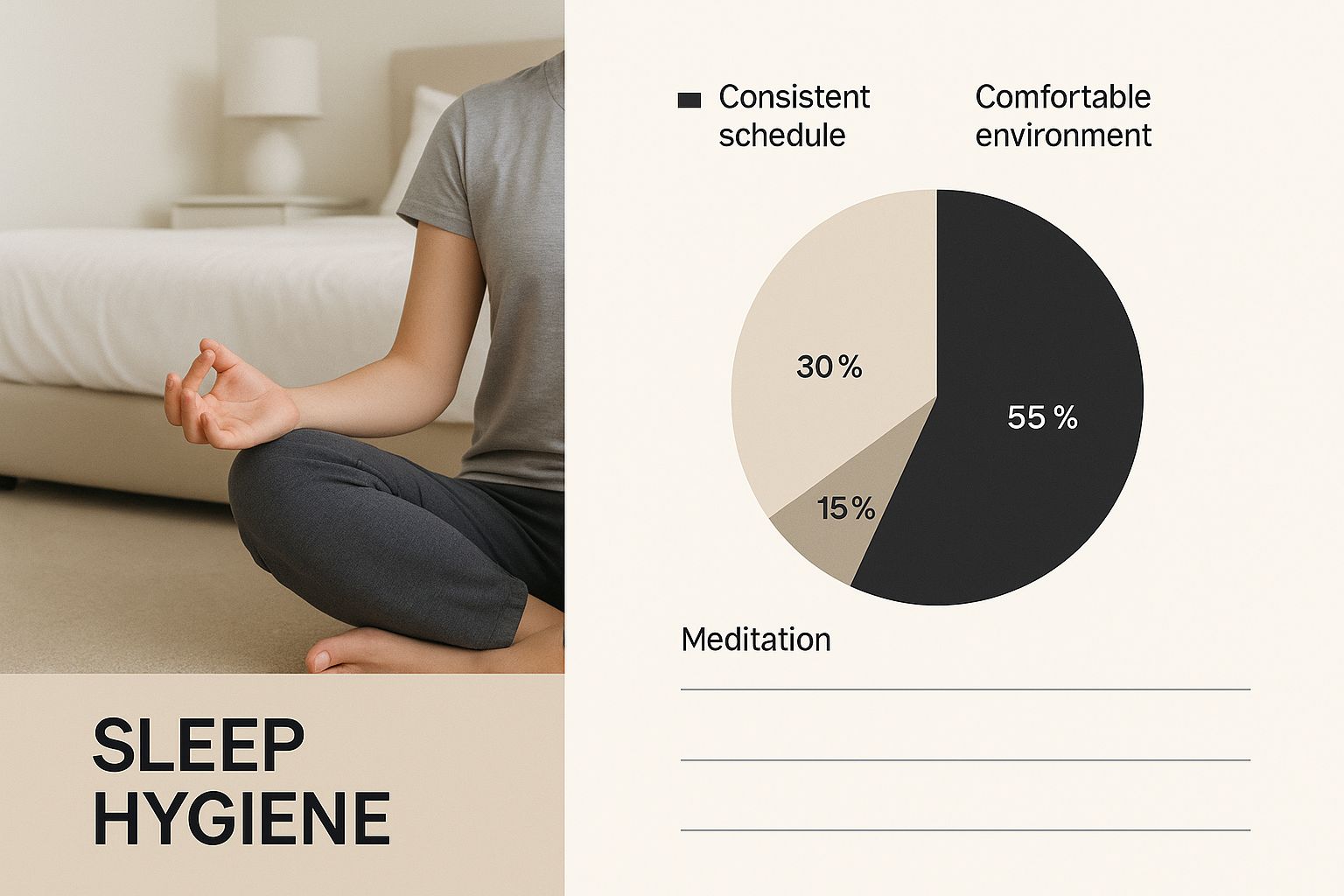
As you can see, creating a restful environment is a cornerstone of great sleep, and getting your light exposure right is a huge piece of that puzzle.
Choosing the right pair of glasses comes down to how and when you'll use them. Not all lenses are created equal, and the best choice for you depends entirely on your lifestyle.
Here’s a quick breakdown to help you decide.
| Lens Type | Blue Light Blockage | Best For | Potential Drawback |
|---|---|---|---|
| Clear | 10%–20% | Daytime use in an office or under fluorescent lights to reduce eye strain. | Not effective for protecting melatonin production at night. |
| Yellow | 40%–60% | Gamers, designers, or anyone needing color accuracy while reducing some eye strain. | Better than nothing, but not strong enough for sleep preparation. |
| Amber/Orange | 90%–99%+ | Nighttime use (2-3 hours before bed) to maximize melatonin production and prepare for sleep. | Alters color perception significantly, making them unsuitable for color-sensitive tasks. |
For improving sleep, amber or orange lenses are the only real option. The others are great for daytime eye strain, but they won't do much to help you wind down.
Ultimately, these glasses are one of the most direct and effective natural sleep aids that work because they tackle the root cause of so much modern sleep trouble. They don’t add anything new to your body; they simply remove an obstacle that’s preventing your body from doing what it’s built to do.
By making one small change to your evening light, you can make a huge impact on your ability to fall asleep faster and get the deep, restorative rest you need. This is so important because that rest is what fuels your success the next day.
While getting your light environment right is the single most powerful step you can take for better sleep, some supplements and herbs can offer fantastic support. Think of them less as a magic bullet and more as a helpful nudge for your biology. Because sleep is so important, having these tools can make a real difference.
These aren't meant to knock you out. Instead, they work with your body, reinforcing the natural signals that tell your brain it’s time to rest. When used correctly, these natural sleep aids that work can help you fall asleep faster and improve the quality of that sleep. Just remember, they should always complement a healthy wind-down routine, not replace it.
Melatonin is a hormone your brain produces naturally when it gets dark. It's the primary signal that orchestrates your entire sleep-wake cycle. Taking a melatonin supplement is like giving your body an extra dose of this "go to sleep" signal.
This can be incredibly useful for resetting your internal clock after jet lag or for shift workers wrestling with an off-kilter schedule. It’s no surprise that melatonin is one of the most popular sleep supplements on the market—it’s a direct, effective way to tell your body it’s nighttime.
Beyond melatonin, a few plant-based options have been trusted for centuries to help people wind down. These herbs work a bit differently; they gently soothe the nervous system rather than acting as a direct sleep hormone.
Magnesium: This essential mineral is a superstar for relaxation. It helps quiet a racing mind by regulating neurotransmitters that promote a sense of calm. A lot of people find a magnesium supplement before bed is just what they need to unwind.
Valerian Root: Often turned to for insomnia and anxiety, valerian root is thought to increase levels of GABA, a chemical messenger in the brain. Higher GABA levels have a natural sedative effect, helping you feel more relaxed and ready for bed.
Chamomile: This gentle herb, usually enjoyed as a tea, contains an antioxidant called apigenin. This compound binds to specific receptors in your brain that can ease anxiety and initiate sleep. A warm cup of chamomile is a classic—and comforting—part of any evening routine for a reason.
It's crucial to remember that supplements are not regulated by the FDA like medications are. The quality and dosage can vary wildly between brands, so always choose products from reputable companies you trust.
The goal here isn't long-term dependency. It's about using these aids as a temporary support system while you build lasting, healthy sleep habits. Always start with the lowest effective dose and pay close attention to how your body responds.
At the end of the day, sleep is about giving your brain and body the time they need to repair and recharge. These natural aids can be a valuable part of that process, helping you secure the rest that is so important for your overall health. To learn more about building a complete approach to better rest, feel free to explore our other helpful sleep and wellness resources.
Here's the rewritten section, designed to sound completely human-written and natural, following the provided style guide and examples.
So, we've talked about some incredible tools for better sleep. But where the real magic happens is when you string them together into a consistent pre-sleep routine.
This isn’t about chasing perfection or following some rigid, complicated "sleep hygiene" checklist. It's about creating a simple, repeatable sequence of actions that tells your brain and body, "Hey, the day is done. It's time to power down."
Think of it this way: your sleep is the foundation for everything—your mood, your energy, your health. A dedicated wind-down ritual is your nightly insurance policy to make sure that foundation is rock-solid. It’s a practical, sustainable plan that brings all the best strategies together into one powerful habit, because that sleep is too important to leave to chance.
The goal here is consistency, not complexity. Repeating the same steps, in the same order, night after night, is how you build a powerful new habit. You’re essentially creating a runway for your body to gently land in a state of deep rest.
Here’s a sample timeline you can steal and tweak to fit your own life. Just layer in the natural sleep aids that work for you.
2-3 Hours Before Bed: This is your first and most important move. Put on your blue-light blocking glasses. This single action shields your melatonin production from the onslaught of screens, signaling the start of your wind-down. Now’s the time for a light, calming activity like reading a real book (not on a tablet!) or listening to some chill music.
1 Hour Before Bed: Time for the internal soothers. If you're taking supplements like magnesium, now is the perfect time to let them get to work. You can also brew a warm, comforting cup of chamomile tea. The simple act of sipping something warm is incredibly relaxing for the nervous system.
30 Minutes Before Bed: All screens off. No exceptions. This is your screen-free zone. Use this final half-hour for some gentle stretching, a quick meditation, or scribbling down your thoughts in a journal to get them out of your head. Double-check that your bedroom is cool, dark, and quiet—your personal sleep cave.
By layering these small, intentional actions, you're not just crossing your fingers and hoping for sleep. You're actively inviting it. This deliberate process helps get your internal clock back in sync, making it so much easier to fall asleep, stay asleep, and wake up feeling like you actually rested. This is how you secure the quality sleep that is so important for every part of your life.
Diving into the world of natural sleep support can feel a little overwhelming. If you're wondering about safety, timing, or which tools actually work, you're not alone. Let's tackle some of the most common questions so you can feel confident on your path to better rest, because great sleep is an achievable and important goal.
This is probably the first question on everyone's mind, and for good reason. For the most part, aids like magnesium supplements or a calming cup of chamomile tea are perfectly safe for healthy adults.
That said, it's always smart to have a quick chat with your doctor before starting anything new. This is especially true if you have any underlying health conditions or are taking other medications. A little expert advice ensures you’re doing what’s best for your unique body.
Timing can make all the difference. For something like blue-light blocking glasses, consistency is your best friend. The goal is to create a non-negotiable "digital sunset" for your brain, because protecting your sleep cycle is fundamentally important.
By popping on your glasses 2-3 hours before you plan to sleep, you send a clear signal to your body that it's time to wind down. This simple habit protects your natural melatonin production, night after night. You can get the full scoop on how our glasses help with sleep right here.
Absolutely. People are waking up to the power of working with their bodies, not against them. In fact, the global market for sleep supplements recently hit USD 8.8 billion and is only expected to climb.
This isn't just a fleeting trend. It reflects a major shift in how we think about health—moving toward natural, plant-based solutions that support our body's built-in sleep cycle instead of just forcing it. It shows a growing understanding of just how important good sleep truly is.
Ready to reclaim your evenings and protect your natural sleep cycle? The amber lenses in Element Lux glasses block over 99% of disruptive blue light, helping your body prepare for deep, restorative rest. Shop now and start your journey to better sleep.
