Ever find yourself lying in bed, mind racing, unable to switch off? You’re definitely not alone. The simple act of winding down is really about creating a buffer zone between your hectic day and a night of solid, restorative sleep. It’s all about sending clear signals to your body that it's finally time to relax, repair, and recharge.
In our constantly connected world, the line between a busy day and a restful night has all but disappeared. For so many of us, the stress from work, family duties, and that endless stream of phone notifications follows us right into the bedroom. This keeps our brains on high alert, making that shift into sleep mode feel next to impossible.
This isn't just a feeling; it's a widespread issue. Back in 2020, data showed that a staggering 14.5% of adults in the United States struggled to fall asleep most days. The problem was even more noticeable for younger and middle-aged adults, where 15.5% of those aged 18-44 reported the same trouble.
So, what's sabotaging our natural sleep cycles? More often than not, the culprits are digital. The glow from our phones, tablets, and TVs emits a specific type of blue light that cleverly mimics daylight. This exposure tricks our brains into thinking it's still daytime, which slams the brakes on melatonin production—the crucial hormone that tells your body it’s time for bed.
A deliberate ‘wind-down’ routine has become a non-negotiable part of a healthy lifestyle. It’s not about finding a magic bullet but about understanding the small, consistent actions that signal it's time for rest.
This is exactly why building a real wind-down routine is so important. It’s not just about feeling tired; it’s about actively prepping your mind and body for sleep with practical, science-backed steps. By managing your light exposure with simple tools like amber blue light glasses and adopting a few relaxation techniques, you can take back your evenings and seriously upgrade your sleep quality.
If you want to dig deeper into how light messes with your sleep, you might find the articles on our blue light blog really helpful.
Let's be honest about blue light. The light pouring from your phone, tablet, and TV is engineered to look like daylight, and it’s brilliant at tricking your brain into staying awake long after sunset. This artificial glow actively suppresses melatonin, the crucial hormone that tells your body it’s time to sleep.
This disruption to your internal clock, or circadian rhythm, is a huge reason why so many of us struggle to wind down. When your brain keeps getting "daytime" signals, it fights the natural urge to rest. This is where the color of the light you see makes all the difference.
Not all blue light glasses are the same. Those clear "computer glasses" might cut down on a bit of glare, but they do very little to block the specific wavelengths of blue and green light that slam the brakes on melatonin production. For nighttime, orange and amber-colored lenses are the undisputed champions.
Think of them as a protective shield for your brain. These specialized lenses filter out the exact parts of the light spectrum known to mess with your sleep cycle. You can still watch a movie or scroll through your feed, but your brain is finally protected from the confusing signals that lead to digital eye strain, headaches, and restless nights.
It’s a simple but powerful adjustment. You can be reading on your tablet in a dimly lit room without sabotaging your body's natural wind-down process.
This one change lets your body ease into sleep mode naturally, even while you’re still enjoying your evening routine.
Putting on a pair of amber glasses is a fantastic first step, but it’s even more effective when it’s part of a solid wind-down strategy. Here are a few more tips to lock in great sleep:
By filtering out disruptive light, amber blue light glasses help sync your internal clock with the actual time of day. This makes it so much easier to relax, feel sleepy, and drift off.
Anxiety is a sleep-killer. If your mind is buzzing at bedtime, try adding a few of these simple, stress-reducing practices to your routine:
By making just a few of these small changes, you can create a powerful routine that signals to your body and mind that it's time for a truly restorative night. You can find out more about how our glasses help with sleep and the science that makes them so effective.
A great bedtime routine isn't some rigid checklist you have to follow perfectly every night. Think of it more like a personal ritual—a set of simple, calming activities that signal to your brain and body that it's time to shift gears and prepare for sleep. Building this habit is one of the most powerful things you can do to learn how to wind down before bed and actually get the rest you need.
And let's be honest, most of us need it. The National Sleep Foundation's Sleep in America® Poll found a crystal-clear link between having a wind-down routine and getting good sleep. With 6 out of 10 American adults not getting enough sleep and almost 40% struggling to drift off multiple nights a week, being intentional about relaxation isn't a luxury—it's essential. You can dig into all the details in their full sleep health report.
So, where do you start? A solid routine is usually built on four key pillars that work together to get you ready for rest. The trick is to mix and match activities from each pillar to figure out what truly works for you.
You can think about it like building a custom routine from a simple menu.
Mix and match these activities to create a personalized routine that signals to your body it's time to rest and prepare for sleep.
| Pillar | Activity Examples | How It Helps You Unwind |
|---|---|---|
| Calm Your Mind | • Journaling a "brain dump" • Light, fiction reading • Guided meditation |
Quiets the mental chatter and helps you offload the day's worries so they don't follow you to bed. |
| Relax Your Body | • Gentle yoga stretches • A warm bath or shower • Foam rolling tight muscles |
Releases the physical tension and stress that can build up in your muscles throughout the day. |
| Optimize Your Environment | • Dimming the lights • Setting a cool room temperature • Playing soft, ambient music |
Creates powerful environmental cues that tell your brain it's time for sleep, not activity. |
| Engage Your Senses | • Sipping chamomile tea • Using a lavender diffuser • Listening to calming sounds |
Soothes your nervous system through calming sensory inputs like smell, taste, and sound. |
Just picking one or two things from this list to do consistently can make a huge difference in how quickly you're able to settle down.
This infographic shows just how simple it can be to layer these habits together for a powerful effect.
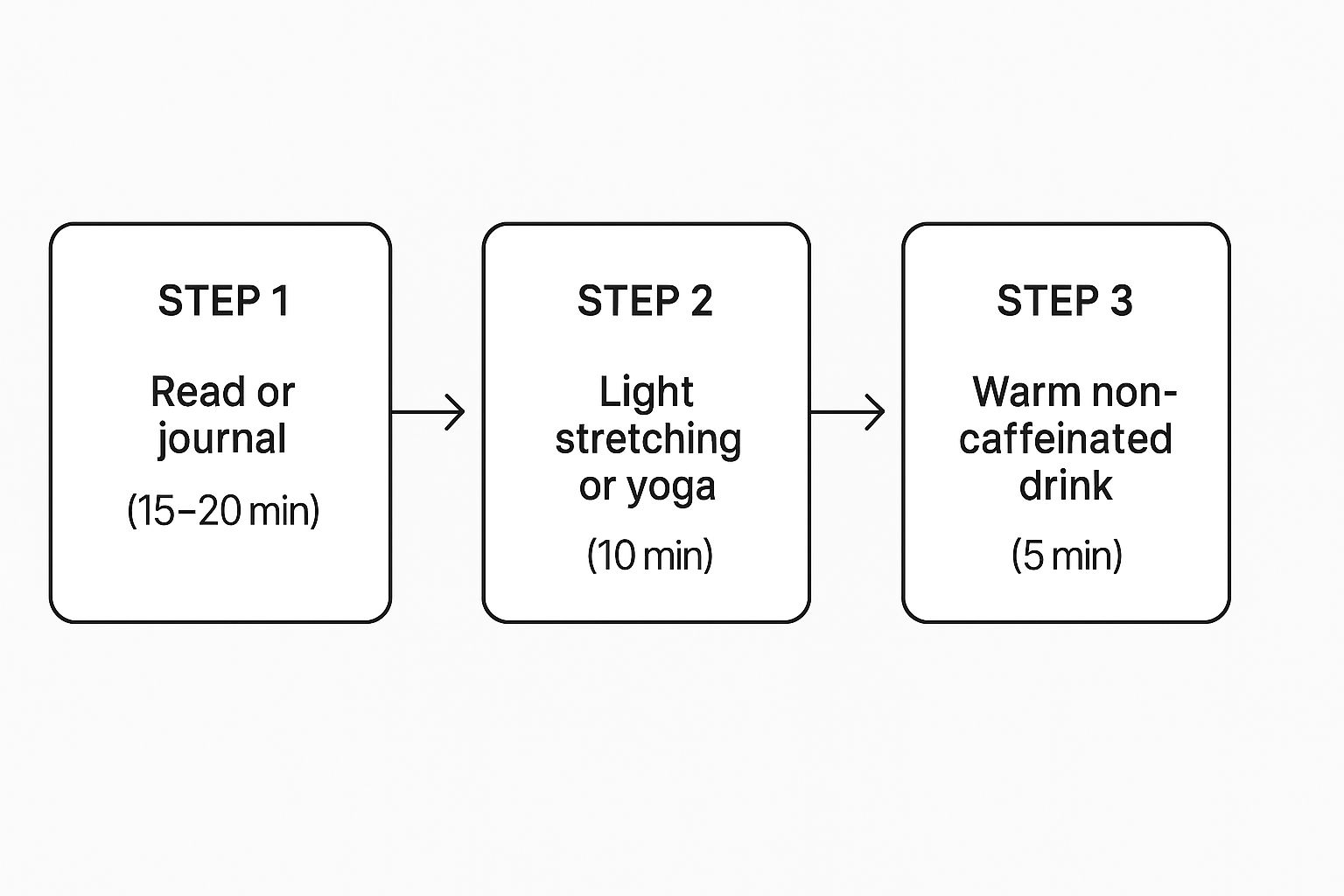
As you can see, it doesn't have to be complicated. The goal is to create a sequence that feels good and signals to your body that the day is officially over.
There's one non-negotiable element that ties this all together, especially if screens are part of your evening. For the last 90 minutes before bed, putting on a pair of amber blue light blocking glasses is absolutely foundational.
These orange-lensed glasses are specifically designed to filter out the disruptive light that kills melatonin production, making it much easier to relax and wind down.
Even if you’re catching up on a show or doing some late-night scrolling, Element Lux glasses shield your eyes, prevent that wired feeling, and allow your body’s natural sleep signals to kick in right on schedule. It's a simple step that makes every other part of your routine more effective and helps you build a practice you’ll actually look forward to each night.
It’s a familiar story: you finally get into bed, ready for a good night's sleep, and suddenly your brain decides to replay every worry from the day. Learning how to wind down before bed means learning how to quiet that mental chatter.
This isn't just you. Our hyper-connected lives are making sleep anxiety a huge barrier to rest. The Global Wellness Institute found that nearly 40% of Gen Z adults deal with this at least three times a week, often because of non-stop digital stimulation.
So, what actually works? You need a few go-to strategies that actively calm your nervous system. Think of these as powerful tools to help you reclaim your evenings and find some mental peace.
Schedule 'Worry Time.' This might sound strange, but it works. Set aside 15 minutes earlier in the evening to just sit and let yourself worry. Write it all down or just think it through. When you give those anxieties their own dedicated time slot, you train your brain not to ambush you with them the second your head hits the pillow.
Try Progressive Muscle Relaxation (PMR). Lie down and focus on tensing, then completely releasing, one muscle group at a time. Start with your toes, move to your calves, your thighs, and work your way up to your forehead. It’s a simple physical cue that helps dissolve tension you didn't even know you were carrying.
Create a 'Digital Sunset.' This is a non-negotiable for me. Put all your screens away at least an hour before you plan to sleep. The constant flow of notifications and information keeps your brain on high alert—the exact opposite of what you need to drift off.
Wear Blue Light Blocking Glasses. If you absolutely can't put the screen away, Element Lux amber glasses are a game-changer. Those deep orange lenses block the stimulating blue light that messes with your sleep hormones and contributes to eye strain, helping you relax even if you’re catching up on a show.
By creating a clear boundary between your active day and your restful night, you signal to your brain that it's safe to switch off. These techniques are your tools for building that boundary.
Getting a truly restful night of sleep isn't about some massive, complicated life overhaul. It's really about stringing together a few small, consistent habits. When you combine proactive ways to de-stress with smart light management, you create a powerful formula for winding down.
Your goal here is progress, not overnight perfection.

I can't overstate this: amber-lensed blue light blocking glasses are a non-negotiable part of my evening routine. They do more than just help with eye strain from screens. Their real power is in letting your body produce melatonin naturally, which is exactly what you need to feel sleepy.
Wearing them is like giving yourself permission to relax and wind down without the harsh digital light from your phone or TV messing with your internal clock.
Remember, the most impactful strategies are often the simplest. A consistent bedtime, a screen-free final hour, and protecting your eyes with quality blue light glasses form a powerful foundation for restorative sleep.
If your mind is still racing when your head hits the pillow, you need a way to offload that mental clutter. Here are four simple but effective techniques I rely on:
You don't have to do it all at once. Start small tonight by exploring more expert tips in our sleep resources.
It's one thing to know you need a wind-down routine, but it's another to get it just right. Let's tackle some of the common questions that pop up when you're trying to perfect your evenings for better sleep.
If you've ever ended a long day with that gritty, tired-eye feeling, you know digital eye strain is no joke. It's that lovely combo of dry eyes, headaches, and fuzzy vision from staring at screens. This is where orange-colored blue light glasses, like the ones from Element Lux, make a world of difference. They work by filtering out the harshest, highest-energy blue light that our devices pump out. This instantly creates a softer, warmer view, taking the edge off the screen's glare. Your eye muscles can finally relax, making that evening Netflix binge or late-night scrolling session way more comfortable.
Here’s where it gets really interesting. The main reason those orange lenses are so effective is how they protect your natural sleep cycle. When you're exposed to blue light after the sun goes down, it tricks your brain into thinking it's still daytime. This slams the brakes on your body's production of melatonin—the hormone that signals it's time to get sleepy. By blocking over 99% of that disruptive light, amber or orange glasses let your melatonin levels rise naturally, just as they're supposed to. This helps you feel tired at the right time, making it much easier to fall asleep and, more importantly, stay asleep.
By filtering out stimulating blue light, amber glasses remove a major source of digital stress. This has a direct calming effect on your brain and nervous system. It stops the constant "daytime" signal that keeps you feeling alert and wired. Instead, your body is allowed to follow its natural rhythm, making it easier to shift into a relaxed state. Think of it this way: amber lenses let you enjoy your evening without confusing your internal clock. It’s a simple switch that helps get your body back in sync and sets the stage for deep, restorative sleep.
Ready to take back your nights and wake up feeling incredible? The Element Lux blue light blocking glasses are designed to protect your sleep and perfect your wind-down. Shop now and feel the difference for yourself.
