If you've ever ended a long workday with tired, achy, or blurry eyes, you're not just imagining it. That nagging discomfort is a real, recognized condition called Digital Eye Strain, or Computer Vision Syndrome (CVS). It's become one of the most common complaints of our screen-filled lives.
So, what’s going on here? Why are our screens so tough on our eyes?
It really boils down to how differently we interact with digital displays compared to, say, a printed book. When we're locked into a screen, our blink rate can plummet by as much as 50%. Blinking is what keeps our eyes moist, so without it, they quickly become dry and irritated.
At the same time, the focusing muscles in your eyes are forced to work overtime, constantly adjusting to keep pixels and text sharp. It's like holding a small weight out in front of you for hours on end—eventually, that muscle is going to get seriously fatigued.
Think about it: holding that constant, close-up focus forces your eyes into a state of unrelenting tension.
When you combine that sustained effort with a dramatic lack of blinking, you create the perfect storm for discomfort. It’s no surprise that this leads to a whole host of frustrating symptoms:
This isn't some rare issue; it's a global phenomenon. In fact, Computer Vision Syndrome now affects an estimated 69% of the global population. The massive shift to remote work and online learning has only poured fuel on the fire, with some studies showing that every extra hour of daily screen time can jack up the risk of CVS by 12%.
The constant focus demanded by our screens prevents our eye muscles from ever truly relaxing. Over time, this not only causes immediate discomfort but also messes with crucial recovery processes—especially sleep, which is non-negotiable for eye repair and lubrication.
Proper rest is your eyes' best friend. When you sleep, your eyes finally get a chance to replenish their natural moisture, and those hard-working focusing muscles get a complete break. Without quality sleep, you're starting the next day with eyes that are already tired and far more vulnerable to strain.
If you want to dig deeper into how this works, you can explore more on the topic by checking out our guide on blue light's impact.
For fast relief, here are the most effective strategies you can implement right now to ease screen-induced eye strain.
| Strategy | How It Works | When to Use It |
|---|---|---|
| The 20-20-20 Rule | Every 20 minutes, look at something 20 feet away for 20 seconds. | Set a recurring timer during long work or study sessions. |
| Conscious Blinking | Remind yourself to blink fully and often to re-lubricate your eyes. | Stick a note on your monitor: "BLINK!" |
| Adjust Screen Settings | Lower brightness to match room lighting and increase text size to avoid squinting. | Whenever you move to a new environment or feel your eyes straining. |
| Use Element Lux Glasses | Filters out high-energy blue light, reducing muscular strain and visual noise. | During any screen time, especially in the evening to protect sleep. |
These simple adjustments can make a world of difference in your day-to-day comfort, helping you break the cycle of fatigue before it even starts.
We all know we should take breaks from our screens. But knowing and doing are two different things, right? The famous 20-20-20 rule is fantastic advice, but it's useless if you don't remember to follow it. The real trick isn't just knowing the rule; it's building a system that makes it automatic.
Let's turn that advice into a reflex. Instead of banking on willpower, which usually runs out by lunchtime, use technology against itself. Set a recurring 20-minute timer on your phone or smartwatch. You can even find simple browser extensions that will literally tell you when it's time to look away.
Another great trick I've found is to tie your eye breaks to your workflow. Every time you finish a task—whether it's sending an email, finishing a slide, or reading a report—make that your cue. That's your moment to stand up, stretch, and give your eyes that much-needed rest. It's a simple way to turn your own productivity into a built-in reminder for self-care.
Those short breaks are crucial, but your eyes also crave longer, more restorative periods of rest. A 20-second glance into the distance is good. A five-minute break where you actually get up and walk around? Even better.
When you step away from your desk, you're doing more than just resting your focusing muscles. You're kickstarting blood flow, helping to ease that tension in your neck and shoulders, and giving your brain a chance to reset. You'll probably find your focus is sharper when you sit back down.
The image below shows one of the simplest but most effective adjustments you can make right at your desk.
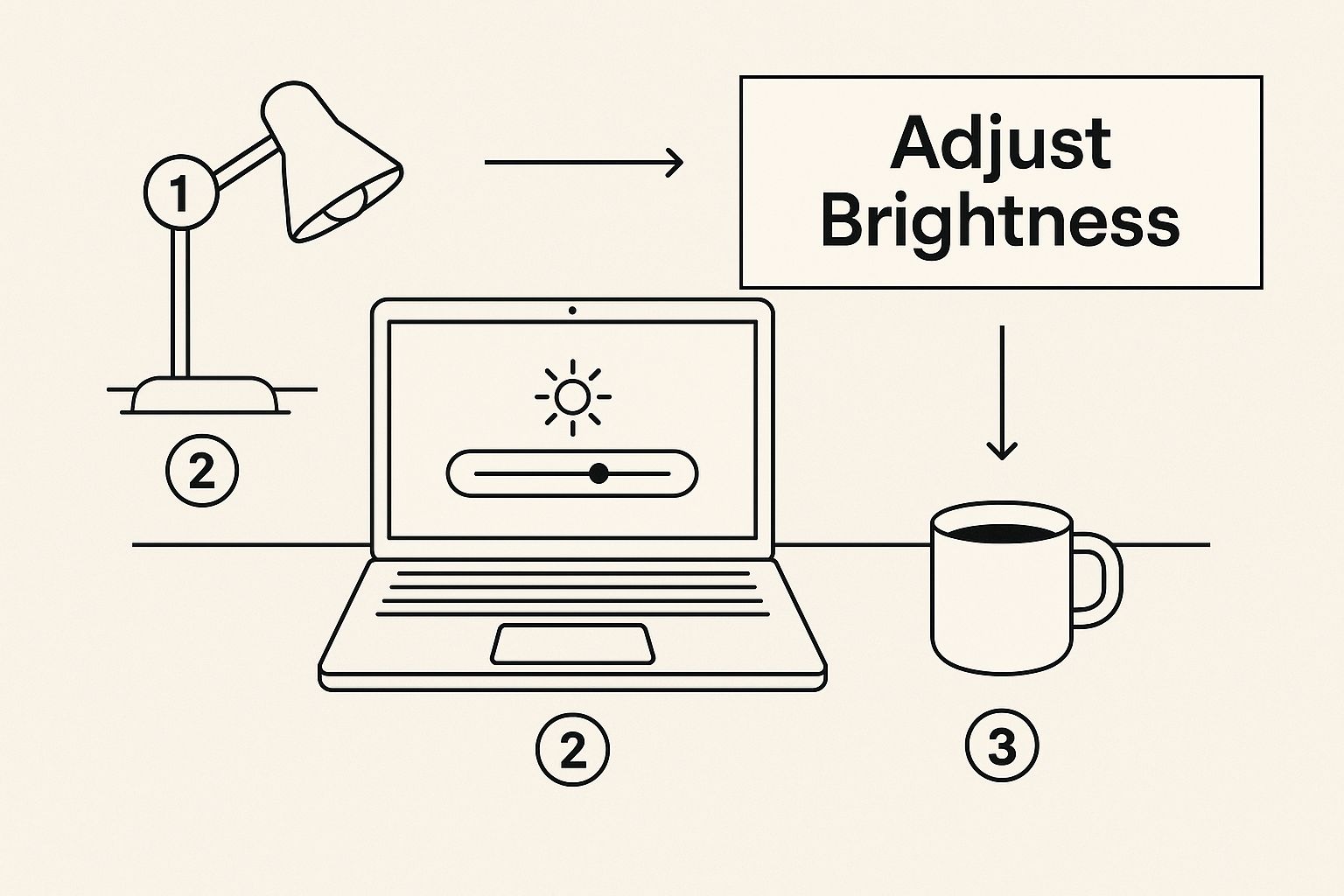
Just matching your screen’s brightness to the light in your room stops your eyes from constantly fighting against overpowering glare or squinting in the dark.
Here's one of the most overlooked habits, and it's also the easiest to fix: just blink more. Seriously. When we stare intently at our screens, our natural blink rate can get cut in half. This is a direct path to dry, gritty, and seriously irritated eyes. You have to make a conscious effort to blink more often.
Think of it as hitting the refresh button for your eyes. A full, deliberate blink coats the surface with a fresh layer of tears, keeping things lubricated and washing away any tiny debris. If you keep forgetting, try a sticky note on the corner of your monitor with one word: "BLINK." It works wonders.
Taking breaks and managing your screen habits isn't just about feeling better today. It's a long-term investment in your vision. Failing to manage digital eye strain can contribute to worsening vision over time.
This isn't just a minor annoyance. There’s a reason experts recommend the 20-20-20 rule so often—it helps combat the real risks of staring at screens all day. Without proper management, the rising tide of myopia (near-sightedness) could lead to more severe eye conditions down the road. You can learn more about the global impact of digital eye strain on newindianexpress.com and see just how critical these simple habits are.
Finally, never underestimate the power of a good night's sleep. Sleep is the ultimate recovery period for your eyes. It’s when they repair tissue, get fully lubricated, and finally let the muscles used for focusing all day completely relax. Protecting your sleep is a non-negotiable part of any real strategy to beat screen-induced eye strain.
The habits you build are half the battle, but where you practice them is just as critical for fighting off eye strain. Your workspace can either work against your eyes or become their biggest ally.
Putting together an eye-friendly setup isn't rocket science. It just takes a few intentional tweaks to your screen, lighting, and even how you sit.
Think of your workspace as a complete ecosystem. If one piece is off—like a monitor that's too close or harsh overhead lighting—it throws everything else out of balance, creating a ripple effect of discomfort. The goal is a workspace that feels natural, so your eyes aren't constantly straining to make up for problems you can easily fix. This not only eases eye strain but also sharpens your focus.
Getting your screen in the right spot is the absolute foundation of an ergonomic setup. It’s a simple change, but the payoff for your eyes, neck, and shoulders is huge.
A poorly positioned screen forces your body into awkward postures. That creates a chain reaction of tension that starts in your eyes and travels right down to your shoulders. When you fix your monitor's placement, you aren’t just helping your vision; you’re supporting your entire upper body.
Screen glare is one of the worst offenders when it comes to digital eye strain. It’s like trying to read with a flashlight shining in your face—your eyes have to work way too hard to see past the reflections.
Windows are often the biggest source of glare. If you can, position your desk perpendicular to any big windows, not directly in front of or behind them. Can't move your desk? No problem. Use blinds or curtains to soften the incoming light.
The light in your room matters, too. Your room's brightness should be pretty close to your screen's brightness. A screen glowing like a beacon in a dark room forces your pupils to work overtime. On the flip side, a dim screen in a bright room will have you squinting. Your goal is to find that comfortable middle ground where the two are in harmony.
Don't just stick with the factory settings on your monitor. Customizing your display is one of the most powerful ways to reduce eye strain, and it only takes a few seconds.
And remember, a comfortable workspace leads to better rest. When your eyes aren't fried at the end of the day, it's so much easier to wind down. This is crucial because quality sleep is the ultimate recovery tool for your eyes, giving them a chance to lubricate, repair, and fully recharge for whatever you have planned for tomorrow.
We all know sleep is for recharging our brains and bodies, but it's just as crucial for our eyes. Think about it: after a full day of staring at screens, reading, and just looking at the world, your eyes are exhausted. They desperately need that downtime to repair and reset.
During deep sleep, your eyes get to work. The tiny focusing muscles that were clenched for hours finally relax completely—a must for preventing that next-day fatigue. More importantly, this is when crucial tissue repair happens and your eyes get to replenish their natural tear film, which keeps them properly lubricated.
Here’s the problem: our modern habits constantly get in the way of this natural recovery process. All that exposure to high-energy blue light from our phones, tablets, and computers in the hours before bed can throw a major wrench in our sleep.
This specific wavelength of light is a master of disguise, tricking your brain into thinking it’s still high noon. It directly suppresses the production of melatonin, the hormone that signals to your body that it's time to wind down.
When your melatonin levels are out of whack, your entire sleep cycle gets derailed. It suddenly becomes harder to fall asleep, and the quality of the rest you do get takes a nosedive. For your eyes, this means less time for recovery, often leading you to wake up with that same dry, strained feeling you went to bed with.
It's a vicious cycle: poor sleep quality directly worsens the symptoms of digital eye strain. When your eyes don't get a full night to lubricate and repair, you're starting the next day with a serious handicap, making you far more sensitive to discomfort.
The good news? You can absolutely take back control and give your eyes the recovery they need. It all starts with being more intentional about your evening routine.
Create a Screen-Free Wind-Down: This is a big one. Commit to putting all screens away for at least one hour before you plan to sleep. Use that time to read a physical book, listen to some chill music, or do some light stretching. This buffer gives your brain's melatonin production a chance to kick in naturally.
Activate 'Night Mode' on Everything: If you absolutely have to use a device in the evening, make sure 'night mode' or a blue light filter is on. This shifts the screen’s color to warmer tones, cutting down on the amount of disruptive blue light hitting your eyes.
Prioritizing sleep isn't just about feeling more energized—you're actively helping to reduce eye strain from screens. If you really want to dig into this, you can learn more about how our glasses help with sleep and see how filtering blue light can be a total game-changer for your nightly routine. It’s one of the most powerful things you can do to make sure your eyes are rested and ready for whatever the next day throws at them.
Once you’ve dialed in your workspace and habits, the right pair of glasses is your most direct line of defense against screen-induced eye strain. This isn't just about a trend; specialized eyewear is a powerful tool engineered to filter out the very things that make our digital lives so hard on our eyes and sleep.
The biggest game-changer here is blue light filtering technology. These lenses are designed to block a significant portion of the high-energy visible (HEV) blue light that our devices constantly pump out. This specific type of light is a known culprit behind visual fatigue and, more importantly, it can throw your body's natural sleep cycle completely out of whack.
Think of your body's internal clock as being tuned by light. Blue light, in particular, screams "daytime!" to your brain. When you're bathed in it during the evening, it can slam the brakes on melatonin production—the essential hormone that signals it's time to sleep.
By filtering out that disruptive light, you’re protecting your body's ability to wind down naturally. This helps you get the deep, restorative sleep your eyes desperately need to repair and re-lubricate themselves. Without it, you're starting the next day with eyes that are already tired, dry, and primed for more strain.
This is why a quality pair of blue light glasses, like those from Element Lux, can be so effective. You can see how different styles fit into a healthy evening routine by exploring the Element Lux collection.
While tackling blue light is critical, a few other features are just as important for all-day visual comfort.
Given how much of our lives are spent in front of screens, investing in the right eyewear is no longer a luxury. It's a core part of a strategy for long-term wellness and comfort.
The sheer volume of our screen exposure is staggering. Projections now suggest that someone born today will spend over 181,000 hours—or roughly 21 years—of their life in front of a screen. It’s no surprise, then, that digital eye strain now impacts up to 90% of users. Eyecare Business has some incredible insights into these projections. Choosing the right eyewear is one of the most proactive steps you can take to manage this modern reality.
Even when you're doing everything right, some questions about digital eye strain always seem to pop up. Let's get you some clear, straightforward answers to the most common ones so you can feel confident you're protecting your long-term eye health.
This is the big one, and the answer is a little more complex than a simple yes or no. While the usual symptoms like dry eyes and headaches are temporary, the real concern is the long-term picture.
Consistent, unmanaged eye strain is linked to an increased risk of developing or worsening myopia (near-sightedness). High levels of myopia aren't just about needing a stronger prescription; they can unfortunately raise your risk for more serious conditions down the road, like retinal detachment or glaucoma.
So, while the daily discomfort usually fades, your habits today are an investment in your vision for tomorrow. This is also where quality sleep comes in—it’s the main time your eyes get to repair themselves from the day's stress.
Yes, when you get a high-quality pair, they are an incredibly effective tool. They work by blocking a portion of the high-energy visible (HEV) blue light that our screens constantly pump out.
This specific type of light scatters more easily than other colors, forcing your eye muscles to work overtime just to stay focused. That extra work is a direct cause of eye strain.
But it's not just about easing immediate fatigue. Filtering out blue light is absolutely crucial for protecting your sleep. When you're exposed to it in the evening, it can slam the brakes on your body's production of melatonin—the hormone that signals it's time for bed. A good pair of glasses helps you wind down naturally, ensuring your eyes (and your brain) get the restorative rest they need.
If you spend the better part of your day looking at a screen, a comprehensive eye exam every year is non-negotiable. An optometrist is trained to spot the early signs of issues like dry eye disease long before they turn into chronic problems.
More importantly, your vision can change subtly over time. Even a tiny, uncorrected refractive error gets magnified into major eye strain and headaches when you're staring at a computer all day. An annual check-up ensures your prescription is perfectly dialed in for your digital life.
Absolutely. A few simple exercises can give your eye muscles a much-needed stretch and fight off the fatigue that builds up from staring at a fixed distance for hours.
Here are two of my go-to routines:
These exercises, combined with good habits and quality sleep, create a powerful defense. By being proactive about how you interact with your screens, you're not just finding comfort for today—you're making a smart investment in your vision for years to come.
Ready to give your eyes the protection they deserve and reclaim your sleep? The amber lenses in Element Lux glasses block over 99% of disruptive blue light, helping to reduce eye strain and support a healthier sleep cycle. Find your perfect pair and start feeling the difference tonight.
