
We've all been there. You sit down to study, determined to be productive, but within minutes, your mind is somewhere else entirely. If you're struggling to focus, it’s not a lack of willpower. It's usually a sign that your environment and habits are working against your brain's natural ability to concentrate.
The real solution lies in tackling the root causes—from digital distractions to the way you structure your study time.
It’s that classic scenario: good intentions, a stack of books, and a brain that just won't cooperate. The problem isn’t you; it’s a mix of silent saboteurs in your environment, both digital and physical.
Let's start with the most obvious one: your phone. It’s an attention-grabbing machine, and every notification is designed to pull you away from what you’re doing. Research backs this up, showing that students who constantly check their phones lose huge chunks of productive time. A 2023 global survey even found that 78% of students said their concentration took a hit from social media notifications alone.
But it's not just about the pings and alerts. Your physical space matters more than you think. A cluttered desk, bad lighting, or even an uncomfortable chair creates a low-level friction that makes focusing feel like an uphill battle. Your brain has to process everything it sees, so a messy desk can easily lead to a messy, distracted mind.
On top of that, common study habits can be counterproductive. Pulling an all-night "marathon" session might feel like you're working hard, but it actually fries your brain. Without breaks and clear goals, you're just exhausting your mental resources and making it harder to retain anything.
The real issue is often a mismatch between how you try to study and how your brain actually learns. True concentration isn't about forcing it; it's about creating the right conditions for it to emerge naturally.
If you find yourself constantly losing focus, it can be helpful to explore proven strategies to improve concentration for ADHD. Many of those techniques are incredibly useful for anyone looking to sharpen their attention. This guide will walk you through building a distraction-proof setup and mastering your well-being for peak mental performance.
Your surroundings can either be your greatest ally or your biggest enemy when it comes to focus. Honestly, creating a dedicated study zone isn’t about some picture-perfect setup. It’s about intentionally getting rid of the small frictions that chip away at your concentration.
Think of your study space like a cockpit—every single thing should serve one mission: deep, uninterrupted work.
Start with the obvious: declutter your desk and the area around it. A messy space forces your brain to process a ton of visual noise, draining mental energy you could be using to actually study. If you want to dig deeper, there are some great strategies for building a distraction-proof study environment that tackle everything from digital chaos to physical distractions.
We’ve all been there. Long study sessions staring at a screen that end with headaches, blurry vision, and just feeling wiped out. That’s digital eye strain, and it’s a huge roadblock to concentration. It happens because the high-energy blue light blasting from our screens is just plain harsh on our eyes.
One of the most effective ways to push back is by wearing blue light blocking glasses with orange or amber lenses. High-quality orange-colored blue light glasses, like the ones from Element Lux, are specifically designed to filter out the most disruptive wavelengths of blue light. This dramatically reduces the harsh glare from your screen, making it much easier to read and research for hours without the distracting pain of tired, aching eyes and the resulting mental fatigue.
The benefits of blocking blue light go way beyond just eye comfort. When you're exposed to blue light in the evening, it can slam the brakes on your body's production of melatonin—the hormone that tells your brain it's time to sleep. This is a big problem. It makes it harder to fall asleep, leading to lousy rest and that awful next-day grogginess that kills any hope of concentrating.
Putting on a pair of orange-colored blue light glasses an hour or two before bed is a powerful way to protect your natural melatonin production. By blocking the specific frequencies of light that interfere with sleep, they send a clear signal to your body: it's time to wind down. You’ll find you fall asleep faster and get the kind of deep, restorative sleep that actually refuels your brain for the next day's study session.
If you want to learn more about how light messes with your sleep cycles, we've got a ton of info on the Element Lux blue light blog.
Key Takeaway: Better sleep isn’t a luxury; it’s a non-negotiable part of any effective study plan. By managing your light exposure, you directly improve your ability to concentrate the following day.
Studying is mentally exhausting. When you add chronic stress to the mix, trying to focus can feel completely impossible. This is why having a "wind-down" ritual is so critical for shifting your brain out of high-alert study mode and into a relaxed state.
This is where amber blue light glasses really shine.
Amber lenses create a warm, calming visual environment that helps soothe your nervous system after a tough study session. They filter just enough blue light to dial down mental stimulation without being as intense as deep-orange lenses meant for sleep. This makes them perfect for helping you relax and wind down while reading a book, watching TV, or tidying up before turning in for the night.
Here are four simple ways to reduce stress, built around managing your light exposure:
Let’s be honest: trying to force yourself to concentrate for hours on end is a losing battle. It's more about smart strategy than sheer willpower. The real secret is working with your brain's natural rhythm, not fighting against it. This means ditching the draining study marathons and embracing short, powerful, and highly productive sessions.
One of the best ways to do this is with the Pomodoro Technique. It’s incredibly simple. You break your study time into focused 25-minute sprints, with a short 5-minute break in between. The thinking behind it is solid—our brains just aren't wired for hours of intense, nonstop focus. Working in these short bursts is a game-changer for boosting concentration and kicking mental fatigue to the curb.
It’s not just a hunch, either. A 2022 study actually found that students who used this method saw a 34% jump in their concentration and productivity scores. The technique plays right into the known limits of our attention span, which cognitive science pegs at around 20-30 minutes before focus starts to fade. You can see how universities are leaning into these kinds of scientifically-backed study methods by checking out a recent report on global student flows on QS.com.
The beauty of the Pomodoro Technique is how flexible it is. You can mold it to fit whatever you're working on.
Pro Tip: Make your breaks count. Don't just swap your textbook for your phone. Seriously, get up. Stretch. Grab a glass of water, or just stare out the window for a few minutes. The goal is to give your brain a true reset, not just a different screen to look at.
For this to really work, you need a clear, achievable goal for each 25-minute session. Instead of a vague plan like "study biology," get specific: "review and label the parts of a cell diagram." This approach turns a massive task into a series of small, manageable wins that keep you motivated.
Here’s a quick-start plan to get you going with the Pomodoro Technique and make it a regular part of your study routine.
| Phase | Duration | Action | Goal |
|---|---|---|---|
| Preparation | 2 minutes | Choose a task and set a clear, specific goal. | Eliminate ambiguity and focus your effort. |
| Focus Sprint | 25 minutes | Work on the task without any interruptions. | Achieve deep, uninterrupted concentration. |
| Short Break | 5 minutes | Step away from your desk. Stretch, get water. | Allow your brain to rest and recharge. |
| Rinse & Repeat | 3-4 cycles | Complete three to four Pomodoro cycles. | Build momentum and make significant progress. |
| Long Break | 15-30 minutes | Take a longer, more substantial break. | Prevent burnout and reset for the next block of tasks. |
By following these steps, you create a structured rhythm that helps you stay on track and avoid mental burnout, turning long study hours into productive, focused sprints.
Of course, managing your time is only half the battle. Your environment has to be ready for focus, too.
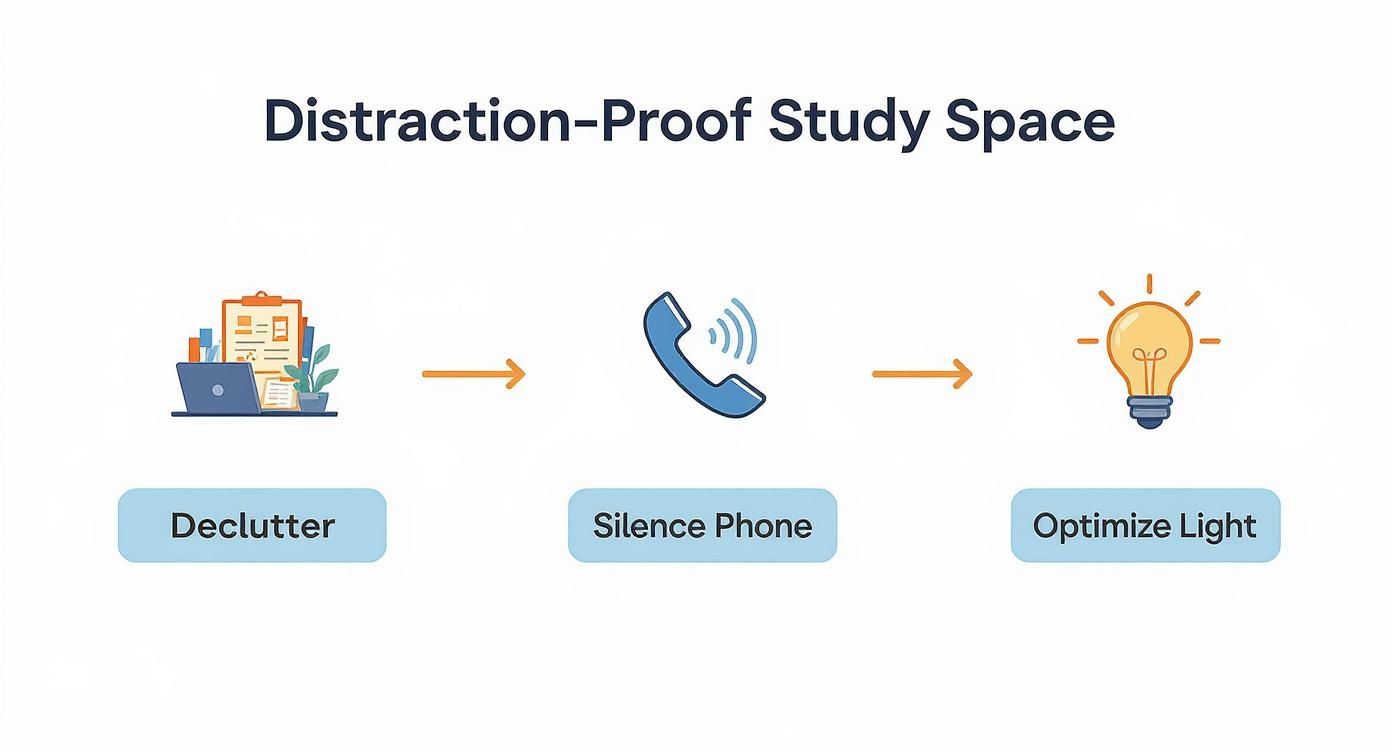
This visual really drives home the foundational steps: decluttering your space, silencing digital noise, and getting the lighting right. When you master both your environment and your time, you create an unstoppable system for deep, sustained concentration.
Sleep isn't just downtime; it’s the most powerful performance-enhancing tool you have. Sacrificing it for another all-night study session is one of the most counterproductive habits a student can get into. Think of it this way: high-quality sleep is directly responsible for memory consolidation, attention span, and the mental clarity you desperately need to actually concentrate.
The science is clear on this—poor sleep flat-out sabotages your ability to learn. It messes with your attention, slows down how you process information, and weakens your working memory. All of these are essential for focusing.
A massive global meta-study found that students getting less than six hours of sleep scored a whopping 23% lower on concentration tasks. And during exam periods? A staggering 46% of students reported being sleep-deprived, which lined up with a 30% drop in their self-rated ability to focus. You can discover more insights about these global student trends to see just how critical rest is for academic success.
One of the biggest modern roadblocks to good sleep is our late-night screen habit. The blue light blasting from our laptops, tablets, and phones tricks our brains into thinking it’s still daytime. This suppresses the production of melatonin, the hormone that tells your body it’s time to sleep.
This is exactly where orange and amber blue light blocking glasses become an invaluable tool in your study kit.

Orange-colored blue light glasses, like the ones from Element Lux, are engineered to block the most disruptive wavelengths of blue and even green light. Wearing them for an hour or two before you plan to go to bed protects your natural melatonin production. This simple step helps you fall asleep faster and get the deep, restorative rest your brain needs to function.
As a bonus, they also significantly cut down on digital eye strain, preventing the headaches and tired eyes that can derail a productive study session.
Amber-lensed glasses work a bit differently. They filter a smaller portion of blue light, which makes them perfect for your evening wind-down routine. They cast a warm, calming light that helps your nervous system relax after a demanding day of studying, making that transition from high-focus work to rest feel much smoother.
Improving your sleep hygiene is one of the best long-term moves you can make to learn how to concentrate better.
Good sleep is not a passive activity but an active strategy for academic success. By prioritizing rest, you are directly investing in your ability to focus and learn. For more actionable advice, check out our guide on how to get better sleep with Element Lux.
Let's be honest: anxiety is the enemy of focus.
When your mind is racing with stress, there's just not much cognitive bandwidth left for learning. Managing your mental state isn't some extra-credit activity—it's a critical part of any serious study plan.
Think of it this way: chronic stress keeps your nervous system in a constant state of high alert. It's nearly impossible to settle into the calm, receptive mindset you need for deep concentration when you're stuck in fight-or-flight mode. The real trick is learning how to transition from a high-strung study session to genuine relaxation. This protects your mental energy and makes sure you're sharp for the next day.
One of the sneakiest culprits behind evening stress is all that screen time. The harsh blue light blasting from your laptop and phone doesn't just strain your eyes; it keeps your brain wired long after you’ve called it a night.
This is where orange-colored blue light glasses become a game-changer. By filtering out a huge chunk of that stimulating blue light, they drastically cut down on digital eye strain. That means fewer of those tension headaches and less fatigue adding to your stress levels.
Even more importantly, blocking blue light in the evening is non-negotiable for healthy melatonin production—that's the hormone that tells your brain it's time for sleep. Slipping on a pair of orange lenses for an hour or two before bed can help you fall asleep faster and get the kind of deep, restorative rest your brain needs to recover and consolidate everything you just learned.
For a gentler transition into relaxation, amber blue light glasses are perfect. They create a warm, calming visual environment that's ideal for winding down. It's a simple way to help soothe your nervous system and quiet the mental clutter from a long day of studying.
Building a consistent wind-down ritual is your best defense against burnout and study-related anxiety. It doesn't have to be complicated. Below is a breakdown of four simple but powerful methods to help you calm your mind and get ready for a night of restorative rest.
| Strategy | Primary Benefit | How to Implement |
|---|---|---|
| Mindfulness or Meditation | Quiets a racing mind and reduces immediate anxiety. | Spend 5-10 minutes just focusing on your breath. Use an app like Calm or Headspace, or simply sit in silence and observe your breathing. |
| Light Physical Activity | Releases pent-up physical tension from sitting all day. | Go for a gentle walk around the block or do some light stretching. The goal is movement, not an intense workout. |
| "Brain Dump" Journaling | Frees up mental space by getting worries out of your head. | Before bed, spend a few minutes writing down everything on your mind—to-dos, nagging thoughts, random ideas. Just get it on paper. |
| Wear Blue Light Blocking Glasses | Reduces the stimulating effects of artificial light to promote relaxation. | Make putting on your Element Lux amber or orange glasses part of your evening routine as you read a book, watch TV, or tidy up before bed. |
These simple, consistent habits do more than just manage stress in the moment. They actively improve your ability to concentrate by ensuring your brain is rested, calm, and actually ready to learn when you sit down to study.
Even with the best study plan, you're bound to run into a few hurdles. Let's tackle some of the most common questions students have when trying to lock in their focus.
Yes, they absolutely do—but it's important to know how they work their magic.
During the day, staring at a screen for hours can cause digital eye strain, leading to the kind of headaches and mental fatigue that completely derail your concentration. A good pair of orange-colored blue light glasses from Element Lux can be a game-changer here, filtering out that harsh glare and cutting down on the distracting discomfort.
At night, the benefits are even bigger. The blue light from your devices tricks your brain into thinking it's still daytime, suppressing melatonin—the hormone that signals it's time to sleep. By wearing orange or amber lenses for an hour or two before bed, you shield your eyes, allowing your body's natural sleep process to kick in. You'll fall asleep faster, get more restorative rest, and wake up with a much sharper mind.
You can't just slam your laptop shut and expect your brain to switch off. Creating a "wind-down" ritual is non-negotiable if you want to manage stress and preserve your mental energy for tomorrow.
This is where amber blue light glasses really shine. They're perfect for that transition period. The warm tint filters just enough of that stimulating blue light to help your nervous system calm down, but it's not so dark that you can't read a book or watch a bit of TV. It's the ideal way to signal to your brain that the high-alert study mode is over and it's time to relax.
Your ability to concentrate tomorrow depends heavily on how well you de-stress and recover tonight. A simple wind-down routine is a non-negotiable part of effective studying.
If you're serious about your grades, you need to get serious about your sleep. It's one of the most powerful tools you have for improving concentration.
Here are the strategies that really move the needle:
Stress is the enemy of focus. When anxiety is running the show, there’s simply no mental bandwidth left for learning.
Here are four simple but effective ways to calm your mind:
For more deep dives and tools to help you stay on top of your game, check out our collection of online resources at Element Lux.
Ready to protect your eyes, improve your sleep, and sharpen your focus? Element Lux offers premium blue light blocking glasses designed to help you study more effectively and rest more deeply. Shop now and feel the difference.
