Yes, glasses designed to reduce eye strain can be a game-changer, especially for those of us who spend hours glued to a screen. They work by cutting through the harsh blue light and annoying glare, which lets your eye muscles finally relax and helps kick those nagging headaches and that feeling of fatigue to the curb.
Ever get to the end of the day and feel like your eyes have run a marathon they didn't sign up for? That dull headache behind your eyes, the blurry vision, maybe even a sore neck—it’s the classic signature of digital eye strain, and almost everyone with a desk job knows it well.
Think of the tiny muscles in your eyes. When you force them to hold a single, intense focus for hours—like staring at a bright screen just inches from your face—they get completely overworked. Just like any other muscle, they get tired, and that constant effort is what leads to all the discomfort.
A huge part of the problem is the high-energy visible (HEV) blue light that our phones, laptops, and tablets are constantly pumping out. This type of light scatters more than other colors, creating a kind of visual "noise" that's hard for your eyes to focus on. To make sense of it, your eyes have to work overtime, which quickly leads to strain.
Then there's the blinking—or rather, the not blinking. Studies show that when we're focused on a screen, our blink rate can plummet by as much as 50%. Blinking is how our eyes stay moist and clean. Without it, they get dry, irritated, and just plain tired.
This isn't just a minor annoyance; it's a massive issue. That’s why the global market for computer glasses was already valued at around USD 3.8 billion in 2024 and is on track to nearly double by 2033. This boom is fueled by a growing awareness of digital eye strain, a problem affecting a huge number of us who work with computers every day.
Once you understand what's causing the strain, it’s easy to see why a simple tool like specialized glasses can make such a huge difference. If any of these sound familiar, your eyes are probably begging for a break:
Recognizing these signals is your first step toward getting some relief. To dive deeper into the science of light and how it affects us, check out our blue light blog.
Think of it like creating a personal sunset for your eyes, even when you're staring at a laptop screen late into the evening. That's really the core idea behind orange-lensed glasses. They act as powerful blackout curtains for your brain, filtering out the most disruptive wavelengths of light long before they can mess with your sleep and eye comfort.
The harsh blue and even some green light from our screens essentially tricks our internal clock into thinking it's still high noon. By blocking these signals, you're giving your body the green light to start producing melatonin—the hormone that tells you it's time for bed—right on schedule. This powerful filtering directly helps reduce eye strain by cutting the visual noise that forces your eyes to work harder, allowing them to relax.
When you slip on a pair of orange-lensed glasses to reduce eye strain in the evening, you're doing more than just giving your eyes a break. You're sending a clear, unmistakable message to your brain that the day is winding down and it's time to prepare for sleep. This one simple habit can lead to some pretty amazing benefits, like falling asleep faster and getting deeper, more restorative rest. Ultimately, orange colored blue light glasses help with sleep by protecting your natural melatonin production from the disruptive effects of artificial light.
For anyone who works late, pulls all-nighters studying, or just can't resist a good scroll before bed, these glasses offer the highest level of protection. They're specifically engineered to dial down digital eye fatigue while signaling to your entire system that it's officially time to shut down.
And people are catching on. The anti-blue light glasses market was valued at around USD 1.43 billion in 2023 and is expected to jump to USD 3.57 billion by 2030. It's no surprise, given how much we rely on screens for just about everything. You can dig into the numbers yourself in recent market reports about anti-blue light glasses.
While orange lenses are the heavy hitters for sleep prep, their amber counterparts are perfect for that transition time. Amber blue light glasses let you relax and wind down by filtering a good chunk of blue light without making the world look completely different. This makes them ideal for watching a movie or wrapping up a few emails in the late afternoon, gently easing you toward bedtime.
By managing your light exposure in the evening, you're not just preventing eye strain—you're actively supporting your body's natural sleep-wake cycle, which is fundamental to overall health and well-being.
Bringing blue light blocking glasses into your nightly routine is a fantastic first step toward better rest. Here are a few practical ways to get better sleep and cut down on daily stress.
Top ways to get good sleep:
Top 4 ways to relax and reduce stress:
If orange lenses are the heavy-duty tool for getting ready for bed, think of amber lenses as your perfect companion for the evening wind-down. They're the ideal bridge between the chaos of a busy day and the calm of a restful night.
Amber glasses are all about helping you gently transition from that high-alert, screen-focused state to a relaxed, pre-sleep mode.
Unlike the more intense orange lenses—which are designed for maximum blue light blockage right before you hit the hay—amber lenses strike a much more practical balance. They filter a significant amount of eye-straining blue light but still allow more of the color spectrum to pass through.
This subtle difference makes them incredibly versatile for your evening routine. You can wear them while finishing up late-afternoon work, enjoying a movie, or reading on a tablet without the major color distortion that comes with darker lenses. The goal here isn't to trick your brain into immediate sleep, but to gently dial down the stimulation and ease into a state of calm.
Weaving amber blue light glasses into your evening is more than just a quick fix for tired eyes; it’s about creating a powerful ritual that signals to your mind and body that the day is winding down.
After hours of staring at screens, your brain is often still buzzing. Slipping on a pair of amber glasses is a tangible, physical cue that helps you disconnect and begin the process of de-stressing.
Think of it as drawing the curtains on the day's digital noise. This simple step helps your nervous system shift from "go" mode to "slow" mode, making it so much easier to relax, reduce anxiety, and prepare for a night of deep, restorative rest.
Amber lenses offer a practical solution for anyone looking to cut down on evening eye strain without sacrificing visual clarity. Here's a quick look at why they're so effective for unwinding:
Using glasses to reduce eye strain with an amber tint is an effortless way to support your natural sleep cycle while still enjoying your evening activities. They are the perfect tool for anyone looking to build a healthier relationship with their screens and prioritize relaxation before bed.
Digital fatigue is more than just tired eyes. It seeps into your mental state, often cranking up feelings of stress and anxiety. Finding ways to genuinely unwind is crucial, but it doesn't have to be some complicated, time-consuming ritual.
A surprisingly powerful (and passive) way to start is by taking control of your light environment. Simply wearing amber or orange glasses in the evening helps regulate your body’s stress response. By filtering out disruptive blue light, you’re sending a clear signal to your nervous system that it’s time to shift out of high-alert mode and into a state of calm.
Beyond managing light, adding a few other simple habits can create a solid foundation for real relaxation. These practices all work together, with your blue light glasses acting as an effortless first step toward a calmer mind and body.
Here are the top 4 ways to reduce stress and relax in the evening:
We’re not trying to add more chores to your to-do list. The goal is to create small, intentional moments of peace. For those looking to go a step further, exploring matcha powder's health benefits, including L-theanine, offers another natural way to encourage a relaxed state.
To help you get started, here’s a quick overview of how these techniques fit together.
This table summarizes four key strategies that work in harmony to reduce stress and promote relaxation.
| Technique | Primary Benefit | When to Practice |
|---|---|---|
| Light Management | Regulates circadian rhythm and reduces nervous system alert | In the evening, after sunset |
| Mindful Breathing | Calms the mind and lowers heart rate | Anytime you feel stressed, or for 5 mins before bed |
| Gentle Movement | Releases physical tension stored in the body | After work, after dinner, or before winding down |
| Tech-Free Time | Reduces mental stimulation and allows the brain to unwind | 30-60 minutes before your intended bedtime |
By combining these simple practices, you're not just putting a band-aid on the symptoms of stress—you're getting to one of the root causes in our modern world.
By combining light management with mindful habits, you create a powerful synergy. You're not just treating the symptoms of stress; you're addressing one of its root causes in our modern environment—constant light exposure.
Ultimately, these small adjustments help recalibrate your internal clock and soothe your nervous system. Whether it's the simple act of putting on your glasses or taking a few deep breaths, each step builds toward a more peaceful end to your day and sets the stage for a night of truly restorative sleep.
Getting great sleep isn't a luxury; it's something you build with smart, consistent habits. And while a lot of things play a part in a restful night, one of the most powerful—and most overlooked—is how you handle light exposure in the hours before you hit the pillow. This is where the right pair of glasses becomes one of your most important tools.
Wearing orange or amber blue light glasses for just 1-3 hours before bed can be a total game-changer. Think of them as a shield, blocking the stimulating blue light from all your screens and indoor lighting that tricks your brain into thinking it's still daytime. This one simple move allows your body to naturally produce melatonin, the hormone that signals "it's time to sleep," right on schedule.
Building a solid sleep routine is about more than just managing light. When you combine blue light blocking glasses with other proven sleep hygiene practices, you create a powerful synergy that leads to deeper, more restorative rest.
Here are the top ways to get good sleep:
Beyond these specific habits, the real goal is to create a calming pre-sleep ritual that helps you disconnect from the day's stress and noise. This is where you can start layering in practices that soothe both your mind and body.
For example, you could slip on your amber glasses for some evening reading and also enhance your bedtime rituals with calming aromas. This combination of sensory cues sends an even stronger message to your brain that it’s time for rest.
As technology keeps moving forward, eyewear is becoming more and more integrated into our daily wellness. The smart glasses market, which often includes blue light filtering, was valued at a cool USD 878.8 million in 2024 and is expected to explode to USD 4.13 billion by 2030. This massive growth just goes to show how much people are looking for eyewear that does more than just help them see—it helps them live better.
Ultimately, mastering your sleep is all about being intentional with your evenings. By making light management a priority with Element Lux glasses, you're setting yourself up for success. For more practical strategies, check out our complete guide on how to get https://element-lux.com/better-sleep/.
Diving into the world of blue light glasses can definitely bring up a few questions. The key to getting real relief from digital eye strain and actually improving your well-being is understanding how different lenses work and, just as importantly, when to use them.
This visual summary gives you a quick look at the data behind wearing glasses to reduce eye strain, especially in the hours before bed.
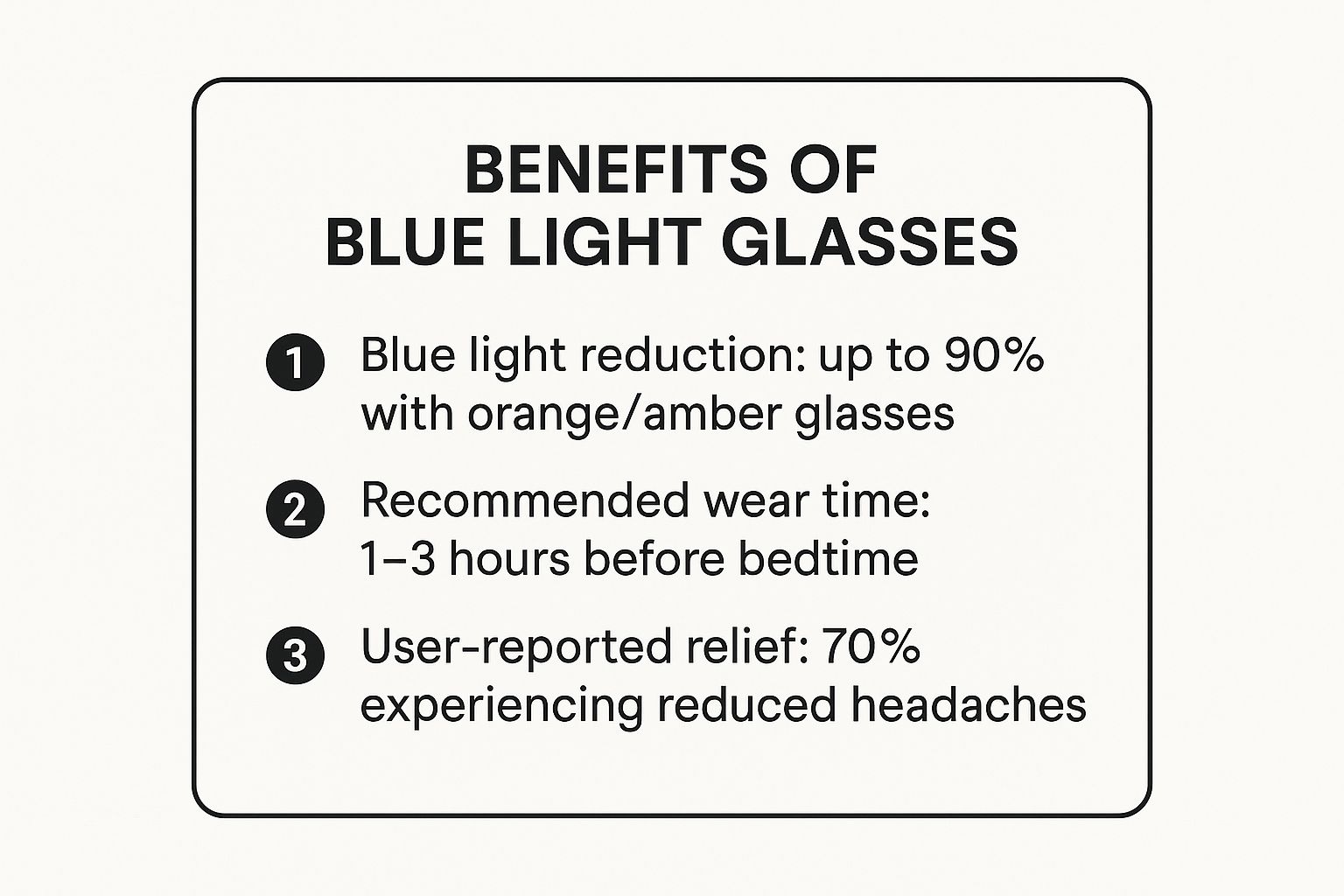
As you can see, high-quality lenses are powerful, capable of blocking up to 90% of that disruptive blue light. It’s no surprise that many people report a huge drop in symptoms like headaches once they start wearing them consistently before turning in for the night.
One of the first things people ask is about the difference between orange and amber lenses. They both filter blue light, sure, but they play very different roles in your evening routine.
Orange lenses are your heavy hitters. They offer maximum protection against both blue and green light, making them the ultimate tool for prepping your brain for sleep. Pop these on for 1-3 hours before bed, and you're helping your body kick its melatonin production into high gear—the clearest signal it can get that it’s time to rest. This powerful filtering is what tackles that late-night screen fatigue and sets you up for a deeper, more restorative sleep cycle.
On the other hand, think of amber blue light glasses as your go-to for winding down. They block a serious amount of blue light to ease that tired-eye feeling, but they let more of the color spectrum through. This makes them perfect for watching a movie or reading an e-book in the evening without turning the whole world a deep shade of orange.
Think of it this way: Amber lenses are for shifting into relaxation mode. Orange lenses are the final step, telling your brain it’s officially time for a great night's sleep.
Putting on a pair of blue light blocking glasses is a fantastic first step, but they’re most effective when they’re part of a bigger wellness strategy. When you combine smart light management with a few other simple habits, you can build a powerful routine for better sleep and less stress.
Top ways to get good sleep:
For a deeper dive, check out our guide on how Element Lux glasses help with sleep.
Top 4 ways to relax and reduce stress:
