If you're dealing with digital eye strain, nagging headaches, or just the overwhelming glare of indoor lighting, the best solution is often a pair of glasses for light sensitivity indoors, especially those with amber or orange lenses. These glasses are designed to filter out the harsh blue light pouring from our screens and lightbulbs. The result? Less visual stress and a more regulated sleep cycle, which means better, more restorative rest.
Ever get that tired, gritty feeling in your eyes after a long day staring at a computer? You're definitely not alone. We live our lives bathed in artificial light from laptops, phones, and bright overhead bulbs. This constant exposure is a sneaky source of discomfort, leading to everything from tension headaches to restless nights.
Thankfully, there’s a pretty straightforward fix: glasses designed specifically for indoor light sensitivity.
Think of them as a protective shield for your eyes. The tinted lenses, particularly in shades of orange and amber, are engineered to block the most aggressive wavelengths of blue light. By cutting out this high-energy light, they allow your eye muscles to finally relax, easing the strain and fatigue that builds up after hours of focused work.
Orange-colored blue light glasses are a game-changer for both daytime comfort and nighttime rest. During the day, they dramatically reduce the digital glare that makes you squint, helping to head off eye strain and those frustrating screen-induced headaches. This means you can focus for longer without feeling wiped out.
Then, as evening sets in, these same lenses send a crucial signal to your brain that it's time to wind down. They block the specific blue light that suppresses melatonin—the hormone that tells your body it’s time to sleep. This simple act helps keep your body's internal clock on track, making it easier to fall asleep and enjoy deeper rest. Amber-tinted glasses work much the same way, creating a warm, calming visual environment that's perfect for relaxing before bed.
Here's a quick look at how these specialized glasses can make a real difference in your daily life.
| Benefit | How It Helps |
|---|---|
| Reduces Eye Strain | Filters harsh blue light, allowing your eye muscles to relax during screen time. |
| Prevents Headaches | Lessens the visual stress and squinting that often trigger tension headaches. |
| Improves Sleep Quality | Blocks blue light that suppresses melatonin, helping you fall asleep faster and rest deeper. |
| Enhances Visual Comfort | Cuts down on glare from screens and artificial lighting, creating a softer, warmer view. |
Ultimately, wearing these glasses is a simple habit that can significantly improve your comfort during the day and your ability to rest at night.
A great night's sleep is built on healthy habits. Here are four key strategies:

Managing stress is crucial for your overall well-being. Try incorporating these effective techniques into your routine:
Our world is flooded with artificial light. From the bright LED bulbs in our ceilings to the ever-present glow of our phones and computers, our eyes are working overtime. But why does all this man-made light leave our eyes feeling so tired, strained, and even sensitive?
It all boils down to the light spectrum. Natural sunlight is balanced, containing all the colors of the rainbow. Artificial light, especially from energy-efficient LEDs and digital screens, is a different story. It's packed with a disproportionately high amount of blue light. This part of the spectrum is made of high-energy, short-wavelength light that scatters much more easily than other colors.
This scattering effect creates a kind of visual "noise," like a constant digital haze. When you're staring at a screen, your eyes have to work relentlessly to cut through that haze just to stay focused. This puts a massive load on your eye muscles, leading straight to the classic symptoms we all know too well: fatigue, dryness, blurry vision, and tension headaches.
This is exactly where specially tinted glasses for indoor light sensitivity come to the rescue. Orange-colored blue light glasses are engineered to target and filter out those harsh, high-energy blue light wavelengths before they hit your eyes.
Think of it as putting a calming filter over everything you see. By blocking this aggressive light, the glasses get rid of that digital haze. Your eye muscles can finally relax instead of constantly struggling to focus, which dramatically cuts down on the strain and discomfort from all that screen time. It’s a simple change that helps you feel more focused and comfortable all day long.
The problem with artificial light goes way beyond just eye comfort. It has a huge impact on our body's natural sleep-wake cycle, known as the circadian rhythm. Our brain uses light cues to keep this internal clock on track. For thousands of years, that cue was the sun—bright light meant "time to be awake," and darkness meant "get ready for sleep."
The trouble is, artificial blue light looks a lot like daylight to our brains. When you're bathed in it during the evening from watching TV, scrolling on your phone, or finishing up work on a laptop, you're sending a seriously confusing signal. This light exposure tricks your brain into thinking it's still daytime, which shuts down the production of melatonin—the essential hormone that tells your body it’s time to sleep.
Without that crucial melatonin signal, falling asleep becomes a battle. You might find yourself tossing and turning, unable to "switch off" your brain even when you feel completely exhausted.
This is precisely why wearing amber blue light glasses in the evening is such a game-changer. Amber lenses are specifically designed to block a wider spectrum of blue and even some green light—the exact frequencies most known for messing with melatonin production.
When you put on a pair of amber glasses an hour or two before you plan to go to bed, you’re essentially creating an artificial sunset for your eyes. This sends a clear signal to your brain that the day is winding down, allowing your melatonin production to kick in naturally. Your body finally gets the message that it’s time to relax, unwind, and prepare for a deep, restorative night’s sleep.
It’s a simple, powerful way to get your natural sleep cycle back on track. For more insights on how light impacts our well-being, you can explore the in-depth articles on the Element Lux blue light blog.
Think of it like this: you're in a room with a light so bright it's almost painful. You reach for the dimmer switch and turn it down to a soft, comfortable glow. That's exactly what orange-lensed glasses do for your eyes during the day. They take harsh, sterile indoor environments and transform them into spaces where your eyes can finally relax.
These aren't just tinted pieces of plastic; they're engineered to be a powerful shield against the most jarring wavelengths of blue light that cause so much visual stress. The science is simple but incredibly effective.
By filtering out the high-energy visible (HEV) blue light pouring from our screens and overhead lighting, they eliminate the visual "noise" that makes our eye muscles work overtime. This filtering isn't just a gimmick—it leads to real, tangible benefits you can feel almost right away, making them a must-have for anyone dealing with indoor light sensitivity.
One of the first things people notice when they slip on a pair of orange-colored blue light glasses is a massive reduction in digital eye strain. After hours of staring at a computer, you know the feeling all too well: that tired, gritty sensation, dryness, and trouble keeping things in focus.
Orange lenses act as a protective barrier, absorbing a huge chunk of that harsh, scattered light before it ever gets to your eyes. The result is a much more relaxed visual experience. You can stay focused for longer without the nasty side effects like discomfort and those killer mid-day headaches. It doesn't matter if you're working in an office, cramming for an exam, or locked into a gaming session—these glasses are your first line of defense against digital fatigue.
And it seems the word is out. The global market for non-prescription blue light blocking glasses, which are often used as glasses for light sensitivity indoors, was worth around $9.76 billion back in 2021. It's expected to climb to a staggering $14.45 billion by 2025. This explosion in popularity shows just how many people are desperate for relief and finding it with this solution. You can dig into more details about this growing market on cognitivemarketresearch.com.
While orange lenses are a game-changer for daytime comfort, their benefits don't stop when you clock out. That same blue light that strains your eyes also plays a nasty trick on your brain, telling it that it's still high noon. This suppresses the production of melatonin—the crucial hormone that signals your body that it's time to power down for sleep.
By wearing orange-lensed glasses for a few hours before bed, you effectively block those confusing signals. This gives your body the green light to produce melatonin naturally, keeping your internal clock running on schedule. The payoff? A much smoother transition into sleep, making it easier to fall asleep and dramatically improving the quality of your rest.
As the evening wears on, amber blue light glasses become an even more powerful tool for pure relaxation. With a slightly deeper, richer tint, amber lenses are designed to block an even wider spectrum of blue light, creating a wonderfully warm and serene visual world.
Putting on a pair of amber glasses is like creating your own personal sunset. It's a clear signal to your brain that the day is officially over and it's time to unwind. This simple habit can be a lifesaver for calming an overstimulated mind and clearing out the mental clutter from a day spent glued to screens. It's a simple, drug-free way to get your body and mind ready for a peaceful night.
When evening rolls around, your brain starts searching for cues that the day is winding down. Amber blue light glasses are designed to be that signal. Their deep, rich tint isn't just for looks; it’s specifically engineered to block nearly all blue light and even some green light—the exact frequencies that mess with your body's internal clock the most.
Putting on a pair is like creating a personal sunset just for your eyes. This simple act tells your brain that darkness is coming, giving it the green light to start producing melatonin right on schedule. Wearing them for just an hour or two before you plan to sleep is a powerful way to get your circadian rhythm back on track and ease into a truly relaxed state.
While amber lenses are the gold standard for evenings, orange-tinted glasses play a fantastic dual role. They're great for cutting down digital glare and reducing eye strain during the day, but they also double as an effective tool to kickstart your evening wind-down. They block a serious amount of the blue light that keeps your brain stuck in "daytime" mode.
This makes orange lenses incredibly versatile. By slipping them on as you wrap up your workday or settle in to watch TV, you're actively preventing the suppression of melatonin. It’s a simple habit that ensures when your head finally hits the pillow, your body is already biochemically prepped for a night of deep, restorative rest.
More and more people are catching on to these benefits. The market for protective eyewear, particularly glasses for light sensitivity indoors, was valued at a whopping $1.43 billion in 2023. It’s projected to explode to $3.57 billion by 2030, which tells you just how many people are looking for real solutions to digital fatigue. You can dive deeper into these market trends at cognitivemarketresearch.com.
Amber lenses really take relaxation to the next level. Their warm, deep tint creates a visually calming environment that helps an overstimulated mind finally settle down. Think of it as turning down the visual "noise" after a long day spent staring at screens and sitting under harsh artificial lights.
This profound calming effect makes them a non-negotiable part of a healthy evening routine. They help clear out the mental clutter and agitation that can build up over the day, allowing for a smooth transition from productivity to peace. This is a game-changer for anyone who finds it hard to "switch off" their brain at night.
By creating a soft, warm visual world, amber lenses send a powerful message to your nervous system: it's safe to relax. This simple, non-pharmaceutical tool can significantly reduce feelings of stress and anxiety before bedtime.
Great sleep comes from building consistent, healthy habits. Blue light blocking glasses are a modern essential, but they work best when you pair them with the fundamentals.
Keeping daily stress in check is crucial for your overall health. Blue light glasses help by easing digital overstimulation, but don’t forget these other proven methods.
Sliding on a pair of light-filtering glasses is a simple, powerful move for your well-being. But to really unlock their benefits, you want to pair them with a smart wellness strategy. Making a few small, consistent tweaks to your daily habits can make a massive difference in your sleep quality and how much stress you carry around. This is exactly what modern tools like orange and amber blue light glasses are designed to help you do.
Think of it this way: orange-colored blue light glasses are fantastic for fighting back against digital eye strain during the day. By filtering out that harsh, high-energy blue light blasting from your screens, they give your eye muscles a chance to relax. This can head off those tension headaches and the mental fog that often creeps in after hours of focused work. Less physical strain means a calmer state of mind all day long.
Then, as evening rolls in, those same orange lenses keep working for you. They block the specific light frequencies that mess with your body's internal clock, signaling to your brain that it's time to wind down. This ensures you can produce melatonin right on schedule, making it so much easier to fall asleep and get the deep, restorative rest you need.
Getting consistently good sleep is a cornerstone of health. It’s about more than just hitting the sack on time; it's about creating an entire environment and routine that tells your body, "Hey, it's time to shut down." Today, adding glasses for light sensitivity indoors to your routine is a key part of modern, effective sleep hygiene.
Here are the top habits to lock in for better sleep:
Maintain a Consistent Sleep Schedule
Try to go to bed and wake up around the same time every single day—yep, even on weekends. This simple consistency reinforces your body's natural sleep-wake cycle, making it easier to drift off at night and wake up feeling refreshed.
Create a Calm, Dark, and Cool Environment
Your bedroom should be your sleep sanctuary. Use blackout curtains to kill any external light, keep the temperature on the cool side, and do what you can to minimize noise. You're aiming for an optimal setting for totally uninterrupted rest.
Power Down an Hour Before Bed
Give your brain a real chance to unwind. Turn off stimulating screens—phones, tablets, TVs—at least 60 minutes before you plan to sleep. This is crucial for reducing mental chatter and prepping your mind for relaxation.
Wear Amber or Orange Lenses Before Bed
In our modern world, this step is non-negotiable. Putting on a pair of amber or orange blue light blocking glasses in the evening effectively shields you from sleep-wrecking artificial light. This lets your body's melatonin production proceed just as nature intended. To get a deeper dive on this, you can check out our guide on how our glasses help with sleep.
Managing stress isn't just about weathering the big storms; it's about handling the small, daily pressures that build up. One of the biggest modern stressors is constant digital overstimulation, and that's precisely what amber blue light glasses are designed to combat by creating a calmer visual experience.
By softening the harsh glare from screens and artificial lights, amber lenses help create a more relaxing and tranquil environment. This simple change can reduce the subconscious agitation and mental fatigue that contribute to feelings of stress and anxiety, helping you unwind and relax more easily.
Here are the top 4 ways to dial down stress and truly relax:
Practice Mindfulness and Deep Breathing
Just a few minutes of focused, deep breathing can work wonders on your nervous system. Mindfulness practices help ground you in the present moment, quieting the mental noise that fuels anxiety.
Incorporate Regular Movement
Physical activity is a potent, proven stress reliever. You don't have to run a marathon; even a short walk or some gentle stretching can release physical tension and boost your mood with a hit of endorphins.
Set Boundaries with Digital Devices
This is huge. Create tech-free zones or dedicated times in your day to give your brain a break from the constant flood of information and notifications. It’s absolutely essential for preventing mental burnout.
Reduce Digital Overload with Blue Light Glasses
Make it a habit to wear your blue light blocking glasses during screen time, especially in the evening. This cuts down on the digital "noise" that can overstimulate your brain, helping you feel more relaxed, less visually tired, and much better prepared for a peaceful night.
Not all blue light glasses are created equal. Far from it. Choosing the right pair is the key to getting the relief you’re looking for, whether that’s finally kicking those afternoon headaches to the curb or reclaiming your natural sleep cycle.
It’s all about matching the lens to your specific goal. Think of it like this: you wouldn't wear sunglasses at night, right? The same logic applies here. Understanding what separates a truly effective pair from a cheap gimmick will make all the difference.
The market for this kind of protective eyewear has exploded, mostly because our lives are now flooded with artificial light from screens and overhead fixtures. The global spectacles market, which includes these blue-light-filtering glasses, was valued at nearly $90 billion in 2024 and is on track to hit $134.5 billion by 2033. You can read more about this massive growth at straitsresearch.com.
More options are great, but it also means you need to be a smart shopper. Things like anti-glare coatings, a comfortable frame, and the actual percentage of blue light being blocked are what really matter.
Think of orange lenses as your versatile, all-around workhorse.
During the day, they’re fantastic for dialing down digital eye strain. They filter out a big chunk of that harsh, high-energy blue light from your monitor that leads to tired eyes and tension headaches. The result? You can stay focused and comfortable, even during those marathon work sessions.
But they don't stop there. As evening rolls around, those same orange lenses keep working for you by blocking the specific wavelengths that tell your brain to stop producing melatonin. Wearing them in the hours before bed helps keep your internal clock ticking on schedule, making it easier to wind down, fall asleep, and get the restorative rest you need.
When your main goal is to seriously unwind and prime your body for a deep, restorative sleep, amber lenses are the undisputed champion.
Their deeper, richer tint is specifically engineered to block nearly all blue light and even some of the green light spectrum—the two biggest culprits when it comes to disrupting your natural sleep cycle.
Wearing amber lenses for an hour or two before bed is like creating your own personal sunset. It sends a powerful, undeniable signal to your brain: the day is done. This allows for maximum melatonin production, helping to quiet an overstimulated mind and ease you into a more profound state of rest. If you need more guidance on finding the perfect pair, check out the valuable information in our Element Lux resources.
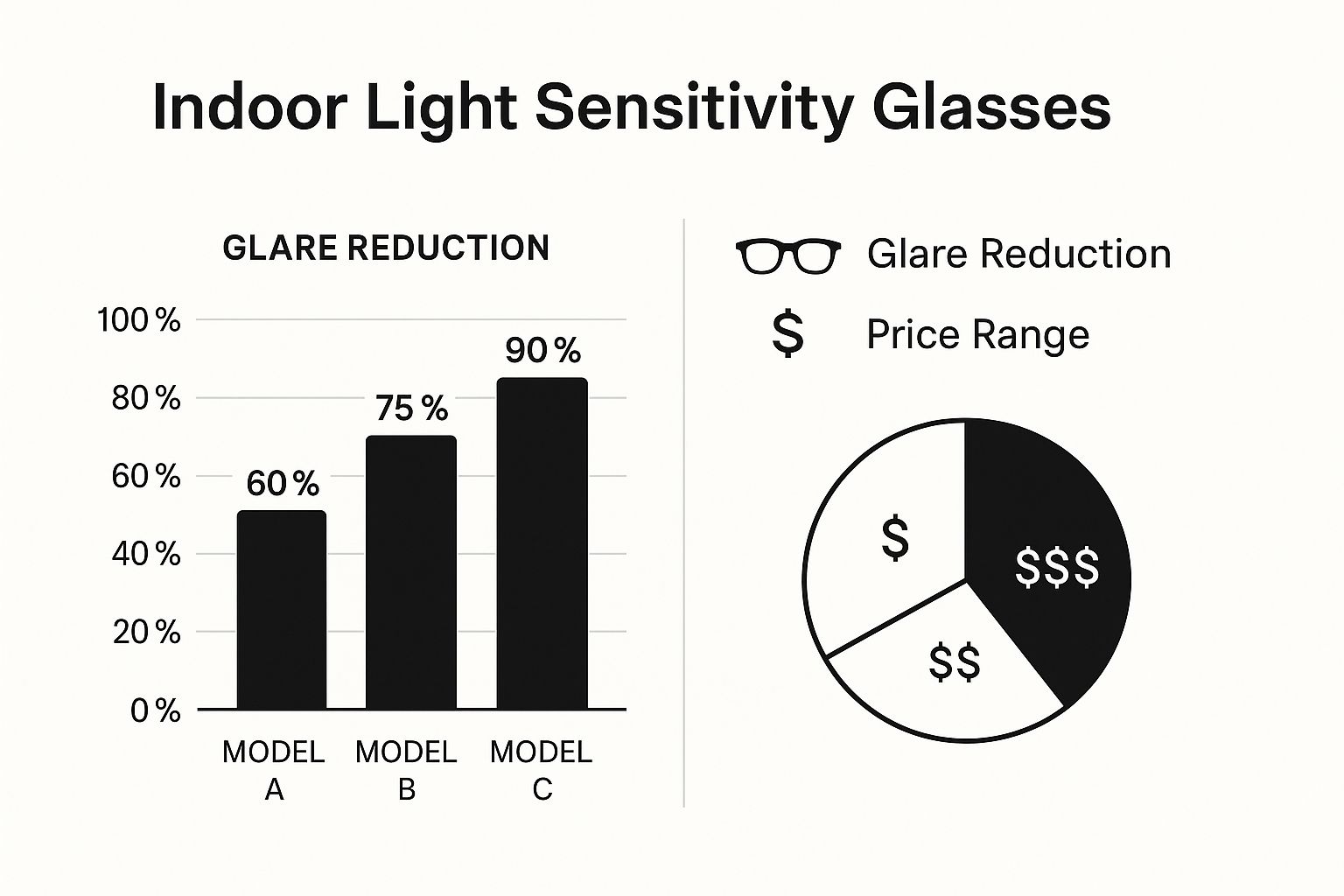
The infographic below gives you a quick visual breakdown of how different types of glasses stack up in terms of glare reduction and price.
As you can see, while higher-end models might offer more advanced features, there are effective and affordable options for just about any budget.
Feeling a bit lost with all the color options? This table breaks it down to help you pick the perfect lens for your needs, whether you're tackling a spreadsheet or winding down with a book.
| Lens Color | Primary Use | Blue Light Blocked | Best For |
|---|---|---|---|
| Clear/Yellow | Daytime, computer work | 10-30% | Reducing mild digital eye strain without major color distortion. |
| Orange | All-day use, evening wind-down | 50-70% | Versatile protection for both work and preparing for sleep. |
| Amber/Red | Pre-sleep relaxation | 90%+ | Maximum melatonin support and signaling your body it's time for bed. |
Ultimately, the best choice depends on when and why you'll be wearing them. Many people find having a daytime pair and a separate evening pair gives them the best of both worlds.
Beyond just the color of the lens, here are a few other critical things to look for. These details are what separate high-quality glasses from the ones that end up collecting dust in a drawer.
Jumping into the world of blue light glasses usually brings up a few good questions. Getting the details straight is key to making sure you get the most out of your pair, whether you're trying to ease eye strain during the day or get some seriously restorative sleep at night.
A question I hear all the time is, "Can I wear these all day?" It really boils down to the lens. Lighter orange tints are perfect for daytime use when you're battling screen fatigue at the office. The darker amber lenses, though? You'll want to save those for the evening to help signal to your brain that it's time to wind down without making you drowsy during the day.
Another big one is about color distortion. "Will these glasses mess with how I see colors?" The short answer is yes, they will, and that's actually the point. The tint is what's doing the heavy lifting, filtering out the harsh blue light that causes discomfort and sleep problems. It's a necessary trade-off—the more protection the lens offers, the more you'll notice the color shift.
So, how can you be sure your glasses are actually doing their job? The clearest sign is a real reduction in your symptoms. After wearing them consistently, you should feel less eye strain and have fewer headaches after a long day of screen time. You should also find it much easier to relax and fall asleep at night.
The ultimate proof is in how you feel. Consistent use should lead to a clear decrease in digital eye strain and a more regulated sleep-wake cycle, making your evenings more relaxing and your nights more restful.
Finally, a lot of people wonder, "Can I get these in my prescription?" Absolutely. Plenty of companies, including those that specialize in glasses for light sensitivity indoors, offer prescription lenses. This way, you never have to choose between seeing clearly and getting that crucial blue light protection. It’s the best of both worlds in a single, comfortable pair.
Ready to feel the difference that premium blue light protection can make? Element Lux offers high-quality amber and orange lenses specifically designed to reduce eye strain and give you a huge boost in sleep quality.
Explore the Element Lux collection and find your perfect pair today!
