So, do blue light filters actually work? The answer really depends on what you're trying to achieve. If you're looking for better sleep, the science is pretty solid on amber or orange-tinted lenses. But if you're just trying to ease digital eye strain, the evidence is a bit more mixed, though many people swear by them.
Think of blue light filters like tools in a toolbox. You wouldn't use a sledgehammer to hang a picture frame, right? In the same way, the right kind of filter depends entirely on whether you're trying to signal your brain it's time for bed or just make your workday screen time a little more comfortable.
The biggest difference comes down to the color of the lens.
When you see glasses with deep orange or amber lenses, they're designed to block the specific wavelengths of light that mess with melatonin—the hormone that regulates your sleep-wake cycle. Wearing a pair like those from Element Lux in the evening is a powerful way to help your body naturally wind down and prepare for a good night's rest.
On the other hand, you have clear lenses or the software filters built into your phone and computer. These only block a tiny fraction of blue light. While they might help a little with glare and make you feel a bit more comfortable, their effect on your sleep is pretty minimal. The real magic happens when you use the right color at the right time.
This decision tree breaks it down nicely:
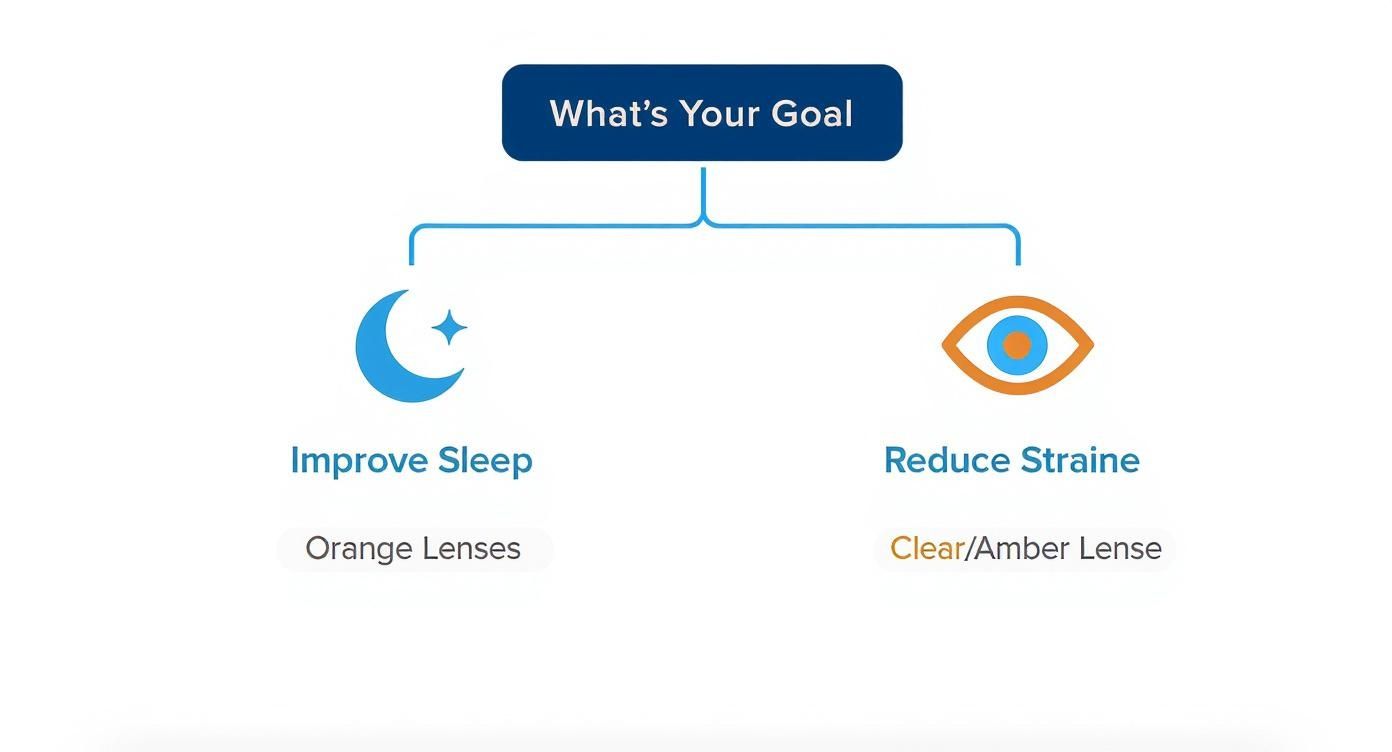
As you can see, if sleep is your main goal, orange lenses are the way to go. For daytime eye strain, clear or light amber lenses are a better fit.
To make it even simpler, this table summarizes which filtering methods are best suited for different goals and how effective they tend to be based on user reports and available research.
| Filtering Method | Primary Goal | Reported Effectiveness |
|---|---|---|
| Orange/Amber Lenses | Improve sleep quality | High – very effective at blocking melatonin-suppressing light |
| Clear Lenses | Reduce daytime eye strain | Moderate – offers subjective comfort and glare reduction |
| Software Filters | Reduce eye strain & light exposure | Low to Moderate – helpful, but less potent than physical lenses |
Ultimately, choosing the right filter comes down to identifying your main pain point—are you struggling to fall asleep, or are your eyes just tired after a long day of meetings? Knowing that will point you to the right solution.
Your brain has an internal clock that’s constantly running, telling you when to feel awake and when it's time to sleep. This is your circadian rhythm, and it depends heavily on light to stay on schedule. The problem is, the bright blue light blasting from our phones and laptops looks a lot like morning sun to our brains. It signals "stay alert!" and slams the brakes on melatonin, the hormone that makes you feel sleepy.
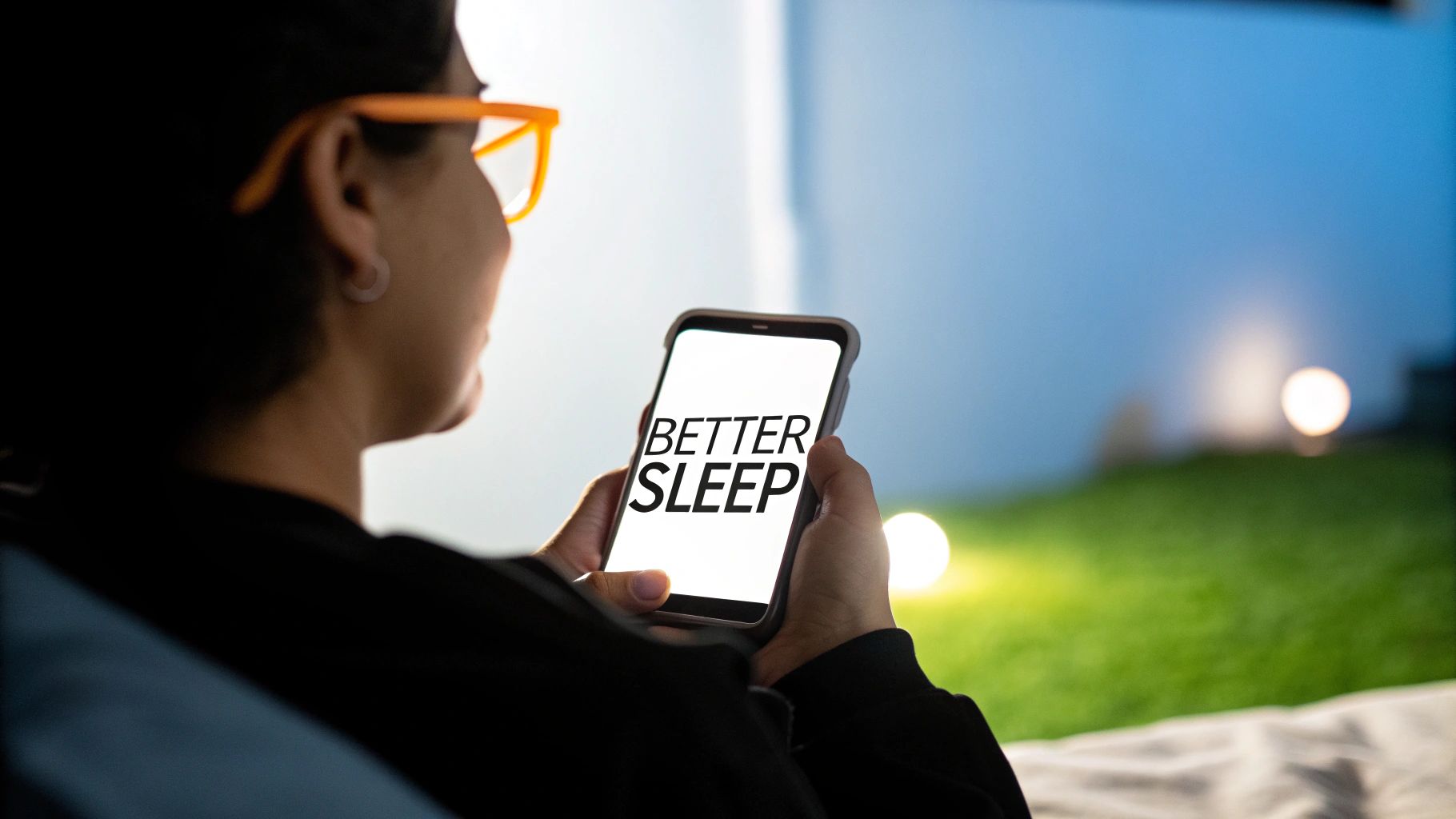
This is where orange-tinted lenses change the game. By specifically filtering out the exact wavelengths of blue and green light that shut down melatonin, these glasses trick your brain into thinking the day is over, even while you’re finishing up emails. Wearing them in the evening sends a powerful signal to your body to start producing melatonin, helping you fall asleep faster and get deeper, more restorative rest. This simple habit is one of the most effective ways to support your natural sleep cycle in our modern, screen-lit world.
Improving your sleep doesn't have to be complicated. Consistency is key, and incorporating blue light blocking glasses into a solid evening routine can be a game-changer. Here are the top ways to set yourself up for a great night's sleep:
This isn't just theory; the research backs it up. A study from Indiana University discovered that participants who wore blue-light filtering glasses before bed saw significant improvements in their sleep quality and even their work performance the next day. The effect was even stronger for "night owls."
It’s not just about sleep—amber and orange lenses are also a seriously powerful tool for helping you unwind and de-stress. Think about it: the harsh, bright light from our screens and overhead lighting is a constant stimulant, keeping your brain in an alert, 'always-on' state. That’s a big reason you might feel so wired and anxious after a long day in front of a computer.
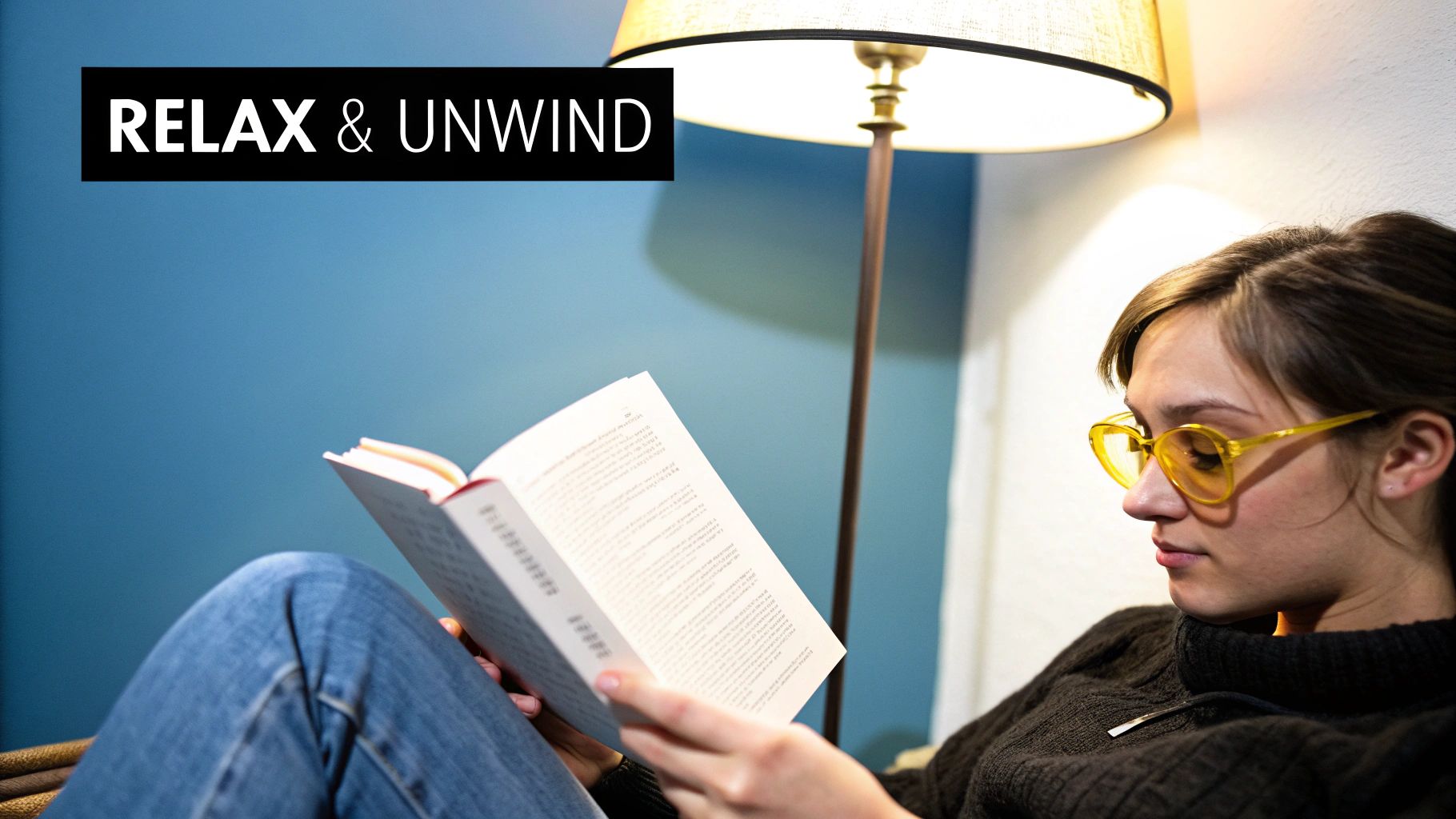
Amber lenses work by fundamentally changing your visual environment. They filter out those stimulating wavelengths of blue light, creating a much warmer, softer, and noticeably calmer atmosphere. It’s like a modern relaxation ritual, not so different from sipping herbal tea or curling up with a good book. This simple act of putting them on helps you transition from a state of high activity to one of peaceful rest.
Wearing amber glasses in the evening is a simple, proactive step that signals to your mind and body that the workday is over. It helps you transition from a state of high activity to one of peaceful rest.
Making blue light blocking glasses part of your nightly routine can make a huge difference in lowering stress. Here are four simple ways to create a more tranquil evening:
When you combine these practices, you create a powerful routine that truly prepares your body and mind for a restful night. These small habits send a clear signal that it's time to let go of the day's stress and just relax.
If you’ve ever ended a long workday with a throbbing headache, dry eyes, or fuzzy vision, you’re no stranger to digital eye strain. A huge part of that discomfort comes from the high-energy blue light that our devices are constantly beaming out, which leads to that tired, overworked feeling in our eyes.
Orange-tinted lenses, like the ones from Element Lux, are specifically designed to filter out these harsh, stimulating wavelengths. They cut down on both blue light and screen glare, which often has the welcome side effect of boosting the contrast on your screen. This makes text look sharper and gives your eye muscles a chance to relax instead of constantly straining to stay in focus. Many users find this dramatically reduces the symptoms of eye strain after just a few hours of wear.
While countless users swear by them, it’s worth noting that the science is still catching up. A recent systematic review found the evidence for blue-light filtering lenses reducing visual fatigue was inconsistent, suggesting their practical benefit is still up for debate for many people.
Eye strain aside, there’s another benefit: amber lenses create a much warmer, softer visual experience. Think of it as turning down the visual "noise" of a stimulating day. By filtering out the harshness of artificial lights and screens, amber blue light glasses send a subtle signal to your brain that it’s time to shift gears from "go-go-go" to a calmer, more relaxed state. It’s a simple way to quiet that "digital buzz" so many of us feel after being plugged in all day. To give your eyes even more support, you might also consider targeted supplements like eye health vitamins.
Making blue light glasses part of your evening routine can be a surprisingly effective tool for managing stress. Here are four simple ways to combine them for maximum relaxation:
Knowing that blue light filters work is one thing, but actually putting that knowledge into practice is what really counts. Blue light glasses are a fantastic tool, but they work best when they're part of a solid sleep hygiene routine.
Think of them less like a magic pill and more like a key player on a team dedicated to getting you the rest you deserve. This guide is a simple, actionable checklist to help you get more restful sleep, starting tonight. When you build a powerful evening routine, you send a clear signal to your body that it’s time to power down.
Improving your sleep doesn't have to be a huge, complicated overhaul. In my experience, small, consistent changes are what lead to the biggest improvements in energy, mood, and overall health. Here are the most impactful steps you can take.
1. Wear Orange or Amber Lenses Before Bed
This is probably the most critical step for our modern, screen-filled lives. Just pop on a pair of orange or amber glasses, like those from Element Lux, for 1-2 hours before you plan to go to sleep.
This simple act blocks the specific wavelengths of blue light that mess with melatonin production. It's a direct signal to your brain that it's nighttime, allowing it to start producing that crucial sleep hormone and helping you feel naturally drowsy.
2. Create a Sleep Sanctuary
Your bedroom should be optimized for one thing: rest. That means making it cool, dark, and quiet. Blackout curtains are a game-changer for blocking out streetlights, and a white noise machine or earplugs can make a world of difference if you live in a noisy area. The goal is an environment free from disruptions.
3. Stick to a Consistent Schedule
I know it's tempting to sleep in on the weekends, but try to go to bed and wake up around the same time every day. This consistency is what reinforces your body’s natural sleep-wake cycle (your circadian rhythm), making it so much easier to fall asleep at night and wake up feeling refreshed.
4. Incorporate a Wind-Down Routine
Give yourself the last 30-60 minutes before bed to do something relaxing that doesn't involve a screen. I'm a big fan of reading a physical book, but gentle stretching or listening to some calm music also works wonders. This helps your mind transition from the day's stress to a state of rest. For more ideas, you can check out our detailed guide for achieving better sleep.
By weaving these habits into your nightly schedule, you're not just trying one thing—you're creating a powerful, holistic approach to finally mastering your sleep.
Tackling daily stress is all about creating a solid evening routine. A simple but surprisingly powerful first step is to change your environment, and one of the easiest ways to do that is with a pair of amber or orange-tinted glasses. Swapping out the harsh, artificial light from lamps and screens for a warmer, softer glow can make a huge difference in calming your mind.
This simple switch tells your brain and body that the day is officially winding down, helping you shift from "go-go-go" mode to a state of peaceful rest.
Think of the bright lights from your phone, laptop, and overhead fixtures as a constant nudge, keeping your brain on high alert. Amber lenses, like the ones from Element Lux, work by filtering out that stimulating blue light and transforming your visual world.
Putting them on in the evening creates a calmer atmosphere, much like sipping herbal tea or curling up with a good book. It’s a proactive way to start unwinding long before your head hits the pillow.
Beyond managing your light exposure, there are some timeless practices that are proven to help you de-stress. Here are a few to try incorporating into your evening.
If you're curious about blue light glasses, you're not alone. We get asked all the time about how they work, when to use them, and what kind is best. Let's clear up some of the most common questions.
A lot of people think orange and amber lenses are the same thing, but they have some key differences.
Think of orange lenses as the heavy-hitters. They're designed to block a wider spectrum of light, including most blue light and even some green light. This sends a powerful "it's nighttime" signal to your brain, making them the best choice for seriously protecting your sleep cycle.
Amber lenses are a bit less intense. They still block a ton of blue light, which is perfect for winding down in the evening or easing digital eye strain from your laptop. You get the relaxation benefits without such a dramatic change in color perception.
It’s a fair question. While your phone’s built-in software filter is definitely better than nothing, it just doesn't compare to a physical pair of glasses.
These apps reduce some blue light, but they often can't filter out the precise wavelengths that mess with your melatonin the most. High-quality orange or amber glasses create a physical barrier, blocking that disruptive light before it ever reaches your eyes.
For the best results, try to wear them for 1 to 2 hours before you plan to sleep. That gives your brain plenty of time to get the message and start producing melatonin naturally.
You’ve probably seen clear lenses that claim to filter blue light. These are built for an entirely different purpose: reducing eye strain during the day.
They only block a tiny fraction of the blue light spectrum, so they won't do much to protect your melatonin or help you sleep better. When your goal is a good night's rest, you really need a tinted lens like orange or amber to block a much wider range of light.
You can dive deeper into topics like this in our other articles and resources.
The key takeaway is simple: For sleep, choose orange or amber tints. For daytime eye comfort, clear lenses may offer some relief, but tinted lenses provide the most powerful benefits for your evening wind-down routine.
It all comes down to picking the right tool for the job. By understanding the difference, you can use blue light filters to genuinely support your sleep and relaxation goals.
Ready to experience the difference for yourself? Element Lux offers high-quality blue light blocking glasses designed to help you relax, unwind, and achieve deeper, more restorative sleep.
Shop Now and Transform Your Nights
