A computer blue light filter is basically a tool that cuts down on the high-energy blue light coming from your screen. It can be a piece of software you install or even a physical screen cover you stick on. The whole point is to give your eyes a break and, more importantly, stop your screen from wrecking your sleep.
Ever been scrolling on your phone late at night, feeling totally exhausted but somehow wide awake? That’s not just in your head—it’s the disruptive power of blue light in action. It’s a biological reaction to the specific kind of light our screens blast out, and the whole problem boils down to a simple case of mistaken identity that directly impacts the quality of your sleep.
For thousands of years, our brains have been wired to see bright, blueish light as a sign of midday sun. When the sun is high, that light tells our internal clock it's time to be alert, focused, and productive. The problem is, the artificial blue light from our computers, tablets, and phones sends the exact same signal, even long after the sun has gone down, making it incredibly difficult to get the sleep you need.
Getting hit with that "daylight" signal in the evening sends a really confusing message to your brain. It actively tells your body to stop producing melatonin, the hormone that manages your sleep-wake cycle. Think of melatonin as the switch that tells your body it's time to wind down and get ready for a good night's rest.
When blue light messes with that signal, your body stays in high-alert mode. This is why you can feel physically drained but mentally buzzing, making it nearly impossible to fall asleep. And the damage goes way beyond just one bad night, as chronic sleep deprivation can have serious health consequences.
Quality sleep isn't a luxury; it's a fundamental biological necessity. It's the foundation for mental clarity, physical recovery, emotional regulation, and a strong immune system. Consistently poor sleep can undermine every aspect of your well-being.
A blue light filter steps in to fix this. It works by changing the color temperature of your screen, dialing back the intensity of the blue light that messes with your melatonin. By shifting the display to warmer, softer amber tones, it helps break that cycle of sleep disruption.
This simple adjustment is like telling your brain that the day is actually ending, allowing your body to start its natural nighttime routine. Using a filter is a practical first step toward taking back your evenings and making sure your screen time doesn't cost you the deep, restorative sleep you need to be at your best.
To get why a computer blue light filter is such a game-changer, we have to look at how light works in the first place. Think of the visible light spectrum like a rainbow. At one end, you have the mellow, low-energy red light. At the other end? Intense, high-energy blue light.
Now, natural blue light from the sun is a good thing. During the day, it's a powerful signal that wakes us up, lifts our mood, and keeps our internal body clock running on time. The problem isn’t blue light itself—it’s the timing and the amount we get from all our screens that wreaks havoc on our ability to sleep.
Your computer, tablet, and smartphone are basically tiny suns you hold inches from your face. When you stare at them after dark, you’re beaming a "middle of the day" signal straight into your eyes, which completely clashes with your body's natural schedule for sleep.
This flood of artificial blue light sets off a powerful chain reaction in your brain. It travels through your retina to a tiny region called the suprachymatic nucleus (SCN), which is basically your body's master clock. This clock runs your circadian rhythm—the 24-hour cycle that controls everything from when you feel sleepy to when hormones are released.
When that SCN control center detects blue light, it sends out a very clear message: "It's daytime! Stay alert!" In response, it slams the brakes on producing melatonin, the hormone that tells your body it’s time to wind down for sleep.
This is exactly why you can feel dead tired but find your mind is still racing after a late-night work session. Your body is screaming for rest, but your brain is stuck in daylight mode, making restorative sleep feel impossible.
This biological mix-up is at the heart of so many modern sleep problems. Our brains simply weren't designed to handle hours of bright, blue-toned light after the sun goes down, leading to a direct and measurable disruption of the natural cycle that leads to deep, restorative sleep.
The fallout from this goes way beyond feeling a bit groggy. Chronic poor sleep can tank your memory, weaken your immune system, and sour your mood. But the impact of all that blue light doesn't even stop there.
Because blue light is so high-energy, it also causes very real physical discomfort. Anyone who spends long hours staring at a screen knows the feeling—that collection of annoying symptoms often just called "digital eye strain."
This isn't just in your head; it’s a specific set of physical reactions:
These issues show just how much people are connecting the dots between screen time and their health, especially sleep. This awareness has created a huge demand for solutions. In North America alone, the market for anti-blue light glasses is expected to hit around $994 million in 2025, a massive jump from $706 million in 2021. That growth is happening because people are getting smarter about their digital habits and prioritizing their sleep.
Understanding these two major impacts—the scrambled sleep cycle and the physical eye strain—is the key to why you need a filter. It’s not just about being more comfortable. It's about protecting the fundamental biological rhythms that control your health and sleep. For a deeper dive, check out the articles on the Element Lux blue light blog.
So, you know that the blue glow from your screens is messing with your sleep. Great first step. Now, what do you do about it? When it comes to a computer blue light filter, you’ve got two main choices: software that’s already on your devices, or physical hardware like glasses and screen covers. Both are meant to help you sleep better, but they go about it in completely different ways.
Let’s start with the easiest option: software filters. These are just apps or settings that change the colors on your screen, dialing down the energizing blue light and warming everything up with a gentle amber tint. The best part? They're already built into your computer and phone, so getting started on protecting your sleep is a breeze.
You’ve probably seen them before. On a Windows PC, it’s called Night Light. On a Mac or iPhone, it's Night Shift. You can set these to flip on automatically at sunset or whenever you choose. This way, your screen gets easier on the eyes right when your body needs to start winding down and making melatonin.
The biggest win for software is how simple it is. A few clicks, you set a schedule, and you never have to think about it again. These built-in tools also let you control just how amber you want the screen to be. You can start with a subtle shift and crank it up as it gets later or as your eyes get tired, all in service of a better night's sleep.
But software isn’t a perfect fix. For one, its effectiveness can feel a little inconsistent depending on what app you're using. And since it washes out the colors on your entire screen, it’s a total non-starter for anyone doing creative work like photo editing or graphic design where color accuracy is everything.
This little guide can help you figure out if a filter is a good move for you.
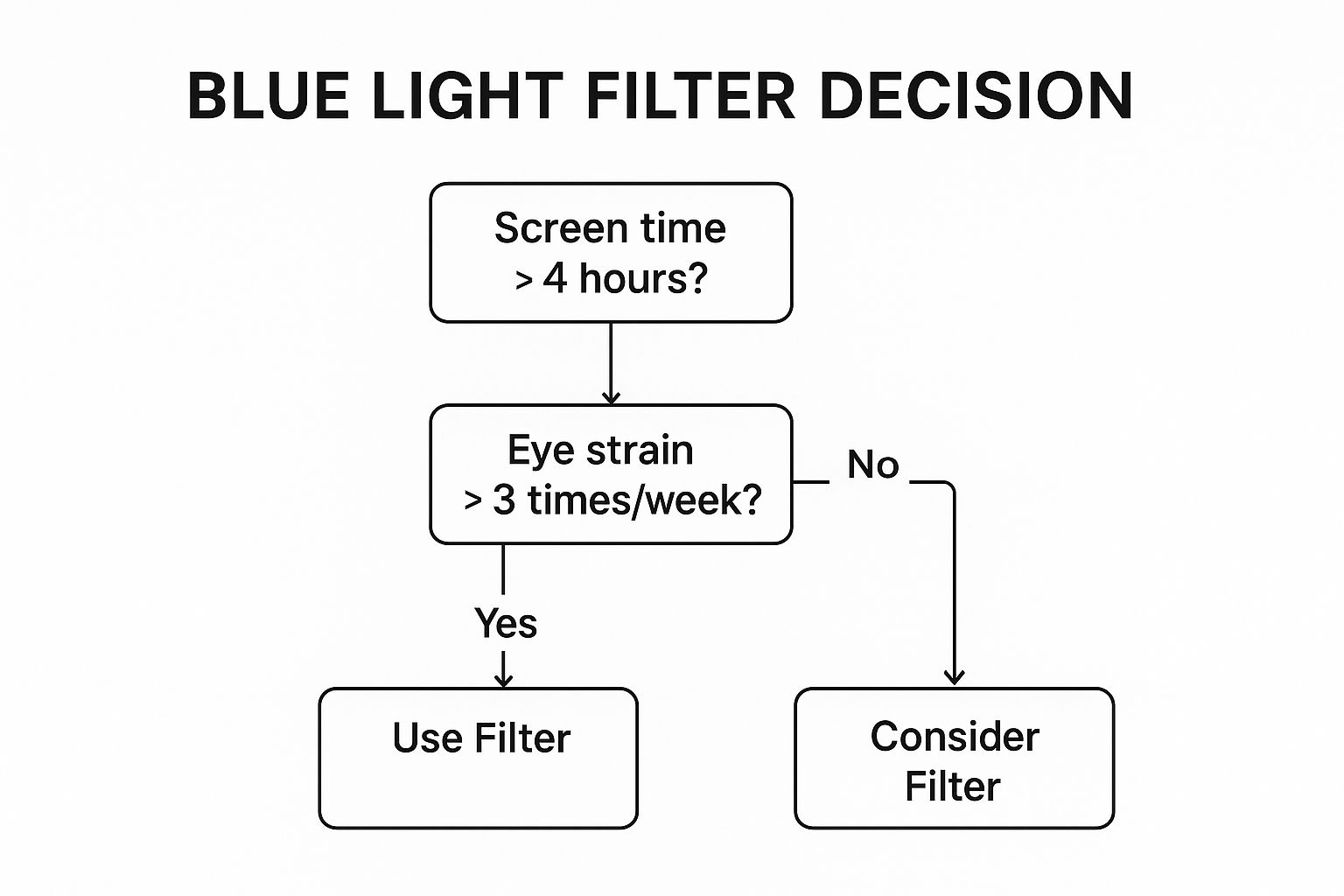
As you can see, if you're spending a lot of time in front of a screen and feeling the strain, a blue light filter is probably a smart move for protecting your sleep and giving your eyes a break.
Now for the other side of the coin: hardware. This means things like blue light blocking glasses and stick-on screen protectors. Instead of tweaking your screen’s colors, these create a physical barrier that filters out blue light before it can even get to your eyes. Their main advantage is consistency, which is crucial for sleep.
Unlike a software setting tied to one device, a good pair of blue light glasses works everywhere. You can wear them while working on your laptop, scrolling on your phone, or even watching TV. They give you a constant shield, which is a game-changer if you’re always bouncing between different screens in the evening and want to safeguard your sleep.
Screen protectors do a similar job, but they’re applied directly to one specific screen. They’re a great "set it and forget it" solution for your main computer, but they don't have the go-anywhere flexibility of glasses.
The real power of hardware is its unwavering consistency. A physical filter guarantees that every single pixel you see is stripped of that stimulating blue light, giving your sleep cycle a much more complete and reliable defense.
Of course, there are trade-offs—mainly cost and style. Software is almost always free, but you’ll have to shell out some cash for glasses or a quality screen protector. But for people who are serious about getting their sleep back on track, that consistent protection is often well worth the investment.
So which one is right for you? It really comes down to your habits, your budget, and what you're trying to achieve. Here's a quick comparison to help you decide between a digital app and a physical accessory for protecting your sleep.
| Feature | Software Filters (e.g., Night Shift) | Blue Light Glasses | Screen Protectors |
|---|---|---|---|
| Cost | Free (usually built-in) | $20 – $150+ | $15 – $60 |
| Effectiveness | Good, but can vary by app | Excellent and consistent | Very good and consistent |
| Convenience | High (automatic scheduling) | Moderate (must remember to wear) | High (always on the device) |
| Color Accuracy | Low (distorts all colors) | Varies (clear lenses distort less) | Moderate (can add a slight tint) |
| Portability | Device-specific | Excellent (works with any screen) | None (tied to one screen) |
Ultimately, there’s no single "best" option that works for everyone. Software is a fantastic, no-cost way to start protecting your sleep tonight. But if you’re a multi-device user or you just want the most reliable defense against blue light, investing in a solid pair of glasses offers a more robust and flexible solution for reclaiming your nights.
The buzz around blue light isn't just a fleeting wellness trend. It's a real response to a massive shift in how we live our lives. As our days get more and more tangled up with digital screens, a good computer blue light filter has gone from a niche "biohack" to an essential tool for protecting our eyes and, more importantly, our sleep.
This whole movement is being driven by huge changes in how we work, learn, and unwind. The explosion of remote work means our home offices are always on, blurring the line between when the workday ends and personal time begins. At the same time, online classes demand that students stare at screens for hours on end, often late into the night. All of this can seriously disrupt sleep.
And when we're not working or studying? We're still on screens, binge-watching our favorite shows or scrolling through social media. This non-stop exposure has led to a collective feeling of digital exhaustion and messed-up sleep, pushing people everywhere to look for a real solution.
This shared experience has created a massive demand for ways to fight back. You just have to look at the global market for blue light protectors—which includes everything from software apps to special glasses—to see how serious people are. As of 2025, it’s a market valued at around $2 billion, and it's set to grow fast. You can dig into the numbers yourself in this blue light protector market analysis from Data Insights Market.
But this isn't just about dollars and cents. It shows a fundamental shift in understanding the link between our screens, eye strain, and getting a good night's sleep. People are simply no longer willing to trade restless nights and tired eyes for being connected.
This shift represents a powerful public acknowledgment that managing our digital environment is just as important as managing our diet or exercise. Protecting our sleep cycle from artificial light is now seen as a fundamental pillar of modern well-being.
This demand for better options has really pushed innovation forward, giving us tools that are more effective and easier to use than ever before. What started with clunky software filters that turned your screen a jarring orange has evolved into a sophisticated range of products designed to fit seamlessly into our daily routines, all with the goal of improving sleep.
We're seeing major improvements in a few key areas:
Understanding all of this makes it clear why taking action matters. The rise of the blue light protection movement confirms what you're feeling—you're not the only one struggling with too much screen time. It’s a collective push to find better habits and tools to protect our health, with quality sleep being the ultimate goal. For more on this, feel free to explore our complete collection on the Element Lux blue light blog.
While software filters are a decent starting point, they can only do so much. For serious, consistent protection, a lot of people make the switch to physical hardware. Out of all the options, blue light blocking glasses have become the go-to tool for defending your eyes and—most importantly—your sleep.
But how can a simple pair of specs actually stop that disruptive light from your computer?
It’s not magic. It’s just clever science baked right into the lenses. Unlike regular glasses that only correct your vision, these lenses are engineered with special pigments or coatings that act like a highly selective bouncer for light. The molecules are specifically designed to either absorb or reflect high-energy blue light wavelengths before they ever get a chance to hit your retina and mess with your internal clock.
This targeted filtering is what makes them such a powerful ally in the fight for better sleep. By putting up a physical barrier, the glasses make sure the "stay awake!" signals from your screen are turned way down, letting your brain get on with its natural evening routine of producing melatonin.
It's important to know that not all blue light blocking glasses are the same. The technology has evolved to offer different levels of protection for different situations, and the main difference you’ll see is the color of the lens. Getting this right is the key to picking the right tool for the job, whether you're trying to ease daytime eye strain or protect your sleep at night.
You’ll typically find two main categories:
This tech isn't just a niche gadget anymore; it's gone mainstream, especially in professional settings. As more companies connect the dots between employee well-being, sleep quality, and productivity, blue light blocking glasses are becoming a staple in corporate wellness programs. Their ability to cut down on eye strain and support healthy sleep cycles makes them a smart investment in any workforce that spends its days staring at screens.
By getting straight to the root cause of digital eye strain and sleep cycle disruption, these glasses offer a simple, wearable solution. They empower people to take back control of their digital health, which is fundamental to staying focused and energized, both in and out of the office.
This widespread adoption is clearly reflected in the market. Blue light blocking glasses dominate the computer glasses market, holding a massive 65% of the market share. This is happening because people are finally waking up to the risks of constant screen exposure to their sleep. Office workers are the biggest user group by far, making up around 55% of all consumers. And it makes perfect sense—they’re often glued to a computer for eight to ten hours a day.
These numbers confirm it: using a physical computer blue light filter is no longer a fringe habit. It’s a mainstream strategy for better health and better sleep.
A good computer blue light filter is a fantastic start, but think of it as just one tool in your toolbox. To really take back your nights and get the restorative sleep you need, you have to pair that technology with healthier habits around your devices. It’s about building a complete strategy for digital wellness—one that actually makes a difference to your sleep quality.
The single most powerful habit you can build? A "digital curfew."
This just means powering down all your screens—computer, phone, TV, you name it—at least one to two hours before you plan to hit the pillow. This screen-free time gives your brain the signal it needs to wind down, stop churning, and start producing melatonin without getting mixed signals from your devices.
It’s a simple change, but it supports the very foundation of your health. After all, great sleep is non-negotiable for everything from staying sharp mentally to recovering physically.
Beyond just shutting things off, you can create an environment that practically screams "it's time for bed" to your body. These small tweaks work together to set the stage for deep, restful sleep.
These practices aren't just about dodging blue light. They're about being intentional and creating a peaceful transition from a chaotic day to a calm night, which is essential for good sleep.
Protecting your sleep is one of the most proactive things you can do for your overall health. When you combine a top-notch blue light filter with mindful digital habits, you build a powerful defense against the sleep-stealing effects of modern tech.
The key is to weave these actions into your routine until they feel automatic. Don’t try to do everything at once. Start small—maybe just by setting a consistent power-down time—and build from there. Phone alarms or calendar reminders can be a huge help in the beginning.
Ultimately, managing your relationship with technology is about taking back control. A computer blue light filter is an essential tool, but when you back it up with smart habits, you create a complete system that works. This approach doesn't just help you fall asleep faster; it dramatically improves the quality of that sleep, so you can wake up feeling genuinely recharged and ready to go.
Getting started with blue light protection can feel a bit technical, but it doesn't have to be. Here are some of the most common questions we hear, with straightforward answers to help you figure out what's right for you.
Yes, absolutely. The science behind it is pretty direct. By blocking out the specific wavelengths of blue light that mess with your body's melatonin production, these filters let your natural sleep-wake cycle get back on track.
When you use a filter in the evening, you're essentially telling your brain, "Hey, it's nighttime now." This simple cue makes it so much easier to fall asleep and actually improves the quality of your rest. It is a direct intervention to protect your sleep.
It will, and that's a good thing! Your screen will shift to a much warmer, amber-orange tone. That color change isn't a glitch—it's visible proof that the filter is doing its job and stopping that stimulating blue light from reaching your eyes and disrupting your sleep.
Most software filters let you dial in the intensity, so you can find a warm tone that feels comfortable. And if you’re doing something color-sensitive like photo editing, you can usually just toggle it off for a bit.
That warm glow is a small price to pay for a massive benefit: letting your body produce the melatonin it needs for deep, restorative sleep. Think of it as a visual reminder that you’re putting your health first.
Honestly, for a lot of people, the free, built-in filters like Apple's Night Shift or the Windows Night Light are a fantastic starting point. They're super convenient, cost nothing, and make a real difference for your sleep. If you're new to this, it's a great first step toward better sleep habits.
But if you're looking for the most complete and reliable protection, physical filters usually win out.
If your main goal is better sleep, then the most important time to use a filter is in the two to three hours before you go to bed. That’s when it has the biggest impact on your natural sleep cycle.
However, if you're someone who constantly deals with digital eye strain, headaches, or just feels sensitive to bright screens, a milder filter or a pair of clear blue light glasses during the day can make staring at a screen feel a whole lot more comfortable.
Ready to take control of your sleep and give your eyes a break? The amber lenses from Element Lux are engineered to block over 99% of the most disruptive blue light, helping you wind down naturally. Protect your sleep and shop our collection now.
