Waking up to a blurry world is surprisingly common. For most of us, it’s just a fleeting fogginess that vanishes after a few blinks as we start our day. It's usually nothing more than your eyes adjusting after a long night's rest.
That hazy, out-of-focus moment right after the alarm clock rings can be a little jarring, but it’s rarely a reason to panic. Think of your eyes like a camera lens that needs a second to find its focus. While you sleep, your tear production naturally slows down, and the surface of your eye—the cornea—can get a bit swollen from fluid retention. This combo is what typically causes that temporary blur.
But what if it's something more? Generally, the reasons for morning blur fall into two camps: everyday lifestyle habits or underlying medical issues. Figuring out which one applies to you is the first step toward clearer mornings.
Often, the culprit is something simple and easy to fix. Do you sleep with a fan blowing directly at you? That can dry out your eyes. Suffer from allergies? They can flare up overnight. Even your sleeping position can play a role—sleeping face-down can put gentle but sustained pressure on your eyes, temporarily changing the shape of your cornea.
On the flip side, blurry vision that sticks around, gets worse, or comes with other symptoms like pain, redness, or floaters might point to a medical condition that needs a doctor's attention.
This infographic gives a great visual breakdown of the two main paths—lifestyle and medical—that can lead to waking up with blurry vision.
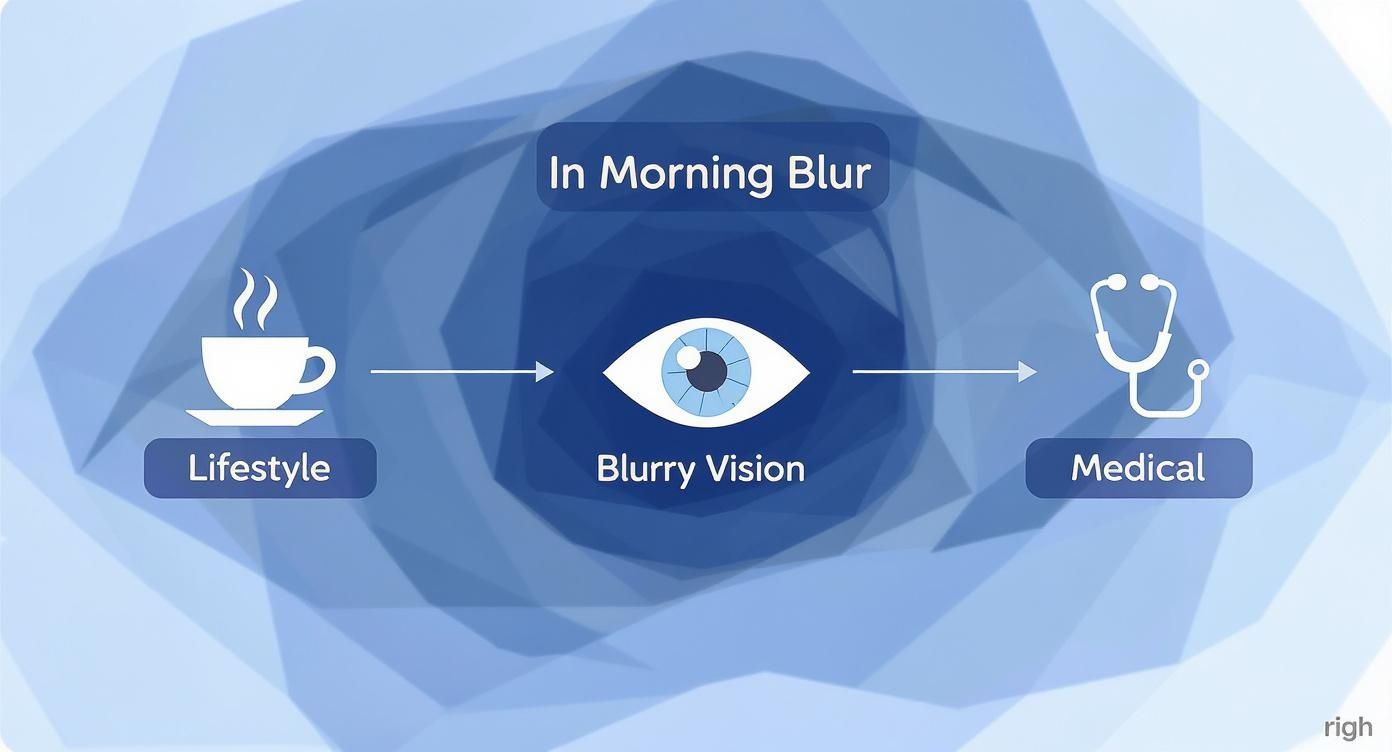
As you can see, it clearly separates the temporary, manageable causes from more serious conditions, helping you pinpoint what might be going on.
Don't underestimate the impact of poor sleep, either. It’s a huge contributor to all sorts of visual problems. In fact, a U.S. study of 9,384 adults discovered that people with vision-related difficulties were 1.5 times more likely to have sleep disorders. If you're curious, you can review the full research on sleep and vision.
Key Takeaway: For most people, morning blurriness is just a temporary quirk of waking up. But if it doesn’t clear up quickly, it's a signal to dig a little deeper.
To make it even clearer, let's quickly compare the common causes.
This table offers a quick summary to help you distinguish between a simple lifestyle issue and a potential medical concern.
| Cause | Description | Typical Resolution |
|---|---|---|
| Lifestyle & Environmental | Things like dry air from A/C or heat, allergens in your bedding, sleeping on your face, or even eye strain from staring at screens the night before. | Usually resolves on its own within minutes. Blinking, using rewetting drops, staying hydrated, and adjusting your sleep environment often help. |
| Potential Medical Issues | This includes chronic conditions like Fuchs' dystrophy, glaucoma, sleep apnea, or fluctuating blood sugar levels from diabetes. | Requires a proper diagnosis and treatment plan from an eye care professional. The symptoms tend to be persistent and don't clear up quickly. |
Ultimately, paying attention to how long the blur lasts and whether it's joined by other symptoms is the best way to know if it's time to see a doctor.
That late-night scroll through social media or last-minute work email might be a bigger reason for your blurry vision when waking up than you realize. The main culprit? Digital Eye Strain (DES), a condition that affects a huge number of people who regularly use screens.
Think of your eye muscles like any other muscle in your body. After hours of intense focus on a bright screen, they become overworked and fatigued. This constant tension makes it difficult for your eyes to relax completely overnight, so when you wake up, those tired muscles struggle to readjust. The result is that frustrating morning blur.
This effect is magnified by the high-energy blue light our devices emit. It not only strains the eyes but also contributes to dryness by reducing our blink rate.
A recent study involving 512 adolescents found that DES was present in a staggering 63.7% of them. Blurry vision was a key symptom for nearly 60% of those affected. The research was clear: using digital devices for more than two hours daily, especially near bedtime, significantly worsens these symptoms. You can read the full study on digital media use and eye strain to see the data for yourself.
So, how can you combat this nightly eye fatigue? One of the most effective tools is a quality pair of blue light blocking glasses. These aren't just a trendy accessory; they are specifically designed to filter out the most damaging wavelengths of light that cause eye strain and wreck your sleep.
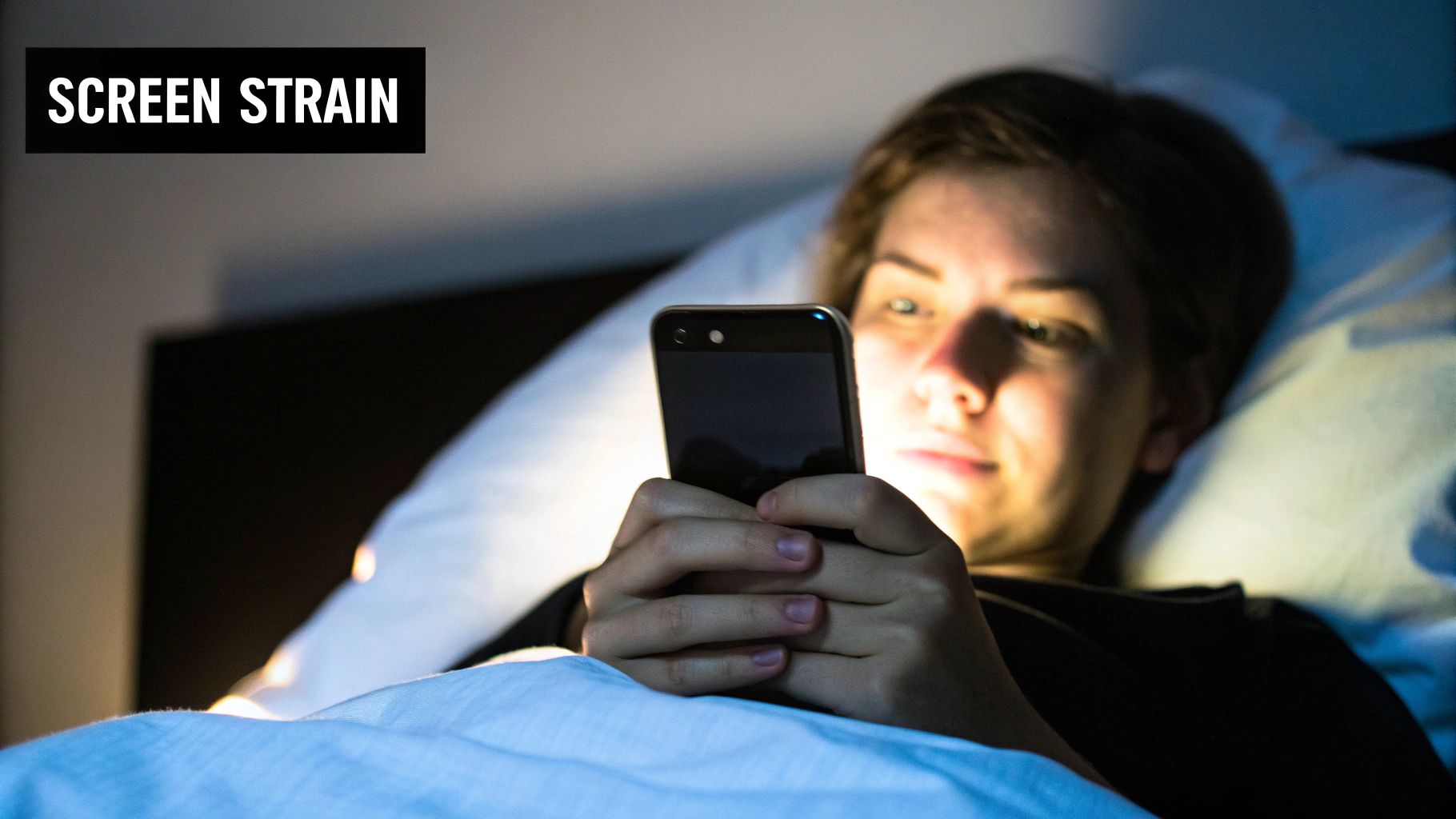
Orange and amber colored lenses, like those from Element Lux, are particularly effective. They block a significant portion of blue light, which cuts the harsh glare from screens and allows your eye muscles to finally relax.
Wearing them for an hour or two before bed can dramatically decrease the strain that builds up all evening. It gives your eyes a much-needed break before you even turn out the lights. This means your eyes are less fatigued overnight, allowing them to recover more fully and focus easily in the morning—goodbye, blurriness.
The benefits go way beyond just reducing eye strain. The warm tint of amber blue light glasses creates a visually soothing effect, sending a powerful signal to your brain that it's time to wind down. This helps you shift from a state of high alert—something bright screens are notorious for—to a relaxed mindset ready for sleep.
By blocking the blue light that suppresses melatonin (the sleep hormone), these glasses help regulate your natural sleep-wake cycle. Better sleep quality allows for more complete restoration of your entire body, including your eyes.
Improving your sleep is a powerful way to combat morning blurriness. Here are some simple strategies that work:
Managing stress is also crucial for good sleep. Try these simple techniques to calm your mind:
By incorporating these habits, especially using blue light glasses, you can significantly improve your sleep and reduce the eye strain that leads to blurry vision when you wake up. For more tips on this, feel free to explore our blue light blog.
If you spend your evenings scrolling, streaming, or working on a screen, you might be unintentionally setting yourself up for that blurry vision when you wake up. It's a common problem, but there's a practical and surprisingly effective fix: blue light blocking glasses. Think of them as a protective shield for your eyes during those crucial hours before bed.
These glasses are designed with specially tinted lenses that filter out the high-energy visible (HEV) blue light pouring out of our phones, tablets, and computers. The best analogy is sunglasses for the digital world. Just as sunglasses cut the sun's harsh glare, these glasses soften the intense, artificial glow from your devices.
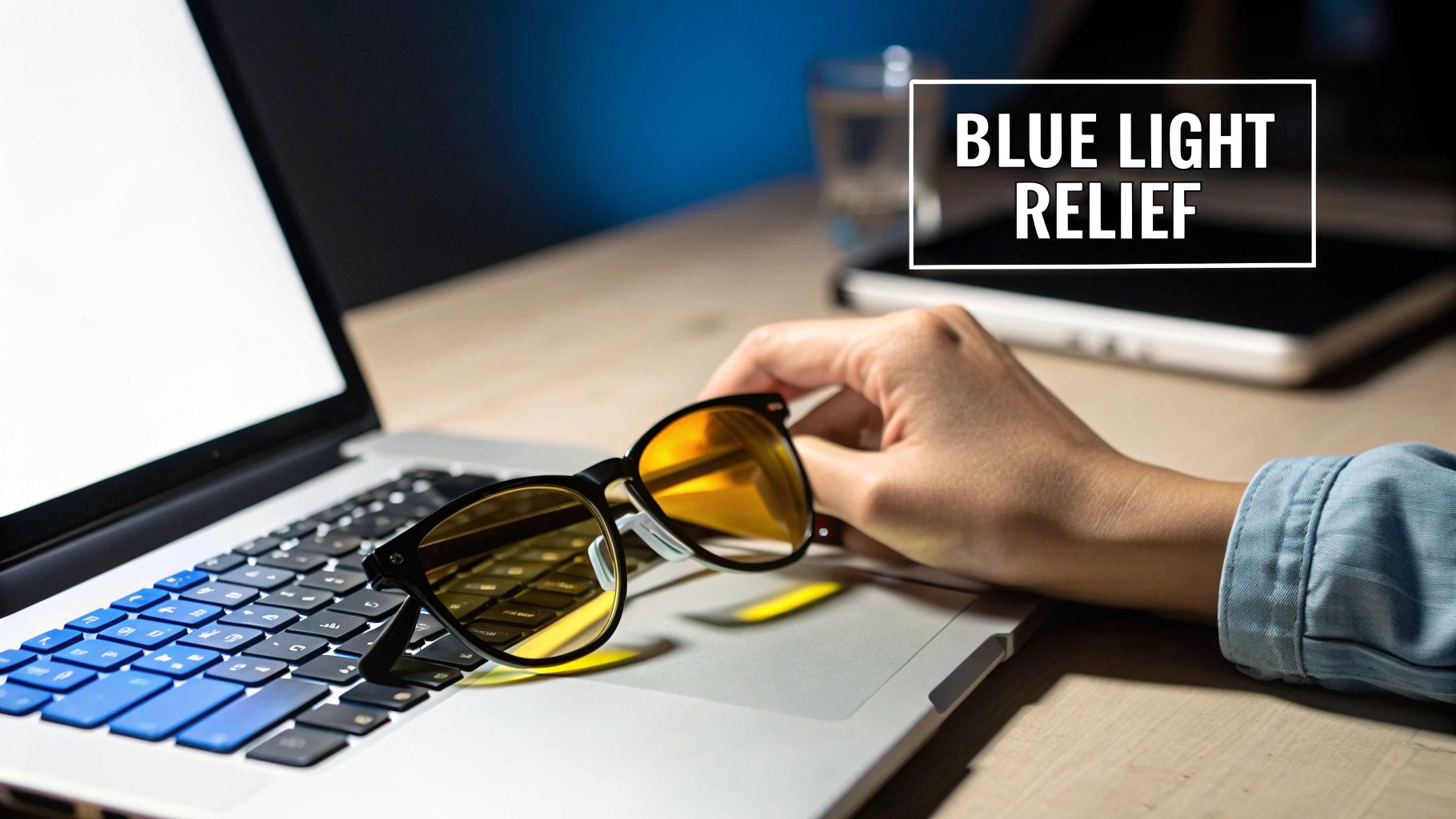
This filtering effect immediately lightens the load on your eye muscles. Instead of constantly squinting and working overtime to focus against digital glare, your eyes can finally relax.
Heads up: not all blue light glasses are created equal. The color of the lens makes a huge difference in how much blue light actually gets blocked. Orange colored blue light glasses, like ours at Element Lux, are the heavy hitters because they filter out a much wider spectrum of blue and even some green light.
This is a game-changer for preventing eye muscle fatigue. Picture your eye muscles as tiny rubber bands that are constantly pulled taut when you stare at a screen. The orange tint lets these muscles ease up, preventing the tension that leads to headaches, dryness, and that familiar, gritty end-of-day feeling.
Think about a real-world scenario. You're wrapping up a presentation late at night, and the bright white background of your document is blasting your eyes with blue light. The moment you put on a pair of orange-lensed glasses, that harsh screen transforms into a soft, warm amber glow. It's instantly more comfortable, allowing you to focus without the strain.
The benefits of orange lenses go way beyond just immediate comfort. By blocking the specific wavelengths of light that trick your brain into thinking it's still daytime, these glasses are instrumental in protecting your sleep cycle. This gives your brain the green light to produce melatonin, the hormone that says, "Hey, it's time to rest."
When you get deeper, more restorative sleep, your entire body gets a chance to repair itself—and that includes your eyes. Quality sleep helps your eyes rehydrate and allows the cornea to recover from any minor swelling, which directly tackles the root causes of morning blurriness.
Key Takeaway: Wearing orange or amber blue light glasses for 1-2 hours before bed isn't just about reducing eye strain in the moment. It's about promoting the quality sleep your eyes desperately need to feel refreshed and see clearly the next morning.
Putting on your blue light glasses is a fantastic start. But to really get the best results, you'll want to pair them with other solid sleep hygiene habits.
We all know that stress and anxiety are notorious sleep thieves. While amber-tinted glasses can help create a calming visual environment, combining them with other relaxation techniques is even more powerful.
Beyond just what happens inside your eyes, the real secret to waking up with clear vision is often the quality of your sleep. Your eyes, just like the rest of your body, absolutely need deep, restorative rest to repair themselves and rehydrate overnight. The problem? Our modern evening habits are practically designed to sabotage this crucial process.
Think about it: when you stare at a phone or laptop screen late at night, that intense blue light sends a powerful—and confusing—signal to your brain. It basically mimics daylight, tricking your internal clock into staying wide awake. This shuts down the production of melatonin, the very hormone that tells your body it’s time to sleep.
The result is a frustrating cycle. You struggle to fall asleep, toss and turn all night, and completely miss out on the deep sleep stages where true recovery happens. This directly leads to waking up with tired, dry, and blurry eyes.
This is where slipping on a pair of blue light blocking glasses an hour or two before bed can be a total game-changer for your vision. Orange colored blue light glasses, like the ones from Element Lux, are specifically designed to filter out the exact wavelengths of light that mess with your melatonin production.
By blocking this "digital daylight," you’re essentially allowing your body's natural sleep-wake cycle to take back control. Your brain finally gets the correct signal that it's nighttime, which allows for a timely release of melatonin. This helps you not only fall asleep faster but also achieve a much deeper, more uninterrupted sleep.
That improved sleep quality gives your eyes the extended downtime they desperately need to rehydrate, reduce corneal swelling, and recover from the day's strain. The connection is really that simple: better sleep leads directly to fresher eyes and clearer morning vision. To really make this work, it helps to implement a full strategy. You can discover proven techniques for natural and restful sleep that perfectly complement an evening routine with blue light glasses.
Similarly, amber blue light glasses play a huge role in helping you relax and actually wind down. The warm, soothing tint of the lenses creates a visually calm environment, dialing down the harsh glare that keeps your brain on high alert.
Think of it as creating an artificial sunset for your eyes. This visual cue signals to your brain that the day is ending, making it so much easier to disconnect from stress and transition into a restful state.
Pairing your glasses with other solid sleep habits creates a powerful strategy for not just great sleep, but sharper vision, too.
We all know anxiety is a huge sleep disruptor. Adding a few relaxation techniques into your evening can make all the difference.
By adopting these practices, you're not just hoping for better sleep—you're actively building the foundation for it.
Think of blue light glasses as a powerful ally, but they're not a one-person army. To really tackle that blurry vision when you wake up, you need to build an evening routine that sends a clear message to your brain and body: the day is officially over. This is how you set the stage for deep, restorative sleep—the kind that lets your eyes fully repair and recover overnight.
The whole point is to create a consistent, calming transition from a busy day to a restful night. It’s more than just flicking off the lights; it's about consciously winding down, cutting back on stimulation, and getting your internal clock on the right track for sleep.
Making blue light glasses part of your evening is one of the easiest and most effective changes you can make. The secret? Consistency. Get into the habit of putting them on one to two hours before you plan to hit the pillow, especially if you’re watching TV, scrolling on your phone, or reading on a tablet.
Orange colored blue light glasses are a game-changer here. They block a huge chunk of the blue light spectrum, which gives your eyes immediate relief from digital strain. This lets the tiny muscles in your eyes finally relax, stopping that nagging fatigue from carrying over into the next morning.
At the same time, blocking all that artificial light allows your brain to get back to its most important nighttime job: producing melatonin on schedule. That hormonal signal is absolutely essential for falling asleep easily and staying asleep all night long.
When it’s time for pure relaxation, amber blue light glasses are your best friend. Their warm, gentle tint creates a visually soothing environment that helps quiet a racing mind. It’s like creating your own personal sunset right inside your home—a powerful cue that tells your nervous system it's time to shift from high alert to total rest. They are perfect for that final hour before bed when you’re reading a book or just chilling out.
A better bedtime routine isn’t about being perfect. It's about creating consistent cues that guide your body toward sleep. Adding blue light glasses is a foundational step that makes all your other efforts even more effective.
To get the most out of your blue light glasses, you’ll want to pair them with these tried-and-true sleep habits.
Anxiety is sleep's worst enemy. A simple relaxation practice can quiet your mind and make it much easier to drift off peacefully.
A well-structured evening routine can be the difference between a restless night and waking up feeling refreshed with clear vision. It’s all about swapping out habits that disrupt sleep for ones that actively encourage it.
Here’s a simple comparison to show you what that looks like in practice.
| Time Before Bed | Habit to Avoid | Recommended Habit |
|---|---|---|
| 2-3 Hours | Scrolling through social media or watching intense TV shows under bright lights. | Put on your orange/amber blue light glasses. Dim the lights in your home. |
| 1 Hour | Checking work emails or engaging in stressful conversations. | Read a physical book, listen to a calming podcast, or do some light stretching. |
| 30 Minutes | Using your phone in bed with the lights off. | Put all screens away. Practice a few minutes of mindful breathing or meditation. |
| Bedtime | Leaving the TV on or having bright digital clocks facing you. | Ensure your room is completely dark, cool, and quiet. A sleep mask can help. |
By making these small adjustments, you're not just preparing for sleep; you're investing in your eye health and ensuring you start the next day with the clarity you deserve.
Stress and anxiety are silent saboteurs when it comes to a good night's sleep. Their effects can easily ripple into the next morning, often showing up as that frustrating blurry vision when you wake up. The key is to deliberately shift your mind and body from the day's high-alert status to a state of calm. This doesn't require complicated rituals—just simple, practical steps that signal it's time to rest.
The good news is you can actively create a calming pre-sleep environment. Little things make a world of difference. Try journaling for a few minutes to get nagging thoughts out of your head, do some gentle stretches to release physical tension, or just read a physical book. Each of these actions helps you disconnect from the day’s chaos and prepares you for truly restorative sleep.
A seriously powerful tool to boost this winding-down process is a pair of amber blue light glasses. Think of them as creating a personal, artificial sunset just for your eyes. The warm, soothing tint of the lenses filters out the harsh, stimulating blue light from screens and overhead lighting that keeps your brain buzzing long after you want it to stop.
This gentle visual cue is a surprisingly effective signal that the day is ending. It helps quiet all that mental chatter and allows your nervous system to smoothly transition from a state of alertness to one of deep relaxation. Wearing them for the last hour before bed can make it so much easier to actually feel tired and ready for sleep.
For those times when you absolutely have to use a screen before bed, orange colored blue light glasses are a must-have. They are specifically designed to block the most disruptive wavelengths of light—the ones that directly interfere with your body's melatonin production.
By shielding your eyes, these glasses make sure your brain gets the right memo to start producing this crucial sleep hormone on schedule. This not only helps you fall asleep faster but also promotes the deeper, more restorative sleep stages your eyes need to rehydrate and recover. It's a direct counter-attack against the causes of morning blurriness.
Key Insight: Creating a relaxing pre-sleep routine is a real investment in your morning clarity. Simple habits, amplified by the right blue light glasses, directly combat the stress and poor sleep that lead to blurry vision.
To give yourself the best shot at waking up with clear vision, start building these habits into your nightly routine.
Anxiety is a huge barrier to restful sleep. Use these simple techniques to calm your mind and get your body ready for a peaceful night.
Most of the time, that hazy blurry vision when waking up is totally harmless. It usually clears up after a few blinks and is just your eyes getting readjusted after a long night's sleep. Think of it like a fleeting headache versus a persistent migraine—one is a minor annoyance, while the other is a sign you need to pay attention.
While the occasional blur is normal, certain red flags are your body's way of telling you to check in with an eye doctor to make sure nothing more serious is going on.
It’s time to schedule an appointment if your blurry vision sticks around or comes with friends. Give your optometrist a call if you experience any of these:
These symptoms could point to conditions that need a professional's touch. It's always better to be proactive when it comes to your eye health.
As we get older, our vision naturally changes, and sometimes blurry vision is one of the first clues. One of the most common issues is presbyopia, a condition that makes it tougher to focus on things up close. In the United States alone, about 128 million adults have it.
What’s more, surveys show a staggering 65% of adults aged 40 to 55 felt completely unprepared for these kinds of age-related vision changes.
Sometimes, persistent blurriness can be linked to other health issues. If your fuzzy vision shows up alongside symptoms like loud snoring or feeling exhausted all day, it might signal a sleep disorder. For example, you can learn more about sleep apnea and see how it can affect everything, including your eyes. Knowing the signs is the first step to getting the right advice.
At Element Lux, we believe in taking a proactive approach to your eye health. Our glasses are designed to shield your eyes from digital strain and support better sleep, but they work best as part of a complete wellness strategy. Protect your eyes from screen time in the evening, and you’ll set yourself up for much clearer mornings.
Shop the Element Lux collection now and experience the difference.
