If you've ever found yourself with tired, scratchy eyes and a buzzing mind after a long day of screen time, you're not alone. The culprit is often the constant stream of artificial blue light from our devices, which can mess with our body's natural clock and lead to headaches, fatigue, and frustratingly restless nights.
Think of this as your personal guide to feeling better in our screen-filled world. We're going to dive into how blue light therapy glasses, specifically those with orange and amber lenses, can be a game-changer for reclaiming your comfort and getting a truly deep night's sleep.
This isn't just a niche trend anymore. The market for blue light blocking glasses is expected to more than double, hitting USD 6.4 billion by 2035 from its USD 3.0 billion valuation in 2025. That kind of growth shows a massive shift—people are realizing these glasses are an essential wellness tool.
This infographic breaks down exactly how that late-night scrolling session can throw a wrench in your body's melatonin production and highlights the common symptoms of digital eye strain we've all felt.
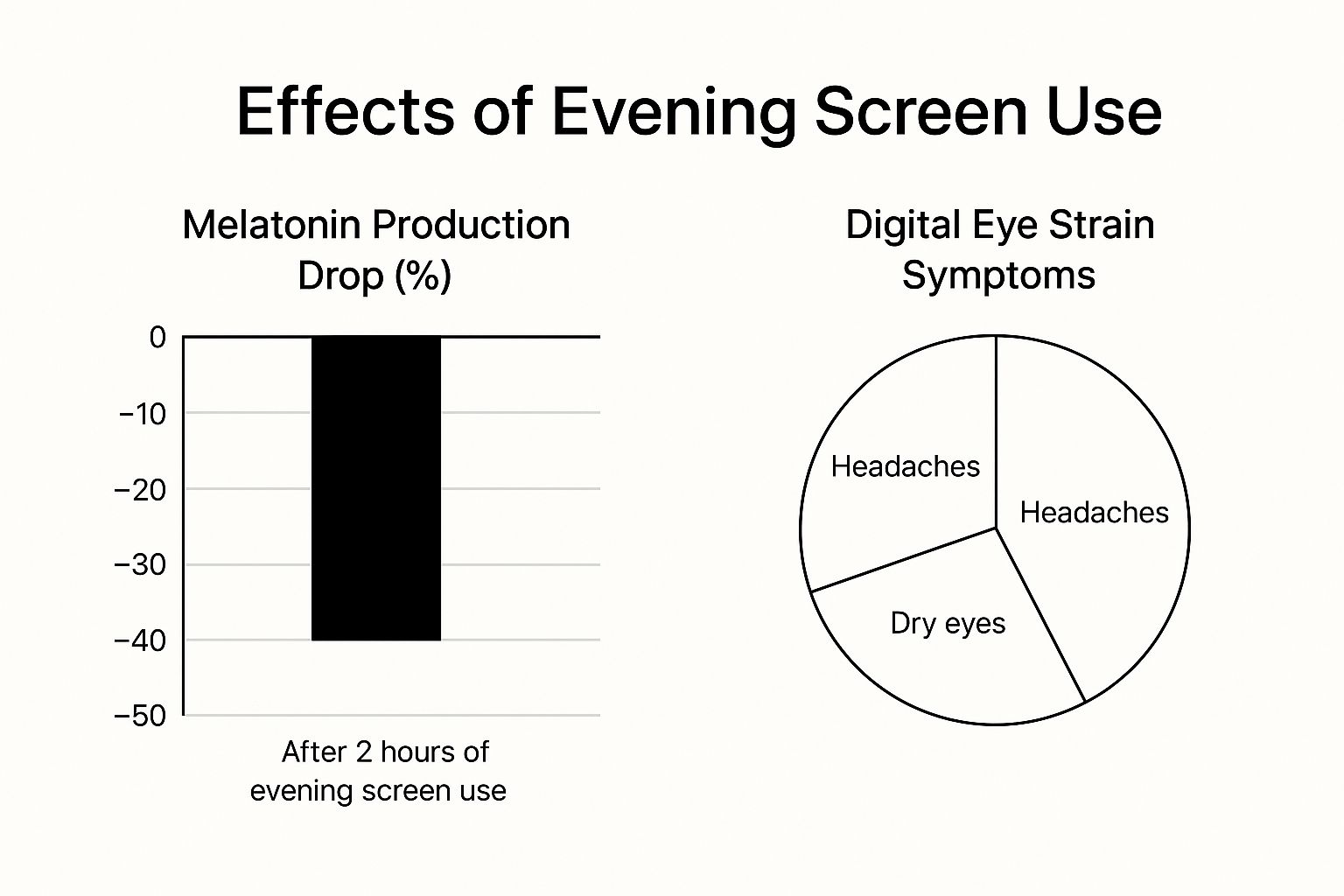
The science is pretty clear: our biology just wasn't designed for this much screen time, and it shows. While our glasses are designed to filter out specific wavelengths, it's also interesting to understand the different light-adaptive lens technologies that exist in modern eyewear.
If you're ready to dig deeper into improving your digital well-being, our blog is packed with more helpful articles. Check it out here: https://element-lux.com/blue-light-blog/
That feeling of tired, achy eyes after a long day of screen time? The one that comes with a side of headaches and blurry vision? That's digital eye strain, and it's your body's response to the intense, high-energy blue light blasting from your devices. Think of it like a camera flash going off in your face for hours on end—it’s exhausting.
Orange-lensed blue light therapy glasses are your best defense against this visual overload. They’re specifically designed to filter out the most aggressive wavelengths of light that force your eye muscles into overdrive. By absorbing that harsh light before it ever hits your retina, the glasses essentially dial down the visual "noise."
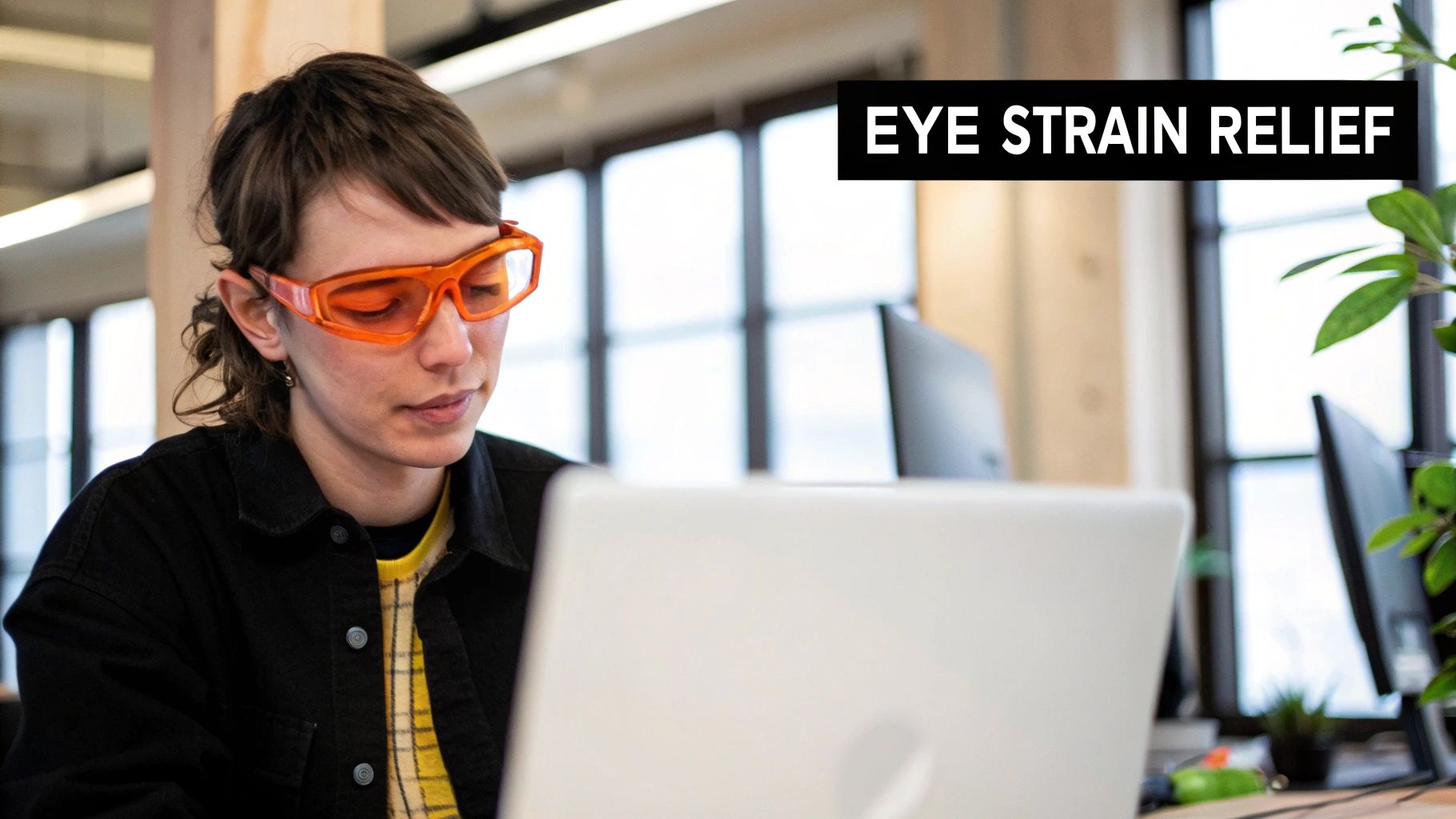
This filtering effect gives your ciliary muscles—the tiny muscles responsible for focusing your eyes—a much-needed break. Instead of constantly fighting against harsh, flickering light, your eyes get a softer, warmer signal. The result? A significant drop in the strain that leads to headaches and discomfort.
But the benefits don't stop at eye comfort. The same blue light that tires out your eyes is also a master of deception, tricking your brain into thinking it’s still high noon. This disrupts your body's natural rhythm and suppresses the production of melatonin, the hormone that tells you it's time to sleep.
When you wear orange-lensed glasses in the evening, you’re creating a "digital sunset." This simple cue tells your brain it's time to wind down, allowing your body to produce melatonin naturally and paving the way for a truly restorative night's sleep.
Amber lenses work in a similar way, creating a warm, cozy visual environment that's perfect for relaxing. They block a huge amount of blue light but still let enough other colors through, making them ideal for unwinding with a good book or watching a movie before bed. It's an easy way to help your mind shift gears from "go, go, go" to a state of calm.
Think of blue light blocking glasses as a key player in your digital wellness toolkit. To really maximize the benefits, pair them with other proven techniques for relaxation and sleep hygiene.
Top Ways to Get Good Sleep:
Top 4 Ways to Relax and Reduce Stress:
Ever find yourself scrolling on your phone late at night, only to feel wired and wide awake when you finally try to sleep? There’s a direct connection there, and it all comes down to a hormone called melatonin.
Your brain produces melatonin to tell your body it’s time to wind down. But when blue light from your phone, laptop, or TV hits your eyes late at night, your brain gets a confusing signal. It thinks it's still daytime, so it slams the brakes on melatonin production, leaving you tossing and turning.
This is where orange-lensed blue light therapy glasses come in. Think of them as creating a “digital sunset” for your eyes. By slipping them on a couple of hours before bed, you filter out those specific, disruptive wavelengths that are messing with your internal clock. It’s the signal your body needs to start its natural nighttime routine.
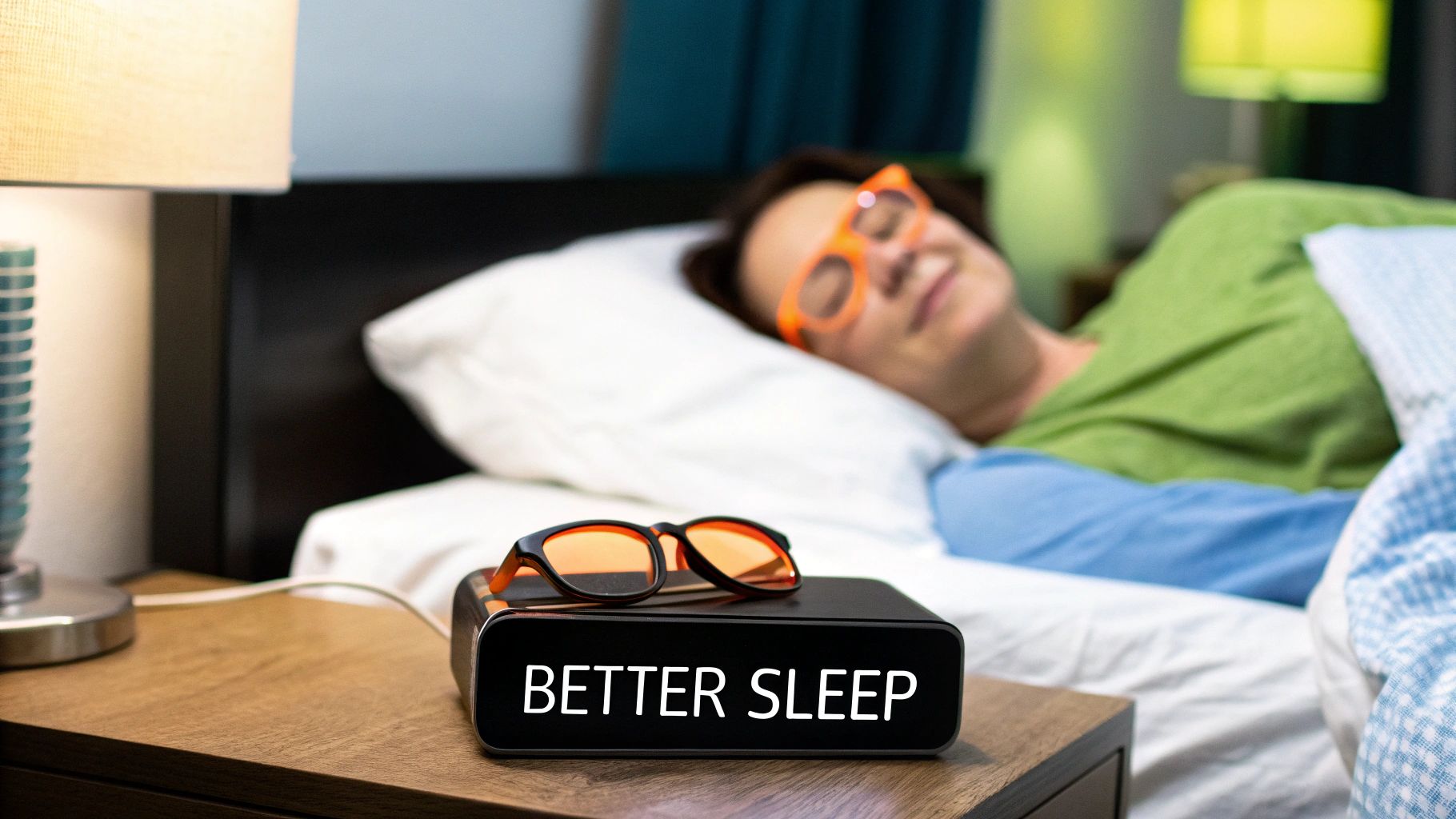
This simple habit lets your body start making melatonin right on schedule, which helps get your natural circadian rhythm back on track. The result? You fall asleep faster and get the kind of deep, restorative sleep that actually leaves you feeling refreshed.
This isn’t just a niche idea anymore. People are catching on globally. The market for these glasses in the Asia Pacific region alone is expected to hit 843.06 million USD by 2025. It’s a clear sign that more and more of us are focusing on simple, preventive ways to take back our health.
While orange lenses are the heavy hitters for pre-sleep melatonin support, amber-colored glasses are fantastic for helping you relax and wind down. They block a good chunk of blue light, cutting down the harsh glare from screens and artificial lights that leads to digital eye strain.
Putting on a pair of amber or orange glasses creates a much softer, warmer visual environment. It’s a cue for your mind to shift gears from a state of high alert to one of calm. You're not just protecting your eyes; you're actively preparing your entire system for a great night's rest. For a deeper look at how it all works, check out our guide on better sleep with the right strategies.
Think of it this way: Just as you dim the lights in your home to create a relaxing atmosphere, blue light blocking glasses dim the harsh light from your digital world, preparing your mind and body for sleep.
Making blue light blocking glasses part of your routine is a powerful first step. But to really get the most out of them, you can pair them with other proven habits for better sleep and less stress.
While orange lenses are the heavy hitters for getting your brain ready for sleep, their amber-lensed cousins are the masters of relaxation. Think of amber glasses as your go-to for creating a sense of calm, making them the perfect accessory for your evening wind-down routine. They take the edge off the stimulating "buzz" from artificial light, helping your mind and body shift gears from high alert to total chill.
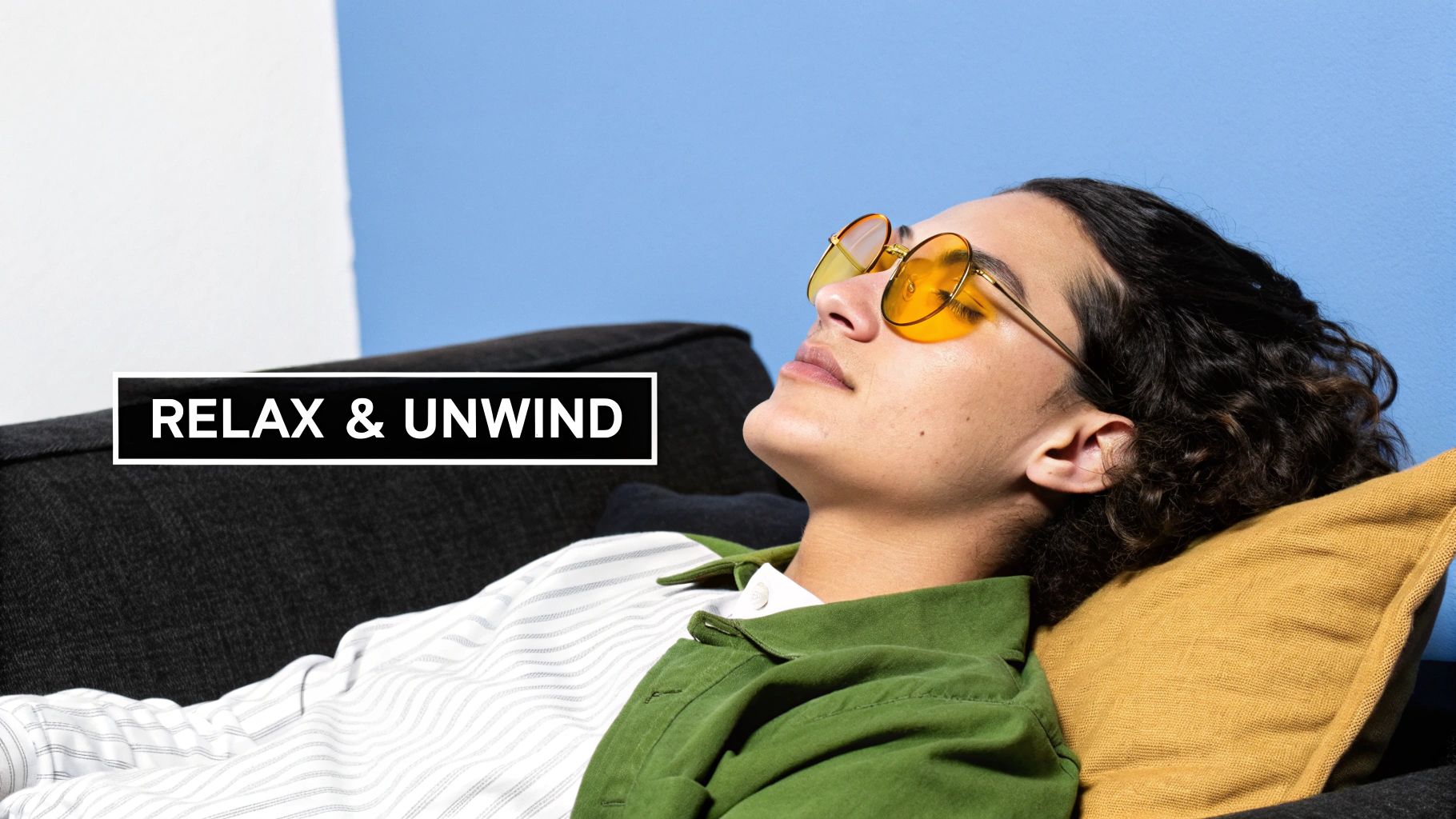
It’s like swapping out the harsh, bright fluorescent bulbs in a room for the soft, warm glow of a fireside lamp. Amber lenses filter a good chunk of blue light but still let more of the color spectrum through than deep orange or red lenses. This creates a cozy, comfortable visual experience that gently tells your brain it's time to unwind.
Weaving amber or orange blue light therapy glasses into your evening is a ridiculously simple yet powerful way to get better rest and lower your stress levels. By softening your visual world, they reduce eye strain and help your nervous system settle down, paving the way for a more peaceful night.
You can really amplify these benefits by combining your glasses with other proven sleep hygiene practices.
Creating a consistent wind-down routine sends powerful signals to your brain that the day is over. Pairing blue light blocking glasses with other calming activities builds a reliable pathway to quicker, deeper sleep and a more relaxed state of mind.
Here are a few of the best strategies to build a comprehensive nighttime routine that supports both your mind and body.
Getting truly restorative sleep isn’t about a single quick fix. It’s about building a powerful, consistent evening routine. While slipping on a pair of blue light therapy glasses is a fantastic first step, the real magic happens when you combine them with other proven sleep habits. Think of this as your guide to building a modern sleep toolkit, where every piece works together to support your body's natural rhythm.
Orange and amber-lensed glasses are the cornerstone of this process. By blocking the harsh blue light pouring from our screens, orange-lensed glasses directly fight the headaches and visual fatigue that come with digital eye strain. More importantly, they stop that artificial light from slamming the brakes on your body's melatonin production, which is the crucial signal your brain needs to know it's time to wind down.
In the same way, amber blue light glasses create a warm, calming visual environment that’s perfect for relaxing. The softer light tones down the mental stimulation that keeps you feeling wired, allowing your nervous system to finally settle. It makes the transition from a chaotic day to a peaceful night feel effortless.
To get the most out of your glasses, you need to build a solid pre-bed ritual. These habits work in harmony to prepare your mind and body for deep, uninterrupted rest.
A good wind-down routine is also key for managing the stress and anxiety that so often sabotage our sleep.
To put it all together, here’s a simple routine you can follow for the last 90 minutes of your day. This isn’t about perfection; it’s about creating a consistent, repeatable process that tells your body it’s time for restorative sleep.
| Time Before Bed | Action | Benefit |
|---|---|---|
| 90 Mins | Put on your blue light glasses. Finish all screen use. | Protects melatonin production from artificial light. |
| 60 Mins | Engage in a calming, screen-free activity (e.g., reading). | Lowers mental stimulation and cortisol levels. |
| 30 Mins | Prepare for tomorrow (e.g., pack your bag, set out clothes). | Reduces morning anxiety and mental clutter. |
| 15 Mins | Practice gentle stretching or mindful breathing. | Relaxes muscles and activates the nervous system. |
| 0 Mins | Lights out. Keep the room cool, dark, and quiet. | Creates the optimal environment for deep sleep. |
By following a simple checklist like this, you take the guesswork out of winding down. You're not just hoping for good sleep—you're actively building the foundation for it, night after night.
That constant feeling of being “on” and just a little bit on-edge? It’s not just in your head. It's digital stress, a very real physiological response to the non-stop buzz of our screens. Getting a handle on it means taking back control—not just of your devices, but of your body’s reaction to them.
A huge piece of the puzzle is managing your light exposure, especially after the sun goes down. The intense blue light pouring out of our screens keeps our nervous system on high alert, making it nearly impossible to genuinely relax. This is exactly why blue light therapy glasses are becoming a go-to tool for signaling to your body that the day is finally over.
This is probably the simplest, most powerful trick in the book: control the light hitting your eyes before you try to sleep. When you put on a pair of orange or amber-lensed glasses in the evening, you’re essentially creating a "digital sunset" for your brain. You’re filtering out all those stimulating light waves that keep you feeling wired.
This simple act immediately dials down the neurological noise that feeds anxiety. By softening your visual world, you’re helping your nervous system flip the switch from “fight-or-flight” to “rest-and-digest.” Suddenly, relaxation feels natural, not forced.
Another game-changer is setting clear boundaries with your devices—both in space and time. Designate certain areas, like the dinner table or your bedroom, as totally screen-free zones. This does wonders for breaking the mindless scrolling habit and helps your brain reconnect those spaces with rest and human connection.
On top of that, set a firm "digital curfew" for yourself. Pick a time each night when all screens get put away for good. This creates a much-needed buffer period for your mind to disengage from the day’s information overload and actually start the process of winding down.
One study revealed that a staggering 86% of people are constantly checking email or social media, which directly leads to higher stress. Creating intentional screen-free time is the perfect antidote to this draining cycle, allowing for real mental recovery.
Instead of just passively letting content wash over you, try being more intentional with your screen time. Before you pick up your phone, ask yourself why. Are you looking for something specific, or are you just trying to dodge a moment of boredom?
When you’re more mindful, you can sidestep the information overload that fuels so much anxiety. This looks like turning off all non-essential notifications, unsubscribing from those newsletters you never open, and curating your social media feeds to be a source of positivity, not a trigger for stress.
Get intentional about scheduling activities that have nothing to do with a screen. Things like reading an actual book, going for a walk, listening to music, or getting lost in a craft can slash your stress levels.
These hobbies give both your eyes and your mind a vital break from the digital grind. While blue light therapy glasses are a fantastic tool for tackling the light-related side of digital strain, a truly holistic approach means exploring all kinds of natural stress reduction methods to find lasting calm.
Got a few lingering questions about blue light therapy glasses? Let’s clear things up so you can feel confident you’re making the right choice for your eyes and your sleep.
Think of the harsh blue light from your screen as a constant visual "noise" that makes your eye muscles work overtime. It's that overstimulation that leads to headaches, fatigue, and that tired, gritty feeling in your eyes.
Orange lenses act like noise-canceling headphones for your eyes. They filter out the most aggressive, high-energy blue light, giving your eye muscles a much-needed break. The result? Your visual world feels softer, your eyes can finally relax, and the nagging symptoms of digital eye strain start to fade away.
Here's the deal: staring at a screen late at night basically tricks your brain into thinking it's still daytime. That blue light exposure hits a switch in your brain that shuts down the production of melatonin, the essential hormone that signals it's time to sleep.
When you put on orange glasses in the evening, you create a kind of "digital sunset." By blocking those disruptive blue light signals, you allow your body to get back to its natural rhythm and produce melatonin like it's supposed to. This helps you fall asleep faster and get the kind of deep, restorative rest you've been missing.
If orange lenses are for serious sleep prep, think of amber lenses as your go-to for winding down. They create a warm, cozy visual vibe that’s perfect for relaxing.
While they still block a good amount of the stimulating blue light, they let a bit more of the color spectrum through than their orange counterparts. The effect is a lot like swapping out a harsh overhead light for a soft, warm lamp. It gently reduces mental stimulation and helps ease your mind and body into a relaxed state—ideal for reading a book or watching a movie before bed.
Ready to take back your evenings and protect your eyes from digital strain? The Element Lux collection is specifically engineered to shield your eyes and help you get back in sync with your natural rhythm.
