Ever get that dull, throbbing ache behind your eyes after a long day of Zoom meetings or a late-night scrolling session? If you've ever wondered if your screens are giving you a headache, you're not imagining things.
That nagging discomfort is what many of us have come to know as a blue light headache. While it's not an official medical term you'll find in a textbook, the experience is incredibly real for millions of people who spend hours staring at computers, phones, and tablets every single day.
The root of the problem isn't just screen time itself—it's the specific type of light our devices emit. The pain you feel is a direct result of how our eyes and brain react to the intense, high-energy light pouring out of our digital screens.
Think of it this way: your eye muscles are like tiny camera lenses, constantly working to focus. When you're looking at a screen, they’re trying to focus on a blurry, flickering image. This forces those muscles to work overtime just to keep things clear, leading to fatigue, strain, and eventually, that all-too-familiar headache. It's a physiological response, not just a feeling.
The main culprit here is High-Energy Visible (HEV) blue light. Unlike other colors on the light spectrum, blue light has a shorter, more scattered wavelength. This scattering creates a kind of visual "noise" or glare that makes it harder for your eyes to focus.
Your eye muscles are forced into a constant state of overexertion, and that's what triggers the strain and pain.
This infographic breaks it down at a glance.
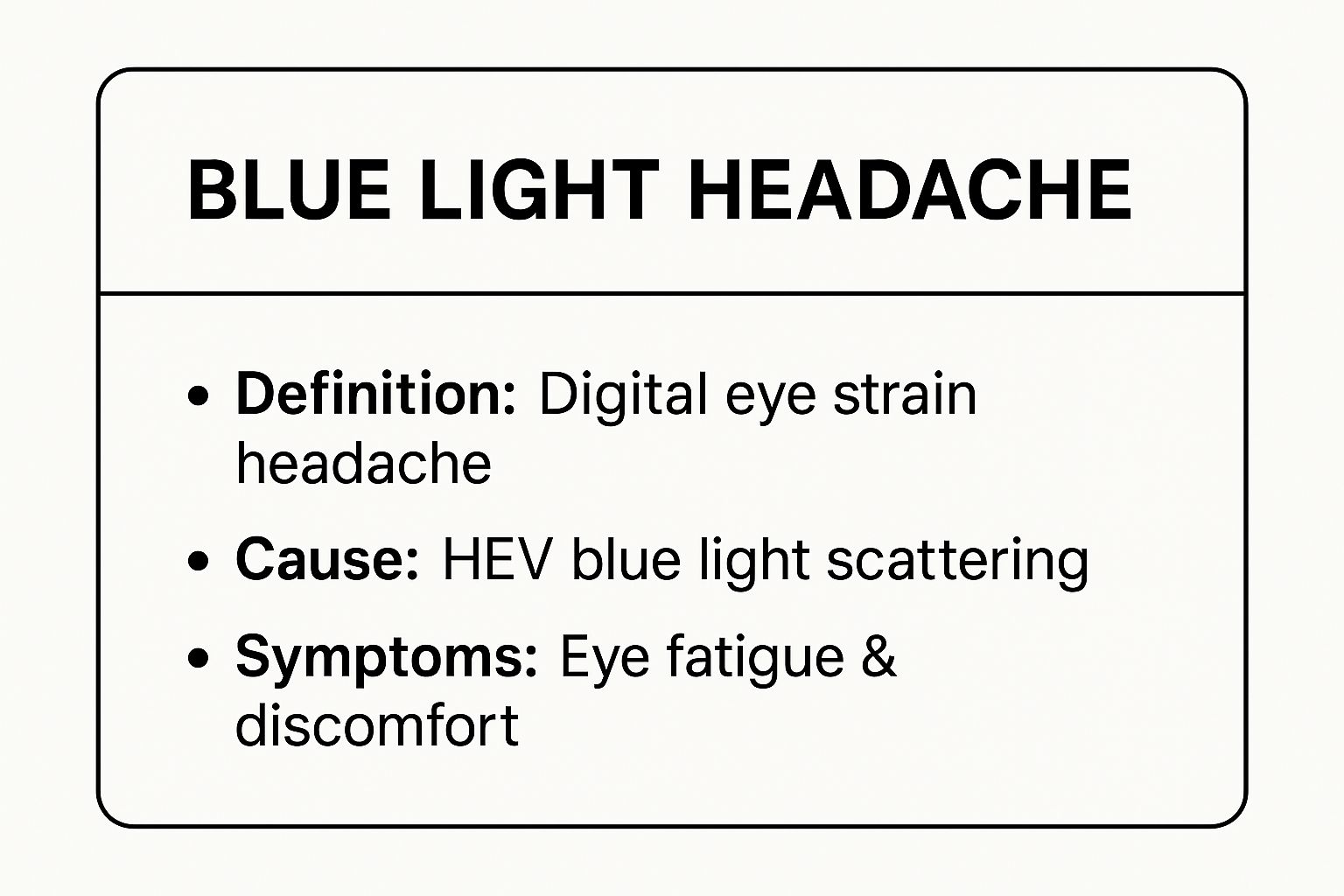
As you can see, the headache doesn't come out of nowhere. It's a direct result of digital eye strain, caused by the unique way HEV blue light behaves, and it leads to some very distinct symptoms.
The connection between our screens and head pain isn't just anecdotal, either. A study with 259 participants found a clear link between daily screen use and the frequency of headaches. Nearly a third of them (30.5%) spent 7–9 hours a day looking at screens, confirming what many of us already suspected: more exposure often means more pain.
To help you connect the dots, here’s a quick breakdown of common symptoms and what might be triggering them.
| Symptom | Common Digital Trigger | What It Feels Like |
|---|---|---|
| Dull, throbbing pain behind the eyes | Long hours staring at a computer monitor or laptop without breaks. | A constant, nagging pressure that seems to be centered right behind your eyeballs. |
| Sensitivity to light | Switching between a bright screen and a dark room. | Finding normal indoor lighting uncomfortably bright after looking at your screen. |
| Dry, itchy, or watery eyes | Reduced blinking rate while focused on reading or detailed work on-screen. | Your eyes feel gritty, tired, and irritated, like there's sand in them. |
| Neck and shoulder tension | Poor posture from hunching over a phone or laptop. | A stiff, aching feeling that radiates from your neck up to the base of your skull. |
| Difficulty focusing vision | Straining to read small text on a phone or tablet. | Your vision feels blurry or slow to adjust when you look away from the screen. |
Recognizing these signs is the first step toward getting relief. By understanding what's causing the pain, you can start taking simple, effective steps to protect your eyes and stop the headaches before they even start.
Want to learn more? You can dive deeper into related topics on our blue light blog.
When your eyes feel tired and overworked from staring at a screen, you need a real solution. That’s where orange-colored blue light glasses come in. These aren't just colored plastic; they're a precision tool engineered to tackle the root cause of digital eye strain and stop a nasty blue light headache before it even starts.
The screens we use all day blast out intense, scattered blue light wavelengths, mostly in the 380-450nm range. You can think of this as a kind of visual "noise." By filtering out that harsh visual static, orange-colored glasses give your eye muscles a much-needed break. Suddenly, the image on your screen seems clearer, the strain vanishes, and your eyes can finally relax and do their job without a struggle.
The magic of orange-colored blue light glasses doesn't stop at just reducing eye strain. They also play a crucial role in safeguarding your body's natural sleep-wake cycle. When you're exposed to blue light in the evening, it tricks your brain into thinking it's still daytime. This confusion causes your brain to suppress the production of melatonin—the very hormone that signals to your body that it's time for sleep.
Wearing orange-colored glasses for an hour or two before bed essentially creates a "digital sunset." By blocking those sleep-disrupting wavelengths, you’re telling your body it's safe to start winding down and produce melatonin naturally. This makes it far easier to fall asleep, stay asleep, and wake up feeling refreshed.
By managing your light exposure in the evening, you're not just preventing eye strain; you're setting the stage for a night of deep, restorative sleep that is essential for headache prevention.
Improving your sleep hygiene is one of the most powerful things you can do to prevent a blue light headache.
Stress is a major trigger for tension headaches, and screen time only makes it worse. Here’s how to unwind and protect yourself.
Ever found yourself staring at the ceiling at 2 AM, feeling completely wired but physically exhausted? That frustrating feeling often starts hours earlier, right when you're scrolling on your phone before bed. The link between that late-night screen time and waking up with a blue light headache is all about sleep quality—or the lack thereof.
Your body runs on a natural internal clock, the circadian rhythm, which uses a hormone called melatonin to signal when it's time to power down. As the sun sets, your melatonin levels are supposed to rise, making you feel sleepy. But here’s the problem: the artificial blue light from our screens is like a dose of midday sun, tricking your brain into slamming the brakes on melatonin production right when you need it most.
This disruption makes it harder to fall asleep and, more importantly, prevents you from getting the deep, restorative rest your body and mind need to repair. When you miss out on that, you’re far more likely to wake up groggy, unfocused, and with that familiar, nagging headache.
This is where slipping on a pair of orange-colored blue light glasses in the evening can make a world of difference. Think of them as creating a “digital sunset” for your eyes.
By filtering out the specific blue light wavelengths (380–500 nanometers) that halt melatonin, these glasses shield your brain from those confusing "stay awake!" signals.
This simple change allows your body's natural sleep processes to get back on track. Melatonin levels can rise as they should, helping you feel naturally sleepy at the right time. The result? You fall asleep faster and get the kind of high-quality rest that's essential for keeping a blue light headache at bay.
Improving your sleep hygiene is one of the most powerful things you can do to prevent headaches. When you pair healthy habits with the right tools, you build a powerful defense against poor rest.
To dive deeper into the science, check out our guide on how our glasses help with sleep.
Wearing amber or orange-lensed glasses is a key part of an effective wind-down routine, signaling to your brain that it’s time to relax and transition from a busy day to a restful night.
Wearing blue light blocking glasses is a huge first step, but the real secret to kicking a blue light headache for good is pairing them with solid daily habits. Think of it like this: building a consistent, relaxing evening routine sends a clear signal to your brain that it’s time to power down. This ensures you get the deep, restorative rest you need to wake up feeling great.
The cornerstone of this whole routine is managing your light exposure, especially in the hours before bed. Orange-colored blue light glasses are your best friend here, filtering out those specific wavelengths that mess with your melatonin and cause serious eye strain. Wearing them for at least 90 minutes before you plan to sleep creates a protective bubble against screens and harsh artificial lighting, letting your natural sleep cycle finally take over.
It's a simple change, but it helps you fall asleep faster and dramatically improves the quality of that sleep. For earlier in the evening, when you just want to relax without the intense sleep-inducing effect, amber blue light glasses are perfect. Their warm hue takes the edge off visual stress, helping you smoothly transition from a hectic day to a calm evening.
To really knock out those fatigue-related headaches, you need to weave your glasses into a bigger sleep hygiene strategy. It's the small, consistent changes that make a world of difference.
Stress is a massive headache trigger, and our constantly-on digital lives keep our nervous systems on high alert. Use these simple techniques to de-stress and stop that tension from building up in the first place.
Let’s be honest, we’re constantly wired. All that digital stimulation puts our nervous systems on high alert, leading to stress, anxiety, and tension headaches that feel eerily similar to a blue light headache. Decompressing isn't a luxury anymore; it’s a flat-out necessity. The good news is that working a few simple, proven strategies into your daily routine can make a world of difference.
This whole process is about calming down both your mind and your visual system. When you intentionally create moments of peace, you can shut down a stress-induced headache before it even gets started.
One of the best ways to tell your brain it’s time to chill out is by managing the light you’re exposed to in the evening. This is where amber blue light glasses become an absolute game-changer. Their warm hue filters out the harsh, alerting glare from screens and artificial lights, creating a much softer, more relaxing visual experience.
Unlike the more intense orange lenses meant for right before bed, amber glasses are perfect for those early evening hours when you just want to unwind. Think of them as creating a "digital sunset." They gently ease you out of a hectic day and cut down on the visual stress that fuels tension and eye fatigue.
Wearing amber or orange-lensed glasses is a key part of an effective wind-down routine, signaling to your brain that it’s time to relax and transition from a busy day to a restful night.
Building a solid evening routine is your best defense against both stress and those nasty sleep-related headaches. These four strategies work together beautifully to help you decompress and get ready for a night of truly restorative rest.
Wear Blue Light Blocking Glasses: Pop on your amber-lensed glasses in the early evening to start the wind-down process. Then, switch to orange lenses, like the ones from Element Lux, at least 90 minutes before bed. This will maximize melatonin production and set you up for deep, quality sleep.
Practice the 20-20-20 Rule: To fight back against digital eye strain during the day, get in the habit of taking a break every 20 minutes. Just look at something 20 feet away for at least 20 seconds. It’s a simple trick, but it gives your eye muscles a much-needed break from staring at a screen up close.
Integrate Mindfulness: You don’t need to meditate for an hour. Seriously, just taking five minutes to focus on slow, deep breathing can lower your heart rate, calm your nervous system, and release the physical tension that so often spirals into a headache.
Disconnect and Find a Hobby: Set aside dedicated time for activities that don't involve a screen. Pick up a physical book, listen to some music, sketch, or just go for a walk. Letting your mind truly disconnect from the non-stop digital buzz is incredibly powerful.
For more great ideas, check out this helpful video on managing your digital environment. By combining these habits, you’re not just coping—you’re creating a powerful system for managing stress and avoiding the painful side effects of our screen-heavy world.
A blue light headache rarely shows up alone. It’s usually the most painful part of a bigger pattern of discomfort that kicks in after you’ve been staring at a screen for too long. The real key is learning to spot the other signs that blue light is the culprit.
Lots of people deal with these issues without ever connecting them back to their phones or laptops. If you find yourself with constantly tired or sore eyes, blurry vision that comes and goes, or a gritty, dry feeling, those are classic signs of digital eye strain. You might also notice it’s hard to focus when you look away from your screen, or that normal lights suddenly seem way too bright.
These physical symptoms often go hand-in-hand with other problems, especially poor sleep. The connection is so common that one survey of university students found that 49.7% reported getting headaches from using their digital devices.
Of those students, over half also pointed to tired eyes (56.2%), while many others mentioned blurred vision (31.9%), dry eyes (30.8%), and even insomnia (30.3%) as related problems. You can dig into more of the insights about these findings on digital eye strain.
If that whole cluster of symptoms sounds familiar, it's a pretty strong signal that blue light is messing with you. The good news is, you can actually do something about it.
Ask yourself if you regularly experience any of these, especially after a long day in front of a screen:
When you see how these seemingly separate issues are all part of a larger pattern, you can finally pinpoint the true impact of blue light and start getting some relief.
We've unpacked a lot, but a few questions might still be floating around. Let's clear those up so you can move forward and find the relief you're looking for.
This is a great question. While they’re most powerful as a preventative shield, you can feel some immediate relief by putting on a pair of blue light glasses during an active headache. Filtering out that harsh, triggering light can instantly take the edge off and ease the strain that’s fueling the pain.
But the real game-changer is consistent, daily use. Think of it like this: the glasses are your best defense to stop headaches before they even get a chance to start.
It all comes down to what you need them for. Think of them as two different tools for two very different jobs.
Orange Lenses: These are your heavy-hitters, designed for maximum protection in the evening. Wear them for about 90 minutes before you plan to sleep. They block a huge amount of blue light, signaling to your brain that it's time to ramp up melatonin production for a great night's rest.
Amber Lenses: Consider these your all-day workhorses. They’re perfect for cutting down on digital eye strain while you’re at the computer, creating a warmer, more comfortable view without messing with colors too much. They're the ideal choice for daytime screen use.
It's a start, but it's definitely not a complete fix. Software filters like Night Shift on your phone or f.lux on your computer are better than nothing—they do reduce some blue light from that specific screen.
But high-quality lenses, like the ones in Element Lux glasses, offer far more consistent and powerful filtering across all sources of artificial light. They protect you from your laptop, your TV, and even the overhead LED lights in your office or kitchen. Software just can't compete with a true physical barrier.
Ready to finally break the cycle of eye strain and headaches? Element Lux offers premium blue light blocking glasses designed to give your eyes the protection they deserve and help you reclaim your sleep. Find the perfect pair and feel the difference for yourself.
