Blue light glasses designed for sleep work by filtering out the precise wavelengths of light that halt your body's production of melatonin—the all-important sleep hormone.
When you wear them in the evening, you're essentially sending a clear signal to your brain that it's nighttime. This allows you to wind down naturally, even if you're still using your screens, helping you fall asleep faster and get the deep, restorative rest you need.
Ever felt tired but strangely wired after an evening scrolling on your phone or binging a show on your laptop? You’re definitely not alone. The culprit is almost always the invisible blue light beaming from your favorite devices, and its effect on your brain is far more powerful than you might realize.
Think of blue light as a shot of digital caffeine for your eyes. It has a short, high-energy wavelength that perfectly mimics the bright, midday sun. When your eyes pick up on this light in the evening, it sends a powerful "wake-up" call to your brain, tricking it into thinking it's still daytime.
This biological mix-up directly messes with your body's internal 24-hour clock, known as your circadian rhythm. This natural cycle is responsible for managing your sleep-wake patterns, hormone release, and even your metabolism. To stay synchronized, it relies on environmental cues—primarily light and darkness.
Your circadian rhythm is like a finely tuned orchestra conductor, telling your body when to feel alert and when to feel sleepy. Evening blue light exposure is like a rogue trumpet player blasting a note at the wrong time, throwing the entire symphony into disarray.
The most critical function disrupted by evening blue light is the production of melatonin, the hormone that signals to your body that it’s time for sleep. As darkness falls, your melatonin levels are supposed to rise, making you feel drowsy. But exposure to blue light from screens slams the brakes on this entire process.
In fact, just two hours of screen time before bed can significantly crush your melatonin levels, making it much harder to fall asleep. This explains why you might toss and turn for hours after finally putting your phone down. You've effectively told your brain to stay alert right when it should be preparing for rest.
The table below breaks down how some of our most common evening habits can directly impact this vital sleep hormone.
| Blue Light Source | Typical Evening Use | Impact on Melatonin |
|---|---|---|
| Smartphone / Tablet | Scrolling social media, reading news, checking email | High Suppression: Close proximity to your eyes delivers a concentrated dose of blue light, significantly delaying melatonin release. |
| Laptop / Computer | Working late, streaming videos, online shopping | High Suppression: Similar to phones, direct screen exposure tricks your brain into a state of daytime alertness. |
| Television | Watching movies or TV shows | Moderate to High Suppression: While further away, modern LED TVs emit strong blue light that can still disrupt your circadian rhythm. |
| E-Reader (Backlit) | Reading books before bed | Moderate Suppression: Devices with built-in lights emit less blue light than phones but can still interfere with sleep hormones. |
| LED Lighting | Bright overhead lights or lamps in your home | Significant Suppression: Many modern light bulbs are high in the blue light spectrum, contributing to the overall "daytime" signal. |
It's clear that our modern environment is constantly working against our natural sleep cycles.
To dive deeper into the science behind light and sleep, you can explore more resources on our blue light blog.
Understanding this biological conflict is the first step. By blocking this disruptive light, blue light glasses for sleep act as a shield for your melatonin, allowing your body to follow its natural rhythm and prepare for a night of deep, restorative sleep. This makes them a simple yet powerful tool for anyone looking to improve their rest in our screen-filled world.
While plenty of glasses claim to block blue light, not all lenses are created equal. The color of the lens—specifically orange or amber—determines its primary function, whether it's maximizing sleep quality or helping you relax. That distinct color isn't a style choice; it's a specific technology designed to filter out the most problematic wavelengths of light.
Orange-lensed glasses are engineered for maximum effectiveness against both digital eye strain and sleep disruption.
Alleviating Digital Eye Strain: Ever notice your eyes feel tired, dry, and sore after hours on a screen? That’s digital eye strain, caused by the harsh, high-energy glare from our devices. Orange lenses tackle this by filtering that intense light, which immediately softens the screen's appearance and cuts down on visual stress. This also enhances contrast, so your eyes don't have to work as hard to focus. It’s like turning a glaring bulb down to a soft, warm glow.
The Science Behind Better Sleep: The real magic of orange blue light glasses for sleep is their ability to shield your body's melatonin production. That deep orange tint blocks the most disruptive blue and green light wavelengths. By putting these glasses on an hour or two before bed, you create a personal sunset for your eyes, allowing melatonin levels to rise naturally, even if you’re using a screen.
Think of it this way: your brain is a factory that produces the sleep hormone, melatonin. Blue light is the emergency signal that shuts down the entire production line. Orange-lensed glasses act as the security guard, blocking that signal from ever reaching the factory floor.
Amber-lensed glasses are the perfect tool for your nightly wind-down. They are the ideal bridge between a chaotic, screen-filled day and a genuinely peaceful evening. While orange lenses offer the strongest sleep protection, amber lenses still block a huge amount of blue light, making them perfect for easing the transition from a hectic day to a calm evening. They dial down the "alerting" signals sent to your brain, helping you get into a more relaxed mental state without fully prepping you for immediate sleep.
Knowing how different lenses protect your sleep is a fantastic start. But the real magic happens when you weave them into a solid routine. This holistic approach tackles all the things that can mess with your rest—physical, environmental, and mental.
Improving your sleep doesn't have to be complicated. Start with these proven strategies to build a powerful nighttime routine.
A calm mind is the gateway to a restful night. If you find that stress or anxiety is keeping you up, weaving in some simple relaxation techniques can be a game-changer.
For more tips and information on creating a healthier lifestyle, check out the valuable articles available in our Element Lux resources.
A calm, quiet mind is the gateway to a night of deep, restorative sleep. But if you’re staring at the ceiling with a thousand thoughts racing through your head, that calm can feel miles away. The good news is that you can absolutely learn to wind down. A few simple practices can be a total game-changer, helping lower both mental and physical tension to prepare your body for rest.
The easiest first step is often the most overlooked. By simply wearing blue light blocking glasses in the evening, you significantly cut down on the stimulating, high-energy light that keeps your brain on high alert. This one simple act helps naturally calm your nervous system, making it an effortless foundation for the rest of your wind-down routine.
Creating a pre-sleep ritual doesn't have to be complicated or take a ton of time. The goal is just to send a clear signal to your body that the day is over and it's time to unwind. Here are four effective methods to help you do just that.
Wear Your Blue Light Blocking Glasses
Think of this as your passive, first line of defense against evening anxiety. Popping on a pair of Element Lux glasses an hour or two before bed filters out the harsh, stimulating light from screens and overhead lighting. This simple action lowers the "alertness" signals reaching your brain, which in turn helps you feel calmer and more relaxed without even trying.
Practice Mindfulness Meditation
You don't need to be a zen master to get the benefits of meditation. Just five to ten minutes of a guided mindfulness practice can work wonders for a busy mind. This technique helps slow your heart rate, lower your blood pressure, and quiet the racing thoughts that often hijack your ability to sleep. It trains your brain to let go of the day's worries and simply be present.
Incorporate Gentle Stretching
Stress doesn't just live in our heads; it gets stored in our bodies as physical tension. Gentle stretching or some light yoga before bed can release the tightness we build up in our neck, shoulders, and back all day. This physical release sends a powerful relaxation signal to your brain, helping your body feel safe and ready for rest.
Try Journaling to Clear Your Mind
Often, the biggest barrier to sleep is rumination—that endless loop of worries, to-do lists, and unresolved thoughts. Journaling is an incredibly powerful tool for stopping this cycle. Just spend a few minutes writing down whatever is on your mind. The act of getting those thoughts out of your head and onto paper provides a mental release, clearing the way for peace and quiet.
By combining these practices, you create a powerful, multi-layered approach to relaxation. Starting with blue light glasses for sleep makes the other techniques even more effective, setting the stage for a truly tranquil evening and a night of deep, uninterrupted rest.
So, you're ready to take back your evenings and get some truly restorative sleep. Awesome. But with all the options out there, how do you pick the right pair of blue light glasses? It really comes down to a few key things: lens color, quality, and of course, comfort.
Let's start with the big one: lens color. You'll mostly see orange and amber options, and they serve slightly different purposes.
Orange lenses are the heavy hitters. They offer maximum protection, filtering out nearly all blue light and even a good chunk of green light. Think of them as your secret weapon for battling eye strain and signaling to your brain that it's time to power down for deep, high-quality sleep.
Amber lenses, on the other hand, are perfect for winding down. They block a significant amount of blue light, enough to help you relax and ease into a calm evening without making you feel instantly ready for bed. They're the ideal bridge between a hectic day and a peaceful night.
Beyond the color of the lens, you need glasses you'll actually want to wear. That's where frame comfort and build quality come in. Look for lightweight materials and a style that sits comfortably on your face. After all, if they're a pain to wear, you're not going to use them consistently.
This whole idea of "digital wellness" is catching on, and the market reflects it. The global blue light blocking glasses market was valued at around $2.9 billion and is expected to almost double to $5.8 billion by 2034. That huge jump is all thanks to our ever-increasing screen time and a growing understanding of how it messes with our health.
The proof is in the data. Just look at how effective these glasses can be.
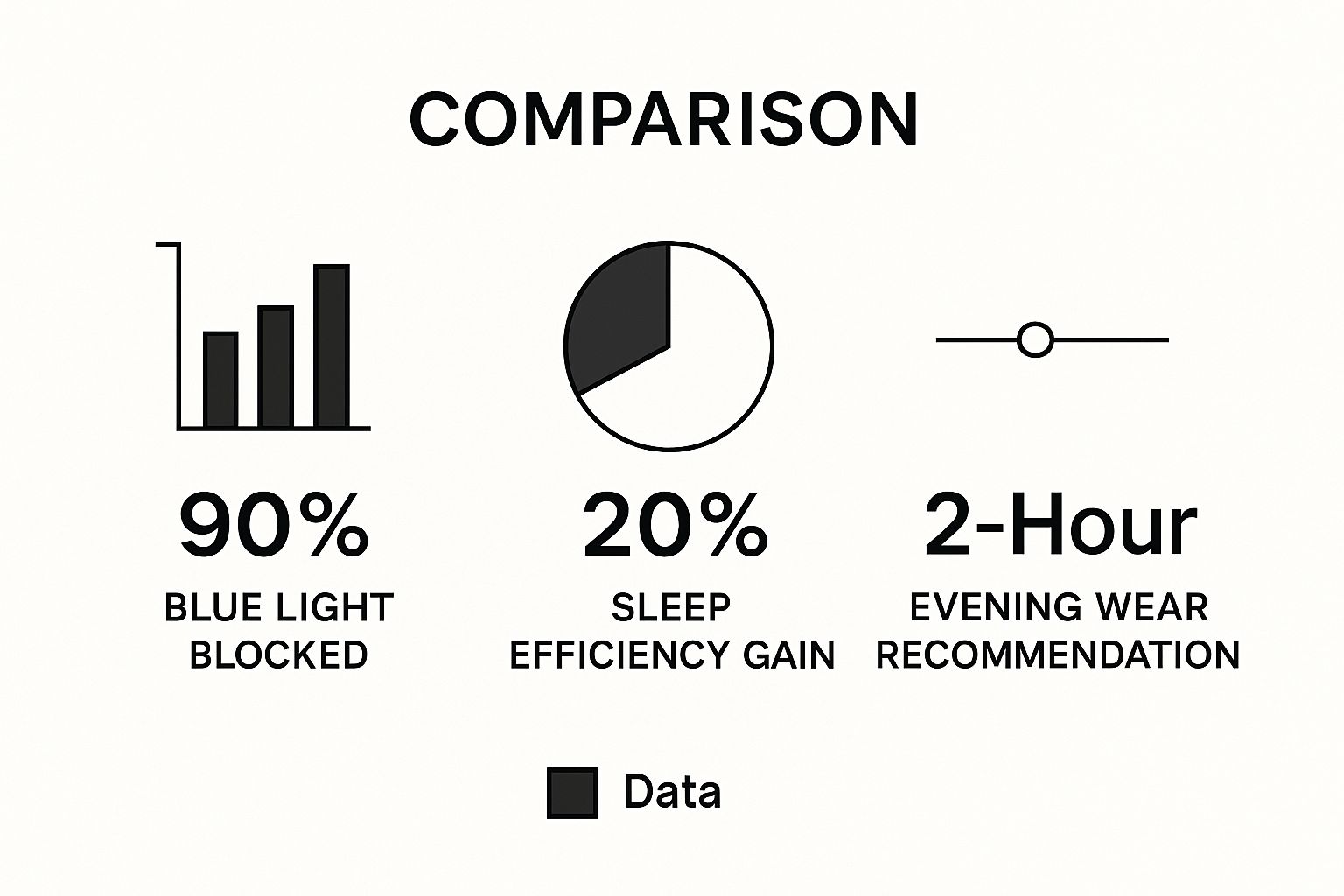
As you can see, popping on a quality pair for just a couple of hours before you hit the hay can make a massive difference in your sleep.
Still on the fence about which color to go with? This simple breakdown should help you decide.
| Lens Color | Blue Light Blocked | Best For | Ideal Time to Wear |
|---|---|---|---|
| Orange | 99%+ | Maximum sleep support, reducing eye strain, and resetting your circadian rhythm. | 2-3 hours before bed, especially if you're sensitive to light or have trouble sleeping. |
| Amber | 75%-90% | General evening use, winding down, reading, or watching TV without overstimulating your brain. | During the evening, after the sun has set, to ease into a relaxed state. |
Ultimately, the best choice depends on your specific goals. Orange is for serious sleep optimization, while amber is great for creating a more relaxed evening environment.
Here’s the thing: blue light glasses for sleep work even better when they’re part of a solid evening routine. Here are a few tips to combine with your new glasses for incredible results.
Top Ways to Get Good Sleep:
Top 4 Ways to Reduce Stress and Relax:
When you bundle these habits together, you create a powerful ritual that tells your body and mind that it's officially time to rest.
Ready to transform your nights and wake up feeling like a new person? Explore the full range of high-quality sleep glasses from Element Lux and find the perfect pair for your evening routine. Shop now and start your journey to better sleep!
