Let's cut right to it. If you've ever wondered, "are fluorescent lights bad for you?"—the short answer is yes, they can be.
Those buzzing tube lights in offices, schools, and even kitchens are praised for being energy-efficient, but they come with a few hidden costs to our health. They constantly pump out high-energy blue light, a bit of invisible UV radiation, and a subtle flicker that many people are surprisingly sensitive to. This is why a full day under them can leave you feeling drained and out of sorts.
That soft hum from a fluorescent light might seem harmless, but what's happening inside the bulb tells a different story. It’s not like the steady, warm glow from an old incandescent bulb. Instead, a fluorescent light works by zapping a tube filled with gas and mercury vapor with an electric current. This creates UV light, which then hits a phosphor coating on the inside of the tube, and that's what produces the light we see.
This little science experiment is exactly where the problems start. The light it creates isn't a stable, continuous beam. It's actually a series of incredibly fast pulses—a flicker that happens so quickly you can't consciously see it, but your brain sure can.
This constant on-off cycle, happening hundreds of times per second, is a real workout for your brain and eyes. They have to work overtime just to process what you're seeing. After a full workday or school day, that extra neurological load starts to add up.
Beyond the light itself, the bulb's physical makeup is another thing to think about. Every single fluorescent bulb contains a small amount of mercury, which is a powerful neurotoxin.
When a bulb breaks, those mercury vapors are released into the air. This isn't just a minor issue—studies have shown that mercury vapors from a broken bulb can hang around in the air for hours at levels way above the recommended safe limit. You can get a deeper dive into these hazards from FES Lighting's analysis of fluorescent bulb risks.
Let's quickly recap the main issues with a simple table.
This table breaks down the primary health issues tied to fluorescent lights and what's causing them behind the scenes.
| Health Concern | Primary Cause | Common Symptoms |
|---|---|---|
| Headaches & Migraines | High-frequency flicker overstimulates the visual cortex. | Tension headaches, sharp pain, visual disturbances, nausea. |
| Eye Strain | Constant pupil adjustments to flickering light and blue light overexposure. | Dry eyes, blurred vision, itching, general eye fatigue. |
| Cognitive Fatigue | The brain expends subconscious energy to process unstable light. | Difficulty concentrating, reduced productivity, mental fogginess. |
| Sleep Disruption | High-intensity blue light suppresses the sleep hormone, melatonin. | Trouble falling asleep, poor sleep quality, disrupted circadian rhythm. |
| Chemical Exposure | Breakage releases mercury vapor, a known neurotoxin. | Potential for respiratory irritation and neurological effects with exposure. |
These combined risks—the invisible flicker, the intense blue light, and the chemical hazard—are why so many people are looking for better alternatives and protective gear like blue light blocking glasses. It’s not just about comfort; it's about protecting our long-term health and well-being.
Ever felt that gritty, tired-eye feeling after a long day under office lights? Think of the harsh blue light from fluorescent bulbs as a constant, low-level assault on your eyes. It’s like forcing them through a non-stop, high-intensity workout with zero breaks.
This relentless demand makes your eye muscles work overtime just to focus, which is a direct recipe for digital eye strain.
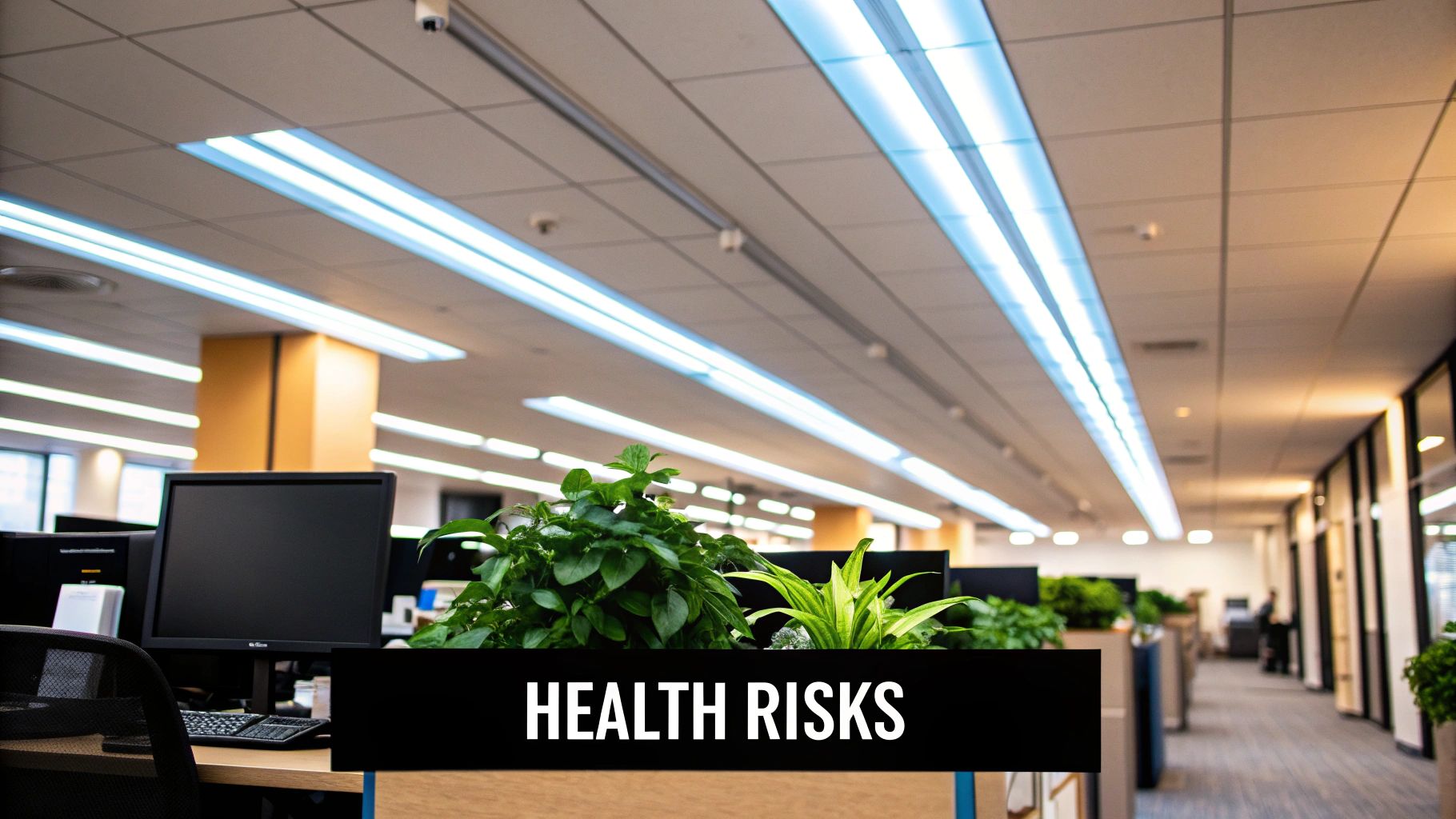
It’s no wonder so many of us end the day with burning, dry eyes. But what you can see is only half the story. The real troublemaker is often what you can't see.
Beyond that cold, blue glare, fluorescent lights have another dirty little secret: the invisible flicker. These bulbs don't emit a steady, stable stream of light. Instead, they’re rapidly pulsating—switching on and off hundreds of times per second.
While you can’t consciously see this strobe effect, your brain and nervous system definitely feel it.
This constant, subtle pulsing acts as a neurological irritant, and for many people, it's a direct trigger for nagging headaches and even full-blown migraines. Your brain is trying to make sense of visual information coming from a chaotic, unstable source, which puts it on high alert. This makes it incredibly difficult to focus, stay productive, and just feel good.
The problems with fluorescent lighting go way beyond immediate discomfort. Some of these bulbs also leak small amounts of ultraviolet (UV) radiation—the same stuff we're told to block with sunglasses.
While the dose from a single bulb is tiny, the cumulative effect of sitting under them day after day, year after year, really adds up.
A 2011 Australian study found that the widespread switch to fluorescent lights was linked to an estimated 12% increase in UV-related eye conditions like cataracts.
The research pointed out that some fluorescent lamps were emitting UV-A radiation well outside the accepted "safe" range, putting our eyes at unnecessary risk. This is a serious concern, especially for those of us who spend most of our waking hours indoors under artificial light.
Perhaps the most damaging impact of fluorescent light is what it does to your body’s internal clock, or circadian rhythm. The intense spike of blue light from these bulbs sends a powerful signal to your brain that mimics the bright midday sun.
When your brain gets this "it's high noon" signal late in the afternoon or evening, it slams the brakes on producing melatonin, the crucial hormone that tells your body it’s time to sleep.
This hormonal sabotage keeps your brain stuck in daytime mode, making it nearly impossible to wind down and get restorative sleep. Over time, this can spiral into chronic sleep problems, tanking your mood, energy, and even your immune system.
Understanding this is the first step to taking back control. You can dive deeper into how different types of light affect your body on our blue light blog. By filtering out this aggressive artificial light, you give your brain and body a fighting chance to get back to a state of natural balance.
So, now we know how the aggressive blue light and invisible flicker from fluorescent bulbs lead to tired eyes and headaches. What's the next logical step? Finding a practical way to fight back.
The most direct and effective defense is a quality pair of blue light blocking glasses. Think of them as a personal filter, creating a much-needed barrier between your eyes and the harsh artificial light all around you.
They are, quite literally, a shield for your vision. Specially designed orange and amber lenses go to work targeting and absorbing the most damaging high-energy wavelengths before they even have a chance to reach your eyes. This simple act dramatically dials down the visual stress your eyes and brain have to deal with all day, making your environment feel calmer and way more comfortable.
When it comes to serious blue light protection, orange-lensed glasses are the heavy hitters. By filtering out nearly all blue light, they provide maximum relief from the digital eye strain caused by both fluorescent lights and screens. This powerful filtering cuts right through the sharp glare, which can make a huge difference in symptoms like tired, dry eyes and blurry vision during those long workdays.
But the benefits go way beyond just immediate comfort. This level of filtration is absolutely crucial for your sleep. By blocking the specific blue light that slams the brakes on melatonin production, orange lenses send a clear signal to your brain: it's time to prepare for rest. Wearing them for a couple of hours before bed lets your body’s natural sleep cycle kick into gear without interference, paving the way for deeper, more restorative sleep.
While orange lenses are the champs for nighttime, amber lenses offer a more subtle—but just as important—benefit for your evening wind-down. Amber lenses are designed to create a warmer, softer visual world, a lot like the calming glow of a sunset or a campfire. This gentle filtering helps shift your nervous system out of that high-alert, "go-go-go" daytime mode. As you wrap up your day, slipping on a pair of amber blue light glasses helps turn down the volume on all that mental chatter and eases feelings of stress. It creates the perfect state of mind for true relaxation, making it much easier to decompress after a long day under harsh artificial lighting.
By filtering the specific wavelengths that keep your brain overstimulated, amber glasses help create a sense of tranquility. It's an effortless way to signal to your body and mind that the demands of the day are over and it's time to rest.
Getting consistently great sleep is all about building a solid routine. Blue light blocking glasses are a cornerstone of modern sleep hygiene, but they work best when you pair them with other healthy habits.
Managing stress is key to your overall well-being, and it's tightly linked to sleep quality. Here are four effective strategies to help you unwind.
That harsh glare from fluorescent lights does more than just give you a headache. It's waging a quiet war on your sleep. Deep inside your brain is a master clock called the circadian rhythm. Think of it as your body's own 24-hour operating system, and it runs on one simple cue: light.
For thousands of years, this system worked flawlessly. Bright, blue-rich sunlight during the day told our brains, "Be alert! Get things done!" Then, as the sun went down, the warm, soft glow of twilight sent the opposite signal: "Time to wind down."

Here's the problem: modern fluorescent lights and screens blast our eyes with intense blue light long after the sun has set. To your brain, that artificial glow looks a lot like the midday sun, sending a powerful "WAKE UP!" signal that hijacks your internal clock.
When your brain gets hit with all that high-energy blue light in the evening, it slams the brakes on producing melatonin, the very hormone that tells your body it’s time to sleep. It’s like chugging an espresso right before you try to go to bed. You might feel exhausted, but your mind is still wired and on high alert.
This is exactly why so many of us struggle to fall asleep, toss and turn all night, and wake up feeling like we've barely rested. The very lights we depend on are actively sabotaging our sleep.
This is where specially designed blue light blocking glasses make a world of difference. Slipping on a pair of orange-lensed glasses, like the ones from Element Lux, is like creating a personal sunset just for your eyes. They're engineered to filter out the most disruptive wavelengths of blue and green light—the ones that scream "daytime" to your brain.
By blocking these signals, the glasses let your brain ignore the confusing messages from fluorescent lights and screens. This simple step allows your body's natural melatonin production to get back on schedule, signaling that the day is over. The result? A much smoother transition into rest, helping you fall asleep faster and get the kind of deep sleep your body craves.
While orange lenses are your go-to for serious sleep prep, amber lenses are perfect for helping you relax and de-stress in the hours beforehand. Think of them as the gentle shift from a busy day to a calm evening. They filter just enough blue light to take the harsh, stimulating edge off your environment, creating a warmer, more soothing visual experience.
Wearing amber blue light blocking glasses in the evening helps shift your nervous system out of a state of high alert. It's an effortless way to signal to your brain and body that the day's demands are over, making it easier to unwind, relax, and quiet your mind.
This calming effect is a game-changer for a healthy evening routine, especially after a long day under stressful office lights.
Great sleep isn't about one magic trick; it’s about building a solid routine. Blue light blockers are a cornerstone, but they work best when you combine them with other smart habits.
You can't sleep if your mind is racing. Stress and sleep are enemies, so calming your nervous system before bed is key.
Knowing how fluorescent lights mess with your body is one thing, but actually doing something about it is what matters. The single most powerful way to reclaim your natural sleep cycle is to build a consistent evening routine.
This isn't about some complicated, rigid schedule. It's about creating a series of simple, intentional habits that signal to your brain and body that it's time to wind down.
If you do only one thing, make it this: wear orange-lensed blue light blocking glasses for two to three hours before bed. Think of these as a shield, protecting you from the confusing signals sent by all the artificial lights in your home.
By filtering out virtually all blue light, they put a stop to the hormonal interference that leaves you feeling wired when you should be feeling tired. This simple act allows your body to start producing melatonin—the sleep hormone—right on schedule. The result? A much smoother transition into sleep and a deeper, more restorative rest all night long.
Plus, this powerful filtering gives your eyes a much-needed break from the constant assault of fluorescent lights and screens, which can dramatically reduce eye strain and fatigue before your head even hits the pillow.
The infographic below shows a simple, three-step process to deal with some of the other hidden risks from fluorescent lighting, like EMF exposure.
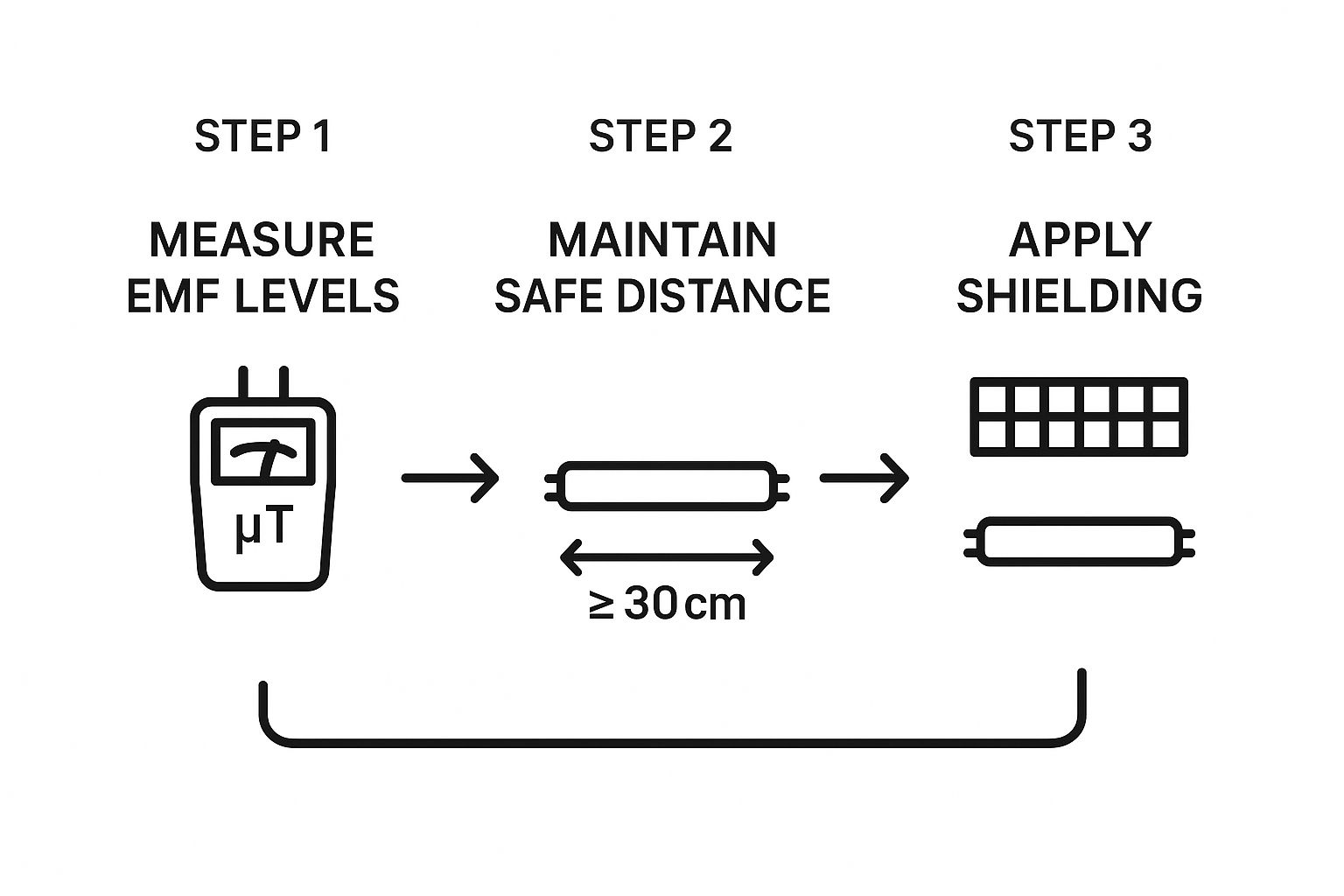
It's a good reminder that it's not just about the light. Managing your physical distance from these fixtures and using diffusers can also lessen their impact on your environment.
While orange lenses are your heavy-hitter for sleep prep, amber blue light glasses are your tool for relaxation. Wearing them in the evening creates a warmer, calmer visual environment, kind of like the soft glow of a sunset.
This subtle shift helps your nervous system switch from a state of high alert to one of rest and digest. It's an easy way to turn down the mental noise, making it easier to de-stress and prepare your mind for a peaceful night.
Pairing your blue light blocking glasses with a few other smart sleep habits creates a holistic approach that truly works. Here are the essentials:
To create a structured routine that works for you, try following a simple timeline. A good evening wind-down can make all the difference between a restless night and deep, rejuvenating sleep.
| Time Before Bed | Activity | Key Benefit |
|---|---|---|
| 2-3 Hours | Put on your orange blue light blocking glasses. Dim the lights in your home. | Blocks artificial light, allowing natural melatonin production to begin. |
| 1-2 Hours | Stop working, scrolling, or watching intense TV. Read a physical book or listen to calm music instead. | Reduces mental stimulation and helps your brain shift into a relaxed state. |
| 1 Hour | Tidy up your space for the next day. Maybe take a warm (not hot) bath or shower. | Creates a sense of calm and completion, while a warm bath can help lower body temperature for sleep. |
| 30 Minutes | Practice gentle stretching, deep breathing, or a short meditation session. | Actively lowers your heart rate and releases physical tension from the day. |
| Bedtime | Get into a cool, dark room. Avoid looking at your phone one last time. | Provides the optimal environment for your body to fall asleep and stay asleep. |
By consistently following these steps, you're not just hoping for good sleep—you're actively building the foundation for it, night after night.
For more deep dives into the science of light and practical tips for better living, be sure to check out our collection of resources.
Being stuck under harsh artificial light all day, especially the kind from fluorescent bulbs, can leave your nervous system stuck in "on" mode. It's a low-level but constant stimulation that adds to feelings of stress and anxiety, making it tough to truly switch off when the day is done.
To counteract this, you need to be intentional about helping your body and mind shift gears. Thankfully, a few powerful and surprisingly simple techniques can make a world of difference. By creating a calmer sensory environment and adopting a few relaxation habits, you can effectively turn down the mental noise and give your nervous system a much-needed break.
One of the easiest yet most effective ways to signal to your brain that it's time to unwind is to change the light you're seeing. Slipping on a pair of amber blue light blocking glasses in the evening instantly creates a warmer, more soothing visual world, much like the soft glow of a sunset.
This gentle filtering of harsh blue light helps your nervous system transition out of that high-alert, "daytime" state. By softening your surroundings, amber lenses dial down the feelings of stress and anxiety, making it far easier to relax after a long day under stimulating lights. Think of it as the first simple step toward a more peaceful evening.
It's an effortless way to create a personal sanctuary of calm light. By filtering the specific wavelengths that keep you overstimulated, amber glasses help promote a state of genuine relaxation, preparing your mind and body for restorative rest.
Having a toolkit of relaxation techniques is key to managing the pressures of modern life. Amber glasses are a fantastic starting point, but when you pair them with other proven methods, you create a powerful strategy for truly winding down.
Here are four of the best ways to reduce stress and find some calm in your evenings:
A lot of people ask if they really need blue light glasses, especially if they don’t feel that classic digital eye strain. It’s a great question, but the answer is a resounding yes. The damage from fluorescent lights and screens to your sleep cycle often happens under the radar.
Think of it as preventative care for your sleep. Even if your eyes feel fine, that blue light exposure in the evening is quietly telling your brain to stop producing melatonin. This leads to shallower sleep, which chips away at your mood and energy the next day. It’s a cumulative effect, and you might not notice the problem until you’re already deep in it.
While both are fantastic tools, they have different jobs. It really comes down to when you're using them.
Amber lenses are your go-to for daytime use. They filter just enough blue light to take the edge off harsh fluorescent office lighting and computer screens, all without making your world look too strange. They’re perfect for easing eye strain and helping you wind down as your workday wraps up.
Orange lenses, on the other hand, are the heavy hitters. They’re designed for maximum protection, blocking nearly all blue light and even some green light. This makes them the ideal choice for the 1-3 hours before you plan to go to sleep. Their job is to fiercely guard your melatonin production, setting the stage for deep, restorative rest.
So, think of it this way: amber is for all-day comfort, and orange is for serious nighttime sleep prep.
Night mode settings on phones and computers are a good start, but they’re far from a complete solution. They only dim the blue light coming from that one device, leaving you exposed to everything else.
What about the overhead fluorescent lights, the TV across the room, or other glowing electronics? Your eyes are still getting blasted with sleep-disrupting signals from all angles. Blue light blocking glasses create a protective bubble around you, shielding you from your entire environment. This consistent, warm-hued signal is what truly tells your brain it’s time to power down and get ready for incredible sleep.
Ready to protect your eyes and finally get the sleep you deserve? The team at Element Lux has engineered the perfect solution. Our scientifically-designed blue light blocking glasses filter out the exact wavelengths that cause eye strain and wreck your natural sleep cycle.
Shop Now and Experience the Difference
When it comes to getting the best sleep possible—the kind of deep, restorative rest your body needs to thrive—the answer is refreshingly simple: you need dim, warm-colored light. Think amber or red, like the gentle glow of a campfire or a sunset. This kind of light works with your body, encouraging the natural production of melatonin—the hormone that signals it's time to power down and rest.
On the flip side, bright and cool-toned lights, especially those loaded with blue light, send the complete opposite message. They tell your brain to stay awake, alert, and ready for action, directly interfering with the crucial sleep your body requires for daily repair.
We all know that deep, restorative sleep is a cornerstone of good health. It's not a luxury; it's the non-negotiable foundation for our daytime energy, sharp thinking, and emotional balance. And while plenty of things can mess with our sleep, one of the most powerful—and most overlooked—is our daily exposure to light.
Getting your lighting right isn't just a minor life hack. It's a fundamental strategy for improving just about every part of your well-being, because without quality sleep, your health will suffer.
Think of your body as having a highly precise internal clock. This is your circadian rhythm, a biological timer that runs in the background, managing everything from hormone release to body temperature. It’s designed to keep you on a consistent sleep-wake cycle, and the single most important cue it uses to set its time is light. Prioritizing this cycle is key to getting the important sleep you need every single night.
The kind of light you’re exposed to in the hours before bed sends a direct, powerful signal straight to your brain.
When your eyes register the long, gentle wavelengths of warm light, it’s a clear sign that the day is winding down. This prompts your brain to start producing melatonin, effectively prepping your body for a night of deep, uninterrupted rest—the very foundation of a healthy life.
But when you're hit with the short, intense wavelengths of blue light—the kind that radiates from the midday sun or your phone screen—it basically shouts "IT'S DAYTIME!" to your internal clock. This slams the brakes on melatonin production, which can delay sleep and leave you tossing and turning for hours, robbing you of essential rest.
Mastering your light environment really just means being intentional about the signals you send to your brain, and when you send them.
A consistent sleep schedule, backed by a smart lighting routine, is one of the most effective ways to sharpen your focus and boost your energy. Poor sleep, on the other hand, is tied to a whole host of problems, including memory issues, mood swings, and a weaker immune system. The importance of sleep cannot be overstated.
Making just a few small adjustments can lead to some seriously big improvements. The key is to be consistent.
To make it even clearer, let's break down how different colors of light can either help or hinder your journey to dreamland.
Here's a simple rundown of how different light colors impact your body's readiness for sleep.
| Light Color | Effect on Melatonin | Best Time to Use | Recommendation |
|---|---|---|---|
| Blue/White | Strongly Suppresses | Daytime Only | Avoid completely for 2-3 hours before bed. This includes most phone/TV screens. |
| Yellow | Mildly Suppresses | Early Evening | Better than blue, but still not ideal right before sleep. Good for "wind-down" time. |
| Orange/Amber | Minimal Effect | 1-2 hours before bed | Excellent choice for evening reading lamps and general room lighting. |
| Red | No Effect | Right before sleep | The absolute best for preserving melatonin. Perfect for nightlights and bedside lamps. |
As you can see, the shift from cool to warm colors throughout the evening is more than just an aesthetic choice—it's a biological command that helps prepare your mind and body for the restorative rest you need to function at your best.
To really get what light is best for sleep, we first need to look at the powerful connection between light and your body's built-in timing system. Getting quality sleep isn't just a perk; it's a non-negotiable biological need for your mind and body to repair, recharge, and work like they're supposed to.
Imagine your circadian rhythm as a huge orchestra playing inside you. Every organ and cell has its own part to play, and to keep everything in sync, you need a conductor. That conductor is a tiny bundle of nerve cells in your brain called the suprachiasmatic nucleus, or SCN for short.
This SCN is your body's "master clock," and it gets its main cues directly from the light your eyes see. When your eyes pick up light, they shoot signals straight to the SCN, which then tells the rest of your body what time it is and what it should be doing—like being alert during the day or starting to wind down for the night, initiating that all-important sleep phase.
But not all light sends the same message. Your master clock is incredibly sensitive to different colors, or wavelengths, of light. This is where the huge difference between daytime and nighttime light really matters for securing the sleep your body desperately needs.
Bright, blue-wavelength light—the kind you get from midday sun and, of course, our phone and computer screens—is a powerful "wake up!" signal. It basically yells at your SCN to be alert. In response, your brain slams the brakes on producing melatonin, the key hormone that makes you feel drowsy and ready for sleep.
On the other hand, warm, long-wavelength light, like the reds and ambers of a sunset, sends a much calmer message. This kind of light whispers, "It's time to wind down." It barely touches your melatonin production, letting your body's natural sleepiness build up as the evening goes on.
This next visual really nails the simple but critical link between your evening light choices and your chances of getting a good night's rest.
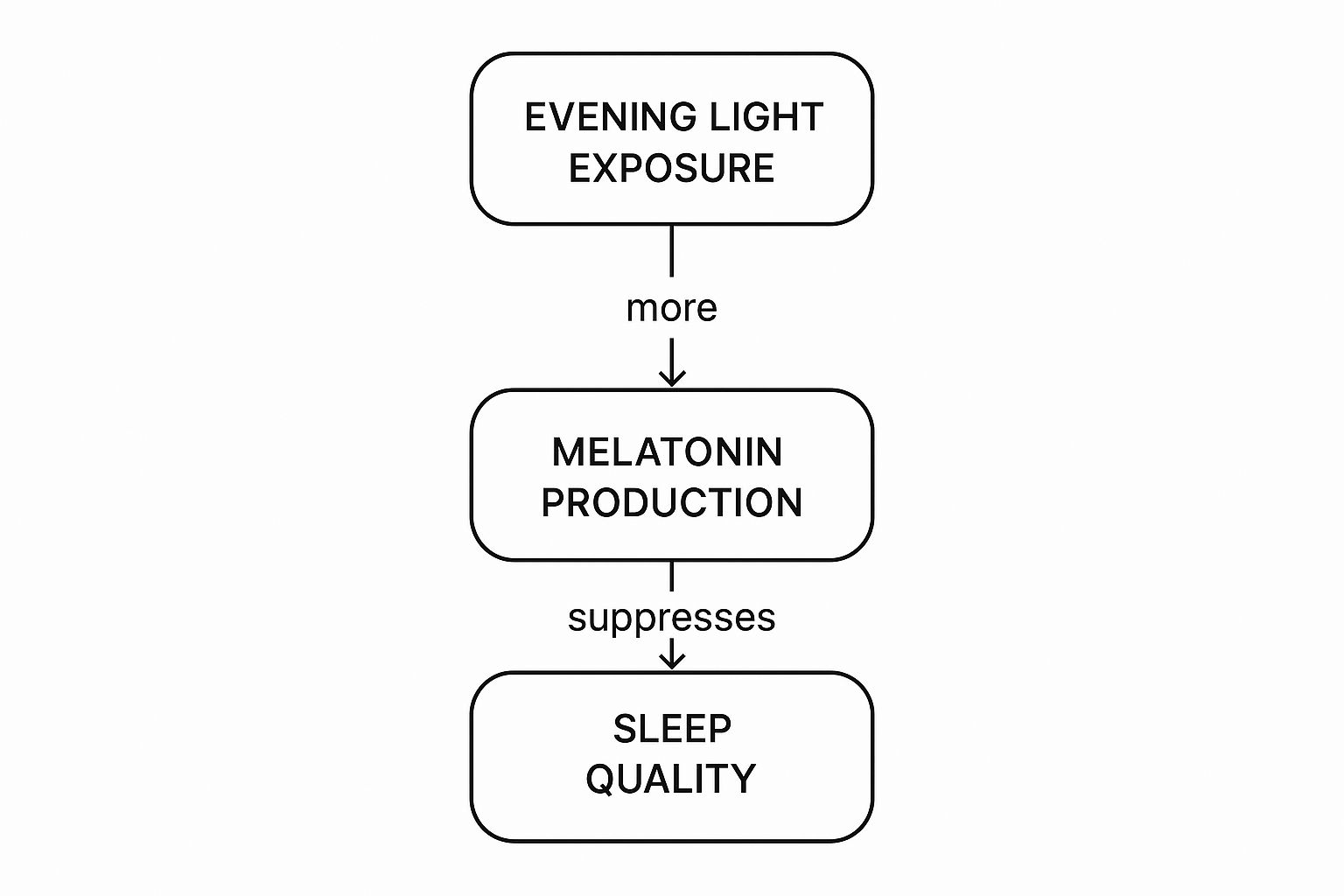
The infographic lays it out perfectly: when you expose your eyes to the wrong kind of light at night, you directly shut down the hormone you need to fall asleep. The end result? Your sleep quality takes a nosedive, and without quality sleep, your health is at risk.
Understanding this whole process is the first step to taking back your nights. It’s not just about the type of light you're around, but also the timing.
Your body is hardwired to respond to light cues. By intentionally managing your light exposure—getting bright light in the morning and switching to dim, warm light at night—you can reinforce your natural sleep-wake cycle for much better health.
When you consistently send the right signals to your master clock, you help every system in your body work together in harmony. It makes sure that when your head finally hits the pillow, your brain is already primed and ready to kick off a night of deep, restorative sleep. This foundation is essential for everything from mental sharpness and mood to physical recovery and a strong immune system.
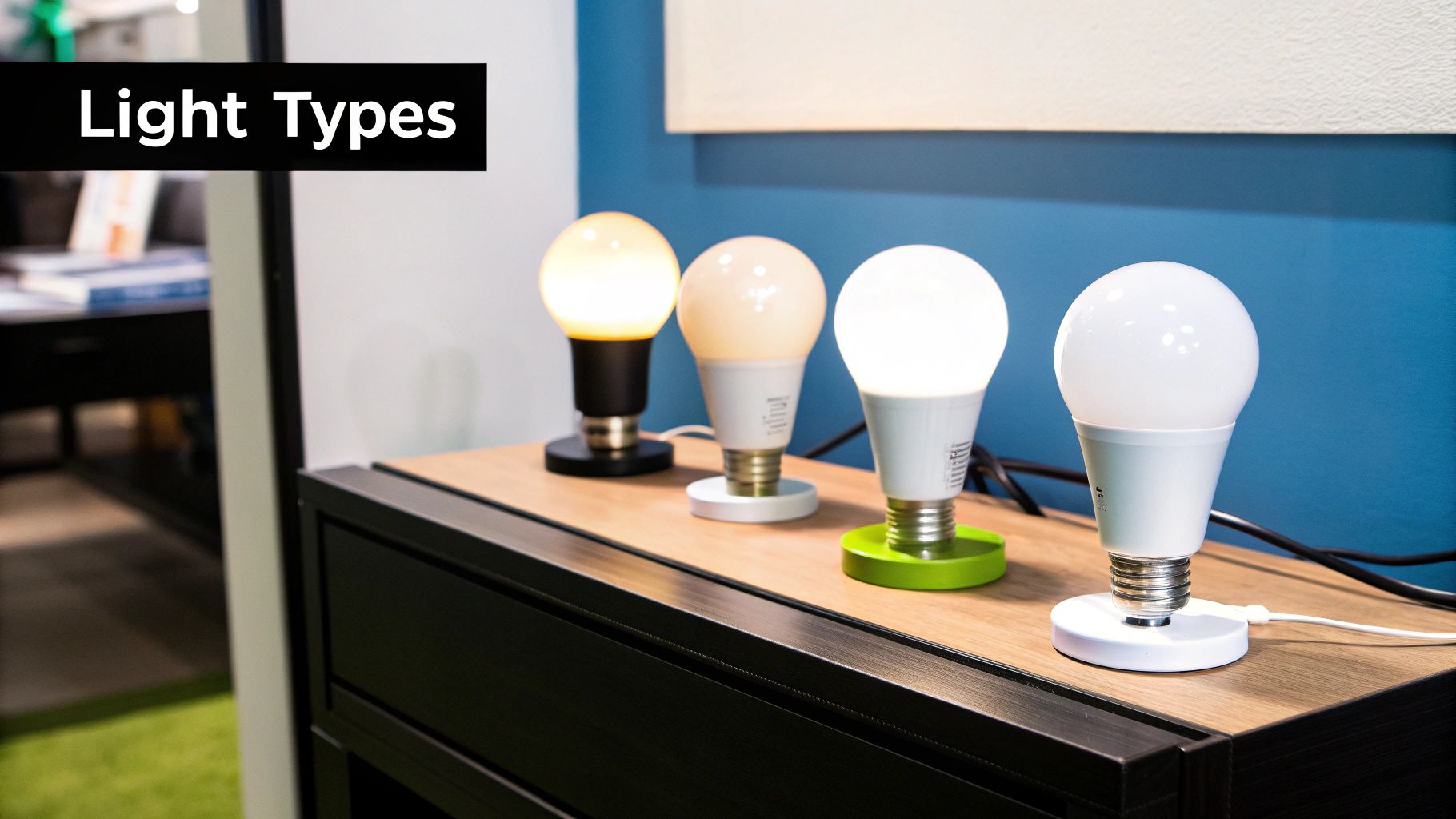
While the right kind of light can be a powerful tool for great sleep, the wrong kind can completely sabotage it. In our modern world, the number one culprit behind disrupted sleep cycles is artificial blue light. We all know that quality sleep is non-negotiable for our health, focus, and mood, but this specific type of light often gets in the way.
Now, blue light itself isn't the enemy. The sun is actually our biggest source of it, and during the day, those short, high-energy wavelengths are fantastic for keeping us alert and feeling good. The problem kicks in when we’re bathed in it long after sunset, right when our bodies should be preparing for vital rest.
Our brains are hardwired to see blue light and think, "Daytime!" When your eyes pick up these wavelengths in the evening, they send an urgent message to your internal clock that the sun is still up. This biological mix-up slams the brakes on melatonin production, the crucial hormone that signals to your body that it's time to power down.
You don’t have to go on a scavenger hunt to find this sleep-disrupting light. It's woven into our daily routines, especially in the evening hours when we’re supposed to be winding down.
Common culprits include:
This constant stream of "daytime" signals tricks our brains into staying on high alert, making the transition to rest feel nearly impossible. And the fallout goes way beyond just taking a little longer to doze off; it undermines the very importance of sleep itself.
Research paints a clear picture of the connection between evening blue light and melatonin. One study, for instance, found that people exposed to blue light before bed saw their melatonin levels slashed by about 50% compared to those who used warmer light. The result? Less REM sleep.
This melatonin suppression isn't just a clinical data point; it has very real effects on how you feel every single day. When your body misses its cue to prepare for rest, it sets off a chain reaction of negative consequences that highlight just how important sleep is.
Too much evening blue light leads to:
Understanding this is key. The light from your phone isn't just bright; it's sending a specific biological command: stay awake. By recognizing these sources and their impact, you can finally start to take back control. To learn more, you can check out our detailed guide on how blue light affects your brain.
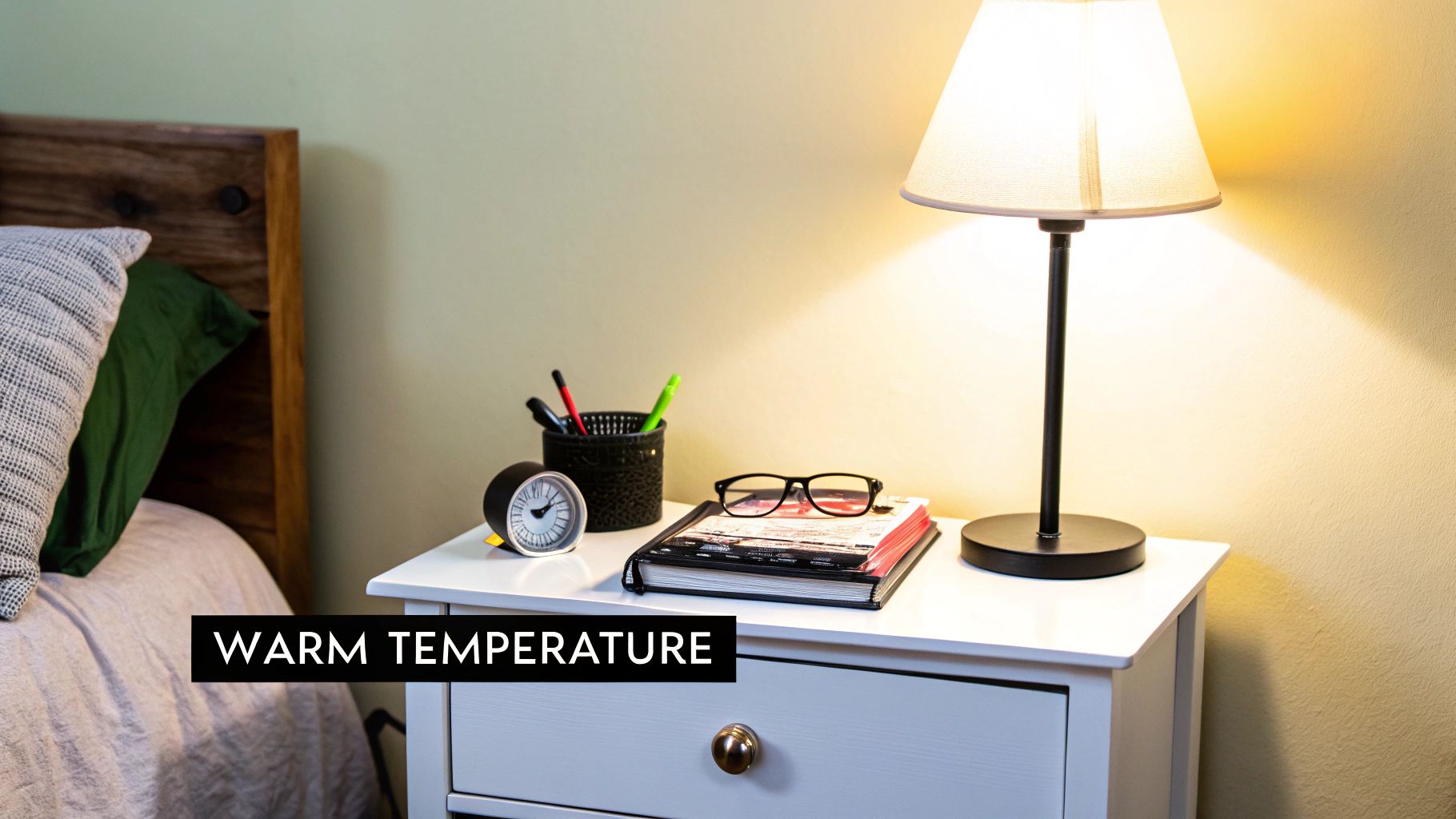
Okay, so you get it—blue light at night is bad news. Now for the fun part: building the solution. Transforming your home into a sleep sanctuary is one of the most powerful things you can do to protect your nightly rest, and it's way easier than you might think. Recognizing the importance of sleep is the first step, and acting on it is the next.
The whole idea is to create an environment that tells your brain it's safe to power down. This all starts by embracing warm-colored light, the undisputed hero of evening illumination.
When you're trying to nail down what light is best for sleep, the answer is all about color and wavelength. Red and amber lights are the champions of the evening because their long, gentle wavelengths barely make a dent in your melatonin production. They don't send your brain the same aggressive, "wake up!" signal that the short waves of blue light do.
Think of it like this: blue light is a blaring alarm clock for your brain, while red light is a soft, soothing lullaby. One jolts you into high alert, the other gently guides you toward rest. By strategically using red and amber hues, you’re working with your body’s natural wind-down process, not against it.
This simple switch helps ensure your brain pumps out the melatonin you need to not only fall asleep but stay asleep, letting you get that deep, restorative rest where all the good stuff—like repair and memory consolidation—happens.
Your body is hardwired to follow the sun. When you dim your lights and shift to warmer colors after sunset, you're essentially mimicking a natural dusk inside your home. This reinforces your body's innate rhythm and preps it for a full night of healing, emphasizing the critical importance of a healthy sleep cycle.
Creating this sleep-friendly haven doesn’t mean you need a major renovation. It’s really just about a few intentional changes you can start making tonight. Trust me, these small tweaks can lead to some seriously big improvements in your sleep quality.
Here are a few actionable strategies to get you started:
By making these simple yet powerful changes, you stop fighting your internal clock and start working with it. You're paving the way for the deep, uninterrupted sleep that fuels a healthy, energetic life.
A great night's sleep doesn't start when you hit the pillow—it begins the moment you wake up.
We talk a lot about creating the perfect dark, quiet environment for sleep, but the light you see in the morning is a powerful lever for setting your internal clock. Think of it as hitting the big "start" button on your circadian rhythm for the day. This simple morning habit underscores the importance of a 24-hour approach to sleep health.
Getting bright, natural sunlight in your eyes shortly after waking is one of the most important things you can do for your sleep. This powerful signal tells your brain's master clock that the day has officially begun, triggering a cascade of hormones that sharpen your focus and boost your energy.
More importantly, this simple act anchors your entire 24-hour cycle. It helps your body know exactly when to start winding down later that evening, so you're actually tired when bedtime rolls around.
Of course, getting natural sunlight isn't always an option, especially for early risers or anyone living through a dark, cloudy winter. Fortunately, a couple of clever gadgets can mimic that biological cue.
Two of the most effective tools are:
This gentle awakening process sets a calmer, more positive tone for your entire day. By avoiding a stressful start, you're not just improving your morning mood—you're supporting a healthier hormonal balance that directly contributes to better sleep quality that night.
It's no surprise that light therapy has become a popular, drug-free way to tackle sleep issues. The global market for these devices was valued at nearly USD 1 billion in 2022 and is expected to keep growing, which shows just how many people are looking for effective solutions beyond pills. You can check out more data on this growing market at Grand View Research.
By starting your day with the right light signals, you're programming your body for a successful night of sleep. And while morning light sets the stage, protecting your eyes from disruptive light at night is just as critical. The perfect one-two punch is bright mornings and dark evenings.
This is why so many people find blue light blocking glasses to be an essential tool for evening screen use. If you're curious, you can learn more about if these glasses help with sleep in our guide.
When you start digging into the world of sleep optimization, a lot of questions pop up. Getting clear, simple answers is key, because every smart change you make to your lighting environment is a direct investment in the restorative sleep your body and mind are craving.
Without that nightly repair cycle, everything from your mood to your immune system can take a hit. Let's tackle some of the most common questions about light and sleep to get you on the right track, because understanding these details reinforces the importance of sleep hygiene.
Not at all, but you do have to be a bit picky. The problem is that many standard, cool-white LEDs are packed with the kind of harsh blue light that kills melatonin production.
The good news is that LED technology has come a long way. You can now easily find "warm white" or "soft white" LEDs that give off a much gentler, yellowish glow. Even better are smart LEDs, which can be programmed to shift to a sleep-friendly red or amber color in the evening. This gives you the best of both worlds: energy-efficient light during the day and a sleep-promoting environment at night.
Yes, and the evidence is pretty solid. Wearing a good pair of blue light blocking glasses for a few hours before bed can dramatically reduce the melatonin suppression caused by screens and artificial lights.
Think of them as a shield for your eyes. They filter out the disruptive, short-wavelength light that tricks your brain into thinking it’s still midday. This makes them a super practical tool for anyone who needs to be on a computer or phone in the evening.
Using them means you can wind down without having to go completely screen-free. For a deeper look into picking the right pair and getting the most out of them, check out the helpful guides in our Element Lux resources section.
For the absolute best sleep quality, a pitch-black room is the gold standard. Seriously, even a tiny bit of light can mess with your sleep cycles, and protecting those cycles is vital for your health.
But we get it—sometimes a night light is a must for safety, especially for kids or older adults. If you need one, the color is everything. Always, always choose a night light that gives off a dim red or amber light. These long-wavelength colors are the least likely to disrupt melatonin and pull you out of crucial deep sleep stages.
Standard white or blue night lights, on the other hand, are far more stimulating to the brain. Making this one small change ensures safety without wrecking the quality of your rest.
At Element Lux, we’re all about helping you reclaim your nights. Our high-performance blue light blocking glasses are designed to protect your eyes and preserve your natural sleep cycle, allowing you to wind down peacefully even in a world full of screens.
Discover the difference and shop our collection today.
A blue light filter is essentially a tool that dials down the amount of intense, high-energy blue light coming from your digital screens. Think of it like putting a pair of digital sunglasses on your phone or laptop. It’s designed to selectively dim the part of the light spectrum that’s most known for messing with your sleep and making your eyes feel tired, both of which are critical for your overall health and well-being.
Picture the light from your screen as a full rainbow of colors. A blue light filter steps in and specifically targets the blue and violet parts of that rainbow, turning down their brightness.
This is a big deal because the artificial blue light from our devices is remarkably similar to the blue light in natural sunlight. During the day, that sunlight is great—it tells our brain to be awake, alert, and focused. But when we get that same signal from our screens late at night, our brain gets confused. It starts to think it’s still daytime, which can seriously disrupt your body’s natural wind-down process and sabotage the quality of your sleep.
To get a clearer picture of how this all fits together, here’s a quick summary of the core concepts.
| Aspect | Description |
|---|---|
| What is Blue Light? | A high-energy wavelength of light emitted by the sun and digital screens. It signals the brain to be awake and alert. |
| The Problem at Night | Exposure to blue light in the evening tricks the brain into thinking it's still daytime, suppressing sleep hormones essential for rest. |
| What a Filter Does | It reduces the amount of blue light coming from your screen, creating a warmer display that supports natural sleep patterns. |
| The Primary Goal | To protect your body's internal clock (circadian rhythm) and ensure you get the restorative sleep you need to function. |
This table lays out the basics, but the real benefit comes down to one thing: protecting your sleep.
The main job of a blue light filter is to defend your body’s natural sleep-wake cycle, also known as your circadian rhythm. Quality sleep is foundational to health, and a filter helps protect it in a few key ways:
At its core, a blue light filter is a wellness tool. It helps realign your modern digital habits with your body’s ancient need for a clear distinction between day and night, making quality sleep more achievable.
By simply dialing down the blue light, you’re doing more than just changing your screen’s color—you’re sending a clear "goodnight" signal to your brain. It’s a small adjustment that can be a powerful first step toward better sleep hygiene and improved daily performance.
For a deeper dive into how light impacts your nightly rest, feel free to explore our blue light blog. Understanding this connection is the key to finally reclaiming your nights.
Your body runs on a surprisingly smart internal clock called the circadian rhythm. Think of it as your body's 24-hour operating system, telling you when to feel awake and when it's time to power down for sleep. The most powerful cue for this entire system? Natural sunlight.
When your eyes see the bright, blue-heavy light of the morning sun, your brain gets a clear signal: "It's daytime! Get sharp and be productive." This is how it's supposed to work—it keeps you perfectly in sync with the world around you, ensuring you have energy during the day and can rest at night.
The problem starts when we stretch "daytime" long after the sun has gone down. Our phones, tablets, laptops, and TVs are all pumping out a concentrated stream of that same high-energy blue light. So when you're scrolling through your feed at 10 PM, you're sending your brain a very confusing signal: "The sun is still up!" This directly undermines your ability to get the essential sleep your body needs.
This false signal directly sabotages a critical sleep hormone called melatonin. Often called the "hormone of darkness," melatonin is what your brain releases to tell your body it's time to get sleepy and prepare for rest.
On a normal day, as the sun sets, your melatonin levels naturally start to climb. This gradual rise is what makes you feel drowsy, setting the stage for a great night of restorative sleep. But bombarding your eyes with blue light in the evening slams the brakes on that entire process.
When your brain is tricked into thinking it's still noon, it shuts down melatonin production. This is the number one reason so many of us struggle to fall asleep after late-night screen time. It completely undermines the very foundation of a good night's rest.
Without enough melatonin, your body’s "time for bed" signal gets lost in translation. This can kick off a whole host of sleep issues, making it harder to fall asleep and stay asleep.
The fallout from this cycle is much more than just feeling tired the next morning. Quality sleep isn't a luxury; it’s a non-negotiable biological need for your physical and mental health. When your circadian rhythm is constantly out of whack, you're robbing your body of its crucial repair time, which can lead to:
Just understanding this connection is the first step toward getting your nights back. If you're curious how tools like glasses can make a difference, you can learn more about how blue light glasses aid sleep and help support a healthier cycle. In the end, managing your evening blue light exposure is one of the most powerful things you can do to help your body get the deep, restorative sleep it needs to thrive.
So, how does a blue light filter actually stop those sleep-wrecking wavelengths from hitting your eyes? It’s not magic—it's just clever optical science that works in one of two main ways: absorption or reflection.
Once you get how these work, you'll understand exactly what’s happening when you flip on a software filter or slide on a pair of blue light glasses to protect your sleep.
The first method, absorption, is pretty much what it sounds like. Think of a sponge soaking up water. Filters using this tech have specific molecules or dyes baked into them that are engineered to capture and absorb high-energy blue light before it ever gets to your eyes.
This is the principle behind most physical filters.
For instance, those glasses with the noticeably yellow or amber lenses? That’s absorption in action. The pigments in the lenses literally trap blue light, which is why everything looks warmer and cozier when you wear them. It’s a simple but powerful way to protect your sleep cycle.
The other method is reflection. Imagine a bouncer at a club who only lets certain people in. Reflective filters use a special multi-layered coating that acts like a highly selective mirror, bouncing specific blue light wavelengths away from your eyes while letting all the other light pass through.
You'll see this technology most often in blue light glasses that look almost perfectly clear. They aren't as aggressive as the deep amber lenses, but their coatings can still reflect a huge chunk of the most problematic blue light that disrupts sleep. If you look closely, you might even notice a faint blue or purple shimmer on the lens surface.
The core idea behind filter technology is simple: selectively manage the light spectrum reaching your eyes. Whether by absorbing it like a sponge or reflecting it like a mirror, the goal is to reduce the "daytime" signals that can disrupt your natural sleep patterns.
This concept isn't exactly new, either. The roots of this tech actually trace back to early 20th-century photography, where photographers used yellow-dyed filters to absorb UV and blue light to get clearer images. So, the pioneering work done over a century ago laid the groundwork for the protective eyewear we use today to help us sleep better. You can check out the fascinating history of photographic filters to see how it all evolved.
You run into this technology in a few common forms, each designed to help you maintain a healthy sleep cycle in our screen-filled world.
Ultimately, understanding the mechanics of what is a blue light filter helps you pick the right tool for the job. It's all about giving your brain the clear signal it needs: when it's dark outside, it's time to wind down for sleep.
Using a blue light filter is about more than just tinting your screen a warm color. It's a simple change that delivers some surprisingly powerful health benefits, with the biggest one being a dramatic improvement in your sleep. When you consciously manage the light you’re exposed to, you’re helping your body’s internal clock stay on track, which is the foundation of good health.
Another huge win is the relief it brings from digital eye strain. By filtering out those harsh, high-energy blue wavelengths, a filter can make hours in front of a computer or phone feel far less punishing. This helps cut down on common issues like tired, gritty eyes and tension headaches that can interfere with your ability to relax and sleep well.
If there's one reason to use a blue light filter, it's to protect your sleep. When you stare at screens after dark, the intense blue light tricks your brain into thinking it's still daytime. This slams the brakes on melatonin production—the hormone that signals your body it's time to rest. This single disruption is a huge reason why so many of us struggle to fall asleep or have restless nights.
Think of a blue light filter as a shield. It blocks those confusing "daytime" signals from reaching your eyes, allowing your brain to start producing melatonin naturally as the evening goes on.
This helps you:
Ever finish a long day at the computer with dry, aching eyes, a nagging headache, and slightly blurry vision? That’s digital eye strain. While a few things can cause it, the high-energy nature of blue light is a major culprit. A blue light filter works by softening the harsh visual contrast, making the screen much gentler on your eyes.
This can bring a noticeable reduction in those all-too-common symptoms:
By dialing down the most intense part of the light spectrum, a blue light filter creates a more comfortable viewing experience. This makes it easier to work, study, or relax in front of a screen without the physical discomfort that can wreck your productivity and, most importantly, your ability to get a good night's sleep.
This problem really exploded in the 21st century as screens became a non-negotiable part of daily life. Today, with the average person clocking 8+ hours of daily screen time, the issue is more relevant than ever. Studies have confirmed that devices like smartphones and LED monitors blast out high levels of the exact blue wavelengths that throw our natural sleep cycles into chaos. In response, a multi-billion dollar industry for filters has grown, with some reports suggesting that consistent use can reduce eye strain symptoms by up to 65%. You can discover more insights about the history of blue light glasses and see how awareness has skyrocketed.
Ultimately, making a blue light filter part of your daily routine is a simple, powerful move for better sleep and more comfortable days. For more strategies to improve your nightly rest, check out the helpful articles in our online resources.
Okay, so you're sold on the idea of a blue light filter helping you sleep better. Awesome. The next step is figuring out which one actually fits into your daily routine.
This isn't a one-size-fits-all situation. The right choice really comes down to your devices, your habits, and just how serious you are about protecting your melatonin and prioritizing sleep. Your two main camps are software and hardware—let's break them down.
Software filters are, without a doubt, the easiest and most accessible option out there. They're already built right into the operating system of your phone, tablet, or computer, just waiting for you to flip a switch.
These filters work by adjusting your screen's color output, dialing down the harsh blue light in favor of a warmer, amber tone. The result is a display that’s much easier on your eyes and far less likely to mess with your sleep cycle.
Here’s how to find and activate them on the most common devices:
Settings > Display & Brightness > Night Shift. You can schedule it to turn on automatically from sunset to sunrise, which is a game-changer for protecting your melatonin in the evening.Settings > Display. It lets you customize the intensity and set a schedule, making it a seamless part of your wind-down routine for better sleep.Settings > System > Display > Night light settings. Here, you can tweak the color temperature and have it kick in automatically after dark to support your sleep.System Settings > Displays > Night Shift. Just like on the iPhone, you can set it to run on a custom schedule or simply from sunset to sunrise.The real power of software filters is automation. When you set it and forget it, you align your screen's light with the natural rhythm of the day. Every single evening, it sends a consistent signal to your brain: "Hey, it's time to start winding down for sleep."
While software is fantastic for its convenience, hardware filters offer a more comprehensive shield for your sleep. They work by physically blocking blue light before it can even hit your eyes.
This is a huge deal because hardware isn't limited to just one screen. It protects you from all artificial blue light sources—your phone, sure, but also the LED lights in your ceiling, your TV, and any other glowing gadget in the room that could be quietly disrupting your sleep.
This image gives you a good idea of how different hardware and software options stack up in terms of effectiveness.
As you can see, the amount of blue light reduction varies quite a bit. Software filters can be incredibly effective, especially when you crank the warmth setting all the way up.
The most popular hardware solutions are:
To help you decide, let's compare the two side-by-side.
| Feature | Software Filters (e.g., Night Shift) | Hardware Filters (e.g., Glasses, Screen Protectors) |
|---|---|---|
| Convenience | Excellent. Already built into most devices and can be automated. | Requires a purchase and remembering to use the item (glasses) or a one-time installation (protector). |
| Protection Scope | Only protects you from the screen of the specific device it's on. | Protects from all blue light sources in your environment, crucial for comprehensive sleep protection. |
| Cost | Free. | Varies. Screen protectors are affordable, while high-quality glasses are an investment in your sleep. |
| Best For | Casual evening screen use and automated, basic protection for sleep. | Serious sleep protection, people sensitive to light, and reducing daytime eye strain. |
| Customization | High. You can adjust the intensity and schedule it to the minute. | Low. The filtering level is fixed by the product's design. |
So, which one is best? Honestly, you don't have to choose just one.
The ultimate strategy is often a combination of both. Use an automated software filter on all your devices as your baseline, then throw on a pair of high-quality amber glasses in the hours before bed. This two-pronged approach gives your sleep the most robust protection possible.
As people start digging into blue light filters, a few questions always pop up. Getting those answered is key to using them right, especially when your sleep is on the line. Let's tackle the big ones.
Yes, they absolutely do—and the science is pretty simple. A blue light filter’s main job is to stop your screens from messing with melatonin, the hormone that signals your body to power down for the night.
By filtering out the specific blue light waves that look like daylight to your brain, you’re letting your body produce melatonin naturally as evening rolls in. This helps get your internal clock (your circadian rhythm) back on track, making it way easier to fall asleep and wake up feeling refreshed. It's not a placebo; you're fixing the biological short-circuit caused by late-night screen time that robs you of essential rest.
Nope, not at all. Blue light filters are designed purely for your comfort and to support better sleep. Whether it's software that adds a warm tint to your screen or a physical pair of glasses, these tools just change the light spectrum hitting your eyes. They don't alter your vision or cause any kind of strain.
Think of a blue light filter as a subtractive tool—it only removes a slice of the light. It adds nothing harmful and is completely safe for both short-term and long-term use. You're just creating a gentler, less jarring visual environment that is more conducive to sleep.
This really comes down to personal preference, but there's one non-negotiable window: the 2-3 hours before you go to bed. That’s when blue light exposure does the most damage to your sleep cycle by slamming the brakes on melatonin production. Protecting this window is critical for quality sleep.
During the daytime, the benefits are more about comfort. Keeping a filter on all day can be a game-changer for reducing digital eye strain—think tired, dry eyes and nagging headaches. If you spend your days staring at a computer, a subtle filter can make your workday feel a lot less grueling.
Here’s a simple way to think about it:
At the end of the day, using a blue light filter is about sending your body the right signals at the right time. By blocking blue light at night, you’re telling your brain it’s time to wind down, setting the stage for the kind of deep sleep your body and mind are craving.
Ready to give your sleep the ultimate protection? The amber lenses from Element Lux are engineered to block over 99% of disruptive blue light, helping you fall asleep faster and wake up refreshed. Shop our collection now and reclaim your nights.
Working the night shift is a tough but essential job in our 24/7 world. The problem is, it puts you in direct conflict with your body's most basic programming, leading to a whole host of night shift health problems. This isn't just about feeling tired; it's about the long-term toll that fighting your natural rhythm takes on your health, primarily by disrupting the restorative sleep you desperately need.
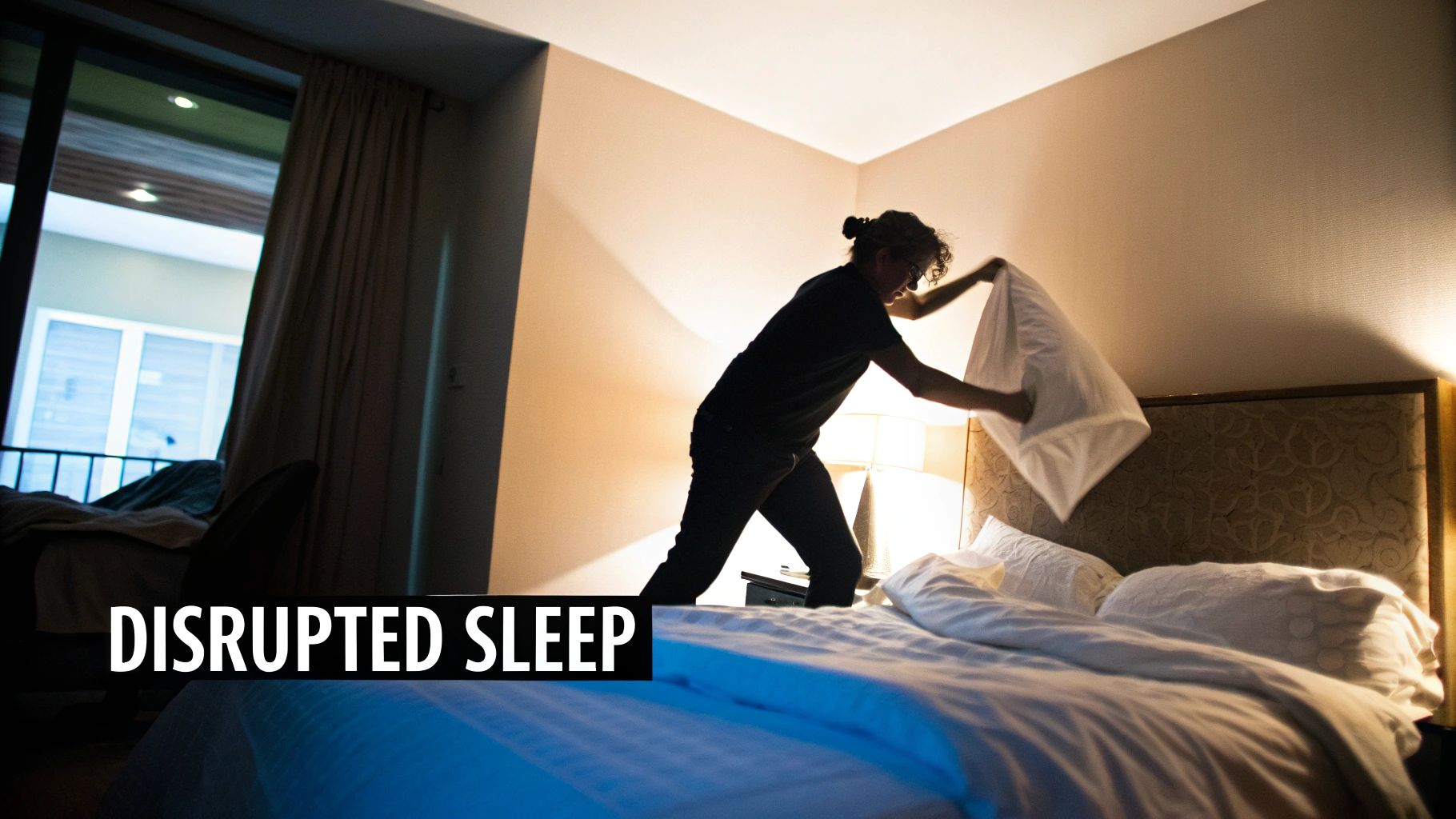
Think of your body as having an internal master clock, fine-tuned over thousands of years to a simple, powerful rhythm: wake with the sun, sleep when it's dark. This is your circadian rhythm, and it doesn't just manage when you feel drowsy—it directs everything from hormone production to your metabolism, all anchored around a consistent sleep-wake cycle.
When you work through the night, you're essentially forcing this finely-tuned system to run completely backward. It's a profound biological mismatch that goes way beyond simple fatigue. The constant battle against your own biology can leave you feeling perpetually jet-lagged, making that deep, restorative sleep you need feel completely out of reach.
If there's one thing you can do to protect your health as a night-shifter, it's prioritizing sleep. It’s the foundation for everything. Without enough quality sleep, your body simply can't repair itself, manage stress, or keep your immune system in fighting shape. Every biological process suffers when sleep is compromised.
This is where the real challenge lies. Sleeping during the day is often lighter and more easily interrupted, which means you're rarely getting the deep rest needed to recover from an upside-down schedule. Over time, this sleep debt becomes the main driver behind many of the health issues that creep up on night workers, as the body never gets the downtime it needs to heal.
A lot of shift workers end up with something called Shift Work Sleep Disorder. It’s a recognized circadian rhythm problem that triggers insomnia when you try to sleep and overwhelming drowsiness when you need to be awake. It's a clear sign that your body is struggling to adapt and your sleep quality is critically low.
Understanding what you're up against is the first step toward protecting yourself. The health problems tied to long-term night work aren't just minor annoyances; they are serious risks that stem directly from the chronic disruption of your sleep cycle.
To give you a quick snapshot, here’s a breakdown of the major health concerns researchers have linked to chronic night shift work.
| Health Category | Specific Risks | Primary Cause |
|---|---|---|
| Metabolic Health | Obesity, Type 2 Diabetes, Metabolic Syndrome | Disruption of hormones that regulate appetite and blood sugar, worsened by poor sleep. |
| Cardiovascular Health | High Blood Pressure, Heart Disease, Increased Stroke Risk | Elevated stress hormones and inflammation from sleep deprivation. |
| Mental & Cognitive Health | Anxiety, Depression, Mood Swings, Brain Fog | Lack of restorative sleep and social isolation. |
| Digestive System | Irritable Bowel Syndrome (IBS), Ulcers, Acid Reflux | Eating at irregular hours when the digestive system is less active due to a disrupted sleep-wake cycle. |
| Immune Function | Increased Susceptibility to Colds, Flu, and Infections | Suppression of immune cells due to chronic sleep loss. |
These risks really drive home just how important it is to be proactive about managing your health and your environment, with a primary focus on improving sleep quality.
One of the most powerful strategies you have is learning to control your light exposure to help signal to your body when it's time to be awake and when it's time to sleep. We dive deep into this topic on our blue light blog. Think of this guide as your roadmap—we'll walk you through the science and give you actionable steps to start protecting your sleep and your health today.
Picture your body as a sprawling city that never completely shuts down. Tucked away deep in your brain is the city’s master control center, a tiny command post called the suprachiasmatic nucleus (or SCN for short). This is your body's internal clock, and it’s in charge of everything. It meticulously coordinates every operation, from when your organs should be most productive to when your alertness levels should dim for the night to promote sleep.
This incredible internal timing system is what we call your circadian rhythm. And it’s not just about feeling sleepy or awake. It's a powerful 24-hour cycle that directs thousands of different functions in your body, like a master conductor ensuring every instrument in your biological orchestra plays in perfect time.
So, what's the conductor's main cue? Light. For basically all of human history, the rising and setting of the sun has been the unwavering metronome for our biology. When light hits your eyes in the morning, it’s a direct signal to the SCN to kickstart all daytime operations. As darkness falls, the SCN cues the release of melatonin, the famous sleep hormone, telling your body it’s time to power down and repair. This is precisely why getting enough quality sleep is the single most important thing you can do for your health; it is the fundamental state in which your body heals.
Working the night shift throws a wrench into this ancient, hardwired programming. It forces you to live in direct opposition to your own biology.
When you’re trying to stay sharp and focused at 2 AM, your body clock is screaming that it’s time for deep rest and cellular repair—processes that only happen during quality sleep. It’s a fundamental biological tug-of-war, and you’re caught in the middle. This isn’t a battle of willpower or something you can just “get used to.” You're asking your body to perform its most demanding work when its internal operating system is in shutdown mode. The constant fight to override these powerful biological signals and sacrifice sleep puts immense stress on your entire system.
Your circadian rhythm is so precise that different organs have their own peak performance times. Your liver, for example, is programmed for intense metabolic activity during the day and detoxification at night during sleep. Eating a large meal in the middle of the night forces it to work overtime when it's supposed to be resting.
When your master clock is out of sync, the disruption sends a ripple effect through your entire body. The carefully timed release of hormones becomes chaotic, throwing everything from your mood to your appetite completely off-kilter, all because your sleep pattern is unnatural.
This desynchronization can trigger several immediate issues:
Getting your head around this core concept is key. The health challenges you’re facing aren't just from being tired; they are the direct result of a body-wide system thrown into chaos by a lack of proper sleep.
Feeling tired, foggy, and having an upset stomach are the immediate struggles of working nights. But the real night shift health problems are the ones that build up silently over the years, all because your body's internal clock is constantly thrown off, leading to chronic sleep deprivation. This is more than just feeling tired; it's about how that relentless biological stress can set the stage for serious, long-term diseases.
When your sleep-wake cycle is always fighting the natural rhythm of day and night, it creates a domino effect of stress inside your body. It’s like flooring the gas on an engine 24/7 without ever letting it cool down for sleep. Eventually, that constant strain starts to wear down critical systems, leading to a state of chronic, low-grade inflammation—a known trigger for many major health conditions.
Your metabolism is one of the first systems to feel the heat. Your body is hardwired to process food during the day and shift into a rest-and-repair mode at night during sleep. Working against that natural programming sends your entire digestive system and metabolic hormones into a state of confusion.
This ongoing misalignment can lead to a dangerous condition known as insulin resistance. Normally, the hormone insulin acts like a key, letting glucose from your blood enter your cells for energy. But when you’re eating and active at night—and not getting enough quality sleep—your cells start to ignore its signal. To compensate, your pancreas has to work overtime, pumping out more and more insulin to keep your blood sugar in check. This is a one-way street to type 2 diabetes and obesity.
The image below shows exactly how a disrupted body clock and subsequent poor sleep kick off this process.
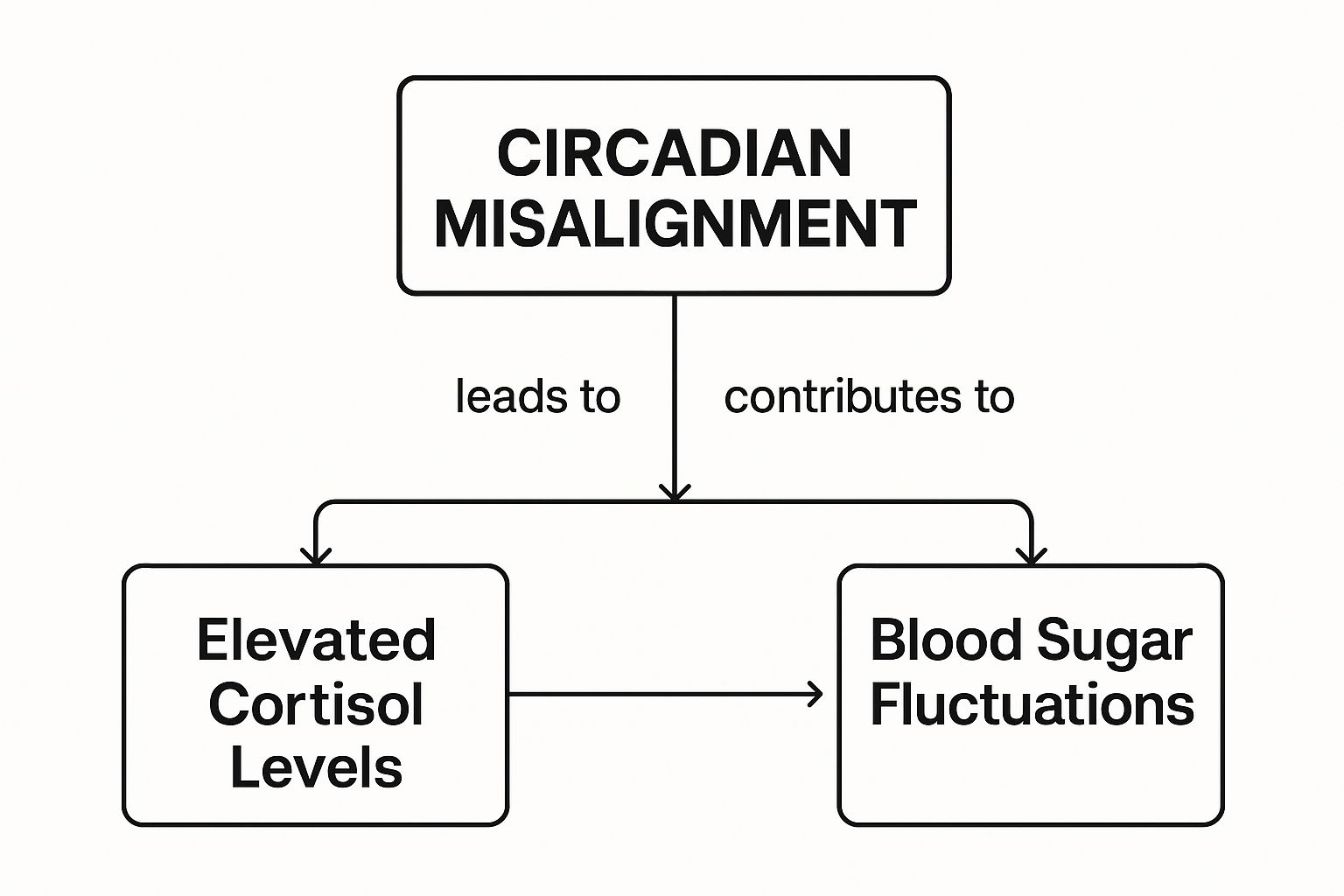
As you can see, it all starts with circadian misalignment. That's the root cause that triggers the hormonal and metabolic imbalances, creating a negative chain reaction for your health, all driven by the lack of restorative sleep.
Your cardiovascular system is also carefully timed by your circadian rhythm. Blood pressure is supposed to take a natural dip while you sleep, giving your heart and blood vessels a much-needed break. For night shift workers, this crucial rest period is often shorter or completely disappears.
This means your heart and arteries are under constant pressure, with no downtime. Over many years, this can lead to chronically high blood pressure (hypertension), which dramatically increases your risk for heart disease, heart attacks, and strokes. The lack of deep, restorative sleep also fuels inflammation and spikes stress hormones like cortisol, piling even more strain on your heart.
The link is undeniable: when your sleep is consistently out of whack, your heart never gets the nightly break it was designed for. This relentless demand is a huge reason why long-term night shift work is a recognized risk factor for cardiovascular disease.
Perhaps the most alarming long-term concern is the link between night shift work and a higher risk for certain cancers. This connection is so well-established that the National Toxicology Program has classified persistent, rhythm-disrupting night shift work as a probable human carcinogen. The problem lies in the disruption of your body's natural defense and repair crews, which do their most important work while you're in a deep sleep.
One major concern is that working nights interferes with fundamental processes like DNA repair and cell regulation, all of which are governed by the circadian clock and rely on quality sleep. Research has found that for every five years of continuous night shift work, the risk of breast cancer increases by about 3.3%. You can explore the full study about night shift work and cancer risk to get a deeper understanding.
This happens for a couple of reasons. Melatonin, the sleep hormone that light exposure at night shuts down, also helps slow the growth of tumors. At the same time, the cellular repair mechanisms that fix DNA damage are seriously compromised without proper restorative sleep. It’s a dangerous combination: your body's ability to fight off cancerous cells is weakened, leaving you more vulnerable over time. Understanding these stakes makes it clear that prioritizing sleep isn't just about feeling better tomorrow—it's about protecting your health for decades to come.
We all know the immediate hits from working nights: the crushing fatigue, the brain fog, the gut issues. But there's a quieter, more serious problem lurking beneath the surface—how this schedule can actually fast-track the aging process by robbing you of essential sleep. We're talking about accelerated aging at a deep, cellular level. It's less about looking older and more about a faster wear-and-tear on your body's resilience.
At its heart, healthy aging is about staying physically sharp, mentally clear, and free from chronic illness for as long as you can. The absolute cornerstone of that process is your body's ability to repair itself, which happens almost entirely during deep, restorative sleep. When your job forces you to be wide awake while your body is screaming for rest, you're essentially canceling that nightly maintenance window.
Think of it this way: your body is a high-performance machine scheduled for a self-repair cycle every single night during sleep. During that downtime, your cells are busy clearing out junk, fixing DNA damage, and tamping down inflammation. But when you're constantly fighting your internal clock, you interrupt this crucial work, letting damage pile up way faster than it should.
Working against your body's natural rhythms puts you in a constant state of low-grade stress. This isn't just a feeling; it's a physiological reality. Your systems are running under conditions they were never designed for, leading to a spike in something called oxidative stress.
Oxidative stress is what happens when there's an imbalance between cell-damaging molecules (free radicals) and the antioxidants that keep them in check. And guess what one of the best antioxidant promoters is? Quality sleep. Without it, free radicals run wild, damaging cells, proteins, and even your DNA. This slow-burn damage is a primary driver of aging and is tied to everything from skin aging to serious disease.
This constant, low-level stress from insufficient sleep sets off a dangerous chain reaction:
The goal isn't just to live longer (lifespan), but to live more years in good health (healthspan). And the research is becoming crystal clear: long-term night shift work, and the sleep disruption it causes, can seriously shorten that healthspan.
A major 24-year study tracking over 46,000 female nurses hammered this point home. The researchers found that women who worked rotating night shifts for years were far less likely to achieve "healthy aging"—which they defined as living free of major chronic diseases while keeping good mental and physical health. The study showed that the combined toll of a scrambled body clock and poor sleep directly sped up their health decline. You can dig into the full research on night shifts and aging to see the data for yourself.
What this means is that the daily battle against your body clock has real, long-term consequences. It slowly chips away at your body's ability to keep you healthy and functional, all because you are not getting the sleep your body needs.
But knowing this is incredibly empowering. Every step you take to protect and improve your sleep is a direct investment in your future health. Guarding your sleep is the single most powerful defense you have against the aging effects of a tough schedule, helping you hold onto your vitality for decades to come.
Knowing the risks is one thing. Doing something about them is what really counts. It's time to build a real-world plan to protect your health. This isn't about some massive overhaul. It's about small, consistent habits that add up to a powerful defense against the most common night shift health problems.
The absolute cornerstone of this whole plan? Sleep. Everything else—from what you eat to how you exercise—depends on getting enough quality rest. If you don't, your body simply can't handle the stress of an inverted schedule. Think of this as your personal toolkit for a more resilient night shift life, and it all starts with mastering the art of sleeping during the day.
Your bedroom needs to be a sanctuary for sleep, not a battlefield where daylight and noise are constantly trying to wake you up. Creating the perfect "sleep cave" is non-negotiable if you need to sleep while the sun is shining. The mission is simple: trick your brain into thinking it's the dead of night so you can achieve restorative sleep.
Your internal clock is incredibly sensitive to light and sound. Even tiny slivers of light sneaking past your eyelids can mess with your sleep cycle, preventing you from hitting those deep, restorative stages of rest. You have to be ruthless about eliminating these disruptions.
Here’s how to build the ultimate sleep cave:
Light is the single most powerful lever you can pull to manage your circadian rhythm and protect your sleep. When you work nights, you have to become the master of your light exposure—seeking it out when you need to be alert and aggressively avoiding it when it’s time to wind down for sleep.
That commute home in the morning? It's a critical danger zone for your sleep. Bright morning sun screams "Wake up!" to your brain, which is the exact opposite of what you need. This is where blue-light blocking glasses become an essential piece of gear. Wearing them on your drive home stops the sun from shutting down your melatonin production, making it far easier to fall asleep once you walk in the door.
"Managing your light exposure is like having a manual override for your body clock. Wearing blue-light blocking glasses after your shift tells your brain, 'Ignore that sunrise; it's our nighttime now.' This simple habit can dramatically improve your ability to fall asleep and stay asleep during the day."
By taking charge of the light you see, you help align your body with your work schedule, not the sun's. Learning how blue light blocking glasses help with sleep is one of the biggest leaps forward a night worker can make.
Eating a big meal at 3 AM is something your body was never designed to do. Your digestive system is basically in low-power mode overnight, which makes it a struggle to process heavy, greasy, or sugary foods. This can interfere with sleep quality later on.
The trick is to eat smarter. Focus on smaller, nutrient-packed meals and snacks that give you sustained energy without bogging you down.
Caffeine can be your best friend on a long night, but timing is everything. A coffee at the start of your shift? Great for boosting alertness. But drinking caffeine within 6-8 hours of when you plan to sleep can seriously sabotage your rest.
A good rule of thumb is to cut off all caffeine by the halfway point of your shift. This gives your body plenty of time to clear it from your system so it won't be keeping you awake when you need to sleep. For the second half of the night, switch to water to stay hydrated.
Turning these ideas into daily habits is the key to making them stick. This simple checklist can help you build a routine that supports your health and helps you get the restorative sleep you need.
| Timeframe | Action Item | Health Benefit |
|---|---|---|
| Before Your Shift | Eat a balanced, protein-rich meal. | Provides sustained energy to prevent mid-shift crashes and poor food choices. |
| Before Your Shift | Engage in 20-30 minutes of moderate exercise. | Boosts alertness, improves mood, and can even improve subsequent sleep quality. |
| During Your Shift | Consume caffeine only in the first half of your shift. | Improves focus when needed without disrupting your ability to sleep later. |
| During Your Shift | Stay consistently hydrated with water. | Fights fatigue, prevents headaches, and supports overall bodily functions. |
| After Your Shift | Wear blue-light blocking glasses on the commute home. | Prevents morning light from suppressing melatonin, making it easier to fall asleep. |
| After Your Shift | Go to bed as soon as possible in your "sleep cave." | Minimizes daytime disruptions and maximizes your opportunity for deep, restorative rest. |
By following this checklist, you’re not just surviving the night shift—you're actively taking control of your health and well-being, starting with sleep.
Trying to figure out the world of night shifts naturally brings up a lot of questions about your health, your schedule, and what it all means for the long haul. Let's dig into some of the most common concerns.
The health effects of night shifts can sneak up on you in two ways: right away, and over time. The short-term stuff—like feeling drained, dealing with brain fog, or having digestive trouble—can pop up within just a few weeks of flipping your schedule. That’s your body’s immediate cry for help as it struggles with disrupted rhythms and poor daytime sleep.
The more serious, chronic night shift health problems are a different beast. Things like a higher risk for heart disease or certain cancers are usually tied to long-term exposure, which many studies define as working nights for five or more years. How hard it hits you really depends on your genetics, your lifestyle, and most importantly, how seriously you take your sleep.
This is a big one. While neither schedule is easy, most sleep experts agree that a stable, permanent night shift is generally the lesser of two evils. Why? Because it gives your body a chance to at least partially adapt to a consistent, even if it's inverted, sleep-wake cycle.
A rapidly rotating schedule, on the other hand, throws your body into a constant state of "jet lag," which is incredibly stressful on your system. The main takeaway here is that consistency is your greatest ally. No matter which schedule you’re on, creating a rock-solid sleep routine is the single most important thing you can do to minimize the health risks.
For more tips on building a routine that works for you, check out the guides and articles in our resources section.
Yes, absolutely—but it takes real dedication. While some of the cellular wear-and-tear from long-term disruption might stick around, you can make a massive difference by switching back to a day-oriented schedule and doubling down on restorative habits. The single most powerful step you can take is re-aligning your sleep with the natural light-dark cycle of the sun.
Getting your sleep schedule back in sync with the sun is the most effective way to reset your circadian rhythm. This one change can help lower inflammation, improve your metabolism, and kickstart your body’s natural repair processes. It’s the foundation for true, long-term recovery.
Protecting your sleep isn't just a good idea—it's your most powerful defense against the health risks of night shift work. At Element Lux, we designed our blue light blocking glasses specifically to help you get that deep, restorative sleep you need, even when the sun is up.
Our glasses block over 99% of disruptive blue light, signaling to your brain that it's time to rest. This helps you fall asleep faster and stay asleep longer. Take back control of your health and start getting the sleep you deserve.
Running on fumes? We’ve all been there. But missing out on quality sleep has effects that go way beyond feeling a little groggy. It's a domino effect that can knock down everything from your immune system and heart health to your focus and emotional balance. When you consistently lack the restorative sleep that is so vital for your body, you're setting off a chain reaction of negative responses that can seriously chip away at your long-term well-being and open the door to chronic diseases.
We tend to treat sleep like it's optional—the first thing to go when a deadline is breathing down our neck or life just gets overwhelming. But thinking of sleep as just "downtime" is a huge mistake. It’s an active, biological necessity, just as critical to your health as what you eat or how often you move. Recognizing the profound importance of sleep and making consistent, high-quality rest a priority is one of the most powerful things you can do for your day-to-day performance and overall vitality.
Think of your body like a high-performance smartphone. Every night, you plug it in to recharge. A full charge gets the battery back to 100%, restores processing speed, and makes sure everything runs smoothly the next day. Now, what if you only ever charged it to 40%? Day after day, it would get slower, buggier, and just plain unreliable.
That’s exactly what happens to your brain and body when you're sleep-deprived. You’re starting every single day with a depleted battery, making it harder to concentrate, manage stress, or even fight off a common cold. Over time, the cumulative effects of sleep deprivation on your health wear down your resilience and tank your performance, underscoring why sufficient sleep is not a luxury, but a necessity.
This isn't just a personal struggle; it's a global one. Modern life, with its 24/7 connectivity and endless pressures, has created a full-blown sleep crisis. The blue light from our screens is a major culprit, messing with our natural sleep cycles—a topic we dive into deeper over on our blue light blog. The sheer scale of this problem is staggering.
A global survey found that, on average, people are losing nearly three full nights of restorative sleep every single week. The main drivers? Stress (57%), anxiety (46%), and financial worries (31%), pointing to a society running on empty.
The data couldn't be clearer: millions of us are stuck in a state of chronic exhaustion. Another survey of over 30,000 people revealed that about one-third struggle to sleep at least three times a week. You can get more insights into this global sleep crisis from the full research.
Recognizing these challenges is the first step toward valuing the importance of sleep. In this guide, we'll walk you through the specific ways a lack of sleep impacts your well-being, covering:
By the end, you'll see why protecting your sleep isn't just about feeling less tired—it’s about fundamentally protecting your health.
We've all felt the mental fog after a bad night's sleep, but the physical damage is far more serious and often goes unnoticed. The importance of sleep is crystal clear when you understand it's the time when your body's repair crew gets to work on intense physiological maintenance. When you cut that process short, you're essentially telling that crew to go on strike.
Think of it like a major city shutting down its maintenance operations for a night. Roads go unrepaired, trash piles up, and the power grid becomes unstable. That’s a pretty good picture of what happens inside your body without enough sleep. Critical jobs like cellular repair, hormone regulation, and immune system reinforcement just stop, leaving you vulnerable from the inside out.
Over time, this built-up neglect takes a real toll, chipping away at your physical resilience. This isn't just about feeling tired—it's about the fundamental systems that keep you healthy starting to break down.
Your immune system is one of the first things to suffer when you don't get enough sleep. During deep sleep, your body produces and releases proteins called cytokines, which are crucial for targeting infection and inflammation. This highlights the vital importance of sleep for a strong immune response; skimping on it means you're not making enough of these critical defenders.
This leaves you far more vulnerable to getting sick with common illnesses like the cold or flu. If you've ever noticed you catch everything going around when you're stressed and sleep-deprived, this is why. Your body just doesn't have enough soldiers to fight off invading pathogens.
It also means recovery takes longer. So, not only are you more likely to get sick, but you'll stay sick for longer, trapping you in a draining cycle of poor health and exhaustion.
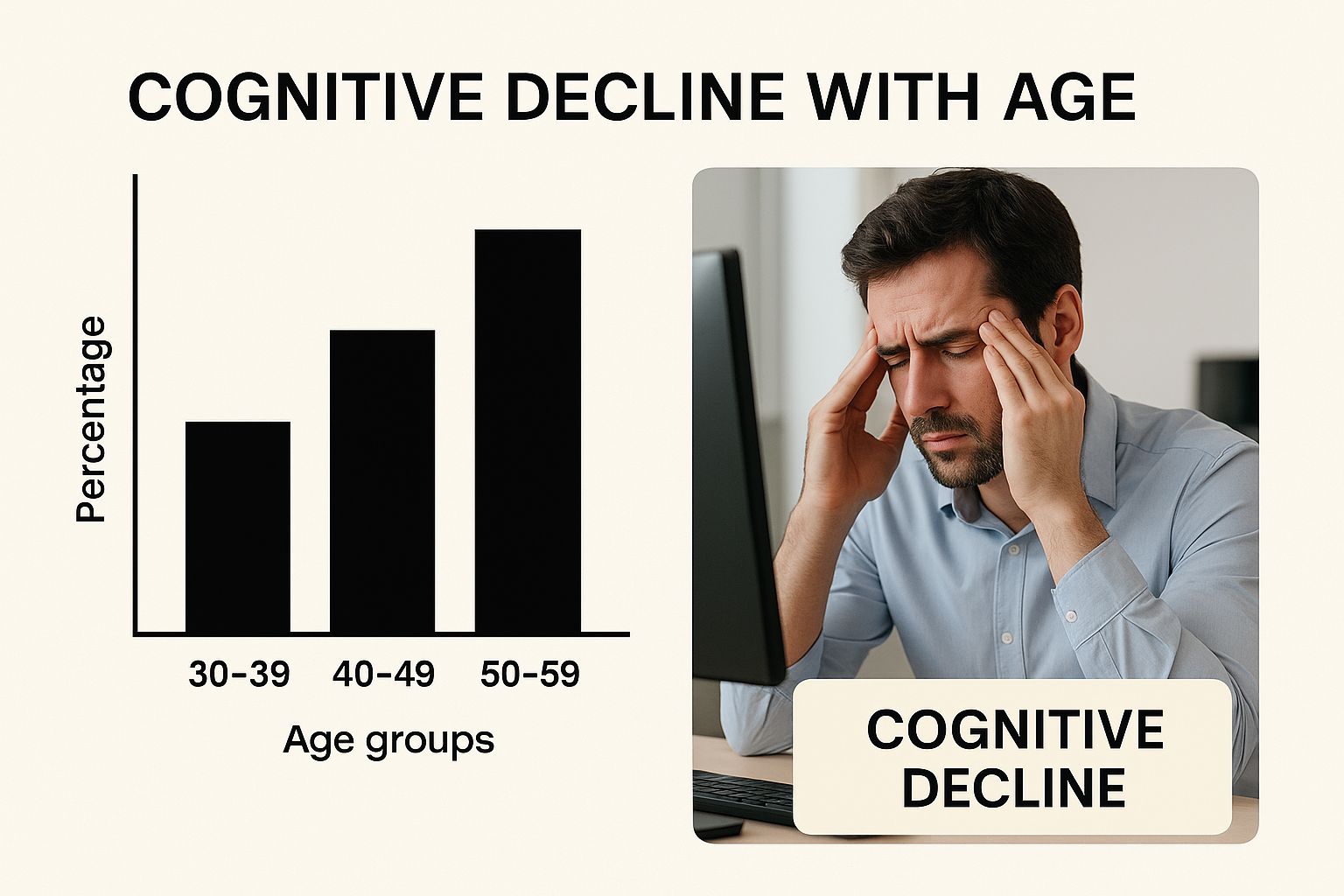
This image captures that feeling of total exhaustion, which is really just the tip of the iceberg when it comes to the real health consequences.
The table below outlines just how serious the risks can become as sleep duration decreases.
| Nightly Sleep Duration | Increased Mortality Risk | Associated Physical Health Effects |
|---|---|---|
| Less than 6 hours | 10% higher | Weakened immunity, high blood pressure, increased risk of heart attack and stroke. |
| 6-7 hours | Moderate increase | Impaired insulin sensitivity, hormonal imbalances (ghrelin/leptin), inflammation. |
| 7-9 hours (Recommended) | Baseline | Optimal immune function, stable cardiovascular health, balanced metabolism. |
As the data shows, consistent, quality sleep isn't a luxury—it's a non-negotiable part of maintaining your long-term health.
The importance of sleep for heart health is rock-solid. Chronic sleep deprivation is closely tied to serious cardiovascular problems, including high blood pressure (hypertension), heart attack, and stroke. During a normal night's sleep, your blood pressure and heart rate naturally dip, giving your heart and blood vessels a much-needed rest.
When you don't get enough sleep, your blood pressure stays elevated for much longer. This puts constant strain on your entire circulatory system. It’s like running an engine at high RPMs for too long without a break—eventually, parts start to wear out. That sustained pressure leads to inflammation and can damage your arteries over time.
Sleep is also the master regulator of your body's hormones, which control everything from your appetite to your stress response. A lack of sleep throws this delicate system into total chaos, demonstrating just how crucial sleep is for metabolic balance. For example, it messes with ghrelin and leptin, the two key hormones that tell you when you're hungry and when you're full.
When you're sleep-deprived, ghrelin levels shoot up (making you feel hungrier) while leptin levels drop (making you feel less full). This is exactly why you might find yourself craving junk food—sugary, fatty, high-calorie snacks—after a rough night. It isn't a lack of willpower; it’s a direct physiological response to being exhausted. This is a big reason we explore whether our glasses can help with sleep, as they can help mitigate factors like blue light that disrupt these natural cycles.
The disruption doesn't stop there. Insufficient sleep also messes with your insulin sensitivity, making it harder for your cells to absorb sugar from your bloodstream. Over time, this dramatically increases your risk of developing type 2 diabetes. The end result is a metabolic system that's inefficient, sluggish, and prone to weight gain and chronic disease.
Beyond the physical strain, the damage sleep deprivation does to your brain is one of the most immediate and profound effects on your health. A sleep-deprived brain is like a computer trying to run complex software with barely any RAM. It sputters, freezes, and struggles with even the most basic tasks, making the importance of sleep for mental clarity undeniable.
Suddenly, remembering where you left your keys or making a critical decision at work becomes exponentially harder. This mental slowdown isn't just a feeling; it's a measurable decline in cognitive performance. The essential brain functions we rely on every second—sharp focus, problem-solving, and sound judgment—are directly compromised. The longer you go without rest, the deeper that cognitive debt becomes, making it impossible to operate at your best.
This exhaustion translates directly into poor performance, affecting everything from your career to your personal relationships. A mind clouded by fatigue just can’t process information clearly.
To really get why this happens, it helps to understand how different sleep stages actively restore your mind. Each phase of the sleep cycle has a specific job, proving how important every moment of sleep is. Think of it as an overnight cognitive maintenance crew, with each member handling a different task.
Deep Sleep (Non-REM Stage 3): This is your brain's filing clerk. During deep sleep, your brain consolidates memories, moving important information from short-term to long-term storage. Skimp on this, and you'll struggle with memory recall and learning new things.
REM (Rapid Eye Movement) Sleep: This is your brain's creative workshop. REM sleep is critical for processing emotions, cementing complex skills, and fostering creative problem-solving. A lack of REM can leave you feeling emotionally raw and mentally inflexible.
When you cut sleep short, you disrupt this vital workflow. The result is a brain that’s not just tired but also disorganized, emotionally volatile, and unprepared for the day.
A well-rested brain can easily filter out distractions and stay on task. A sleep-deprived one can’t. Your attention span shortens dramatically, and the ability to multitask effectively vanishes. You might find yourself reading the same sentence over and over or getting sidetracked by the smallest interruption.
This mental fog directly cripples your ability to make sound judgments. The prefrontal cortex, the part of your brain responsible for reasoning and impulse control, becomes sluggish and impaired. As a result, you're far more likely to be overly optimistic, take unnecessary risks, and make poor decisions you'll later regret. Your brain's natural checks and balances are offline.
When you miss a full night of sleep, the impairment to your cognitive function and reaction time can be equivalent to having a blood alcohol content of 0.10%, which is above the legal limit for driving in many places.
That's a staggering fact. It highlights just how severely a lack of sleep degrades your mental capabilities. It isn’t just about feeling tired; it’s about operating with a genuinely disabled brain.
One of the scariest consequences of severe sleep deprivation is the phenomenon of microsleeps. These are brief, involuntary episodes of sleep that can last from a fraction of a second to several seconds. You might not even realize they’re happening. Your eyes could stay open, but your brain has momentarily checked out.
While a microsleep might seem harmless if you're on the couch, it can be catastrophic if you're behind the wheel of a car or operating heavy machinery. At 55 miles per hour, a car travels the length of a football field in just a few seconds. A single microsleep is all it takes for a devastating accident to happen.
These episodes are your brain's desperate, last-ditch effort to get the rest it needs, overriding your conscious attempts to stay awake. They're a final, undeniable warning sign that you've pushed your body far past its safe limits.
Beyond just clouding your thoughts and weakening your body, a lack of sleep wages a direct assault on your emotional stability. Ever found yourself snapping over something tiny after a restless night? You’ve experienced this firsthand. That heightened irritability isn't a character flaw; it’s a completely predictable, physiological response to being exhausted.
The importance of sleep for emotional regulation is huge. When you’re well-rested, your brain can process emotions, manage stress, and respond to situations with a sense of balance. Without that nightly reset, your emotional controls go haywire. Minor frustrations can suddenly feel like monumental crises.

This feeling of being emotionally overwhelmed isn't just in your head—it's the direct result of specific changes happening inside your sleep-deprived brain.
To really get why you feel so emotionally volatile, we need to look at two key parts of your brain: the amygdala and the prefrontal cortex.
Think of the amygdala as your brain’s emotional gas pedal. It’s the primitive, reactive part that triggers immediate feelings like fear, anger, and anxiety. Normally, it responds appropriately to different situations.
But after just one night of poor sleep, the amygdala can become over 60% more reactive. This is why a small annoyance, like someone cutting you off in traffic, can provoke an outsized, furious reaction when you're tired. Your emotional accelerator is basically stuck to the floor.
At the same time, the prefrontal cortex—your brain's rational decision-maker and impulse controller—becomes sluggish. This is the part of your brain that acts as the brakes, telling the amygdala, "Hey, calm down, this isn't a big deal."
So, a lack of sleep gives you an overly sensitive gas pedal and weak, unresponsive brakes. This neurobiological imbalance is the core reason why sleep deprivation effects on health manifest as mood swings and an inability to cope with everyday stress. Your brain is physically rewired for overreaction.
This connection between rest and emotional wellness is backed by some serious data. A poll by the National Sleep Foundation found that American adults who consistently get enough sleep are far more likely to be flourishing. Specifically, 72% of well-rested people reported a high level of well-being, compared to just 46% of those with poor sleep—a 57% increase. You can read more about the connection between sleep and human flourishing in their report.
This highlights a critical truth: getting enough sleep doesn't just prevent negative emotional states; it actively promotes positive ones. The importance of sleep extends beyond avoiding problems; it’s about enabling a vibrant, fulfilling life.
While occasional irritability is one thing, chronic sleep deprivation creates a much more serious risk. The persistent emotional dysregulation can pave the way for long-term mood disorders.
The relationship between sleep and mood is a two-way street. Not only does sleep deprivation amplify negative emotions, but many mood disorders, like depression and anxiety, often cause severe sleep problems. This can create a draining, self-perpetuating cycle that is incredibly difficult to break.
Here's how this vicious cycle works:
Ultimately, protecting your sleep is a fundamental act of protecting your mental and emotional health. It provides the foundation upon which a stable, resilient, and positive mindset is built.
Knowing how badly sleep deprivation wrecks your health is one thing; doing something about it is another. Reclaiming your rest isn't about finding some magic pill. It’s about building a solid framework of healthy habits that stick. By putting a few practical, science-backed strategies into play, you can get your body’s natural rhythm back on track and finally get the deep, restorative sleep you’ve been missing.
So, let's shift from the problem to the solution. The good news is you have a ton of control over the things that dictate your sleep quality. It all starts with creating an environment and a routine that sends a clear signal to your brain: it’s time to wind down.
Your bedroom should be a sanctuary for rest, not a command center for work, entertainment, and late-night scrolling. The goal is simple: create an environment that kills disruptions and promotes total relaxation. That means making it dark, quiet, and cool.
Think of your brain as being incredibly sensitive to cues from your surroundings. A bright, noisy, or warm room screams, "Stay awake! Be alert!" But a cool, dark, and quiet space tells your brain it's safe to power down for the night.
Here are a few powerful, no-nonsense adjustments:
Honestly, one of the most effective things you can do for your sleep is to lock in a consistent sleep-wake schedule—and yes, that includes weekends. Going to bed and waking up around the same time every day is the key to regulating your body's internal clock, also known as your circadian rhythm.
When your circadian rhythm is stable, your body starts to anticipate when it's time to sleep and when it's time to wake up. It becomes way easier to fall asleep at night and wake up feeling genuinely refreshed. It’s like setting a biological alarm clock that just works.
Sticking to a schedule reinforces your body’s natural sleep-wake cycle. This simple act of consistency can be more powerful than any sleep aid, training your brain to recognize when it’s time for rest and when it’s time for activity.
This doesn't mean you can never stay up late again. But the more consistent you are, the stronger your sleep cycle becomes, making it better at bouncing back from the occasional late night.
In our screen-filled world, the biggest sleep disruptor is the artificial blue light blasting from our phones, tablets, computers, and TVs. This specific wavelength is a master at suppressing melatonin, the hormone that tells your body it’s time to get sleepy.
When you're scrolling through your phone in bed, you're basically telling your brain it's high noon. This pushes back your natural sleep onset and tanks the quality of your rest. This is where blue-light-blocking glasses become an incredibly simple and effective tool. Just wearing them for 1-2 hours before you plan to sleep filters out that disruptive light, letting your body produce melatonin the way it's supposed to.
This one habit lets you wind down with a show or an e-book without completely sabotaging your night. If you're looking to dive deeper into building a rock-solid sleep routine, check out our collection of helpful sleep resources for more tips.
Your body can't just flip a switch from "go-go-go" to "sleep." It needs a transition period. A relaxing pre-bedtime routine is a powerful signal to your brain that the day is over and it's time to prepare for rest. The key is to create a consistent set of calming activities you do every night.
A great routine could look something like this:
To help you get started, here's a quick summary of actionable changes you can make to improve your sleep hygiene.
| Strategy | Primary Impact | Implementation Tip |
|---|---|---|
| Consistent Sleep Schedule | Regulates your circadian rhythm for easier sleep. | Set a daily alarm for both waking up and going to bed. Try to stick to it within a 30-minute window on weekends. |
| Optimize Your Bedroom | Creates an environment conducive to deep rest. | Invest in blackout curtains and use a white noise machine. Set your thermostat to a cool 65°F (18°C). |
| Wear Blue Light Glasses | Prevents melatonin suppression from screens. | Put them on 1-2 hours before bed. Keep a pair right by your couch or wherever you unwind at night. |
| Create a Wind-Down Routine | Signals to your brain that it's time for sleep. | Choose 2-3 relaxing activities (like reading or stretching) and do them in the same order every night for 30 minutes. |
| Avoid Late-Night Stimulants | Reduces interference with natural sleep processes. | Cut off caffeine at least 8 hours before bed and avoid heavy meals or alcohol in the final 2-3 hours of your day. |
By making these practical habits a part of your daily life, you can build a strong foundation for truly restful nights. You’ll be reclaiming your health from the clutches of sleep deprivation and waking up ready to take on the day.
https://www.youtube.com/embed/1U2qMRGihGg
When you start digging into sleep health, a lot of questions pop up. Now that we’ve gone deep on the effects of sleep deprivation on your health, let's tackle some of the most common ones. My goal is to give you clear, science-backed answers so you can feel more confident on your path to better rest.
It’s a tempting idea, right? Treat sleep like a bank account, go into debt during the week, and make a massive deposit on Saturday. While sleeping in can definitely take the edge off and make you feel less tired, it's not a real solution for chronic sleep debt.
Think of it this way: if you ate nothing but junk food Monday through Friday and then switched to salads all weekend, you wouldn't completely undo the damage. It’s the same with sleep. A couple of long nights don't fully reverse the cognitive and metabolic harm that’s been building up all week. Critical functions like your reaction time and attention span often don't bounce back completely.
The best strategy isn't trying to catch up—it's aiming for consistency. A regular sleep schedule, even on weekends, is the gold standard for keeping your body’s natural rhythm in sync and getting truly restorative rest. The importance of sleep lies in its regularity.
The link between poor sleep and weight gain is surprisingly direct and powerful. When you don't get enough sleep, it throws the two hormones that manage your appetite completely out of whack.
Your body ends up producing more ghrelin, the hormone that screams, "I'm hungry!" At the same time, it lowers your levels of leptin, the hormone that signals, "I'm full."
This hormonal mess is a recipe for intense cravings, especially for high-calorie, sugary, and fatty foods. It’s not about weak willpower; it’s a physiological response your body has to being exhausted.
On top of that, sleep deprivation messes with your body's insulin sensitivity, making it harder for your cells to use sugar for energy. Over time, this can lead to weight gain and even increase your risk of developing type 2 diabetes. It makes managing your weight a much tougher fight.
Yes, they’re a genuinely useful tool for our modern, screen-filled lives. All our devices—phones, tablets, laptops—emit a specific type of blue light that messes with our sleep. It essentially tricks your brain into thinking it's still daytime.
This suppresses the production of melatonin, the crucial hormone that tells your body it's time to wind down and get ready for bed.
Popping on a pair of blue light blocking glasses for an hour or two before you go to sleep acts like a shield, filtering out this disruptive light. It’s a simple move that lets your body produce melatonin on its natural schedule, keeping your internal clock running smoothly. They're a practical fix for anyone who can't avoid screens in the evening.
This is a really important distinction.
Tiredness is that temporary feeling of wanting to rest. You had a long day, and a good night's sleep or even a quick nap will usually fix it. It’s a normal, everyday feeling.
Sleep deprivation, on the other hand, is a chronic state. It's what happens when you consistently don't get enough sleep, and that sleep debt just keeps piling up. This leads to much more serious, long-term symptoms like constant brain fog, poor judgment, mood swings, and a much higher risk for serious health problems.
Basically, tiredness is a symptom. Sleep deprivation is the underlying problem, which is why recognizing the importance of consistent sleep is so critical.
Prioritizing your sleep is one of the most powerful things you can do for your overall health. To help you get there, Element Lux offers high-quality blue light blocking glasses designed to protect your sleep from the glare of modern screens.
Explore our collection and take the first step toward more restful nights and energized days by visiting Element Lux.
If you’re on the hunt for natural sleep aids that work, you might be surprised by the answer. The most powerful solutions aren't found in a bottle, but in how you manage light and support your body’s internal clock. While supplements have their place, creating a sleep-friendly environment is always the best first step, because quality sleep is the cornerstone of a healthy, productive life.
Let's be clear: good sleep isn't a luxury. It's a non-negotiable pillar of your health. All too often, we treat it like a passive activity—something we get to only after everything else is checked off the list. This completely misses the point. Sleep is an active, restorative process that keeps our minds sharp and our bodies running smoothly. Without it, every aspect of our well-being suffers.
Think of a sleep-deprived brain like a smartphone with way too many apps open. It’s slow, buggy, and just keeps crashing. When you don't get enough quality rest, your cognitive performance tanks. You’ll struggle with focus, your memory feels hazy, and making good decisions becomes a real challenge. Searching for effective sleep solutions isn't just about feeling less tired; it's a critical investment in your long-term health and daily performance.
Restorative sleep is the bedrock of mental clarity and physical energy. While you’re resting, your brain is anything but quiet. It’s busy consolidating memories, clearing out metabolic junk, and repairing cellular damage from the day. This nightly tune-up is so important because it's essential for:
The modern struggle for rest has kicked off a massive demand for solutions. The U.S. sleep aids market was valued at USD 19.04 billion and is on track to more than double by 2034.
This incredible growth isn't random. It’s fueled by modern life—high stress levels and constant screen time are throwing our natural sleep patterns completely out of whack. This is what's driving so many of us to find natural sleep aids that work. The trend makes one thing obvious: people are finally waking up to the fact that better sleep is the first, most fundamental step toward better health. You can discover more about the sleep aid market's growth and trends here.

Before you can fix your sleep, you have to understand what’s breaking it. Deep inside your brain, there's a master clock, a tiny pacemaker that runs your daily cycles of sleepiness and alertness. This is your circadian rhythm, and it's the bedrock of a healthy sleep-wake schedule. Honoring this rhythm is crucial because it governs the very processes that make sleep restorative.
Think of it like a conductor leading an orchestra. Its main job is to keep every part of your body—from your hormones to your digestion—playing in perfect time. And the conductor’s number one tool for leading this orchestra? Light.
When natural light hits your eyes in the morning, the conductor signals the orchestra to play a lively, energetic tune. When darkness falls, it calls for a slow, calming melody, getting your entire body ready for rest. This natural cycle is the key to unlocking the deep sleep that is so important for your health.
This internal orchestra has two star players: the hormones melatonin and cortisol. They’re designed to work in a delicate see-saw balance all day long, guided by light exposure. Getting a grip on their roles is the key to finding natural sleep aids that work and achieving the revitalizing sleep your body needs.
Cortisol (The 'Wake-Up Call'): Often unfairly labeled the "stress hormone," cortisol is actually crucial for getting you going. Its levels peak in the morning, giving you that get-up-and-go energy to start your day. As the hours tick by, cortisol should naturally taper off.
Melatonin (The 'Sleep Signal'): On the flip side, melatonin is the hormone of darkness. As the sun goes down and light fades, your brain starts pumping it out, signaling to your body that it's time to wind down. Melatonin levels hit their high point in the middle of the night, helping you stay asleep.
This whole elegant system is built to sync your internal world with the one outside. Your body is biologically wired to be awake during the day and asleep at night, all orchestrated by the natural rise and fall of these hormones.
But modern life throws a massive wrench in the works: artificial light. When you're staring at bright screens and sitting under harsh overhead lighting late into the evening, you’re basically yelling confusing directions at your internal conductor.
The blue light blasting from your phone, tablet, and TV sends a powerful "it's daytime!" signal to your brain, even if it's 10 p.m. This artificial glare slams the brakes on melatonin production, throwing your entire hormonal symphony completely out of tune.
Your cortisol might stay high while your melatonin stays low, leaving you in that frustrating state of feeling both wired and tired. This single disruption is the root cause of why so many of us struggle to fall asleep, and it's exactly why managing your light environment is one of the most powerful things you can do to reclaim the important, healing power of sleep.
If your body’s internal clock is an orchestra conductor, then the blue light blasting from your screens is the one rogue trumpet player throwing the entire performance into chaos. This specific wavelength of light is the number one culprit behind our modern sleep struggles, and it’s pouring out of every screen you own—your phone, TV, laptop, and tablet. It's a key reason why achieving deep, restorative sleep is so challenging today.
This isn't just any old light. Blue light has a uniquely high energy level, and our brains are incredibly sensitive to it. During the day, that's a good thing. Sunlight is packed with blue light, which is fantastic for keeping you alert and focused. The problem kicks in when you’re still bathing your eyes in it long after the sun has gone down.
Here’s the thing: your brain can't tell the difference between blue light from the sun and blue light from your Instagram feed. To your internal clock, it's all the same signal: "It's the middle of the day! Stay awake!" This exposure directly slams the brakes on your body’s production of melatonin, the crucial hormone that tells your body it’s time for sleep.
Think of staring at your phone in bed as giving your eyes a silent shot of caffeine. It keeps your mind buzzing and alert at the exact moment it needs to be winding down for the night. This is why you can feel completely exhausted after a long day, yet find yourself staring at the ceiling, wide awake, after an hour of scrolling.
Your body gets caught in a frustrating biological tug-of-war. The natural drive for sleep is pulling you in one direction, while the artificial light from your screen is yanking you in the other. This deep-seated biological confusion is a key reason so many people search for natural sleep aids that work, not realizing the solution starts with managing their light environment to get the sleep they so badly need.
The connection is direct and powerful: evening screen time actively suppresses your natural sleep signals. Studies have shown that just two hours of screen time before bed can significantly delay the release of melatonin, making it harder to fall asleep and wrecking the quality of your rest.
This disruption goes way beyond just feeling groggy the next day. Constantly throwing your circadian rhythm out of sync can have real downstream effects on your mood, metabolism, and overall health. The first and most important step in reclaiming your sleep is to recognize this primary antagonist, because getting enough quality sleep is vital for your well-being.
Understanding the impact of blue light is so critical because it shows just how far modern life has pulled us away from the natural light-dark cycles our bodies evolved with for millennia. We were built to sync with the sun, but now we live under artificial suns that never set. This disruption directly impacts our ability to get the sleep that is so important for healing and recovery.
This gives us a clear path forward for anyone struggling to fall asleep. By managing your exposure to this specific type of light in the evening, you can protect your body's melatonin production and allow your natural sleep cycle to function exactly as it's supposed to. It’s about removing the obstacle, not just treating the symptom.
When you control your light environment, you empower your body to do what it already knows how to do: prepare for a night of deep, restorative rest.
Now that we’ve seen just how badly blue light can mess with your body’s sleep signals, let’s talk about your first line of defense: blue-light blocking glasses. Getting this right is a major step toward achieving the consistently good sleep that's so important for your health.
Think of them as a simple but powerful shield for your eyes. They’re specifically designed to filter out the high-energy wavelengths of light that slam the brakes on your melatonin production.
This isn't just theory; it's a practical way to enjoy your evenings without sabotaging your sleep. When you put them on, you're sending a clear message to your brain: "The day is over. It's time to start winding down." That simple action protects your body's natural rhythm from the constant buzz of modern screens, paving the way for a night of essential rest.
When you're shopping for a pair, the goal is to find lenses that actually block the right kind of light and fit into your evening routine. The most effective ones almost always have a distinct amber or orange tint. These colors are the best at filtering out the specific blue and green light that most aggressively halts melatonin.
Here are the key things to keep in mind:
The act of putting on your blue-light blockers can become a powerful psychological trigger. This simple habit can serve as a "power-down" signal for your brain, marking the official shift from a busy day to a truly restful evening.
Integrating them is easy. Just make them part of your nightly wind-down ritual—whether you're watching TV, reading on a tablet, or scrolling through your phone. If you want to dive deeper into how the technology works, check out our guide on the benefits of blue light glasses.
The image below shows how managing your light exposure is a fundamental part of good sleep hygiene, laying the groundwork for a healthy rest cycle. Because at the end of the day, that rest is what allows your body and mind to function at their best.
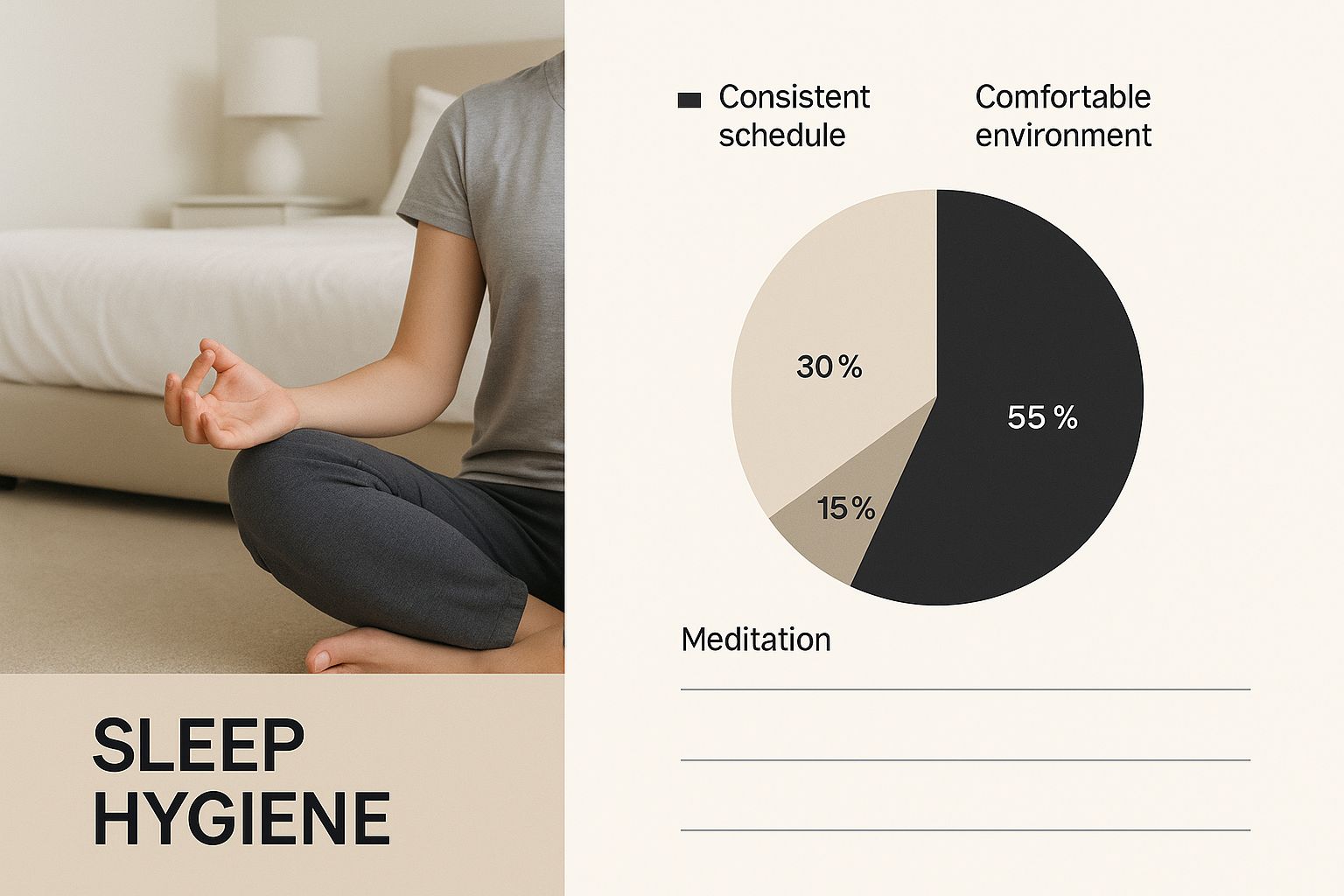
As you can see, creating a restful environment is a cornerstone of great sleep, and getting your light exposure right is a huge piece of that puzzle.
Choosing the right pair of glasses comes down to how and when you'll use them. Not all lenses are created equal, and the best choice for you depends entirely on your lifestyle.
Here’s a quick breakdown to help you decide.
| Lens Type | Blue Light Blockage | Best For | Potential Drawback |
|---|---|---|---|
| Clear | 10%–20% | Daytime use in an office or under fluorescent lights to reduce eye strain. | Not effective for protecting melatonin production at night. |
| Yellow | 40%–60% | Gamers, designers, or anyone needing color accuracy while reducing some eye strain. | Better than nothing, but not strong enough for sleep preparation. |
| Amber/Orange | 90%–99%+ | Nighttime use (2-3 hours before bed) to maximize melatonin production and prepare for sleep. | Alters color perception significantly, making them unsuitable for color-sensitive tasks. |
For improving sleep, amber or orange lenses are the only real option. The others are great for daytime eye strain, but they won't do much to help you wind down.
Ultimately, these glasses are one of the most direct and effective natural sleep aids that work because they tackle the root cause of so much modern sleep trouble. They don’t add anything new to your body; they simply remove an obstacle that’s preventing your body from doing what it’s built to do.
By making one small change to your evening light, you can make a huge impact on your ability to fall asleep faster and get the deep, restorative rest you need. This is so important because that rest is what fuels your success the next day.
While getting your light environment right is the single most powerful step you can take for better sleep, some supplements and herbs can offer fantastic support. Think of them less as a magic bullet and more as a helpful nudge for your biology. Because sleep is so important, having these tools can make a real difference.
These aren't meant to knock you out. Instead, they work with your body, reinforcing the natural signals that tell your brain it’s time to rest. When used correctly, these natural sleep aids that work can help you fall asleep faster and improve the quality of that sleep. Just remember, they should always complement a healthy wind-down routine, not replace it.
Melatonin is a hormone your brain produces naturally when it gets dark. It's the primary signal that orchestrates your entire sleep-wake cycle. Taking a melatonin supplement is like giving your body an extra dose of this "go to sleep" signal.
This can be incredibly useful for resetting your internal clock after jet lag or for shift workers wrestling with an off-kilter schedule. It’s no surprise that melatonin is one of the most popular sleep supplements on the market—it’s a direct, effective way to tell your body it’s nighttime.
Beyond melatonin, a few plant-based options have been trusted for centuries to help people wind down. These herbs work a bit differently; they gently soothe the nervous system rather than acting as a direct sleep hormone.
Magnesium: This essential mineral is a superstar for relaxation. It helps quiet a racing mind by regulating neurotransmitters that promote a sense of calm. A lot of people find a magnesium supplement before bed is just what they need to unwind.
Valerian Root: Often turned to for insomnia and anxiety, valerian root is thought to increase levels of GABA, a chemical messenger in the brain. Higher GABA levels have a natural sedative effect, helping you feel more relaxed and ready for bed.
Chamomile: This gentle herb, usually enjoyed as a tea, contains an antioxidant called apigenin. This compound binds to specific receptors in your brain that can ease anxiety and initiate sleep. A warm cup of chamomile is a classic—and comforting—part of any evening routine for a reason.
It's crucial to remember that supplements are not regulated by the FDA like medications are. The quality and dosage can vary wildly between brands, so always choose products from reputable companies you trust.
The goal here isn't long-term dependency. It's about using these aids as a temporary support system while you build lasting, healthy sleep habits. Always start with the lowest effective dose and pay close attention to how your body responds.
At the end of the day, sleep is about giving your brain and body the time they need to repair and recharge. These natural aids can be a valuable part of that process, helping you secure the rest that is so important for your overall health. To learn more about building a complete approach to better rest, feel free to explore our other helpful sleep and wellness resources.
Here's the rewritten section, designed to sound completely human-written and natural, following the provided style guide and examples.
So, we've talked about some incredible tools for better sleep. But where the real magic happens is when you string them together into a consistent pre-sleep routine.
This isn’t about chasing perfection or following some rigid, complicated "sleep hygiene" checklist. It's about creating a simple, repeatable sequence of actions that tells your brain and body, "Hey, the day is done. It's time to power down."
Think of it this way: your sleep is the foundation for everything—your mood, your energy, your health. A dedicated wind-down ritual is your nightly insurance policy to make sure that foundation is rock-solid. It’s a practical, sustainable plan that brings all the best strategies together into one powerful habit, because that sleep is too important to leave to chance.
The goal here is consistency, not complexity. Repeating the same steps, in the same order, night after night, is how you build a powerful new habit. You’re essentially creating a runway for your body to gently land in a state of deep rest.
Here’s a sample timeline you can steal and tweak to fit your own life. Just layer in the natural sleep aids that work for you.
2-3 Hours Before Bed: This is your first and most important move. Put on your blue-light blocking glasses. This single action shields your melatonin production from the onslaught of screens, signaling the start of your wind-down. Now’s the time for a light, calming activity like reading a real book (not on a tablet!) or listening to some chill music.
1 Hour Before Bed: Time for the internal soothers. If you're taking supplements like magnesium, now is the perfect time to let them get to work. You can also brew a warm, comforting cup of chamomile tea. The simple act of sipping something warm is incredibly relaxing for the nervous system.
30 Minutes Before Bed: All screens off. No exceptions. This is your screen-free zone. Use this final half-hour for some gentle stretching, a quick meditation, or scribbling down your thoughts in a journal to get them out of your head. Double-check that your bedroom is cool, dark, and quiet—your personal sleep cave.
By layering these small, intentional actions, you're not just crossing your fingers and hoping for sleep. You're actively inviting it. This deliberate process helps get your internal clock back in sync, making it so much easier to fall asleep, stay asleep, and wake up feeling like you actually rested. This is how you secure the quality sleep that is so important for every part of your life.
Diving into the world of natural sleep support can feel a little overwhelming. If you're wondering about safety, timing, or which tools actually work, you're not alone. Let's tackle some of the most common questions so you can feel confident on your path to better rest, because great sleep is an achievable and important goal.
This is probably the first question on everyone's mind, and for good reason. For the most part, aids like magnesium supplements or a calming cup of chamomile tea are perfectly safe for healthy adults.
That said, it's always smart to have a quick chat with your doctor before starting anything new. This is especially true if you have any underlying health conditions or are taking other medications. A little expert advice ensures you’re doing what’s best for your unique body.
Timing can make all the difference. For something like blue-light blocking glasses, consistency is your best friend. The goal is to create a non-negotiable "digital sunset" for your brain, because protecting your sleep cycle is fundamentally important.
By popping on your glasses 2-3 hours before you plan to sleep, you send a clear signal to your body that it's time to wind down. This simple habit protects your natural melatonin production, night after night. You can get the full scoop on how our glasses help with sleep right here.
Absolutely. People are waking up to the power of working with their bodies, not against them. In fact, the global market for sleep supplements recently hit USD 8.8 billion and is only expected to climb.
This isn't just a fleeting trend. It reflects a major shift in how we think about health—moving toward natural, plant-based solutions that support our body's built-in sleep cycle instead of just forcing it. It shows a growing understanding of just how important good sleep truly is.
Ready to reclaim your evenings and protect your natural sleep cycle? The amber lenses in Element Lux glasses block over 99% of disruptive blue light, helping your body prepare for deep, restorative rest. Shop now and start your journey to better sleep.
That nightly scroll through your phone feels pretty harmless, right? A simple way to wind down. But it's often the real reason you’re tossing and turning at night and hitting snooze five times in the morning. A good night's sleep is the foundation of a productive and happy day, and this habit might be undermining it.
The truth is, all that screen time before bed is messing with your body's natural sleep-wake cycle. Getting a handle on this connection is the first step to reclaiming the deep, restorative rest you need to actually feel good. Remember, sleep isn't a luxury; it's essential for your health and well-being.
In a world that never seems to switch off, winding down often just means switching from one screen to another. Maybe you're catching up on a show, doom-scrolling through social media, or firing off one last email. It's become so normal it feels like part of our relaxation routine.
But here’s the catch: that "relaxing" habit might be the very thing robbing you of the quality sleep your mind and body are screaming for.
Sleep isn't a luxury. It's a fundamental biological need, the bedrock for mental clarity, physical energy, and emotional stability. While you're asleep, your body is hard at work repairing itself, supporting healthy brain function, and getting you ready for the day ahead. This nightly reset is crucial for everything you do.
When you consistently get bad sleep, it creates a ripple effect across your entire life. Skimping on the recommended seven to nine hours isn't just about feeling tired. It's about setting yourself up for a whole host of chronic health issues and making your daily life harder than it needs to be. The importance of sleep cannot be overstated.
Poor sleep can tank your:
This makes the conversation about screen time before bed more than just a lifestyle tip—it’s a critical health discussion centered on the importance of sleep.
The way you feel all day is a direct reflection of how you slept all night. Think of it as the essential reset button that prepares you to handle whatever life throws at you.
For thousands of years, our sleep was dictated by one thing: the sun. When the sun went down, our brains started producing melatonin, the hormone that signals it's time to sleep. Simple.
Today, we're surrounded by artificial suns—our smartphones, tablets, laptops, and TVs.
These devices blast our eyes with a specific type of light that powerfully mimics daylight, sending a loud and clear—but very wrong—signal to your brain. This guide will break down the science of how your screens are quietly tricking your brain into staying wide awake. And more importantly, we’ll get into some simple, effective ways to break the cycle and protect your sleep, which is one of the most important things you can do for your health.
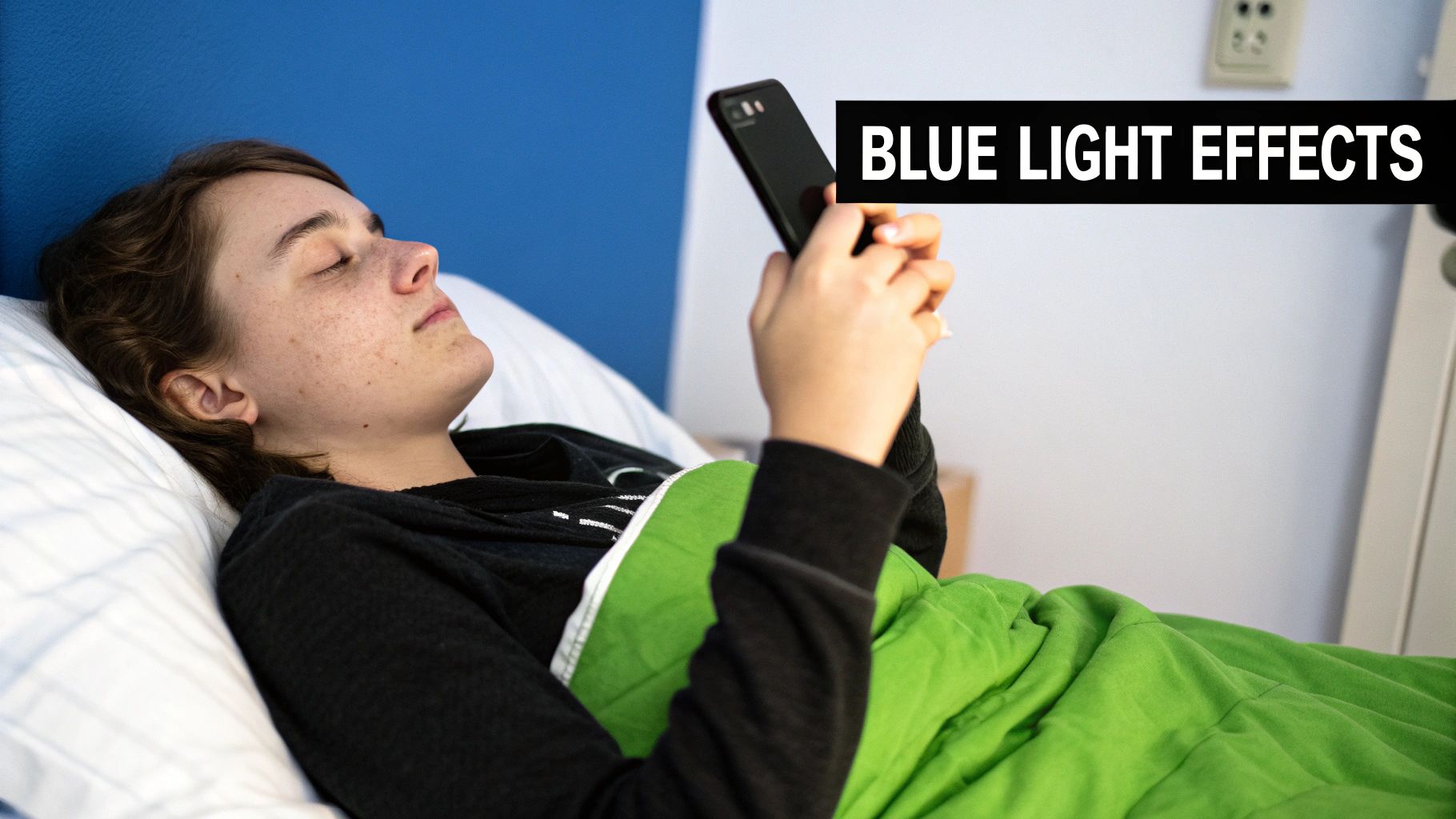
Think of your brain's sleep system like a light switch that’s wired directly to the sun. For thousands of years, this internal clock—your circadian rhythm—followed a simple, natural pattern. When the sun went down, your brain started producing a crucial hormone called melatonin, gently signaling that it was time to rest and recover.
This ancient biological rhythm is the foundation of good health and is vital for getting the restorative sleep you need. But the bright, artificial light beaming from your phone, tablet, or laptop is a powerful imposter, perfectly mimicking the midday sun. When you get screen time before bed, you're sending your brain a confusing and disruptive message: "Hey, it's still daytime!"
This exposure actively slams the brakes on your natural melatonin production, keeping you alert and wired exactly when your body is supposed to be winding down. Understanding this biological trick is the first step toward reclaiming your sleep and well-being.
Melatonin is often called the "hormone of darkness," and for a good reason. Its release is triggered by dimming light, and it’s the conductor that orchestrates your body's transition into sleep. But here's the catch: not all light is created equal when it comes to stopping this process.
The light from our digital devices is packed with short-wavelength blue light. Research has shown time and again that this specific part of the light spectrum is the most potent at fooling the brain and shutting down melatonin. One study even found that exposure to blue light in the evening can significantly delay the onset of sleep.
It’s like a dam holding back a river. As evening approaches, your brain gets ready to open the melatonin floodgates. But every minute you spend staring at a screen is like adding another layer of concrete to that dam, preventing the natural flow of sleep signals and pushing your bedtime later and later. This directly impacts your ability to get the important sleep your body requires.
This constant disruption does more than just make it harder to fall asleep; it throws your entire circadian rhythm out of whack. Your internal clock governs a lot more than just sleep—it also manages your appetite, mood, and energy levels all day long.
When your sleep-wake cycle is consistently thrown off by evening screen use, you might start to notice:
This vicious cycle of poor sleep can have serious consequences, since quality rest is non-negotiable for cognitive function, emotional balance, and physical repair. Recognizing how blue light is impacting your routine is the first step toward taking back control and acknowledging the importance of sleep. For a deeper dive, you can learn more about blue light and its effects on our blog.
The problem isn't just the light itself, but the timing. Blasting your eyes with daylight-mimicking blue light after sunset directly contradicts the signals your body needs to prepare for deep, healing sleep.
The impact of screen time before bed goes beyond just melatonin suppression. The light from your screens also directly stimulates special photoreceptors in your eyes that are hard-wired for alertness.
These receptors, known as intrinsically photosensitive retinal ganglion cells (ipRGCs), send signals straight to your brain's master clock. When they detect blue light, they tell your brain to be awake, sharp, and vigilant. That’s a fantastic survival mechanism during the day, but at night, it becomes a massive roadblock to the calm, relaxed state you need for sleep.
This means that even if you don't feel wired from the video you're watching or the article you're reading, the light alone is working against your body's natural drive to sleep. It’s a silent, physiological process that keeps your brain in a state of wakefulness, sabotaging your best efforts to get the rest you need to function. The importance of overcoming this cannot be stressed enough.
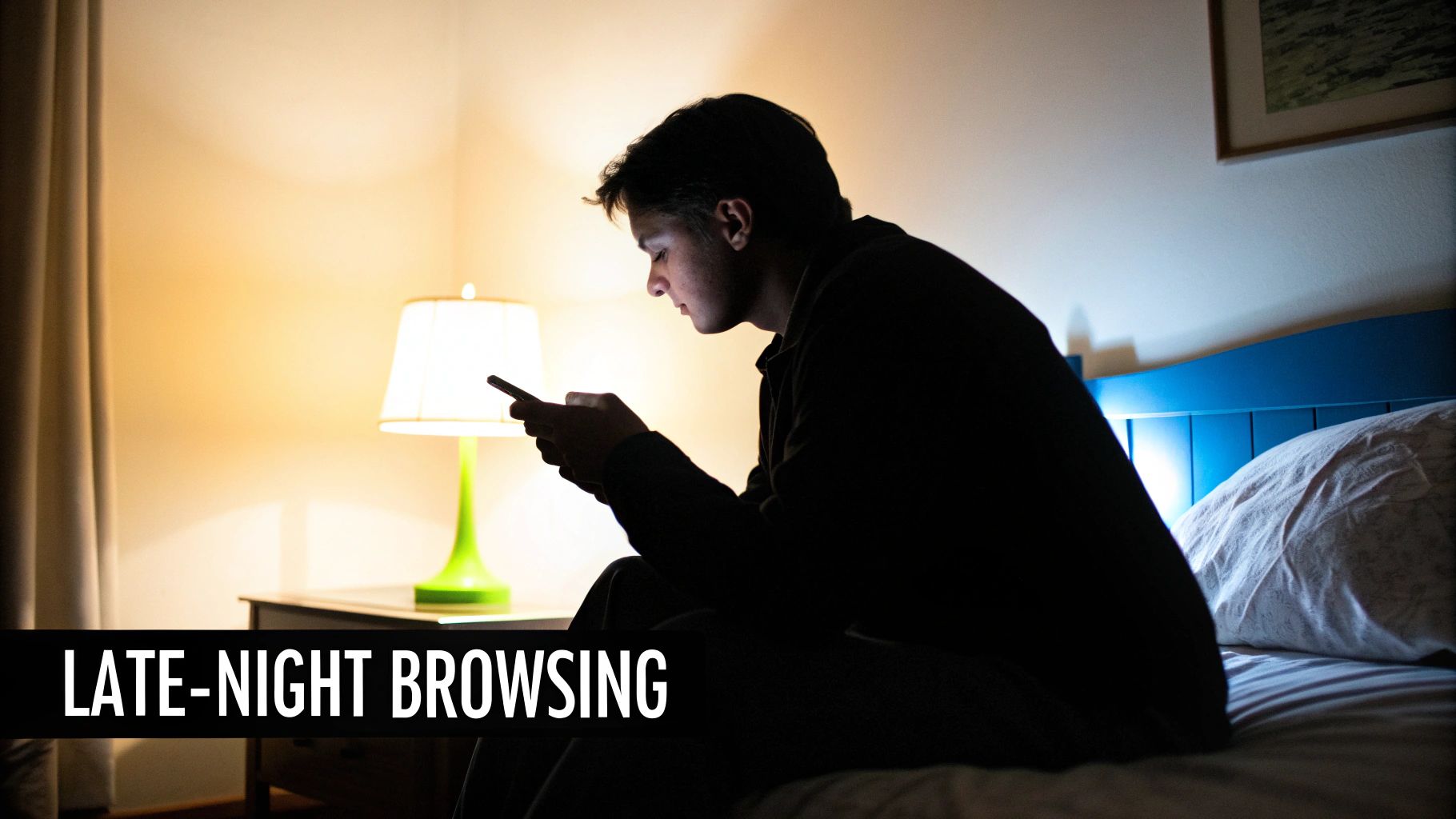
When late-night scrolling consistently sabotages your sleep, the consequences ripple out much further than just feeling groggy the next morning. Quality sleep isn't a luxury—it’s a fundamental pillar of good health. Mess with it, and your brainpower, mood, and physical well-being start to pay the price.
Think of sleep as your body’s nightly maintenance crew. It’s the time when your brain files away memories, your muscles repair themselves, and your hormones get back in balance. Interrupting this crucial process night after night is like sending the crew home before the job is done. Eventually, the whole system starts to wear down. The importance of sleep is evident in how deeply these disruptions affect us.
One of the first things to go when sleep is in short supply is your cognitive performance. A sleep-deprived brain just can’t focus, pay attention, or solve problems like it should. Simple tasks suddenly feel like monumental efforts, and your ability to learn and remember new things takes a nosedive.
It’s not just mental fog, either. A lack of restorative sleep throws your emotional regulation completely out of whack. You might find yourself snapping at people, feeling anxious, or dealing with wild mood swings. That’s because the part of your brain that keeps emotional responses in check—the amygdala—goes into overdrive without proper rest, making it harder to cope with everyday stress.
Chronic sleep deprivation doesn't just make you tired; it fundamentally alters how you think and feel. Protecting your sleep is one of the most effective ways to safeguard your mental and emotional resilience.
The scale of this problem is huge. Research shows that adults who use screens for more than two hours at night get an average of only 5.9 hours of sleep—way below the recommended seven to nine. This screen time can slash critical REM sleep (the stage vital for memory) by about 18%. You can dig into more of these screen time statistics to see the full picture.
The damage from poor sleep runs deep, impacting your physical health in serious and long-lasting ways. Your body relies on that downtime to keep its complex systems running smoothly. When that gets disturbed, the fallout can be severe, highlighting the true importance of sleep.
Here are just a few ways chronic sleep loss can hurt your body:
Ultimately, cutting back on evening screen time is more than just a "sleep hack." It’s a foundational practice for keeping your mind sharp, your mood stable, and your body healthy for the long haul. Prioritizing a solid sleep routine is one of the best investments you can possibly make in your overall well-being.
It’s tempting to point the finger at blue light for all our sleep woes, but that’s only half the story. The content you’re scrolling through, watching, or reading on your screen plays a huge part in why you’re still wide awake at 2 AM. To get quality sleep, you need a calm mind—and binging a thriller or getting into a social media debate is the exact opposite of calm.
Think of your brain like a car engine. To get ready for sleep, you need to let it cool down and settle into a quiet idle. But when you fire up a suspenseful TV show, scroll through a heated political thread, or check that one last work email, you're not idling. You're flooring it. This kind of screen time before bed jolts your brain into a high-alert, problem-solving state, making that gentle drift into sleep feel almost impossible.
Not all content is created equal. A chill nature documentary won't rev your engine nearly as much as a competitive online game or a doom-and-gloom news report. The problem is that most digital content is designed to hook you and keep your attention, which creates a state of cognitive arousal.
This mental stimulation goes head-to-head with your body's natural urge to rest. Your body might feel tired, but your brain is still buzzing—processing information, guessing what’s next, or having an emotional reaction to what it’s seeing. You end up in a frustrating standoff: your body is ready for bed, but your mind is running a marathon. It completely undermines the restorative sleep you need.
Let’s look at how swapping out certain activities can dramatically shift your pre-sleep mindset.
| Activity | Psychological State Induced | Impact on Sleep Readiness |
|---|---|---|
| Watching a suspenseful movie or TV show | Anticipation, anxiety, emotional investment | High. Keeps the brain alert and engaged, delaying sleep onset. |
| Reading a physical book (fiction or non-fiction) | Relaxation, focus, imaginative immersion | Low. Calms the mind and encourages a transition to a restful state. |
| Scrolling through social media | Comparison, emotional reactivity, distraction | High. Triggers emotional responses and cognitive overload. |
| Gentle stretching or meditation | Mindfulness, physical relaxation, stress reduction | Low. Actively prepares both the mind and body for sleep. |
| Playing a competitive video game | High alertness, problem-solving, adrenaline | Very High. Puts the brain into a peak performance mode, fighting sleep signals. |
| Listening to a calm podcast or audiobook | Passive engagement, relaxation | Low. Allows the mind to wind down without active visual stimulation. |
As you can see, the type of activity matters just as much as the screen itself. Choosing a passive, calming alternative can make all the difference in achieving the important sleep you need.
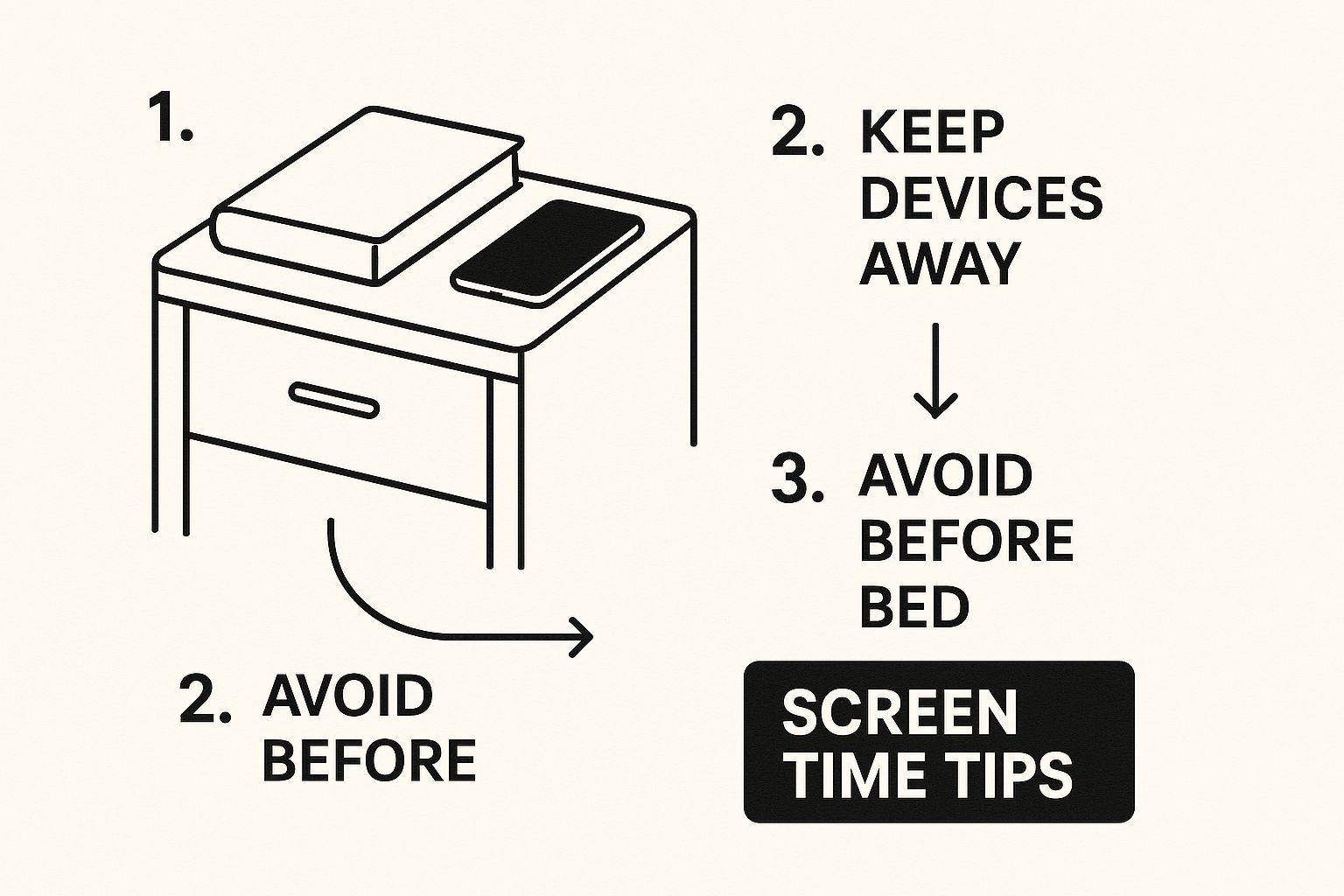
The image above nails a simple but powerful point: swapping an active screen for a quiet activity like reading a book is a direct way to help your mind prepare for rest.
Beyond keeping your brain wired, there’s another sneaky sleep thief at work: time displacement. This is what happens when that "one last video" becomes a rabbit hole, and suddenly it's an hour past your bedtime. The captivating nature of our feeds is designed to do exactly that.
That lost time is stolen directly from your sleep budget. A huge study of over 45,000 young adults found a direct line between using screens in bed and sleep problems. For every extra hour of screen time in bed, the risk of insomnia shot up by 59%, and on average, people lost about 24 minutes of sleep each night. What's really telling is that the type of activity—whether social media, movies, or studying—didn't matter. They all wrecked sleep, mostly by pushing bedtime later and later. You can dive deeper into these sleep and screen time findings to see the full picture.
Engaging content doesn't just keep your mind awake; it actively steals the minutes and hours you've allocated for essential rest. This isn't just about delaying sleep—it's about fundamentally shortening the time your body has to repair and recharge.
At the end of the day, getting deep, restorative sleep is about more than just having a dark, quiet room. It demands a quiet mind. Protecting that precious hour before you hit the pillow from mentally stimulating content is just as crucial as managing your blue light exposure. It’s a non-negotiable step in signaling to your brain that the day is done and it’s finally safe to power down. The importance of sleep makes this one of the most vital habits to cultivate.
Knowing how screens mess with your sleep is one thing. Actually doing something about it is where the magic happens. The good news? You don't need to throw your phone in a lake to see a difference. Small, consistent changes can send a powerful signal to your brain that it’s finally time to power down.
It all starts with building a relaxing bedtime routine that actively gets you ready for deep, restorative sleep. The importance of sleep hygiene cannot be overstated.
The single most powerful trick in the book is creating a "digital sunset." This is simply a dedicated, screen-free buffer zone of 60 to 90 minutes before you plan to be asleep. Think of it as a gentle off-ramp for your brain, giving it time to slow down from the high-speed highway of daily pings and notifications.
This quiet period lets your melatonin levels rise naturally and your mind settle down, paving the way for a much smoother transition into sleep. It’s the perfect antidote to the blue light and overstimulation that keeps so many of us wired at night.
So, what are you supposed to do during this "digital sunset"? The goal is to swap screen-based habits for calming activities that genuinely help you relax. This isn't about taking something away; it's about upgrading your evening with something better.
Here are a few great alternatives to scrolling:
Of course, the modern challenge is that screens are everywhere. The global average screen time has climbed to a staggering 6 hours and 40 minutes per day. Americans are slightly higher at around 7 hours and 3 minutes, and for Gen Z, that number rockets to about 9 hours daily. You can check out more of these widespread screen time trends for yourself.
Given those numbers, a complete pre-bed detox can feel like a tall order.
If going completely screen-free feels impossible right now, don't sweat it. You can use a few harm-reduction strategies to minimize the damage while you work on building better habits.
The goal is progress, not perfection. Even small adjustments to how you use screens in the evening can lead to huge wins for your sleep quality.
Start with these practical tips tonight:
By combining a dedicated wind-down period with these practical tools, you're creating a powerful, multi-layered defense for your sleep. You’re not just avoiding the bad stuff—you're actively inviting the calm your body needs to rest, recover, and wake up ready for whatever comes next.
Turning your bedroom into a true sanctuary for rest is one of the most powerful moves you can make against the ails of screen time before bed. Think about it: your environment is constantly sending signals to your brain. When you optimize your space for sleep, you’re sending a loud, clear message that the bedroom is for one thing—rest and rejuvenation.
A great first step is to declare your bedroom a "no-screen zone." This helps your brain build a rock-solid connection between your bed and sleep, not your bed and endless scrolling. Once your mind learns that getting into bed means it's time to power down, falling asleep starts to feel less like a chore and more like an automatic reflex. This directly supports the importance of sleep in your daily life.
Your body’s internal clock is incredibly tuned in to its surroundings, especially temperature, light, and sound. Nailing these three elements can make a night-and-day difference in your sleep quality.
A cool room is non-negotiable for quality rest. Your body's core temperature naturally dips as it preps for sleep, and a cooler bedroom—somewhere between 60 and 67 degrees Fahrenheit—helps that process along. If your room is too warm, it can actually fight against this natural drop, leaving you restless and waking up all night.
Darkness is just as critical. Even tiny slivers of light from a streetlamp or the glowing charger across the room can mess with your melatonin production and throw your sleep cycles out of whack.
Creating a pitch-black environment sends the clearest possible signal to your brain that it's time for deep, uninterrupted sleep. It’s a simple but profound way to work with your body's natural rhythms, not against them.
Finally, you need quiet. Unexpected noises can yank you right out of the deepest, most restorative stages of sleep, even if you don't remember waking up. By taking control of your sleep environment, you’re basically building a fortress to protect your precious downtime.
Crafting this perfect sleep environment doesn't have to be complicated or break the bank. Just a few smart additions can make a huge difference in your ability to fall asleep and stay that way.
Here are a few items worth considering:
When you deliberately shape your physical space, you create an environment that actively supports your sleep goals. It makes restorative rest feel less like a struggle and more like the natural, easy end to your day.
As you start tweaking your evening routine, you're bound to have some questions. It's totally normal. Nailing down the details of how to manage screen time before bed is the key to creating a wind-down ritual that actually works for you and gets you the deep sleep you need.
Let’s dive into a few of the most common ones we hear.
While features like 'Night Shift' or 'Dark Mode' are definitely a good start, they're not the whole solution. These settings dial down the harsh blue light coming from your screen by giving it a warmer, amber glow. That's great for taking the edge off and reducing how much your screen messes with your melatonin.
But here’s the catch: it's not just about the light, it's about the stimulation. Binge-watching a tense thriller, firing off one last work email, or getting sucked into a heated debate on social media still puts your brain on high alert. That’s the opposite of what you want before trying to sleep. The importance of sleep lies in both physical and mental relaxation.
Think of night mode as a solid harm-reduction tool. It’s better than nothing, but a truly screen-free buffer before bed is still the gold standard for telling your brain it's time to power down.
A warm-toned screen is better than a bright blue one, but a calm, screen-free mind is the gold standard for preparing your body for deep, restorative rest.
Absolutely. In fact, this is one of our favorite screen-time alternatives. The huge difference here is that you're not staring directly into a light source. Listening to an audiobook or a relaxing podcast is a much more passive activity than scrolling, typing, or watching a video.
The trick is to do it right. Cue up your podcast or book, turn the screen completely off, and put your device face down. This way, you get to unwind and enjoy your content without any of the disruptive blue light. It’s a perfect addition to a digital sunset routine.
This is the best part—many people feel a real difference in just a few nights. After consistently cutting back on evening screen time, you might find yourself falling asleep faster and waking up feeling sharper and more rested than you have in a long time.
But for the deep, lasting benefits—like fully resetting your internal clock—consistency is everything. Give it a few weeks. Sticking with your new habit helps your body’s circadian rhythm find its natural groove again. The more you protect your sleep, the more profound the payoff will be. The importance of sleep is cumulative; every good night builds on the last.
For more ideas on building healthy sleep habits, check out the articles in our sleep resource center.
At Element Lux, we're all about helping you take back your nights. Our blue-light-blocking glasses are specifically designed to shield your eyes and support your body's natural sleep-wake cycle, making it that much easier to wind down peacefully. See how they can become a key part of your evening routine by exploring our collection at https://element-lux.com/shop-now.
Let's be honest, staring at the ceiling for hours when you know you need to sleep is one of the most frustrating feelings in the world. But figuring out how to fall asleep faster starts with a simple shift in mindset: seeing sleep not as a nightly chore, but as the most powerful and essential tool you have for a better life. Without it, our physical health, mental clarity, and emotional well-being all begin to decline.
It’s not just about shaking off that morning grogginess. Deep, restorative sleep is when your brain and body get to work doing critical maintenance—repairing, resetting, and recharging you for whatever comes next. This process is absolutely vital for a healthy, productive life.
Think of quality sleep as a non-negotiable part of your health, right up there with diet and exercise. When you consistently get the rest you need, you’re making a direct investment in your mental sharpness, emotional stability, and physical resilience. Without it, even small daily tasks can feel like a massive uphill battle, because sleep is the foundation for all daily functions.
The fallout from poor sleep goes way beyond just feeling tired. It tanks your cognitive function, leading to brain fog, bad decisions, and a nosedive in productivity. It also puts your immune system on the back foot, leaving you more likely to catch whatever is going around. The importance of sleep cannot be overstated; it touches every aspect of our health.
Trying to function without enough sleep is like trying to drive a sports car with no gas in the tank. Sooner or later, everything just sputters to a halt.
If you find it hard to get solid rest, you're in very good company. This is a global issue, often fueled by the always-on pressures of modern life. Recognizing the importance of sleep is the first step toward reclaiming it.
A recent worldwide survey painted a clear picture of just how common this is. It found that nearly a third of people struggle to fall or stay asleep at least three times a week. The biggest culprits? Stress (57%), anxiety (46%), and financial worries (31%). It's a stark reminder of how much our waking lives bleed into our ability to rest.
You can dig into the full research about these global sleep patterns to see the whole story. This shared struggle is exactly why learning how to fall asleep faster is more important than ever.
When we prioritize sleep, we are prioritizing every aspect of our physical and mental health. It’s the foundation upon which a vibrant, energetic, and resilient life is built.
Once you really grasp why sleep is so crucial, all the practical tips and tricks start to make a lot more sense. They aren’t just random rules; they’re tools to help you reclaim a vital biological function that’s been hijacked by modern life. Every minute of quality sleep contributes to a healthier you.
When you’re well-rested, you can:
Viewing sleep as your ultimate superpower changes the game. It’s not about "losing" hours at the end of the day; it’s about investing in a healthier, sharper, and more capable version of yourself.
Your bedroom should be a sanctuary for sleep, and nothing else. But for most of us, it's a multi-purpose room—a home office, a late-night Netflix spot, a place to scroll on our phones. This sends mixed signals to your brain, making it harder to power down when you actually want to rest. Optimizing your environment is a key step because high-quality sleep is critical for your health.
The good news is you don't need a full-blown renovation to fix this. A few simple, strategic tweaks can transform your room into a space that signals "it's time to sleep" the moment you walk in. Think of it as creating a powerful trigger for relaxation.
This visual guide breaks down the core elements of a perfect sleep environment.
As you can see, the secret lies in mastering darkness, temperature, and quiet. Together, they create the optimal setting for deep, restorative rest—the kind of sleep that truly matters for your long-term well-being.
Our internal body clock is incredibly sensitive to light. Even a tiny sliver of light from a streetlamp or the glowing LED on your phone charger can disrupt the production of melatonin—the hormone that tells your body it's bedtime. Securing total darkness is important because it directly supports the biological processes needed for restorative sleep.
Ever tried to sleep in a warm, stuffy room? It’s nearly impossible. That's because your body's core temperature needs to drop slightly to initiate sleep. Keeping your bedroom cool helps that natural process along, paving the way for the deep sleep your body needs to repair and recharge.
Most research points to an optimal sleep temperature of around 65°F (18.3°C). It might feel a bit chilly at first, but it’s the sweet spot for signaling to your body that it’s time to wind down. Try adjusting your thermostat down a few degrees and see how you feel.
To help you get started, here's a quick checklist for dialing in your sleep environment.
| Element | Optimal Setting | Why It Works |
|---|---|---|
| Light | Pitch black | Supports melatonin production, the natural sleep hormone essential for deep rest. |
| Temperature | Around 65°F (18.3°C) | A cool room helps your body's core temperature drop, which is a key trigger for sleep. |
| Sound | Consistent & quiet | Prevents sudden noises from disrupting important sleep cycles that heal the body and mind. |
| Clutter | Minimal & organized | Reduces visual "noise" and mental stress, creating a more calming atmosphere for rest. |
Getting these four elements right creates a powerful foundation for better sleep, night after night.
A cool, dark, and quiet room isn't just a preference; it's a biological necessity. By controlling these three elements, you are directly supporting your body's natural sleep processes, making it easier to fall asleep and stay asleep.
Unpredictable noises are the enemy of good sleep. A car alarm, a slamming door, a neighbor's TV—all of them can jolt you awake and mess with your sleep cycle. Protecting those cycles is incredibly important for allowing your brain to perform its nightly cleanup and memory consolidation.
While total silence works for some, others find it just makes them more aware of every tiny creak and hum. The real goal is to create a consistent, soothing audio backdrop.
If you live in a noisy apartment, a white noise machine can be a lifesaver. It works by creating a steady, calming hum that effectively masks those sudden, disruptive sounds. Even a simple fan can do the trick while also keeping the room cool. It’s all about creating a peaceful soundscape that lets your mind relax without interruption.
Think about your morning routine. It gets you primed and ready for the day, right? A solid wind-down ritual does the exact opposite—it's your gentle off-ramp from all that activity. This transition is important because it prepares you for the restorative sleep that is vital for your health.
This is your signal to your brain and body that the day is officially ending and it's time to prep for some serious, restorative sleep. It’s not about adding a bunch of complicated tasks to your evening. The real goal is to create a simple, repeatable sequence of calming things you actually look forward to doing.
Without this transition, your mind can keep racing long after your head hits the pillow, leaving you staring at the ceiling instead of drifting off.
One of the most powerful changes you can make is setting a 'digital curfew' at least an hour before bed. It’s a game-changer. Quality sleep is too important to let a screen derail it.
The bright blue light blasting from our phones, tablets, and laptops is a notorious sleep thief. It actively suppresses melatonin, the hormone that screams, "Hey, it's nighttime, go to sleep!"
This doesn’t mean you have to sit in a dark room bored out of your mind. Just swap the screen for something analog.
Ever notice that when your mind is racing, your breathing gets shallow and quick? That’s your body stuck in high-alert mode. The good news is you can manually override this just by changing how you breathe. This simple act can be profoundly important for preparing your body for a night of healing sleep.
A simple but incredibly effective technique I love is the 4-7-8 breathing method. You can do it anywhere.
Do this cycle three or four times. The focused counting and long exhale literally calms your fight-or-flight response. It's the perfect tool to use right before you shut your eyes.
A wind-down ritual isn't a luxury; it's a deliberate practice that trains your brain to associate certain activities with sleep. Over time, simply starting your routine will trigger a relaxation response, making the journey to sleep smoother and faster.
Sometimes, the biggest obstacle to sleep is a brain cluttered with tomorrow’s to-do list, worries, or endless replays of the day's events. Getting those thoughts out of your head and onto paper is a huge relief, clearing the path for the restorative sleep that is so important for mental health.
You don't need to write a novel. A quick five-minute "brain dump" is all it takes.
Just scribble down everything that’s on your mind—tasks, anxieties, random ideas, frustrations. This simple act of externalizing your thoughts creates mental space, allowing your mind to finally quiet down and get ready for sleep. Pairing this with a warm cup of chamomile tea or a warm bath makes it even more soothing.
Falling asleep isn't just about what you do right before you hit the sheets. Think of it more like the grand finale of a story your body has been writing all day long. Your body runs on an internal clock, known as the circadian rhythm, and it absolutely thrives on consistency. The importance of respecting this natural rhythm cannot be overstated for achieving deep sleep.
When your daily habits line up with this internal clock, winding down at night feels natural and effortless. But when your lifestyle is all over the place—erratic meal times, random workouts, and caffeine deep into the afternoon—you're basically sending mixed signals to your body. It gets confused about when to be alert and when to power down.
Aligning your daily choices is one of the most powerful things you can do to support this natural rhythm and unlock the full benefits of sleep.
The single most effective way to get your body clock on track is to go to bed and wake up at roughly the same time every single day. The importance of this consistency is paramount for regulating your sleep-wake cycle.
Yes, that includes weekends.
It's tempting to stay up late and sleep in on Saturday, but that just throws your rhythm out of whack. It’s what causes that "social jetlag" feeling that makes Monday mornings so miserable.
Try to stay within a 30-minute window. If 10:30 PM is your goal, make sure you're in bed by 11:00 PM at the absolute latest. This kind of repetition trains your brain to anticipate sleep, making it so much easier to drift off when the time comes.
This isn’t just a hunch; it aligns with global patterns. Data shows that most people worldwide go to bed between 10 p.m. and midnight and wake up between 6:30 and 7:30 a.m. Tapping into this common rhythm becomes much easier with a consistent schedule. You can discover more insights about these international sleep statistics on naplab.com.
Your daily habits around light exposure and what you consume play a massive role in telling your body when to be alert and when to rest. A few small tweaks here can make a huge difference in the quality and importance of your nightly rest.
By managing light exposure and timing your caffeine intake, you are actively communicating with your body’s internal clock. Morning light says "wake up," while avoiding evening stimulants says "it’s time to wind down."
What you do in the hours leading up to bedtime matters. A lot. The timing of your last meal and your workout can either set you up for success or completely sabotage your ability to fall asleep quickly. This timing is important because your body needs to shift focus from digestion and activity to rest and repair.
A big, heavy meal right before bed forces your digestive system to work overtime when it should be resting. Try to finish your last meal at least two to three hours before you plan to hit the hay. This gives your body plenty of time to digest.
Likewise, intense exercise too close to bedtime can jack up your core body temperature and heart rate, making it tough to relax. If you're an evening exerciser, opt for something gentle like stretching or yoga. Save the high-intensity stuff for earlier in the day to help your body wind down naturally at night.
For more on how light fits into these daily cycles, check out our guide on the blue light blog.
You’ve done everything right—the room is dark, the temperature is perfect, and you have a relaxing wind-down routine. But the second your head hits the pillow, your brain decides it’s the perfect time to review every mistake you’ve ever made or plan your entire next month.
If this sounds familiar, you know that the biggest obstacle to falling asleep isn't your environment; it's a mind that just won't switch off. This is where we get into the psychology of sleep, and it highlights the importance of mental calm for physical rest.
Learning to manage a racing mind isn't just about feeling less tired. When you can calm your thoughts, you unlock sleep's true restorative power—the part that processes emotions, locks in memories, and helps you feel emotionally balanced the next day.
Ever get stuck on a thought loop? Maybe it's a work deadline or a conversation you wish had gone differently. It’s incredibly frustrating. The cognitive shuffle is a simple but brilliant technique designed to derail those repetitive thoughts, allowing your mind to relax enough to initiate the important process of sleep.
Instead of trying to force your mind into silence (which rarely works), you give it a gentle, meaningless task.
This exercise is just engaging enough to pull your focus away from anxious thoughts but boring enough to let you drift off. It actually mimics the random, disconnected way our brains think as we naturally fall asleep.
It sounds completely backward, I know. But if you've been lying in bed trying to sleep for more than 20 minutes, the best thing you can do is get up. This is important for preserving the psychological connection between your bed and sleep itself.
Tossing and turning just creates a vicious cycle. You start associating your bed with the frustration of not being able to sleep, which makes it even harder to relax.
Get out of bed and go to another room. Do something quiet and relaxing in dim light—read a few pages of a book (a real one, not on a screen!), listen to some calm music, or do some light stretching. The moment you feel sleepy again, head back to bed.
This strategy is a cornerstone of effective sleep therapies. By refusing to lie awake in bed feeling stressed, you protect the powerful mental connection between your bed and actual, restful sleep. Over time, this makes falling asleep much easier.
This is more important than ever, as sleep anxiety is becoming a major issue. Recent research shows that nearly 40% of Gen Z adults struggle with sleep-related anxiety multiple times a week. You can read more about the rise of sleep anxiety on globalwellnessinstitute.org.
The goal is to reinforce one simple rule: your bed is only for sleeping. To take this a step further, you can also explore how blue light blocking glasses help with sleep by helping signal to your body it’s time to wind down, even during that relaxing pre-bedtime activity.
Even when you're doing everything right, a few questions can still pop up. I get it. Sleep can feel like a complicated puzzle, but getting clear answers to these common sticking points can make all the difference in fine-tuning your nightly routine. After all, the importance of consistent, quality sleep means it's worth getting the details right.
After all, learning how to fall asleep faster isn't a one-and-done deal—it's about finding what works for you.
First off, don't panic. Waking up once or twice during the night is actually pretty normal. The real key is what you do next. Whatever you do, resist the urge to grab your phone. The blast of blue light and the potential for a stressful notification will instantly jolt your brain into "awake mode."
Instead, try a simple relaxation technique like the 4-7-8 breathing method without even leaving your bed. If you find you’re still wide awake after 20 minutes or so, it's time to get up.
Go to another room, keep the lights as dim as possible, and do something quiet until you feel drowsy again. Read a boring book, listen to soft music—anything but staring at a screen.
This simple rule prevents your brain from building a frustrating connection between your bed and the anxiety of being awake. Your bed should be a sanctuary for sleep, not a battleground. This is an important step in protecting your long-term sleep health.
Absolutely. In fact, the average healthy person takes somewhere between 15 to 20 minutes to drift off. That idea of falling asleep the second your head hits the pillow? It's usually a sign of serious sleep deprivation, not a goal to aim for. A gradual transition to sleep is healthy and important.
Now, if it's consistently taking you more than 30 minutes to fall asleep, that’s your cue to start putting some of the strategies we've discussed into practice. For a deeper dive, our collection of sleep-focused resources has plenty of extra guidance.
The best thing you can do is focus on creating a consistent, relaxing wind-down routine instead of watching the clock. A calm mind will always find its way to sleep faster than a stressed one.
At Element Lux, we know that managing your light environment is one of the most powerful steps you can take toward better sleep. Our blue light blocking glasses are specifically designed to shield your eyes from stimulating screen light in the evening, helping your body produce melatonin naturally. This makes winding down feel effortless, so you can fall asleep faster. Take control of your nights and discover our collection today.
Real relief from an eye strain headache means tackling what's actually causing it in the first place—think prolonged screen use, poor lighting, and not enough rest. The good news is that simple, immediate actions can make a huge difference. Taking intentional screen breaks, tweaking your environment, and getting quality sleep are the foundations for letting your overworked eye muscles finally recover. And don’t forget: prioritizing sleep hygiene is key to keeping those headaches at bay.
If you’ve ever finished a long day at the computer with a dull, throbbing ache behind your eyes, you know the feeling. It’s a uniquely modern problem tied directly to our digital lives, and it's more than just a nuisance—it’s a physical sign that your eyes are being pushed to their limit.
This problem is so common that eye strain headaches, often a type of tension-type headache (TTH), have become a major health concern worldwide. Just how common? About 78% of the population has experienced TTH at some point. Unsurprisingly, the prevalence of these headaches shot up by around 38% globally between 1990 and 2021, a period that perfectly mirrors the explosion of digital devices in our homes and workplaces.
To get a better handle on the pain, let's look at what's really going on behind the scenes. The table below breaks down the main culprits.
A quick look at the primary factors that trigger or worsen headaches from screen use.
| Factor | How It Contributes to Headaches |
|---|---|
| Constant Muscle Focus | Your ciliary muscles are in a constant state of tension to keep close-up text sharp, leading to fatigue and pain. |
| Reduced Blink Rate | Staring at screens causes us to blink up to 66% less, leading to dry, irritated eyes that have to work harder. |
| Screen Glare | Reflections from overhead lights or windows force your eyes to struggle to see past the glare, adding another layer of strain. |
| Poor Sleep | Without enough restorative sleep, your eye muscles don't get a chance to recover, starting the next day already fatigued. |
These factors often work together, creating the perfect storm for a headache that just won't quit. Always remember, consistent, restorative sleep each night gives your eyes the downtime they need to recover and helps prevent that perfect storm from ever forming.
It’s easy to focus on what happens during screen time, but one of the most critical recovery tools kicks in long after you’ve logged off: sleep.
Good, quality sleep is non-negotiable for your eye health. It’s the only time your eye muscles get to fully relax, repair, and recover from the day's strain. Think of good sleep as the cornerstone of eye health—without it, no other strategy can fully protect you.
When you don't get enough restorative sleep, you start the day with already fatigued eyes, making them far more susceptible to strain and pain. Think of it as starting a marathon without any rest—your eyes are set up to fail.
You can discover more about how light exposure impacts your natural sleep cycle on our blue light blog.
Lasting relief from eye strain headaches often starts with your environment, not your eyes. Your workspace can either be a source of constant, low-level strain or a foundation for comfort. Making a few intentional tweaks to your desk setup can dramatically cut down on the physical stress that builds into a painful headache. Combined with a solid sleep routine, these ergonomic adjustments become even more powerful.
Most people think "ergonomics" means dropping a ton of cash on specialized equipment, but that’s rarely the case. In my experience, simple, practical changes are what really move the needle. By optimizing your monitor placement, lighting, and chair height, you can tackle the root causes of eye and muscle fatigue head-on.
One of the most common mistakes I see is a monitor that's at the wrong height or distance. When your screen is too low, you naturally hunch forward, which strains your neck and shoulders. If it's too high, your eye muscles have to work overtime just to focus. It's a lose-lose situation.
The fix can provide immediate relief. The very top of your screen should be at or just slightly below your eye level. A simple way to get this right is by stacking a few sturdy books under your monitor until it feels perfect. You really don't need a fancy stand to get the job done.
Distance matters, too. Your screen should be about an arm’s length away from you—roughly 20 to 24 inches. This sweet spot lets your eyes focus comfortably without forcing you to squint or lean in, which is a key part of preventing the muscle tension that leads to headaches.
Screen glare is a sneaky culprit behind eye strain. Reflections from windows or harsh overhead lighting force your eyes to constantly readjust, fighting to distinguish what's on the screen. The tiny muscles around your eyes get exhausted from this continuous effort.
Here's a quick trick I use to spot glare: turn your monitor off. The black screen instantly becomes a mirror, revealing any reflections from light sources behind or above you. Once you see them, you can take action.
To fight back against glare, try these simple adjustments:
Your posture is directly connected to the tension in your upper body, which can easily trigger a headache. An improperly adjusted chair forces your neck and shoulder muscles to compensate, leading to stiffness and pain that radiates right up to your head.
The goal is to find a relaxed, neutral posture. Adjust your chair so your feet are flat on the floor and your knees are bent at a comfortable 90-degree angle. Let your arms rest easily on your desk or armrests, and make sure your shoulders are relaxed—not hunched up by your ears. This alignment minimizes physical stress and creates a solid foundation for keeping those headaches at bay.
Optimizing your workspace is a huge step, but what you do in that space matters just as much. Lasting relief from eye strain headaches often comes down to small, consistent habits. This isn't about some massive life overhaul; it's about building smart routines that protect your eyes from the constant demands of digital screens. And again, these habits pair best with a regular sleep schedule to give your eyes the solid rest they need.
You've probably heard of tricks like the 20-20-20 rule, but the real key is turning that advice into an unbreakable habit. It's surprisingly easy to forget until that all-too-familiar headache is already brewing. By using simple timers or browser extensions, you can automate these crucial breaks and make them a natural part of your day.
The 20-20-20 rule is brilliantly simple yet incredibly powerful: every 20 minutes, look at something 20 feet away for at least 20 seconds. This simple action gives the tiny ciliary muscles in your eyes a chance to relax from their constant close-up focus, which is a primary driver of eye strain.
Here's how to make it stick:
For maximum benefit, follow this rule throughout the day and ensure you’re also clocking enough quality sleep at night. This tiny interruption is one of the most effective ways I've found to prevent the muscle fatigue that snowballs into a nasty headache.
Beyond taking breaks, a couple of other simple habits can bring significant relief.
First, match your screen's brightness to the ambient light in your room. A screen that's blazing bright in a dark room is like staring into a lightbulb. On the flip side, a dim screen in a bright room forces you to squint. Tweak the setting until it feels comfortable and blends in with your surroundings.
Second, make a conscious effort to blink more. It sounds silly, but we naturally blink far less when we're focused on a screen, which leads to dry, gritty, and strained eyes. Consciously blinking fully and often is like a mini-rinse for your eyes, keeping them moist and reducing irritation.
It's a proven cycle: the more hours we pour into our screens, the higher the risk of headaches. One study found that a staggering 62.4% of IT professionals reported headaches linked directly to their computer use, showing a clear dose-response relationship between screen time and pain. Interestingly, the study found recreational screen time was an even bigger culprit than work-related use. You can dive into the full research on screen time and ocular pain to see the data for yourself.
Finally, don't forget the ultimate eye-saving habit: prioritizing sleep. Adequate nightly rest makes these daytime habits even more effective, giving your eyes the recovery they crave.
Think about the tiny muscles in and around your eyes. Just like any other muscle in your body, they get exhausted from constant use. When you’re locked onto a screen for hours, these muscles are held in a state of tension, leading to that all-too-familiar fatigue that can quickly morph into a headache.
The good news? A few targeted exercises can offer surprisingly fast relief, right from your desk. Pair these exercises with consistent sleep habits to give your eye muscles the best chance to recover overnight.
Think of these as a quick "stretch break" for your eyes. They don't require any fancy equipment and take just a few minutes, but they're fantastic for releasing built-up tension and bringing immediate comfort. Weaving them into your daily routine is even better—it helps build up your eyes' resilience over time, making them less prone to strain in the first place.
This visual guide breaks down a few simple but effective steps you can take to prevent eye strain before it starts.
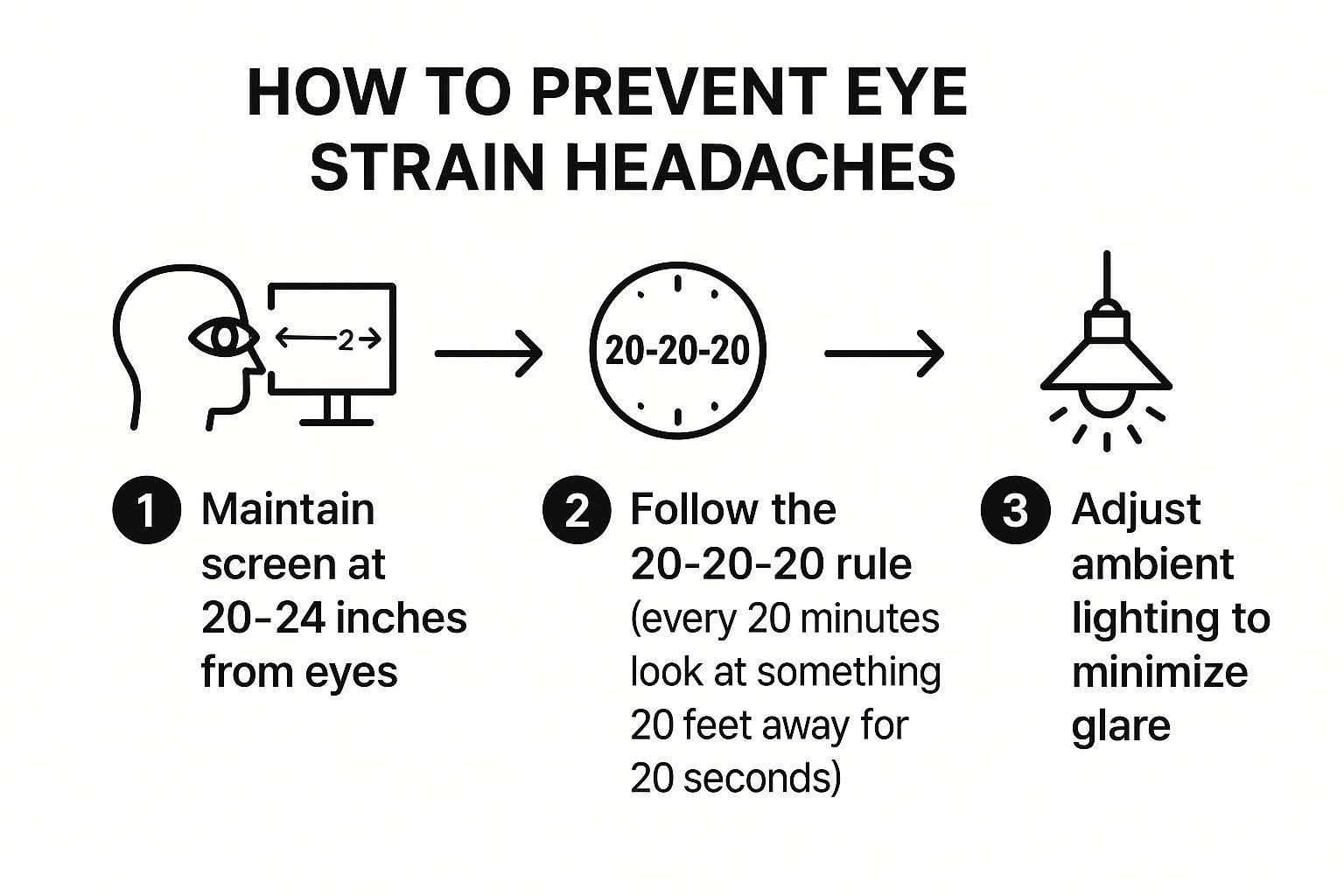
As the infographic shows, proactive habits like proper screen distance and lighting, combined with the 20-20-20 rule, form a powerful defense against digital eye strain.
Here are a few practical exercises you can start using today to fight off eye fatigue and stop headaches before they even get started.
While these exercises provide fantastic daytime relief, their benefits are amplified when paired with proper rest. Quality sleep is the ultimate reset button for your eyes. It’s during these crucial hours that your eye muscles fully recover, repair, and prepare for the next day. Without quality sleep, even these soothing breaks will have limited impact.
Honestly, you can do all the eye exercises in the world, but if you're not getting enough solid, restorative sleep, you're fighting an uphill battle.
Skimping on sleep means your eyes start the day already tired, making them far more vulnerable to strain from the get-go. Prioritizing 7-9 hours of quality sleep is one of the most effective long-term strategies for preventing eye strain headaches. It allows your eyes to heal, reduces inflammation, and ensures they're actually ready for the demands of another day. Make sleep non-negotiable to truly reset your eyes every night.
Real, lasting relief from eye strain headaches isn't just about what you do during screen time—it's about the daily habits that support your eyes around the clock. Think of sleep, hydration, and nutrition as the foundation for keeping your eye muscles healthy and headaches at bay. Remember, prioritizing sleep underpins all of these lifestyle adjustments. Making a few small, consistent tweaks in these areas can pay off big time with fewer flare-ups and sharper, more comfortable vision.
Quality sleep is completely non-negotiable for eye health. It’s during those deep, restful hours that your eye muscles finally get to recover and repair from the constant tension of focusing on a screen.
When you skimp on 7–9 hours of uninterrupted sleep, your eyes start the day already tired, making them far more vulnerable to strain.
Ever wondered why that late-night scrolling session leaves you feeling groggy? Exposure to blue light at night can mess with your body's natural melatonin production, which is the hormone that signals it's time to rest. For a deeper dive into how blue light glasses can help you reclaim restorative sleep, check out our guide on how our glasses can support your sleep.
Here’s why quality sleep is so crucial:

It’s easy to forget, but how much water you drink has a direct impact on your eye comfort. When you're dehydrated, your eyes can feel dry and gritty, a sensation that can quickly activate headache pathways.
Staying hydrated supports both a healthy tear film and overall headache prevention. Aim for around 8 glasses of water a day, but don't be afraid to adjust based on your activity level or the climate. Good hydration at night can also improve sleep quality, creating a virtuous cycle for eye health.
A few simple tricks can help you hit your target:
Just like the rest of your body, your eyes need the right fuel to stay strong and repair themselves. Foods rich in vitamins A, C, E, and omega-3 fatty acids are fantastic for maintaining healthy blood flow and reducing inflammation around the ocular muscles. And eating a balanced diet helps you sleep better, further supporting your eye health.
You don't need a total diet overhaul. Just focus on adding a few powerhouse ingredients to your meals. For instance, a simple lunch of grilled salmon over a spinach salad delivers a potent anti-inflammatory combination that your eyes will love.
Here are a few things to add to your grocery list:
It’s no secret that the COVID-19 pandemic dramatically shifted our screen habits. One study found that daily screen time for children in the US jumped from 1.4 to 2.7 hours, which correlated with an increase in headache reports. You can read the full research on these screen time shifts here.
To make it easier, here’s a quick-glance table of daily habits that can make a huge difference.
Integrating proper sleep into this checklist is paramount for real relief.
| Habit | Target Goal | Why It Helps |
|---|---|---|
| Sleep | 7–9 hours nightly | Prevents morning fatigue and reduces muscle tension |
| Hydration | 8 glasses per day | Maintains tear film balance and prevents headache triggers |
| Nutrient-Rich Diet | Daily servings | Supplies vitamins and omega-3s for cellular repair |
Putting these pieces together is the key to a sustainable strategy for relief.
A combination of quality sleep, proper hydration, and nutrient-rich foods creates a powerful, sustainable defense against eye strain headaches.
These aren't quick fixes, but lifestyle changes that build resilience over time. Start by incorporating them gradually, and pay close attention to how your eyes feel. As you build consistency, you'll likely notice fewer headaches and better focus during your workday.
Even after you've started making changes, a few questions about eye strain headaches always seem to linger. Getting these common concerns sorted out can help you fine-tune your strategy and feel more confident that you're on the right track.
Let's dive into the questions we hear most often and get you some clear, straightforward answers.
For a lot of people, the answer is a definite yes. Blue light glasses can bring noticeable relief by filtering the high-energy visible (HEV) light that our digital screens blast out all day.
This specific type of light is a well-known culprit behind digital eye fatigue. It can also mess with your body's internal clock, especially if you're scrolling on your phone or working late into the night.
While the science is still catching up on all the benefits, countless people swear by them, reporting less strain and much better sleep after making them a part of their evening routine.
Think of them as one powerful tool in your toolkit, not a magic cure-all. They work best when you combine them with other good habits like taking frequent breaks, maintaining a consistent sleep schedule, and creating a multi-layered defense against eye strain.
The biggest clues are almost always the timing and location of the pain.
An eye strain headache usually shows up as a dull, nagging ache right behind or around your eyes. Sometimes that ache can creep into your forehead, temples, or even the back of your neck.
The dead giveaway? It almost always starts after you’ve been doing something visually demanding for a while—like staring at your monitor, driving long distances, or getting lost in a good book. The headache tends to get worse the longer you go and then fades away once you finally give your eyes a rest.
Unlike a migraine, it rarely brings along friends like nausea or intense light sensitivity. Of course, if any headache feels unusually severe or just different, it’s always smart to check in with a doctor.
As a general rule, adults should aim for a comprehensive eye exam every one to two years. These check-ups are critical for catching subtle vision changes you might not even be aware of.
Often, uncorrected vision problems like a minor astigmatism or slight farsightedness are the hidden villains behind chronic eye strain.
When you go, be sure to mention your daily screen time and the headaches you've been having. Your optometrist might even recommend computer glasses, which are prescribed specifically for the distance between your eyes and your screen. This small tweak can make a massive difference.
For more helpful articles and tips on keeping your eyes healthy, feel free to explore our Element Lux resources section. Getting the right prescription isn't just about seeing clearly—it's about feeling better, too.
At Element Lux, we’re all about creating high-quality blue light blocking glasses designed to dial down eye strain and protect your natural sleep cycle. Combined with 7–9 hours of quality sleep each night, our glasses become even more powerful in delivering eye strain headache relief. Our amber lenses are engineered to filter over 99% of disruptive blue light, helping you unwind and get ready for a truly restful night. Shop now to experience the difference and start your journey toward more comfortable days and better sleep.
If you’ve ever finished a long day of work and felt that gritty, tired, or blurry sensation in your eyes, you know exactly what computer eye strain feels like. It’s not just in your head—it’s a real condition, officially called Computer Vision Syndrome (CVS), and it's the direct result of spending hours staring at digital screens.
Simply put, it’s the discomfort that creeps in when your eyes have been working overtime in a digital world they weren't built for. The cycle of strain is often made worse by poor sleep, which prevents your eyes from fully recovering overnight.
Think about your eye muscles the same way you’d think about any other muscle in your body. If you held a heavy dumbbell with your arm extended for hours without a break, your muscles would scream in protest. Staring at a screen is a similar kind of marathon workout for the tiny, delicate muscles responsible for focusing your eyes.
This effort gets even more intense because the text on a screen isn't solid like ink on a page. It’s made of tiny dots called pixels, which have fuzzy edges. Your eyes are forced to constantly readjust and refocus to keep things sharp, and that non-stop work leads to fatigue.
On top of that, we tend to blink way less when we're focused on a screen. The average person blinks about 18-22 times a minute, but that number plummets to just 5-7 times when we’re staring at a device. Blinking is how our eyes spread a fresh layer of tears to stay moist and clean. When we don't do it enough, our eyes become dry, irritated, and uncomfortable. This one-two punch of intense focus and reduced blinking is the main culprit behind digital eye strain.
Recognizing the signs of eye strain is the first step toward finding relief. This table breaks down the most common symptoms people experience after prolonged screen use.
| Symptom Category | Specific Signs to Watch For |
|---|---|
| Eye Discomfort | Dryness, burning, itching, or a feeling like something is in your eye. |
| Vision Issues | Blurred or double vision, difficulty refocusing from near to far. |
| Physical Strain | Headaches (especially around the temples), neck and shoulder pain. |
| Increased Sensitivity | Greater sensitivity to light, watery eyes, or eye redness. |
If you find yourself nodding along to several of these points, chances are your eyes are feeling the effects of digital fatigue.
This isn't some rare, isolated problem; it's a shared reality for most of us. A massive 2023 meta-analysis found that Digital Eye Strain impacts an estimated 69% of the global population.
That’s a staggering number. The condition, with its hallmark symptoms of burning, blurred vision, and headaches, has become so common it’s now considered a modern occupational hazard. Interestingly, the study noted that women reported a higher rate of eye strain at 71.4% compared to 61.8% for men, showing just how universal this issue is. Discover more insights from this extensive 2023 study.
The core problem is that our eyes were not designed for the demands of up-close, pixelated, and brightly lit screens for hours on end. The resulting strain is your body’s signal that it needs a break and better conditions.
The trouble doesn't stop with just tired eyes. The blue light emitted from our screens can mess with our body's internal clock by suppressing melatonin, the hormone that signals it's time to sleep. This can make falling asleep a real struggle.
When you don't get enough quality sleep, your eye muscles don't have a chance to fully rest and recover. This creates a vicious cycle where you start the next day with already-fatigued eyes, making them even more vulnerable to strain. Learn more about the link between blue light and sleep in our blog.
It usually starts small. A little dryness in the afternoon, maybe an urge to rub your eyes. These subtle nudges are your body’s way of saying, "Hey, we're working a little too hard here." Learning to spot these signals is the first real step toward getting some relief.
These symptoms aren't just random annoyances; they're direct, physical reactions to the way we stare at our screens all day. Once you can connect what you're feeling to what's causing it, you're on your way to feeling better. A good night's sleep is essential for this recovery process.
The image below shows a familiar reaction—that instinctive need to press on our eyes when they feel tired or strained.
This feeling of discomfort is ground zero for computer eye strain, and it's where most people first notice something is wrong.
The most immediate computer eye strain symptoms are the ones you feel right in your eyes. A big reason for this is that our blink rate can drop by more than 50% when we’re locked into a screen. Blinking is your body's built-in cleaning and moisturizing system, and it's essential.
When you don't blink enough, the natural tear film that protects your eyes starts to evaporate. This kicks off a chain reaction of uncomfortable sensations.
You might feel:
Beyond just feeling bad, your eyes also start to see worse. The constant muscle work required to keep pixelated text in focus takes a serious toll. Think of it like holding a small weight out in front of you for hours on end—eventually, that muscle is going to get shaky and weak.
This constant flexing leads to some frustrating (though usually temporary) vision problems.
Your eye muscles have to stay contracted to focus on a nearby screen. After a while, they have trouble relaxing enough to refocus on things farther away. This focusing fatigue is the root cause of many vision symptoms.
Common vision issues include:
The strain rarely stays just in your eyes. It has a nasty habit of spreading, causing a ripple effect of aches and pains. When you squint to see a tiny font or lean your head toward the monitor, you’re creating tension in completely different parts of your body.
This can lead to a whole host of pains you might not realize are connected to your screen time. They're secondary symptoms, triggered by your body's attempt to compensate for tired eyes.
This whole cycle is made so much worse by a lack of good sleep. When you don't get enough rest, your muscles—including the tiny ones in your eyes—don't get a chance to recover. You start the next day already at a disadvantage, making you more prone to strain and locking you in a cycle of discomfort.
Ever notice how some days you can stare at your screen for hours and feel fine, but on others, your eyes start aching almost immediately? It’s not random. That inconsistency is a huge clue that specific things in your environment and your daily habits are creating the perfect storm for digital eye strain.
The real problem is a mismatch between what our eyes are built to do and what we’re asking of them. Staring at a bright screen for hours is already an intense workout for your eyes. When you pile on bad lighting, a wonky desk setup, or an uncorrected vision problem, you're essentially forcing your eyes to run a marathon uphill… in the dark.
Figuring out these triggers is the first real step toward relief. Let's break down the three main culprits: your workspace, your habits, and your own two eyes.
Your immediate surroundings play a massive role in how hard your eyes have to work. A poorly arranged desk or the wrong kind of lighting can crank up the physical stress on your visual system without you even realizing it.
Think of your eyes like a camera lens. If the lighting is terrible or there's a distracting glare, the camera struggles to capture a clear image. Your eyes are no different, and all that extra effort is what we feel as strain.
Beyond your physical setup, how you work is just as important as where you work. Uninterrupted screen time is a major offender. In fact, research shows a direct link between the number of hours you spend glued to a computer and how bad your eye strain symptoms get.
On top of that, poor ergonomic habits—like slouching in your chair all day—only make things worse. You can learn more here about how ergonomics and eye strain are connected.
Another piece of the puzzle is how you rest—or, more accurately, how you don't. A lack of quality sleep means your eye muscles never get the chance to fully recover overnight. When your eyes don't get that essential downtime, they start the day already tired, making them way more vulnerable to strain from the very first email you open. This kicks off a draining cycle: tired eyes lead to poor sleep, which then leads to even more tired eyes.

Knowing the symptoms and causes of digital eye strain is the first step, but now it's time to actually fight back. The good news is, you don't need a bunch of complicated tools or expensive gadgets to find relief pretty quickly. A few simple, consistent tweaks to your habits and your desk setup can make a massive difference in how your eyes feel at the end of the day.
The whole game is about reducing the workload on your eyes. By creating a more comfortable visual environment and forcing yourself to take regular breaks, you can stop many computer eye strain symptoms before they even get started. Let’s dive into some practical strategies you can start using today.
One of the best habits you can build is the 20-20-20 rule. It's a simple memory trick designed to combat the intense, non-stop focus that staring at a screen demands. The concept is straightforward, but it's incredibly powerful.
For every 20 minutes of screen time, you need to:
That’s it. This tiny exercise forces the focusing muscles in your eyes to relax, giving them a much-needed mini-break. It interrupts the cycle of constant strain and also reminds you to blink, which is key for keeping your eyes from getting dry. Set a timer on your phone or use a browser extension to nudge you until it becomes second nature.
Think of the 20-20-20 rule like a quick stretch for your eyes. You wouldn't sit in a chair for hours without stretching your legs; this rule gives your eye muscles that same chance to reset and recover throughout the workday.
Your physical setup plays a surprisingly huge role in eye comfort. An ergonomic workstation isn't just about your back and posture—it's absolutely essential for your vision. A few small adjustments can take a huge amount of strain off your eyes and neck.
Start by looking at your monitor. It should be about an arm's length away from you (roughly 20-28 inches) and positioned so the top of the screen is at, or just slightly below, your eye level. Looking slightly downward is a much more natural and comfortable angle for your eyes.
Next, fiddle with your screen's settings. The brightness should more or less match the light in your room. You don't want it so bright that it feels like a lightbulb, but not so dim that you have to squint to see. Bumping up the text size is another easy win that instantly makes your eyes work less. For more in-depth advice on office wellness, feel free to explore the articles and guides in our resource library.
Finally, don't forget to blink on purpose. When we get absorbed in our work, our blink rate can drop by more than half. Make a conscious effort to blink fully and often to keep your eyes lubricated. These simple steps create a strong defense against daily digital fatigue. And of course, nothing beats getting restorative sleep, which gives your eyes the time they need to truly repair and recharge overnight.
While adjusting your workspace and taking breaks are crucial for daytime relief, what you do at night is just as important. Sleep isn't just passive downtime; it’s an active maintenance period for your entire body, especially for your hard-working eyes.
Think of it as the ultimate repair cycle for your visual system. This nightly reset is your most powerful tool against the cumulative effects of digital eye strain. During those critical hours, the tiny muscles inside and around your eyes finally get a chance to completely relax after a long day of constant focusing, which helps reduce the fatigue that leads to blurry vision and headaches.
Your eyes also perform vital housekeeping tasks while you sleep. One of the most important is replenishing the natural tear film that keeps your eyes moist and protected. Since consistent screen use makes you blink less and leads to dry eyes, quality sleep is when your body works to restore this delicate balance.
Sleep also allows for the cellular repair of the cornea and other sensitive eye tissues. Without enough rest, this healing process gets cut short, leaving your eyes far more vulnerable to irritation the next day. This is exactly why a poor night's sleep can make your eyes feel gritty and tired before you even log on.
Think of sleep as the biological equivalent of taking your eyes to a repair shop. It’s when essential fluids are replenished, muscles are rested, and tissues are healed, preparing them for another day of visual demands.
The connection between screens and sleep is a two-way street. The blue light from our devices, especially in the evening, can suppress melatonin—the hormone that signals your brain it's time to rest. This disruption makes it harder to fall asleep, creating a vicious cycle.
Poor sleep worsens the computer eye strain symptoms you feel during the day, and the very blue light causing those symptoms also sabotages your sleep. Breaking this cycle is the key to finding lasting relief. If you're curious about how certain eyewear can support this, you can explore whether specialized glasses help with sleep in our detailed guide.
To really harness the restorative power of sleep, a dedicated wind-down routine is essential. The goal is simple: signal to your body that the day is over and it's time to prepare for rest.
This screen-free buffer gives your brain time to unwind and lets your melatonin levels rise naturally, paving the way for the deep, restorative sleep that your eyes are counting on.
While better habits and a few lifestyle tweaks can take care of most computer eye strain symptoms, there are times when you absolutely need to bring in a professional. Think of it like this: you know the difference between a muscle that’s just tired from a workout and needs some rest, and a deep, nagging ache that signals it’s time to see a doctor. The same logic applies to your eyes.
Trying to push through ongoing discomfort won’t just prolong the issue. It might also be masking a totally different problem, like an old glasses prescription that's no longer cutting it or another eye condition altogether. If you’ve made positive changes but aren’t feeling any relief, that’s your cue to get an expert opinion.
It’s also worth remembering that a lack of good, restorative sleep can crank up the intensity of eye strain, making it tough to figure out the root cause. If you've cleaned up your sleep routine but still wake up with that same tired, strained feeling in your eyes, a professional can help you dig deeper.
Don't put it off. If you’re dealing with any of these persistent issues, schedule an appointment with your optometrist or ophthalmologist right away:
During an exam, your eye doctor will do more than just check your prescription. They’ll assess how your eyes work together as a team and look for any signs of underlying conditions. This kind of professional evaluation gives you clarity and makes sure you’re on the right track for your long-term vision health.
If you're spending hours in front of a screen, you probably have a few questions. Let's clear up some of the most common concerns people have about digital eye strain.
This is a big one, and thankfully, the answer is usually no. Digital eye strain doesn't typically cause permanent vision damage. Think of it like muscle soreness after a good workout—it's a sign that your eye muscles are tired and overworked, not that they're permanently harmed.
That said, constant strain can make existing problems, like dry eye disease, feel a lot worse. If the discomfort just won't go away, it's your body's way of telling you to see an eye doctor. They can rule out any underlying issues and make sure your eyes stay healthy for the long haul.
Lots of people swear by them, but the science is still catching up. The biggest win for blue light blocking glasses seems to be in helping you sleep better. By filtering out the specific light that can mess with your body's melatonin production, they can help you get back to a natural sleep-wake cycle. A good night's rest is crucial for letting your eyes recover.
It's important to remember these glasses don't solve the core problems of eye strain, like not blinking enough, dealing with screen glare, or having a bad desk setup. At the end of the day, quality sleep is still the best tool you have for letting your eyes rest and repair themselves.
For most people, the nagging symptoms of computer eye strain get much better after just a few hours away from a screen. If your eyes still feel off after a full day or two of rest, it’s a good idea to get a professional opinion.
Ready to give your eyes the nighttime recovery they deserve? The amber lenses in Element Lux glasses are designed to block over 99% of sleep-disrupting blue light, helping you get the restorative rest needed to fight daily eye fatigue. Shop now and feel the difference.
If you've ever ended a long workday with tired, achy, or blurry eyes, you're not just imagining it. That nagging discomfort is a real, recognized condition called Digital Eye Strain, or Computer Vision Syndrome (CVS). It's become one of the most common complaints of our screen-filled lives.
So, what’s going on here? Why are our screens so tough on our eyes?
It really boils down to how differently we interact with digital displays compared to, say, a printed book. When we're locked into a screen, our blink rate can plummet by as much as 50%. Blinking is what keeps our eyes moist, so without it, they quickly become dry and irritated.
At the same time, the focusing muscles in your eyes are forced to work overtime, constantly adjusting to keep pixels and text sharp. It's like holding a small weight out in front of you for hours on end—eventually, that muscle is going to get seriously fatigued.
Think about it: holding that constant, close-up focus forces your eyes into a state of unrelenting tension.
When you combine that sustained effort with a dramatic lack of blinking, you create the perfect storm for discomfort. It’s no surprise that this leads to a whole host of frustrating symptoms:
This isn't some rare issue; it's a global phenomenon. In fact, Computer Vision Syndrome now affects an estimated 69% of the global population. The massive shift to remote work and online learning has only poured fuel on the fire, with some studies showing that every extra hour of daily screen time can jack up the risk of CVS by 12%.
The constant focus demanded by our screens prevents our eye muscles from ever truly relaxing. Over time, this not only causes immediate discomfort but also messes with crucial recovery processes—especially sleep, which is non-negotiable for eye repair and lubrication.
Proper rest is your eyes' best friend. When you sleep, your eyes finally get a chance to replenish their natural moisture, and those hard-working focusing muscles get a complete break. Without quality sleep, you're starting the next day with eyes that are already tired and far more vulnerable to strain.
If you want to dig deeper into how this works, you can explore more on the topic by checking out our guide on blue light's impact.
For fast relief, here are the most effective strategies you can implement right now to ease screen-induced eye strain.
| Strategy | How It Works | When to Use It |
|---|---|---|
| The 20-20-20 Rule | Every 20 minutes, look at something 20 feet away for 20 seconds. | Set a recurring timer during long work or study sessions. |
| Conscious Blinking | Remind yourself to blink fully and often to re-lubricate your eyes. | Stick a note on your monitor: "BLINK!" |
| Adjust Screen Settings | Lower brightness to match room lighting and increase text size to avoid squinting. | Whenever you move to a new environment or feel your eyes straining. |
| Use Element Lux Glasses | Filters out high-energy blue light, reducing muscular strain and visual noise. | During any screen time, especially in the evening to protect sleep. |
These simple adjustments can make a world of difference in your day-to-day comfort, helping you break the cycle of fatigue before it even starts.
We all know we should take breaks from our screens. But knowing and doing are two different things, right? The famous 20-20-20 rule is fantastic advice, but it's useless if you don't remember to follow it. The real trick isn't just knowing the rule; it's building a system that makes it automatic.
Let's turn that advice into a reflex. Instead of banking on willpower, which usually runs out by lunchtime, use technology against itself. Set a recurring 20-minute timer on your phone or smartwatch. You can even find simple browser extensions that will literally tell you when it's time to look away.
Another great trick I've found is to tie your eye breaks to your workflow. Every time you finish a task—whether it's sending an email, finishing a slide, or reading a report—make that your cue. That's your moment to stand up, stretch, and give your eyes that much-needed rest. It's a simple way to turn your own productivity into a built-in reminder for self-care.
Those short breaks are crucial, but your eyes also crave longer, more restorative periods of rest. A 20-second glance into the distance is good. A five-minute break where you actually get up and walk around? Even better.
When you step away from your desk, you're doing more than just resting your focusing muscles. You're kickstarting blood flow, helping to ease that tension in your neck and shoulders, and giving your brain a chance to reset. You'll probably find your focus is sharper when you sit back down.
The image below shows one of the simplest but most effective adjustments you can make right at your desk.
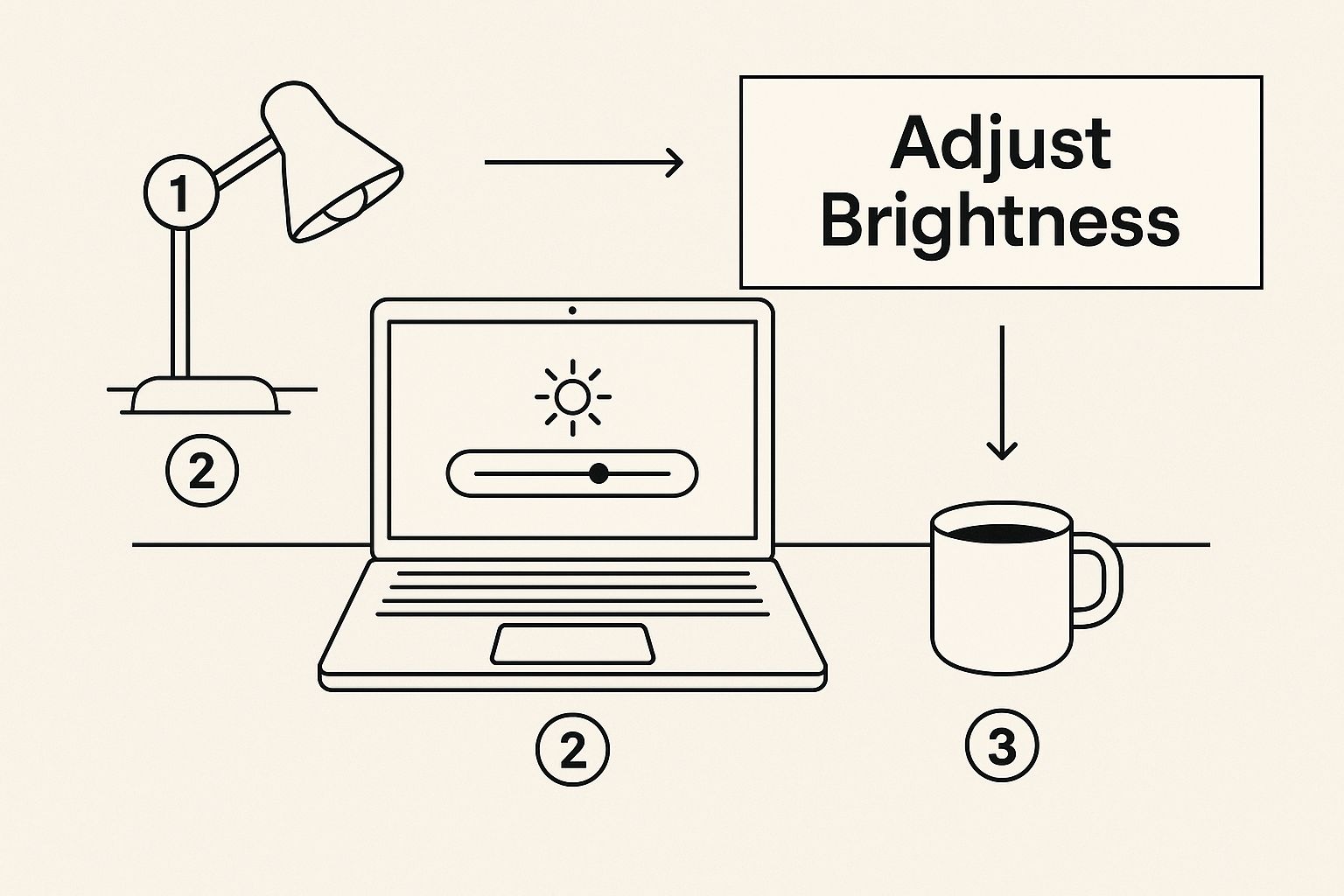
Just matching your screen’s brightness to the light in your room stops your eyes from constantly fighting against overpowering glare or squinting in the dark.
Here's one of the most overlooked habits, and it's also the easiest to fix: just blink more. Seriously. When we stare intently at our screens, our natural blink rate can get cut in half. This is a direct path to dry, gritty, and seriously irritated eyes. You have to make a conscious effort to blink more often.
Think of it as hitting the refresh button for your eyes. A full, deliberate blink coats the surface with a fresh layer of tears, keeping things lubricated and washing away any tiny debris. If you keep forgetting, try a sticky note on the corner of your monitor with one word: "BLINK." It works wonders.
Taking breaks and managing your screen habits isn't just about feeling better today. It's a long-term investment in your vision. Failing to manage digital eye strain can contribute to worsening vision over time.
This isn't just a minor annoyance. There’s a reason experts recommend the 20-20-20 rule so often—it helps combat the real risks of staring at screens all day. Without proper management, the rising tide of myopia (near-sightedness) could lead to more severe eye conditions down the road. You can learn more about the global impact of digital eye strain on newindianexpress.com and see just how critical these simple habits are.
Finally, never underestimate the power of a good night's sleep. Sleep is the ultimate recovery period for your eyes. It’s when they repair tissue, get fully lubricated, and finally let the muscles used for focusing all day completely relax. Protecting your sleep is a non-negotiable part of any real strategy to beat screen-induced eye strain.
The habits you build are half the battle, but where you practice them is just as critical for fighting off eye strain. Your workspace can either work against your eyes or become their biggest ally.
Putting together an eye-friendly setup isn't rocket science. It just takes a few intentional tweaks to your screen, lighting, and even how you sit.
Think of your workspace as a complete ecosystem. If one piece is off—like a monitor that's too close or harsh overhead lighting—it throws everything else out of balance, creating a ripple effect of discomfort. The goal is a workspace that feels natural, so your eyes aren't constantly straining to make up for problems you can easily fix. This not only eases eye strain but also sharpens your focus.
Getting your screen in the right spot is the absolute foundation of an ergonomic setup. It’s a simple change, but the payoff for your eyes, neck, and shoulders is huge.
A poorly positioned screen forces your body into awkward postures. That creates a chain reaction of tension that starts in your eyes and travels right down to your shoulders. When you fix your monitor's placement, you aren’t just helping your vision; you’re supporting your entire upper body.
Screen glare is one of the worst offenders when it comes to digital eye strain. It’s like trying to read with a flashlight shining in your face—your eyes have to work way too hard to see past the reflections.
Windows are often the biggest source of glare. If you can, position your desk perpendicular to any big windows, not directly in front of or behind them. Can't move your desk? No problem. Use blinds or curtains to soften the incoming light.
The light in your room matters, too. Your room's brightness should be pretty close to your screen's brightness. A screen glowing like a beacon in a dark room forces your pupils to work overtime. On the flip side, a dim screen in a bright room will have you squinting. Your goal is to find that comfortable middle ground where the two are in harmony.
Don't just stick with the factory settings on your monitor. Customizing your display is one of the most powerful ways to reduce eye strain, and it only takes a few seconds.
And remember, a comfortable workspace leads to better rest. When your eyes aren't fried at the end of the day, it's so much easier to wind down. This is crucial because quality sleep is the ultimate recovery tool for your eyes, giving them a chance to lubricate, repair, and fully recharge for whatever you have planned for tomorrow.
We all know sleep is for recharging our brains and bodies, but it's just as crucial for our eyes. Think about it: after a full day of staring at screens, reading, and just looking at the world, your eyes are exhausted. They desperately need that downtime to repair and reset.
During deep sleep, your eyes get to work. The tiny focusing muscles that were clenched for hours finally relax completely—a must for preventing that next-day fatigue. More importantly, this is when crucial tissue repair happens and your eyes get to replenish their natural tear film, which keeps them properly lubricated.
Here’s the problem: our modern habits constantly get in the way of this natural recovery process. All that exposure to high-energy blue light from our phones, tablets, and computers in the hours before bed can throw a major wrench in our sleep.
This specific wavelength of light is a master of disguise, tricking your brain into thinking it’s still high noon. It directly suppresses the production of melatonin, the hormone that signals to your body that it's time to wind down.
When your melatonin levels are out of whack, your entire sleep cycle gets derailed. It suddenly becomes harder to fall asleep, and the quality of the rest you do get takes a nosedive. For your eyes, this means less time for recovery, often leading you to wake up with that same dry, strained feeling you went to bed with.
It's a vicious cycle: poor sleep quality directly worsens the symptoms of digital eye strain. When your eyes don't get a full night to lubricate and repair, you're starting the next day with a serious handicap, making you far more sensitive to discomfort.
The good news? You can absolutely take back control and give your eyes the recovery they need. It all starts with being more intentional about your evening routine.
Create a Screen-Free Wind-Down: This is a big one. Commit to putting all screens away for at least one hour before you plan to sleep. Use that time to read a physical book, listen to some chill music, or do some light stretching. This buffer gives your brain's melatonin production a chance to kick in naturally.
Activate 'Night Mode' on Everything: If you absolutely have to use a device in the evening, make sure 'night mode' or a blue light filter is on. This shifts the screen’s color to warmer tones, cutting down on the amount of disruptive blue light hitting your eyes.
Prioritizing sleep isn't just about feeling more energized—you're actively helping to reduce eye strain from screens. If you really want to dig into this, you can learn more about how our glasses help with sleep and see how filtering blue light can be a total game-changer for your nightly routine. It’s one of the most powerful things you can do to make sure your eyes are rested and ready for whatever the next day throws at them.
Once you’ve dialed in your workspace and habits, the right pair of glasses is your most direct line of defense against screen-induced eye strain. This isn't just about a trend; specialized eyewear is a powerful tool engineered to filter out the very things that make our digital lives so hard on our eyes and sleep.
The biggest game-changer here is blue light filtering technology. These lenses are designed to block a significant portion of the high-energy visible (HEV) blue light that our devices constantly pump out. This specific type of light is a known culprit behind visual fatigue and, more importantly, it can throw your body's natural sleep cycle completely out of whack.
Think of your body's internal clock as being tuned by light. Blue light, in particular, screams "daytime!" to your brain. When you're bathed in it during the evening, it can slam the brakes on melatonin production—the essential hormone that signals it's time to sleep.
By filtering out that disruptive light, you’re protecting your body's ability to wind down naturally. This helps you get the deep, restorative sleep your eyes desperately need to repair and re-lubricate themselves. Without it, you're starting the next day with eyes that are already tired, dry, and primed for more strain.
This is why a quality pair of blue light glasses, like those from Element Lux, can be so effective. You can see how different styles fit into a healthy evening routine by exploring the Element Lux collection.
While tackling blue light is critical, a few other features are just as important for all-day visual comfort.
Given how much of our lives are spent in front of screens, investing in the right eyewear is no longer a luxury. It's a core part of a strategy for long-term wellness and comfort.
The sheer volume of our screen exposure is staggering. Projections now suggest that someone born today will spend over 181,000 hours—or roughly 21 years—of their life in front of a screen. It’s no surprise, then, that digital eye strain now impacts up to 90% of users. Eyecare Business has some incredible insights into these projections. Choosing the right eyewear is one of the most proactive steps you can take to manage this modern reality.
Even when you're doing everything right, some questions about digital eye strain always seem to pop up. Let's get you some clear, straightforward answers to the most common ones so you can feel confident you're protecting your long-term eye health.
This is the big one, and the answer is a little more complex than a simple yes or no. While the usual symptoms like dry eyes and headaches are temporary, the real concern is the long-term picture.
Consistent, unmanaged eye strain is linked to an increased risk of developing or worsening myopia (near-sightedness). High levels of myopia aren't just about needing a stronger prescription; they can unfortunately raise your risk for more serious conditions down the road, like retinal detachment or glaucoma.
So, while the daily discomfort usually fades, your habits today are an investment in your vision for tomorrow. This is also where quality sleep comes in—it’s the main time your eyes get to repair themselves from the day's stress.
Yes, when you get a high-quality pair, they are an incredibly effective tool. They work by blocking a portion of the high-energy visible (HEV) blue light that our screens constantly pump out.
This specific type of light scatters more easily than other colors, forcing your eye muscles to work overtime just to stay focused. That extra work is a direct cause of eye strain.
But it's not just about easing immediate fatigue. Filtering out blue light is absolutely crucial for protecting your sleep. When you're exposed to it in the evening, it can slam the brakes on your body's production of melatonin—the hormone that signals it's time for bed. A good pair of glasses helps you wind down naturally, ensuring your eyes (and your brain) get the restorative rest they need.
If you spend the better part of your day looking at a screen, a comprehensive eye exam every year is non-negotiable. An optometrist is trained to spot the early signs of issues like dry eye disease long before they turn into chronic problems.
More importantly, your vision can change subtly over time. Even a tiny, uncorrected refractive error gets magnified into major eye strain and headaches when you're staring at a computer all day. An annual check-up ensures your prescription is perfectly dialed in for your digital life.
Absolutely. A few simple exercises can give your eye muscles a much-needed stretch and fight off the fatigue that builds up from staring at a fixed distance for hours.
Here are two of my go-to routines:
These exercises, combined with good habits and quality sleep, create a powerful defense. By being proactive about how you interact with your screens, you're not just finding comfort for today—you're making a smart investment in your vision for years to come.
Ready to give your eyes the protection they deserve and reclaim your sleep? The amber lenses in Element Lux glasses block over 99% of disruptive blue light, helping to reduce eye strain and support a healthier sleep cycle. Find your perfect pair and start feeling the difference tonight.
If you've ever wrapped up a long day at the computer with dry, aching eyes and a low-grade headache that just won't quit, you're in good company. The good news is that learning how to protect eyes from computer screens isn't complicated. It usually comes down to a few smart tweaks to your workspace, your screen settings, and your daily habits.
Believe it or not, even simple changes like taking regular breaks or just turning down your monitor's brightness can bring some surprisingly fast relief.
That feeling of total eye exhaustion isn't just you being dramatic—it's a very real condition called Computer Vision Syndrome (CVS), often just called digital eye strain.
When you're locked onto a screen for hours, your eyes are putting in a serious workout. Think about it: the letters on a printed page are solid and crisp, but the pixels on a screen have fuzzy edges. This forces the tiny muscles in your eyes to constantly refocus just to keep things sharp.
On top of that, we have another bad habit we don't even notice. We blink way less when we're focused on a screen—sometimes by as much as half the normal rate! Blinking is how our eyes stay lubricated, so when we don't do it enough, we get that classic dry, gritty, and irritated feeling.
This isn't a niche problem; it's practically universal. A massive 2023 meta-analysis found that Computer Vision Syndrome hits about 69% of the global population. To make matters worse, every extra hour you spend in front of a screen bumps up your risk by another 12%.
This goes beyond just feeling uncomfortable. Chronic eye strain can tank your productivity, sour your mood, and even mess with your sleep. And quality sleep is non-negotiable for eye health. It’s the only time your body gets to repair and rehydrate the delicate tissues in your eyes.
When you sleep, your eyes finally get a real break. The focusing muscles relax completely, and your cornea—the clear outer layer—gets replenished with the nutrients and moisture it needs to face another day. Without adequate sleep, you start the day with eyes that are already fatigued and less resilient to screen-induced stress.
So, what are the common red flags? Most people experience a handful of the same symptoms.
Here’s a quick rundown of what digital eye strain typically feels like. See how many of these sound familiar.
| Symptom | What It Feels Like |
|---|---|
| Dry, Gritty Eyes | A sandy or scratchy sensation, as if something is in your eye. |
| Headaches | Often a dull, aching pain around the temples or behind the eyes. |
| Blurred Vision | Difficulty focusing, or objects appearing fuzzy, especially after looking away from the screen. |
| Watery or Red Eyes | Your eyes might tear up excessively or look bloodshot from irritation. |
| Neck & Shoulder Pain | Poor posture from leaning into the screen often leads to tension in the upper body. |
| Light Sensitivity | Increased sensitivity to both screen glare and ambient room lighting. |
Recognizing these signs is the first step. The key takeaway is simple: our eyes just weren't built for staring at a glowing box all day.
To dig deeper into how screens affect your eyes, you can explore our blue light blog for more insights. In the next sections, we’ll get into the practical, actionable steps you can take to fight back against these effects and keep your vision sharp for the long haul.
Your physical environment is one of your most powerful allies in the fight against eye strain. Instead of just toughing it out, you can strategically set up your workspace to reduce discomfort from the moment you sit down. The whole idea is to create a space where your eyes can work in their most natural, relaxed state.
It all starts with where you put your screen. So many of us work with laptops flat on a desk or with monitors positioned way too low, forcing us into that dreaded hunch. This doesn't just wreck your neck and shoulders; it also puts a ton of unnecessary pressure on your eye muscles.
Getting the placement right is simpler than you might think. Sit back comfortably in your chair and stick your arm straight out—your fingertips should just about graze the screen. This distance, usually around 20 to 25 inches, is the sweet spot that helps your eyes focus with minimal effort.
Next up is height. The top edge of your monitor should be at or just a hair below your eye level. This encourages a slight downward gaze, which is a much more natural resting position for your eyes than looking straight ahead or, even worse, up.
Lighting is another huge piece of the puzzle. Working in a room that’s either too dim or blindingly bright creates a harsh contrast that just wears your eyes out. But the absolute worst offender is glare—that distracting, shiny reflection of light bouncing off your screen.
Think of your screen like a mirror. If you can clearly see a bright window or a harsh overhead light reflected in it, you're forcing your eyes to work overtime to see past it.
One of the easiest and most effective changes you can make is to position your desk so that any windows are to the side of you, not directly in front or behind. This simple move can slash screen glare and bring immediate relief.
If moving your desk isn't an option, look into an anti-glare screen filter or just make better use of your blinds. Swapping out harsh fluorescent bulbs for softer, ambient lamps can also create a much more comfortable visual environment. The goal is balance, not a spotlight.
For a lot of us, work involves more than just staring at a screen. If you're constantly looking back and forth between physical documents on your desk and your monitor, you're adding a layer of strain you might not even realize.
This constant near-to-far-and-back-again focusing is like doing rapid push-ups for your eye muscles—they get tired, fast. This is where a simple document holder can be a total game-changer. By placing your papers right next to your monitor at the same height and distance, you practically eliminate the need for your eyes to constantly readjust.
These small ergonomic tweaks really add up, leading to significant relief over a full workday. Taking a proactive approach like this doesn’t just ease strain in the moment; it can also lead to better sleep by cutting down on end-of-day fatigue and headaches. And we all know that well-rested eyes are fundamental for long-term health.
Your physical setup is just one piece of the puzzle. The settings on your monitor are a seriously powerful tool for keeping your eyes comfortable, but most of us just plug in a new screen and go with whatever the factory decided was best. Let's fix that.
Think of your display less like a static window and more like a dynamic part of your room that needs to adapt. A few simple tweaks can make a world of difference.
First up, brightness. Your screen shouldn't feel like a lamp shining in your face. It should blend in with the light in your room. A good test is to look away from your screen and then back at it. If you have to squint like you're staring into a lightbulb, it’s too bright. On the flip side, if you're leaning in to make out the words, it’s too dim.
Next, let's talk contrast. Cranking up the contrast makes text pop, creating a sharper difference between the letters and the background. This little adjustment seriously reduces the effort your eyes have to make to focus. And while you're at it, don't be afraid to bump up the font size. No one ever won a prize for reading the tiniest text on the screen.
Blue light is a hot topic for a reason. It's a type of high-energy visible (HEV) light that our digital devices love to emit, and it can be especially disruptive when you're trying to wind down. The biggest issue is its knack for messing with melatonin, the hormone that tells your body it’s time to sleep.
When you don't get good sleep, your eyes pay the price. Deep sleep is when your body gets to work repairing tissues, and that includes your eyes. It’s when your corneas rehydrate and the tiny muscles that control your focus finally get a chance to chill out. Late-night blue light exposure throws a wrench in this whole process, leaving your eyes feeling gritty, dry, and just plain tired the next day.
Luckily, our devices are getting smarter about this. Most have built-in tools to help you out:
Another option you've probably seen everywhere is blue light filtering glasses. These are made with special lenses that block or absorb a percentage of blue light, which can help reduce eye strain and, more importantly, support a healthier sleep cycle. Think of them as a final line of defense when you're burning the midnight oil or scrolling before bed.
The reality is, digital eye strain—or computer vision syndrome (CVS)—is a massive problem. It affects an estimated 60 million people worldwide. With more than half the population in the US spending six or more hours a day on screens, it's no surprise that symptoms like dry eyes, headaches, and blurry vision affect up to 90% of regular device users. You can dig into more of the data on how screens impact our vision in this detailed review.
Blue light glasses are a specific tool for a specific job. They’re most effective in the evening to help protect your melatonin production and signal to your brain that it’s time to wind down for sleep.
But they aren't a magic wand for daytime eye fatigue. For that, you still need to lean on good habits like adjusting your screen, fixing your ergonomics, and taking those all-important breaks. The best approach is to combine everything—that way, you’re building a complete defense to protect your eyes all day long.
While optimizing your workspace and screen settings is a great first step, the real secret to long-term eye comfort comes down to your daily habits. It’s the small, consistent actions that truly prevent eye strain from building up over time.
Hands down, the most powerful technique you can adopt is the 20-20-20 rule. It's a ridiculously simple exercise designed to give your eye's focusing muscles a much-needed break.
Here’s how it works: Every 20 minutes you're staring at a screen, you need to shift your gaze to an object at least 20 feet away. Lock your eyes on it for a full 20 seconds. I recommend setting a recurring timer on your phone or computer to make this a non-negotiable part of your workday. It’s the perfect way to interrupt that constant near-focus that leaves your eyes feeling so tired.
This might sound too simple, but another surprisingly effective habit is conscious blinking. When we get absorbed in our work, our blink rate can drop by more than half. Blinking is your body’s natural way of cleaning and rehydrating your eyes, so doing it less is a fast track to dryness and irritation.
Make a deliberate effort throughout the day to perform full, complete blinks. Don't just flutter your eyelids—gently but completely close them, then open again. This simple action spreads a fresh layer of tears across your cornea, keeping everything lubricated and comfortable.
One of the biggest mistakes people make is underestimating the power of small breaks. The 20-20-20 rule isn't just a suggestion; it's a foundational practice for anyone serious about protecting their eyes from screen fatigue.
Eye health professionals constantly champion practical measures like this. They also advise balancing screen time with outdoor activity, which helps reduce the risk of developing myopia and other issues. You can learn more about the latest expert recommendations for digital eye strain to understand the bigger picture.
Your overall wellness has a direct impact on your eye health. Just like the rest of your body, your eyes need the right fuel and rest to function at their best.
Staying hydrated is a fantastic start, as dehydration can quickly lead to dry, gritty-feeling eyes. But you can take it a step further by focusing on specific nutrients that support vision. Adequate rest is just as crucial as nutrition; good sleep allows your eyes to repair and absorb these nutrients effectively.
Think of it as maintaining your eyes from the inside out. Try to incorporate more foods rich in these compounds:
This infographic is a great visual guide for setting up an ergonomic desk, which perfectly complements these healthy habits.
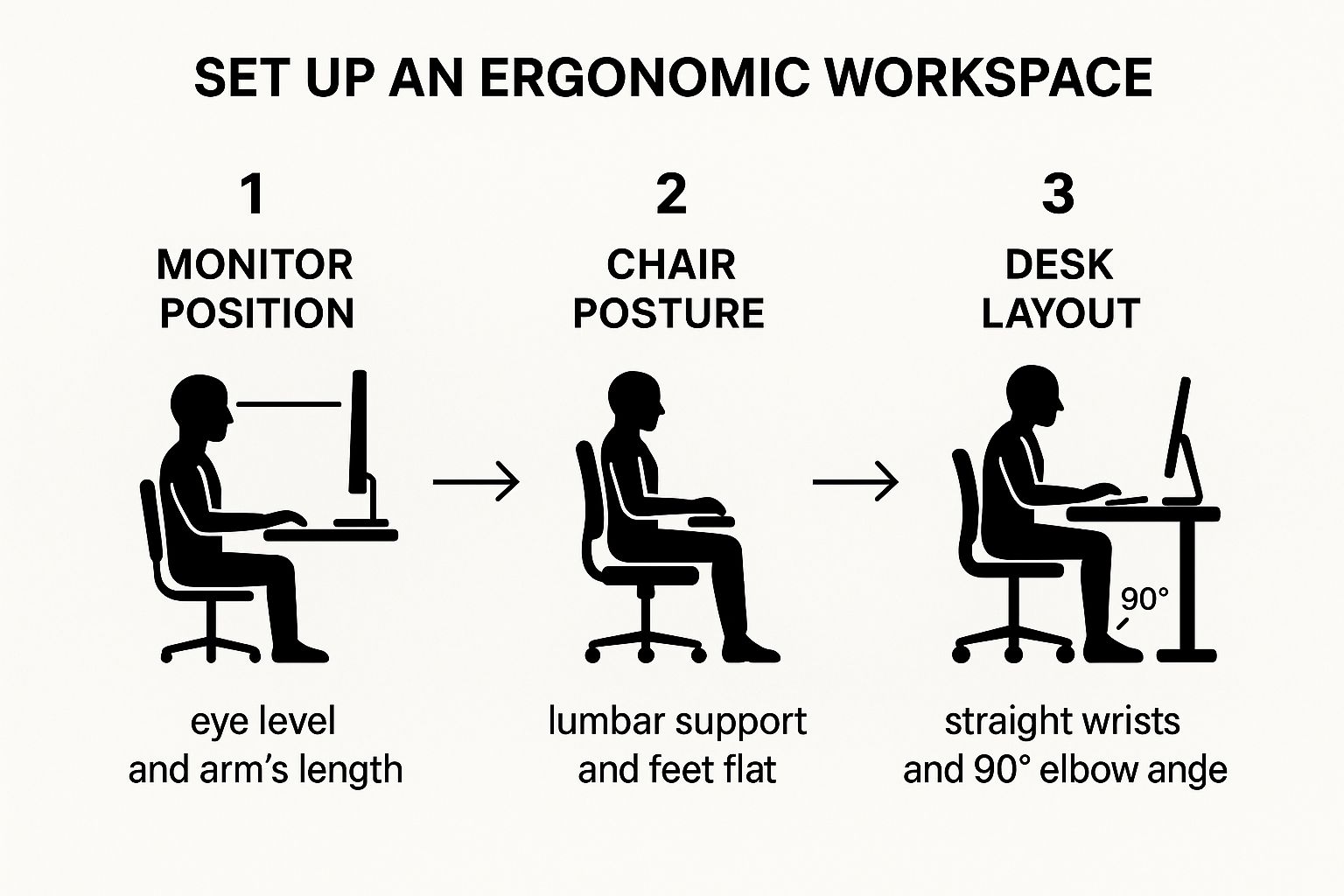
It really shows how your monitor position, posture, and desk layout all work together to minimize physical strain. When you combine these ergonomic adjustments with proactive habits like the 20-20-20 rule and conscious blinking, you create a powerful, multi-layered defense against digital eye strain.
Protecting your eyes isn’t just about what you do during the workday—it's also about what happens when you turn off the lights. Think of sleep as your body’s ultimate reset button. For your eyes, it’s a non-negotiable period of intense repair and recovery.
While you’re asleep, your body is hard at work. Your eyes finally get a chance to rehydrate, the cells on the surface of your cornea are repaired, and the tiny ciliary muscles that control your focus get to completely relax after a long day of flexing.
Without that essential downtime, you're starting the next day at a disadvantage, with eyes that are already fatigued, dry, and strained. This is exactly why that late-night scroll session can be so damaging. The blue light blasting from our phones, tablets, and computers is particularly good at suppressing melatonin, the crucial hormone that tells your body it's time to sleep.
When your melatonin production gets thrown off, it doesn't just take you longer to fall asleep; it can torpedo the overall quality of your rest. This means your eyes miss out on that critical recovery window, leaving you with that gritty, strained feeling in the morning.
Imagine trying to run a marathon after just a few hours of light, interrupted rest. That’s what you’re asking your eyes to do every time you sacrifice sleep for more screen time. You can learn more about how quality rest is impacted and whether glasses can help improve sleep right here in our detailed guide.
A good night's sleep is one of the most effective, free tools you have to combat digital eye strain. It allows the natural healing processes to take place, ensuring your eyes are refreshed and ready for the demands of the next day.
To support this vital process, you need a healthy pre-bedtime routine that prioritizes winding down over scrolling.
The single most effective way to protect your sleep is to establish a "digital sunset." This simply means putting away all screens—yes, including your phone—for at least one to two hours before you plan to go to sleep.
This buffer period gives your brain time to ramp up melatonin production naturally, without the interference of blue light.
Here are a few ways to make this happen:
By making these simple but powerful changes, you give your eyes the best possible chance to fully recover each night. This one habit alone can make a huge difference in how your eyes feel, helping you protect your vision from the daily grind.
All the tips and tricks we've covered are fantastic for managing the daily grind of digital eye strain. Think of them as your first line of defense, but they aren't a replacement for professional medical care. A huge part of protecting your eyes from your computer screen is knowing when to call in an expert.
Sometimes, that nagging discomfort is a sign that screens are just making an underlying issue worse. Those frequent headaches or that frustratingly blurry vision might not just be fatigue. It could be an uncorrected prescription that’s finally catching up with you or even an eye alignment problem that needs a professional look.
If you start experiencing any of the following, don't just wait for them to go away. It’s time to book an appointment with your eye doctor.
A comprehensive eye exam is the only way to get a truly complete and accurate picture of what's going on with your vision and overall eye health. An optometrist can spot potential issues long before you even notice major symptoms.
Ultimately, think of these check-ups as proactive maintenance for your eyes. They ensure your prescription is spot-on and help rule out more serious conditions. When you pair regular doctor visits with healthy habits—like prioritizing restorative sleep—you're setting yourself up for clear, comfortable vision for years to come.
Even after you've nailed down the basics, a few specific questions always seem to pop up. Let's tackle some of the most common ones I hear to give you some quick clarity.
They absolutely can, especially if you use screens in the evening. By filtering out the specific wavelengths of blue light that mess with your body's internal clock, they can ease that tired, strained feeling and help regulate your sleep cycle. Getting good sleep is crucial for letting your eyes recover overnight.
But they aren't a magic bullet. They work best as one tool in your toolbox, combined with regular breaks and smart screen settings.
The biggest mistake is thinking one tool can solve everything. True eye protection comes from a combination of good habits, proper ergonomics, and smart tools used at the right times.
Nope, this is a classic myth. That stark contrast between a super bright screen and a pitch-black room actually makes your eyes work way harder to adjust, which ramps up the strain big time. A poorly lit environment can also disrupt your circadian rhythm, impacting your sleep quality later on.
The ideal setup is soft, ambient lighting in the room. You want enough light to see comfortably without it causing a distracting glare on your screen.
For more quick tips and deeper dives into eye health, check out the valuable articles in our online resources.
Ready to give your eyes the nightly recovery they deserve? The amber lenses in Element Lux glasses block over 99% of disruptive blue light, helping you wind down naturally for better, more restorative sleep. Protect your eyes and reclaim your rest by exploring our collection at https://element-lux.com/shop-now.
There’s a reason staring at a screen all day feels so different from getting lost in a good book. Glasses for screen time are built with a specific purpose: to filter out the high-energy blue light blasting from our digital devices. This helps cut down on that tired, strained feeling in your eyes and, more importantly, keeps your natural sleep cycle from going haywire, which is the foundation of your daily energy and long-term health.
Our eyes simply weren't built for this. For thousands of years, they evolved to process the dynamic, full-spectrum light of the natural world. They were never meant to spend hours locked onto the constant, artificial glow of a digital screen.
That fundamental mismatch is what causes what experts call digital eye strain, or computer vision syndrome.
If you spend a good chunk of your day on a laptop or phone, you know the feeling all too well. Your eyes might feel gritty and dry, a tension headache might start creeping in, or your vision gets a little blurry by the end of the day. Those are all signals from your body telling you that your eyes are seriously overworked. Ultimately, this strain can make it harder to wind down at night, impacting the quality of your sleep.
The big difference between the light from your screen and the light from the sun is the intense concentration of high-energy visible (HEV) blue light. This specific kind of light scatters more easily than other colors, which forces your eyes to constantly struggle to maintain focus. Your eye muscles are putting in a full workout just to keep things clear, and that leads directly to fatigue.
But the impact is twofold. During the day, it’s all about physical discomfort. After the sun goes down, however, the problem gets much more serious. Getting hit with a blast of blue light in the evening basically tricks your brain into thinking it's still daytime. This messes with your body's ability to produce melatonin, sabotaging the deep, restorative sleep you need to recharge.
"The bigger issue is how prolonged screen use affects our sleep. When our internal clock is thrown off by artificial light at night, the consequences go beyond just feeling tired—it affects our mood, focus, and long-term health."
As more people connect the dots between screen time and feeling run-down, the demand for a real solution has skyrocketed. The global market for non-prescription blue light blocking glasses was valued at a staggering USD 9.76 billion in 2021 and is on track to hit around USD 14.45 billion by 2025.
This explosive growth makes one thing clear: people everywhere are looking for relief from digital discomfort and searching for ways to protect their crucial sleep cycles. You can learn more about the market growth for blue light filtering eyewear to see just how widespread the issue has become.
Think you might be dealing with digital eye strain? Use this checklist to see if the symptoms you're experiencing are linked to prolonged screen use, helping you connect your discomfort to its source. Many of these issues can also be exacerbated by poor sleep, creating a vicious cycle.
| Symptom | How It Typically Feels |
|---|---|
| Tired or Sore Eyes | A heavy, aching, or burning sensation in your eyes. |
| Dryness or Irritation | A gritty, sandy feeling, as if something is in your eye. |
| Headaches | Dull, persistent pain, often around the temples or behind the eyes. |
| Blurred Vision | Difficulty focusing, or objects appearing fuzzy after looking at a screen. |
| Neck and Shoulder Pain | Stiffness and soreness from holding a strained posture to see the screen. |
| Increased Light Sensitivity | Finding bright screens or overhead lights unusually harsh. |
If you're nodding along to several of these, it's a strong sign your eyes are crying out for a break from unfiltered blue light.
The biggest reason screen time completely wrecks a good night’s rest is surprisingly simple: it tricks your brain. Think of the blue light from your phone or laptop as a blast of artificial morning sun, even when it’s 11 PM. This exposure sends a powerful—and very confusing—signal to your body.
That signal directly interferes with your circadian rhythm, which is basically your internal 24-hour clock. This natural rhythm dictates everything from when you feel hungry to when you get sleepy. One of its most critical jobs is managing the release of a hormone called melatonin. Without a healthy sleep cycle, everything else starts to suffer.
Melatonin is your body's natural "time for bed" signal. As the sun goes down and natural light fades, your brain ramps up its production, making you feel drowsy and ready for sleep. But when you’re scrolling through your phone late at night, the high-energy blue light hits your eyes and essentially shouts, "It's still daytime!"
In response, your brain slams the brakes on melatonin production. This is exactly why you can lie in bed feeling wired but exhausted, struggling to drift off even after you’ve put your device away. Your body's natural sleep-wake cycle has been thrown completely off track.
This disruption doesn't just make it harder to fall asleep. It sinks the quality of the sleep you do get, which is why you feel so groggy and unfocused the next day. Getting your sleep back on track starts with managing your evening light exposure.
A consistently messed-up sleep cycle has consequences that go way beyond feeling tired in the morning. Poor sleep is linked to a whole host of issues that hit your daily performance and long-term health. The connection is clear: managing blue light is essential for protecting your sleep, which is the cornerstone of a healthy life.
When your circadian rhythm is out of sync, you’re likely to experience:
Just making the connection between your screen habits and your sleep quality is the first step to reclaiming your rest. For a deeper dive into the science, you can find more articles on our blue light blog.
Using glasses for screen time with amber lenses in the evening is a powerful way to block this artificial signal. It allows your body to produce melatonin naturally and prepare for the restorative sleep it needs.
So, how do these glasses actually work? Think of them as specialized sunglasses, but instead of blocking UV rays from the sun, they’re built to deal with the digital world. Their lenses have special filters that absorb or reflect the most intense, high-energy wavelengths of blue light before they can hit your eyes and disrupt your sleep.
But it’s not a one-size-fits-all kind of deal. The technology is smartly adapted for what you need at different times of the day. The two main types of lenses offer very different levels of protection, each playing a critical role in your eye comfort and—most importantly—your sleep.
The glasses you need at 2 PM are completely different from the ones that will help you at 10 PM. That’s because not all blue light is bad; we actually need some of it during the day to feel awake and alert. The goal is to manage it intelligently to support, not sabotage, a healthy sleep schedule.
Nearly Clear Lenses: These are your daytime companions. They’re designed to filter just enough of the blue light spectrum to cut down on digital eye strain and that midday fatigue. The best part? They do it without messing up your color perception, making them perfect for work.
Amber-Tinted Lenses: These are the heavy hitters, specifically built to protect your sleep. When you wear them in the evening, that deep amber tint gets to work blocking a huge portion of blue light—often over 99%. This prevents the light from telling your brain to stop making melatonin.
Protecting your body's natural melatonin release is the whole game when it comes to better sleep. Amber lenses act like a shield, signaling to your brain that it's nighttime—even if you're looking at a screen—and letting your body wind down the way it's supposed to.
On top of that, many high-quality glasses for screen time come with an anti-reflective coating. This handy feature cuts down on the glare from overhead lights or windows reflecting off your screen, which is another sneaky cause of eye fatigue. It’s a powerful one-two punch: filter the blue light and slash the glare.
It’s no surprise that as more people feel the strain and recognize the link to poor sleep, the market for these glasses is booming. Projections show the industry growing from USD 1.43 billion in 2023 to an expected USD 3.57 billion by 2030.
By understanding how these glasses help with sleep, you can really see why picking the right lens for the right time of day makes all the difference.
Picking the right pair of glasses for screen time isn't a one-size-fits-all deal. It’s all about matching the right lens technology to your daily rhythm and what you’re trying to achieve, whether that's less eye strain or deeper sleep. The first thing you need to look at is the lens type, because that's what makes all the difference for your sleep quality.
You’ve got two main choices, and they serve completely different purposes. Think of clear lenses as your daytime workhorse. They’re designed to filter a smaller slice of the blue light spectrum, which is perfect for cutting down glare and eye fatigue during a long workday without messing up your color perception.
On the other hand, amber lenses are your non-negotiable evening tool. These are engineered to block a much wider spectrum of blue and even some green light—the specific wavelengths that most disrupt your body's sleep signals. Slipping these on a couple of hours before bed is one of the smartest moves you can make to protect your melatonin production and get the restorative sleep you need.
So, which one is for you? It really just boils down to your main goal. Are you trying to get rid of those nagging headaches during your 9-to-5, or is your mission to fix a completely wrecked sleep schedule?
The key is to see these glasses not as a single solution, but as two distinct tools. One is for making your workday more comfortable, while the other is for telling your brain it's time to wind down for a good night's sleep, even when you're still looking at a screen.
The infographic below breaks down the different types of screen glasses, comparing how much blue light they block, their lens thickness, and what you can expect to pay.
As you can see, while standard filters give you a bit of protection, it’s the specialized coatings and prescription options that offer a more targeted defense against digital eye strain and its negative impact on your sleep.
To make it even simpler, think about your primary use case. The table below gives you a quick side-by-side comparison to help you decide which lens is the right fit for your goals.
| Lens Feature | Best for Daytime Use (Clear) | Best for Evening Use (Amber) |
|---|---|---|
| Blue Light Filtering | Filters 10-40% of blue light | Blocks 90% or more of blue & green light |
| Primary Goal | Reduces eye strain, headaches, and glare | Protects melatonin and improves sleep quality |
| Color Distortion | Minimal to none | Significant color shift (world looks orange) |
| When to Wear | During work hours, gaming, or general screen use | 2-3 hours before you plan to go to sleep |
| Bottom Line | Your go-to for comfort and focus during the day | Your essential tool for sleep preparation at night |
Ultimately, many people find they need both: a clear pair for the office and an amber pair for winding down at home. It’s about having the right tool for the job to ensure both daytime comfort and nighttime rest.
While the lens tint is what gets all the attention, a few other things are just as important if you actually want to wear the glasses. Let's be honest, an uncomfortable or flimsy frame will just end up collecting dust. Look for lightweight materials and a style that sits on your face without pinching your nose or sliding down.
You also need to decide between prescription or non-prescription lenses. If you already wear glasses, you can easily get a blue light filter added to your next pair. If your vision is fine, then a simple "plano" (non-prescription) pair is all you need.
And of course, the technology keeps moving forward. While glasses for screen time are the most common choice, you can now find similar filtering tech in contact lenses. The global market for blue light blocking contacts hit USD 389 million in 2024 and is only expected to grow, which shows just how many people are looking for screen protection to safeguard their sleep. Discover more insights about the contact lens market if you're curious about where things are headed.
While glasses for screen time are a powerful tool, they work best when you pair them with smart daily habits. Think of them as one piece of a complete digital wellness puzzle, not a magic fix on their own. Adopting just a few simple routines can make a huge difference in cutting down eye fatigue and, most importantly, protecting your sleep.
One of the easiest and most effective habits is the 20-20-20 rule. It couldn't be simpler: for every 20 minutes you spend staring at a screen, you take a 20-second break to look at something 20 feet away. This tiny pause gives your eye muscles a chance to relax, preventing the intense, locked-in focus that leads to strain and headaches.
This isn't just about giving your eyes a break; it's about signaling to your entire body that it's okay to wind down. Constant screen focus keeps you in a state of high alert—the exact opposite of what you need before bed to achieve deep, restful sleep.
The single most important habit for protecting your sleep is creating what I call a "digital sunset." This just means setting a firm, screen-free buffer zone for at least an hour or two before you plan to go to sleep. This simple act lets your brain get back to its natural job of producing melatonin without the interference of artificial light.
You can make this even more effective by using the tech that's already on your devices. Most phones and computers have a "night mode" or "comfort view" that warms up the screen's color. They definitely help, but they don't block all the disruptive light that can mess with your sleep.
To build a routine that really works, try these steps:
These habits all work together, sending a clear signal to your brain: the day is ending, and it's time to get ready for restorative sleep. For more ideas on improving your digital wellness, feel free to check out more resources on healthy screen habits.
Even after digging into the science, you probably have some practical questions about how these glasses actually fit into your daily routine. Let's tackle the most common ones so you can feel confident about protecting your eyes and—most importantly—your sleep.
Think of these glasses less as an accessory and more as a tool to get your body back in sync with its natural rhythms, even in a world flooded with artificial light. Good sleep is the goal.
Night mode is a decent start, but it's far from a complete solution for protecting your sleep. While it does warm up the screen’s color, it often lets a surprising amount of blue and green light slip through—the exact wavelengths most guilty of shutting down your melatonin production.
Here’s an analogy: night mode is like dimming the lights in a room. It helps, but it’s not total darkness. Putting on a pair of amber-lensed glasses is like drawing blackout curtains. You get a much higher, more targeted level of protection, giving your brain the unmistakable signal that it’s time to power down for a deep, restorative sleep.
You absolutely can, but it’s crucial to use the right tool for the job to protect your natural sleep-wake cycle. Clear-lens glasses are designed for all-day wear. They’re perfect for cutting down on digital eye strain and screen glare without messing with your body's internal clock.
The heavily tinted amber or red lenses, however, are your nighttime specialists. Save those for the last two to three hours before you plan to hit the hay. Your body actually needs exposure to natural blue light during the day to regulate your circadian rhythm and keep you feeling alert and focused. Wearing dark amber lenses too early can send it some seriously mixed signals and disrupt your sleep pattern.
Glasses for screen time are a fantastic preventative tool, not a cure for existing vision issues. They excel at easing the symptoms of digital eye strain and shielding your sleep cycle from the harsh effects of artificial light.
But they won't correct underlying conditions like nearsightedness or astigmatism. If you're dealing with persistent vision problems, your first stop should always be an optometrist. They can give you a proper diagnosis and a solution that's tailored to your eyes. However, managing your light exposure for better sleep can often reduce related symptoms like headaches.
The results are often things you feel more than see, but they’re powerful. For daytime use, the proof is a noticeable reduction in eye fatigue, dryness, or those nagging tension headaches after a long day in front of the computer.
For your amber lenses at night, the real test is your sleep quality. You’ll likely find it much easier to drift off, wake up feeling more refreshed, and enjoy a deeper, more consistent sleep throughout the night. That’s the ultimate sign they’re doing their job.
Ready to reclaim your evenings and wake up feeling fantastic? The right pair of Element Lux glasses can make all the difference. Shop now and take the first step toward better sleep.
If you spend your days staring at a screen, you already know your standard glasses probably aren't cutting it. The best glasses for office work are built differently—they come loaded with features like blue light filtering and anti-reflective coatings designed to fight digital eye strain and protect your sleep. Quality sleep is the cornerstone of a productive day, and the right eyewear is a critical tool in achieving it.
These specialized lenses are optimized for the intermediate distance of a computer screen, a crucial difference from your general-purpose glasses.
That gritty, tired-eye feeling and dull headache you get after a long day? It isn't just a sign of hard work. It’s a clear signal that your everyday glasses are struggling to keep up with your digital life, ultimately impacting your ability to get the restorative sleep you need.
Most standard prescription lenses are designed for one of two things: seeing far away (distance) or up close (reading). But they often completely miss the specific, fixed distance of a computer monitor that dominates the modern workday.
This creates a subtle but constant strain. Your eyes are forced to work harder to maintain focus on a screen that's typically 20-26 inches away—that awkward intermediate zone that standard glasses just weren't built for. This mismatch is a huge driver of what's known as Computer Vision Syndrome (CVS), a collection of symptoms caused by spending too much time in front of screens.
The issue is twofold: the fixed focal distance and the harsh light our screens blast out.
Digital devices are a major source of high-energy visible (HEV) blue light, which is notorious for messing with our natural sleep patterns. Constant exposure, especially later in the day, tricks your brain into thinking it's still high noon. This suppresses the production of melatonin, the essential hormone that tells your body it’s time to sleep. Without quality sleep, focus and productivity suffer the next day.
This chart really puts the challenges office workers face into perspective.
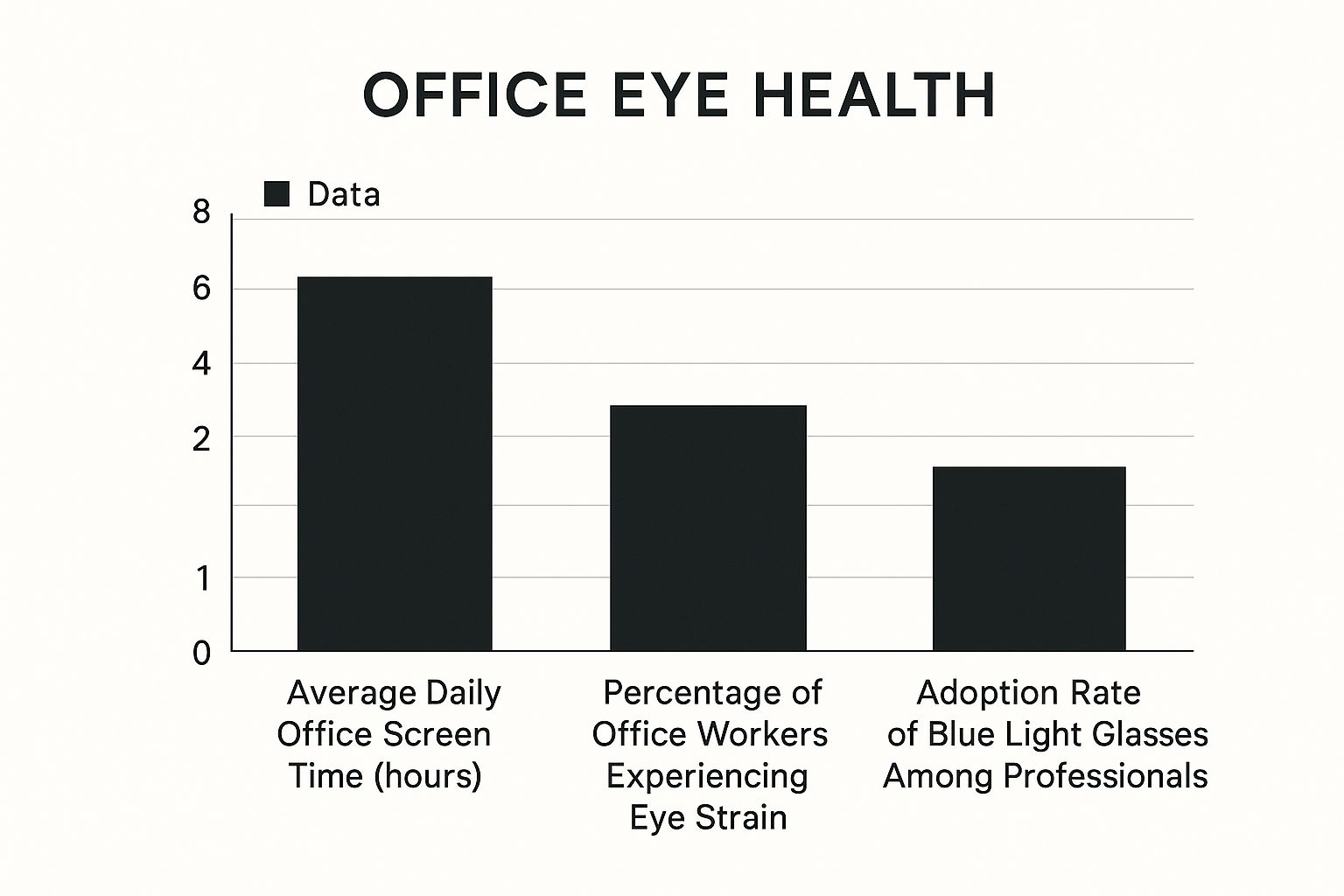
The data makes it crystal clear: long hours in front of screens directly correlate with high rates of eye strain, yet surprisingly few people are using eyewear designed to protect them and their sleep.
Before we dive deeper, let's quickly break down the key differences between your everyday pair and glasses made for the office.
| Feature | General Purpose Glasses | Specialized Glasses for Office |
|---|---|---|
| Focal Point | Optimized for distance or close reading, not intermediate ranges. | Fine-tuned for the 20-26 inch distance of computer screens. |
| Blue Light Filtering | Typically has no blue light filter unless added as an extra. | Includes built-in blue light filtering to block harmful HEV light. |
| Lens Coatings | Standard anti-scratch coatings are common. | Comes with advanced anti-reflective and anti-glare coatings. |
| Primary Goal | To correct general vision errors (nearsightedness, farsightedness). | To reduce digital eye strain, improve comfort, and protect sleep. |
As you can see, it's not just about a prescription—it's about having the right tool for the job.
This constant visual effort does more than just tire your eyes out. The American Academy of Ophthalmology reports that over 40% of Americans feel the burn of digital eye strain, with symptoms like blurred vision, headaches, and painfully dry eyes. This is a massive problem, and it's fueling the demand for specialized lenses that can actually handle our screen-heavy lives.
Choosing the right glasses for office work isn't just about clearer vision. It's a strategic decision to improve your focus, reduce daily discomfort, and safeguard your sleep quality for better overall health.
By ignoring these issues, you're risking more than just a bit of discomfort. Poor sleep caused by blue light exposure can tank your productivity, mess with your mood, and even lead to long-term health problems. You can learn more about the science of blue light on our blog.
Specialized office glasses are designed to break this vicious cycle. They offer a simple yet powerful tool to protect your eyes and, just as importantly, your rest, because a good night's sleep is non-negotiable for peak performance.
When you're shopping for a great pair of glasses for office work, it’s easy to get caught up in the frames. But the real magic, the part that actually saves your eyes and improves your sleep, is in the lens technology.
Choosing the right lenses isn't just about correcting your vision. It's about actively protecting your eyes from the unique challenges of a screen-heavy workday and, just as importantly, preserving your natural sleep cycle. Think of them as a high-performance tool, specifically calibrated for your work environment.
Unlike standard glasses, specialized office lenses are built with layers of technology designed to filter out the bad light and enhance the good. The goal is simple: keep your eyes comfortable and make sure your brain gets the right signals for rest when the day is done, because quality sleep underpins everything else.
First up, and arguably the most important feature, is blue light filtering. The screens on our computers, tablets, and phones all blast out high-energy visible (HEV) blue light, which mimics the light from the sun. During the day, that's not a huge problem.
But as you work into the afternoon and evening, that continuous exposure can trick your brain into thinking it's perpetually noon. This artificial daylight suppresses your body's production of melatonin—the hormone that signals it's time to wind down.
Without that crucial signal, you can shut your laptop after a long day feeling wired and exhausted at the same time. This makes it tough to fall asleep, often leading to a night of restless, poor-quality rest. Good office lenses act as a shield, selectively filtering out the most disruptive wavelengths.
This is about more than just feeling less tired. Getting consistently good sleep is fundamental for cognitive function, mood regulation, and overall health. By wearing blue light filtering glasses during your workday, you help keep your body’s natural circadian rhythm on track, making the transition from work to rest feel a whole lot smoother.
Next, let's talk about anti-reflective (AR) coatings. Office environments are a minefield of visual noise—harsh overhead lights, glare from windows, and even reflections bouncing off your own screen. An AR coating works to eliminate these distracting reflections from both the front and back of your lenses.
The result is a crisper, clearer view. Your screen looks sharper, which significantly reduces the hard work your eye muscles have to do just to maintain focus. Less squinting means less end-of-day fatigue.
Think of it like trying to have a conversation in a noisy restaurant versus a quiet library. The AR coating is like a noise-canceling headphone for your eyes, quieting all that visual chaos so you can focus effortlessly. This mental ease contributes to a calmer state of mind, which is essential for winding down and achieving deep sleep.
Finally, the lens type itself is a huge piece of the puzzle. Your everyday glasses probably aren't optimized for the specific intermediate distance of a computer screen. This is where specialized office lenses really shine.
You’ll generally discuss two main options with your optometrist:
Choosing the right lens technology is a conversation you absolutely need to have. It's the step that transforms your glasses from a simple vision corrector into an essential tool for productivity, comfort, and a great night's sleep.
Ever finish a long day at the office, shut your laptop, and find your mind is still racing? You feel exhausted but strangely wired, making a good night's rest feel completely out of reach. It’s a frustrating cycle, and the culprit might be the very thing you've been staring at all day—your computer screen.
What you wear on your face during work hours has a direct, and often overlooked, impact on how well you sleep at night. The connection is all about how our bodies interpret light. Digital screens blast out high-energy blue light, which closely mimics the light of the midday sun. This constant exposure sends a powerful, and confusing, signal to your brain: "It's daytime!" even when it’s 4 PM and the sun is starting to dip.
This biological mix-up throws a wrench in a critical natural process. As evening approaches, our bodies are supposed to produce a hormone called melatonin. Think of melatonin as the "sleep hormone"—it’s the signal that tells your body it's time to wind down. But when your brain is flooded with artificial blue light, melatonin production gets shut down.
The result? You have trouble falling asleep, your nights are restless, and you wake up feeling groggy. Quality sleep isn't a luxury; it's the foundation for cognitive function, mood stability, and overall health. Without it, your productivity and well-being take a serious hit.
This is where specialized glasses for office work can be a game-changer. High-quality lenses with blue light filtering technology act as a protective shield for both your eyes and your internal clock. They're designed to selectively block the most disruptive wavelengths of blue light, preventing them from messing with your melatonin production.
By wearing these glasses throughout your workday, you're helping your body maintain its natural circadian rhythm. Your brain starts getting the right light cues again, allowing it to produce melatonin at the right time. Suddenly, the transition from a busy workday to a restful evening feels much smoother and more natural.
By filtering out artificial blue light, office glasses help your brain recognize that the workday is ending. This simple change can be the key to unlocking deeper, more restorative sleep and waking up ready to tackle the day.
Think about Sarah, a graphic designer who regularly worked late to meet deadlines. For months, she struggled to unwind after work. Despite being bone-tired, she’d lie awake for hours, her mind buzzing. Her sleep was broken and unsatisfying, leaving her drained and unfocused the next day. This lack of restorative sleep started a cycle of poor performance and increased stress.
Skeptical but desperate, she decided to try a pair of office glasses with a strong blue light filter. The change wasn't overnight, but after about a week of wearing them consistently, she noticed a huge difference. She started to feel naturally sleepy in the evenings. Instead of tossing and turning, she was falling asleep faster and, more importantly, staying asleep.
This isn't just about feeling less tired. To learn more about how the right eyewear can help you rest better, check out our guide on how our glasses help with sleep. A good pair of office glasses does more than just protect your eyes from strain—it protects your fundamental need for restorative sleep.
While the lenses are doing all the heavy lifting to protect your eyes, the frames are what make or break the experience. Let's be real—if your glasses are uncomfortable, you're just not going to wear them.
An ill-fitting or heavy pair can be a huge distraction. Think pressure points behind your ears, headaches, or that constant, annoying nose-slide that pulls you out of your focus. Picking the right frames is about finding that sweet spot between durability, all-day comfort, and a style that looks professional.
Think of it this way: your glasses are a tool you rely on for 8+ hours a day. Just like a good ergonomic chair, the right frames are crucial for preventing physical discomfort and keeping you in the zone. Reduced physical stress during the day is another key factor in being able to relax and achieve deep sleep at night.
When you're wearing glasses from your morning coffee to your last email, every single gram counts. Heavy frames create noticeable pressure on the bridge of your nose and ears, which can quickly lead to headaches and fatigue that have nothing to do with your screen.
To avoid this, look for frames made from materials known for being both feather-light and tough:
Choosing a lightweight material means your glasses won't become a burden, letting you focus on your work, not the weight on your face.
Frame size isn't just about how you look; it's about how you see. The right size directly impacts your field of vision, which is especially critical if you're considering occupational progressive lenses with different viewing zones.
A frame that's too small or narrow can literally cut off parts of the lens you need to see your desk setup clearly.
The goal is to find a frame large enough to give you an unobstructed view of your entire screen setup. You shouldn't have to constantly tilt or turn your head to see clearly. A wider field of vision means less strain on your neck and your eyes.
We've all seen the demand for functional, stylish office eyewear grow. The global business glasses market is valued at around $15 billion in 2025 and is set to keep growing. This is driven by our non-stop screen time and a greater understanding of how the right features—like blue light filtering and smart lens design—can genuinely improve our work and sleep. You can dive deeper into the eyewear market at Archive Market Research.
Here's a quick rundown of what to look for in a great pair of office frames.
| Feature | Why It Matters for Office Use | Recommended Materials/Styles |
|---|---|---|
| Lightweight Construction | Prevents pressure points, headaches, and fatigue during long workdays. | Titanium, TR-90, high-quality acetate. |
| Adjustable Nose Pads | Allows for a custom fit to keep glasses from sliding down your nose. | Silicone or metal nose pads that can be molded to your nose bridge. |
| Proper Temple Length | Ensures the arms fit securely and comfortably behind your ears without digging in. | Look for frames where the arms curve gently just past the ear. |
| Sufficient Lens Height | Provides a wide vertical field of vision, crucial for multi-monitor setups and progressive lenses. | Avoid overly narrow or "short" lens shapes. Rectangular or soft-square shapes are often ideal. |
Ultimately, a well-chosen frame is the final piece of the puzzle. When your frames fit perfectly, you'll forget you're even wearing them—and that's exactly the point.
So, you’ve got your new office glasses. That’s a huge first step. But think of them as a powerful tool in your toolkit, not the entire solution. To really get the benefits—like fewer headaches and better sleep—you need to build some healthy habits around them.
It's all about creating an environment where your eyes can finally relax. When your new eyewear and your daily habits work together, that’s when the magic happens. You'll feel less strain and find it much easier to wind down for a restful night. After all, a good night's sleep is the ultimate productivity hack.
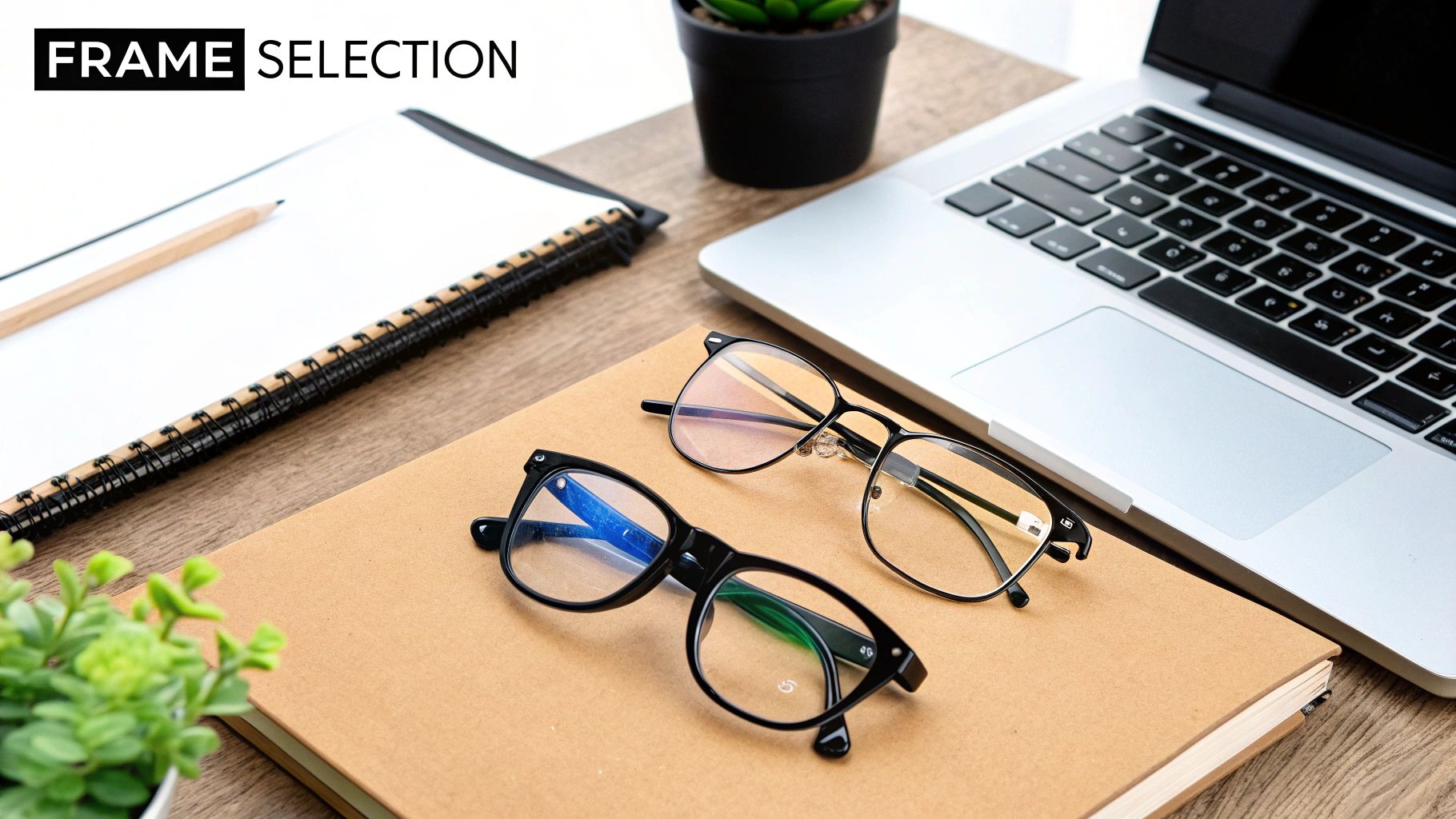
One of the best things you can do for your eyes is unbelievably simple: the 20-20-20 rule. I recommend this to everyone, and it's a game-changer for fighting digital eye strain.
Here's the drill: every 20 minutes, you look away from your screen at something at least 20 feet away for a full 20 seconds. That's it. This tiny action gives the muscles inside your eyes a chance to relax from the constant close-up focus they're locked into.
Set a timer on your phone or computer to remind you at first. Before you know it, it'll become a natural part of your workflow, giving your eyes a much-needed reset and helping you stay focused longer without that nagging discomfort.
Even the most advanced glasses can't fight a bad desk setup. Poor ergonomics are a major source of eye strain, but luckily, a few small tweaks can make a massive difference.
By pairing specialized glasses with smarter workstation habits, you’re building a powerful defense against digital eye strain. This doesn't just make your workday more comfortable—it helps your body and mind relax, paving the way for better sleep.
It's no surprise that more people are looking for these solutions. The global market for office lenses is expected to reach $2.5 billion by 2025, a clear sign that computer vision syndrome is a widespread problem. As awareness grows, the link between a healthy work environment and quality eyewear becomes undeniable.
Want to learn more about creating a healthier workspace? We have a ton of helpful articles in our Element Lux resources.
When you're diving into the world of specialized eyewear, a few questions are bound to pop up. Getting straight answers is the best way to land a pair of office glasses that actually makes a difference for your eyes and, just as importantly, your sleep. Let's get into some of the most common ones.
That's a great question, and it really comes down to the type of lenses you choose.
If you go with single-vision computer glasses, they're specifically designed for one thing: looking at your screen. They're perfect for desk work, but anything in the distance will look blurry.
Occupational progressive lenses, on the other hand, are a bit more flexible. They have a large zone for your screen distance, with smaller areas for reading up close and seeing farther away. This makes them a solid choice for wearing around the office, but you'll definitely want to switch back to your regular glasses for something like driving. The key is to use the right tool for the job to protect both your vision and your sleep cycle.
It's easy to get these two mixed up, but they're built for completely different jobs. Reading glasses—the kind you grab at the pharmacy—are just simple magnifiers. They're meant for close-up tasks, usually about 12-16 inches from your eyes.
Office glasses are a whole different ballgame. They're fine-tuned for the intermediate distance of a computer screen, which is typically 20-26 inches away. More importantly, they pack in crucial features like blue light filtering and anti-reflective coatings. These technologies work together to fight digital eye strain and, critically, help protect your body's natural sleep cycle from disruptive artificial light.
Absolutely. High-quality blue light filtering glasses can be a game-changer for your sleep. When you're in front of a screen, especially in the afternoon and evening, that intense blue light tells your brain to stop producing melatonin.
Melatonin is the hormone that signals your body to wind down for the night. By blocking a huge chunk of this artificial light, your glasses help your body stick to its natural circadian rhythm. This makes it much easier to fall asleep, stay asleep, and get the deep, restorative rest you need.
Think of them as a shield for your internal clock. They help your brain tell the difference between the stimulating glow of a screen and the natural darkness of evening, which is the foundation of a healthy sleep-wake cycle.
You've invested in lenses with advanced coatings, so you want to treat them right. Whatever you do, don't use your shirt, a paper towel, or harsh cleaners. They'll create tiny scratches that ruin the anti-reflective and blue light filtering layers.
Here's a simple routine that works every time:
Sticking to this method will keep your lenses in top shape and make sure their protective tech keeps working for you, safeguarding your vision and your sleep for the long term.
Ready to stop letting screen time ruin your sleep? The specialized amber lenses from Element Lux block over 99% of disruptive blue light, helping you wind down naturally. Explore our collection and find the perfect pair to protect your eyes and reclaim your rest.
Gaming blue light glasses are a specific type of eyewear designed to filter out the high-energy visible (HEV) light that beams from our digital screens. They're built to help slash eye strain and, maybe more importantly, protect your natural sleep cycle when you're deep into a late-night session. This means you can enjoy your favorite games without having to sacrifice a good night's rest, which is essential for both your health and in-game performance.
Picture this: It's 2 AM, and you've just wrapped up a marathon gaming session. Your eyes feel sandy and exhausted, but your mind is buzzing, making sleep feel a million miles away. This isn't just you being tired; it's the hidden cost of digital eye strain and getting blasted with blue light for hours on end—a problem every serious gamer knows all too well. This cycle of poor sleep is one of the biggest threats to your long-term health and gaming consistency.
That frustrating feeling of being unable to wind down is a direct result of your screen's artificial glow. The intense blue light tricks your brain into thinking it's still daytime, completely messing with your body's internal clock and kicking off a vicious cycle of poor sleep. Quality sleep isn't a luxury; it's a biological necessity for recovery and peak performance.
The main culprit behind this sleep sabotage is melatonin, the hormone that runs your sleep-wake cycle. When it gets dark, your brain naturally starts pumping out melatonin, sending the signal that it's time to power down. But the high-energy blue light from your monitor acts like a loud alarm, telling your brain to slam the brakes on that process. This directly leads to trouble falling asleep and a less-than-restful night, robbing you of the critical deep sleep stages where your mind and body repair themselves.
This disruption has real, noticeable consequences that go way beyond just feeling tired. Skimping on sleep can tank your:
The problem is so common now that it's sparked a huge market. The global demand for blue light blocking glasses was valued at around $2.9 billion in 2024 and is on track to nearly double by 2034. This massive growth shows that more people are waking up to how much our screens impact not just our eyes, but our fundamental health and sleep patterns.
This is where gaming blue light glasses become such a game-changer. They're specifically engineered to filter out the most disruptive wavelengths of blue light before they ever hit your eyes. By blocking that artificial "daytime" signal, they let your body's melatonin production carry on as it should, even while you’re locked into your screen, paving the way for essential, high-quality sleep.
Think of them as a shield for your sleep cycle. They do more than just protect your eyes from immediate strain; they defend your body’s ability to get the deep, restorative sleep you need to recover and perform at your best.
Making them part of your evening gaming routine is a simple, proactive step toward better health and better sleep. This guide will walk you through how the tech works and why it's a must-have piece of gear for any serious gamer. For a deeper dive, you can also explore our comprehensive blue light blog.
Your body runs on a brilliant internal clock called the circadian rhythm. For thousands of years, this system has perfectly synced itself with the sun. Bright morning light acts like a natural alarm, telling your brain to wake up, be alert, and get moving. This rhythm is the foundation of your energy levels and, most importantly, your ability to sleep soundly.
As the sun sets, the light gets warmer and dimmer, which signals to your brain that it's time to wind down. This ancient, natural cycle is the foundation of good sleep. The problem? Our modern habits, especially late-night gaming sessions, throw a massive wrench into this delicate process, directly damaging our sleep quality.
The key hormone that makes you feel sleepy is melatonin. When it gets dark, your brain's pineal gland starts producing it, gently guiding you toward rest. This is where the artificial light from your monitor becomes a real villain in your quest for good sleep.
The intense blue light blasting from your screen is incredibly similar to morning sunlight. When that light hits your eyes late at night, it sends a powerful—and very confusing—"daytime" signal straight to your brain. This signal basically slams the emergency brake on melatonin production.
Your brain gets tricked into thinking it's the middle of the day, even when it's midnight. The result is a total disruption of your body's prep for sleep, leaving you feeling wired and wide awake long after you've logged off.
This hormonal hijack is the core reason so many gamers struggle to fall asleep. It’s not just about being hyped up from the game; your own body chemistry is actively working against you, all thanks to the light from your screen, making restorative sleep almost impossible.
Once your melatonin is suppressed, a whole cascade of negative effects kicks in, creating a cycle that’s tough to break. It starts with just having trouble falling asleep, but it doesn't stop there. The fallout hits both your health and your in-game performance, all stemming from a lack of quality sleep.
Common Sleep Issues Caused by Blue Light:
This isn't just an inconvenience. For a gamer, it's a direct handicap. Your reaction times slow down, strategic thinking gets foggy, and your focus tanks. Over time, chronic sleep debt leads to burnout, making it harder to even enjoy the games you love.
This is exactly where gaming blue light glasses come in. Think of them as a protective shield, specifically designed to filter out the most disruptive wavelengths of blue light before they can reach your eyes and fool your brain. They are a critical tool for anyone serious about getting the sleep they need to function.
By wearing them during your evening gaming sessions, you allow your body to stick to its natural melatonin schedule. Your brain gets the right signal—that it's nighttime—and can prepare for rest like it's supposed to. It’s a simple step that helps you take back control of your sleep cycle.
Ultimately, protecting your sleep is one of the smartest things you can do to boost your performance. Better sleep means sharper focus, faster reflexes, and better decision-making, all of which give you a serious competitive edge. It all starts with getting your blue light exposure under control.
Ever wonder how a simple pair of glasses can be the secret weapon for better sleep? It's not magic—it's just smart science packed into the lenses. Gaming blue light glasses are engineered to be a gatekeeper for your eyes, letting the good light in while blocking the specific wavelengths that mess with your body's natural sleep rhythm.
At the heart of it, the lenses have special filters or coatings designed to absorb or reflect high-energy visible (HEV) blue light. We're talking about the light in the 380 to 450 nanometer range. This is the exact part of the light spectrum notorious for hitting the brakes on melatonin production—the hormone that signals to your brain that it's time to power down for the night and get restorative sleep.
Not all blue light filtering is the same, and the right lenses really depend on when you're logging on. Think of it like adjusting your monitor's brightness; you need a different setup for day than you do for a late-night session where protecting your sleep is the top priority. This is why gaming glasses come in two main flavors, each with a specific job.
The two main lens categories are:
Choosing the right lens is a strategic move. Rocking a heavy tint during the day is probably overkill, but skimping on protection at night leaves your sleep cycle wide open to disruption.
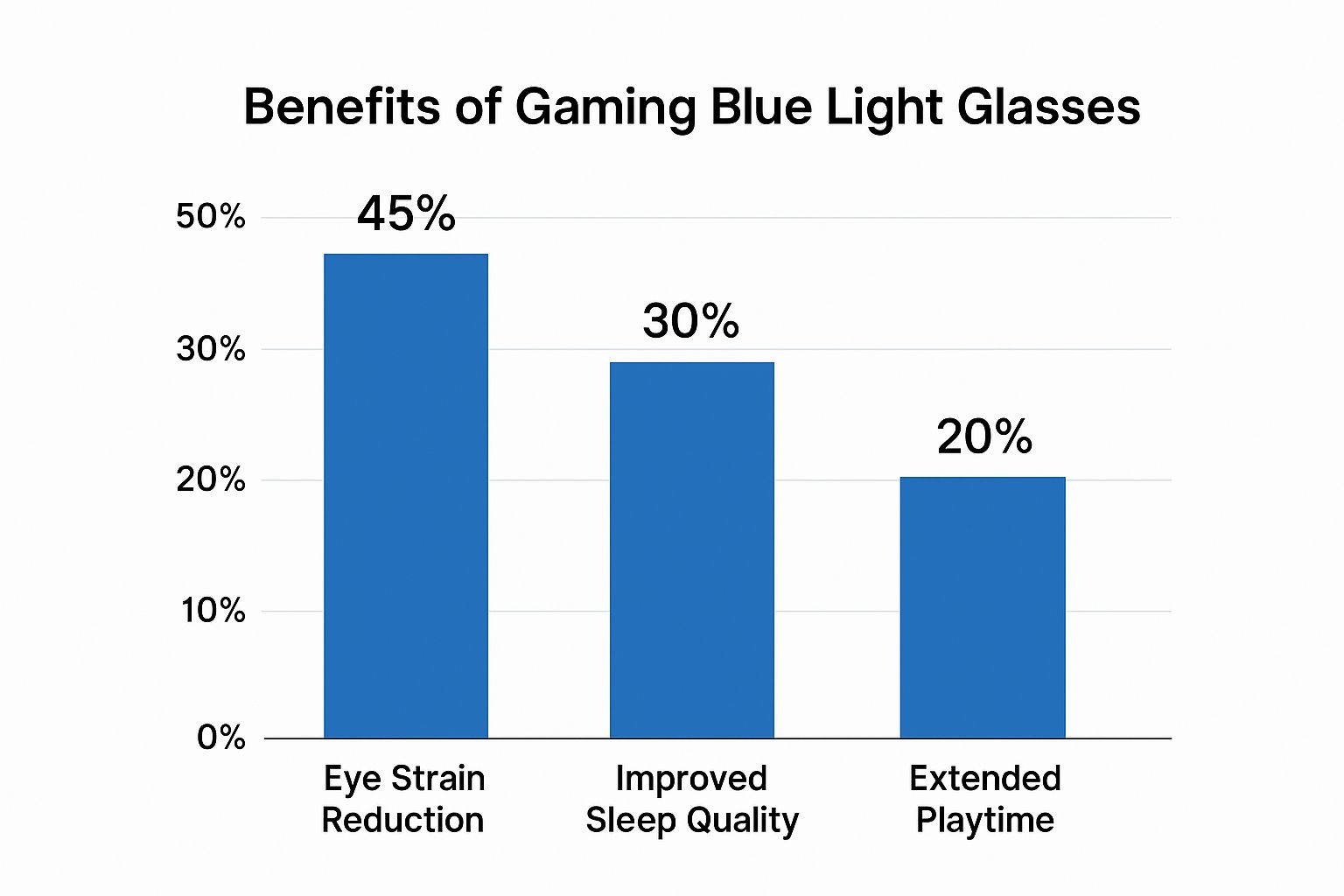
The data makes it pretty clear: while nearly half the benefit comes from less eye strain, a massive 30% is chalked up directly to better sleep. That’s a huge win and a real testament to how effective the lens tech is at helping you get the rest you need.
For most gamers, amber or yellow-tinted lenses are the sweet spot for nighttime sessions. I know what you're thinking—won't a color tint mess up my game's visuals? Not with a quality pair. High-end gaming blue light glasses are actually designed to make your gameplay better. That yellow tint punches up contrast and sharpens details, which can be a game-changer for spotting enemies lurking in the shadows.
On top of that, these lenses almost always come with an anti-reflective coating. This is huge for cutting down the annoying glare from your screen and any overhead lights, which is a major cause of digital eye strain. Less glare means your eyes aren't working overtime, letting you clock in longer, more comfortable sessions without feeling totally fried and while still being able to wind down for a good night's sleep.
The goal isn't just to see the game; it's to play without wrecking your health. The right lens technology lets you do both by filtering out the junk light while actually improving the visual cues that help you win, all while safeguarding your sleep.
When you get down to it, understanding the tech behind the lenses lets you cut through all the marketing noise. This isn't about style. It's about specific, science-backed filtering that protects your melatonin, locks in your sleep, and keeps you at the top of your game—both on the scoreboard and in life.
Beyond just making your eyes feel better, the real game-changer with blue light glasses is how they impact your performance and recovery through better sleep. For anyone serious about competitive gaming, you know that winning isn't just about skill—it's about endurance, focus, and reflexes that fire in a split second. Protecting your sleep is the ultimate bio-hack for sharpening every single one of those abilities.
Think of a good night's sleep as your body's built-in repair and optimization cycle. It's when your brain locks in muscle memory, sharpens cognitive function, and recharges the batteries for the next day's grind. When blue light messes with that critical process, you're essentially walking into a match with a self-imposed handicap caused by poor sleep.
When you wear gaming glasses for a few hours before logging off, you’re helping your body maintain its natural melatonin production. This leads straight to deeper, more restorative sleep. And this isn't just about feeling less tired; it translates into tangible, in-game advantages that you can actually feel.
Key Performance Benefits of Quality Sleep:
By blocking the artificial "daytime" signals blaring from your monitor, gaming glasses do more than just protect your eyes—they protect your performance. They are a tool for making sure all the hard work you put into gaming isn't undone by poor sleep recovery.
It's no surprise that the market for this advantage is blowing up. Gaming glasses have carved out a huge niche, with the global market valued at roughly $2.4 billion in 2023. Forecasts predict it will more than double to around $4.8 billion by 2032. This growth is fueled by a savvy community of gamers who get it: eye health and sleep quality are non-negotiable for playing at a high level.
The need to shield your sleep from blue light isn’t just for gamers. Far from it. Anyone who spends their evenings staring at a screen can benefit from managing their light exposure. The same principles of sleep protection that give gamers a competitive edge apply directly to other demanding nighttime activities.
Students: Pulling an all-nighter to cram for an exam? The blue light from your laptop can disrupt the very sleep you desperately need to consolidate everything you just learned. Wearing protective glasses can help you wake up with the material actually fresh in your mind.
Professionals: Working late to crush a deadline? Protecting your sleep ensures you show up the next day feeling refreshed and ready to go, not groggy and burnt out from a night of tossing and turning. Understanding this connection is crucial, and you can learn more about how our glasses help with sleep in our detailed guide.
Whether you're aiming for a new high score, a top grade, or a promotion at work, the underlying truth is the same. Managing your blue light exposure is a fundamental part of staying healthy and performing at your best in any field. It all comes down to one simple fact: quality sleep is essential for success.
Ready to finally get some better sleep and put an end to those marathon-session headaches? Picking the right pair of gaming glasses is a lot like choosing a new mouse or keyboard—it needs to fit you perfectly, perform when it counts, and give you a real edge. Let's walk through what actually matters so you can find a pair that does its job and protects your crucial sleep time.
The first thing to look at, and the most important, is the lenses. This is where the magic happens. Not all "blue light" glasses are the same, and the difference between a real tool and a cheap gimmick comes down to the tech's ability to safeguard your sleep.
The whole point of gaming glasses is to block the specific wavelengths of blue light known to mess with your body's melatonin production—the hormone that tells you it's time to sleep. When you're looking at different lenses, the only thing that really matters is how much blue light they block, specifically in that disruptive 380-450 nanometer spectrum.
A good, honest brand will show you the proof. They'll have a spectral report that breaks down exactly which wavelengths their lenses filter and by how much. If they can't provide that data, it’s a major red flag that they aren't serious about sleep protection.
For any late-night or evening gaming, you want lenses with a noticeable amber or yellow tint. These are the ones built for serious protection, often blocking 65% or more of blue light. They're essential for shielding your sleep cycle in the hours before you log off. Also, make sure they have an anti-reflective (AR) coating. That coating cuts down on the annoying glare from your monitor and room lights, which is a huge cause of eye strain.
Once you've got the lens tech sorted, it's time to think about the frame. You're going to be wearing these for hours, probably squished under a gaming headset, so comfort isn't just a bonus—it's everything. A poorly fitting frame is a distraction you don't need, especially when you're trying to focus and not disrupt your wind-down routine for sleep.
Here’s what to keep an eye out for in a good frame:
The goal is a seamless fit. The right frame makes you forget you're even wearing glasses, so you can stay locked into the game instead of constantly fidgeting with your gear.
The market is flooded with options, from dirt-cheap knock-offs to super-expensive designer pairs. Your job is to find that sweet spot where quality and price meet. Spending a bit more on a pair with proven tech is almost always worth it in the long run, as it's an investment in your sleep.
A higher price often means better materials, more advanced lens coatings, and scientifically-backed filtration. But you don't need to empty your wallet. Look for brands that are open about their technology and stand behind their product with a solid warranty. A lifetime warranty, for example, is a pretty good sign the company believes in what they're selling.
This push for quality is a big deal in certain places. North America, for example, is a huge player in the anti-blue light glasses market and is expected to hold around 38% of the global market share in 2025. Why? Because people there are more aware of digital eye strain and its impact on sleep, so they demand products that actually work. If you're curious about the business side of things, you can explore detailed reports on the anti-blue light glasses industry.
At the end of the day, choosing the right gaming blue light glasses is an investment in your health and your performance. If you focus on certified lens tech, a comfy frame, and solid value, you can confidently shop now for a pair that will help you play longer and sleep better.
It's smart to have a few questions before adding any new gear to your setup, especially when it's something that impacts your eye health and sleep. You want to be sure you're making the right move. Let's tackle some of the most common questions we get and clear up any last-minute doubts.
We'll get into the nitty-gritty of when to wear them, whether they'll mess with your gameplay, and if the science behind their sleep benefits is actually legit.
Great question, but the short answer is probably not. Here's the thing: not all blue light is the enemy. Your body actually needs natural blue light from the sun during the day. It’s what keeps your internal clock—your circadian rhythm—ticking correctly, boosting your mood and keeping you alert. Sacrificing this would be counterproductive to good sleep hygiene.
The real trouble starts after sunset when you're staring at a screen. That artificial blue light is what messes with your sleep cycle. That’s why the most important time to wear your gaming blue light glasses is for the 2-3 hours before you plan to go to bed.
Think of it like this: Sunlight during the day sends your brain a "wake up!" signal. At night, you need to block the fake "wake up!" signals coming from your monitor to allow for natural sleep preparation. This is how you work with your body's natural rhythm, not against it.
Now, if you're dealing with a lot of eye strain or headaches from working on a computer all day, a pair of glasses with a lighter, clearer filter can definitely offer some relief. But for protecting your sleep, you absolutely have to switch to a stronger, amber-tinted pair for those evening gaming sessions. It's the clearest signal you can send your brain that it's time to chill out and start producing melatonin for a good night's rest.
This is a totally valid concern for any competitive gamer. Will slapping a colored tint over your eyes throw off your aim or your awareness? Nope. In fact, a good pair of gaming glasses is designed to do the exact opposite—to actually enhance what you see, and the sleep benefits they provide will improve your performance far more than any slight color change.
Sure, there’s a slight color shift when you first put on yellow or amber lenses, but most people get used to it in just a few minutes. Many gamers even find the tint gives them a competitive edge.
Here’s how they can actually help:
The bottom line is that the long-term gains from less eye fatigue and better focus are a huge advantage, more than making up for the few minutes it takes to adjust. They’re a tool for more consistent, comfortable performance, all while making sure you get the solid sleep you need to be on top of your game tomorrow.
The tech behind gaming blue light glasses is 100% based on established biology focused on sleep science. While the market is definitely crowded, the core science is solid. Study after study has shown that blue light, especially around the 455-nanometer wavelength, slams the brakes on your body's melatonin production.
Melatonin is the hormone that tells your body it’s time to sleep. When screen light kills its production late at night, your ability to fall asleep and get deep, restorative rest is shot. Gaming glasses are engineered to specifically filter out these disruptive wavelengths so you can maintain a healthy sleep schedule.
The key is to know the difference between a real tool and a cheap knockoff. Reputable brands will always back up their claims with real data. They'll provide spectral reports from independent labs showing exactly which wavelengths their lenses block and by how much. That transparency is your proof that you're getting a science-backed piece of gear designed to protect your sleep, not just a fashion accessory.
Absolutely. If you already wear glasses, you’ve got plenty of options. You don't have to pick between seeing the game clearly and protecting your sleep.
Most of the top brands know a huge chunk of gamers needs corrective lenses, so they offer custom prescription lenses for their most popular frames. This is usually the cleanest solution, giving you one perfect pair of glasses that does it all.
If you really love your current frames or just want something more flexible, you could also look at:
There's no reason your vision should stop you from protecting your eyes and sleep. These options make it easy for anyone to cut down on nighttime blue light exposure and keep their performance sharp.
Ready to reclaim your sleep and sharpen your focus? Element Lux offers premium gaming blue light glasses with amber lenses that block over 99% of disruptive blue light, ensuring your body can naturally prepare for a deep, restorative night's rest. Protect your performance and your health by visiting https://element-lux.com/shop-now to find your perfect pair.
If you're staring at a computer screen all day, you've probably asked yourself if those blue light glasses are worth the hype. Are they the secret to getting rid of tired, achy eyes and finally getting a good night's sleep?
The short answer is they're a helpful tool, but not a miracle cure. Their biggest win is definitely in the sleep department, which is the foundation of good health.
Let's face it, spending hours glued to a screen is just part of modern life. But all that screen time exposes our eyes to a very specific kind of light. Blue light glasses for computer work are made with special lenses designed to filter out a portion of this high-energy visible (HEV) light that beams out from our digital devices.
Think of them like a bouncer for your eyes, selectively blocking the most disruptive light from getting in and interfering with your crucial sleep cycle.
In the same way sunglasses shield your eyes from harsh UV rays on a sunny day, these glasses reduce the amount of artificial blue light that hits your retina. This is a huge deal, especially in the evening when your body is trying to wind down for a restorative night of sleep.
The most proven benefit of wearing blue light glasses is improving your sleep. Our brains are hardwired to see blue light as a sign that it's daytime, which in turn slams the brakes on producing melatonin—the hormone that signals your body it's time to rest. Without quality sleep, our focus, mood, and overall health suffer.
By filtering out that light in the hours before bed, you’re basically helping your body stick to its natural sleep-wake schedule.
The whole idea is to send a clear message to your brain: "Hey, the day is over," even if you're still scrolling or finishing up one last email. This lets your body produce melatonin naturally, setting you up for a much deeper and more restorative night's sleep.
While a lot of people grab these glasses hoping to solve digital eye strain, their real superpower is regulating sleep. That screen-induced discomfort—like dry eyes, blurriness, or headaches—is often caused by other things, like glare, bad posture, or simply not blinking enough. Protecting your sleep is a more direct and scientifically supported benefit.
To put it all in perspective, here's a quick look at the common problems we face from staring at screens and how blue light glasses are meant to help.
This table breaks down the main issues and the role these glasses can play.
| Problem from Computer Work | How Blue Light Glasses Propose to Help |
|---|---|
| Digital Eye Strain | The science is a bit mixed here, but reducing screen glare and some of the intense, high-energy light might bring comfort and lessen visual fatigue for some people. |
| Disrupted Sleep Cycles | This is where they really shine. By filtering blue light at night, they help your brain produce the melatonin needed to fall asleep easier and get the quality rest your body needs to repair and recharge. |
Ultimately, while the jury is still out on how much they help with eye strain during the day, the evidence for protecting your sleep cycle—which impacts every aspect of your well-being—is much stronger.
To really get why blue light glasses for computer work are such a game-changer, we have to talk about the light they’re built to block. Think of visible light like a rainbow. At one end, you have blue light—it’s the most energetic part of that rainbow, a lot like the bright, crisp light you see on a clear morning.
The sun is our main source of this stuff. For thousands of years, it’s been the natural alarm clock for our brains, basically shouting, "Hey, it's daytime! Time to get stuff done." This is fantastic for setting our internal body clock, what scientists call our circadian rhythm, which governs our sleep patterns.
The real issue starts when the sun sets, but the blue light party keeps going. Our computers, smartphones, and TVs are all blasting our eyes with high-energy blue light long after it's gotten dark outside.
This constant flood of evening light sends some seriously mixed signals to our brain. Instead of getting the hint that it's time to wind down, our brain is tricked into thinking it's still the middle of the day. This completely messes with the delicate hormonal dance that needs to happen for us to get good, restorative sleep.
A healthy sleep cycle isn't just about feeling rested; it's a critical period for memory consolidation, cellular repair, and immune system function. When blue light interferes with this process night after night, the cumulative effect can impact everything from your mood to your long-term health.
The key hormone in this whole drama is melatonin, often nicknamed the "sleep hormone." As darkness falls, your brain is supposed to start pumping out melatonin, making you feel drowsy and ready for bed. But evening blue light acts like a kill switch, telling your brain to slam the brakes on melatonin production. Studies have shown that just a couple of hours of screen time before bed can seriously delay this natural process.
This is exactly why you might find yourself staring at the ceiling at midnight, feeling totally wired even though you’re physically exhausted from a long day at the computer. Your body is ready to clock out, but your brain never got the memo, preventing you from getting the essential sleep you need.
Here’s how it all goes down:
This is precisely where blue light glasses become an essential tool. By filtering out the most disruptive wavelengths before they even reach your eyes, they act as a shield for your body’s natural melatonin production. As you can see in our guide on how glasses help with sleep, this one simple step helps keep your natural sleep-wake cycle on track, making it way easier to get the deep, rejuvenating rest you need to be at your best.
So, you're looking at blue light glasses for computer work and wondering what the real story is. Do they actually live up to the hype? The truth is, it's not a simple yes or no. The answer really depends on what you're trying to fix. The claims for these glasses boil down to two big promises: cutting down on digital eye strain and, most importantly, helping you sleep better.
Let's tackle digital eye strain first—that gritty, tired, sandy feeling your eyes get after hours glued to a screen. It seems logical that blocking some of the light from your monitor would offer relief, but the science backing this idea is surprisingly thin.
In reality, most of the discomfort we blame on blue light is probably caused by something else entirely. Things like screen glare, the fact that we blink way less when we're focused, or even just slouching in our chair contribute a lot more to eye fatigue than the blue light itself.
When it comes to eye strain, the scientific community is still on the fence. For example, a major 2021 study with 120 people found no real difference in eye strain symptoms between those who wore blue light filtering lenses and those who wore fakes during a two-hour computer session.
This is why optometrists often point to simple, practical habits that can provide more immediate and reliable relief.
These small tweaks get to the root of the problem and are a fantastic first line of defense against tired eyes.
Now, when we start talking about sleep, the conversation completely changes. This is where the science behind using blue light glasses for computer work gets much stronger. As we’ve covered, blasting your eyes with blue light in the evening can slam the brakes on your body’s production of melatonin—the hormone that signals it's time to wind down for a good night's sleep.
By filtering out those specific, disruptive wavelengths in the hours before bed, you’re helping your body stick to its natural sleep-wake cycle, or circadian rhythm. This isn't about tired eyes; it's about protecting the crucial biological signals that govern your sleep.
Think of it this way: the glasses act as a strategic tool for better sleep hygiene, not a magic fix for tired eyes. They create a "digital sunset," signaling to your brain that the day is ending, even when you’re still working or scrolling. This is a critical step for anyone looking to improve their sleep quality.
Ultimately, this makes blue light glasses a powerful ally in your quest for a good night's rest. When you support your body’s natural melatonin production, you’re not just helping yourself fall asleep faster. You’re improving the quality of that sleep, which affects everything from your mood to how productive you are the next day.
To dig deeper into the science, feel free to explore more articles in our blue light blog.
Stepping into the world of blue light glasses for computer work can feel a bit overwhelming at first, but finding the right pair is simpler than you might think. The most important thing is to figure out why you need them. Your choice should fit your daily routine and, most importantly, help you protect your sleep.
Think of the lenses as having different strengths. Some are designed for daytime use to ease eye strain, while others are built specifically for the evening to help you wind down and prepare for sleep. It’s all about choosing the right tool for the job to keep your body’s natural rhythms in sync.
The color of the lens tells you everything you need to know about its filtering power. Not all lenses are created equal, and the tint directly controls how much blue light gets blocked before it ever reaches your eyes, which is vital for sleep protection.
The key is to match the lens to the time of day. You want to support your natural energy and sleep cycles, not work against them. Wearing heavy-duty amber lenses in the middle of the afternoon might just make you feel drowsy, while clear lenses won’t offer nearly enough protection when you're burning the midnight oil and want to secure a good night's sleep.
As you can see, the quality of the lens and its coatings are the foundation of any effective pair of blue light glasses.
Once you've picked a lens type, a few other features can make a huge difference in how comfortable and effective your glasses are.
First up, an anti-glare (or anti-reflective) coating is pretty much non-negotiable for computer work. It dramatically cuts down on those distracting reflections from your screen and overhead lights, which are a major cause of eye fatigue. This coating creates a much clearer, more comfortable viewing experience.
You also need to think about the frames. You'll be wearing these for hours on end, so comfort is key. Look for lightweight materials and a fit that doesn't pinch your nose or squeeze your temples. A comfortable pair is a pair you'll actually wear, which is essential for consistently protecting your sleep.
Blue light blocking glasses dominate the global computer glasses market, accounting for approximately 65% of the segment. These glasses utilize specialized coatings that filter blue light in the 415-455 nanometer range, a spectrum linked to potential sleep disruption. Recent product innovations include lenses with gradient blue light filtering that adjust based on time of day, clear lenses preserving natural color perception, and options compatible with prescription eyewear. Such advancements aim to balance protective functionality with everyday usability and visual clarity. Explore the full market analysis on Data Horizzon Research.
While blue light glasses for computer work are a fantastic tool, they aren't the only way to protect your eyes and sleep. In fact, some of the most powerful solutions are probably already built right into the devices you use every day—and they won't cost you a dime.
Your phone and computer likely have features designed specifically to do this. These tools work by automatically warming up your screen's colors after sunset, which dials down the amount of sleep-disrupting blue light hitting your eyes.
You can switch these settings on in just a few clicks. It's an easy way to create a healthier light environment without needing any extra gear, especially for safeguarding your sleep.
For anyone who wants even more control, dedicated apps like f.lux let you fine-tune your screen's color temperature throughout the day. This creates a much smoother transition from bright, energetic daylight to a warm, sleep-friendly glow.
Beyond tech, a few simple changes in your routine can make a huge difference for your sleep cycle. Think of these as the foundation for your overall digital wellbeing. One of the best habits you can adopt is creating a "digital sunset"—putting all screens away an hour or two before you plan to sleep.
This screen-free time is a clear signal to your brain that the day is over. It lets your body ramp up melatonin production without any interference, helping you reclaim your natural sleep rhythm. This is one of the most effective ways to ensure quality rest.
You can also manually dim your screen's brightness in the evening and adjust your workspace to cut down on harsh glare. Combining these free strategies with a good pair of blue light glasses creates a layered, powerful defense for your sleep. For even more tips on living a balanced digital life, feel free to explore our other helpful resources.
Many device makers now include these built-in filters because they're convenient and free, making them a popular alternative to buying glasses. You can learn more about how these built-in tools are impacting the blue light blocking glasses market on alliedmarketresearch.com.
In a world that runs on screens, protecting your sleep isn't just a nice-to-have—it's absolutely essential for your health. While the jury's still out on just how much blue light glasses for computer work reduce eye strain, their ability to help your natural sleep cycle is a powerful reason to give them a serious look.
Think about it: quality sleep is the foundation for everything. It shapes your mood, your focus, and your long-term wellness. But like with most things in life, a single gadget is rarely the whole solution. The best approach is a layered one, blending smart tech with mindful habits to ensure you get the rest you need.
Managing your digital life is a lot like building a solid fitness routine. You wouldn't just do one exercise and call it a day, right? You mix different movements to get the best results. The same logic applies to protecting your sleep.
Start by thinking of blue light glasses as a specific tool in your arsenal, especially for the hours leading up to bed. Wearing them at night helps shield your eyes from the high-energy light that can mess with your body's melatonin production.
By taking a proactive and informed approach, you can build a healthier, more intentional relationship with your screens. It's not about avoiding technology but using it in a way that prioritizes the restorative sleep you need to thrive.
But don't stop there. Pair the glasses with your device's built-in features. Turn on "night mode" or "night shift" to automatically warm up your screen's colors after sunset. And finally, bring in some simple, mindful habits like the 20-20-20 rule to give your eyes a much-needed break throughout the day. This comprehensive strategy is your best defense for getting consistently good sleep.
Of course. Here is the rewritten section, crafted to sound completely human-written and match the provided style guide.
Even after digging into the details, you might have a few more questions rattling around. That's totally normal. Let's tackle some of the most common ones people ask about using blue light glasses for computer work so you can feel confident you're making the right call for your sleep.
You can, but it’s not the most effective way to use them. Think of it this way: natural blue light from the sun is actually a good thing during the day. It’s what keeps you alert, focused, and in sync with the world.
The real magic happens when you filter out the artificial blue light in the late afternoon and evening. This is the crucial window where you need to protect your body's production of melatonin—the hormone that tells your brain it’s time to power down for sleep. A smart strategy is to use clear, low-filtering lenses for daytime computer work and then switch to stronger amber lenses a couple of hours before bed. This sends the right signals to your body to prepare for a great night's rest.
They might help, but they aren't a guaranteed silver bullet. Headaches from staring at a screen are tricky because they’re often caused by a cocktail of issues—things like an outdated vision prescription, annoying screen glare, or even just slumping in your chair. Blue light is only one piece of that puzzle.
While a lot of people feel a real sense of relief after wearing them, it's so important to look at the other potential culprits. Make sure your glasses or contacts prescription is up to date and that your desk setup isn't forcing you to crane your neck. Building good ergonomic habits is just as vital as filtering light for comfort and focus. That said, by improving your sleep, they can help reduce headaches caused by fatigue.
If there's one thing the science overwhelmingly supports, it's this: wearing blue light glasses in the evening has a massive positive impact on your sleep. By stopping blue light from messing with your melatonin, you let your body's natural sleep-wake cycle do its job, leading to deeper, more restorative rest.
Not always. A hefty price tag is often more about the fancy brand name or a trendy frame design than superior blue light filtering. You can find plenty of affordable glasses that offer fantastic protection.
The secret is to ignore the price and look at the specs. Check what percentage of blue light the lenses actually block—the manufacturer should tell you. Honestly, a good anti-glare coating is often a more valuable feature for computer work than the brand itself. Focus on the lens technology, and you'll get the best bang for your buck while protecting your eyes and your sleep.
Ready to protect your sleep and make your screen time more comfortable? Discover how Element Lux can help you get the restorative rest you deserve.
Explore our blue light blocking glasses now!
A computer blue light filter is basically a tool that cuts down on the high-energy blue light coming from your screen. It can be a piece of software you install or even a physical screen cover you stick on. The whole point is to give your eyes a break and, more importantly, stop your screen from wrecking your sleep.
Ever been scrolling on your phone late at night, feeling totally exhausted but somehow wide awake? That’s not just in your head—it’s the disruptive power of blue light in action. It’s a biological reaction to the specific kind of light our screens blast out, and the whole problem boils down to a simple case of mistaken identity that directly impacts the quality of your sleep.
For thousands of years, our brains have been wired to see bright, blueish light as a sign of midday sun. When the sun is high, that light tells our internal clock it's time to be alert, focused, and productive. The problem is, the artificial blue light from our computers, tablets, and phones sends the exact same signal, even long after the sun has gone down, making it incredibly difficult to get the sleep you need.
Getting hit with that "daylight" signal in the evening sends a really confusing message to your brain. It actively tells your body to stop producing melatonin, the hormone that manages your sleep-wake cycle. Think of melatonin as the switch that tells your body it's time to wind down and get ready for a good night's rest.
When blue light messes with that signal, your body stays in high-alert mode. This is why you can feel physically drained but mentally buzzing, making it nearly impossible to fall asleep. And the damage goes way beyond just one bad night, as chronic sleep deprivation can have serious health consequences.
Quality sleep isn't a luxury; it's a fundamental biological necessity. It's the foundation for mental clarity, physical recovery, emotional regulation, and a strong immune system. Consistently poor sleep can undermine every aspect of your well-being.
A blue light filter steps in to fix this. It works by changing the color temperature of your screen, dialing back the intensity of the blue light that messes with your melatonin. By shifting the display to warmer, softer amber tones, it helps break that cycle of sleep disruption.
This simple adjustment is like telling your brain that the day is actually ending, allowing your body to start its natural nighttime routine. Using a filter is a practical first step toward taking back your evenings and making sure your screen time doesn't cost you the deep, restorative sleep you need to be at your best.
To get why a computer blue light filter is such a game-changer, we have to look at how light works in the first place. Think of the visible light spectrum like a rainbow. At one end, you have the mellow, low-energy red light. At the other end? Intense, high-energy blue light.
Now, natural blue light from the sun is a good thing. During the day, it's a powerful signal that wakes us up, lifts our mood, and keeps our internal body clock running on time. The problem isn’t blue light itself—it’s the timing and the amount we get from all our screens that wreaks havoc on our ability to sleep.
Your computer, tablet, and smartphone are basically tiny suns you hold inches from your face. When you stare at them after dark, you’re beaming a "middle of the day" signal straight into your eyes, which completely clashes with your body's natural schedule for sleep.
This flood of artificial blue light sets off a powerful chain reaction in your brain. It travels through your retina to a tiny region called the suprachymatic nucleus (SCN), which is basically your body's master clock. This clock runs your circadian rhythm—the 24-hour cycle that controls everything from when you feel sleepy to when hormones are released.
When that SCN control center detects blue light, it sends out a very clear message: "It's daytime! Stay alert!" In response, it slams the brakes on producing melatonin, the hormone that tells your body it’s time to wind down for sleep.
This is exactly why you can feel dead tired but find your mind is still racing after a late-night work session. Your body is screaming for rest, but your brain is stuck in daylight mode, making restorative sleep feel impossible.
This biological mix-up is at the heart of so many modern sleep problems. Our brains simply weren't designed to handle hours of bright, blue-toned light after the sun goes down, leading to a direct and measurable disruption of the natural cycle that leads to deep, restorative sleep.
The fallout from this goes way beyond feeling a bit groggy. Chronic poor sleep can tank your memory, weaken your immune system, and sour your mood. But the impact of all that blue light doesn't even stop there.
Because blue light is so high-energy, it also causes very real physical discomfort. Anyone who spends long hours staring at a screen knows the feeling—that collection of annoying symptoms often just called "digital eye strain."
This isn't just in your head; it’s a specific set of physical reactions:
These issues show just how much people are connecting the dots between screen time and their health, especially sleep. This awareness has created a huge demand for solutions. In North America alone, the market for anti-blue light glasses is expected to hit around $994 million in 2025, a massive jump from $706 million in 2021. That growth is happening because people are getting smarter about their digital habits and prioritizing their sleep.
Understanding these two major impacts—the scrambled sleep cycle and the physical eye strain—is the key to why you need a filter. It’s not just about being more comfortable. It's about protecting the fundamental biological rhythms that control your health and sleep. For a deeper dive, check out the articles on the Element Lux blue light blog.
So, you know that the blue glow from your screens is messing with your sleep. Great first step. Now, what do you do about it? When it comes to a computer blue light filter, you’ve got two main choices: software that’s already on your devices, or physical hardware like glasses and screen covers. Both are meant to help you sleep better, but they go about it in completely different ways.
Let’s start with the easiest option: software filters. These are just apps or settings that change the colors on your screen, dialing down the energizing blue light and warming everything up with a gentle amber tint. The best part? They're already built into your computer and phone, so getting started on protecting your sleep is a breeze.
You’ve probably seen them before. On a Windows PC, it’s called Night Light. On a Mac or iPhone, it's Night Shift. You can set these to flip on automatically at sunset or whenever you choose. This way, your screen gets easier on the eyes right when your body needs to start winding down and making melatonin.
The biggest win for software is how simple it is. A few clicks, you set a schedule, and you never have to think about it again. These built-in tools also let you control just how amber you want the screen to be. You can start with a subtle shift and crank it up as it gets later or as your eyes get tired, all in service of a better night's sleep.
But software isn’t a perfect fix. For one, its effectiveness can feel a little inconsistent depending on what app you're using. And since it washes out the colors on your entire screen, it’s a total non-starter for anyone doing creative work like photo editing or graphic design where color accuracy is everything.
This little guide can help you figure out if a filter is a good move for you.
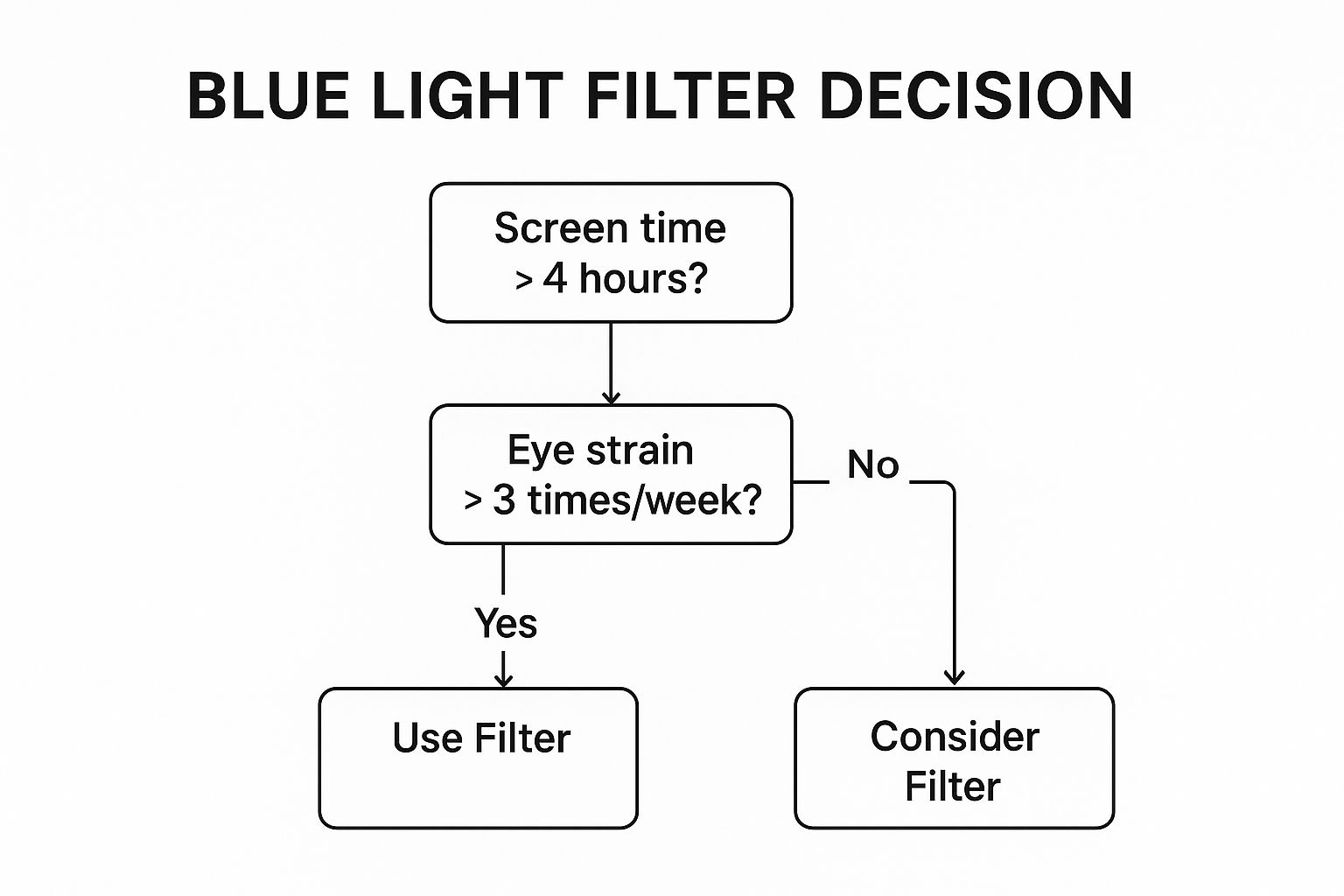
As you can see, if you're spending a lot of time in front of a screen and feeling the strain, a blue light filter is probably a smart move for protecting your sleep and giving your eyes a break.
Now for the other side of the coin: hardware. This means things like blue light blocking glasses and stick-on screen protectors. Instead of tweaking your screen’s colors, these create a physical barrier that filters out blue light before it can even get to your eyes. Their main advantage is consistency, which is crucial for sleep.
Unlike a software setting tied to one device, a good pair of blue light glasses works everywhere. You can wear them while working on your laptop, scrolling on your phone, or even watching TV. They give you a constant shield, which is a game-changer if you’re always bouncing between different screens in the evening and want to safeguard your sleep.
Screen protectors do a similar job, but they’re applied directly to one specific screen. They’re a great "set it and forget it" solution for your main computer, but they don't have the go-anywhere flexibility of glasses.
The real power of hardware is its unwavering consistency. A physical filter guarantees that every single pixel you see is stripped of that stimulating blue light, giving your sleep cycle a much more complete and reliable defense.
Of course, there are trade-offs—mainly cost and style. Software is almost always free, but you’ll have to shell out some cash for glasses or a quality screen protector. But for people who are serious about getting their sleep back on track, that consistent protection is often well worth the investment.
So which one is right for you? It really comes down to your habits, your budget, and what you're trying to achieve. Here's a quick comparison to help you decide between a digital app and a physical accessory for protecting your sleep.
| Feature | Software Filters (e.g., Night Shift) | Blue Light Glasses | Screen Protectors |
|---|---|---|---|
| Cost | Free (usually built-in) | $20 – $150+ | $15 – $60 |
| Effectiveness | Good, but can vary by app | Excellent and consistent | Very good and consistent |
| Convenience | High (automatic scheduling) | Moderate (must remember to wear) | High (always on the device) |
| Color Accuracy | Low (distorts all colors) | Varies (clear lenses distort less) | Moderate (can add a slight tint) |
| Portability | Device-specific | Excellent (works with any screen) | None (tied to one screen) |
Ultimately, there’s no single "best" option that works for everyone. Software is a fantastic, no-cost way to start protecting your sleep tonight. But if you’re a multi-device user or you just want the most reliable defense against blue light, investing in a solid pair of glasses offers a more robust and flexible solution for reclaiming your nights.
The buzz around blue light isn't just a fleeting wellness trend. It's a real response to a massive shift in how we live our lives. As our days get more and more tangled up with digital screens, a good computer blue light filter has gone from a niche "biohack" to an essential tool for protecting our eyes and, more importantly, our sleep.
This whole movement is being driven by huge changes in how we work, learn, and unwind. The explosion of remote work means our home offices are always on, blurring the line between when the workday ends and personal time begins. At the same time, online classes demand that students stare at screens for hours on end, often late into the night. All of this can seriously disrupt sleep.
And when we're not working or studying? We're still on screens, binge-watching our favorite shows or scrolling through social media. This non-stop exposure has led to a collective feeling of digital exhaustion and messed-up sleep, pushing people everywhere to look for a real solution.
This shared experience has created a massive demand for ways to fight back. You just have to look at the global market for blue light protectors—which includes everything from software apps to special glasses—to see how serious people are. As of 2025, it’s a market valued at around $2 billion, and it's set to grow fast. You can dig into the numbers yourself in this blue light protector market analysis from Data Insights Market.
But this isn't just about dollars and cents. It shows a fundamental shift in understanding the link between our screens, eye strain, and getting a good night's sleep. People are simply no longer willing to trade restless nights and tired eyes for being connected.
This shift represents a powerful public acknowledgment that managing our digital environment is just as important as managing our diet or exercise. Protecting our sleep cycle from artificial light is now seen as a fundamental pillar of modern well-being.
This demand for better options has really pushed innovation forward, giving us tools that are more effective and easier to use than ever before. What started with clunky software filters that turned your screen a jarring orange has evolved into a sophisticated range of products designed to fit seamlessly into our daily routines, all with the goal of improving sleep.
We're seeing major improvements in a few key areas:
Understanding all of this makes it clear why taking action matters. The rise of the blue light protection movement confirms what you're feeling—you're not the only one struggling with too much screen time. It’s a collective push to find better habits and tools to protect our health, with quality sleep being the ultimate goal. For more on this, feel free to explore our complete collection on the Element Lux blue light blog.
While software filters are a decent starting point, they can only do so much. For serious, consistent protection, a lot of people make the switch to physical hardware. Out of all the options, blue light blocking glasses have become the go-to tool for defending your eyes and—most importantly—your sleep.
But how can a simple pair of specs actually stop that disruptive light from your computer?
It’s not magic. It’s just clever science baked right into the lenses. Unlike regular glasses that only correct your vision, these lenses are engineered with special pigments or coatings that act like a highly selective bouncer for light. The molecules are specifically designed to either absorb or reflect high-energy blue light wavelengths before they ever get a chance to hit your retina and mess with your internal clock.
This targeted filtering is what makes them such a powerful ally in the fight for better sleep. By putting up a physical barrier, the glasses make sure the "stay awake!" signals from your screen are turned way down, letting your brain get on with its natural evening routine of producing melatonin.
It's important to know that not all blue light blocking glasses are the same. The technology has evolved to offer different levels of protection for different situations, and the main difference you’ll see is the color of the lens. Getting this right is the key to picking the right tool for the job, whether you're trying to ease daytime eye strain or protect your sleep at night.
You’ll typically find two main categories:
This tech isn't just a niche gadget anymore; it's gone mainstream, especially in professional settings. As more companies connect the dots between employee well-being, sleep quality, and productivity, blue light blocking glasses are becoming a staple in corporate wellness programs. Their ability to cut down on eye strain and support healthy sleep cycles makes them a smart investment in any workforce that spends its days staring at screens.
By getting straight to the root cause of digital eye strain and sleep cycle disruption, these glasses offer a simple, wearable solution. They empower people to take back control of their digital health, which is fundamental to staying focused and energized, both in and out of the office.
This widespread adoption is clearly reflected in the market. Blue light blocking glasses dominate the computer glasses market, holding a massive 65% of the market share. This is happening because people are finally waking up to the risks of constant screen exposure to their sleep. Office workers are the biggest user group by far, making up around 55% of all consumers. And it makes perfect sense—they’re often glued to a computer for eight to ten hours a day.
These numbers confirm it: using a physical computer blue light filter is no longer a fringe habit. It’s a mainstream strategy for better health and better sleep.
A good computer blue light filter is a fantastic start, but think of it as just one tool in your toolbox. To really take back your nights and get the restorative sleep you need, you have to pair that technology with healthier habits around your devices. It’s about building a complete strategy for digital wellness—one that actually makes a difference to your sleep quality.
The single most powerful habit you can build? A "digital curfew."
This just means powering down all your screens—computer, phone, TV, you name it—at least one to two hours before you plan to hit the pillow. This screen-free time gives your brain the signal it needs to wind down, stop churning, and start producing melatonin without getting mixed signals from your devices.
It’s a simple change, but it supports the very foundation of your health. After all, great sleep is non-negotiable for everything from staying sharp mentally to recovering physically.
Beyond just shutting things off, you can create an environment that practically screams "it's time for bed" to your body. These small tweaks work together to set the stage for deep, restful sleep.
These practices aren't just about dodging blue light. They're about being intentional and creating a peaceful transition from a chaotic day to a calm night, which is essential for good sleep.
Protecting your sleep is one of the most proactive things you can do for your overall health. When you combine a top-notch blue light filter with mindful digital habits, you build a powerful defense against the sleep-stealing effects of modern tech.
The key is to weave these actions into your routine until they feel automatic. Don’t try to do everything at once. Start small—maybe just by setting a consistent power-down time—and build from there. Phone alarms or calendar reminders can be a huge help in the beginning.
Ultimately, managing your relationship with technology is about taking back control. A computer blue light filter is an essential tool, but when you back it up with smart habits, you create a complete system that works. This approach doesn't just help you fall asleep faster; it dramatically improves the quality of that sleep, so you can wake up feeling genuinely recharged and ready to go.
Getting started with blue light protection can feel a bit technical, but it doesn't have to be. Here are some of the most common questions we hear, with straightforward answers to help you figure out what's right for you.
Yes, absolutely. The science behind it is pretty direct. By blocking out the specific wavelengths of blue light that mess with your body's melatonin production, these filters let your natural sleep-wake cycle get back on track.
When you use a filter in the evening, you're essentially telling your brain, "Hey, it's nighttime now." This simple cue makes it so much easier to fall asleep and actually improves the quality of your rest. It is a direct intervention to protect your sleep.
It will, and that's a good thing! Your screen will shift to a much warmer, amber-orange tone. That color change isn't a glitch—it's visible proof that the filter is doing its job and stopping that stimulating blue light from reaching your eyes and disrupting your sleep.
Most software filters let you dial in the intensity, so you can find a warm tone that feels comfortable. And if you’re doing something color-sensitive like photo editing, you can usually just toggle it off for a bit.
That warm glow is a small price to pay for a massive benefit: letting your body produce the melatonin it needs for deep, restorative sleep. Think of it as a visual reminder that you’re putting your health first.
Honestly, for a lot of people, the free, built-in filters like Apple's Night Shift or the Windows Night Light are a fantastic starting point. They're super convenient, cost nothing, and make a real difference for your sleep. If you're new to this, it's a great first step toward better sleep habits.
But if you're looking for the most complete and reliable protection, physical filters usually win out.
If your main goal is better sleep, then the most important time to use a filter is in the two to three hours before you go to bed. That’s when it has the biggest impact on your natural sleep cycle.
However, if you're someone who constantly deals with digital eye strain, headaches, or just feels sensitive to bright screens, a milder filter or a pair of clear blue light glasses during the day can make staring at a screen feel a whole lot more comfortable.
Ready to take control of your sleep and give your eyes a break? The amber lenses from Element Lux are engineered to block over 99% of the most disruptive blue light, helping you wind down naturally. Protect your sleep and shop our collection now.
Ever heard of amber glasses for sleep? They're a surprisingly simple tool designed to help you get a better night's rest. Good sleep isn't a luxury; it's the foundation of our physical and mental health. These glasses act as a filter, blocking out the artificial blue light from all our screens before we hit the hay. Think of them as a shield for your eyes, helping your brain do what it's naturally supposed to do: wind down for a deep, restorative sleep, which is essential for repairing the body, consolidating memories, and regulating mood.
Let's be real—how often do you wake up feeling genuinely refreshed and ready to take on the day? It can feel like a rare treat. We all know sleep is important; it’s the bedrock of our focus, mood, and overall health. Yet, actually getting that consistent, high-quality rest—the kind that allows our bodies to heal and our minds to recharge—feels like a constant battle for so many of us.
A huge part of this modern sleep problem is hiding in plain sight: the endless glow from our screens. Whether you're firing off late-night emails on your laptop or just scrolling through your phone in bed, we're soaking in artificial light long after sunset. This isn't just a small habit; it's actively messing with our biology and robbing us of the restorative sleep we desperately need.
Our bodies are hardwired to follow a natural clock, one that’s guided by light and darkness. For millennia, the setting sun was the cue for our brains to start shutting down for the night. The problem today is that our screens blast out a powerful, high-energy blue light that looks a lot like daylight to our brains. Without proper sleep, our cognitive function, emotional stability, and even immune system suffer.
This constant exposure tricks your internal clock into thinking it's still midday. As a result, it slams the brakes on producing melatonin, the crucial hormone that tells your body it's time to sleep. This biological confusion is why so many of us experience:
This is exactly where amber glasses for sleep come in. They aren't some complicated piece of tech, but a straightforward, science-backed tool designed to filter out the specific wavelengths of blue light that sabotage your sleep cycle.
By popping them on in the evening, you’re basically creating your own personal sunset. It's a clear signal to your brain that it's time to relax and get ready for the deep, quality sleep you need to function at your best. In this guide, we'll break down exactly how they work and how you can use them to take back your nights.
Deep inside your brain, you have a master clock called the circadian rhythm. Think of it as your body's internal timekeeper, a system that has spent thousands of years perfecting the art of managing your sleep and energy levels. For nearly all of human history, its job was pretty straightforward.
This internal clock relied on one major cue to keep time: sunlight. The bright, blue-heavy light of the morning sun was an unmistakable signal to your brain: "Time to wake up! Be alert!" As the sun went down, the absence of that light sent an equally clear message: "It's time to wind down. Get ready for sleep." This natural cycle is absolutely fundamental for the deep, restorative rest your body needs to function at its best.
When this delicate rhythm gets thrown off, the consequences ripple through your entire well-being. The importance of sleep cannot be overstated; it affects everything from your mood and focus to your immune system and long-term health.
Here's where our modern world throws a wrench in the works. Our screens—smartphones, TVs, laptops, you name it—all blast out high-energy blue light. This is the exact same kind of light your brain associates with the peak of daytime.
So, when you're scrolling through social media or watching a show late at night, you’re sending your brain a deeply confusing message. Even if you feel tired, your eyes are soaking up light that screams, "It's still noon!" This blast of artificial daylight basically hijacks your body's natural sleep-wake cycle.
In response, your brain hits the brakes on producing melatonin, the crucial hormone that signals it's time to sleep. Without enough melatonin, it's not just harder to fall asleep; the quality of the sleep you do get takes a nosedive.
This isn't a niche problem, either. The global market for blue light blocking glasses, which includes amber glasses for sleep, was valued at around $2.9 billion and is projected to nearly double by 2034. This surge reflects a growing public awareness of the importance of sleep, especially as adults now spend an average of over 7 hours per day glued to their screens.
This disruption isn't just about taking longer to doze off. By delaying your melatonin release, blue light messes with your body's ability to transition into the deep, restorative stages of sleep that are so critical for repair and recovery.
You might find yourself tossing and turning all night or waking up feeling like you barely slept at all. You can dive deeper into how light shapes our biology over on our blue light blog.
This nightly battle against artificial light is a huge reason why so many of us struggle to get the kind of sleep that leaves us feeling truly refreshed. Shielding your eyes from this disruptive light in the hours before bed is one of the most effective ways to start reclaiming your natural sleep rhythm and prioritizing the restorative rest you need.
So, we know blue light can be a real problem for our sleep. But how exactly do amber glasses come to the rescue? That warm, amber tint isn't just a style choice; it's a specific technology designed to be a powerful shield for your eyes as evening sets in. The goal is to protect the processes that lead to high-quality sleep, which is essential for our daily performance and long-term health.
Think of amber glasses for sleep as a highly selective filter. Like a bouncer at an exclusive club, their job is to keep out the troublemakers—which, in this case, are the most disruptive wavelengths of light. This is where the real magic happens.
These lenses are carefully engineered to block the exact spectrum of blue light that most aggressively tells your brain to stop making melatonin. Some research even points to parts of the green light spectrum having a similar, though less powerful, disruptive effect on our internal clock.
The amber tint works by absorbing these specific blue and green wavelengths before they ever hit your eyes. This simple action stops them from sending that confusing "Hey, it's still daytime!" signal to your brain.
By filtering out all that visual noise, the glasses let the right signals get through. Your brain gets the memo that it's nighttime and can finally get on with its natural evening routine: ramping up melatonin production. This is absolutely critical for preparing your body for a night of deep, restorative rest.
This targeted filtering is what makes amber the perfect color for evening wear. Unlike clear "blue light" lenses that might only block a tiny fraction of the problem light, or super dark lenses that make it impossible to see, amber strikes a perfect balance.
It effectively blocks the vast majority of the light that messes with your sleep, but it still allows enough other light through so you can comfortably read a book, watch a movie, or just move around your house without bumping into things.
This elevates the glasses from a simple accessory to a key part of modern sleep hygiene. They aren't meant to block all light. Instead, they manage it intelligently, creating an environment that supports your natural sleep cycle. If you want to dive deeper into how effective they are, check out our guide that asks: do our glasses help with sleep?
Putting on a pair in the hours before bed is a simple, powerful way to counteract the effects of our screen-filled lives. It helps you fall asleep faster and get the kind of deep sleep your body craves to repair and recharge for the day ahead.
It's one thing to understand the science behind amber lenses, but what really matters is how they make you feel. When you start consistently using amber glasses for sleep every evening, you’re doing more than just blocking some light. You're setting the stage for some pretty profound improvements in your sleep and overall sense of well-being, because good sleep is at the heart of a healthy life.
The most immediate and powerful change you'll likely notice is a major boost in sleep quality. This isn't about just feeling a little less tired; it's about fundamentally resetting your body's natural sleep-wake cycle. When your melatonin production gets the support it needs, the positive effects are real and tangible.
One of the first things people tell me they experience is falling asleep faster. That nightly battle of tossing and turning often just… fades away once your body's natural sleep signals are back online. This means you spend more time in those deep, restorative stages of sleep that are absolutely critical for repairing your body and clearing your mind.
By filtering out disruptive light, you’re basically giving your brain permission to cycle through its sleep stages naturally, without the usual interruptions. The result? Waking up feeling genuinely refreshed and ready to go, instead of groggy and hitting snooze for the third time.
On top of getting to sleep quicker, you'll probably find yourself waking up less during the night. Shielding your melatonin levels helps you stay asleep, leading to a much more solid, uninterrupted block of rest. That consistency is the secret to unlocking your full potential for energy and focus the next day, highlighting the profound importance of sleep.
While fantastic sleep is the main prize, the ripple effects are just as impressive. Many people discover that building a routine around their amber glasses brings a whole host of other welcome benefits that improve their daily life.
Some of these extra advantages include:
At the end of the day, making amber glasses for sleep a part of your nightly wind-down is a simple action with a powerful payoff. It’s a direct and effective way to take back your nights and supercharge your days.
When it comes to amber glasses, it’s not a one-size-fits-all situation. Picking the right pair is crucial if you actually want to reap the sleep-boosting benefits. Think of it less like buying a pair of fashion sunglasses and more like selecting a specific tool for your health toolkit. A quality pair will give you the protection you need to work with your body’s natural sleep cycle, not against it, because getting enough quality sleep is non-negotiable for well-being.
The single most important factor to look for is the percentage of blue light blocked. To make a real difference for your sleep, you need a pair that filters out at least 90% of the disruptive blue light spectrum. Anything less than that simply won't be strong enough to stop your brain from hitting the brakes on melatonin production, which is the entire reason to wear them in the first place.
Beyond just the raw filtering power, a few other features separate a great pair from a mediocre one. You’ll want to pay attention to lens clarity—a high-quality lens blocks the bad light without distorting your vision or making everything blurry. Comfort is another big one. If the frames are pinching your nose or pressing into your temples, you’re just not going to wear them, no matter how effective they are.
Here are a few practical things to consider when you’re shopping around:
This visual guide can help you figure out if amber glasses might be the right addition to your evening routine.
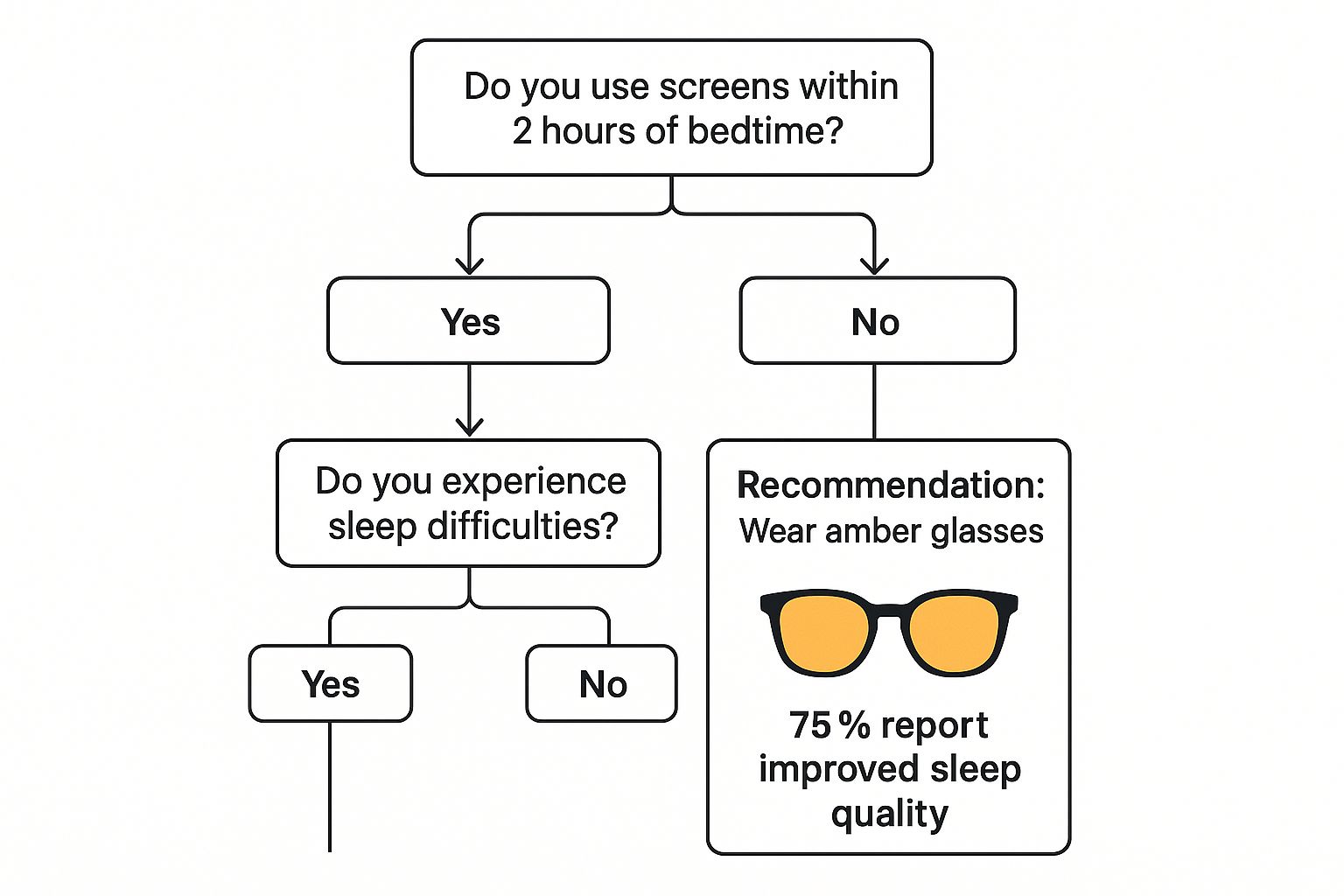
The numbers really speak for themselves, showing a clear link between using screens at night, struggling with sleep, and the positive impact amber lenses can have. A huge majority of people find their sleep quality gets a real boost.
To help you narrow down the options, this table breaks down the most important features to look for in a pair of amber glasses. It’s a quick way to compare what matters most for getting a better night's sleep.
| Feature | What to Look For | Why It Matters |
|---|---|---|
| Blue Light Blocking | At least 90% filtration, ideally tested and verified. | This is the minimum required to effectively shield your natural melatonin production from artificial light. |
| Lens Clarity | High-quality, distortion-free optical grade lenses. | This lets you read, watch a movie, or just relax without annoying eye strain or warped vision. |
| Frame Comfort | Lightweight materials, flexible arms, and an ergonomic fit. | You're far more likely to wear them consistently if they feel like they’re barely there. |
| Fit and Coverage | Wraparound styles or "fit-over" options for prescription wearers. | This minimizes the amount of unfiltered ambient light that can enter from the periphery. |
By keeping these points in mind, you can make a smart investment in a pair of glasses that will quickly become an essential part of your nightly wind-down routine.
Making an informed choice is the first real step toward reclaiming your rest. For more tools and tips to build a better bedtime routine, feel free to explore our collection of helpful sleep resources.
Getting started with amber glasses is simpler than you might think. The real secret to making them work isn't complicated; it's all about consistency. Sticking with it helps retrain your body's internal clock and unlocks the full benefits, because improving sleep is one of the most powerful things you can do for your health.
The basic idea is to create a "wind-down" buffer between your screen time and your bedtime. Just pop on your glasses about one to two hours before you plan to hit the hay. This one small action is a powerful first signal to your brain that the day is winding down and it's time to start producing melatonin.
The easiest way to make this a regular part of your evening is to link it to something you already do. Try leaving your glasses in a spot you can't miss at night—maybe next to your favorite reading chair, on your nightstand, or right by the TV remote.
A daily reminder on your phone can also work wonders. A simple alert that says "Time for amber glasses" is surprisingly effective when you're first building the habit.
You're not alone in seeking better sleep. The global sleep glasses market, which includes amber lenses, was valued at around $1.2 billion in 2023. It's expected to triple by 2032 as more people look for natural ways to rest better. You can dive deeper into the trends in the sleep glasses market on Dataintelo.com.
People often ask, "Can I still use my phone or watch TV with these on?" The answer is a definite yes! That's exactly what they're for. They let you enjoy your usual evening activities without blasting your eyes with the kind of blue light that keeps your brain wired.
Think of your amber glasses as the first step in a bigger, better sleep ritual. For an even greater effect, pair them with other calming signals, like dimming the overhead lights and switching to more relaxing activities. This combination creates the perfect environment to ease your body into a night of deep, restorative sleep.
Whenever you're trying something new to improve your sleep, it's smart to have a few questions. Making an informed choice is the first step, so let's clear up some of the common things people wonder about when they first look into amber glasses, as prioritizing sleep is a critical investment in your health.
It’s a fair question. You see some pairs for cheap, and others with a higher price tag, so what gives? While you can find budget options, the premium pairs often deliver a lot more for your money in terms of both technology and comfort.
A top-quality pair of amber glasses will usually come with certified lab reports showing they block over 90% of blue light. This isn't just marketing—it's your proof that they're actually protecting your melatonin production. You'll also notice a big difference in lens clarity, which means less distortion, and frames that are built to last and feel comfortable enough to wear for a few hours every night.
This is a big one, and the short answer is no. Think of amber glasses as a specialized tool just for the evening. Your body actually needs natural blue light from the sun during the day to feel awake and alert. It’s a key signal that sets your internal clock.
Wearing sleep-specific amber glasses in the middle of the day can throw your natural rhythm out of whack. You might end up feeling drowsy or foggy when you’re supposed to be productive. Save them for when the sun goes down to help your brain wind down for bed.
Patience is key here, as everyone's body is a little different. Some people are incredibly sensitive to the change and feel a difference after just one or two nights. They might fall asleep faster or just feel more rested in the morning.
For most of us, though, the effect is more gradual. Give it a solid week or two of consistent nightly use. Wearing your amber glasses for sleep every evening allows your body time to reset its circadian rhythm and get back into a healthy pattern. Think of it as retraining your brain for better sleep, and these glasses are your most powerful tool. The importance of sticking with it cannot be overstated, as consistent sleep is key to overall health.
Ready to create your own personal sunset and reclaim your nights? Explore the science-backed Element Lux collection and find the perfect pair to begin your journey to deeper, more restorative sleep. Discover our amber glasses at https://element-lux.com/shop-now.
Staring at screens late into the night has become a modern ritual, but it's sending your brain all the wrong signals. Think of blue light blocking glasses as a simple shield designed to protect your eyes from this disruptive light, helping to get your natural sleep rhythm back on track. By filtering out specific wavelengths, they give your body a chance to prepare for the crucial process of sleep, even if you're still scrolling or working.
Ever found yourself feeling tired but weirdly alert after watching a show or finishing some late-night work on your laptop? That feeling isn't just in your head—it’s a biological response to the light your screens are blasting out. At the heart of this issue is a specific type of high-energy light known as blue light, and its biggest victim is a good night's sleep.
For thousands of years, our bodies have followed a natural clock tied to the sun. Bright, blue-rich sunlight in the morning tells our brains to be awake, alert, and productive. As the sun sets, the light gets warmer and dimmer, which is our cue to wind down and get ready for sleep. This internal clock, our circadian rhythm, is everything when it comes to getting truly restorative rest.
The problem is, our modern devices—smartphones, tablets, laptops, TVs—all pump out a strong concentration of blue light, mimicking the bright afternoon sun. When you stare at a screen in the evening, you're essentially sending a powerful "wake up!" signal to your brain at the exact time it should be preparing for the most important recovery period of the day: sleep.
This artificial "daytime" signal directly messes with a crucial sleep hormone: melatonin. Often called the "hormone of darkness," melatonin is what your brain produces when the lights dim. Its job is to lower your body temperature and heart rate, making you feel drowsy and paving the way for a night of deep, rejuvenating sleep.
When blue light from your devices hits your eyes after dark, it tricks your brain into thinking it's still daytime. This slams the brakes on melatonin production, effectively canceling your body's natural sleep cues. Instead of feeling relaxed and sleepy, you stay alert and wired, making it so much harder to fall asleep and get the rest your body needs to function.
The core issue is simple: evening screen use is like shining a miniature sun directly into your eyes. It confuses your brain, halts the production of sleep hormones, and pushes your natural bedtime further and further back, compromising the quality of your sleep.
To get a clearer picture, let's look at some common culprits.
This table breaks down how our everyday gadgets directly interfere with our body's ability to wind down and achieve restful sleep.
| Blue Light Source | Typical Evening Use | Primary Impact on Sleep |
|---|---|---|
| Smartphones | Scrolling social media, texting, reading news | Suppresses melatonin, making it difficult to feel sleepy. |
| Laptops/PCs | Finishing work, online shopping, streaming videos | Keeps the brain in an alert, "work mode," delaying sleep onset. |
| Tablets | Reading e-books, playing games, watching movies | The close proximity to the face intensifies blue light exposure. |
| LED TVs | Binge-watching shows or movies before bed | Fills the entire room with sleep-disrupting light. |
| LED Lighting | Bright overhead lights in kitchens or bathrooms | Signals "daytime" to the brain, inhibiting the wind-down process. |
Seeing it laid out like this really highlights how surrounded we are by sleep-stealing light sources.
This disruption does more than just make you feel a bit tired the next day. Consistent, high-quality sleep is the foundation of good health. It's when your body repairs tissues, consolidates memories, and regulates everything from your immune system to your mood. Without sufficient sleep, your physical and mental health suffers.
When blue light consistently sabotages your sleep cycle, the consequences can cascade:
Understanding this connection is the first step toward reclaiming your nights. By managing your light exposure, you can support your body’s natural ability to get the deep sleep it desperately needs. For more insights on this, you can explore our articles on the Element Lux blue light blog.
So, we know that blue light from our screens is messing with our sleep. The solution, then, is surprisingly simple: put a shield between your eyes and the screen to protect this vital bodily function.
That’s exactly what blue light blocking glasses do. Think of them like specialized sunglasses, but instead of blocking out the sun's glare, they selectively filter the specific wavelengths of blue light that trick your brain into thinking it’s still daytime. They’re a barrier that stops those disruptive light signals from reaching your eyes and messing with your internal clock.
This isn’t just about making things look dimmer; it's a high-tech filtering job. The lenses are made with special polymers and coatings that absorb and reflect high-energy visible (HEV) blue light. By cutting off that "afternoon sun" signal, they let your brain know it's actually nighttime, which is crucial for winding down and getting restorative sleep.
The upshot? You can finish up those last-minute emails, read an e-book, or scroll through your phone without completely derailing your body’s natural sleep cycle. Putting on these glasses sends the right message to your brain: darkness is coming, and it’s time to start producing melatonin so you can achieve healthy sleep.
You’ve probably noticed that not all blue light glasses look the same. They come in a few different tints, and that’s because the technology inside the lens varies. Each color serves a different purpose, filtering out a specific amount of blue light to support your sleep goals.
This variety in lens tech reflects a huge shift in how we think about light and health. With almost everyone spending their days (and nights) glued to screens, the demand for smart solutions has skyrocketed. In fact, the market for these glasses is projected to hit around USD 5,992 million by 2035. That growth isn’t just a trend; it's a direct response to a real need for tools that help us manage screen time and get better sleep. You can read more on these market trends over at Future Market Insights.
The link between filtering blue light and getting better sleep is a straight line, biologically speaking. When you slip on a pair of amber-tinted glasses in the evening, you create what I like to call "digital darkness" for your brain. You can see your screen just fine, but your eyes are no longer getting bombarded with the specific light frequencies that slam the brakes on melatonin.
By blocking disruptive light waves, these glasses act as a gatekeeper for your brain's sleep signals. They don't make you sleepy on their own; instead, they remove the primary obstacle—blue light—that prevents you from feeling naturally sleepy.
This simple change lets your circadian rhythm get back to its natural programming. Your brain finally gets the memo to release melatonin, and your body can start its gradual, built-in process of preparing for bed.
It’s a small intervention, but it can lead to some pretty big improvements in your sleep. You might find it’s easier to fall asleep, that you’re staying in a deeper sleep for longer, and that you wake up feeling genuinely refreshed. At the end of the day, these glasses aren't a magic pill. They're just a tool to help restore the natural harmony between your body and your modern environment, clearing the path for the quality sleep you need to thrive.
Most people start looking into blue light blocking glasses for one simple reason: they want better sleep. But what does that actually look like in your day-to-day life? It’s not about tacking on more hours in bed; it’s about seriously upgrading the quality of those hours. Because sleep is so fundamental to our health, this one small change can be the difference between dragging yourself out of bed and waking up feeling genuinely restored.
By filtering out the artificial blue light that messes with your body's internal clock, these glasses help pave the way for a much smoother transition into sleep. Instead of tossing and turning with a brain that won’t shut off, you’ll likely find yourself drifting off more easily. Your body finally gets the signal it needs to produce melatonin, letting you feel sleepy when you’re supposed to—just like nature intended.
This all leads to spending more time in the most important stages of sleep: deep sleep and REM. This is where the magic happens, from muscle repair to locking in memories. Better sleep quality tonight is the foundation for a much better tomorrow.
The payoff for a good night's sleep doesn't stop when the alarm goes off. In fact, that's when you really start to feel it. When you get that deep, uninterrupted rest, you wake up with a full tank of mental and physical energy. Good sleep isn't a luxury; it's a performance enhancer.
Think about a student cramming for a big exam, staring at their laptop until midnight. Without any protection, that screen’s blue light is screaming “daytime!” to their brain, making it nearly impossible to wind down. But if they pop on a pair of amber-lensed glasses for those last couple of hours, they can finish their work and still let their body prepare for essential sleep. The result? They wake up with a clear head, ready to ace that test, instead of a foggy brain.
The same thing goes for professionals. Knocking out a few last-minute emails after dark can easily push your bedtime back and leave you feeling completely drained the next day. Wearing blue light glasses during your evening screen time creates a boundary for your brain, protecting your sleep schedule and making sure you’re sharp and productive for those morning meetings. If you want to dig deeper into the science, check out our guide on how our glasses help with sleep.
The connection is direct: protecting your sleep with blue light blocking glasses tonight directly fuels your focus, mood, and productivity tomorrow. It’s an investment in your well-being that pays dividends from the moment you wake up.
While getting your sleep cycle back on track is the main event, there’s another huge benefit: reducing digital eye strain. If you’ve ever finished a long day at the computer with tired, scratchy eyes, a dull headache, or blurry vision, you know exactly what I’m talking about.
That discomfort, often called Computer Vision Syndrome, is the direct result of our eyes working overtime to deal with the high-energy blue light and glare from our screens. Blue light blocking glasses act like a shield, softening that harsh light and giving your eye muscles a much-needed break.
This relief can lead to some pretty noticeable improvements in your daily comfort:
At the end of the day, these glasses are a simple, practical tool for modern life. They tackle the two biggest complaints of our screen-filled world—poor sleep and tired eyes. By getting to the root of the problem (all that unnatural light), they help bring back a little balance, letting you enjoy your evenings without wrecking your sleep or your energy for the next day.
With so many different blue light glasses out there, picking the right one can feel a bit overwhelming. The secret is to match the glasses to your daily routine and your primary goal, which for most people is achieving better sleep. The biggest decision you'll make comes down to the lenses—different tints offer different levels of protection for your rest.
Think of it like choosing a jacket. You wouldn't wear a heavy winter coat on a breezy spring day, and a light windbreaker won't do you much good in a blizzard. In the same way, clear lenses are perfect for taking the edge off daytime eye strain, while deeply tinted amber or red lenses are your go-to for protecting your sleep at night.
Your choice really boils down to one question: are you trying to stop getting headaches after a long day in front of spreadsheets, or is your main goal to fall asleep faster and get deeper, more restorative rest? Once you know that, you'll know exactly where to start.
Not all blue light lenses are created equal. The color of the lens tells you how much blue light it's actually filtering, which in turn tells you the best time of day to wear them. Getting this right is critical for making sure your glasses support your body's natural sleep-wake cycle instead of confusing it.
Clear Lenses: These are your daytime companions. They're designed to filter just enough blue light to reduce digital eye strain and screen glare without messing with your color perception. If you're an office worker, student, or anyone who spends hours in front of a computer during the day, these are a great fit.
Yellow Lenses: Think of these as the middle ground. Yellow-tinted lenses block more blue light than clear ones, offering a more noticeable reduction in glare. They're a fantastic choice for people who are extra sensitive to bright light or work in intensely lit spaces.
Amber or Red Lenses: These are the sleep specialists. Built to block 99% or more of the blue light that kills your melatonin production, these darker lenses are strictly for evenings. You'll want to pop them on about two to three hours before bed to give your brain a clear signal that it's time to wind down for a night of quality sleep.
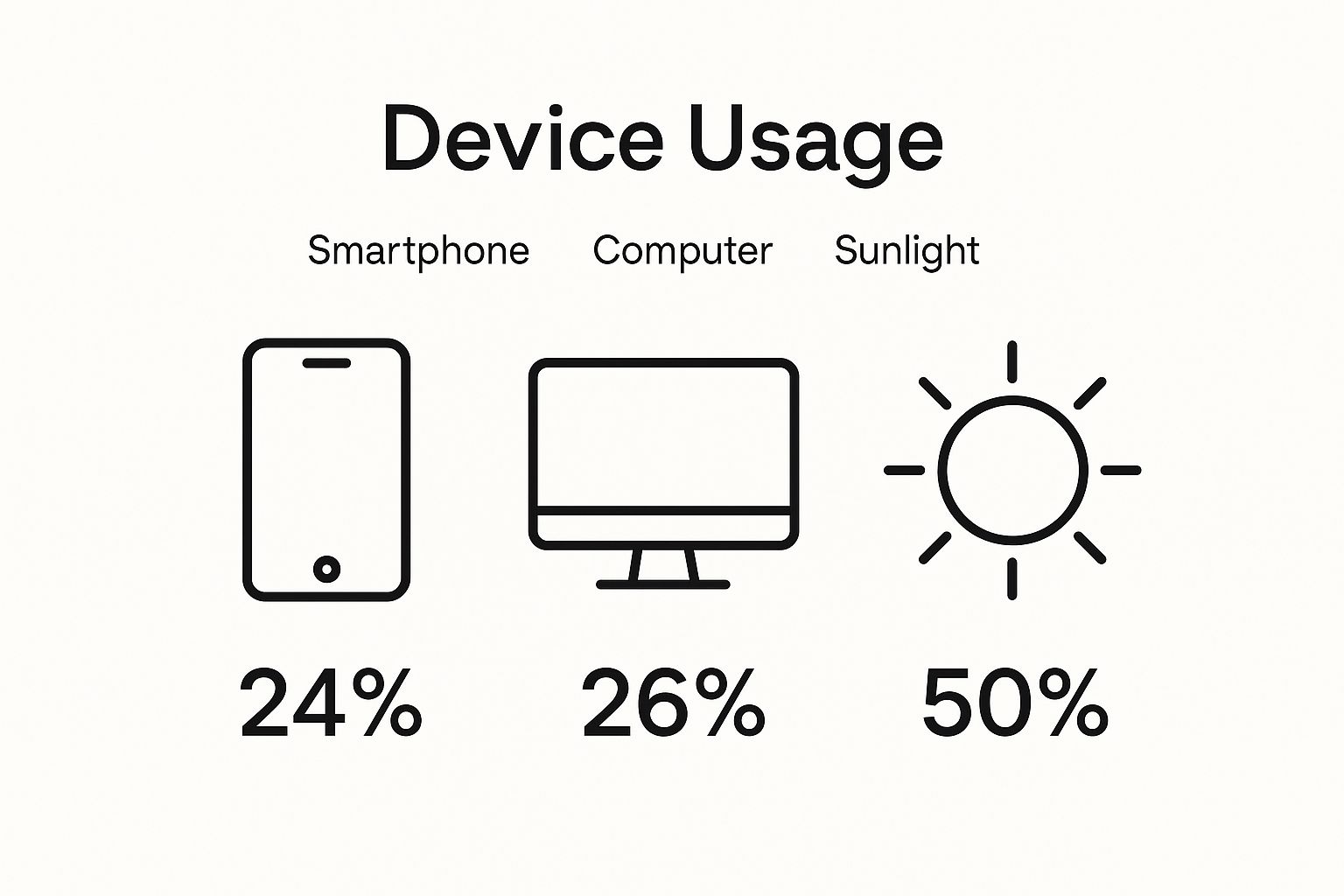
To make it even simpler, here's a quick guide to help you understand the key differences between lens colors. This will help you select the right glasses for your specific needs, from daytime work to protecting your precious sleep.
| Lens Tint | Blocking Strength | Ideal Use Case | Color Perception |
|---|---|---|---|
| Clear | Low (30-50%) | Daytime office work, reducing eye strain | Minimal distortion |
| Yellow | Medium (50-70%) | Sensitive eyes, brightly lit environments | Moderate warm shift |
| Amber/Red | High (90%+) | Pre-sleep screen time, maximizing melatonin | Significant color shift |
Choosing the right tint based on your goals is the most important step in finding glasses that actually work for you.
Once you've nailed down the right lens tint for your lifestyle, a couple of other things will make sure you get a pair you’ll actually want to wear. After all, the best glasses in the world are useless if they just sit in a drawer and don't help your sleep.
First up is frame comfort and fit. The glasses should rest comfortably on your nose and ears without pinching or constantly slipping down. A lightweight frame is usually your best bet, especially if you plan on wearing them for hours at a time.
Next, think about your vision. If you already wear glasses, you've got a few options. You can find prescription blue light blocking glasses, or you can pick up a "fit-over" style designed to be worn right over your current eyeglasses. This means everyone has a way to protect their eyes and sleep.
A critical step for ensuring quality is to look for a spectral report from the manufacturer. This report is a scientific verification that shows exactly which wavelengths of light the lenses block and by how much, giving you confidence that you’re getting the protection you paid for.
As more people become aware of just how important sleep is, the demand for these glasses has exploded. The market for non-prescription pairs alone was valued at USD 2.4 billion and is expected to hit USD 6.5 billion by 2033. With more options popping up every day, it's more important than ever to choose a reliable pair.
Ready to find a style that works for you? You can browse a curated selection of high-protection glasses by visiting our shop page. Choosing the right pair is a simple but powerful step toward better sleep and a more comfortable day.
So, you’ve got a pair of blue light blocking glasses. That’s the first step. But just owning them isn't enough—using them the right way is what really unlocks better sleep. Think of them less like an accessory and more like a crucial tool in your evening wind-down routine, designed to give your body the "all-clear" to rest.
The single most important factor is timing. This is all about working with your body’s natural rhythm, not against it. When you get the timing right, you’re supporting melatonin production, the hormone that’s absolutely essential for deep, restorative sleep. It’s not just about wearing the glasses, but when you wear them that makes all the difference for your nightly recovery.
To really nail the sleep benefits, especially with those amber-tinted lenses, you need to create a dedicated "pre-sleep window." This is a non-negotiable block of time where you shield your eyes from the disruptive blue light that keeps your brain wired and in "daytime mode."
The golden rule is simple: put on your stronger, amber-lensed glasses at least two to three hours before you plan to go to sleep. This gives your body plenty of time to naturally ramp up melatonin, helping you feel genuinely sleepy when your head finally hits the pillow.
During this window, just go about your normal evening. Watch a movie, scroll through social media, or read on your tablet. Your glasses act as a protective filter, letting you wind down without the usual sleep-sabotaging light exposure. It’s a simple habit that helps kickstart the natural hormonal cascade that leads to quality sleep.
While amber lenses are your nighttime shield, the clearer lenses have a different but equally important job. If you spend your days staring at a computer screen, clear or lightly tinted glasses can be a total game-changer for digital eye strain. They soften the harsh glare and high-energy light that’s behind so many headaches and tired, achy eyes.
Wearing them during long work sessions doesn't just make you feel more comfortable; it can actually help you stay focused. When your eyes aren't fighting screen fatigue, your brain has more energy for the task at hand. Just remember, these daytime glasses are all about comfort, not sleep prep, which is why they filter a much lower percentage of blue light.
Your glasses are your number one tool, but for the best results, you'll want to pair them with other solid sleep hygiene habits. This creates a powerful, layered approach to digital wellness and truly optimized rest. Without good overall habits, you limit the potential of any single tool.
Try working these into your routine:
By combining consistent use of your blue light glasses with these habits, you’re not just blocking out bad light—you’re actively building an environment that promotes the deep, restorative sleep your body craves.
Alright, so we've covered how these glasses work, but you probably still have a few questions rolling around in your head. That's totally normal. Let's tackle the big ones so you can feel confident adding them to your routine for better sleep.
Getting the details right is what makes a new habit stick. Think of this as your final check-in before you dive in.
Great question, and the answer is: it depends entirely on the lens. You absolutely can wear them all day, but you have to use the right kind for the right time to protect your sleep-wake cycle.
For daytime hours, you'll want lenses that are either clear or have a very faint yellow tint. Their job is to cut down on screen glare and take the edge off digital eye strain. They won't interfere with the healthy blue light from the sun that you need to stay alert and focused.
But those deep amber or red-tinted lenses? Those are strictly for nighttime. Think of them as your "sundown signal." You should pop them on about two to three hours before you plan to go to bed. Wearing these powerful filters during the day would just confuse your internal clock and sabotage the very sleep you're trying to improve.
It's important to have realistic expectations here. While blue light glasses are a game-changer for many, they aren't a magic pill for chronic insomnia, which often has deeper, more complex causes related to health or psychology.
What they do brilliantly is eliminate one of the biggest sleep disruptors in our modern world: artificial blue light at night. By blocking that specific trigger, they clear the way for your body's natural sleep processes to take over. This makes it a whole lot easier to fall asleep, stay asleep, and get the restorative rest you need.
For the best results, think of blue light blocking glasses as a key player in your sleep hygiene lineup. Pair them with other good habits—like a consistent bedtime and a relaxing wind-down routine—and you'll be amazed at the difference they can make in your sleep quality.
Yes, a huge one. It really boils down to three things: the quality of the lens, the durability of the frame, and—most importantly—proof that they actually work to protect your sleep.
Reputable brands will back up their claims with a spectral report. This is just a fancy term for a lab test that shows you exactly which wavelengths of light the lenses block and how much they block. It’s your guarantee that you’re getting the protection you’re paying for. Cheaper pairs often make big promises with zero data to back them up, meaning you might be getting little more than colored plastic.
On top of that, higher-quality glasses usually offer better optical clarity (no weird distortions) and have coatings that resist scratches. You don’t need to buy the most expensive pair on the market, but investing in a brand that's transparent about its technology is always a smart move for your eyes and your sleep.
Ready to find a high-quality pair of glasses designed to protect your sleep? Element Lux offers premium amber lenses that block over 99% of disruptive blue light, helping you fall asleep faster and wake up refreshed. Shop our collection now and take the first step toward better nights.
If you spend long hours staring at screens—whether it’s for work, studying, or winding down with a favorite show—you’ve probably felt it: eye strain. Dryness, headaches, blurred vision, even trouble falling asleep at night.
That’s where blue light glasses come in. Marketed as a way to filter harmful blue light from screens, these glasses claim to reduce eye fatigue and support healthier sleep. But how do they actually work, and do they deliver on the promise? Let’s break it down.
What Is Blue Light and Why Does It Matter?
Digital screens (phones, laptops, tablets, TVs) emit blue light, a high-energy wavelength of visible light in the 400–500 nanometer range.
During the day: Blue light helps regulate mood, alertness, and the natural sleep–wake cycle (circadian rhythm).
At night: Too much exposure can suppress melatonin, the hormone that tells your body it’s time to sleep.
This is why scrolling through TikTok or answering late-night emails can leave you tossing and turning when you finally hit the pillow.
How Blue Light Glasses Work
Blue light glasses use specially tinted lenses—often amber or orange—to filter out a significant portion of blue light before it reaches your eyes.
Amber/dark lenses: Block over 90% of blue light, making them best for evening wear and sleep support.
Clear lenses: Typically block 10–20%, good for daytime use but less effective for sleep.
By cutting down on blue light exposure, these glasses aim to:
Reduce eye strain from prolonged screen time.
Support natural melatonin production for better sleep.
Do They Actually Help With Eye Strain?
The short answer: —yes.
Scientific studies show noticeable benefits and confirm that blue light makes the body think that it is still daytime.
And Users report less eye fatigue, dryness, and headaches when wearing blue light glasses.
Practical Relief Tips (with or without glasses):
Follow the 20-20-20 rule: Every 20 minutes, look 20 feet away for 20 seconds.
Adjust screen brightness to match your environment.
Keep your eyes hydrated with artificial tears if needed.
What About Sleep?
This is where amber glasses shine. Blocking blue light at night helps prevent melatonin suppression, making it easier to fall asleep faster and enjoy deeper rest.
If you’re a night owl or screen scroller, wearing amber blue light glasses in the evening can give your body a better chance to wind down naturally.
Features to Look for When Shopping
Not all blue light glasses are created equal. Here’s what to check before buying:
✅ High blue light blocking percentage (ideally 90%+ for night use)
✅ UV protection (UV400 is a good benchmark)
✅ Comfortable, lightweight frames for long wear
✅ Full coverage lenses to prevent light leakage
✅ Extras like a protective case or microfiber cloth
A Shopper-Favorite Example
The Element LUX Amber Blue Light Glasses tick these boxes:
Block over 99% of blue light in the 400–500 nm range
Reduce eye strain by shielding against both blue light and UV rays
Designed with aviator-style frames for full coverage and comfort
Come with a travel case, microfiber cloth, and a bonus sleep guide
The Bottom Line
Blue light glasses aren’t a magic fix for everyone—but for many people, especially nighttime screen users, they can make a real difference in reducing eye fatigue and improving sleep.
Pair them with healthy screen habits, and you’ll give your eyes the best chance to stay comfortable during the day and your body the best shot at restful sleep at night.
