We've all been there. You sit down to study, determined to be productive, but within minutes, your mind is somewhere else entirely. If you're struggling to focus, it’s not a lack of willpower. It's usually a sign that your environment and habits are working against your brain's natural ability to concentrate.
The real solution lies in tackling the root causes—from digital distractions to the way you structure your study time.
It’s that classic scenario: good intentions, a stack of books, and a brain that just won't cooperate. The problem isn’t you; it’s a mix of silent saboteurs in your environment, both digital and physical.
Let's start with the most obvious one: your phone. It’s an attention-grabbing machine, and every notification is designed to pull you away from what you’re doing. Research backs this up, showing that students who constantly check their phones lose huge chunks of productive time. A 2023 global survey even found that 78% of students said their concentration took a hit from social media notifications alone.
But it's not just about the pings and alerts. Your physical space matters more than you think. A cluttered desk, bad lighting, or even an uncomfortable chair creates a low-level friction that makes focusing feel like an uphill battle. Your brain has to process everything it sees, so a messy desk can easily lead to a messy, distracted mind.
On top of that, common study habits can be counterproductive. Pulling an all-night "marathon" session might feel like you're working hard, but it actually fries your brain. Without breaks and clear goals, you're just exhausting your mental resources and making it harder to retain anything.
The real issue is often a mismatch between how you try to study and how your brain actually learns. True concentration isn't about forcing it; it's about creating the right conditions for it to emerge naturally.
If you find yourself constantly losing focus, it can be helpful to explore proven strategies to improve concentration for ADHD. Many of those techniques are incredibly useful for anyone looking to sharpen their attention. This guide will walk you through building a distraction-proof setup and mastering your well-being for peak mental performance.
Your surroundings can either be your greatest ally or your biggest enemy when it comes to focus. Honestly, creating a dedicated study zone isn’t about some picture-perfect setup. It’s about intentionally getting rid of the small frictions that chip away at your concentration.
Think of your study space like a cockpit—every single thing should serve one mission: deep, uninterrupted work.
Start with the obvious: declutter your desk and the area around it. A messy space forces your brain to process a ton of visual noise, draining mental energy you could be using to actually study. If you want to dig deeper, there are some great strategies for building a distraction-proof study environment that tackle everything from digital chaos to physical distractions.
We’ve all been there. Long study sessions staring at a screen that end with headaches, blurry vision, and just feeling wiped out. That’s digital eye strain, and it’s a huge roadblock to concentration. It happens because the high-energy blue light blasting from our screens is just plain harsh on our eyes.
One of the most effective ways to push back is by wearing blue light blocking glasses with orange or amber lenses. High-quality orange-colored blue light glasses, like the ones from Element Lux, are specifically designed to filter out the most disruptive wavelengths of blue light. This dramatically reduces the harsh glare from your screen, making it much easier to read and research for hours without the distracting pain of tired, aching eyes and the resulting mental fatigue.
The benefits of blocking blue light go way beyond just eye comfort. When you're exposed to blue light in the evening, it can slam the brakes on your body's production of melatonin—the hormone that tells your brain it's time to sleep. This is a big problem. It makes it harder to fall asleep, leading to lousy rest and that awful next-day grogginess that kills any hope of concentrating.
Putting on a pair of orange-colored blue light glasses an hour or two before bed is a powerful way to protect your natural melatonin production. By blocking the specific frequencies of light that interfere with sleep, they send a clear signal to your body: it's time to wind down. You’ll find you fall asleep faster and get the kind of deep, restorative sleep that actually refuels your brain for the next day's study session.
If you want to learn more about how light messes with your sleep cycles, we've got a ton of info on the Element Lux blue light blog.
Key Takeaway: Better sleep isn’t a luxury; it’s a non-negotiable part of any effective study plan. By managing your light exposure, you directly improve your ability to concentrate the following day.
Studying is mentally exhausting. When you add chronic stress to the mix, trying to focus can feel completely impossible. This is why having a "wind-down" ritual is so critical for shifting your brain out of high-alert study mode and into a relaxed state.
This is where amber blue light glasses really shine.
Amber lenses create a warm, calming visual environment that helps soothe your nervous system after a tough study session. They filter just enough blue light to dial down mental stimulation without being as intense as deep-orange lenses meant for sleep. This makes them perfect for helping you relax and wind down while reading a book, watching TV, or tidying up before turning in for the night.
Here are four simple ways to reduce stress, built around managing your light exposure:
Let’s be honest: trying to force yourself to concentrate for hours on end is a losing battle. It's more about smart strategy than sheer willpower. The real secret is working with your brain's natural rhythm, not fighting against it. This means ditching the draining study marathons and embracing short, powerful, and highly productive sessions.
One of the best ways to do this is with the Pomodoro Technique. It’s incredibly simple. You break your study time into focused 25-minute sprints, with a short 5-minute break in between. The thinking behind it is solid—our brains just aren't wired for hours of intense, nonstop focus. Working in these short bursts is a game-changer for boosting concentration and kicking mental fatigue to the curb.
It’s not just a hunch, either. A 2022 study actually found that students who used this method saw a 34% jump in their concentration and productivity scores. The technique plays right into the known limits of our attention span, which cognitive science pegs at around 20-30 minutes before focus starts to fade. You can see how universities are leaning into these kinds of scientifically-backed study methods by checking out a recent report on global student flows on QS.com.
The beauty of the Pomodoro Technique is how flexible it is. You can mold it to fit whatever you're working on.
Pro Tip: Make your breaks count. Don't just swap your textbook for your phone. Seriously, get up. Stretch. Grab a glass of water, or just stare out the window for a few minutes. The goal is to give your brain a true reset, not just a different screen to look at.
For this to really work, you need a clear, achievable goal for each 25-minute session. Instead of a vague plan like "study biology," get specific: "review and label the parts of a cell diagram." This approach turns a massive task into a series of small, manageable wins that keep you motivated.
Here’s a quick-start plan to get you going with the Pomodoro Technique and make it a regular part of your study routine.
| Phase | Duration | Action | Goal |
|---|---|---|---|
| Preparation | 2 minutes | Choose a task and set a clear, specific goal. | Eliminate ambiguity and focus your effort. |
| Focus Sprint | 25 minutes | Work on the task without any interruptions. | Achieve deep, uninterrupted concentration. |
| Short Break | 5 minutes | Step away from your desk. Stretch, get water. | Allow your brain to rest and recharge. |
| Rinse & Repeat | 3-4 cycles | Complete three to four Pomodoro cycles. | Build momentum and make significant progress. |
| Long Break | 15-30 minutes | Take a longer, more substantial break. | Prevent burnout and reset for the next block of tasks. |
By following these steps, you create a structured rhythm that helps you stay on track and avoid mental burnout, turning long study hours into productive, focused sprints.
Of course, managing your time is only half the battle. Your environment has to be ready for focus, too.
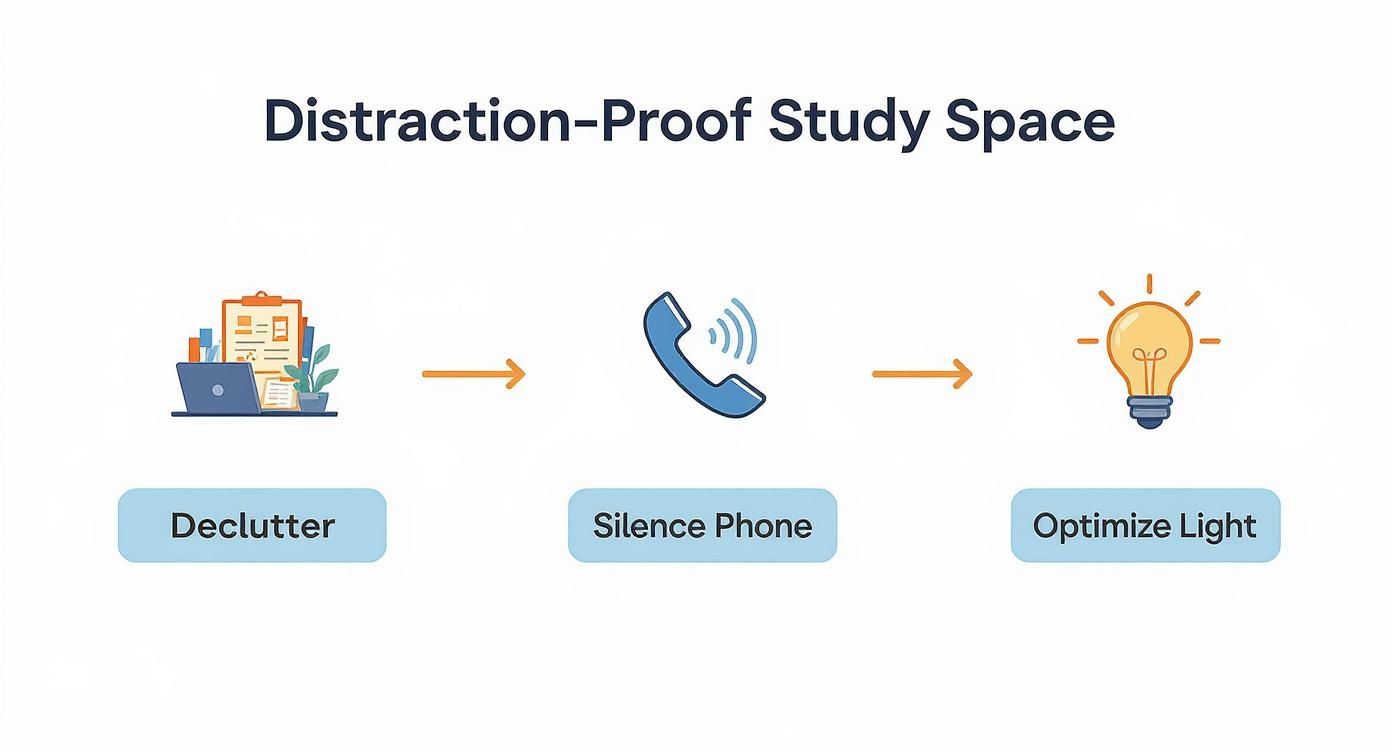
This visual really drives home the foundational steps: decluttering your space, silencing digital noise, and getting the lighting right. When you master both your environment and your time, you create an unstoppable system for deep, sustained concentration.
Sleep isn't just downtime; it’s the most powerful performance-enhancing tool you have. Sacrificing it for another all-night study session is one of the most counterproductive habits a student can get into. Think of it this way: high-quality sleep is directly responsible for memory consolidation, attention span, and the mental clarity you desperately need to actually concentrate.
The science is clear on this—poor sleep flat-out sabotages your ability to learn. It messes with your attention, slows down how you process information, and weakens your working memory. All of these are essential for focusing.
A massive global meta-study found that students getting less than six hours of sleep scored a whopping 23% lower on concentration tasks. And during exam periods? A staggering 46% of students reported being sleep-deprived, which lined up with a 30% drop in their self-rated ability to focus. You can discover more insights about these global student trends to see just how critical rest is for academic success.
One of the biggest modern roadblocks to good sleep is our late-night screen habit. The blue light blasting from our laptops, tablets, and phones tricks our brains into thinking it’s still daytime. This suppresses the production of melatonin, the hormone that tells your body it’s time to sleep.
This is exactly where orange and amber blue light blocking glasses become an invaluable tool in your study kit.
Orange-colored blue light glasses, like the ones from Element Lux, are engineered to block the most disruptive wavelengths of blue and even green light. Wearing them for an hour or two before you plan to go to bed protects your natural melatonin production. This simple step helps you fall asleep faster and get the deep, restorative rest your brain needs to function.
As a bonus, they also significantly cut down on digital eye strain, preventing the headaches and tired eyes that can derail a productive study session.
Amber-lensed glasses work a bit differently. They filter a smaller portion of blue light, which makes them perfect for your evening wind-down routine. They cast a warm, calming light that helps your nervous system relax after a demanding day of studying, making that transition from high-focus work to rest feel much smoother.
Improving your sleep hygiene is one of the best long-term moves you can make to learn how to concentrate better.
Good sleep is not a passive activity but an active strategy for academic success. By prioritizing rest, you are directly investing in your ability to focus and learn. For more actionable advice, check out our guide on how to get better sleep with Element Lux.
Let's be honest: anxiety is the enemy of focus.
When your mind is racing with stress, there's just not much cognitive bandwidth left for learning. Managing your mental state isn't some extra-credit activity—it's a critical part of any serious study plan.
Think of it this way: chronic stress keeps your nervous system in a constant state of high alert. It's nearly impossible to settle into the calm, receptive mindset you need for deep concentration when you're stuck in fight-or-flight mode. The real trick is learning how to transition from a high-strung study session to genuine relaxation. This protects your mental energy and makes sure you're sharp for the next day.
One of the sneakiest culprits behind evening stress is all that screen time. The harsh blue light blasting from your laptop and phone doesn't just strain your eyes; it keeps your brain wired long after you’ve called it a night.
This is where orange-colored blue light glasses become a game-changer. By filtering out a huge chunk of that stimulating blue light, they drastically cut down on digital eye strain. That means fewer of those tension headaches and less fatigue adding to your stress levels.
Even more importantly, blocking blue light in the evening is non-negotiable for healthy melatonin production—that's the hormone that tells your brain it's time for sleep. Slipping on a pair of orange lenses for an hour or two before bed can help you fall asleep faster and get the kind of deep, restorative rest your brain needs to recover and consolidate everything you just learned.
For a gentler transition into relaxation, amber blue light glasses are perfect. They create a warm, calming visual environment that's ideal for winding down. It's a simple way to help soothe your nervous system and quiet the mental clutter from a long day of studying.
Building a consistent wind-down ritual is your best defense against burnout and study-related anxiety. It doesn't have to be complicated. Below is a breakdown of four simple but powerful methods to help you calm your mind and get ready for a night of restorative rest.
| Strategy | Primary Benefit | How to Implement |
|---|---|---|
| Mindfulness or Meditation | Quiets a racing mind and reduces immediate anxiety. | Spend 5-10 minutes just focusing on your breath. Use an app like Calm or Headspace, or simply sit in silence and observe your breathing. |
| Light Physical Activity | Releases pent-up physical tension from sitting all day. | Go for a gentle walk around the block or do some light stretching. The goal is movement, not an intense workout. |
| "Brain Dump" Journaling | Frees up mental space by getting worries out of your head. | Before bed, spend a few minutes writing down everything on your mind—to-dos, nagging thoughts, random ideas. Just get it on paper. |
| Wear Blue Light Blocking Glasses | Reduces the stimulating effects of artificial light to promote relaxation. | Make putting on your Element Lux amber or orange glasses part of your evening routine as you read a book, watch TV, or tidy up before bed. |
These simple, consistent habits do more than just manage stress in the moment. They actively improve your ability to concentrate by ensuring your brain is rested, calm, and actually ready to learn when you sit down to study.
Even with the best study plan, you're bound to run into a few hurdles. Let's tackle some of the most common questions students have when trying to lock in their focus.
Yes, they absolutely do—but it's important to know how they work their magic.
During the day, staring at a screen for hours can cause digital eye strain, leading to the kind of headaches and mental fatigue that completely derail your concentration. A good pair of orange-colored blue light glasses from Element Lux can be a game-changer here, filtering out that harsh glare and cutting down on the distracting discomfort.
At night, the benefits are even bigger. The blue light from your devices tricks your brain into thinking it's still daytime, suppressing melatonin—the hormone that signals it's time to sleep. By wearing orange or amber lenses for an hour or two before bed, you shield your eyes, allowing your body's natural sleep process to kick in. You'll fall asleep faster, get more restorative rest, and wake up with a much sharper mind.
You can't just slam your laptop shut and expect your brain to switch off. Creating a "wind-down" ritual is non-negotiable if you want to manage stress and preserve your mental energy for tomorrow.
This is where amber blue light glasses really shine. They're perfect for that transition period. The warm tint filters just enough of that stimulating blue light to help your nervous system calm down, but it's not so dark that you can't read a book or watch a bit of TV. It's the ideal way to signal to your brain that the high-alert study mode is over and it's time to relax.
Your ability to concentrate tomorrow depends heavily on how well you de-stress and recover tonight. A simple wind-down routine is a non-negotiable part of effective studying.
If you're serious about your grades, you need to get serious about your sleep. It's one of the most powerful tools you have for improving concentration.
Here are the strategies that really move the needle:
Stress is the enemy of focus. When anxiety is running the show, there’s simply no mental bandwidth left for learning.
Here are four simple but effective ways to calm your mind:
For more deep dives and tools to help you stay on top of your game, check out our collection of online resources at Element Lux.
Ready to protect your eyes, improve your sleep, and sharpen your focus? Element Lux offers premium blue light blocking glasses designed to help you study more effectively and rest more deeply. Shop now and feel the difference.
Waking up to a blurry world is surprisingly common. For most of us, it’s just a fleeting fogginess that vanishes after a few blinks as we start our day. It's usually nothing more than your eyes adjusting after a long night's rest.
That hazy, out-of-focus moment right after the alarm clock rings can be a little jarring, but it’s rarely a reason to panic. Think of your eyes like a camera lens that needs a second to find its focus. While you sleep, your tear production naturally slows down, and the surface of your eye—the cornea—can get a bit swollen from fluid retention. This combo is what typically causes that temporary blur.
But what if it's something more? Generally, the reasons for morning blur fall into two camps: everyday lifestyle habits or underlying medical issues. Figuring out which one applies to you is the first step toward clearer mornings.
Often, the culprit is something simple and easy to fix. Do you sleep with a fan blowing directly at you? That can dry out your eyes. Suffer from allergies? They can flare up overnight. Even your sleeping position can play a role—sleeping face-down can put gentle but sustained pressure on your eyes, temporarily changing the shape of your cornea.
On the flip side, blurry vision that sticks around, gets worse, or comes with other symptoms like pain, redness, or floaters might point to a medical condition that needs a doctor's attention.
This infographic gives a great visual breakdown of the two main paths—lifestyle and medical—that can lead to waking up with blurry vision.
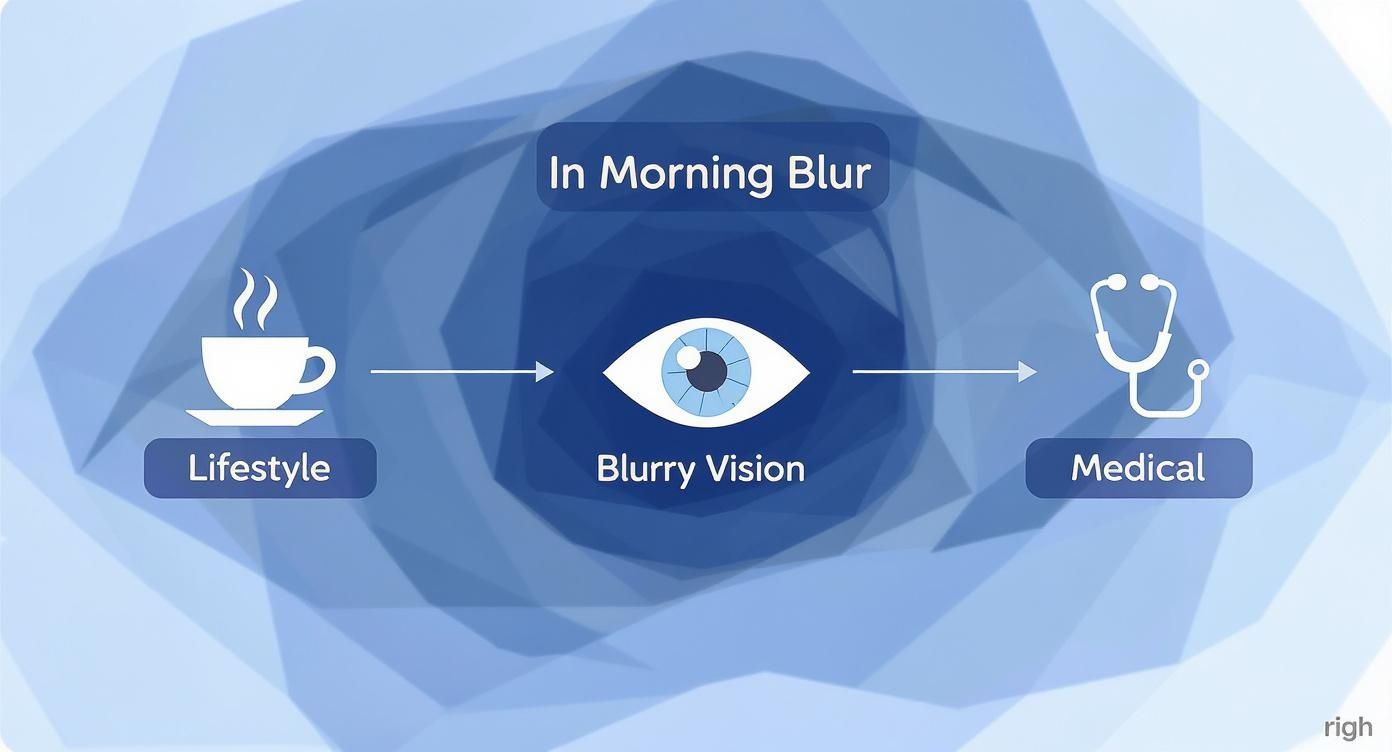
As you can see, it clearly separates the temporary, manageable causes from more serious conditions, helping you pinpoint what might be going on.
Don't underestimate the impact of poor sleep, either. It’s a huge contributor to all sorts of visual problems. In fact, a U.S. study of 9,384 adults discovered that people with vision-related difficulties were 1.5 times more likely to have sleep disorders. If you're curious, you can review the full research on sleep and vision.
Key Takeaway: For most people, morning blurriness is just a temporary quirk of waking up. But if it doesn’t clear up quickly, it's a signal to dig a little deeper.
To make it even clearer, let's quickly compare the common causes.
This table offers a quick summary to help you distinguish between a simple lifestyle issue and a potential medical concern.
| Cause | Description | Typical Resolution |
|---|---|---|
| Lifestyle & Environmental | Things like dry air from A/C or heat, allergens in your bedding, sleeping on your face, or even eye strain from staring at screens the night before. | Usually resolves on its own within minutes. Blinking, using rewetting drops, staying hydrated, and adjusting your sleep environment often help. |
| Potential Medical Issues | This includes chronic conditions like Fuchs' dystrophy, glaucoma, sleep apnea, or fluctuating blood sugar levels from diabetes. | Requires a proper diagnosis and treatment plan from an eye care professional. The symptoms tend to be persistent and don't clear up quickly. |
Ultimately, paying attention to how long the blur lasts and whether it's joined by other symptoms is the best way to know if it's time to see a doctor.
That late-night scroll through social media or last-minute work email might be a bigger reason for your blurry vision when waking up than you realize. The main culprit? Digital Eye Strain (DES), a condition that affects a huge number of people who regularly use screens.
Think of your eye muscles like any other muscle in your body. After hours of intense focus on a bright screen, they become overworked and fatigued. This constant tension makes it difficult for your eyes to relax completely overnight, so when you wake up, those tired muscles struggle to readjust. The result is that frustrating morning blur.
This effect is magnified by the high-energy blue light our devices emit. It not only strains the eyes but also contributes to dryness by reducing our blink rate.
A recent study involving 512 adolescents found that DES was present in a staggering 63.7% of them. Blurry vision was a key symptom for nearly 60% of those affected. The research was clear: using digital devices for more than two hours daily, especially near bedtime, significantly worsens these symptoms. You can read the full study on digital media use and eye strain to see the data for yourself.
So, how can you combat this nightly eye fatigue? One of the most effective tools is a quality pair of blue light blocking glasses. These aren't just a trendy accessory; they are specifically designed to filter out the most damaging wavelengths of light that cause eye strain and wreck your sleep.
Orange and amber colored lenses, like those from Element Lux, are particularly effective. They block a significant portion of blue light, which cuts the harsh glare from screens and allows your eye muscles to finally relax.
Wearing them for an hour or two before bed can dramatically decrease the strain that builds up all evening. It gives your eyes a much-needed break before you even turn out the lights. This means your eyes are less fatigued overnight, allowing them to recover more fully and focus easily in the morning—goodbye, blurriness.
The benefits go way beyond just reducing eye strain. The warm tint of amber blue light glasses creates a visually soothing effect, sending a powerful signal to your brain that it's time to wind down. This helps you shift from a state of high alert—something bright screens are notorious for—to a relaxed mindset ready for sleep.
By blocking the blue light that suppresses melatonin (the sleep hormone), these glasses help regulate your natural sleep-wake cycle. Better sleep quality allows for more complete restoration of your entire body, including your eyes.
Improving your sleep is a powerful way to combat morning blurriness. Here are some simple strategies that work:
Managing stress is also crucial for good sleep. Try these simple techniques to calm your mind:
By incorporating these habits, especially using blue light glasses, you can significantly improve your sleep and reduce the eye strain that leads to blurry vision when you wake up. For more tips on this, feel free to explore our blue light blog.
If you spend your evenings scrolling, streaming, or working on a screen, you might be unintentionally setting yourself up for that blurry vision when you wake up. It's a common problem, but there's a practical and surprisingly effective fix: blue light blocking glasses. Think of them as a protective shield for your eyes during those crucial hours before bed.
These glasses are designed with specially tinted lenses that filter out the high-energy visible (HEV) blue light pouring out of our phones, tablets, and computers. The best analogy is sunglasses for the digital world. Just as sunglasses cut the sun's harsh glare, these glasses soften the intense, artificial glow from your devices.
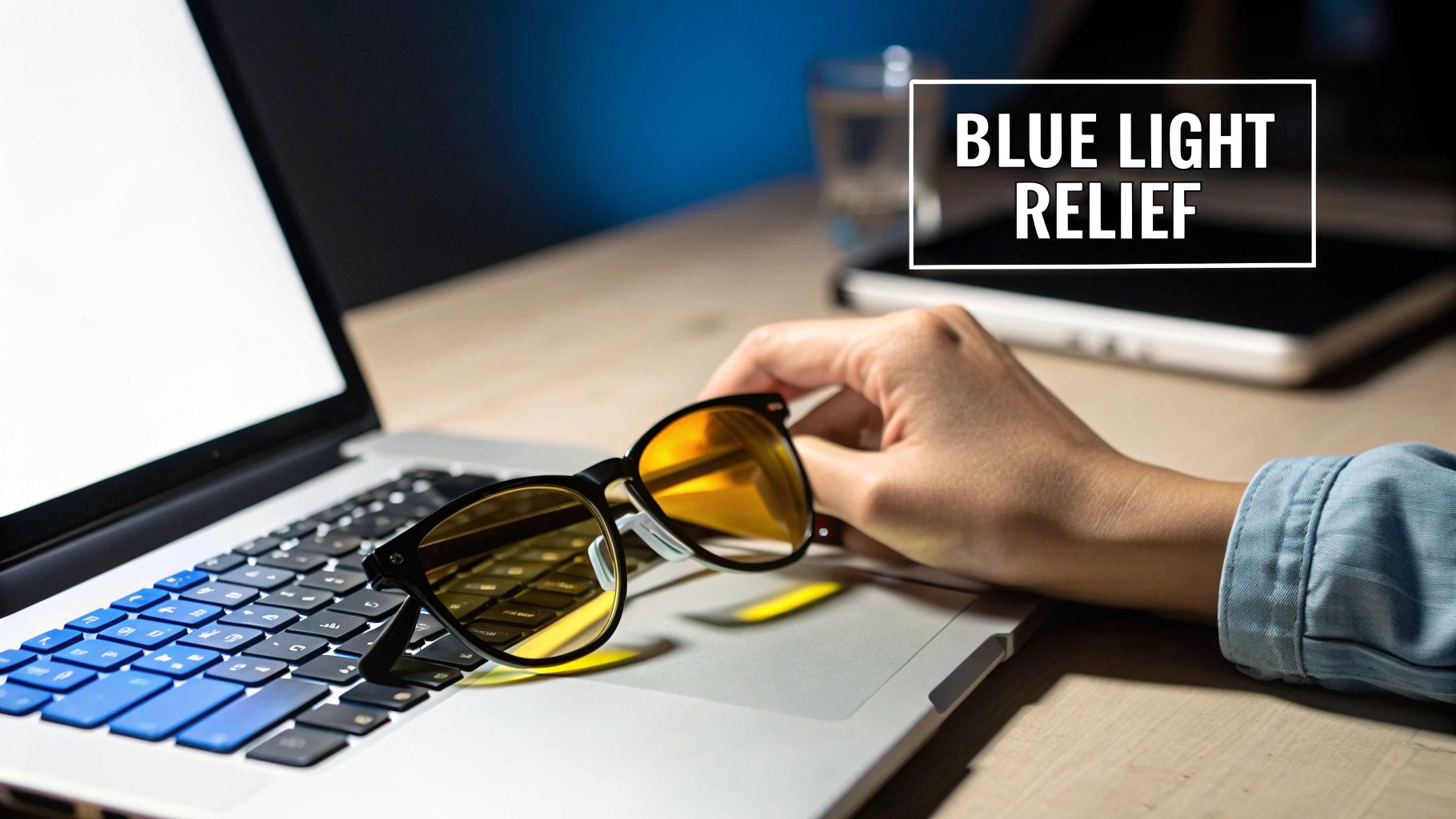
This filtering effect immediately lightens the load on your eye muscles. Instead of constantly squinting and working overtime to focus against digital glare, your eyes can finally relax.
Heads up: not all blue light glasses are created equal. The color of the lens makes a huge difference in how much blue light actually gets blocked. Orange colored blue light glasses, like ours at Element Lux, are the heavy hitters because they filter out a much wider spectrum of blue and even some green light.
This is a game-changer for preventing eye muscle fatigue. Picture your eye muscles as tiny rubber bands that are constantly pulled taut when you stare at a screen. The orange tint lets these muscles ease up, preventing the tension that leads to headaches, dryness, and that familiar, gritty end-of-day feeling.
Think about a real-world scenario. You're wrapping up a presentation late at night, and the bright white background of your document is blasting your eyes with blue light. The moment you put on a pair of orange-lensed glasses, that harsh screen transforms into a soft, warm amber glow. It's instantly more comfortable, allowing you to focus without the strain.
The benefits of orange lenses go way beyond just immediate comfort. By blocking the specific wavelengths of light that trick your brain into thinking it's still daytime, these glasses are instrumental in protecting your sleep cycle. This gives your brain the green light to produce melatonin, the hormone that says, "Hey, it's time to rest."
When you get deeper, more restorative sleep, your entire body gets a chance to repair itself—and that includes your eyes. Quality sleep helps your eyes rehydrate and allows the cornea to recover from any minor swelling, which directly tackles the root causes of morning blurriness.
Key Takeaway: Wearing orange or amber blue light glasses for 1-2 hours before bed isn't just about reducing eye strain in the moment. It's about promoting the quality sleep your eyes desperately need to feel refreshed and see clearly the next morning.
Putting on your blue light glasses is a fantastic start. But to really get the best results, you'll want to pair them with other solid sleep hygiene habits.
We all know that stress and anxiety are notorious sleep thieves. While amber-tinted glasses can help create a calming visual environment, combining them with other relaxation techniques is even more powerful.
Beyond just what happens inside your eyes, the real secret to waking up with clear vision is often the quality of your sleep. Your eyes, just like the rest of your body, absolutely need deep, restorative rest to repair themselves and rehydrate overnight. The problem? Our modern evening habits are practically designed to sabotage this crucial process.
Think about it: when you stare at a phone or laptop screen late at night, that intense blue light sends a powerful—and confusing—signal to your brain. It basically mimics daylight, tricking your internal clock into staying wide awake. This shuts down the production of melatonin, the very hormone that tells your body it’s time to sleep.
The result is a frustrating cycle. You struggle to fall asleep, toss and turn all night, and completely miss out on the deep sleep stages where true recovery happens. This directly leads to waking up with tired, dry, and blurry eyes.
This is where slipping on a pair of blue light blocking glasses an hour or two before bed can be a total game-changer for your vision. Orange colored blue light glasses, like the ones from Element Lux, are specifically designed to filter out the exact wavelengths of light that mess with your melatonin production.
By blocking this "digital daylight," you’re essentially allowing your body's natural sleep-wake cycle to take back control. Your brain finally gets the correct signal that it's nighttime, which allows for a timely release of melatonin. This helps you not only fall asleep faster but also achieve a much deeper, more uninterrupted sleep.
That improved sleep quality gives your eyes the extended downtime they desperately need to rehydrate, reduce corneal swelling, and recover from the day's strain. The connection is really that simple: better sleep leads directly to fresher eyes and clearer morning vision. To really make this work, it helps to implement a full strategy. You can discover proven techniques for natural and restful sleep that perfectly complement an evening routine with blue light glasses.
Similarly, amber blue light glasses play a huge role in helping you relax and actually wind down. The warm, soothing tint of the lenses creates a visually calm environment, dialing down the harsh glare that keeps your brain on high alert.
Think of it as creating an artificial sunset for your eyes. This visual cue signals to your brain that the day is ending, making it so much easier to disconnect from stress and transition into a restful state.
Pairing your glasses with other solid sleep habits creates a powerful strategy for not just great sleep, but sharper vision, too.
We all know anxiety is a huge sleep disruptor. Adding a few relaxation techniques into your evening can make all the difference.
By adopting these practices, you're not just hoping for better sleep—you're actively building the foundation for it.
Think of blue light glasses as a powerful ally, but they're not a one-person army. To really tackle that blurry vision when you wake up, you need to build an evening routine that sends a clear message to your brain and body: the day is officially over. This is how you set the stage for deep, restorative sleep—the kind that lets your eyes fully repair and recover overnight.
The whole point is to create a consistent, calming transition from a busy day to a restful night. It’s more than just flicking off the lights; it's about consciously winding down, cutting back on stimulation, and getting your internal clock on the right track for sleep.
Making blue light glasses part of your evening is one of the easiest and most effective changes you can make. The secret? Consistency. Get into the habit of putting them on one to two hours before you plan to hit the pillow, especially if you’re watching TV, scrolling on your phone, or reading on a tablet.
Orange colored blue light glasses are a game-changer here. They block a huge chunk of the blue light spectrum, which gives your eyes immediate relief from digital strain. This lets the tiny muscles in your eyes finally relax, stopping that nagging fatigue from carrying over into the next morning.
At the same time, blocking all that artificial light allows your brain to get back to its most important nighttime job: producing melatonin on schedule. That hormonal signal is absolutely essential for falling asleep easily and staying asleep all night long.
When it’s time for pure relaxation, amber blue light glasses are your best friend. Their warm, gentle tint creates a visually soothing environment that helps quiet a racing mind. It’s like creating your own personal sunset right inside your home—a powerful cue that tells your nervous system it's time to shift from high alert to total rest. They are perfect for that final hour before bed when you’re reading a book or just chilling out.
A better bedtime routine isn’t about being perfect. It's about creating consistent cues that guide your body toward sleep. Adding blue light glasses is a foundational step that makes all your other efforts even more effective.
To get the most out of your blue light glasses, you’ll want to pair them with these tried-and-true sleep habits.
Anxiety is sleep's worst enemy. A simple relaxation practice can quiet your mind and make it much easier to drift off peacefully.
A well-structured evening routine can be the difference between a restless night and waking up feeling refreshed with clear vision. It’s all about swapping out habits that disrupt sleep for ones that actively encourage it.
Here’s a simple comparison to show you what that looks like in practice.
| Time Before Bed | Habit to Avoid | Recommended Habit |
|---|---|---|
| 2-3 Hours | Scrolling through social media or watching intense TV shows under bright lights. | Put on your orange/amber blue light glasses. Dim the lights in your home. |
| 1 Hour | Checking work emails or engaging in stressful conversations. | Read a physical book, listen to a calming podcast, or do some light stretching. |
| 30 Minutes | Using your phone in bed with the lights off. | Put all screens away. Practice a few minutes of mindful breathing or meditation. |
| Bedtime | Leaving the TV on or having bright digital clocks facing you. | Ensure your room is completely dark, cool, and quiet. A sleep mask can help. |
By making these small adjustments, you're not just preparing for sleep; you're investing in your eye health and ensuring you start the next day with the clarity you deserve.
Stress and anxiety are silent saboteurs when it comes to a good night's sleep. Their effects can easily ripple into the next morning, often showing up as that frustrating blurry vision when you wake up. The key is to deliberately shift your mind and body from the day's high-alert status to a state of calm. This doesn't require complicated rituals—just simple, practical steps that signal it's time to rest.
The good news is you can actively create a calming pre-sleep environment. Little things make a world of difference. Try journaling for a few minutes to get nagging thoughts out of your head, do some gentle stretches to release physical tension, or just read a physical book. Each of these actions helps you disconnect from the day’s chaos and prepares you for truly restorative sleep.
A seriously powerful tool to boost this winding-down process is a pair of amber blue light glasses. Think of them as creating a personal, artificial sunset just for your eyes. The warm, soothing tint of the lenses filters out the harsh, stimulating blue light from screens and overhead lighting that keeps your brain buzzing long after you want it to stop.
This gentle visual cue is a surprisingly effective signal that the day is ending. It helps quiet all that mental chatter and allows your nervous system to smoothly transition from a state of alertness to one of deep relaxation. Wearing them for the last hour before bed can make it so much easier to actually feel tired and ready for sleep.
For those times when you absolutely have to use a screen before bed, orange colored blue light glasses are a must-have. They are specifically designed to block the most disruptive wavelengths of light—the ones that directly interfere with your body's melatonin production.
By shielding your eyes, these glasses make sure your brain gets the right memo to start producing this crucial sleep hormone on schedule. This not only helps you fall asleep faster but also promotes the deeper, more restorative sleep stages your eyes need to rehydrate and recover. It's a direct counter-attack against the causes of morning blurriness.
Key Insight: Creating a relaxing pre-sleep routine is a real investment in your morning clarity. Simple habits, amplified by the right blue light glasses, directly combat the stress and poor sleep that lead to blurry vision.
To give yourself the best shot at waking up with clear vision, start building these habits into your nightly routine.
Anxiety is a huge barrier to restful sleep. Use these simple techniques to calm your mind and get your body ready for a peaceful night.
Most of the time, that hazy blurry vision when waking up is totally harmless. It usually clears up after a few blinks and is just your eyes getting readjusted after a long night's sleep. Think of it like a fleeting headache versus a persistent migraine—one is a minor annoyance, while the other is a sign you need to pay attention.
While the occasional blur is normal, certain red flags are your body's way of telling you to check in with an eye doctor to make sure nothing more serious is going on.
It’s time to schedule an appointment if your blurry vision sticks around or comes with friends. Give your optometrist a call if you experience any of these:
These symptoms could point to conditions that need a professional's touch. It's always better to be proactive when it comes to your eye health.
As we get older, our vision naturally changes, and sometimes blurry vision is one of the first clues. One of the most common issues is presbyopia, a condition that makes it tougher to focus on things up close. In the United States alone, about 128 million adults have it.
What’s more, surveys show a staggering 65% of adults aged 40 to 55 felt completely unprepared for these kinds of age-related vision changes.
Sometimes, persistent blurriness can be linked to other health issues. If your fuzzy vision shows up alongside symptoms like loud snoring or feeling exhausted all day, it might signal a sleep disorder. For example, you can learn more about sleep apnea and see how it can affect everything, including your eyes. Knowing the signs is the first step to getting the right advice.
At Element Lux, we believe in taking a proactive approach to your eye health. Our glasses are designed to shield your eyes from digital strain and support better sleep, but they work best as part of a complete wellness strategy. Protect your eyes from screen time in the evening, and you’ll set yourself up for much clearer mornings.
Shop the Element Lux collection now and experience the difference.
Ever end the day with sore eyes and a mind that just won’t switch off? Blue blockers sunglasses might be the simple fix you’ve been overlooking—less high-energy blue light exposure means better focus now and deeper sleep tonight.
Too much screen time can leave your eyes feeling stretched thin and throw your sleep cycle out of sync. By filtering out nearly all blue and green light, orange-colored lenses relieve eye strain and encourage your brain to release melatonin naturally.
On the other hand, amber-tinted glasses offer a gentler filter—softening glare without turning everything an unnatural hue. They ease the alerting effect of harsh blue light, so winding down feels smooth, not jarring.
Orange Lenses for Eye and Sleep Health
Wearing deep-orange blue light glasses 1–2 hours before bedtime blocks disruptive wavelengths. This can help you fall asleep faster and significantly reduce eye fatigue after evening screen sessions.
Amber Lenses for Relaxation
These lenses filter roughly 60% of blue light, creating a calmer visual field. Perfect for late-afternoon work or leisurely evenings without harsh color shifts, they help you relax and wind down.
“Using blue light blocking glasses before bed can help reset your sleep clock,” notes a sleep specialist.
Case Study: After two weeks wearing Element Lux amber-tinted glasses, one freelance designer noticed 40% less eye fatigue.
Digital Detox Breaks
Step away from screens every hour for a quick walk or eye exercises.
Mindful Breathing
Combine amber blue blockers with a two-minute breathing exercise to clear your head.
Light Physical Activity
Gentle yoga or stretching in orange-tinted glasses can dissolve tension and promote calm.
Evening Wind-Down Routine
Dim the lights, play soothing music, and slip on your blue blockers to signal it’s time to rest.
Integrating blue blockers sunglasses into your day offers a straightforward path to digital wellness. Choose the right lens color, pair it with healthy habits, and watch your eyes feel better, your stress melt away, and your sleep improve.
Think of blue light like tiny, high-energy ocean waves. Over time, those constant waves can start to wear on your retinas.
The light from our screens might feel soft, but it's packed with those high-energy blue wavelengths that trick our brains into thinking it's always daytime. While the natural blue light from the sun is great for keeping us alert, the artificial kind from our phones, tablets, and computers is a recipe for digital overload.
This constant exposure messes with melatonin, the hormone your body needs to wind down and prepare for sleep. When melatonin gets suppressed, your sleep cycle gets thrown off, and your eyes take the brunt of the impact.
We’ve all felt it. That scratchy, dry, irritated feeling in your eyes after a long day of staring at a screen. That’s digital eye strain, and it often comes with a side of headaches, blurred vision, and even neck tension.
It’s no surprise that an evening scrolling habit can quickly turn into a frustrating nighttime struggle to fall asleep.
A few simple shifts can set you up for deeper, more restorative sleep without totally ditching your screens:
This is where the lens color really matters. Orange-tinted blue blockers are the heavy hitters, filtering out nearly all blue and green light. Wearing them in the evening is like creating an artificial sunset for your eyes, relieving strain and getting your brain ready for bed.
Amber-tinted glasses are a bit more subtle. They block around 60% of blue light, so you don't get as much color distortion. They're perfect for bridging that gap between late-afternoon work and evening relaxation.
Here are four simple ways to use them to reduce stress and unwind:
It's clear people are catching on. The global market for blue light blocking glasses has exploded, hitting $2.5 billion and is projected to grow by 15% each year through 2033. That surge is a direct reflection of our screen time habits and a growing awareness of the health risks.
We dive deeper into this topic right here on our blog. For more tips on minimizing screen fatigue with blue blockers, check out our guide on digital wellness: https://element-lux.com/blue-light-blog/.
And if you want to understand the bigger picture, it's worth reading up on the impact of sleep on our overall health.
Blue blockers are a fantastic tool, but they work best when paired with other smart screen habits. Making just a few small tweaks can make a massive difference in how your eyes (and brain) feel.
Consistent use of blue blockers can reduce evening light stress and improve sleep efficiency, making them a simple yet powerful tool in your wellness routine.
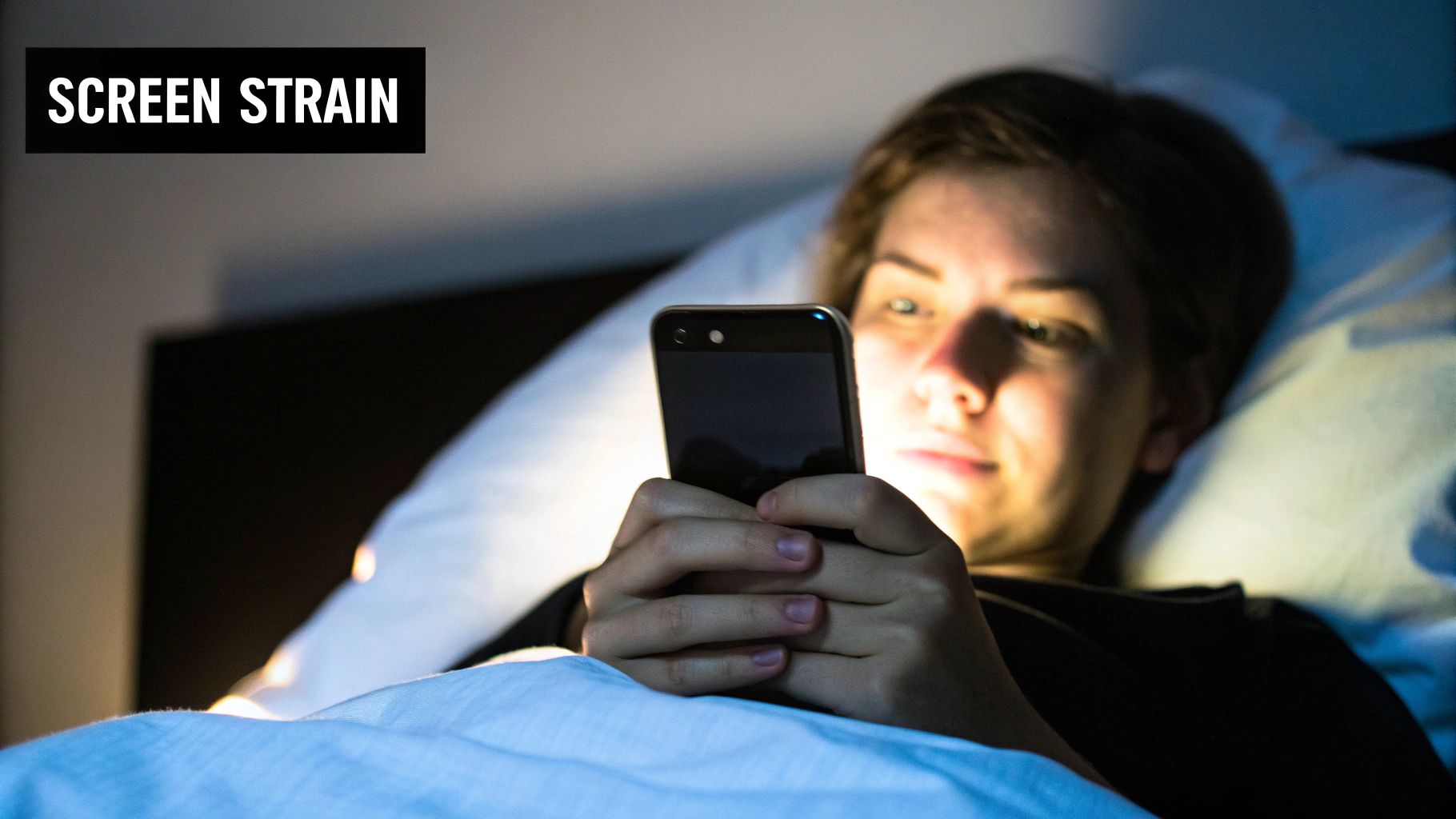
If you've ever felt wired and restless after scrolling on your phone in bed, you know firsthand how artificial light can mess with your ability to wind down. Orange-lensed blue blockers act like your own personal sunset, signaling to your brain that it's time to switch off—even when your screens are still on. Their deep orange tint is designed for maximum impact before you hit the pillow, creating a powerful shield against the very light that sabotages sleep.
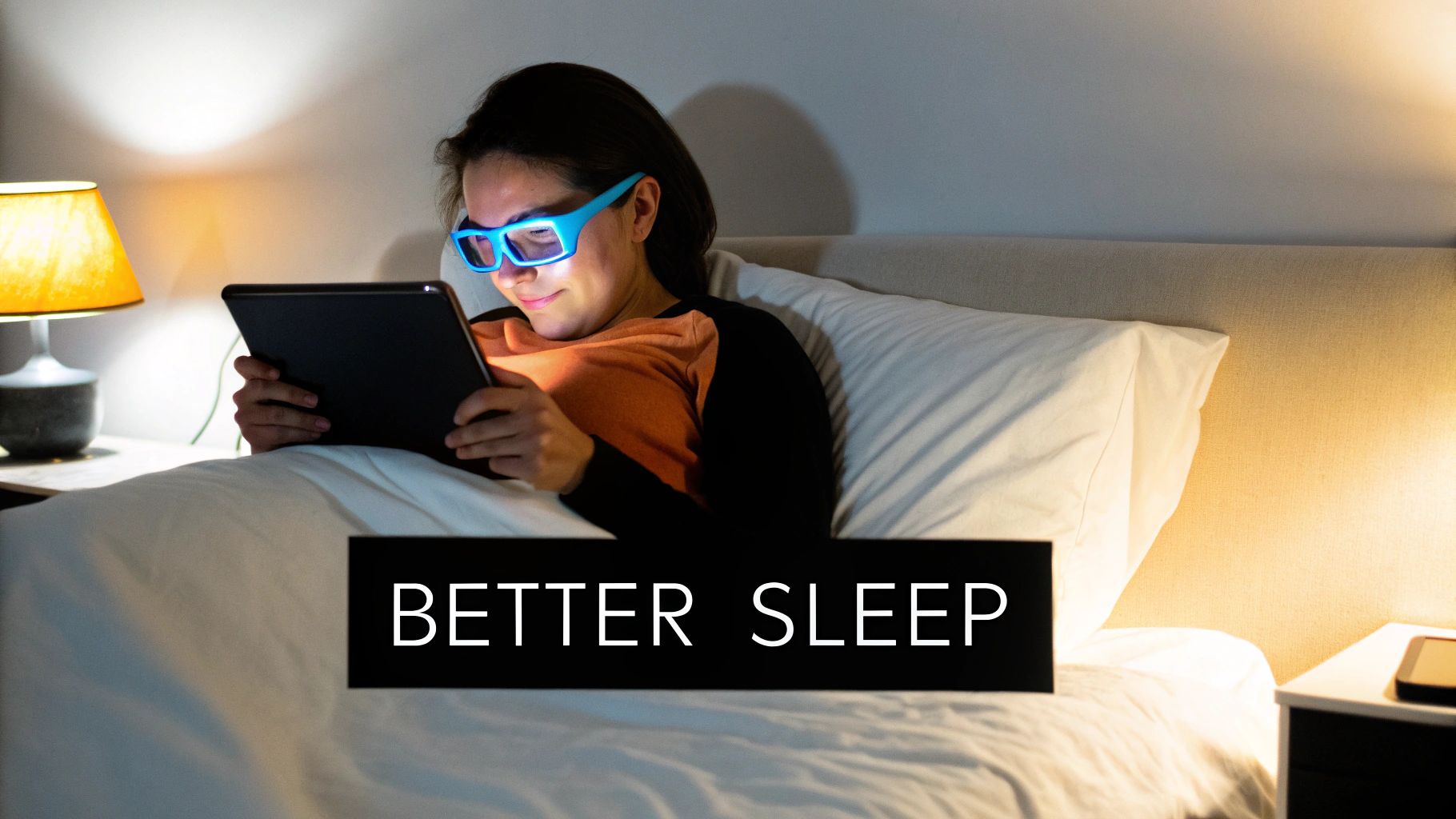
So, how do they work? These lenses filter out a huge portion of blue and even some green light wavelengths. This is absolutely critical because those specific colors are the biggest culprits when it comes to suppressing melatonin, the hormone that runs your sleep-wake cycle. When you put them on, you're essentially telling your brain the sun has gone down, giving it the green light to start producing melatonin naturally.
This simple change can have a dramatic effect on your body's internal clock. The result is a much smoother transition into rest, helping you fall asleep faster and get the deep, restorative sleep your body craves to repair and recharge.
Beyond just sleep, orange blue light glasses are a game-changer for nighttime eye comfort. The high-energy visible (HEV) light beaming from our screens is a major cause of digital eye strain, which shows up as dry eyes, headaches, and blurry vision. Orange lenses cut your exposure to this harsh light way down.
Think of it like putting on sunglasses for your screen. Suddenly, the intense glare is softened, contrast gets a nice boost, and your eye muscles can finally relax. This makes catching up on emails, watching videos, or reading in the evening a far more comfortable experience—without wrecking your sleep later.
While orange is the ultimate nighttime tool, amber lenses offer a gentler transition. They're perfect for the late afternoon or early evening as you start to wind down. Amber glasses filter just enough blue light to reduce eye strain but without the heavy color shift of orange lenses, making them ideal for easing out of work mode.
Putting on blue blockers is a huge step, but they're most effective when they're part of a solid sleep hygiene routine. Here are a few top tips to set yourself up for a great night's rest:
Managing stress is key for a calm mind and restful sleep, and blue blockers can be a central part of your relaxation toolkit.
If intense orange lenses are the "off switch" for your brain at bedtime, think of amber-lensed blue blockers as your personal dimmer switch. They’re the perfect bridge between a chaotic day and a quiet evening, designed to help you relax and decompress without plunging your world into a deep, dark orange.
Amber lenses work by filtering out a huge chunk of the most stimulating blue light coming from screens and artificial lighting. This simple tweak creates a softer, warmer, and much calmer visual environment. If you've ever had that buzzy, "wired but tired" feeling after a long afternoon of video calls, amber glasses are designed to gently smooth out that mental friction, making the shift from work to rest feel natural.
This subtle shift is enough to cut the harsh glare that causes digital eye strain, but it doesn’t distort colors so much that you can’t enjoy a movie or read on your tablet. It’s this balance that makes amber blue blockers sunglasses such a versatile tool for late-afternoon focus and evening downtime.
Constant exposure to bright, blue-heavy light keeps our nervous system in a state of low-key alert. By toning down this aggressive light, amber lenses help your eye muscles finally relax, which can reduce symptoms like dryness, headaches, and fatigue. This physical relief sends a clear signal to your brain that the day is winding down, allowing your mind to follow.
And people are catching on. The global market for non-prescription blue blockers was valued at $2.4 billion and is expected to hit $6.5 billion by 2033. This boom shows a massive consumer shift toward protecting our eyes and sleep cycles from the effects of constant screen time.
Making amber blue light blocking glasses a part of your routine can seriously boost your efforts to de-stress. Here are four practical ways to use them to find your calm:
By softening your visual world, amber lenses create a tangible sense of calm. They don't just protect your eyes; they help quiet a busy mind, making it easier to be present and relaxed in your own home.
To take your relaxation routine even further, you can pair your blue blockers with other natural aids. For instance, learning about the best essential oils for relaxation can introduce calming scents like lavender or chamomile into your evening, perfectly complementing the visual calm from your glasses.
Think of blue blocker sunglasses as more than just an accessory—they're a powerful tool for building a modern wellness strategy. When you start weaving them into your daily life, you can see real, tangible improvements in your sleep and stress levels. It's all about pairing them with smart habits to build a healthier relationship with technology and take back control of your well-being.
This isn't about some complicated overhaul. It's about creating simple, repeatable routines. For instance, making your orange-lensed glasses a non-negotiable part of your pre-sleep ritual sends a powerful signal to your brain. It's a clear cue that the day is wrapping up, and it's time to get ready for deep, restorative rest.
Ever had that gritty, tired, or achy feeling in your eyes after an evening on your laptop or phone? That's digital eye strain. Orange-colored blue light glasses go right to the source, filtering out the harsh, high-energy blue and green light that forces your eye muscles into overdrive.
This filtering effect is like turning down the visual "noise" coming from your devices. The intense glare is softened, contrast gets a nice boost, and your eyes can finally take a breath and relax. This simple change makes evening screen time so much more comfortable and helps you avoid the overstimulation that often leads to headaches and fatigue.
The real superpower of orange lenses is their incredible impact on sleep. The artificial light blaring from our screens tricks our brains into thinking it's still high noon, which slams the brakes on melatonin—the essential hormone that governs your sleep-wake cycle. Orange lenses essentially create an "artificial sunset" just for your eyes.
By blocking those specific, disruptive light wavelengths, these glasses give your body the green light to naturally ramp up melatonin production as the evening goes on. Pop them on for an hour or two before bed, and you're actively helping to reset your internal clock. This makes it easier to fall asleep faster and sink into that deep, truly refreshing sleep we all crave.
While orange lenses are your heavy-duty nighttime shield, amber blue light glasses are your best friend for that transition from a hectic day to a calm evening. They filter a solid amount of blue light to ease eye strain, but they do it without the dramatic color shift of the darker orange lenses. This makes them perfect for finishing up late-afternoon work or just relaxing with a tablet after dinner.
The softer, warmer world they create helps quiet a mentally tired mind. Think of them as a dimmer switch for your reality, gently easing your nervous system from "go-go-go" mode into a state of relaxation, perfectly prepping you for a restful night ahead.
By softening your visual environment, amber lenses create a tangible sense of calm. They don't just protect your eyes; they help quiet a busy mind, making it easier to be present and relaxed.
Building simple, consistent routines is the key to unlocking the full benefits of your blue blockers. The table below shows a few examples of how you can integrate them into daily life to tackle specific wellness goals.
| Goal | Key Action with Blue Blockers | Complementary Habits |
|---|---|---|
| Improve Sleep Quality | Wear orange lenses for 90-120 minutes before bed while reading or watching TV. | Keep a consistent sleep schedule, even on weekends. Dim household lights in the evening. |
| Reduce Evening Stress | Put on amber lenses after dinner to signal the start of "wind-down" time. | Practice 10 minutes of light stretching or meditation. Avoid checking work emails after a set time. |
| Combat Digital Eye Strain | Use amber lenses during the last two hours of the workday to ease eye fatigue. | Follow the 20-20-20 rule: every 20 minutes, look 20 feet away for 20 seconds. |
By making these small actions a habit, you create powerful cues for your mind and body to relax and prepare for rest.
Pairing your blue blockers with other healthy sleep habits creates a powerful synergy for better rest. Here’s a simple routine to maximize your results:
Your blue blockers can also be a cornerstone of your stress-management toolkit. Use them to carve out moments of calm in your day and evening.
Picking out the perfect pair of blue blockers sunglasses can feel like a chore, but it gets a lot simpler once you know what you're trying to achieve. The first question to ask yourself is: what's my main goal?
Are you trying to fight off that tired, strained-eye feeling after a long day of staring at a computer? Or are you looking for a way to get better, deeper sleep at night? Your answer points you straight to the right lens color.
It all comes down to understanding the difference between orange and amber lenses. They look different because they do different things, and getting the right one is key to getting the results you want.
Think of glasses with orange lenses as your secret weapon for winding down at night. They're built to block out a huge chunk of the blue and even some green light—the exact wavelengths that mess with your body's ability to produce melatonin, the sleep hormone.
Just pop them on for an hour or two before you plan to hit the hay. It’s like sending a clear signal to your brain that the day is over and it's time to power down. This one simple habit can help you fall asleep faster and get more of that restorative, deep sleep you need. Plus, they cut down the harsh glare from screens, which helps kick those evening headaches and eye fatigue to the curb.
Amber-lensed glasses are your best friend for daytime and early evening use. They filter out a good amount of blue light to keep your eyes comfortable, but they don't distort colors as much as the heavy-duty orange lenses.
This makes them perfect for that late-afternoon work session or for relaxing with a movie after dinner. They create a softer, warmer feel that helps ease mental fatigue, letting your mind and body shift smoothly from "go-go-go" mode to a more relaxed state.
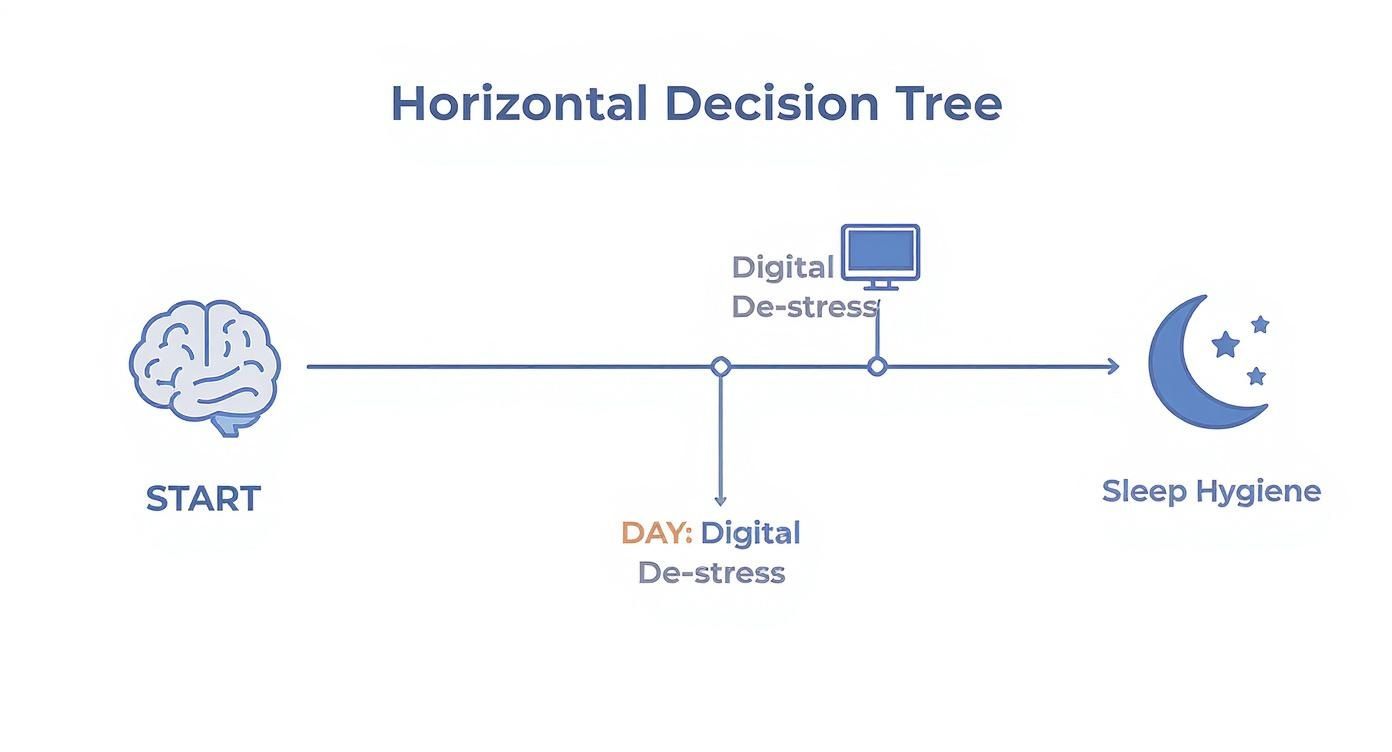
This handy little decision tree breaks it down visually, showing you how to choose the right glasses for de-stressing during the day versus prepping for a great night's sleep.
As you can see, the path is pretty clear. Each lens type has a distinct job, helping you pick the right tool for day or night.
This isn't just a niche trend, either. The demand for blue light blocking eyewear is growing all over the world. The market in South America, for instance, jumped from $74.13 million to $101.11 million, which just goes to show how many people are catching on. This global growth points to a real, widespread commitment to digital wellness. You can dig deeper into the anti-blue light glasses market on cognitivemarketresearch.com.
When you're ready to find a pair that actually works as promised, make sure you choose a brand that builds its products on real, science-backed technology. To see some high-quality options designed for both day and night, you can shop now for a curated selection.
At the end of the day, choosing the right blue blockers is an investment in your own well-being. By matching the lens to your lifestyle, you can take real steps to reduce eye strain, improve your sleep, and build a much healthier relationship with all the screens in your life.
If you're new to the world of blue light glasses, you probably have a few questions. Getting the details right is the key to unlocking the real benefits for your eyes and your sleep, so let's clear up some of the most common ones.
Think of orange-lensed blue blockers as your ultimate nighttime tool. They're designed to filter out almost all of the intense, high-energy blue and green light that our screens blast out. This is the exact light that causes digital eye strain—that familiar feeling of soreness, dryness, and fatigue after a long day.
By cutting that harsh light down to almost nothing, you're giving your eye muscles a much-needed break, which makes scrolling or watching a show in the evening so much more comfortable.
But the real magic happens with your sleep hormones. Blocking these specific wavelengths stops your body from hitting the brakes on melatonin production. Melatonin is the hormone that signals to your brain that it's time to sleep. When you wear them for an hour or two before bed, your melatonin levels can rise naturally, just as they're supposed to. This helps you fall asleep faster and get the kind of deep, restorative rest you need. If you want to dive deeper, you can explore our detailed guide on how our glasses help with sleep.
If orange lenses are for sleep, think of amber lenses as a dimmer switch for your day. They create a softer, warmer visual environment by filtering out a good chunk of blue light, but without the heavy color shift you get from the darker orange lenses.
This subtle change is perfect for easing the mental burnout and overstimulation that comes from staring at a screen all day. It just makes it easier to wind down and feel relaxed after work without feeling like you've gone into full nighttime mode.
Of course, glasses work best when they're part of a bigger wellness routine. It's about creating the right habits.
For Better Sleep:
For Less Stress:
Ready to feel the difference for yourself? At Element Lux, we offer premium blue light blocking glasses designed to protect your eyes, calm your mind, and help you get the sleep you deserve.
To really nail your focus when you study, you need a dedicated space that tells your brain it's time for deep work. This goes way beyond just tidying your desk. It’s about fine-tuning your lighting, ergonomics, and even your digital tools to build a personal study sanctuary. By making a few small, deliberate changes, you can create a space that actively helps you concentrate instead of fighting against you.
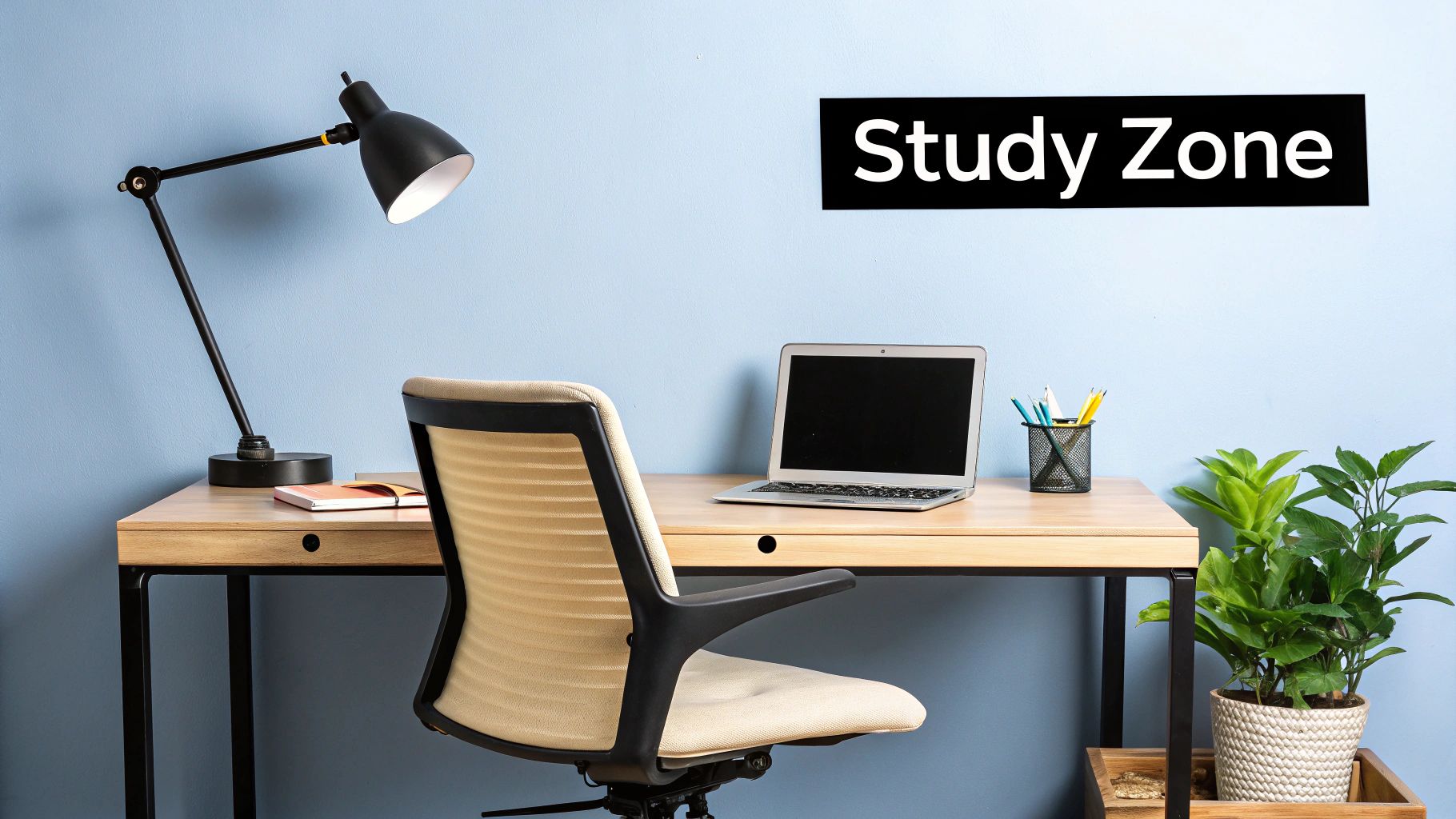
Your physical surroundings have a huge impact on your ability to concentrate. A cluttered, uncomfortable, or badly lit room creates a constant, low-level hum of distraction that slowly drains your mental energy. The goal here is to design a study zone that shuts down those disruptions and cranks up the comfort, letting your mind lock in for longer.
Think of your study space as your command center for learning. It needs to be a place you associate with productivity, not scrolling through social media or chilling out. That mental link is the secret to getting into "study mode" fast.
First things first, pick a dedicated spot. Even if it's just a small corner of your room, consistency is everything. Always studying in the same place trains your brain to associate that location with getting work done. Once you’ve claimed your territory, it's time to optimize it.
Next, let's talk setup. An uncomfortable chair or a desk at the wrong height is a recipe for fidgeting and aches—major distractions. Adjust your chair so your feet are flat on the floor and your screen is at eye level. A proper ergonomic setup prevents the kind of physical strain that constantly yanks your attention away from your books.
A study space should be a sanctuary for thought. By removing external clutter, you create space for internal clarity. This isn't just about being neat; it's about reducing the cognitive load on your brain.
Lighting is another game-changer. Harsh overhead lights cause glare and eye strain, while a dim room can make you feel sleepy. The sweet spot is layered, well-distributed light. A good desk lamp can illuminate your work without creating harsh shadows, making it much easier to read and reducing the physical stress on your eyes.
In today's world, your digital space is just as important as your physical one. Your computer and phone are critical tools, but let's be honest—they're also your biggest enemies when it comes to focus. Practicing good digital hygiene means setting up your devices to support you, not sabotage you.
Here are a few practical steps to build a distraction-free digital zone:
By intentionally designing both your physical and digital worlds, you're building a powerful foundation for deep, sustained focus.
Let's be honest: our devices are a double-edged sword. They're indispensable for research and writing, but they're also a black hole of distraction. Every notification, email ping, and news alert shatters your concentration, making it nearly impossible to hit that state of deep focus you need to really learn.
If you feel like you're losing the battle against the endless scroll, learning how to overcome social media addiction is a powerful first step to reclaiming your attention.
But beyond the mental tug-of-war, there’s a physical one. Hours staring at a screen leads to digital eye strain—that familiar feeling of dry, gritty eyes, a nagging headache, and slightly blurred vision. It's more than just annoying; it’s a productivity killer that can force you to pack it in early.
So what's causing all that discomfort? It's largely due to the high-energy visible (HEV) blue light pouring out of our screens. This type of light scatters more than other colors, creating a kind of visual "noise" or glare that your eyes have to constantly fight to focus through. All that extra work is what leaves them feeling strained and tired.
This is exactly where a good pair of orange-colored blue light glasses comes in. While clear or light-yellow lenses might filter a tiny fraction of blue light, high-quality orange lenses are designed to block a huge portion of it. By cutting out that harsh, scattered light, they reduce glare and boost contrast on your screen, letting your eye muscles finally relax.
Putting on a pair of Element Lux glasses during a long study session means less squinting and less fatigue. You can stay in the zone for longer without the burnout and physical discomfort that screen-heavy work usually brings.
Blue light’s impact doesn’t stop at your eyes—it messes directly with your sleep. When you're exposed to it in the evening, it basically tricks your brain into thinking it's still daytime. This suppresses the production of melatonin, the hormone that tells your body it’s time to wind down and sleep.
Ever feel tired but totally wired after a late-night cram session? That’s suppressed melatonin at work. Your body is exhausted, but your brain hasn’t gotten the "go to sleep" signal.
Wearing orange or amber blue light blocking glasses for a few hours before bed allows your body's melatonin production to kick in naturally. It's such a simple habit, but it can help you fall asleep faster and get the deep, restorative rest you need for memory consolidation and sharp focus the next day.
After a long day of lectures and textbooks, your brain needs a clear signal to shift out of high-alert mode. Amber blue light glasses create a warm, calming visual environment, like a personal sunset. This visual cue helps your mind understand that the day is ending, making it easier to decompress, manage academic stress, and let go of the day's worries. It's an effortless way to start your wind-down routine.
For more tips on this, check out the resources on the https://element-lux.com/blue-light-blog/. It’s a proactive way to make sure you’re rested, relaxed, and ready for whatever your studies throw at you.

Let’s be honest: real, sustained focus isn’t about just gritting your teeth and pushing through. It's about working smarter, not harder. Effective time management is the secret sauce here. It gives your study sessions structure, turning a mountain of coursework into a series of small, manageable hills.
When you build a predictable routine, you're essentially training your brain to snap into "focus mode" on command. Instead of staring down a massive assignment for hours on end, you break it into focused bursts of effort. This approach doesn't just prevent burnout—it makes the whole process feel way less intimidating.
Two of the most popular and effective methods out there are the Pomodoro Technique and time blocking. They both run on the same simple principle: work in focused sprints, not endless marathons.
The beauty of the Pomodoro Technique is its simplicity. You work with intense focus for 25 minutes, then take a quick 5-minute break. After four of these cycles, you earn a longer break of 15-30 minutes. This rhythm keeps your mind fresh and stops that mental fatigue from setting in.
Time blocking, on the other hand, is all about scheduling your entire day. You might block out 9:00-10:30 AM for "Chapter 5 Reading" and 1:00-2:00 PM for "Math Problem Set." It takes all the guesswork and decision-making out of your day so you can just get down to business.
The real power here isn't just about organizing your calendar. It's about creating a consistent, repeatable process that tells your brain, "Okay, this is a focus block. It's time to work."
Trying these techniques once or twice won't do much. The magic is in the consistency. A structured routine is your best friend for building concentration because it creates momentum and cuts down on the mental energy you waste just trying to get started.
Here’s what that could look like in a real student's week:
This isn't just anecdotal advice; it's backed by research. A huge analysis of 15 different studies confirmed a clear link between disciplined study habits and higher grades. In one study, students with strong routines scored 10–15% higher on average than their peers.
A key part of mastering your time is to always look for ways to improve workflow efficiency in your research and studies. The goal is to build a personalized system that fits your energy levels and course load. Experiment a little, find what works for you, and make it a non-negotiable part of your daily routine.
Think of sleep as the final, non-negotiable step in your study routine. After you’ve put in the hours, it's during deep sleep that your brain gets to work consolidating memories, sharpening problem-solving skills, and filing away all that new information.
Without quality rest, a lot of that hard work can literally evaporate overnight. You’ll find it harder to focus the next day, and that information you crammed just won't stick.
One of the biggest culprits sabotaging our sleep in the modern world? Late-night screen time. All that artificial blue light messes with our natural sleep-wake cycle, making it a huge obstacle to academic success.
You know that tired, gritty feeling your eyes get after staring at a laptop for hours? That’s digital eye strain, caused by the intense blue light from your screens.
High-quality orange-colored blue light glasses, like the ones we designed at Element Lux, are built to filter out this harsh, high-energy light. They cut down on screen glare and allow your eye muscles to relax, making those late-night study sessions far more comfortable and sustainable.
Even more importantly, blue light actively suppresses the production of melatonin—the hormone that signals your body it's time to sleep. It’s why you can feel completely exhausted but still find yourself tossing and turning after scrolling through notes on your tablet.
Wearing orange lenses in the hours before bed blocks this disruptive light, allowing your body's melatonin levels to rise naturally. This simple habit helps you fall asleep faster and get the deep, restorative sleep your brain needs to process everything you just learned.
Beyond the science, amber-tinted lenses also create a calming, warm visual environment. Putting them on in the evening is like creating your own personal sunset.
This simple visual cue signals to your brain that the day is ending and it’s time to shift from high-alert study mode to a relaxed state. It makes it so much easier to decompress, manage that pre-exam stress, and prepare your mind for a peaceful night.
A consistent evening routine that includes blue light blocking glasses is a powerful way to protect your sleep. It's not just about what you do during your study time; it's about how you wind down afterward that solidifies your learning.
Here’s a quick summary of the most effective ways you can start getting better sleep tonight. These small changes can have a huge impact on your focus and memory retention.
| Strategy | How It Improves Focus | Implementation Tip |
|---|---|---|
| Wear Blue Light Blocking Glasses | Prevents melatonin suppression from screens, helping you fall asleep faster and get deeper rest. | Put on orange or amber glasses 2-3 hours before bed, especially if you're on a device. |
| Create a Consistent Schedule | Regulates your body's internal clock (circadian rhythm), making it easier to feel sleepy at night and alert in the morning. | Try to go to bed and wake up within the same 30-minute window every day, even on weekends. |
| Optimize Your Bedroom | A dark, quiet, and cool environment minimizes disruptions that can pull you out of deep sleep cycles. | Use blackout curtains, a white noise machine, and set the thermostat between 60-67°F (15-19°C). |
| Avoid Late-Day Caffeine | Caffeine has a long half-life and can linger in your system, making it difficult to fall asleep. | Make your last cup of coffee or energy drink at least 6-8 hours before your planned bedtime. |
By prioritizing your rest, you are directly investing in your academic performance. Each of these strategies works together to help you wake up feeling refreshed and ready to learn.
To dive deeper into these tips, check out our comprehensive guide on how to get better sleep.
Let's be honest: stress is the ultimate focus killer.
When your brain is swamped with anxiety, it goes into survival mode. That leaves almost zero mental bandwidth for the complex stuff, like absorbing new information or solving tough problems. Tackling stress isn't a "nice-to-have"—it's a core strategy for studying effectively.
When you feel that sense of being completely overwhelmed, your ability to think clearly and remember what you just read takes a nosedive. Building a toolkit of go-to calming techniques is just as critical as organizing your notes. The goal is to actively soothe your nervous system so you can get back to being productive.
Between high-stakes exams and looming deadlines, the idea of relaxing can feel like a joke. But a few simple, intentional practices can make a massive difference. You just have to find what works for you and weave it into your routine before the stress boils over.
Here are four powerful ways to get a handle on stress and anxiety:
Proactively managing stress isn't avoiding your work. It's about creating the right mental conditions for high-quality, effective learning.
After hours spent staring at a bright screen, your brain can feel totally wired and overstimulated. That's where amber blue light blocking glasses come in.
They help draw a clear line between "study time" and "relaxation time." The warm-colored lenses filter out harsh, stimulating light, which helps calm your mind and makes the transition from work to rest so much smoother.
Think of it like creating your own personal sunset. This simple visual cue tells your brain the day is winding down, making it far easier to let go of academic pressure and actually relax. It's a small habit that supports your mental well-being, ensuring you’re not just studying hard, but recovering effectively, too.
Got questions? I've got answers. Here are some of the most common things people ask about boosting focus and how our gear can help.
Think of it this way: when you stare at a screen, your eyes are getting blasted with harsh, high-energy blue light. It's like a constant glare that forces your eye muscles to work overtime.
Orange-lensed glasses are designed to specifically filter out a huge chunk of that aggressive blue light. This cuts the glare and sharpens the contrast on your screen, letting your eye muscles finally relax. The result? You can study for hours without that familiar headache, fatigue, or eye discomfort setting in.
Have you ever noticed how calming a sunset feels? Amber-tinted lenses tap into that same effect. They wash your vision in a warm, gentle light that sends a powerful signal to your brain: the day is winding down.
Popping them on in the evening is a simple but effective way to start decompressing. It helps you shift gears from that hyper-focused, alert study mode into a more relaxed state, making it easier to manage stress and get ready for a good night's sleep.
Great sleep is non-negotiable for memory and focus. The biggest wins come from a few key habits:
But here’s the game-changer for the modern student: wear blue light blocking glasses for a couple of hours before you hit the hay. This one move protects your body's natural melatonin production from being tanked by your phone or laptop screen.
When your mind is racing, it’s impossible to focus. The trick is to have a few go-to techniques to calm the noise.
For an even deeper dive into focus strategies and student well-being, check out the other guides and articles over on our Element Lux Resources page.
Ready to protect your eyes, get better sleep, and finally lock in your focus? Element Lux makes high-quality blue light blocking glasses designed to help you study smarter, not just harder.
Shop Now and Feel the Difference
So, do blue light filters actually work? The answer really depends on what you're trying to achieve. If you're looking for better sleep, the science is pretty solid on amber or orange-tinted lenses. But if you're just trying to ease digital eye strain, the evidence is a bit more mixed, though many people swear by them.
Think of blue light filters like tools in a toolbox. You wouldn't use a sledgehammer to hang a picture frame, right? In the same way, the right kind of filter depends entirely on whether you're trying to signal your brain it's time for bed or just make your workday screen time a little more comfortable.
The biggest difference comes down to the color of the lens.
When you see glasses with deep orange or amber lenses, they're designed to block the specific wavelengths of light that mess with melatonin—the hormone that regulates your sleep-wake cycle. Wearing a pair like those from Element Lux in the evening is a powerful way to help your body naturally wind down and prepare for a good night's rest.
On the other hand, you have clear lenses or the software filters built into your phone and computer. These only block a tiny fraction of blue light. While they might help a little with glare and make you feel a bit more comfortable, their effect on your sleep is pretty minimal. The real magic happens when you use the right color at the right time.
This decision tree breaks it down nicely:
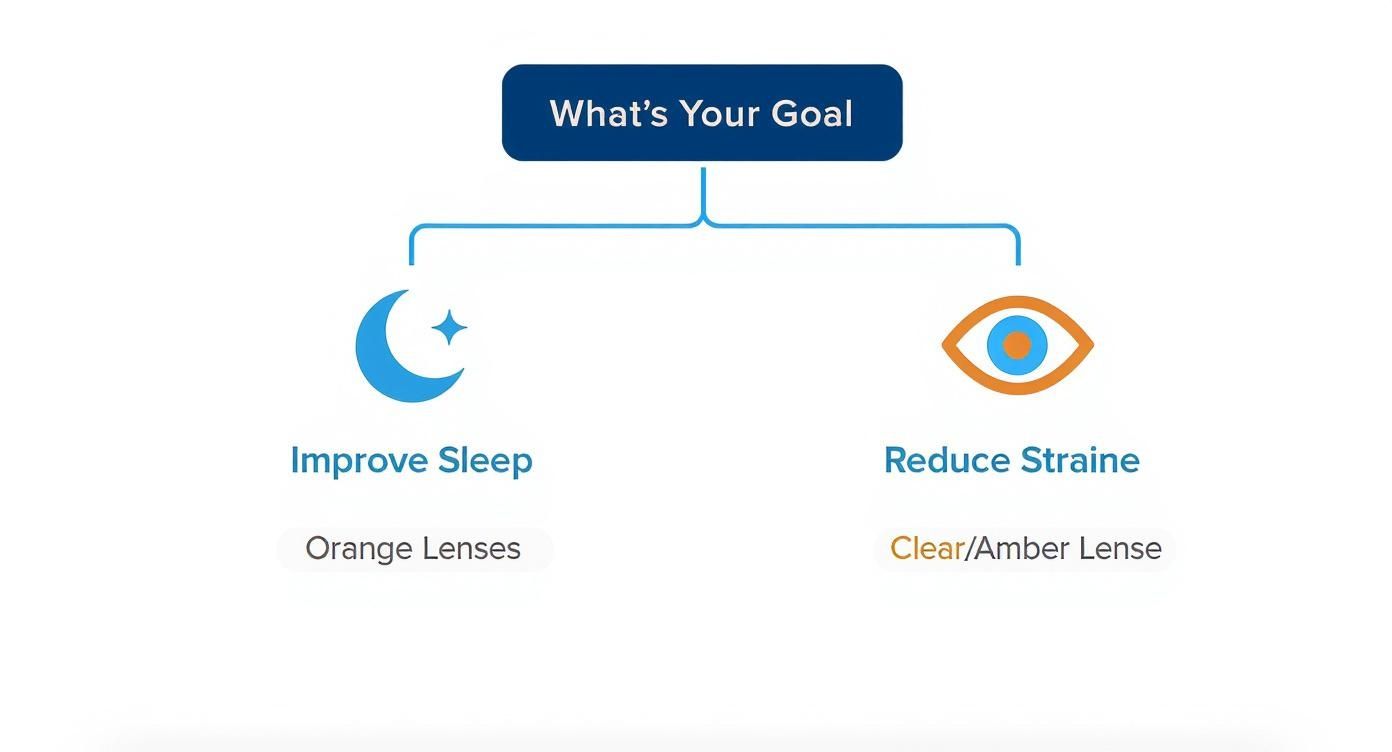
As you can see, if sleep is your main goal, orange lenses are the way to go. For daytime eye strain, clear or light amber lenses are a better fit.
To make it even simpler, this table summarizes which filtering methods are best suited for different goals and how effective they tend to be based on user reports and available research.
| Filtering Method | Primary Goal | Reported Effectiveness |
|---|---|---|
| Orange/Amber Lenses | Improve sleep quality | High – very effective at blocking melatonin-suppressing light |
| Clear Lenses | Reduce daytime eye strain | Moderate – offers subjective comfort and glare reduction |
| Software Filters | Reduce eye strain & light exposure | Low to Moderate – helpful, but less potent than physical lenses |
Ultimately, choosing the right filter comes down to identifying your main pain point—are you struggling to fall asleep, or are your eyes just tired after a long day of meetings? Knowing that will point you to the right solution.
Your brain has an internal clock that’s constantly running, telling you when to feel awake and when it's time to sleep. This is your circadian rhythm, and it depends heavily on light to stay on schedule. The problem is, the bright blue light blasting from our phones and laptops looks a lot like morning sun to our brains. It signals "stay alert!" and slams the brakes on melatonin, the hormone that makes you feel sleepy.
This is where orange-tinted lenses change the game. By specifically filtering out the exact wavelengths of blue and green light that shut down melatonin, these glasses trick your brain into thinking the day is over, even while you’re finishing up emails. Wearing them in the evening sends a powerful signal to your body to start producing melatonin, helping you fall asleep faster and get deeper, more restorative rest. This simple habit is one of the most effective ways to support your natural sleep cycle in our modern, screen-lit world.
Improving your sleep doesn't have to be complicated. Consistency is key, and incorporating blue light blocking glasses into a solid evening routine can be a game-changer. Here are the top ways to set yourself up for a great night's sleep:
This isn't just theory; the research backs it up. A study from Indiana University discovered that participants who wore blue-light filtering glasses before bed saw significant improvements in their sleep quality and even their work performance the next day. The effect was even stronger for "night owls."
It’s not just about sleep—amber and orange lenses are also a seriously powerful tool for helping you unwind and de-stress. Think about it: the harsh, bright light from our screens and overhead lighting is a constant stimulant, keeping your brain in an alert, 'always-on' state. That’s a big reason you might feel so wired and anxious after a long day in front of a computer.
Amber lenses work by fundamentally changing your visual environment. They filter out those stimulating wavelengths of blue light, creating a much warmer, softer, and noticeably calmer atmosphere. It’s like a modern relaxation ritual, not so different from sipping herbal tea or curling up with a good book. This simple act of putting them on helps you transition from a state of high activity to one of peaceful rest.
Wearing amber glasses in the evening is a simple, proactive step that signals to your mind and body that the workday is over. It helps you transition from a state of high activity to one of peaceful rest.
Making blue light blocking glasses part of your nightly routine can make a huge difference in lowering stress. Here are four simple ways to create a more tranquil evening:
When you combine these practices, you create a powerful routine that truly prepares your body and mind for a restful night. These small habits send a clear signal that it's time to let go of the day's stress and just relax.
If you’ve ever ended a long workday with a throbbing headache, dry eyes, or fuzzy vision, you’re no stranger to digital eye strain. A huge part of that discomfort comes from the high-energy blue light that our devices are constantly beaming out, which leads to that tired, overworked feeling in our eyes.
Orange-tinted lenses, like the ones from Element Lux, are specifically designed to filter out these harsh, stimulating wavelengths. They cut down on both blue light and screen glare, which often has the welcome side effect of boosting the contrast on your screen. This makes text look sharper and gives your eye muscles a chance to relax instead of constantly straining to stay in focus. Many users find this dramatically reduces the symptoms of eye strain after just a few hours of wear.
While countless users swear by them, it’s worth noting that the science is still catching up. A recent systematic review found the evidence for blue-light filtering lenses reducing visual fatigue was inconsistent, suggesting their practical benefit is still up for debate for many people.
Eye strain aside, there’s another benefit: amber lenses create a much warmer, softer visual experience. Think of it as turning down the visual "noise" of a stimulating day. By filtering out the harshness of artificial lights and screens, amber blue light glasses send a subtle signal to your brain that it’s time to shift gears from "go-go-go" to a calmer, more relaxed state. It’s a simple way to quiet that "digital buzz" so many of us feel after being plugged in all day. To give your eyes even more support, you might also consider targeted supplements like eye health vitamins.
Making blue light glasses part of your evening routine can be a surprisingly effective tool for managing stress. Here are four simple ways to combine them for maximum relaxation:
Knowing that blue light filters work is one thing, but actually putting that knowledge into practice is what really counts. Blue light glasses are a fantastic tool, but they work best when they're part of a solid sleep hygiene routine.
Think of them less like a magic pill and more like a key player on a team dedicated to getting you the rest you deserve. This guide is a simple, actionable checklist to help you get more restful sleep, starting tonight. When you build a powerful evening routine, you send a clear signal to your body that it’s time to power down.
Improving your sleep doesn't have to be a huge, complicated overhaul. In my experience, small, consistent changes are what lead to the biggest improvements in energy, mood, and overall health. Here are the most impactful steps you can take.
1. Wear Orange or Amber Lenses Before Bed
This is probably the most critical step for our modern, screen-filled lives. Just pop on a pair of orange or amber glasses, like those from Element Lux, for 1-2 hours before you plan to go to sleep.
This simple act blocks the specific wavelengths of blue light that mess with melatonin production. It's a direct signal to your brain that it's nighttime, allowing it to start producing that crucial sleep hormone and helping you feel naturally drowsy.
2. Create a Sleep Sanctuary
Your bedroom should be optimized for one thing: rest. That means making it cool, dark, and quiet. Blackout curtains are a game-changer for blocking out streetlights, and a white noise machine or earplugs can make a world of difference if you live in a noisy area. The goal is an environment free from disruptions.
3. Stick to a Consistent Schedule
I know it's tempting to sleep in on the weekends, but try to go to bed and wake up around the same time every day. This consistency is what reinforces your body’s natural sleep-wake cycle (your circadian rhythm), making it so much easier to fall asleep at night and wake up feeling refreshed.
4. Incorporate a Wind-Down Routine
Give yourself the last 30-60 minutes before bed to do something relaxing that doesn't involve a screen. I'm a big fan of reading a physical book, but gentle stretching or listening to some calm music also works wonders. This helps your mind transition from the day's stress to a state of rest. For more ideas, you can check out our detailed guide for achieving better sleep.
By weaving these habits into your nightly schedule, you're not just trying one thing—you're creating a powerful, holistic approach to finally mastering your sleep.
Tackling daily stress is all about creating a solid evening routine. A simple but surprisingly powerful first step is to change your environment, and one of the easiest ways to do that is with a pair of amber or orange-tinted glasses. Swapping out the harsh, artificial light from lamps and screens for a warmer, softer glow can make a huge difference in calming your mind.
This simple switch tells your brain and body that the day is officially winding down, helping you shift from "go-go-go" mode to a state of peaceful rest.
Think of the bright lights from your phone, laptop, and overhead fixtures as a constant nudge, keeping your brain on high alert. Amber lenses, like the ones from Element Lux, work by filtering out that stimulating blue light and transforming your visual world.
Putting them on in the evening creates a calmer atmosphere, much like sipping herbal tea or curling up with a good book. It’s a proactive way to start unwinding long before your head hits the pillow.
Beyond managing your light exposure, there are some timeless practices that are proven to help you de-stress. Here are a few to try incorporating into your evening.
If you're curious about blue light glasses, you're not alone. We get asked all the time about how they work, when to use them, and what kind is best. Let's clear up some of the most common questions.
A lot of people think orange and amber lenses are the same thing, but they have some key differences.
Think of orange lenses as the heavy-hitters. They're designed to block a wider spectrum of light, including most blue light and even some green light. This sends a powerful "it's nighttime" signal to your brain, making them the best choice for seriously protecting your sleep cycle.
Amber lenses are a bit less intense. They still block a ton of blue light, which is perfect for winding down in the evening or easing digital eye strain from your laptop. You get the relaxation benefits without such a dramatic change in color perception.
It’s a fair question. While your phone’s built-in software filter is definitely better than nothing, it just doesn't compare to a physical pair of glasses.
These apps reduce some blue light, but they often can't filter out the precise wavelengths that mess with your melatonin the most. High-quality orange or amber glasses create a physical barrier, blocking that disruptive light before it ever reaches your eyes.
For the best results, try to wear them for 1 to 2 hours before you plan to sleep. That gives your brain plenty of time to get the message and start producing melatonin naturally.
You’ve probably seen clear lenses that claim to filter blue light. These are built for an entirely different purpose: reducing eye strain during the day.
They only block a tiny fraction of the blue light spectrum, so they won't do much to protect your melatonin or help you sleep better. When your goal is a good night's rest, you really need a tinted lens like orange or amber to block a much wider range of light.
You can dive deeper into topics like this in our other articles and resources.
The key takeaway is simple: For sleep, choose orange or amber tints. For daytime eye comfort, clear lenses may offer some relief, but tinted lenses provide the most powerful benefits for your evening wind-down routine.
It all comes down to picking the right tool for the job. By understanding the difference, you can use blue light filters to genuinely support your sleep and relaxation goals.
Ready to experience the difference for yourself? Element Lux offers high-quality blue light blocking glasses designed to help you relax, unwind, and achieve deeper, more restorative sleep.
Shop Now and Transform Your Nights
If you've ever found yourself with tired, scratchy eyes and a buzzing mind after a long day of screen time, you're not alone. The culprit is often the constant stream of artificial blue light from our devices, which can mess with our body's natural clock and lead to headaches, fatigue, and frustratingly restless nights.
Think of this as your personal guide to feeling better in our screen-filled world. We're going to dive into how blue light therapy glasses, specifically those with orange and amber lenses, can be a game-changer for reclaiming your comfort and getting a truly deep night's sleep.
This isn't just a niche trend anymore. The market for blue light blocking glasses is expected to more than double, hitting USD 6.4 billion by 2035 from its USD 3.0 billion valuation in 2025. That kind of growth shows a massive shift—people are realizing these glasses are an essential wellness tool.
This infographic breaks down exactly how that late-night scrolling session can throw a wrench in your body's melatonin production and highlights the common symptoms of digital eye strain we've all felt.
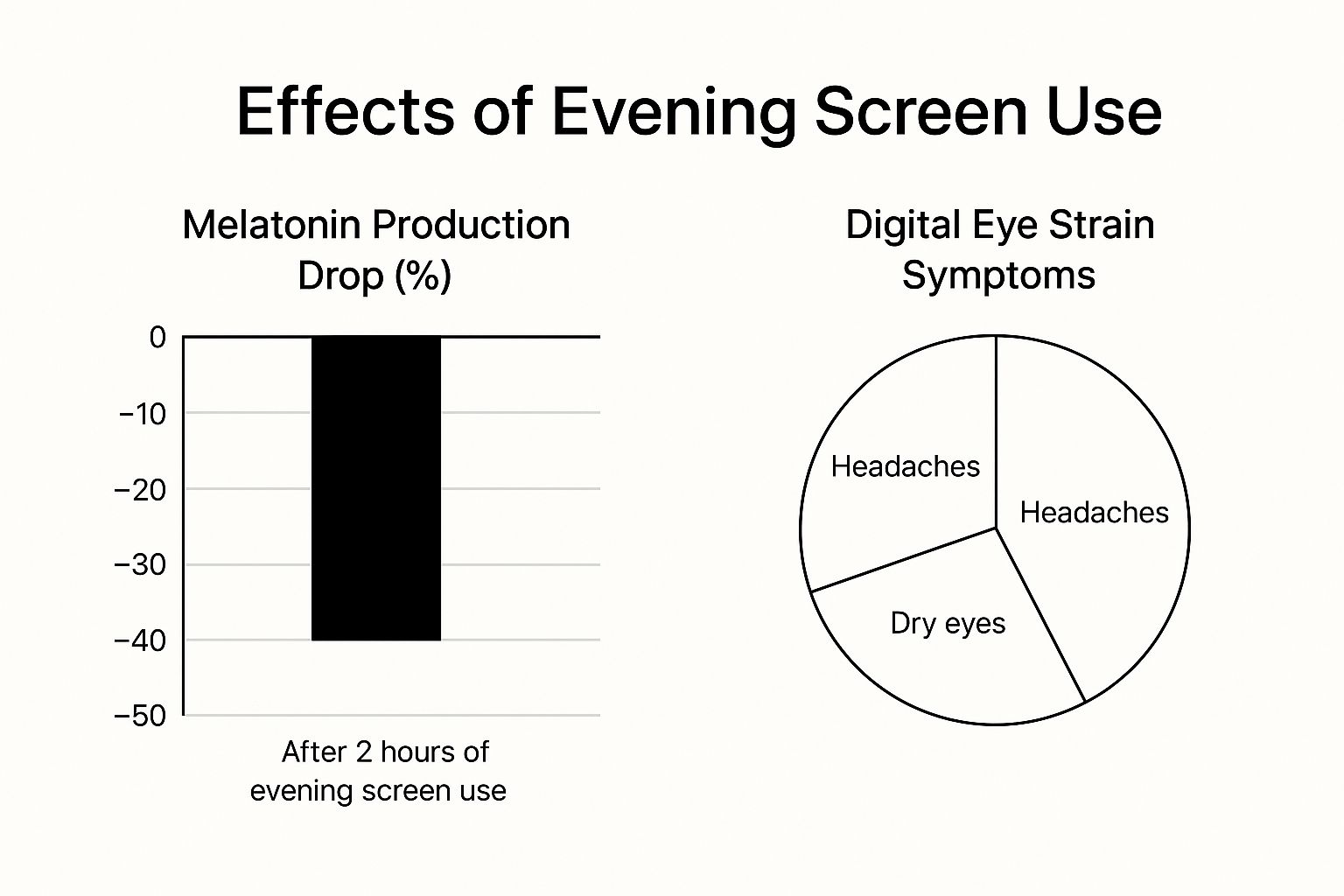
The science is pretty clear: our biology just wasn't designed for this much screen time, and it shows. While our glasses are designed to filter out specific wavelengths, it's also interesting to understand the different light-adaptive lens technologies that exist in modern eyewear.
If you're ready to dig deeper into improving your digital well-being, our blog is packed with more helpful articles. Check it out here: https://element-lux.com/blue-light-blog/
That feeling of tired, achy eyes after a long day of screen time? The one that comes with a side of headaches and blurry vision? That's digital eye strain, and it's your body's response to the intense, high-energy blue light blasting from your devices. Think of it like a camera flash going off in your face for hours on end—it’s exhausting.
Orange-lensed blue light therapy glasses are your best defense against this visual overload. They’re specifically designed to filter out the most aggressive wavelengths of light that force your eye muscles into overdrive. By absorbing that harsh light before it ever hits your retina, the glasses essentially dial down the visual "noise."
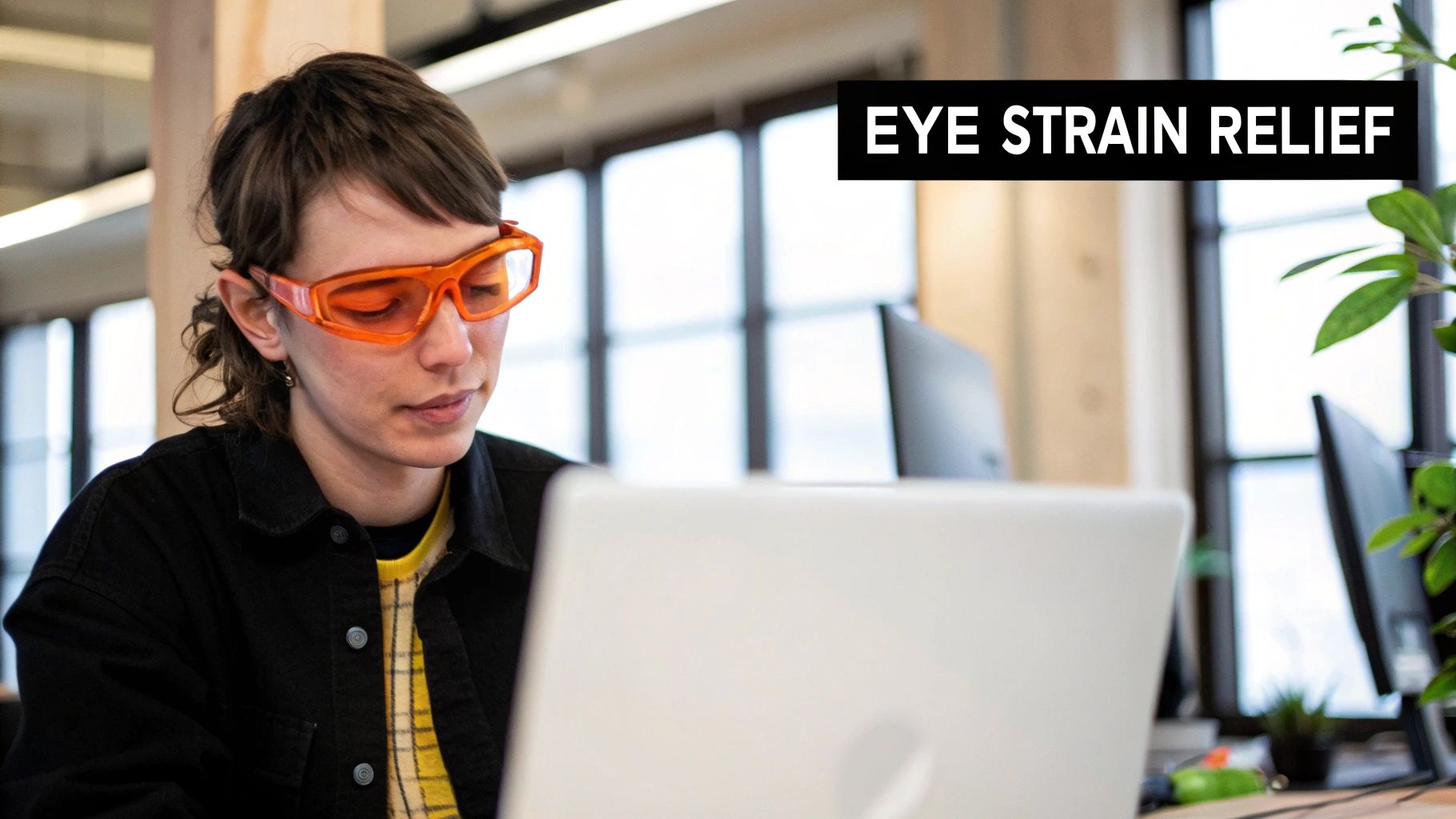
This filtering effect gives your ciliary muscles—the tiny muscles responsible for focusing your eyes—a much-needed break. Instead of constantly fighting against harsh, flickering light, your eyes get a softer, warmer signal. The result? A significant drop in the strain that leads to headaches and discomfort.
But the benefits don't stop at eye comfort. The same blue light that tires out your eyes is also a master of deception, tricking your brain into thinking it’s still high noon. This disrupts your body's natural rhythm and suppresses the production of melatonin, the hormone that tells you it's time to sleep.
When you wear orange-lensed glasses in the evening, you’re creating a "digital sunset." This simple cue tells your brain it's time to wind down, allowing your body to produce melatonin naturally and paving the way for a truly restorative night's sleep.
Amber lenses work in a similar way, creating a warm, cozy visual environment that's perfect for relaxing. They block a huge amount of blue light but still let enough other colors through, making them ideal for unwinding with a good book or watching a movie before bed. It's an easy way to help your mind shift gears from "go, go, go" to a state of calm.
Think of blue light blocking glasses as a key player in your digital wellness toolkit. To really maximize the benefits, pair them with other proven techniques for relaxation and sleep hygiene.
Top Ways to Get Good Sleep:
Top 4 Ways to Relax and Reduce Stress:
Ever find yourself scrolling on your phone late at night, only to feel wired and wide awake when you finally try to sleep? There’s a direct connection there, and it all comes down to a hormone called melatonin.
Your brain produces melatonin to tell your body it’s time to wind down. But when blue light from your phone, laptop, or TV hits your eyes late at night, your brain gets a confusing signal. It thinks it's still daytime, so it slams the brakes on melatonin production, leaving you tossing and turning.
This is where orange-lensed blue light therapy glasses come in. Think of them as creating a “digital sunset” for your eyes. By slipping them on a couple of hours before bed, you filter out those specific, disruptive wavelengths that are messing with your internal clock. It’s the signal your body needs to start its natural nighttime routine.
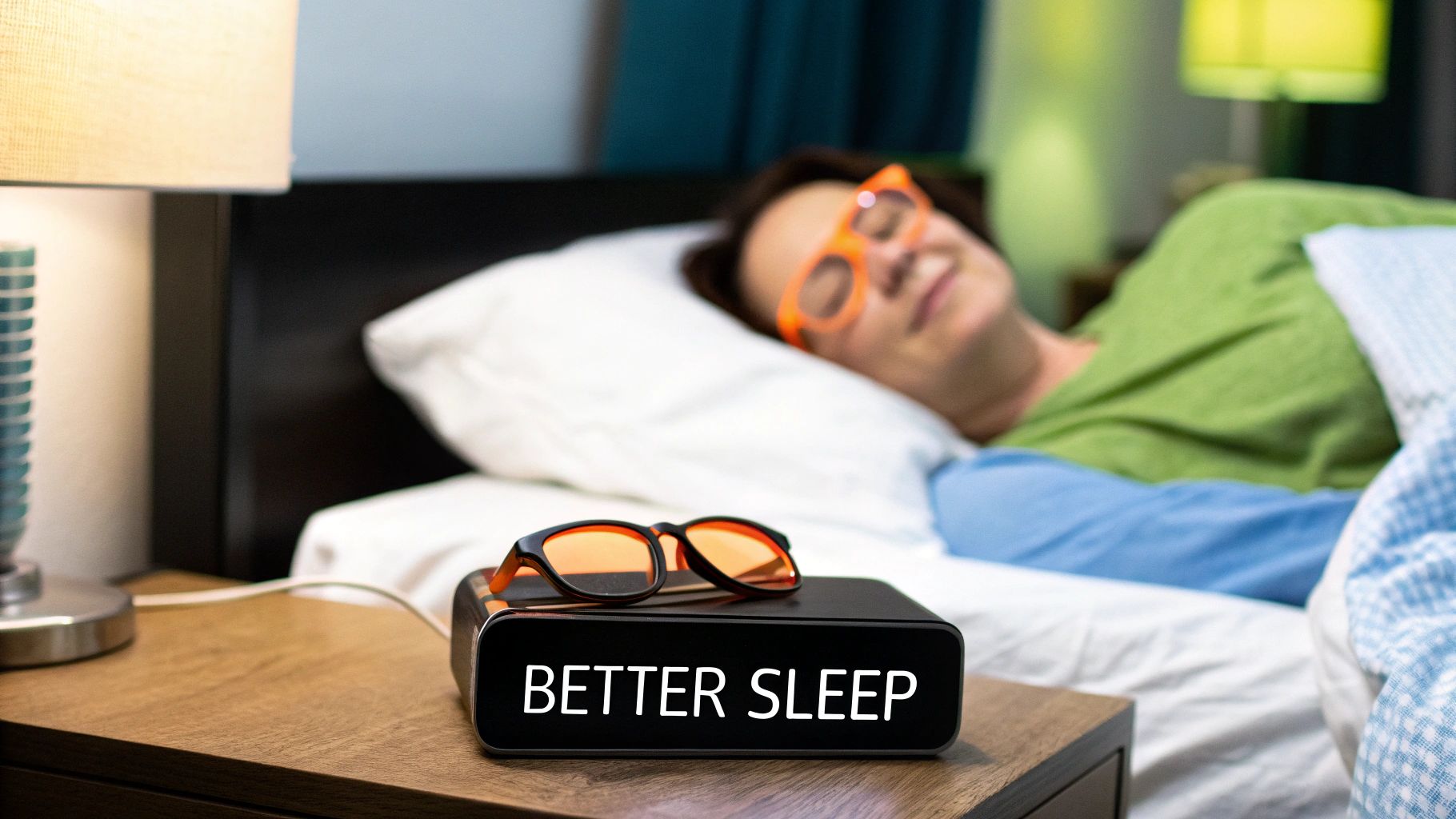
This simple habit lets your body start making melatonin right on schedule, which helps get your natural circadian rhythm back on track. The result? You fall asleep faster and get the kind of deep, restorative sleep that actually leaves you feeling refreshed.
This isn’t just a niche idea anymore. People are catching on globally. The market for these glasses in the Asia Pacific region alone is expected to hit 843.06 million USD by 2025. It’s a clear sign that more and more of us are focusing on simple, preventive ways to take back our health.
While orange lenses are the heavy hitters for pre-sleep melatonin support, amber-colored glasses are fantastic for helping you relax and wind down. They block a good chunk of blue light, cutting down the harsh glare from screens and artificial lights that leads to digital eye strain.
Putting on a pair of amber or orange glasses creates a much softer, warmer visual environment. It’s a cue for your mind to shift gears from a state of high alert to one of calm. You're not just protecting your eyes; you're actively preparing your entire system for a great night's rest. For a deeper look at how it all works, check out our guide on better sleep with the right strategies.
Think of it this way: Just as you dim the lights in your home to create a relaxing atmosphere, blue light blocking glasses dim the harsh light from your digital world, preparing your mind and body for sleep.
Making blue light blocking glasses part of your routine is a powerful first step. But to really get the most out of them, you can pair them with other proven habits for better sleep and less stress.
While orange lenses are the heavy hitters for getting your brain ready for sleep, their amber-lensed cousins are the masters of relaxation. Think of amber glasses as your go-to for creating a sense of calm, making them the perfect accessory for your evening wind-down routine. They take the edge off the stimulating "buzz" from artificial light, helping your mind and body shift gears from high alert to total chill.
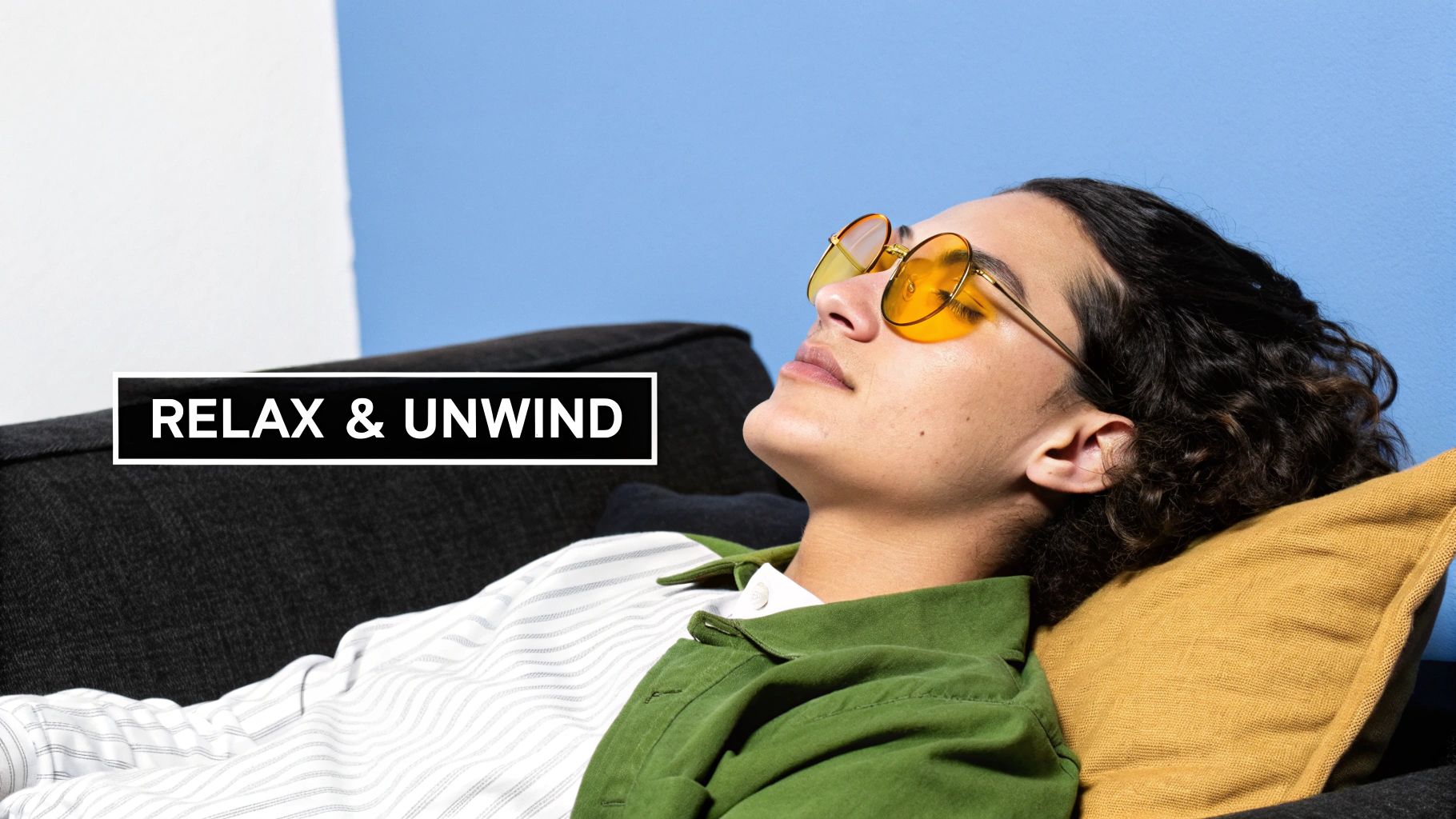
It’s like swapping out the harsh, bright fluorescent bulbs in a room for the soft, warm glow of a fireside lamp. Amber lenses filter a good chunk of blue light but still let more of the color spectrum through than deep orange or red lenses. This creates a cozy, comfortable visual experience that gently tells your brain it's time to unwind.
Weaving amber or orange blue light therapy glasses into your evening is a ridiculously simple yet powerful way to get better rest and lower your stress levels. By softening your visual world, they reduce eye strain and help your nervous system settle down, paving the way for a more peaceful night.
You can really amplify these benefits by combining your glasses with other proven sleep hygiene practices.
Creating a consistent wind-down routine sends powerful signals to your brain that the day is over. Pairing blue light blocking glasses with other calming activities builds a reliable pathway to quicker, deeper sleep and a more relaxed state of mind.
Here are a few of the best strategies to build a comprehensive nighttime routine that supports both your mind and body.
Getting truly restorative sleep isn’t about a single quick fix. It’s about building a powerful, consistent evening routine. While slipping on a pair of blue light therapy glasses is a fantastic first step, the real magic happens when you combine them with other proven sleep habits. Think of this as your guide to building a modern sleep toolkit, where every piece works together to support your body's natural rhythm.
Orange and amber-lensed glasses are the cornerstone of this process. By blocking the harsh blue light pouring from our screens, orange-lensed glasses directly fight the headaches and visual fatigue that come with digital eye strain. More importantly, they stop that artificial light from slamming the brakes on your body's melatonin production, which is the crucial signal your brain needs to know it's time to wind down.
In the same way, amber blue light glasses create a warm, calming visual environment that’s perfect for relaxing. The softer light tones down the mental stimulation that keeps you feeling wired, allowing your nervous system to finally settle. It makes the transition from a chaotic day to a peaceful night feel effortless.
To get the most out of your glasses, you need to build a solid pre-bed ritual. These habits work in harmony to prepare your mind and body for deep, uninterrupted rest.
A good wind-down routine is also key for managing the stress and anxiety that so often sabotage our sleep.
To put it all together, here’s a simple routine you can follow for the last 90 minutes of your day. This isn’t about perfection; it’s about creating a consistent, repeatable process that tells your body it’s time for restorative sleep.
| Time Before Bed | Action | Benefit |
|---|---|---|
| 90 Mins | Put on your blue light glasses. Finish all screen use. | Protects melatonin production from artificial light. |
| 60 Mins | Engage in a calming, screen-free activity (e.g., reading). | Lowers mental stimulation and cortisol levels. |
| 30 Mins | Prepare for tomorrow (e.g., pack your bag, set out clothes). | Reduces morning anxiety and mental clutter. |
| 15 Mins | Practice gentle stretching or mindful breathing. | Relaxes muscles and activates the nervous system. |
| 0 Mins | Lights out. Keep the room cool, dark, and quiet. | Creates the optimal environment for deep sleep. |
By following a simple checklist like this, you take the guesswork out of winding down. You're not just hoping for good sleep—you're actively building the foundation for it, night after night.
That constant feeling of being “on” and just a little bit on-edge? It’s not just in your head. It's digital stress, a very real physiological response to the non-stop buzz of our screens. Getting a handle on it means taking back control—not just of your devices, but of your body’s reaction to them.
A huge piece of the puzzle is managing your light exposure, especially after the sun goes down. The intense blue light pouring out of our screens keeps our nervous system on high alert, making it nearly impossible to genuinely relax. This is exactly why blue light therapy glasses are becoming a go-to tool for signaling to your body that the day is finally over.
This is probably the simplest, most powerful trick in the book: control the light hitting your eyes before you try to sleep. When you put on a pair of orange or amber-lensed glasses in the evening, you’re essentially creating a "digital sunset" for your brain. You’re filtering out all those stimulating light waves that keep you feeling wired.
This simple act immediately dials down the neurological noise that feeds anxiety. By softening your visual world, you’re helping your nervous system flip the switch from “fight-or-flight” to “rest-and-digest.” Suddenly, relaxation feels natural, not forced.
Another game-changer is setting clear boundaries with your devices—both in space and time. Designate certain areas, like the dinner table or your bedroom, as totally screen-free zones. This does wonders for breaking the mindless scrolling habit and helps your brain reconnect those spaces with rest and human connection.
On top of that, set a firm "digital curfew" for yourself. Pick a time each night when all screens get put away for good. This creates a much-needed buffer period for your mind to disengage from the day’s information overload and actually start the process of winding down.
One study revealed that a staggering 86% of people are constantly checking email or social media, which directly leads to higher stress. Creating intentional screen-free time is the perfect antidote to this draining cycle, allowing for real mental recovery.
Instead of just passively letting content wash over you, try being more intentional with your screen time. Before you pick up your phone, ask yourself why. Are you looking for something specific, or are you just trying to dodge a moment of boredom?
When you’re more mindful, you can sidestep the information overload that fuels so much anxiety. This looks like turning off all non-essential notifications, unsubscribing from those newsletters you never open, and curating your social media feeds to be a source of positivity, not a trigger for stress.
Get intentional about scheduling activities that have nothing to do with a screen. Things like reading an actual book, going for a walk, listening to music, or getting lost in a craft can slash your stress levels.
These hobbies give both your eyes and your mind a vital break from the digital grind. While blue light therapy glasses are a fantastic tool for tackling the light-related side of digital strain, a truly holistic approach means exploring all kinds of natural stress reduction methods to find lasting calm.
Got a few lingering questions about blue light therapy glasses? Let’s clear things up so you can feel confident you’re making the right choice for your eyes and your sleep.
Think of the harsh blue light from your screen as a constant visual "noise" that makes your eye muscles work overtime. It's that overstimulation that leads to headaches, fatigue, and that tired, gritty feeling in your eyes.
Orange lenses act like noise-canceling headphones for your eyes. They filter out the most aggressive, high-energy blue light, giving your eye muscles a much-needed break. The result? Your visual world feels softer, your eyes can finally relax, and the nagging symptoms of digital eye strain start to fade away.
Here's the deal: staring at a screen late at night basically tricks your brain into thinking it's still daytime. That blue light exposure hits a switch in your brain that shuts down the production of melatonin, the essential hormone that signals it's time to sleep.
When you put on orange glasses in the evening, you create a kind of "digital sunset." By blocking those disruptive blue light signals, you allow your body to get back to its natural rhythm and produce melatonin like it's supposed to. This helps you fall asleep faster and get the kind of deep, restorative rest you've been missing.
If orange lenses are for serious sleep prep, think of amber lenses as your go-to for winding down. They create a warm, cozy visual vibe that’s perfect for relaxing.
While they still block a good amount of the stimulating blue light, they let a bit more of the color spectrum through than their orange counterparts. The effect is a lot like swapping out a harsh overhead light for a soft, warm lamp. It gently reduces mental stimulation and helps ease your mind and body into a relaxed state—ideal for reading a book or watching a movie before bed.
Ready to take back your evenings and protect your eyes from digital strain? The Element Lux collection is specifically engineered to shield your eyes and help you get back in sync with your natural rhythm.
Shop the Element Lux Collection Now
So, you’ve heard about blue light blocking glasses, but what exactly are they? Think of them as a shield for your eyes in our modern, screen-filled world. They're specially designed eyewear that filters out the high-energy blue light blasting from our phones, computers, and TVs.
The whole point is to give your eyes a break. This can lead to less digital eye strain and, most importantly, a serious improvement in your sleep quality, especially when you wear them before hitting the hay.
Every single day, we're surrounded by artificial blue light. It's coming from your laptop as you work, your phone as you scroll, and your TV as you unwind. All that exposure can leave you with tired eyes, nagging headaches, and a completely messed-up sleep schedule.
Blue light blocking glasses offer a super practical fix. They work by selectively filtering out the most disruptive wavelengths of light, helping both your eyes and your mind feel more relaxed and ready for rest.
To make it even clearer, here's a quick breakdown of what these glasses are all about.
This table helps you understand the core function and primary benefits at a glance.
| Feature | Description | Main Benefit |
|---|---|---|
| Specialized Lenses | Lenses are tinted (often amber or orange) to filter specific light wavelengths. | Filters out high-energy blue light before it reaches your eyes. |
| Melatonin Support | Blocks the blue light that can suppress your body's natural melatonin production. | Helps you fall asleep faster and achieve deeper, more restorative sleep. |
| Eye Strain Reduction | Reduces the harsh glare and high-energy light that fatigues your eye muscles. | Alleviates symptoms like dry eyes, headaches, and blurred vision from screen time. |
Essentially, they're a simple tool to help your body sync back up with its natural rhythm, even when you're surrounded by modern tech.
Heads up—not all blue light glasses are created equal. The color of the lens makes a huge difference.
Orange colored blue light glasses are your best friend for nighttime use. They're built to block a massive amount of blue light, which is exactly what you need to help your brain produce melatonin—the hormone that basically tells your body it's time to sleep. This powerful filtering also drastically reduces digital eye strain by cutting through harsh screen glare, letting your eye muscles relax. The result? You fall asleep faster and get more of that deep, restorative rest you've been missing.
For a more relaxed evening vibe, amber blue light glasses are a fantastic choice. They filter just enough blue light to help you relax and wind down without being as intense as the orange lenses. This makes them perfect for watching a movie or reading on your tablet before bed, gently easing you from a hectic day into a peaceful night.
A great night's sleep is about more than just glasses. Here are a few top-tier tips to improve your sleep hygiene:
Feeling totally wired and overwhelmed? Integrating blue light glasses into your routine can also be a game-changer for unwinding.
To really get what blue light blocking glasses do, we first have to talk about blue light itself. Think of all the visible light you see as a rainbow, or a spectrum. Blue light is just one part of that spectrum—specifically, a high-energy, short-wavelength part that our eyes pick up.
You can see where it fits in with all the other colors below.
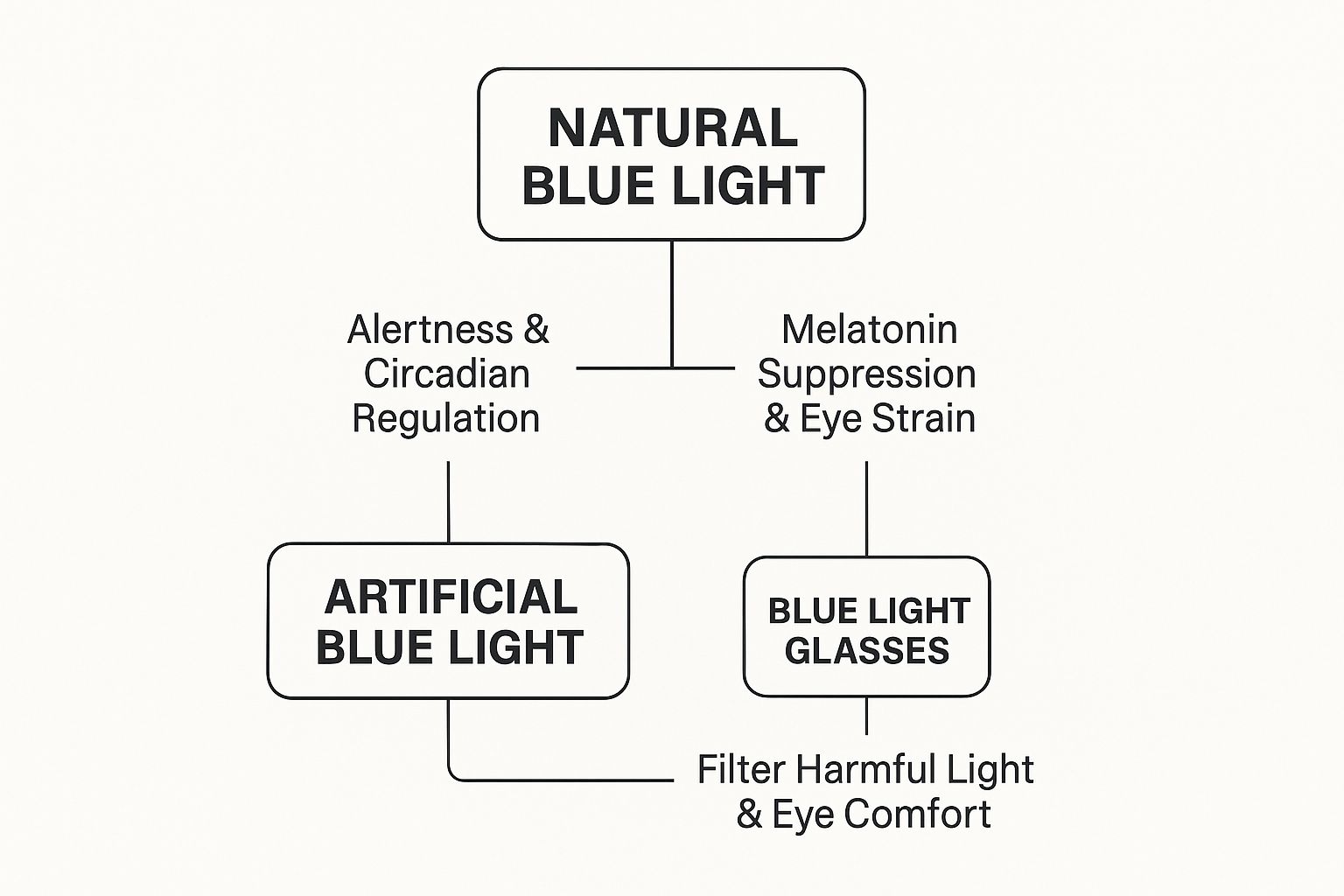
As the image shows, blue light sits at the energetic end of the spectrum, packing a bigger punch than warmer colors like red or orange. Now, the blue light we get from the sun is actually great for us. It helps set our internal body clock, known as our circadian rhythm, and keeps us alert and focused during the day.
The real problem starts when we're blasted with artificial blue light from our screens all day and, more importantly, all night. This constant, close-up exposure essentially tricks our brains into thinking it’s still high noon, even when it's well past sunset.
This non-stop signal can seriously mess with the production of melatonin, the hormone that tells your body it’s time to sleep. Filtering out this specific type of light is a huge step toward getting your natural sleep-wake cycle back on track.
When all that high-energy blue light hits your eyes for hours on end, you get digital eye strain. If you’ve ever had that feeling of sore, tired eyes, blurry vision, or even nagging tension headaches after a long day of screen time, you know exactly what I’m talking about.
This is where orange or amber-tinted blue light glasses come in. They are designed specifically to filter out those harsh wavelengths that make our eye muscles work overtime and feel fatigued.
By slipping on a pair in the evening, you’re creating a much warmer, more calming visual environment. It's a simple cue to your brain and body that it’s time to relax, wind down, and get ready for a good night's sleep.
And it seems a lot of people are catching on. The global market for blue light blocking glasses was valued at around USD 35.26 million in 2025 and is expected to climb to USD 65.61 million by 2034. That's a clear sign that people everywhere are feeling the strain and looking for a real solution.
For more deep dives into the science and benefits, check out our articles on the Element Lux blue light blog.
When it comes to blue light glasses, the color of the lens makes all the difference—especially when your goal is a good night's sleep. Not all tints are created equal. For nighttime, orange and amber lenses are your best bet for telling your brain it's time to power down.
Think of orange lenses as the heavy-hitters in your sleep toolkit. They're engineered to block the most disruptive wavelengths of blue light, which is crucial for sleep. Slipping on a pair from Element Lux for an hour or two before bed is like putting up a "Do Not Disturb" sign for your brain. It stops those activating visual signals from screens, letting your body produce the melatonin it needs to fall asleep faster and sink into a more restorative, deep sleep. This intense filtering also significantly cuts down on digital eye strain, making late-night screen time much more comfortable.
Amber lenses are the perfect "wind-down" accessory for your evenings. They filter a serious amount of blue light, giving everything a warm, calming glow without the full intensity of orange lenses.
This makes them perfect for relaxing with a movie, reading on a tablet, or doing some light scrolling before you're ready to call it a night. They're fantastic for easing digital eye strain and helping your mind shift gears from a hectic day to a state of calm.
Your glasses are powerful, but they work best when paired with other healthy habits. It’s all about creating a solid sleep routine.
By combining these habits, you’re creating a comprehensive approach to sleep hygiene. The glasses tackle the light-based disruption, while the routine reinforces your body's natural sleep-wake cycle for maximum benefit.
That same evening routine can also be a game-changer for managing stress.
Ever wrap up a long day at your computer with tired, burning, or aching eyes? That’s digital eye strain, and you're definitely not alone. It happens because blue light has a short, high-energy wavelength that scatters more easily than other light, creating a kind of visual "noise." This forces the tiny muscles in your eyes to work overtime just to stay focused.
All that constant effort is what leaves you feeling fatigued and uncomfortable. This is where orange and amber blue light blocking glasses, like the ones from Element Lux, come in. They act as a filter, cutting straight through that visual noise by blocking the most scattered, high-energy wavelengths. The result? A sharper, higher-contrast image that finally lets your eye muscles relax.

It’s a simple change that can make your screen time feel so much more comfortable. Besides wearing glasses, another great strategy is simply adjusting your screen's settings. Learning about taking control of your screen brightness can provide another layer of protection.
As more people understand these issues, the demand for a real solution has skyrocketed. The global market for these glasses hit roughly $2.5 billion in 2025 and is only expected to keep growing. It's clear that people everywhere are looking for relief.
Beyond just making your eyes feel better, managing your blue light exposure is a surprisingly powerful tool for lowering daily stress and anxiety. Here are a few ways you can help your mind and body unwind more effectively.
Think of blue light blocking glasses as your secret weapon for a better night's sleep. They're a powerful tool, but they deliver the best results when you make them part of a smart evening routine.
Putting on a pair of orange or amber glasses is a simple but critical first step. It sends a clear signal to your brain that it’s time to wind down for the night. By filtering out the specific blue light that messes with your melatonin, they help you fall asleep faster and get the kind of deep rest your body is craving.
This one simple act can make a massive difference, especially if you have a hard time disconnecting from your screens in the evening. If you want to dive into the details, you can learn more about how our glasses help with sleep and see the science for yourself.
Ready to truly transform your sleep? Combine your glasses with these essential habits to create a rock-solid nighttime ritual.
While glasses are a game-changer for managing light exposure, they are just one piece of the puzzle. It's always a good idea to explore other strategies for alleviating sleep disorders to build a complete and effective sleep hygiene routine.
Living in a world that’s always "on," finding simple ways to actually switch off is a bigger deal than ever for our mental health. It might sound surprising, but managing your blue light exposure with the right pair of glasses is a powerful first step in helping your mind and body unwind at the end of the day.
Of course, this simple habit is most effective when you pair it with other techniques that quiet your nervous system and help release all that pent-up tension.
Think of these four strategies as a complete toolkit. They help frame what blue light blocking glasses truly are: not just an eye-care gadget, but a central piece of your daily relaxation ritual.
Switch to Amber Glasses in the Evening: Make it a habit to put on your amber-tinted glasses from Element Lux a few hours before you plan to sleep. This simple swap creates a warm, calming visual environment, dialing down the stimulating glare from your screens. It’s like sending a clear signal to your brain that it's time to shift out of high-alert mode and into a state of rest.
Take a Five-Minute Breathing Break: It's easy to get lost in your screen for hours. Step away and focus on nothing but your breath for just five minutes. A guided breathing exercise can instantly calm your nervous system, slowing your heart rate and taking the edge off any anxiety you’re feeling.
Do Some Gentle Stretching: We all hold stress in our bodies—usually in the neck, shoulders, and back. Get up and do a few gentle stretches. Releasing that physical tension does wonders for helping your mind feel more at ease, too.
Trade Your Phone for a Screen-Free Hobby: At least an hour before bed, make a conscious choice to put your phone away. Out of sight, out of mind. Pick up a book, listen to some music, or write in a journal. Giving your brain a break from the constant feed of digital information is crucial for truly disconnecting.
By bringing these practices together, you create a powerful routine that actively pushes back against daily stress. The glasses set the relaxing tone, and the other habits build on it, helping you genuinely unplug and recharge for the next day.
This isn't just a niche idea; it's a global one. The Asia-Pacific region, for example, accounted for 32.10% of the anti-blue light glasses market back in 2025, showing just how mainstream this has become. You can explore more about the global market trends on Cognitive Market Research to see the full picture.
Let's clear up a few of the most common things people ask about blue light blocking glasses. Getting the facts straight will help you feel confident you're picking the right pair for your needs.
The color of the lens tells you everything about its job. Orange and amber lenses aren't just for style—they're specifically engineered to tackle the problems that come with screen time, especially after the sun goes down.
Orange lenses are your heavy-hitters for protecting sleep. Think of them as the ultimate nighttime shield. They block a very high percentage of blue light, which is exactly what you need to keep your body's natural melatonin production on track. This helps you fall asleep faster and get the kind of deep, restorative rest your body craves. As a bonus, filtering out those harsh wavelengths also dramatically reduces digital eye strain during late-night screen use.
For a softer touch, amber lenses are perfect for helping you relax and wind down. They filter just enough blue light to create a warm, calming visual experience that eases eye fatigue. It’s a great way to signal to your brain that the busy day is over and it's time to shift into a peaceful evening. To dig deeper into this, we have more helpful info waiting for you in our online resources section.
Glasses are a fantastic tool, but they work best when they're part of a solid sleep routine.
Ready to take back your evenings and improve your sleep? The Element Lux collection of blue light blocking glasses is designed to help you unwind naturally and wake up refreshed. Shop now and feel the difference for yourself.
If you’ve ever finished a long day of screen time feeling like your eyes are tired, dry, and just plain overworked, you’re not alone. That feeling is often a direct result of digital eye strain, and blue blocking computer glasses are designed to tackle the problem head-on. By filtering out the intense blue light from our devices, these glasses can make hours of screen time far more comfortable and even help you sleep better.
Think of the light coming from your screen like the harsh glare of the midday sun. You wouldn't stare directly into the sun without sunglasses, right? Staring at a screen for hours exposes your eyes to a similar, albeit less intense, blast of high-energy blue light. This particular part of the light spectrum has short, punchy wavelengths that scatter easily, creating a kind of visual "noise" that makes it harder for your eyes to focus.
To deal with this unfocused light, the tiny muscles in your eyes have to work overtime just to keep things clear. It’s a constant, low-level workout they weren't designed for, and it leads straight to digital eye strain. The symptoms are probably all too familiar:
Over time, this isn't just about discomfort. All that strain can mess with your body's natural rhythms. Blue blocking computer glasses act like a shield, filtering out those aggressive wavelengths and giving your eyes a much-needed break.
This infographic breaks down the key numbers on blue light and shows how protective eyewear can help.
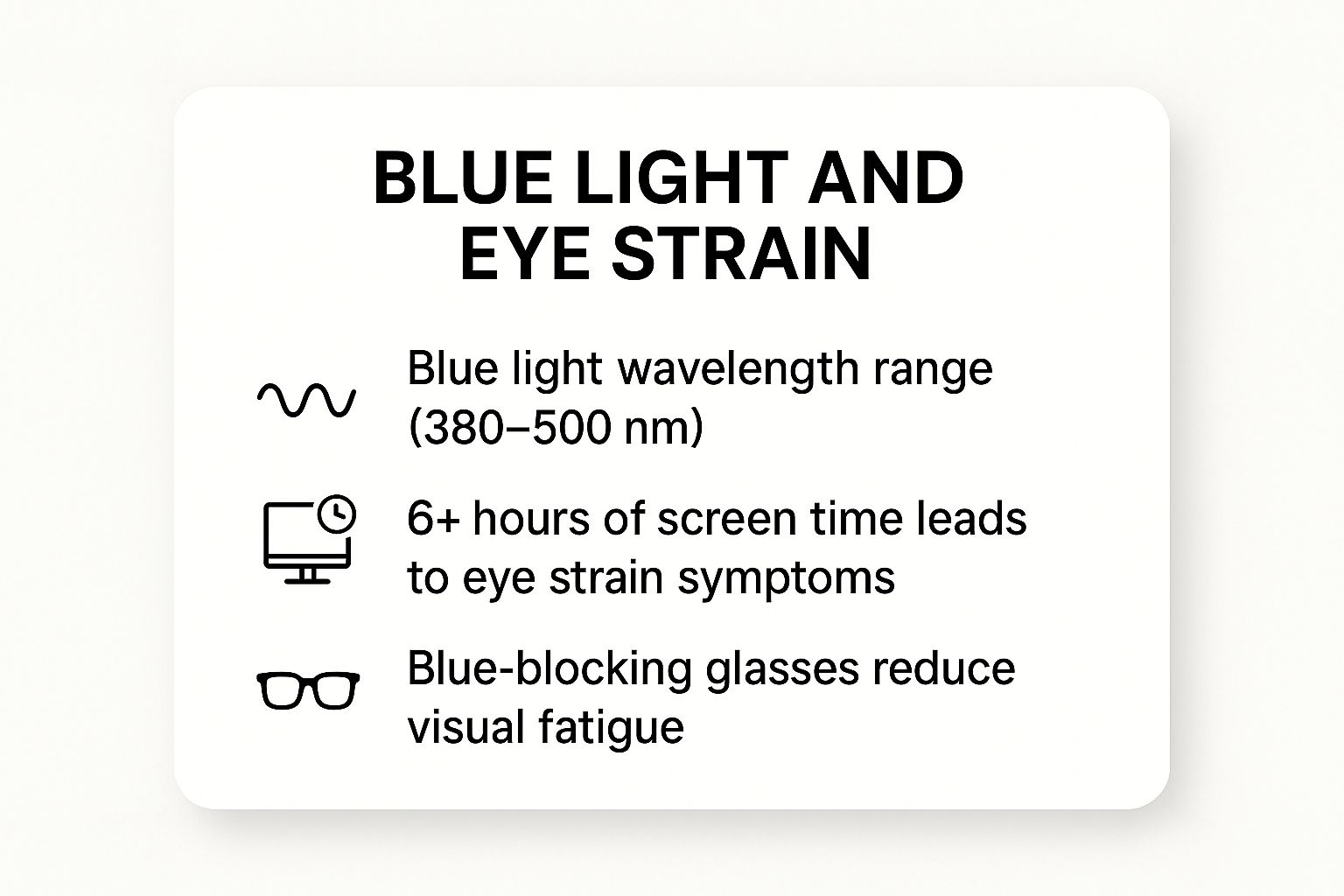
As you can see, blue light sits in the 380–500 nm range of the visible light spectrum. The data makes it clear: more screen time directly correlates with more symptoms of eye strain.
To make it even clearer, here’s a quick breakdown of the common issues caused by blue light and how these glasses provide relief.
| Symptom | Underlying Cause | How Blue Blocking Glasses Help |
|---|---|---|
| Headaches & Migraines | Constant muscle contraction in and around the eyes to maintain focus. | By reducing the need for intense focusing, the glasses help relax eye muscles. |
| Blurred Vision | Eye muscles become too fatigued to hold focus clearly. | Filtering blue light creates a sharper, higher-contrast image, easing the focusing effort. |
| Dry & Irritated Eyes | We blink less when staring at screens, leading to poor lubrication. | Reducing glare and strain can help normalize blink rates and reduce irritation. |
| General Eye Fatigue | The cumulative effect of overworking your eyes for extended periods. | The glasses act as a buffer, cutting down the overall workload on your eyes. |
This table shows it's all connected. Easing the strain on your eyes can lead to a cascade of positive effects, making your screen time more sustainable.
Digital eye strain isn't just a minor annoyance; it’s your body’s direct response to the unnatural demands modern screens place on your vision. Every moment you're looking at a screen, your eyes are performing a complex focusing act that becomes exponentially harder with high-energy blue light in the mix. To dive deeper into the science, you can explore our comprehensive blue light blog, where we unpack the research behind screen-related fatigue.
By filtering these intense wavelengths, blue blocking glasses effectively turn down the "visual noise," allowing your eyes to relax even while you're focused on a task. This reduction in effort is what provides the feeling of immediate relief many users report.
At the end of the day, wearing these glasses is a simple, practical way to build a healthier relationship with your digital devices. It protects your eyes from unnecessary fatigue, making work, study, and even your late-night Netflix binge more enjoyable.
Not all blue light glasses are created equal. When it comes to maximum protection against digital eye strain and sleep disruption, orange colored blue light glasses are the gold standard. They are specifically engineered to filter out the most intense, high-energy blue wavelengths that cause the most problems.
By blocking the harshest part of the light spectrum, orange lenses significantly reduce the visual "noise" that makes your eyes work overtime. This means the tiny muscles responsible for focusing don't have to strain as hard to keep images sharp and clear. This reduction in muscular effort is the key to combating digital eye strain, providing noticeable comfort during long work sessions and preventing headaches.
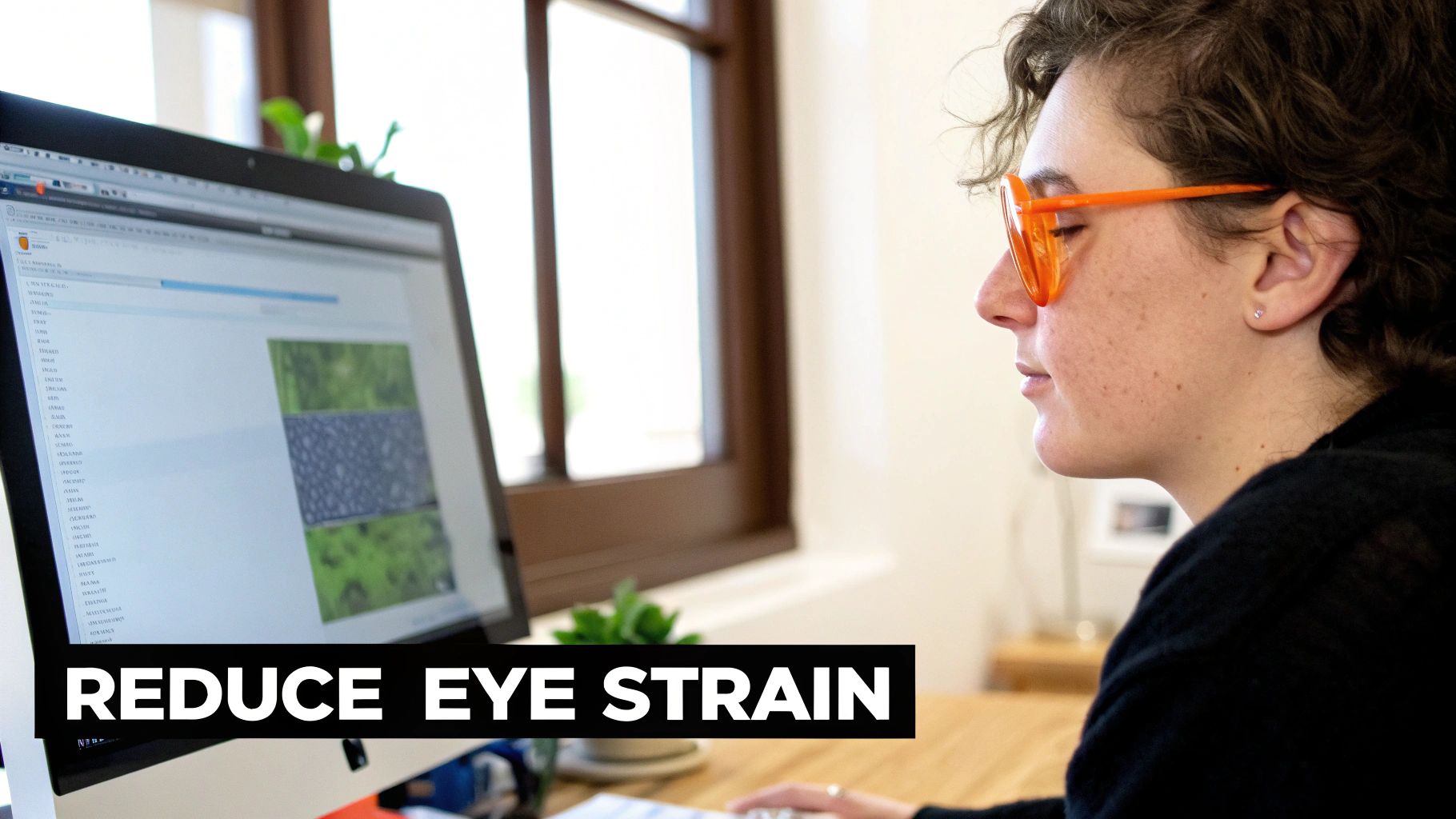
As evening approaches, your brain naturally produces melatonin, the hormone that signals it's time to sleep. Blue light from screens disrupts this process, tricking your brain into thinking it's still daytime and suppressing melatonin production. Orange lenses act as a shield. By wearing them for 2-3 hours before bed, you block these disruptive light signals, allowing your body's melatonin production to proceed on its natural schedule. This helps you fall asleep faster and achieve deeper, more restorative rest.
This growing awareness of digital wellness is why protective eyewear has exploded in popularity. The global market for blue light blocking glasses is expected to hit around $2.5 billion in 2025, a jump fueled by the sheer number of us dealing with digital eye strain. You can read more about this market growth on archivemarketresearch.com.
The goal is to create a more comfortable visual and biological environment. By removing the most jarring part of the light spectrum, orange lenses allow your eyes to function more efficiently and your sleep cycle to remain undisturbed.
It's a simple change, but one that can make a huge difference in your daily comfort and nightly rest.
While orange lenses offer maximum protection, sometimes you just need to gently transition from a busy day to a calm evening. That's where amber blue light glasses excel. They filter a moderate amount of blue light, creating a warmer, softer visual experience that signals to your brain it's time to relax and wind down.

Think of amber lenses as dimming the lights on the digital world. This visual cue helps reduce the mental "buzz" from screen time, making it easier to shift from a high-alert state to a more relaxed one. Slipping them on while watching TV or scrolling in the evening creates a crucial buffer between screen time and bedtime, allowing you to unwind without completely derailing your natural sleep cues.
Making blue blocking glasses part of your evening routine is a game-changer for better rest. Here are the top ways to get good sleep:
Managing stress is crucial for well-being, and your eyewear can be a valuable tool in your relaxation toolkit.
As evening sets in, your brain has a built-in routine. It starts producing melatonin, the hormone that basically tells your body, "Hey, it's time to wind down." The problem is, the blue light beaming from our phones, laptops, and TVs sends the complete opposite signal. It tricks your brain into thinking it's still high noon.
This constant blast of artificial daylight slams the brakes on melatonin production. The result? You're left feeling wired when you should be getting sleepy, making it harder to fall asleep and wrecking the quality of your rest.
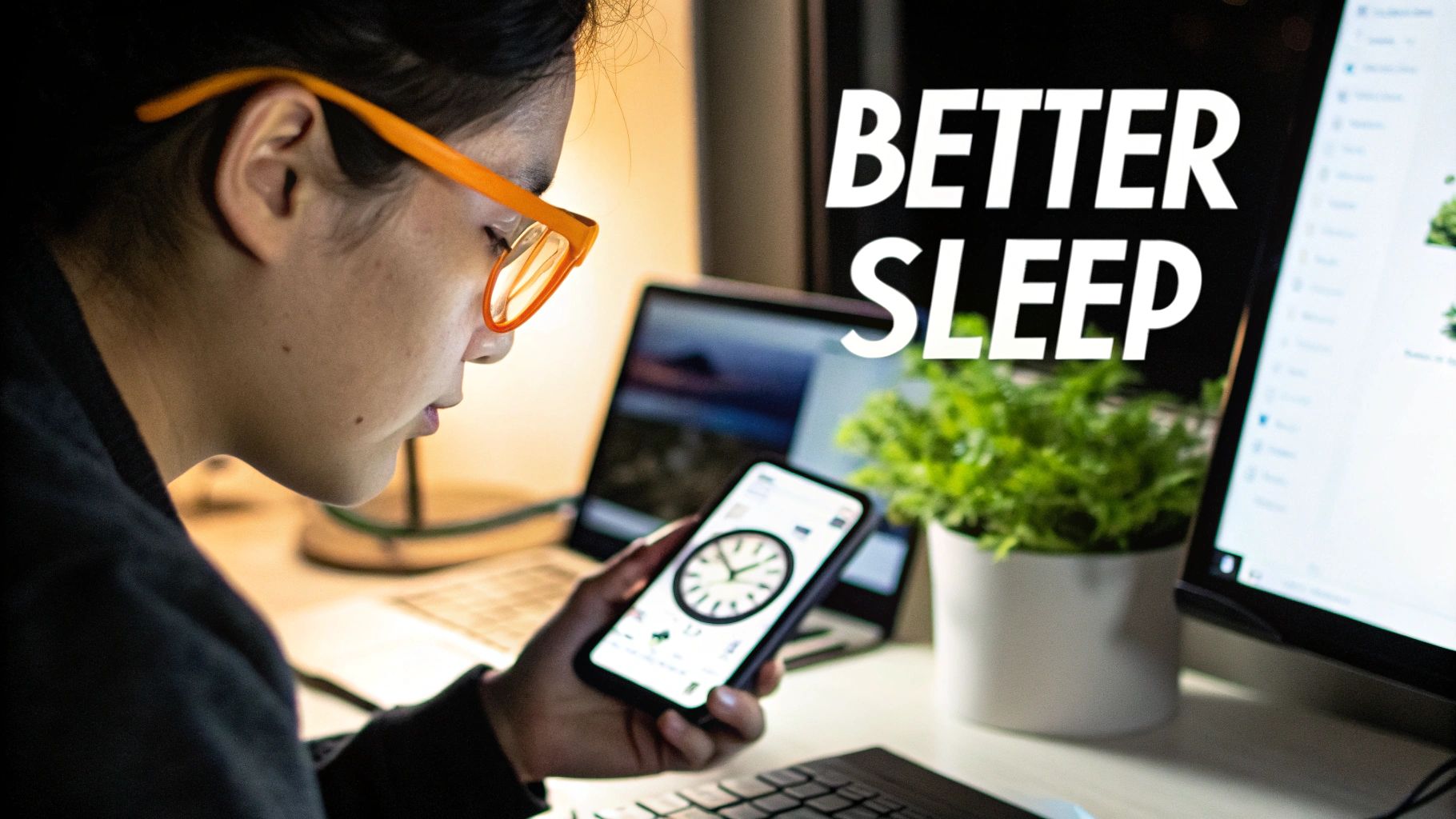
This is exactly where orange-lensed blue blocking computer glasses make a huge difference. Think of them as a protective shield for your eyes. By wearing them for just two to three hours before bed, you block those confusing light signals from ever reaching your brain. The specific orange tint is engineered to filter out the most disruptive blue wavelengths, letting your body get back to its natural, scheduled melatonin production.
It’s a simple habit that helps get your internal clock—your circadian rhythm—back in sync with the actual time of day. Instead of tossing and turning, you'll start to feel naturally drowsy when bedtime rolls around, helping you fall asleep faster and get the restorative rest you need.
Orange and amber lenses do more than just get you ready for sleep; they also give your eyes a much-needed break. That warm tint dials down the harsh glare from your screen, which is a major cause of eye strain and those nagging evening headaches. This visual comfort sends a clear message to your brain: it's time to shift from high-alert mode to relaxation.
By easing the workload on your eye muscles, amber lenses help you unwind both physically and mentally. This powerful one-two punch—less eye strain and normalized melatonin—makes these glasses an incredible tool for improving your evening wellness.
Wearing orange-lensed glasses in the evening is like drawing the curtains on the digital world. It tells your body that the day is ending, allowing your natural sleep cycle to take over without interference from artificial light.
Putting on a pair of blue blockers is a game-changing first step. But if you want to really supercharge your sleep, combine them with these proven sleep hygiene habits:
It’s no secret that better sleep leads to lower stress. Your glasses are a key player here, but you can take it even further with these simple practices:
Getting truly restorative sleep is about more than just flicking off the lights at the end of the day. In a world dominated by screens, a modern approach has to start with managing your light exposure.
This is where blue blocking computer glasses come in. They are a foundational tool for any solid sleep hygiene routine. By filtering out the disruptive artificial light from screens in the hours before you go to bed, you’re giving your body a crystal-clear signal that it's time to wind down and prepare for rest.
But glasses are just one piece of the puzzle. To really lock in great sleep, you need a holistic strategy that accounts for your environment and your habits. Think of it like building an ecosystem for rest, where every single element works together to help you fully recharge.
When you pair your evening eyewear with these evidence-backed habits, you’ll see a massive difference in your sleep quality.
Let's be real: high stress is a sleep-killer. Weaving a few simple relaxation techniques into your nightly routine can quiet your mind and get your body ready for bed.
People are catching on. The demand for wellness tools like these is surging worldwide. In Europe alone, revenue for blue light blocking eyewear is expected to jump from $435.05 million in 2021 to $605.37 million by 2025—that's a nearly 40% increase. This trend shows a growing public awareness of just how much our digital lives impact both our eyes and our sleep.
For a deeper dive into building a bulletproof sleep routine, check out our guide on how to get better sleep. While blue blocking glasses are a game-changer for your circadian rhythm, they're part of a bigger picture. To round out your strategy, explore other proven practices like the Top 10 Ways To Improve Your Sleep and build a routine that works for you.
In our screen-first world, it's easy to feel wound up by the constant digital buzz. That low-level hum of notifications and endless scrolling can quietly build into real stress and anxiety. The good news is that managing it comes down to a few smart habits and the right tools—and believe it or not, your glasses can make a huge difference.
By tackling digital eye strain and helping you sleep better, blue blocking computer glasses ease two of the biggest physical stressors your body faces every single day. When your eyes are less strained and your body is properly rested, your mind is naturally calmer and more resilient.
Of course, glasses work best when they're part of a bigger picture. Think of them as a foundational piece of your mental well-being toolkit. Here are four practical ways to get a handle on digital stress, starting with your eyewear.
Cut Down Eye Strain with Orange Lenses: The harsh glare blasting from your screens makes your eye muscles work overtime. This constant effort creates a physical tension that feeds directly into mental fatigue. Wearing orange-tinted blue blocking computer glasses filters out that aggressive light, giving your eyes—and by extension, your brain—a chance to finally relax.
Use Orange or Amber Lenses to Sleep Deeper: A bad night's sleep is a recipe for anxiety. By blocking blue light in the evening, these glasses allow your body to produce melatonin on a natural schedule. The result is deeper, more restorative rest. A well-rested brain is simply better at navigating the pressures of the day.
Set Clear Digital Boundaries: This one is simple but powerful. Designate specific "screen-free" times, especially in the hour leading up to bed. Unplugging gives your mind a much-needed break from the firehose of stimulation, letting it properly unwind. If you need something to replace the scrolling, a complete guide to bedtime stories for adults with anxiety and stress can be a surprisingly effective way to ease into a peaceful state of mind.
Take Mindful Breaks and Move Your Body: It's easy to get locked in for hours at a time. Set a timer to get up from your desk every hour. Use that short break for a few deep breaths, a quick stretch, or a walk around the room. This physical reset helps interrupt the cycle of focus and tension that builds up during long sessions in front of a screen.
As you start looking into blue blocking computer glasses, a few common questions always pop up. Getting the right answers helps you pick a pair that actually does what you need it to—whether that’s finally getting rid of that nagging eye strain, sleeping better, or just being able to relax after a long day staring at screens.
The color of the lens is everything. It's what determines just how much blue light gets filtered out before it hits your eyes.
Orange colored lenses are the heavy hitters. They’re designed to block the maximum amount of blue light, which is why they’re so effective at crushing digital eye strain. More importantly, this powerful filtering is scientifically shown to let your body produce melatonin naturally, setting you up for deeper, more restorative sleep.
Amber blue light glasses are a more moderate choice. They filter just enough blue light to make your screen look noticeably warmer and softer. That calming visual shift is perfect for helping you wind down in the evening while you’re watching TV or scrolling on your tablet, without the full-on intensity of a darker orange lens.
Using these glasses as part of a solid nighttime routine is where the real magic happens. Here are a few proven ways to get better sleep:
Lowering your daily stress is a game-changer for your overall well-being. Believe it or not, your glasses can be a simple but powerful tool in your relaxation kit.
Ready to feel the difference that less eye strain and deeper sleep can make? The Element Lux team has engineered premium blue blocking glasses to help you unwind, relax, and rest better.
Discover the difference and shop now!
If you've ever ended a long workday with dry, scratchy eyes, a dull headache, or blurry vision, you know exactly what digital eye strain feels like. It’s that nagging discomfort that comes from staring at screens for hours on end. The good news is, relief can be surprisingly simple.
The easiest trick in the book is the 20-20-20 rule. All you have to do is this: every 20 minutes, look at something 20 feet away for at least 20 seconds. That’s it. This tiny habit gives the focusing muscles in your eyes a much-needed break and, when paired with a good desk setup, can make a world of difference almost immediately.
What we call "digital eye strain" is actually a group of issues officially known as computer vision syndrome. It’s not just one symptom—it’s a whole collection of them, from achy, tired eyes and blurry vision to headaches and even neck pain. And if you think you're the only one, you're definitely not alone.
The problem is incredibly widespread. According to the 2025 Workplace Vision Health Report from VSP Vision Care, nearly 60% of employees globally deal with digital eye strain. It’s why experts are constantly recommending simple, repeatable habits like the 20-20-20 rule. It works because it forces the muscles inside your eyes to relax, preventing them from getting locked into that intense, up-close focus for too long.
This chart breaks down just how common the main symptoms are.
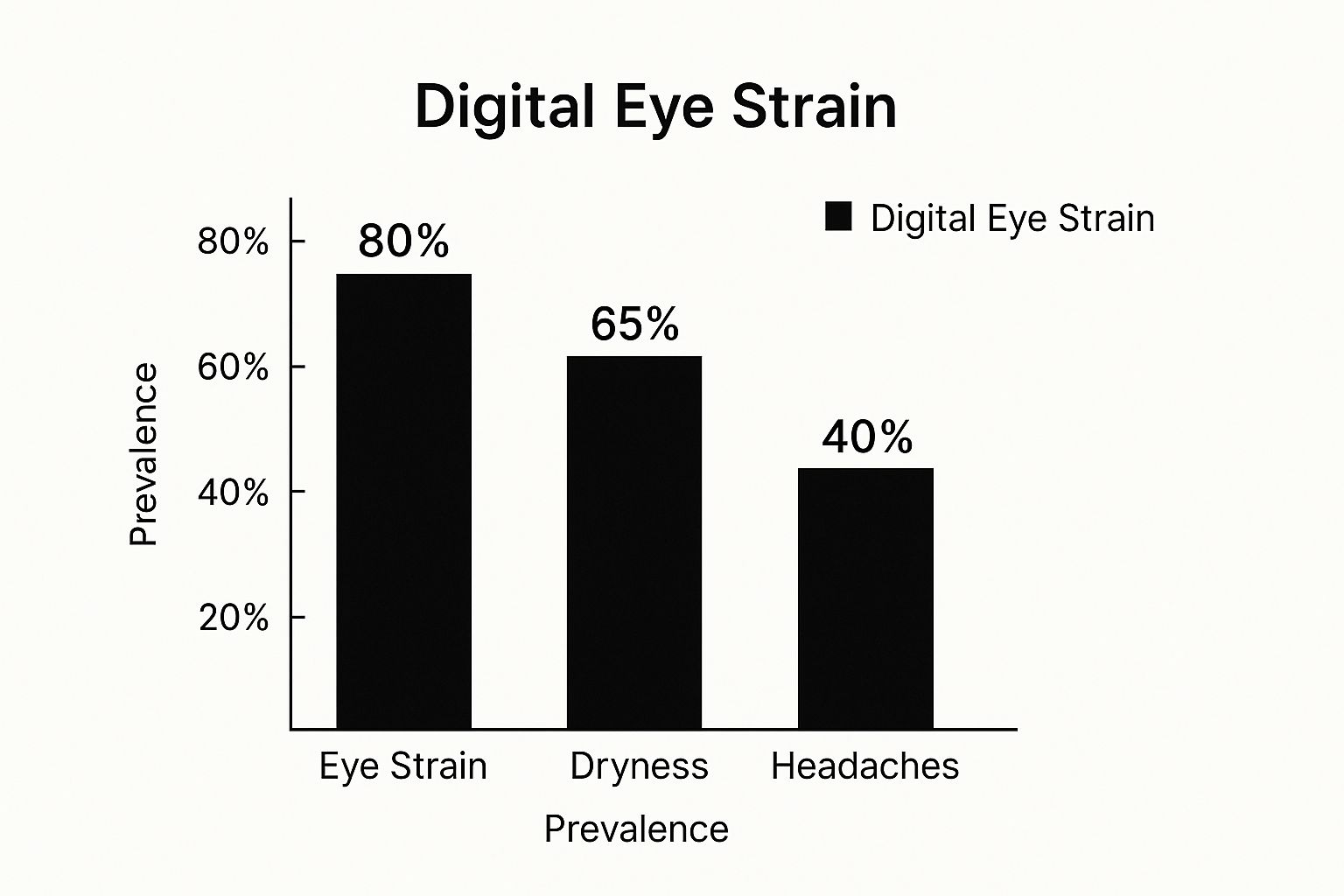
While general eye strain takes the top spot, you can see that dryness and headaches are right behind. Pinpointing what triggers these issues for you is the first step toward getting some real relief.
So many of our daily habits contribute to tired eyes, but the fix is often just as simple as the cause. Here's a quick look at common triggers and some immediate solutions you can try right now.
| Cause of Eye Strain | Immediate Solution |
|---|---|
| Prolonged Screen Time | Practice the 20-20-20 rule to give your eyes regular breaks from close-up focus. |
| Poor Screen Contrast/Brightness | Adjust your display settings to match the ambient light in your room. Avoid glare from windows. |
| Incorrect Desk Ergonomics | Position your monitor an arm's length away and ensure the top is at or slightly below eye level. |
| Infrequent Blinking | Make a conscious effort to blink fully and often to keep your eyes lubricated naturally. |
These small adjustments don't require a lot of effort but can add up to a significant reduction in eye discomfort throughout your day.
Ever get that gritty, exhausted feeling in your eyes after a day spent staring at a screen? You can thank the high-energy blue light blasting from your devices. It digs deep into the eye, and that’s a big reason why you feel that all-too-familiar digital eye strain.
But it’s not just about tired eyes. That constant exposure, especially late at night, wreaks havoc on your ability to get a good night's sleep. Blue light basically tricks your brain into thinking it’s still daytime, which slams the brakes on your body's production of melatonin—the hormone that signals it's time to wind down.
This is where a good pair of orange or amber-tinted glasses really shines. Unlike those clear "computer glasses" that only filter out a tiny fraction of blue light, orange lenses are built to block the most disruptive wavelengths. The warm tint of orange colored blue light glasses filters out the harsh, high-energy light from screens, giving the tiny muscles in your eyes a much-needed break. This significantly reduces the tired, gritty feeling associated with digital eye strain.
Pop on a pair of Element Lux orange-colored glasses in the evening, and you're protecting your natural melatonin production. By blocking the blue light that suppresses this key sleep hormone, they help you feel genuinely sleepy when you should be, paving the way for a deeper, more restorative night's rest.
Amber blue light glasses work in a similar way, wrapping your vision in a warm, calming glow that helps you relax and wind down. I like to think of it as creating your own "digital sunset." This small ritual signals to your brain that the day is over, helping you shift from that wired, alert state to a much more relaxed one. If you want to dig deeper into the science, you can explore the benefits of blue light glasses and how they boost eye comfort.
By filtering out stimulating blue light, amber glasses help ease the transition into a restful state, reducing the "wired" feeling many of us experience after evening screen time.
Of course, great sleep is about more than just blocking blue light. Building a solid nighttime routine is key.
When you combine these habits with the right eyewear, you’re creating a powerful recipe for truly restorative sleep. To learn more about how it all works, check out the resources on our blue light blog.
Think of it like creating your own personal sunset, even when you're burning the midnight oil. That's exactly what wearing amber or orange-tinted blue light glasses does in the evening. They create a "digital sunset" that cues your brain to start winding down and gives your eyes a much-needed break.

This isn't just a psychological trick; it has real physiological benefits. Filtering out that harsh blue light helps your body regulate its natural sleep-wake cycle, which can even help dial down feelings of stress and anxiety. When your mind is calm, your body tends to follow, making it far easier to fall asleep and stay that way.
Pairing blue light blocking glasses with a few other simple habits can completely transform your evening routine and your sleep. To really unwind, give these a try.
Here are four of my go-to ways to de-stress before bed:
By building a consistent, screen-smart evening ritual, you’re essentially training your body to transition smoothly from "on" to "off." This preparation is absolutely key to getting the deep, restorative sleep your eyes and mind are craving.
Ultimately, the goal is deep, uninterrupted sleep. That’s when your eyes truly get to recover and repair themselves. Orange and amber glasses are an incredibly powerful tool to help you get there. You can dig deeper into how our glasses help with sleep and the science behind it.
To start getting the best sleep of your life, focus on these habits:
One of the best things you can do to help your eyes recover from daily strain is, quite simply, to get better sleep. A solid nightly routine is your roadmap to that kind of restorative rest, and orange-colored blue light glasses are a surprisingly critical first step.
Think of these glasses as more than just an accessory—they're a tool. By filtering out the stimulating blue light that pours out of our screens, they give your brain the signal to start producing melatonin naturally. This is the hormone that tells your body it's time for bed, helping you not only fall asleep faster but also enjoy deeper, more restful sleep cycles.
There's also the calming effect of the orange and amber lenses. When you slip on a pair of Element Lux amber glasses, the warm tint feels a bit like a "digital sunset." It’s a simple visual cue that dials down the mental buzz from screens, making that transition from "on" to "off" feel so much easier. This simple wind-down is key for allowing your eyes to truly rest overnight.
A consistent evening routine built around blue light blocking glasses can significantly reduce stress and prepare your mind and body for high-quality, restorative sleep.
To really get the most out of your glasses, weave them into a broader relaxation routine. Here are four easy ways to de-stress before you turn in for the night:
With that foundation, you can start fine-tuning your sleep hygiene to maximize your eye recovery. For a much deeper dive, you can check out our proven strategies for better sleep.
Here’s a quick checklist to get you started:
Beyond special eyewear, you have the power to combat eye strain with simple, free techniques. Think of this section as your daily toolkit for eye care, focusing on small habits that deliver some serious relief.
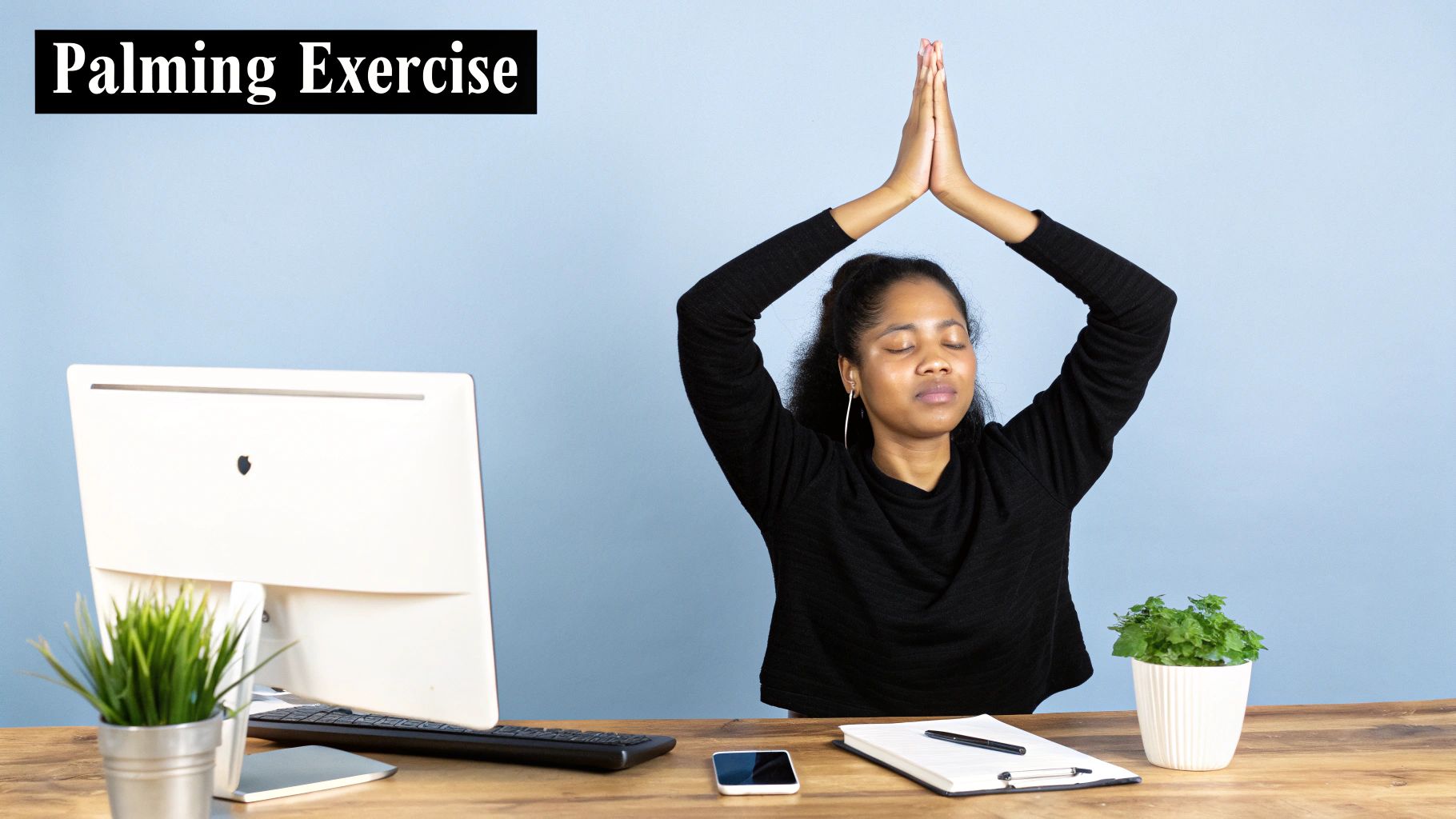
It's a huge issue, too. Globally, over 2.2 billion people live with vision impairment, and for nearly 1 billion of them, the problem was either preventable or hasn't been addressed. A lot of these issues stem from things that could be managed with simple measures—like taking screen breaks or fixing your lighting.
Weaving a few quick drills into your day can keep your eye muscles flexible and cut down on that end-of-day fatigue.
These exercises are like a reset button for your eyes' focusing system. They stop the muscle fatigue that builds up from staring at a fixed distance for hours on end.
How you set up your desk plays a massive role in how your eyes feel after a long day. A few small tweaks can make a world of difference.
Try to position your monitor about an arm's length away, with the top of the screen sitting at or just below your eye level. This simple adjustment stops you from craning your neck or straining your eyes upward.
Also, take a second to adjust your screen’s brightness to match the light in your room. A screen that’s way brighter than its surroundings is a major source of glare and discomfort. If you're looking for more great ideas, check out these further tips on avoiding computer eye strain.
A lot of people ask me if those orange-tinted blue light glasses really work. The short answer is yes, and they're especially effective for tackling digital eye strain.
Here's why: orange colored blue light glasses are specifically designed to filter out the most intense blue light wavelengths that our screens blast at us all day. Blocking that light gives the tiny muscles in your eyes a much-needed break, which helps get rid of that tired, gritty feeling you get after a long day in front of the computer.
But it's not just about eye strain. That powerful filtering is also a game-changer for your sleep. By blocking all that disruptive blue light in the evening, orange colored blue light glasses help with sleep by allowing your body to naturally produce melatonin—the hormone that tells your brain it's time to power down. This makes it so much easier to fall asleep and actually stay asleep.
I've found that amber blue light glasses let you relax and wind down by creating a similar, deeply calming effect. Slipping on a pair of Element Lux amber glasses in the evening really does feel like creating your own personal "digital sunset." It's a simple visual cue that signals to your brain that the day is over and it's time to unwind.
This simple habit helps you shift gears from that hyper-alert, screen-focused state to one of genuine relaxation. For me, they’ve become an essential part of my nightly wind-down routine.
To get the most out of your glasses, you need to build them into a consistent pre-bed ritual. Here are a few top ways to get good sleep:
And if you need to reduce stress or anxiety, here is a list of the top 4 ways to relax:
Ready to transform your evenings and get the restorative sleep your eyes are crying out for? Explore the collection of high-quality, effective blue light blocking glasses from Element Lux. Shop now and start your journey to better rest and happier eyes!
Yes, glasses designed to reduce eye strain can be a game-changer, especially for those of us who spend hours glued to a screen. They work by cutting through the harsh blue light and annoying glare, which lets your eye muscles finally relax and helps kick those nagging headaches and that feeling of fatigue to the curb.
Ever get to the end of the day and feel like your eyes have run a marathon they didn't sign up for? That dull headache behind your eyes, the blurry vision, maybe even a sore neck—it’s the classic signature of digital eye strain, and almost everyone with a desk job knows it well.

Think of the tiny muscles in your eyes. When you force them to hold a single, intense focus for hours—like staring at a bright screen just inches from your face—they get completely overworked. Just like any other muscle, they get tired, and that constant effort is what leads to all the discomfort.
A huge part of the problem is the high-energy visible (HEV) blue light that our phones, laptops, and tablets are constantly pumping out. This type of light scatters more than other colors, creating a kind of visual "noise" that's hard for your eyes to focus on. To make sense of it, your eyes have to work overtime, which quickly leads to strain.
Then there's the blinking—or rather, the not blinking. Studies show that when we're focused on a screen, our blink rate can plummet by as much as 50%. Blinking is how our eyes stay moist and clean. Without it, they get dry, irritated, and just plain tired.
This isn't just a minor annoyance; it's a massive issue. That’s why the global market for computer glasses was already valued at around USD 3.8 billion in 2024 and is on track to nearly double by 2033. This boom is fueled by a growing awareness of digital eye strain, a problem affecting a huge number of us who work with computers every day.
Once you understand what's causing the strain, it’s easy to see why a simple tool like specialized glasses can make such a huge difference. If any of these sound familiar, your eyes are probably begging for a break:
Recognizing these signals is your first step toward getting some relief. To dive deeper into the science of light and how it affects us, check out our blue light blog.
Think of it like creating a personal sunset for your eyes, even when you're staring at a laptop screen late into the evening. That's really the core idea behind orange-lensed glasses. They act as powerful blackout curtains for your brain, filtering out the most disruptive wavelengths of light long before they can mess with your sleep and eye comfort.
The harsh blue and even some green light from our screens essentially tricks our internal clock into thinking it's still high noon. By blocking these signals, you're giving your body the green light to start producing melatonin—the hormone that tells you it's time for bed—right on schedule. This powerful filtering directly helps reduce eye strain by cutting the visual noise that forces your eyes to work harder, allowing them to relax.
When you slip on a pair of orange-lensed glasses to reduce eye strain in the evening, you're doing more than just giving your eyes a break. You're sending a clear, unmistakable message to your brain that the day is winding down and it's time to prepare for sleep. This one simple habit can lead to some pretty amazing benefits, like falling asleep faster and getting deeper, more restorative rest. Ultimately, orange colored blue light glasses help with sleep by protecting your natural melatonin production from the disruptive effects of artificial light.
For anyone who works late, pulls all-nighters studying, or just can't resist a good scroll before bed, these glasses offer the highest level of protection. They're specifically engineered to dial down digital eye fatigue while signaling to your entire system that it's officially time to shut down.
And people are catching on. The anti-blue light glasses market was valued at around USD 1.43 billion in 2023 and is expected to jump to USD 3.57 billion by 2030. It's no surprise, given how much we rely on screens for just about everything. You can dig into the numbers yourself in recent market reports about anti-blue light glasses.
While orange lenses are the heavy hitters for sleep prep, their amber counterparts are perfect for that transition time. Amber blue light glasses let you relax and wind down by filtering a good chunk of blue light without making the world look completely different. This makes them ideal for watching a movie or wrapping up a few emails in the late afternoon, gently easing you toward bedtime.
By managing your light exposure in the evening, you're not just preventing eye strain—you're actively supporting your body's natural sleep-wake cycle, which is fundamental to overall health and well-being.
Bringing blue light blocking glasses into your nightly routine is a fantastic first step toward better rest. Here are a few practical ways to get better sleep and cut down on daily stress.
Top ways to get good sleep:
Top 4 ways to relax and reduce stress:
If orange lenses are the heavy-duty tool for getting ready for bed, think of amber lenses as your perfect companion for the evening wind-down. They're the ideal bridge between the chaos of a busy day and the calm of a restful night.
Amber glasses are all about helping you gently transition from that high-alert, screen-focused state to a relaxed, pre-sleep mode.
Unlike the more intense orange lenses—which are designed for maximum blue light blockage right before you hit the hay—amber lenses strike a much more practical balance. They filter a significant amount of eye-straining blue light but still allow more of the color spectrum to pass through.
This subtle difference makes them incredibly versatile for your evening routine. You can wear them while finishing up late-afternoon work, enjoying a movie, or reading on a tablet without the major color distortion that comes with darker lenses. The goal here isn't to trick your brain into immediate sleep, but to gently dial down the stimulation and ease into a state of calm.
Weaving amber blue light glasses into your evening is more than just a quick fix for tired eyes; it’s about creating a powerful ritual that signals to your mind and body that the day is winding down.
After hours of staring at screens, your brain is often still buzzing. Slipping on a pair of amber glasses is a tangible, physical cue that helps you disconnect and begin the process of de-stressing.
Think of it as drawing the curtains on the day's digital noise. This simple step helps your nervous system shift from "go" mode to "slow" mode, making it so much easier to relax, reduce anxiety, and prepare for a night of deep, restorative rest.
Amber lenses offer a practical solution for anyone looking to cut down on evening eye strain without sacrificing visual clarity. Here's a quick look at why they're so effective for unwinding:
Using glasses to reduce eye strain with an amber tint is an effortless way to support your natural sleep cycle while still enjoying your evening activities. They are the perfect tool for anyone looking to build a healthier relationship with their screens and prioritize relaxation before bed.
Digital fatigue is more than just tired eyes. It seeps into your mental state, often cranking up feelings of stress and anxiety. Finding ways to genuinely unwind is crucial, but it doesn't have to be some complicated, time-consuming ritual.
A surprisingly powerful (and passive) way to start is by taking control of your light environment. Simply wearing amber or orange glasses in the evening helps regulate your body’s stress response. By filtering out disruptive blue light, you’re sending a clear signal to your nervous system that it’s time to shift out of high-alert mode and into a state of calm.
Beyond managing light, adding a few other simple habits can create a solid foundation for real relaxation. These practices all work together, with your blue light glasses acting as an effortless first step toward a calmer mind and body.
Here are the top 4 ways to reduce stress and relax in the evening:
We’re not trying to add more chores to your to-do list. The goal is to create small, intentional moments of peace. For those looking to go a step further, exploring matcha powder's health benefits, including L-theanine, offers another natural way to encourage a relaxed state.
To help you get started, here’s a quick overview of how these techniques fit together.
This table summarizes four key strategies that work in harmony to reduce stress and promote relaxation.
| Technique | Primary Benefit | When to Practice |
|---|---|---|
| Light Management | Regulates circadian rhythm and reduces nervous system alert | In the evening, after sunset |
| Mindful Breathing | Calms the mind and lowers heart rate | Anytime you feel stressed, or for 5 mins before bed |
| Gentle Movement | Releases physical tension stored in the body | After work, after dinner, or before winding down |
| Tech-Free Time | Reduces mental stimulation and allows the brain to unwind | 30-60 minutes before your intended bedtime |
By combining these simple practices, you're not just putting a band-aid on the symptoms of stress—you're getting to one of the root causes in our modern world.
By combining light management with mindful habits, you create a powerful synergy. You're not just treating the symptoms of stress; you're addressing one of its root causes in our modern environment—constant light exposure.
Ultimately, these small adjustments help recalibrate your internal clock and soothe your nervous system. Whether it's the simple act of putting on your glasses or taking a few deep breaths, each step builds toward a more peaceful end to your day and sets the stage for a night of truly restorative sleep.
Getting great sleep isn't a luxury; it's something you build with smart, consistent habits. And while a lot of things play a part in a restful night, one of the most powerful—and most overlooked—is how you handle light exposure in the hours before you hit the pillow. This is where the right pair of glasses becomes one of your most important tools.
Wearing orange or amber blue light glasses for just 1-3 hours before bed can be a total game-changer. Think of them as a shield, blocking the stimulating blue light from all your screens and indoor lighting that tricks your brain into thinking it's still daytime. This one simple move allows your body to naturally produce melatonin, the hormone that signals "it's time to sleep," right on schedule.
Building a solid sleep routine is about more than just managing light. When you combine blue light blocking glasses with other proven sleep hygiene practices, you create a powerful synergy that leads to deeper, more restorative rest.
Here are the top ways to get good sleep:
Beyond these specific habits, the real goal is to create a calming pre-sleep ritual that helps you disconnect from the day's stress and noise. This is where you can start layering in practices that soothe both your mind and body.
For example, you could slip on your amber glasses for some evening reading and also enhance your bedtime rituals with calming aromas. This combination of sensory cues sends an even stronger message to your brain that it’s time for rest.
As technology keeps moving forward, eyewear is becoming more and more integrated into our daily wellness. The smart glasses market, which often includes blue light filtering, was valued at a cool USD 878.8 million in 2024 and is expected to explode to USD 4.13 billion by 2030. This massive growth just goes to show how much people are looking for eyewear that does more than just help them see—it helps them live better.
Ultimately, mastering your sleep is all about being intentional with your evenings. By making light management a priority with Element Lux glasses, you're setting yourself up for success. For more practical strategies, check out our complete guide on how to get https://element-lux.com/better-sleep/.
Diving into the world of blue light glasses can definitely bring up a few questions. The key to getting real relief from digital eye strain and actually improving your well-being is understanding how different lenses work and, just as importantly, when to use them.
This visual summary gives you a quick look at the data behind wearing glasses to reduce eye strain, especially in the hours before bed.
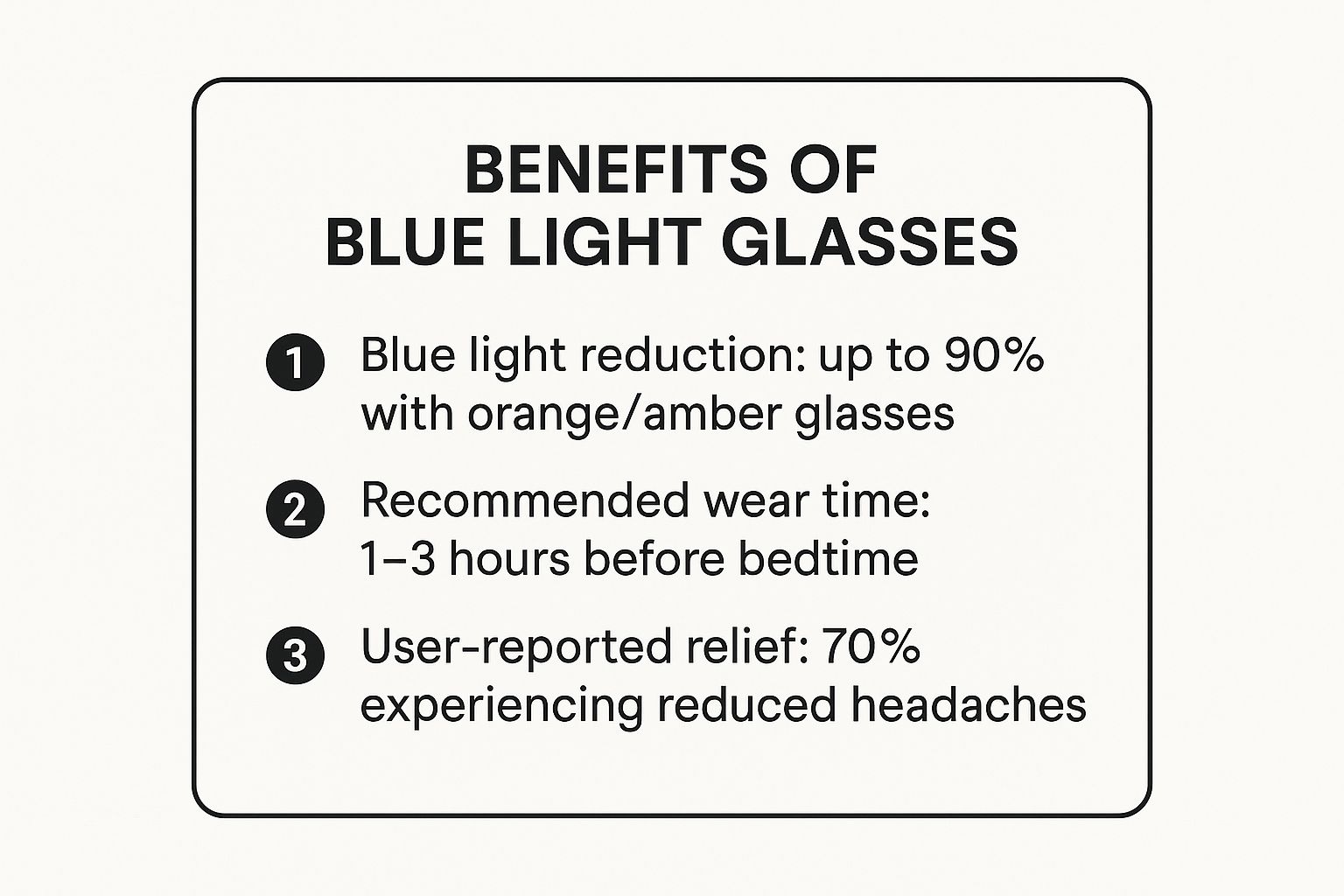
As you can see, high-quality lenses are powerful, capable of blocking up to 90% of that disruptive blue light. It’s no surprise that many people report a huge drop in symptoms like headaches once they start wearing them consistently before turning in for the night.
One of the first things people ask is about the difference between orange and amber lenses. They both filter blue light, sure, but they play very different roles in your evening routine.
Orange lenses are your heavy hitters. They offer maximum protection against both blue and green light, making them the ultimate tool for prepping your brain for sleep. Pop these on for 1-3 hours before bed, and you're helping your body kick its melatonin production into high gear—the clearest signal it can get that it’s time to rest. This powerful filtering is what tackles that late-night screen fatigue and sets you up for a deeper, more restorative sleep cycle.
On the other hand, think of amber blue light glasses as your go-to for winding down. They block a serious amount of blue light to ease that tired-eye feeling, but they let more of the color spectrum through. This makes them perfect for watching a movie or reading an e-book in the evening without turning the whole world a deep shade of orange.
Think of it this way: Amber lenses are for shifting into relaxation mode. Orange lenses are the final step, telling your brain it’s officially time for a great night's sleep.
Putting on a pair of blue light blocking glasses is a fantastic first step, but they’re most effective when they’re part of a bigger wellness strategy. When you combine smart light management with a few other simple habits, you can build a powerful routine for better sleep and less stress.
Top ways to get good sleep:
For a deeper dive, check out our guide on how Element Lux glasses help with sleep.
Top 4 ways to relax and reduce stress:
Yes, computer glasses absolutely block blue light to a significant degree. Think of them as a protective shield for your eyes, filtering out the harsh, high-energy light from your screens to help cut down on digital eye strain and support healthier sleep cycles, especially when you're working late.
If you spend your days staring at a screen, you know the feeling all too well: that gritty, tired-eye sensation, maybe a dull headache creeping in, and a mind that just won't shut off when it's time for bed. That isn't just you being tired—it's the direct result of all the high-energy blue light our devices pump out.
This guide will walk you through exactly how computer glasses offer a simple but powerful solution to this modern problem.
We'll dive into how different lens colors are actually targeted tools for your well-being. For example, orange-colored glasses are incredibly effective at relieving eye strain and signaling your brain that it's time to start producing melatonin—your body's natural sleep hormone. Amber blue light glasses offer a slightly softer approach, perfect for helping you relax and wind down in the evening without making you feel sleepy too early.
Getting deep, restorative sleep is about more than just flipping the light switch. A solid, consistent routine can make a world of difference. Here are a few strategies that genuinely work:
For a deeper dive, check out these comprehensive strategies to reduce digital eye strain and protect your vision.
In the same way, calming down after a long day involves being proactive about soothing your nervous system.
To really get why computer glasses that block blue light work so well, we first have to understand the light itself.
Think of light as a rainbow. On one end, you have gentle, long waves like red light. On the other end, you have short, high-energy waves—and that's where you'll find blue light. Our screens are constantly blasting our eyes with this high-energy stuff.
Because its waves are so short and scattered, your eyes have a tough time focusing on it. All that extra effort is what leads to the digital eye strain we all know and hate: dryness, blurry vision, and tension headaches. But the effects go way beyond just eye comfort.
When your brain sees blue light late at night, it gets a confusing signal that it’s still the middle of the day. This unwanted exposure slams the brakes on melatonin production, the hormone your body needs to feel sleepy. Without enough melatonin, falling asleep is a struggle, and the sleep you do get just isn't as deep.
When it comes to protecting your sleep, orange-colored blue light glasses are the heavy hitters. They’re designed to block the most disruptive wavelengths of blue and even some green light, which can also mess with your melatonin.
By filtering out this intense light, orange lenses essentially create a personal sunset for your eyes. They send a clear, powerful signal to your brain that it's time to wind down and prepare for rest. This not only eases eye strain but also triggers a natural, healthy release of melatonin, setting you up for deeper, more restorative sleep.
Amber blue light glasses strike a great balance, making them perfect for relaxing in the hours before bed. They filter out a serious amount of blue light—enough to protect your melatonin and reduce eye fatigue—but they do it without distorting your color perception as much as darker orange lenses.
This makes amber glasses the ideal tool for creating a “digital dusk.” They help your mind and body transition smoothly from a state of high alert to one of calm relaxation, preparing you for a good night's rest without making you immediately drowsy.
To dive deeper into the connection between light and your body's internal clock, you can learn more about how circadian lighting principles are used to support natural well-being.
Let's be clear: not all blue light glasses are the same. If you're serious about ending screen-induced eye strain and getting a great night's sleep, orange-colored blue light glasses are the heavyweights you want in your corner.
Think of them as a complete blackout curtain for your eyes when you're using screens at night. Orange-tinted lenses are built to block nearly all blue light. Crucially, they also filter a big chunk of the green light spectrum right next to it, which we now know can also mess with melatonin.
This intense filtering brings immediate relief. It cuts out the high-energy visual 'noise' that makes your eye muscles work overtime, finally letting them relax while you’re still scrolling, reading, or watching. This is how orange-colored glasses directly help reduce eye strain.
This image shows a pair of Element Lux orange-lensed glasses, specifically designed to provide the strongest blue light filtering possible.
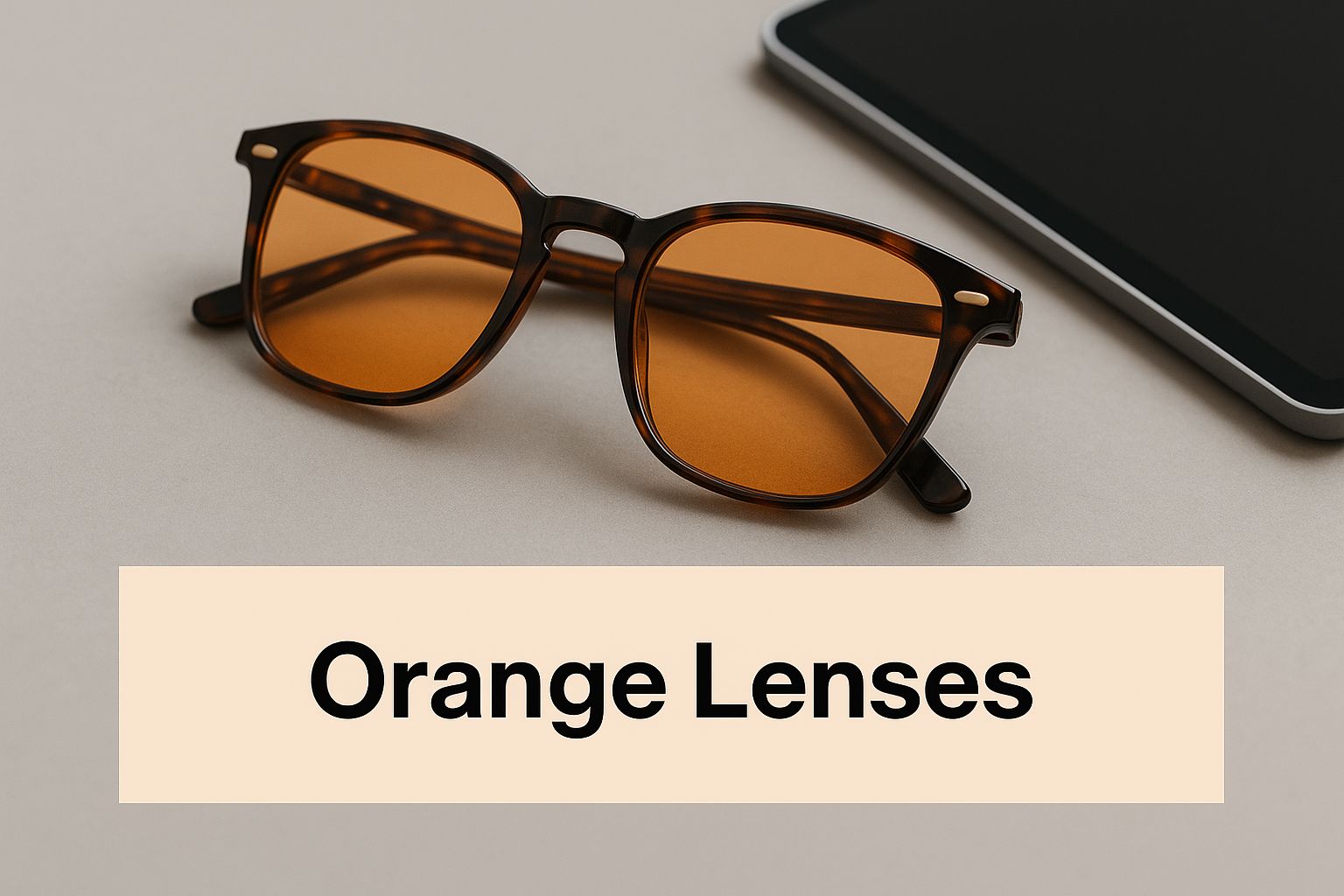
That deep orange color isn't just for looks—it's what makes them so powerful at getting your body ready for bed.
The real magic of orange-colored blue light glasses is what they do for your sleep. By blocking the most disruptive light wavelengths, they essentially create a personal "sunset" for your brain, sending a powerful signal that the day is done and it's time to start making melatonin. This is how they help with sleep.
This triggers a natural and strong hormonal response. People who use them often report falling asleep faster, staying in deeper sleep cycles, and waking up feeling truly refreshed—not just less tired.
And it’s not just a niche trend. The blue light blocking glasses market is booming, expected to hit $2.5 billion by 2025 and grow at a 15% clip through 2033. This growth is all thanks to people like us who are tired of letting screens ruin our sleep and strain our eyes. You can discover more insights about this growing market trend.
While orange lenses are for serious sleep prep, amber blue light glasses are a more balanced option for general evening use. They're perfect for when you want to chill out without your brain immediately getting the signal to pass out.
Amber lenses still filter a good amount of blue light, protecting your melatonin and easing eye fatigue. But they don't distort color as much, which makes them great for watching a movie or casually scrolling an hour or two before you plan to sleep. They help ease your mind and body from a wired, alert state into a calm, relaxed one.
Wearing the right computer glasses is more than just protecting your eyes; it’s about actively managing your body's natural rhythms to improve how you feel, relax, and sleep every single night.
If orange lenses are your go-to for serious sleep prep, think of amber lenses as your evening wind-down partner. They strike that perfect balance for the hours when you’re not quite ready for bed but want to start signaling to your body that the day is over. It’s like creating your own personal “digital dusk.”
Amber blue light glasses filter out a serious amount of blue light—enough to stop melatonin from being suppressed and to give your eyes a noticeable break from fatigue. But they don't distort color as much as their darker orange cousins. This makes them perfect for watching a movie, a bit of casual scrolling, or reading on your tablet in the hours before you turn in.
That balance is precisely what makes them so effective. Instead of hitting the brakes hard, they gently ease your brain and body from a state of high alert into one of calm relaxation. This transition doesn't just protect your eyes; it helps your mind disconnect and get ready for a night of quality sleep. This is how amber glasses let you relax and wind down.
Using computer glasses that block blue light has become a pretty common wellness practice, and for good reason. The market for these glasses is blowing up as more people get wise to the effects of digital eye strain. By 2025, it's expected to hit $2.626 billion, with Europe leading the charge. This isn't just a fad; it's a reflection of a growing understanding of how much light management matters for our health. You can dig deeper into the trends in the anti-blue light glasses market to see just how big this is getting.
Amber lenses are a huge part of this shift. They’re the perfect tool for creating a buffer zone between a hectic, screen-heavy day and a truly restful night.
Amber-lensed glasses are less about forcing sleep and more about inviting relaxation. They gently dial down the visual stress that keeps your nervous system fired up, letting you unwind naturally without feeling like you have to go to bed immediately.
Amber lenses help you create a gradual transition from the stimulation of the day to the calm needed for sleep. They’re practical for anyone who still needs to see their screen clearly but wants to do so without the harsh, sleep-disrupting effects of unfiltered blue light. Below, we've put together a quick comparison to help you decide between orange and amber.
| Feature | Orange Lenses | Amber Lenses |
|---|---|---|
| Primary Use | Pre-sleep ritual; intense blue light blocking | Evening relaxation; moderate blue light blocking |
| Blue Light Blocking | Highest (98-99%+) | High (around 90-95%) |
| Color Distortion | Significant; everything appears very warm/orange | Moderate; colors are warmer but more recognizable |
| Best For | Last 1-2 hours before bed to maximize melatonin | 2-4 hours before bed for movies, reading, general use |
| Effect on Alertness | Can make you feel sleepy quickly | Promotes relaxation without immediate drowsiness |
Ultimately, amber is for unwinding, while orange is for shutting down. Many people find having a pair of each gives them the flexibility to manage their light exposure perfectly throughout the evening.
Simply popping on a pair of glasses is a great start, but truly restorative sleep comes from building smart habits around them. Think of it as a total system reset. The most powerful signal you can send your brain to wind down is managing your light exposure.
This is where being strategic with your eyewear pays off. For general evening relaxation, like watching a movie, amber-lensed glasses are perfect for easing eye strain and getting your body into a "pre-sleep" mode.
Then, about 1-2 hours before you want to be asleep, it’s time to bring out the big guns. Switch over to your heavy-duty orange-lensed glasses to block out as much disruptive light as possible, giving your melatonin production the green light it needs for deep, restful sleep.
Once you’ve nailed your light management, a few other consistent habits will amplify the benefits. A solid routine is like training for your internal clock, making it far easier to fall asleep and wake up feeling genuinely refreshed.
Here are the most effective habits to build into your nightly routine:
A relaxing pre-sleep ritual is the final cue you can give your body that it’s time to rest. Ditching your phone for a real book, doing some light stretching, or taking a warm bath can make all the difference.
Combining these simple adjustments creates a powerful foundation for consistently great sleep. If you want to dive even deeper, check out our complete guide to achieving better sleep.
Let's be honest, modern life is stressful. Between work, family, and the constant pings from our devices, our nervous systems are often stuck in a low-grade state of alert. It's no wonder that "unwinding" feels like another task on the to-do list.
The first step to actually relaxing is tackling the source of all that digital stimulation. One of the simplest and most effective ways to do this is by putting on a pair of computer glasses that block blue light once the sun goes down. Think of it like turning down the volume on your brain. The amber lenses dial back the harsh visual noise from screens, which helps calm your body's "fight or flight" response and lets you unwind naturally.
Beyond managing the light hitting your eyes, a few simple practices can make a world of difference. You don't need a lot of time, just consistency.
Here are four of the best ways to reduce stress and relax:
Wear Blue Light Blocking Glasses: After dinner, make it a habit to put on a pair of amber-lensed glasses, like the ones from Element Lux. This one small change signals to your brain that the day is over, helping your nervous system shift from "go mode" into a much-needed "relax mode."
Practice Mindful Minutes: You don't need an hour-long session. Just set aside 5-10 minutes a day for a quick guided meditation or just to sit in silence. This practice is incredible for grounding you in the present moment and quieting the frantic thoughts that love to race through our minds at night.
Get Some Light Physical Activity: A brisk 20-minute walk is one of the best-kept secrets for stress relief. It gets you outside, clears your head, and releases mood-boosting endorphins that help melt away the physical tension stress builds up in your body.
Disconnect for a Hobby: Intentionally put your phone away and spend a little time on something you enjoy just for the sake of it. Maybe it's listening to an entire album without skipping tracks, sketching in a notebook, or journaling. These screen-free activities can dramatically lower your stress levels and just make you feel more like you.
By actively managing the stimulating inputs from our digital environment, we give our minds the quiet space needed to properly rest and recover from the day's demands.
You’ve got questions, we’ve got answers. Let's tackle some of the most common things people ask about blue light glasses and how they fit into real life.
Not necessarily. It really depends on the type of lens you have.
Lenses that are clear or have a very light yellow tint are designed to take the edge off glare and mild eye strain during the day. But the heavy-hitters—the amber and orange lenses—are strictly for evening and nighttime use.
Think of it this way: wearing those darker tints during the day is like telling your body it's nighttime when the sun is still out. It can actually throw off your internal clock by blocking the beneficial blue light you need to feel alert and awake.
Yes, absolutely. Most optometrists can add blue light filtering technology directly into your prescription lenses. It’s a common request these days, so you can get your vision correction and blue light protection all in one.
And if you have perfect vision? No problem. Non-prescription versions, sometimes called "plano" lenses, are easy to find. This means everyone can get the same relief from digital eye strain and sleep disruption.
Forget the online tests for a minute. The real proof is how you feel.
The two biggest signs that your glasses are doing their job are a noticeable reduction in eye strain, dryness, and headaches after a long day of screen time, and finding it much easier to fall asleep at night. For many, the improvement in sleep is the most dramatic and welcome change.
If you want to dive deeper into the science behind it, you can learn more about how these glasses help with sleep in our detailed guide.
The ultimate proof is in your personal experience. Less eye fatigue by day and deeper, more restful sleep by night are the clearest signs that your computer glasses are doing their job effectively.
It really boils down to three things:
Ready to protect your eyes and improve your sleep? The Element Lux collection offers premium amber and orange lenses designed for maximum effectiveness and comfort. Shop now and feel the difference tonight.
Let's get straight to the point: amber lens glasses are your first line of defense against the harsh blue light blasting from our digital screens. That glow, which can lead to tired eyes and restless nights, gets filtered out before it even reaches you.
Think of these glasses as a specialized shield. They’re a simple tool designed to create a calmer, more natural visual environment, setting the stage for more relaxing evenings and, most importantly, better sleep.
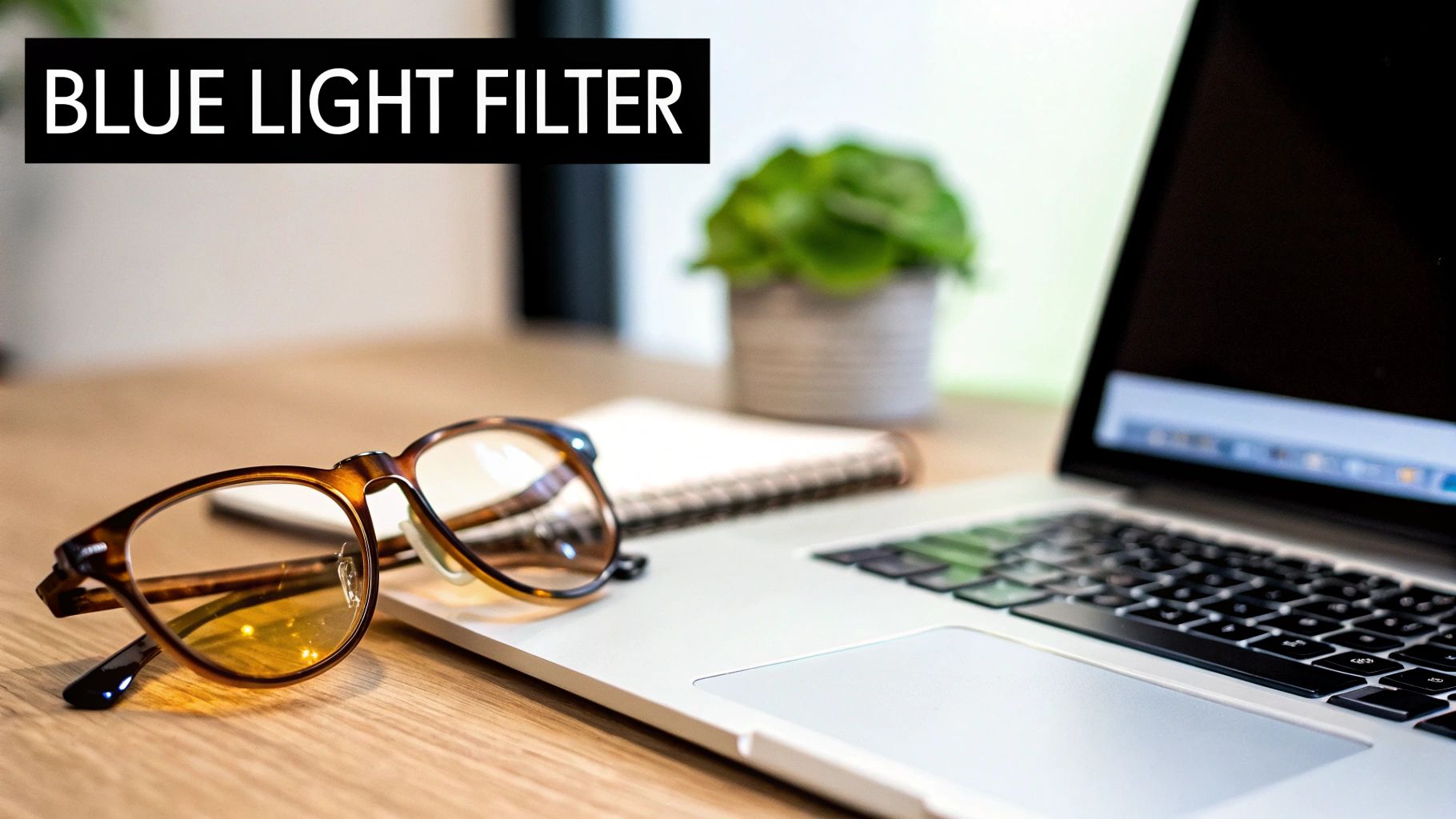
It helps to know that not all light is the same. The visible light spectrum is made up of different colors, and the blue-violet light that comes from our phones, laptops, and TVs is a high-energy, short-wavelength type. Our eyes just aren't built to focus on it easily, which is a big reason we end up with digital eye strain, headaches, and general fatigue after a long day of screen time.
You can think of blue light as "visual noise"—a kind of constant, fuzzy static that your eyes are always fighting to see through. This is where amber lens glasses come in. They act like a noise-canceling filter, specifically designed to absorb and block those harsh blue light waves.
The result? A much clearer, higher-contrast view. The warm, amber tint takes the sharp glare of a screen and turns it into a soft, soothing glow, finally giving your eye muscles a chance to relax.
The benefits aren't just a feeling; they're rooted in how our brains process light. When you reduce the amount of blue light hitting your eyes, especially in the evening, you're sending a clear signal to your brain: it's time to wind down. This triggers the production of melatonin, the hormone that’s absolutely essential for getting to sleep.
This one simple change can have a massive impact on your overall well-being. And people are catching on. The market for blue light blocking glasses is projected to grow at a compound annual growth rate of 7.3%, a surge driven by a deeper understanding of how our screen habits affect both sleep and long-term eye health. You can read more about this market trend on alliedmarketresearch.com.
Wearing amber-tinted glasses in the evening is an incredibly effective way to start your wind-down routine. By calming your visual senses, you help reduce stress and prepare your mind and body for a night of deep, restorative rest.
To dive even deeper into the science of screen light, you can learn more about blue light in our articles.
For a quick summary, here’s a look at the main advantages of putting on a pair of amber glasses before you settle in with your screens for the night.
| Benefit | How It Works |
|---|---|
| Promotes Better Sleep | By blocking over 99% of blue light, it allows your body to produce melatonin naturally, signaling that it's time to rest. |
| Reduces Eye Strain | The amber tint filters the harsh "visual noise" from screens, reducing squinting and helping your eye muscles relax. |
| Decreases Headaches | Less eye strain and muscle tension often translates to fewer screen-induced headaches. |
| Improves Visual Clarity | By cutting through the blue light glare, the lenses enhance contrast and make text and images appear sharper and clearer. |
These benefits work together to create a more comfortable and restful screen experience, particularly in the hours leading up to bedtime.
If you've ever ended a long day at the computer with that gritty, tired-eye feeling, you know digital eye strain is no joke. The main culprit is high-energy blue light, which scatters more erratically than other colors on the spectrum. This scattering forces the tiny focusing muscles in your eyes to work overtime, leading to fatigue, dryness, and sometimes even a nagging headache.
Orange colored blue light glasses help with eye strain by filtering out this harsh light. Think of it like trying to listen to one conversation in a loud, crowded room. All that background noise forces you to strain to hear anything clearly. Blue light creates a similar kind of visual "noise" for your eyes. Amber lens glasses are the solution that simply turns down the volume.
By filtering out those disruptive wavelengths, the warm tint creates a much smoother, higher-contrast image. This lets your eye muscles finally relax, offering real, tangible relief from the constant effort of focusing on a harsh screen.
The benefits of these orange-hued glasses go way beyond just comfort. When your eyes can finally relax, your entire nervous system gets the signal to calm down, too. The constant state of alertness that screen glare puts you in starts to fade, making it so much easier to actually wind down in the evening.
This visual calm is the first, crucial step toward preparing your body for a night of deep, restorative sleep. Instead of feeling wired and mentally scattered after scrolling, you can actually feel a sense of ease settle in.
It's no surprise that the demand for this kind of specialized eyewear is growing. People are connecting the dots between screen time and their overall well-being. The global spectacle lens market just keeps expanding, largely driven by our desire for personalized solutions like blue light filtering coatings that solve modern problems. You can explore more insights into the spectacle lens market on researchandmarkets.com.
Getting truly restful sleep is about building good habits, and wearing blue light glasses is a fantastic cornerstone for your routine. Here are a few of the most effective strategies to pair with them:
Making amber blue light glasses part of your evening can also be a powerful tool for managing stress and anxiety. Here's how to build a routine around them:
We've all been there—scrolling on our phones late at night, only to find ourselves tossing and turning later. That connection between evening screen time and poor sleep isn't just in your head; it’s all about a crucial hormone called melatonin. Think of melatonin as your body's built-in sleep signal. As darkness falls, your brain releases it, letting your body know it’s time to wind down and rest.
But artificial blue light from our phones, tablets, and laptops throws a massive wrench in that natural process. Your brain can't tell the difference between the glow of a screen and the daytime sun. It interprets that high-energy light as a signal to stay awake and alert, slamming the brakes on melatonin production right when you need it most.
This is exactly where orange colored blue light glasses help with sleep. They're specifically engineered to filter out the precise wavelengths of blue and green light that are most notorious for messing with melatonin.
By popping on a pair of amber lens glasses for about two to three hours before bed, you're essentially creating an "artificial dusk" for your eyes. It’s a simple trick, but it sends a powerful signal to your brain: the day is officially ending.
This simple routine allows your body to start producing melatonin right on schedule, helping to sync your internal clock (your circadian rhythm) with your actual bedtime. So you're not just easing eye strain; you're actively helping your body prepare for a night of deep, restorative sleep.
By blocking the sleep-disrupting frequencies of light, amber lens glasses allow your body to naturally produce the melatonin needed to fall asleep faster and achieve higher-quality sleep.
It's no surprise that specialized amber lenses are a fast-growing segment of the optical lens market. More and more people are connecting the dots between their digital habits and their health, making these glasses a key tool for modern wellness. You can discover more insights about optical lens market trends on straitsresearch.com.
Pairing your amber glasses with other healthy sleep habits can be a total game-changer. For a deeper dive, check out our guide on how Element Lux glasses help with sleep.
Here are a few of the most effective habits to build into your nightly routine:
Beyond just getting your body ready for bed, amber lens glasses are fantastic for creating a genuinely calm, relaxing environment. Amber blue light glasses let you relax and wind down by filtering out the constant, high-energy glow from our screens that keeps our brains in a state of high alert. That intense visual stimulation tells your mind to stay “on,” even when all you want to do is de-stress.
By filtering out that aggressive light, amber and orange lenses completely change your visual world. The harsh white and blue glare of a screen gets replaced by a warm, soothing palette. This gentle shift is more than just cosmetic—it’s a direct signal to your nervous system that the day's demands are over and it's finally time to unwind.
Think of the bright light from your phone as visual caffeine. It keeps you engaged and alert, which is great during the day but the last thing you need at night. Orange colored blue light glasses act like a dimmer switch for your eyes, smoothing the transition from a state of high alert to one of restful calm.
This simple reduction in visual stimulation helps lower feelings of mental tension and anxiety. Your eye muscles relax, your mind stops racing, and your body can finally begin its natural wind-down process. It’s a small change that makes a huge difference in how you feel at the end of the day.
For a deeper dive into crafting the perfect evening routine, check out our other tips for getting better sleep right here on our site.
A consistent evening ritual is the foundation of quality rest. Slipping on your blue light blocking glasses is a powerful first step, but you can amplify the benefits by pairing them with other healthy habits.
Anxiety and stress are major roadblocks to a peaceful evening. Here are four practical ways to actively relax, with amber blue light glasses as the cornerstone of your routine.
Getting deep, restful sleep isn't just about flicking off a switch at the end of the day. It’s about building a solid, consistent routine that tells your body it's time to power down. The cornerstone of this modern sleep strategy? Amber lens glasses. They help you manage the constant barrage of artificial light, protecting your natural sleep-wake cycle.
When you pair this powerful tool with other smart habits, you create an unstoppable routine for truly restorative rest. Think of it as a holistic approach—combining amber lenses with good sleep hygiene practices creates a powerful synergy, making sure every part of your evening is working for you, not against you.
Ready to transform your sleep? It all starts with a few key, actionable steps. This is your nightly checklist for preparing your mind and body for optimal rest. Wearing your orange colored blue light glasses is a critical first move, immediately cutting down on the stimulating glare from screens and easing the strain on your eyes.
Here are the essential habits to lock into your evening:
This simple infographic pulls it all together, showing how these core habits work in harmony.
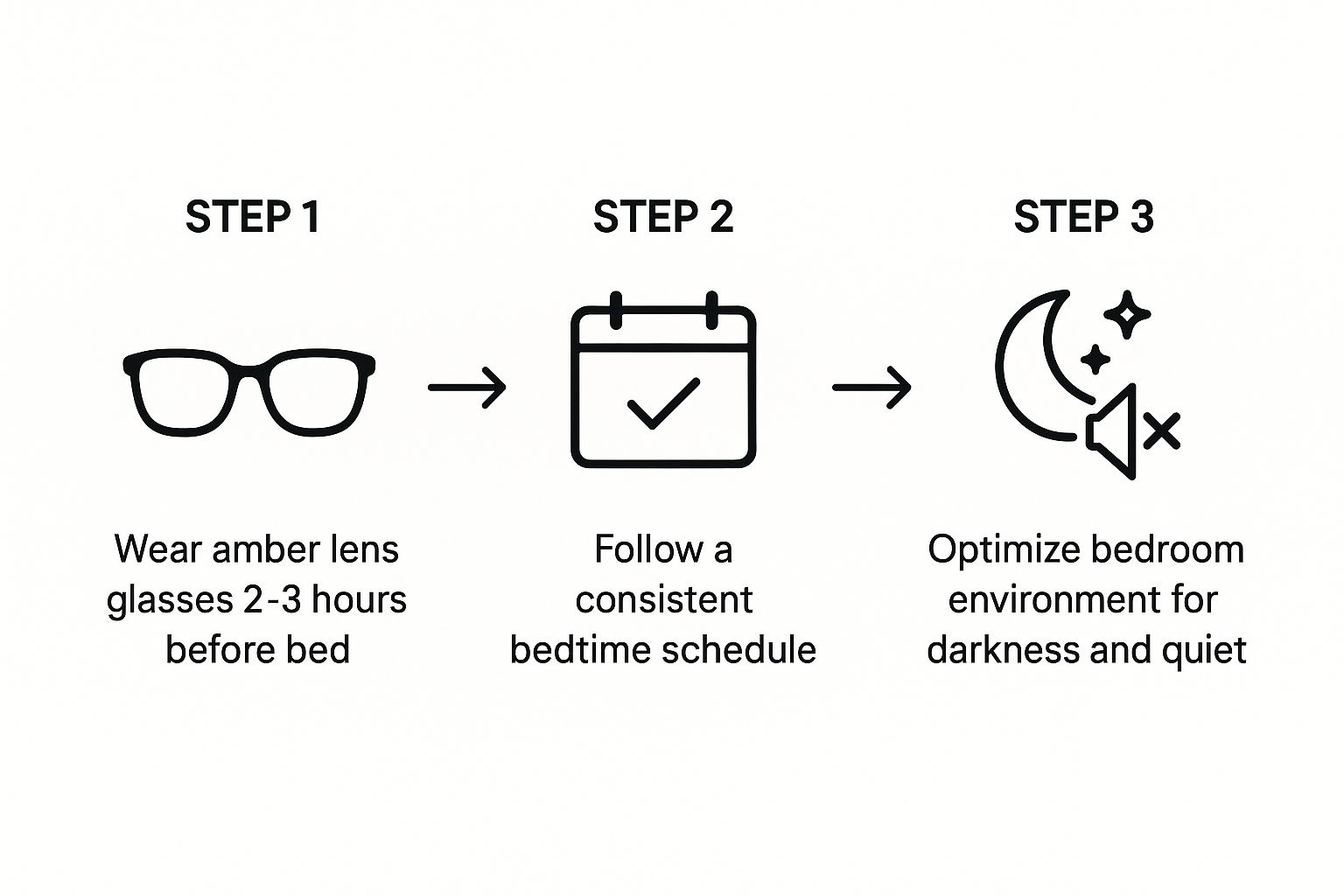
As you can see, the process is pretty straightforward. Start with your glasses, lock in your schedule, and control your environment. That's the formula for deep, restorative sleep.
Stress and anxiety are notorious sleep thieves. A racing mind can sabotage even the best-laid plans for rest. A proper wind-down routine is designed to quiet that inner noise, and your amber blue light glasses play a surprisingly big role here. By visually softening your surroundings, they send a powerful signal to your brain that it's safe to relax and let go.
Here are four practical ways to boost this calming effect:
Here's a simple, effective timeline you can adapt to build your own perfect pre-sleep ritual.
| Time Before Bed | Activity | Purpose |
|---|---|---|
| 2-3 Hours | Put on amber blue light glasses. | Block stimulating blue light to protect melatonin production. |
| 1.5 Hours | Finish up any necessary screen time (e.g., final emails). | Complete stimulating tasks early while your eyes are protected. |
| 1 Hour | Power down all screens (phone, TV, laptop). | Eliminate the primary source of sleep-disrupting light. |
| 45 Minutes | Engage in a relaxing, screen-free hobby. | Shift your mind from active problem-solving to a state of rest. |
| 15 Minutes | Practice gentle stretching or mindful breathing. | Lower heart rate, reduce physical tension, and calm the nervous system. |
| 5 Minutes | Journal any lingering thoughts or worries. | Clear your mind to prevent late-night rumination. |
| Bedtime | Get into a cool, dark, and quiet room. | Create an optimal environment for deep, uninterrupted sleep. |
Following a structure like this doesn't just happen by chance; it's a deliberate practice. But by consistently signaling to your body that it's time to wind down, you're paving the way for the kind of sleep that leaves you feeling truly recharged.
If you're new to the world of blue light glasses, you probably have a few questions. That's a good thing! Let's clear things up and give you the confidence you need to use amber lens glasses to wind down, de-stress, and finally get the sleep you deserve.
You know that tired, gritty, headache-y feeling you get after staring at a screen all day? A lot of that comes from blue light. The intense, high-energy light from our devices scatters more than other colors, forcing the tiny muscles in your eyes to work overtime just to stay focused. It's a constant, low-level workout they're not built for.
By filtering out that harsh, scattered "visual noise," orange lenses make the screen appear softer and with higher contrast. This lets your eye muscles finally relax, bringing some much-needed relief from the fatigue and discomfort of a long day online.
This is where amber and orange lenses really shine. The core benefit is their power to protect your natural sleep cycle. When you're blasted with artificial blue light late at night, it sends a powerful signal to your brain: "It's still daytime! Stay awake!" This slams the brakes on your body's production of melatonin, the essential hormone that tells you it's time for sleep.
When you wear these glasses for two to three hours before bed, you block the exact wavelengths that mess with your melatonin. This allows your body to start its natural wind-down process, making it so much easier to fall asleep, stay asleep, and wake up feeling genuinely refreshed.
Think of it this way: amber lenses create a kind of "artificial dusk" for your brain. They signal that the day is over and it's time to prepare for rest, even if you’re still scrolling or finishing up an email.
It's not just about the sleep science—there’s also a noticeable calming effect. The constant glare and harsh blue light from screens can put your nervous system on high alert, making it almost impossible to switch off and de-stress at the end of the day.
Switching your view to a soothing, warm palette with amber blue light glasses is a direct cue for your brain to relax. That reduction in jarring visual input helps ease feelings of mental tension and anxiety. It’s the perfect first step for any evening wind-down routine.
Great sleep doesn't just happen; it's built with consistent, healthy habits. Managing your light exposure is a huge piece of that puzzle. Here are some of the best strategies to build into your night:
Stress and anxiety are the enemies of a peaceful evening. Here are four simple, practical ways to calm your mind, using your glasses as the first step toward tranquility:
Ready to reclaim your evenings and experience truly restful sleep? The science is clear, and the solution is simple. Explore the collection at Element Lux and find the perfect pair of high-performance amber lens glasses to transform your nights.
Shop the Element Lux collection now and start your journey to better sleep!
If you've ever struggled to fall asleep, managing your light exposure is one of the most powerful changes you can make. This is especially true in the evening. A simple strategy is to dim your lights and put away screens before bed, but using orange or amber-lensed blue light blocking glasses can be a total game-changer. They work by filtering out the specific wavelengths of light that stop your body from producing its natural sleep hormone.
So, what is this "sleep hormone"? It's melatonin, your body's own built-in sleep signal. This hormone is produced by a tiny gland in your brain, and its job is to regulate your sleep-wake cycle.
Think of it like a natural sunset happening inside your head. As it gets dark outside, your brain gets the memo and starts releasing melatonin, telling your body it's time to wind down and prepare for rest. This entire process is orchestrated by your internal clock, which you might know as the circadian rhythm.
The problem is, our modern lives can easily throw this delicate system out of whack.
Late-night scrolling on your phone, binge-watching a series, or even just sitting under bright indoor lights can trick your brain into thinking it's still high noon. This confusion slams the brakes on melatonin release, leaving you in that frustrating state of feeling tired but wired, unable to drift off.
This visual gives you a great overview of how melatonin acts as the key to your internal clock, signaling when it's time for your body to rest.
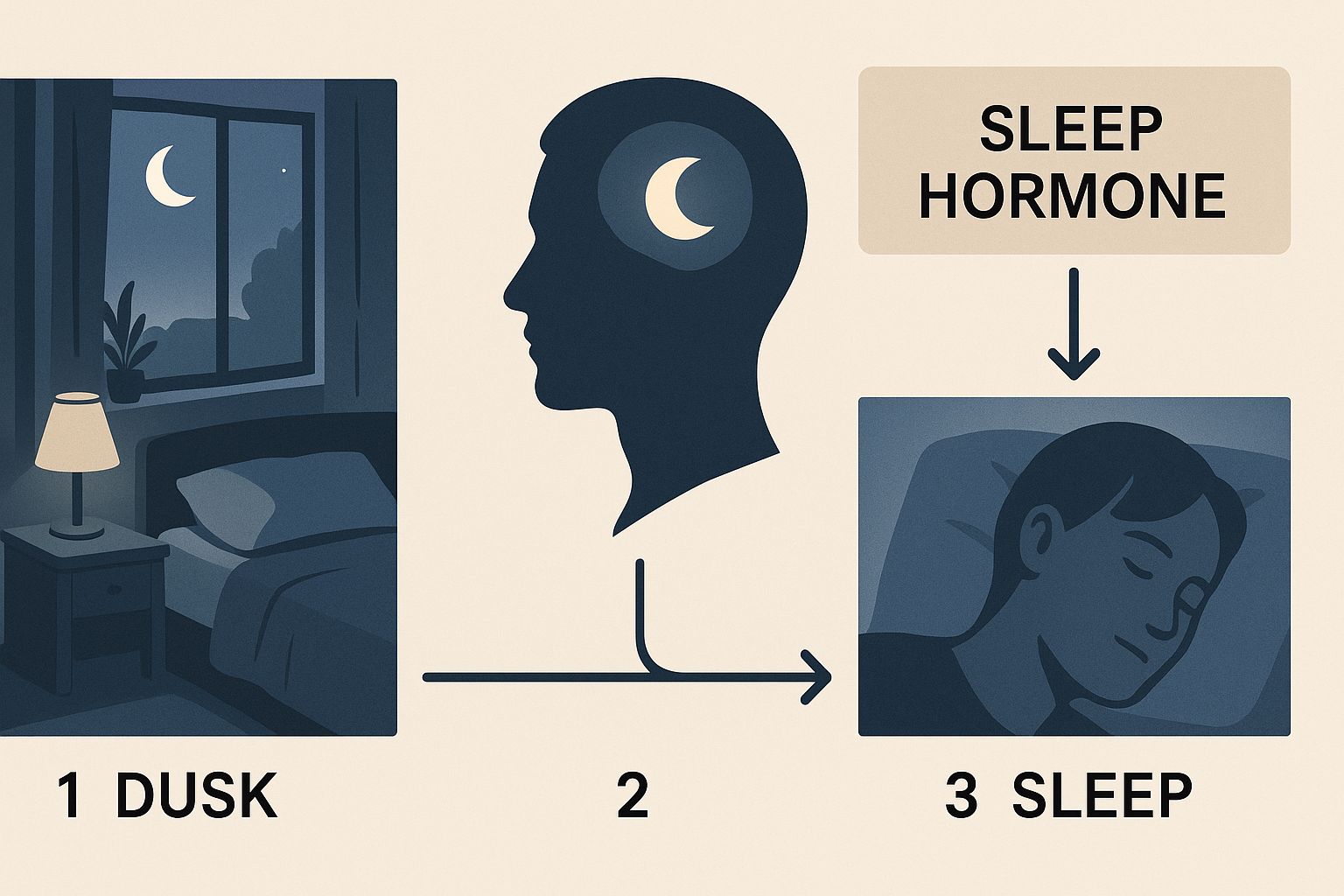
As the infographic shows, supporting this natural signal is fundamental to getting the kind of deep, restorative sleep we all need.
Before we dive into the specific "how-tos," here’s a quick snapshot of the strategies we're about to cover.
Here is a quick summary of the most effective strategies we'll cover for naturally increasing melatonin production, giving you a scannable overview before we dive into the details.
| Strategy | Primary Benefit | When to Do It |
|---|---|---|
| Manage Light Exposure | Prevents melatonin suppression | 2-3 hours before bed |
| Optimize Your Diet | Provides building blocks for melatonin | Throughout the day & evening |
| Smart Supplementation | Offers targeted support when needed | As directed, typically before bed |
| Use Blue Light Glasses | Blocks disruptive light from screens | In the evening, when using devices |
| Establish a Routine | Reinforces your natural sleep-wake cycle | Consistently, every day |
This table lays out the core pillars of a sleep-friendly lifestyle. Now, let's get into the specifics of making them work for you.
When it comes to better sleep, helping your body produce its own melatonin is a much more sustainable approach than simply relying on supplements. While a melatonin pill might help in a pinch, it's often just a temporary fix that doesn't get to the root of the problem. To really get a handle on this, it’s worth understanding the science of sleep and its cycles.
There’s no doubt that people are waking up to the importance of good sleep. The global melatonin market was valued at around USD 2.06 billion in 2024 and is projected to skyrocket to nearly USD 9.8 billion by 2033. This isn't just a trend; it's a major shift in how we prioritize our health.
By making a few small, consistent changes to your daily habits, you can empower your body to regulate its own sleep cycle effectively. The following sections are packed with practical, real-world strategies to help you do just that, laying the foundation for better sleep, night after night.
Your body's ability to produce melatonin is incredibly sensitive to light. The real secret to boosting it naturally isn't just about what you do at night—it’s about managing your light environment all day long. This is how you make light work for you, not against you.
It all starts the moment you wake up. Getting bright, natural sunlight first thing in the morning is a non-negotiable for locking in your internal clock. This powerful signal tells your brain, "Hey, the day has officially started," which in turn sets a timer for melatonin release later that evening.
As day turns to night, your strategy has to flip. Instead of seeking light, you need to start avoiding it. The artificial blue light pouring out of our phones, laptops, and TVs is especially disruptive because it tricks your brain into thinking it's still high noon. This constant, late-night exposure is one of the biggest reasons people struggle to wind down and have their melatonin suppressed.
This is where a simple but incredibly effective tool comes into play: orange-lensed blue light blocking glasses.
Think of these glasses as a filter for the modern world, protecting your eyes and letting your brain know it's actually time to prepare for sleep.
Slipping on a pair of orange or amber-tinted glasses in the evening does more than just block a little light; it actively supports your body's natural sleep processes. If you've ever felt that gritty, tired-eye feeling after a long day of screen time, you know what digital eye strain is. Orange colored blue light glasses help with eye strain by cutting that harsh glare, often providing immediate relief and reducing symptoms like dry eyes and headaches.
More importantly, orange colored blue light glasses help with sleep. By filtering out the specific wavelengths of blue and green light that slam the brakes on melatonin production, these glasses give your body the "all clear" to let sleep hormone levels rise naturally. This is the key to improving melatonin without a single supplement. You're just removing the obstacle.
The result is a gentle, natural onset of sleepiness. Instead of feeling exhausted but wired, you start to feel genuinely relaxed and ready for bed, making the entire process smoother and more effective.
A holistic approach is always the most effective. You can't just rely on one thing.
Stress is melatonin's worst enemy. When your cortisol (the stress hormone) is high, it's nearly impossible to fall asleep. Weaving in some simple relaxation techniques can make a huge difference.
By mastering your light environment and layering in these supportive habits, you create the perfect conditions for your body to do what it does best: produce melatonin and get you the rest you need. For more insights on this topic, check out our guides on the Element Lux blue light blog.
When it comes to glasses that actually help you sleep, not all lenses are created equal. Clear lenses might take the edge off digital eye strain during the day, but if you’re serious about boosting your natural melatonin, orange and amber-tinted glasses are the real MVPs for your evening wind-down.
These darker, warmer tints are engineered to do one thing exceptionally well: filter out the specific wavelengths of blue and even green light that slam the brakes on your body’s melatonin factory. Slipping them on an hour or two before bed sends a powerful, undeniable signal to your brain—the day is done, and it's time to prepare for real rest.
We’ve all been there. After a few hours of watching a movie, scrolling on your phone, or finishing up some late-night work, your eyes feel gritty and tired. That’s digital eye strain, and orange colored blue light glasses help with eye strain by offering immediate relief. They cut down the harsh glare from your screen, which can ease those familiar symptoms like dry eyes, blurry vision, and tension headaches.
But the real magic happens beyond just physical comfort. The warm hue of amber blue light glasses lets you relax and wind down. It’s a visual cue that tells your body to move out of its alert, "daytime" mode and into a more relaxed, pre-sleep state. This makes falling asleep feel like a gentle, natural drift rather than a battle.
Here’s a perfect example of what high-quality, sleep-focused blue light blockers look like.
That deep amber tint is the key. It's designed to specifically block the light frequencies that throw your sleep cycle into chaos at night.
Ultimately, the biggest win from wearing these glasses in the evening is their direct effect on melatonin. By blocking the disruptive light from screens and overhead lighting, you’re literally removing the single biggest obstacle that prevents your brain from producing its natural sleep hormone. Before you know it, you start to feel genuinely sleepy—not just bone-tired.
It’s this natural approach that has so many people turning away from supplements and looking at their environment first. The melatonin market is expected to balloon from USD 1.89 billion in 2025 to USD 3 billion by 2030, which shows just how many of us are struggling with sleep. But fixing the root cause—your light exposure—is a far more sustainable path. You can read more about melatonin market trends and what’s driving them.
Wearing amber or orange glasses is like creating your own personal sunset. You're giving your body the ancient, primal signal that it's nighttime, allowing your internal clock to sync up and release melatonin right on schedule. It's the simplest way to get back in tune with your natural rhythm.
A solid pre-sleep routine will amplify the benefits of your blue light glasses ten-fold. Think of these as your non-negotiables for a great night's rest:
Want to dive deeper into the science? Check out our full guide on how blue light glasses help with sleep.
Beyond just managing light, your daily habits create the real foundation for healthy melatonin release. These strategies all work together, reinforcing your body's natural sleep-wake cycle and making it far easier to fall asleep and stay asleep.
It all starts with transforming your bedroom into a sleep sanctuary. I'm talking about making it as cool, dark, and quiet as humanly possible. Think of it like a cozy cave where your body instinctively knows it's time to shut down and recover.
This kind of environment minimizes disruptions and supports the continuous, steady production of melatonin all through the night.
Your evening wind-down routine is absolutely crucial, and this is where orange or amber blue light glasses become such a powerful tool. The warm tint does way more than just block disruptive light from your phone or TV; it has a genuinely calming effect that helps ease the digital eye strain you feel after a long day. How amber blue light glasses let you relax and wind down is by softening harsh artificial light, creating a soothing visual environment that signals it's time to destress.
That physical relief helps your mind shift gears from an alert, "on" state to a relaxed, pre-sleep mode.
By wearing them for an hour or two before bed, you're giving your natural melatonin levels a chance to rise without interruption. This helps you feel genuinely sleepy and ready for bed, making the transition to sleep feel effortless instead of forced. You can find a style that fits your routine and learn more about achieving better sleep with Element Lux.
Think of your amber glasses as the official start of your bedtime routine. Slipping them on is a clear signal to your brain and body that the day is over, and it's time to prepare for restorative rest.
Consistency is everything. Just integrating a few of these habits can make a huge difference in how your body produces melatonin naturally. Here are the top ways to get good sleep, including our favorite tip.
Stress and anxiety are melatonin's worst enemies. High levels of cortisol, the stress hormone, actively suppress its release. Here is our top 4 list of ways to reduce stress or anxiety and relax, including a key tool for modern life.
https://www.youtube.com/embed/eGVWRvNe1-A
Stress is melatonin's worst enemy. When your body is flooded with the stress hormone cortisol, your natural sleep hormone production takes a nosedive. You're left feeling completely exhausted but unable to switch off your brain.
The good news? You don't need complicated solutions. Simple, accessible techniques can calm your mind and body, paving the way for the deep, restorative sleep you’ve been missing. These practices work by getting cortisol levels down, which finally allows your natural melatonin to take center stage.
Adding a pair of amber blue light glasses into these rituals creates a powerful pre-sleep routine, sending a clear signal to your brain that it's safe to rest.
Think about how your eyes feel after a long day of staring at screens—strained, gritty, and just plain tired. The moment you slip on a pair of orange colored blue light glasses, you feel immediate relief as the harsh glare of artificial light softens. That physical comfort is the first step toward true relaxation.
But it goes beyond just easing eye strain. The warm, amber tint helps your nervous system shift from a state of high alert into a relaxed, wind-down mode. It's a powerful visual cue that the day is over and it's time to prepare for sleep, making the transition feel natural instead of forced.
Wearing amber glasses in the evening is like creating your own personal sunset. It’s a simple, powerful way to tell your body that it's time to let go of the day's stress and prepare for a night of deep rest.
Weaving just a few calming activities into your evening can dramatically improve your ability to fall asleep. By making these part of your nightly routine, you're actively helping your body improve melatonin levels.
Here are four simple but effective practices to try tonight:
As more people look for natural ways to improve their sleep, the market for convenient aids has grown. For instance, melatonin sleep gummies have become a go-to for many who prefer non-pharmaceutical options for managing sleep issues like insomnia. You can find more insights about this growing trend on coherentmarketinsights.com.
When you combine these stress-reduction techniques with the melatonin-protecting power of Element Lux blue light blocking glasses, you create an unbeatable combination for finally getting the deep, restorative sleep you deserve.
When you're trying to improve your sleep, a few questions always seem to pop up. Let's clear the air on some of the most common ones so you can get started with confidence.
This is a great question, and the answer has two parts. First off, amber and orange colored blue light glasses help with eye strain. After a long day staring at a screen, that harsh glare can leave your eyes feeling tired, dry, and gritty. The warm tint on these lenses cuts right through that high-energy light, giving your eyes some much-needed relief.
But the real magic is how orange colored blue light glasses help with sleep. Those same lenses are specifically designed to block the blue and green light wavelengths that tell your brain to stop making melatonin. By popping on a pair of Element Lux glasses an hour or two before you plan to sleep, you're essentially giving your brain the "all clear" to release melatonin right on schedule. It's a simple change that helps you feel naturally sleepy, making it so much easier to wind down and drift off.
Great sleep isn't about one magic bullet; it's about building a solid, consistent routine. Here are the top ways to get good sleep by stacking a few small, smart habits together.
Stress is melatonin's worst enemy. When your stress hormone, cortisol, is high, your sleep hormone simply can't do its job. Here is our top 4 list of ways to reduce stress or anxiety and relax.
Ready to finally take control of your sleep cycle and wake up feeling incredible? The most impactful first step is protecting your evenings from all that junk light. Element Lux offers premium blue light blocking glasses engineered to help you relax, wind down, and get your natural melatonin production back on track.
Explore our collection and start your journey to better sleep tonight.
If you spend a lot of time staring at a screen, you know the feeling all too well: tired, aching eyes and a restless night of sleep. The culprit is a constant stream of high-energy blue light beaming from our phones, laptops, and tablets.
This isn’t just any light. It’s a specific wavelength that our bodies interpret in a very powerful way.
Think of the natural blue light from the sun. It's the ultimate "daytime" signal, telling your brain to be awake, alert, and ready to go. The problem is, when we expose ourselves to artificial blue light from screens—especially late at night—we're sending our brain a confusing message.
This constant exposure tricks your brain into thinking it's still daytime, long after the sun has set.
That persistent "daytime" signal forces our eyes to work overtime just to focus, leading to a condition many of us are painfully familiar with: digital eye strain. The symptoms probably sound familiar: dry or watery eyes, headaches, blurred vision, and just general discomfort.
Specially tinted computer glasses that block blue light act like a shield, filtering out this disruptive light before it ever hits your eyes.
This infographic really puts it into perspective, showing the direct link between more screen time, higher rates of eye strain, and the suppression of melatonin—our natural sleep hormone.
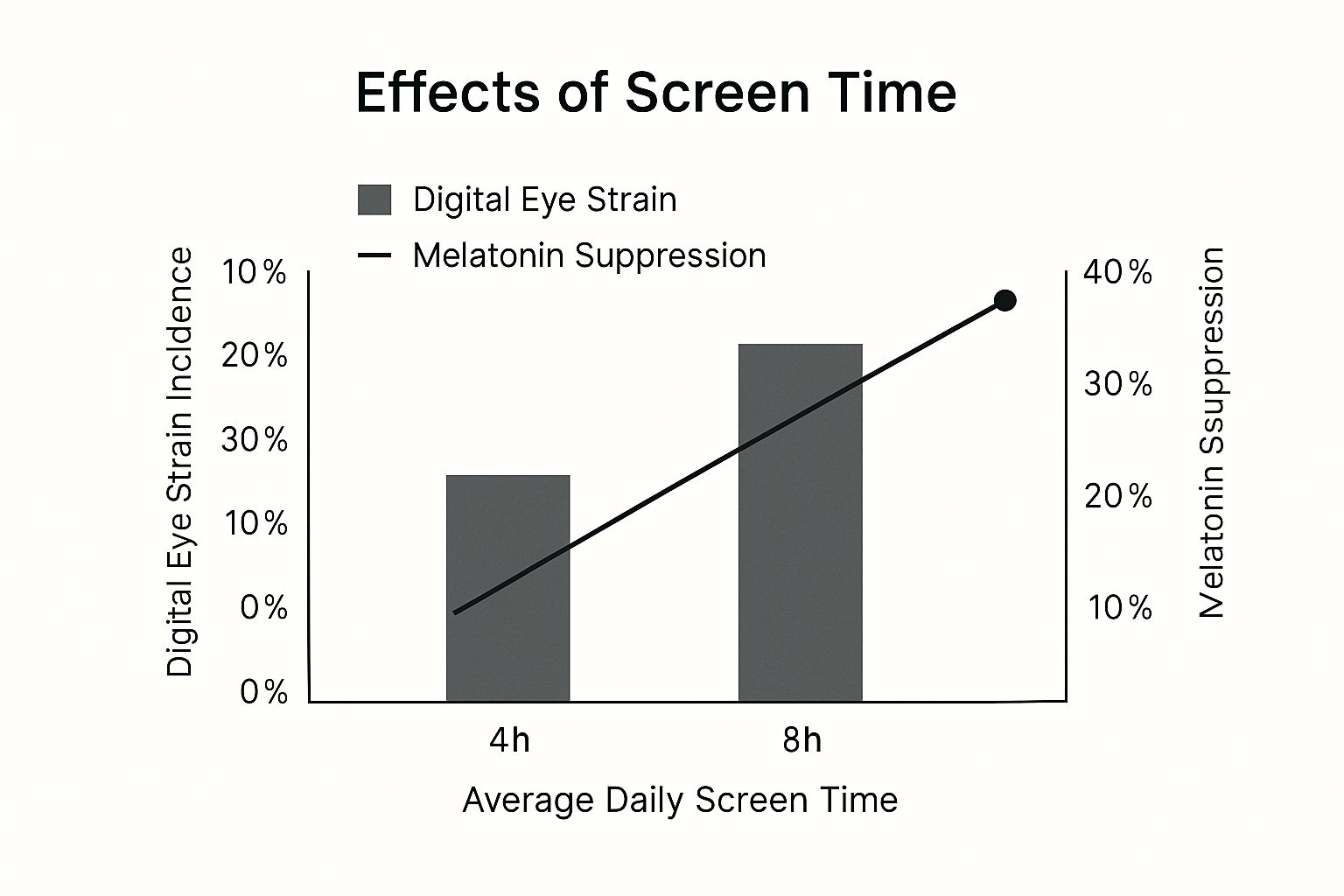
As you can see, even a couple of hours of screen time in the evening can seriously delay your body's ability to wind down for sleep. And as daily screen time goes up, the chances of experiencing eye strain skyrocket.
To give you a clearer picture, here's a quick breakdown of where this artificial light is coming from and what it's doing to us.
| Source of Blue Light | Primary Impact on Health | When Exposure is Most Harmful |
|---|---|---|
| Smartphones & Tablets | Suppresses melatonin, causes eye strain | 2-3 hours before bedtime |
| Laptops & Computers | Headaches, dry eyes, focus issues | During long, uninterrupted work sessions |
| LED & Fluorescent Lights | Can disrupt circadian rhythm, add to total daily exposure | Evening and nighttime hours |
| Televisions | Delays sleep onset, reduces sleep quality | Binge-watching late into the night |
This table is a simple reminder of how easily our modern habits can throw our natural rhythms out of whack.
Beyond just eye comfort, the most significant impact of evening blue light is on our sleep. It directly messes with our body’s production of melatonin, the hormone that manages our sleep-wake cycle.
When melatonin gets suppressed, it becomes much harder to fall asleep, stay asleep, and get the deep, restorative rest our bodies and minds crave. You can dive deeper into this science by exploring our extensive blue light blog resources.
This growing awareness has kicked off a major trend. In 2023, the market for non-prescription blue light blocking glasses was already valued at around $3.5 billion, and it's expected to keep climbing through 2030. That's a clear sign that people are starting to take action to protect their eyes and sleep from the side effects of our digital lives.
Ever feel like your eyes are buzzing after a long day of screen time? Think of the blue light from your devices as a kind of visual static. It’s a harsh, scattered light that makes the tiny muscles in your eyes work overtime just to stay focused. After a few hours, that constant effort adds up to digital eye strain—the familiar headaches, fatigue, and blurry vision we all know too well.
This is where computer glasses that block blue light with orange lenses come in. Orange-colored blue light glasses act as a powerful filter, slicing through that static. By absorbing the most disruptive high-energy wavelengths, they create a cleaner, higher-contrast image on your screen. This allows your eye muscles to relax, significantly reducing the symptoms of digital eye strain.
It’s this reduction in muscle tension that explains why so many people notice their headaches and blurry vision start to fade shortly after they begin wearing orange lenses for screen work.
The magic of orange lenses isn’t just about eye comfort—it’s also about preparing your body for a great night's sleep. How orange-colored blue light glasses help with sleep is by blocking the specific light frequencies that suppress melatonin. When your eyes are exposed to screens at night, your brain thinks it's still daytime and halts melatonin production. By filtering out this aggressive blue light, the glasses send a clear signal to your brain that the day is winding down, allowing your body to start its natural sleep cycle. The result? A much smoother transition into a relaxed state, making it easier to fall asleep and stay asleep.
And people are catching on. The global market for these specialized lenses is booming. By 2023, it was already a massive industry, with projections showing a compound annual growth rate of 15% from 2025 to 2033. It's clear there's a huge demand for better eye health and sleep. You can discover more insights about this market growth on archivemarketresearch.com.
While orange lenses are the heavy hitters for maximum blue light blocking before bed, amber lenses offer the perfect middle ground for evening relaxation. Think of them as a gentle transition tool.
How amber blue light glasses let you relax and wind down is by filtering a good portion of blue light, creating a warmer, softer visual experience. This calming tint is perfect for casual evening activities like watching a movie or scrolling on your tablet. It dials down the mental stimulation from harsh screens without completely changing your color perception.
Wearing amber glasses in the evening helps shift your mind and body away from the high-alert state caused by screens. It’s a simple yet effective way to signal to your nervous system that it’s time to relax and prepare for sleep.
Making computer glasses that block blue light part of your routine is a game-changer for better rest. But for the best results, you'll want to pair them with other proven sleep hygiene habits. Here are the top ways to get good sleep.
Tackling evening stress is crucial for unlocking deep, restful sleep. Here are four strategies that pair perfectly with your blue light blocking glasses.
Ever wondered why that late-night scroll on your phone leads to a restless night? It’s not just in your head. Your body runs on an internal clock, known as the circadian rhythm, and its main cue is light. When your eyes are flooded with intense blue light from screens, it sends a powerful "wake up!" signal to your brain, slamming the brakes on melatonin—the hormone that tells your body it's time to sleep.
This constant stream of artificial daylight messes with your natural sleep-wake cycle, making it harder to fall asleep and torpedoing the quality of your rest. It's like trying to get some shut-eye while your brain is convinced the sun is still high in the sky.
This is where a good pair of orange-lensed computer glasses that block blue light can be a total game-changer. How orange-colored blue light glasses help with sleep is by filtering out those confusing signals from your screens. Popping these on in the hours before bed lets your brain get back to its natural nighttime routine, producing melatonin just as it should.
The result? A much smoother transition into sleep. Instead of tossing and turning, you'll find it easier to drift off, hit those deeper, more restorative sleep stages, and wake up feeling genuinely refreshed. We dive deep into the science behind this on our guide about how Element Lux glasses help with sleep.
While orange lenses are your heavy-hitter for pre-sleep protection, amber-lensed glasses are perfect for winding down. How amber blue light glasses let you relax and wind down is by filtering a significant chunk of blue light, creating a warm, calming vibe that’s ideal for watching a movie or some casual browsing in the evening.
That warmer light helps your nervous system shift gears from high alert to a more relaxed state. It dials down the mental buzz from harsh screen light, making it easier to de-stress after a long day and get your mind ready for rest.
Pairing your blue light glasses with a few other solid habits creates a powerful sleep-promoting routine. Here are the top ways to get good sleep.
By proactively managing your light exposure in the evening, you are directly supporting your body's innate ability to prepare for deep, restorative sleep. It's one of the most effective changes you can make for your overall wellness.
Taming evening stress is a huge piece of the sleep puzzle. Here are four strategies to help you find your calm.
While those powerful orange lenses are the heavy hitters for maximizing melatonin right before bed, there's another key player for your evening routine: amber-lensed glasses.
Think of them as the perfect way to transition from a chaotic day to a calm evening. They’re designed to help you relax and wind down, offering a much gentler approach to managing your light exposure.
How amber blue light glasses let you relax and wind down is by filtering out a good chunk of the most disruptive blue light without the intensity of orange lenses. This creates a warm, soothing visual environment that’s just right for casual evening activities. Whether you're watching TV, reading on a tablet, or scrolling on your phone, amber lenses cut the screen's harshness without making your color perception go haywire.
This gentle filtering helps your nervous system shift from the high-alert, "fight or flight" mode that bright screens love to trigger, down into a more relaxed, "rest and digest" state. It’s a simple change, but it dials down the mental buzz from artificial light, making it so much easier to unwind after a long day.
Making blue light blocking glasses a part of your nightly routine is a game-changer. But for truly deep, restorative sleep, you'll want to combine this habit with other proven sleep hygiene practices. Here are the top ways to get good sleep.
Tackling evening stress is crucial if you want to unlock deep, restful sleep. Amber-lensed glasses are a fantastic tool for this, but they're even better when paired with other relaxation techniques.
By actively managing your light exposure, you are directly reducing one of the most common environmental stressors of modern life. It’s a passive yet powerful way to calm your nervous system.
Here are four simple strategies to help you find your calm in the evening.
While computer glasses that block blue light are a game-changer for our modern, screen-filled lives, they work best as part of a smart, consistent sleep strategy. Think of them as one powerful piece of a bigger puzzle. When you build a solid nightly routine, you’re sending clear signals to your mind and body that it’s time for deep, restorative rest.
This guide is all about actionable habits you can build into a sleep plan that actually works, with light management as the cornerstone. Each tip is designed to stack on the others, creating a complete toolkit for reclaiming your nights and waking up feeling recharged.
Improving your sleep doesn't mean you have to overhaul your entire life overnight. It’s about making small, consistent changes that really add up. The single most impactful habit you can start tonight is managing your light exposure after the sun goes down, because it directly controls your body's natural sleep-wake cycle.
And don't forget about your daytime habits! Getting plenty of natural sunlight during the day is just as crucial for regulating your circadian rhythm. Learn more about the health benefits of natural light from skylights.
Let's be honest: stress and anxiety are sleep's worst enemies. When your mind is racing, your body stays on high alert, making it feel impossible to actually rest. Bringing a few simple relaxation techniques into your evening can make a world of difference.
By actively managing your light environment with blue light blocking glasses, you reduce a major source of physiological stress that many people overlook. It’s a passive yet powerful way to promote calm.
Here are four simple but incredibly effective strategies for dialing down that evening stress.
To make this all a bit more concrete, here's a simple routine you can follow to wind down effectively and prepare your body for a great night's sleep.
| Time Before Bed | Action Item | Benefit |
|---|---|---|
| 2-3 Hours | Put on your amber blue light blocking glasses. | Signals your brain to start producing the sleep hormone, melatonin. |
| 1 Hour | Set a digital curfew—no more phones, tablets, or TV. | Reduces mental stimulation and gives your mind a break. |
| 45 Minutes | Do a light activity like gentle stretching or tidying up. | Eases physical tension and calms the body. |
| 30 Minutes | Read a physical book or listen to calming music. | Lowers stress and helps you transition into a relaxed state. |
| Just Before Bed | Ensure your bedroom is completely dark and cool. | Creates the ideal physical environment for deep, quality sleep. |
Sticking to a routine like this helps train your body and mind, making it easier to fall asleep faster and wake up feeling ready to take on the day.
Let's be honest, modern life can leave you feeling wound up and overstimulated, especially by the time evening rolls around. When you're in that constant state of high alert, it’s almost impossible to actually unwind, relax, and get the kind of restorative sleep your body and brain are crying out for.
The good news is you don’t have to just accept this as your new normal. You can actively manage that stress and create a calming evening routine, starting with the one thing you might be overlooking: your lighting. By making a few key changes, you can send a clear signal to your nervous system that it’s time to shift from a hectic day to a peaceful night.
This is the most important step you can take. Your evening stress is often amplified by your exposure to artificial light, especially from screens. All that bright, blue light is like a shot of espresso for your brain, telling it to stay awake and alert, which keeps your body in a subtle but persistent state of stress.
The simplest way to fight back is by wearing computer glasses that block blue light in the evenings. Popping on a pair with orange or amber lenses filters out those stimulating wavelengths, creating a much warmer, calmer visual world that helps your nervous system take a breath and relax. It's a small change that dramatically reduces the stressful signals your screens are sending, making it so much easier to wind down.
People are catching on to this. The market for anti-blue light glasses in Europe alone jumped from $435.05 million in 2021 and is on track to hit $605.37 million by 2025, with similar growth happening across Asia. It's a clear sign that more and more of us are looking for tools to help us manage our digital lives. You can read the full research about these market dynamics if you're curious.
Once your light is under control, the next step is to quiet your mind. Stress loves to show up as a racing brain, replaying the day's worries and making true relaxation feel like a distant dream.
A short mindfulness or meditation practice can be a game-changer here. Just 10-15 minutes of focused breathing or a guided meditation helps lower your heart rate, settles your nervous system, and creates a little mental space between you and your stressors. It’s a powerful way to shift from a "doing" state to simply "being," prepping your mind for rest.
Stress isn't just in your head; it builds up as physical tension in your body. Releasing that tension is a huge part of feeling truly relaxed.
You don't need a grueling workout—in fact, that can backfire in the evening. Instead, think gentle. A light walk around the block, some slow stretching, or a few simple yoga poses will do the trick. This helps release endorphins (your body’s natural mood-lifters) and eases muscle tightness, leaving you feeling calmer both physically and mentally.
Finally, give your brain a real break from the non-stop flood of information. It's not just the blue light; the content we consume on our screens is often highly stimulating and can ramp up anxiety right before bed.
Setting a firm "no-screen" rule for the last 30-60 minutes before you sleep is one of the most powerful things you can do for your peace of mind. Use that time for a relaxing, screen-free ritual like reading a physical book, listening to calm music, or journaling. This digital boundary is essential for letting your mind fully disconnect and unwind before you sleep.
When you're trying to find the right computer glasses that block blue light, it's easy to get a little lost. Which color lens is best? When should you wear them? Getting the right pair for your specific needs is what makes the real difference in cutting down eye strain and finally getting better sleep.
Here are some of the most common questions we get.
Think of orange-colored lenses as your heavy-hitters, especially for late-night work or gaming sessions. How orange-colored blue light glasses help with eye strain is by filtering out the harsh blue light that makes your eye muscles work overtime, which is a big reason you get screen-induced headaches and fatigue.
Their real superpower is helping you sleep. How orange-colored blue light glasses help with sleep is by protecting your body's melatonin production. Wearing them for 2-3 hours before bed lets your brain know it’s actually nighttime, helping you fall asleep faster and get the deep, restorative rest you need.
Amber lenses are your perfect go-to for winding down in the evening. How amber blue light glasses let you relax and wind down is by blocking plenty of blue light to create a softer, warmer visual environment than the more intense orange lenses. This makes them absolutely ideal for chilling out while watching TV or scrolling on your tablet.
That warm tint from amber blue light glasses helps nudge your nervous system out of that "on-alert" daytime mode. It dials down the mental stimulation from screens, making it much easier to de-stress after a long day.
Getting consistently great sleep is all about building a solid routine. While blue light glasses are a game-changer for modern sleep hygiene, they work best when you pair them with other healthy habits. Here are the top ways to get good sleep.
You can’t sleep if your mind is racing. Managing stress in the evening is absolutely critical for getting restful sleep. Here are the top 4 ways to reduce stress or anxiety and relax.
By proactively managing your evening light exposure, you are addressing a major physiological stressor that many people overlook. It’s a passive but powerful way to signal calm to your nervous system.
Ready to reclaim your evenings and wake up feeling genuinely refreshed? Element Lux offers premium blue light blocking glasses designed to protect your eyes and get your natural sleep cycle back on track.
Shop Now and Experience the Difference
So, are blue light glasses bad for your eyes? It’s not a simple yes or no, because the real issue is that not all blue light glasses are created equal.
The conversation gets muddy pretty quickly. While many clear-lensed glasses are sold to combat eye strain, the ones that really move the needle—especially for sleep—are the purpose-built amber and orange lenses designed to work with your body’s natural sleep-wake cycle.
A lot of people grab a pair of blue light glasses hoping to fix digital eye strain, but the science on that is murky at best. The far more important conversation is about how artificial blue light, especially after the sun goes down, tricks your brain into thinking it's still midday.
This is what messes with your internal clock, or circadian rhythm, and that’s where the real problem lies. And this is exactly where the color of the lenses becomes the make-or-break factor.
Your standard clear lenses only filter a tiny fraction of blue light. Frankly, it's often not enough to send a meaningful signal to your brain's sleep center.
This is where amber and orange-tinted lenses, like the ones we use at Element Lux, come in. They are engineered from the ground up to do a completely different job.
They’re designed to block a much, much wider spectrum of the most disruptive blue and even some green light. This drastic reduction in stimulating light sends an unmistakable message to your brain: it’s time to wind down.
By filtering out the specific wavelengths that slam the brakes on melatonin production, amber lenses help your body get back to its natural rhythm and prepare for truly restorative sleep. That's a game-changer for both your mental and physical health.
This chart really puts the difference into perspective, showing just how much more effective specialized amber lenses are compared to standard clear ones.
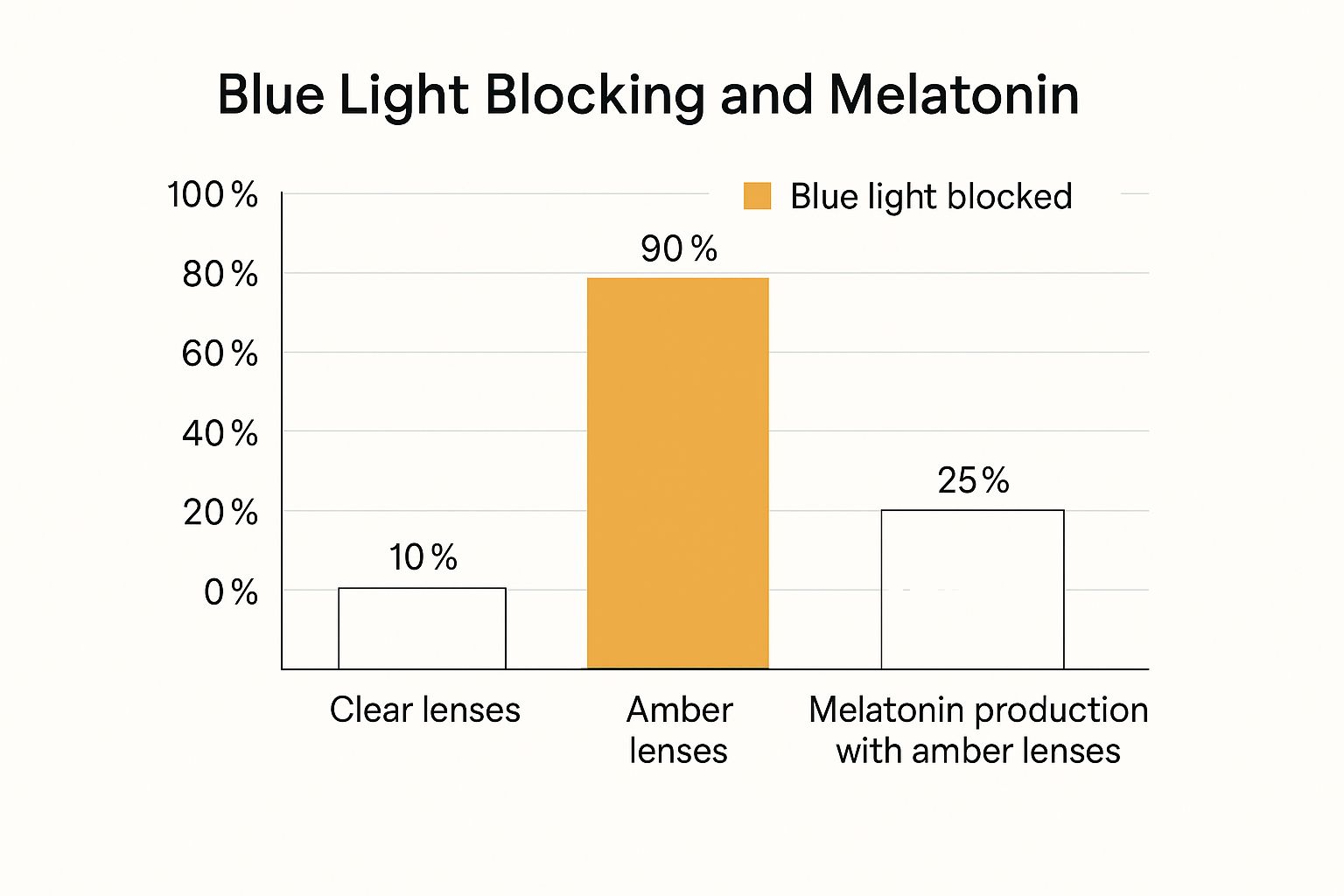
As you can see, the difference isn't small. Amber lenses offer a powerful filtering effect that’s specifically designed to support your natural sleep cycle, not just vaguely reduce screen glare.
Recent scientific reviews have started to question just how effective typical clear blue-light glasses are for computer-related eye strain.
A major 2023 systematic review looked at 17 different trials and ultimately found there just wasn't enough evidence to say that standard blue-light filtering lenses do much to reduce symptoms of eye strain. This is why it’s so critical to focus on the type of lens you’re using and what you want it to accomplish.
The goal should shift from vaguely "fighting eye strain" to actively managing your light exposure to protect your sleep. If you want to go deeper into the research and what to look for, this is a great resource on blue light glasses: do they really work and how to choose them for your own needs.
To clear things up, here’s a quick table breaking down the common claims you’ll see versus what the science actually supports for different types of lenses.
| Lens Type | Common Claim | Scientific Consensus | Primary Benefit |
|---|---|---|---|
| Clear Lenses | Reduces digital eye strain. | Weak to inconclusive evidence for eye strain; minimal impact on melatonin. | May slightly reduce glare from screens. |
| Amber/Orange Lenses | Supports better sleep by blocking blue light at night. | Strong evidence that blocking blue light in the evening supports natural melatonin production. | Helps regulate the body's sleep-wake cycle (circadian rhythm). |
Ultimately, choosing the right glasses comes down to understanding your goal. If you want to help your body wind down naturally for a great night's sleep, amber lenses are the clear winner.
To really get why some blue light glasses are more effective than others, you have to understand what we're up against. Think of light as a rainbow of different wavelengths. Blue light is made of high-energy, short waves—it’s the kind of intense light our biggest natural source, the sun, puts out.
When the sun is up, that blue light hits our eyes and sends a powerful signal to our brain: "Hey, it's daytime! Time to be awake and alert."
This signal is the master controller for your circadian rhythm, which is basically your body's built-in 24-hour clock. When your brain senses blue light, it hits the brakes on melatonin—the hormone that makes you sleepy. During the day, that's exactly what you need to stay focused and energized.
But the trouble starts when we're blasted with artificial blue light from our phones, laptops, and TVs long after sunset. That exposure tricks our brains into thinking it’s still high noon, completely messing with our natural wind-down process and making it so much harder to get the deep, restorative sleep we need.
This is where orange and amber lenses come into play. They’re designed specifically to tackle that nighttime disruption. By filtering out the most stimulating blue and even some green light, they send a clear, unmistakable signal to your brain: "Okay, the sun has set. It's evening now."
This immediately helps calm your visual system down from that harsh, alerting light, which is what helps reduce that gritty, tired feeling of digital eye strain.
Even more importantly, this filtering allows your body to start producing melatonin right on schedule. That hormonal shift is absolutely crucial for letting you relax, feel sleepy, and ultimately fall asleep faster and stay asleep longer. You can dive deeper into how light messes with our biology over on our blue light blog.
While you might hear claims about blue light causing retinal damage, the scientific evidence that glasses prevent this is still up in the air. If you want to get into the weeds, you can read the full research about these findings. For now, the most proven, undeniable benefit of amber lenses is their power to help you manage your body clock.
Getting a fantastic night's sleep is about more than just your glasses—it's about building a solid, consistent routine.
When you're trying to manage your sleep and actually relax at night, not all blue light glasses are created equal. Sure, those clear-lensed ones might cut down on a bit of screen glare, but amber and orange-tinted lenses from brands like Element Lux are engineered for a much more specific and powerful job: helping your brain and body wind down.
The real difference comes down to the amount of blue light they block. The effectiveness of a lot of glasses on the market varies wildly, and some clear versions only filter a tiny fraction of the light that messes with your sleep. You can dive deeper into these blue light facts and fictions to see just how different they are. A weak filter just isn't enough to trigger the biological "it's time for bed" response. High-quality amber lenses, on the other hand, are designed to filter out a much broader and more impactful spectrum of that disruptive light.
Think of the bright, harsh light from your phone or laptop as a constant visual "noise." Orange colored blue light glasses work like noise-canceling headphones for your eyes. They dramatically dial down those harsh, high-energy wavelengths that lead to digital eye strain. By softening all that visual input, your eyes don't have to work nearly as hard, which is a huge help in getting rid of that tired, gritty feeling after a long evening staring at a screen.
But the effect on your sleep is even more profound. By blocking the specific blue and green light that shuts down melatonin production, orange colored blue light glasses essentially give your brain the "all-clear" signal to start preparing for rest. This lets your melatonin levels rise naturally, making it much easier to feel sleepy and fall into a deeper, more restorative sleep.
Here’s a perfect example of Element Lux amber blue light blocking glasses designed for exactly this.
That distinct amber tint isn't just for looks; it’s a clear sign of their function—filtering out disruptive light so you can get ready for a truly restful night.
The calming effect of amber lenses goes beyond just sleep prep; they're a fantastic tool for daily relaxation. Putting them on in the evening helps create a clean boundary between your active "day mode" and your restful "night mode."
This simple habit can become a powerful part of your wind-down ritual. It signals to your body that the demanding part of the day is officially over, helping you shift into a state of calm. This is a game-changer for anyone who feels wired or anxious after a late night of work or scrolling.
By dialing down the alerting signals from your environment, amber blue light blocking glasses help lower the mental and physiological stimulation that keeps you from truly relaxing. It’s a simple, passive way to support your body's natural relaxation response.
Pairing amber glasses with a solid relaxation strategy can make a huge difference. Here are four of our top ways to de-stress in the evening:
Getting better sleep isn't about chasing a single magic bullet. It’s about building a powerful, consistent evening routine that signals to your body that it's time to wind down.
A crucial part of any modern sleep strategy is managing your light exposure, which is exactly where a quality pair of amber or orange blue light blocking glasses becomes your most important tool.
Slipping on a pair of Element Lux glasses 1-2 hours before you plan to go to sleep is one of the simplest and most effective things you can do. It immediately starts filtering out the harsh, artificial light from your screens and overhead lighting, sending a clear message to your brain: the day is done. This one small action kickstarts the natural process of preparing for deep, restorative sleep.
Building a great routine around your glasses can seriously amplify their effects. Here are the top ways to reclaim your nights and wake up feeling like a new person.
Wear Amber or Orange Lensed Glasses: This is your non-negotiable first step. Make it a habit to put them on every single evening. This simple trigger helps your body start producing melatonin while also easing the digital eye strain that comes from late-night screen time. You can learn more about how our glasses help with sleep and get your circadian rhythm back on track.
Stick to a Consistent Schedule: Your body absolutely thrives on consistency. Going to bed and waking up at roughly the same time every day—yes, even on weekends—is a game-changer. It reinforces your internal clock, making it far easier to fall asleep and wake up naturally.
Optimize Your Bedroom Environment: Your bedroom should be a sanctuary for sleep, not a multi-purpose room. The goal is cool, completely dark, and quiet. Things like blackout curtains, a white noise machine, or a simple eye mask can make a world of difference.
Avoid Late-Night Stimulants: That evening cup of coffee, a heavy meal, or a glass of wine too close to bedtime can wreak havoc on your sleep quality. Try to finish eating at least two to three hours before you turn in. This lets your body focus on rest and repair, not digestion. To go even deeper, check out these eight science-backed ways to fall asleep faster.
What you do in that last hour before bed matters immensely, and it goes beyond just blocking blue light. This is your time to consciously disconnect from the day's stress and prepare your mind for rest.
A dedicated wind-down routine isn't a luxury; it's a crucial practice that helps transition your brain from an active, problem-solving state to a calm, restful one. Wearing your amber glasses during this time enhances the entire process.
Here are a few powerful ways to build a relaxing ritual into your evening, with your blue light blocking glasses as the foundational piece.
Mindful Disconnection: Put on your Element Lux glasses and put your phone away. Seriously, put it away. Spend 15-20 minutes reading a physical book (not an e-reader!), listening to calming music, or journaling.
Gentle Stretching: Let go of the day's physical tension. Focus on light stretches for your neck, shoulders, and back. A few simple yin yoga poses can also help your body signal it’s time to rest.
Deep Breathing Exercises: Try a simple box breathing technique. Inhale for four counts, hold for four, exhale for four, and hold again for four. This is a remarkably effective way to calm your entire nervous system.
Prepare for Tomorrow: Get tomorrow's to-do list out of your head and onto paper. This simple act of "brain dumping" can prevent that late-night mental chatter and worry that keeps so many of us awake.
To help you put it all together, here’s a sample routine you can adapt to fit your own schedule.
| Time Before Bed | Action Item | Purpose |
|---|---|---|
| 2-3 Hours | Finish your last meal or snack. | Prevents digestive issues from interfering with sleep. |
| 1-2 Hours | Put on your Element Lux amber glasses. | Blocks disruptive blue light to allow natural melatonin production. |
| 1 Hour | Turn off bright overhead lights; use dim lamps instead. | Reduces overall light exposure, signaling your brain it's nighttime. |
| 45 Minutes | Turn off all screens (TV, phone, computer). | Eliminates mental stimulation and the last sources of blue light. |
| 30 Minutes | Engage in a calming activity: read a book, journal, meditate. | Shifts your brain from an active to a restful state. |
| 15 Minutes | Do some gentle stretching or deep breathing exercises. | Releases physical tension and calms the nervous system. |
| Bedtime | Get into a cool, dark, and quiet room. | Creates the ideal physical environment for deep, restorative sleep. |
Sticking to a schedule like this, even just for a week, can have a profound impact on how quickly you fall asleep and how refreshed you feel in the morning. Consistency is your best friend when it comes to sleep.
The image above nails the goal of a wind-down ritual. It’s all about creating a calm, screen-free space to get your mind and body ready for rest. Slipping on a pair of amber glasses during this time makes a huge difference, filtering out the harsh, stimulating light that keeps your brain stuck in "day mode."
But it's about more than just sleep. Managing your evening light exposure with amber lenses is a game-changer for your overall mental well-being. In our hyper-connected lives, finding ways to genuinely de-stress is non-negotiable. The right pair of glasses can become the cornerstone of an evening routine that actively dials down anxiety and brings on a sense of calm.
Think of it this way: by filtering out the high-energy blue light that screams "wake up!" to your brain, amber lenses help turn down the volume on the day's stimulation. This simple switch helps lower cortisol (the stress hormone) and nudges your nervous system from a frantic "fight or flight" state to a much-needed "rest and digest" one. They're not just a sleep aid; they're a daily tool for your mental toolkit.
When you pair your amber glasses with other proven relaxation techniques, you create a powerful synergy for your mental health. Here are four effective methods to beat back stress and anxiety in our digitally-drenched world.
Wear Amber Blue Light Blocking Glasses: Make this your first move every single evening. Pop on your Element Lux glasses for 1-2 hours before you plan to go to bed. This filters out the stimulating artificial light from all your screens and lightbulbs. It’s the easiest, most passive way to send a clear signal to your body and mind that the day is officially done.
Practice Mindfulness and Deep Breathing: Once your glasses are on, set aside just five or ten minutes for a mindfulness exercise. Don't overthink it. Just focus on your breath—a slow inhale through your nose, a long exhale through your mouth. This simple practice is scientifically proven to calm the nervous system and quiet those feelings of anxiety.
Incorporate Gentle Stretching: Let go of the physical tension that builds up from sitting at a desk or running around all day. A few light stretches for your neck, shoulders, and lower back can provide immediate relief. This physical release sends signals of safety and relaxation to your brain, perfectly complementing the calming visual effect from the amber lenses.
Establish a Screen-Free Wind-Down Ritual: For the final 30-60 minutes before sleep, put all your screens away. For real. Use this protected time—while still wearing your amber glasses—to do something genuinely calming. Read a physical book, listen to some chill music, or journal about your day. This helps you unplug from daily stressors and truly prepare your mind for a peaceful night.
So, how do you pick the right pair? It really just boils down to one simple question: What are you trying to accomplish? Figuring that out is the key to separating the gimmicks from the genuinely effective tools.
If all you're worried about is a bit of screen glare during the day, standard clear-lensed glasses might give you a little relief. But let's be honest—major studies have shown they don’t really do much for digital eye strain. They block a tiny fraction of blue light, which is nowhere near enough to make a real difference to your body's internal clock.
Now, if your goal is to protect your natural sleep cycle, get better quality rest, and actually relax in the evening, then amber and orange lenses are the only choice with real science behind them. Their job isn't just to cut down on glare; it's to filter out the exact, disruptive wavelengths of blue and even some green light that slam the brakes on your body's melatonin production.
This powerful filtering sends a clear "it's nighttime" signal to your brain, letting you wind down naturally instead of feeling wired. Brands like Element Lux have engineered their glasses specifically for this. That deep amber tint isn't just a style choice—it's a functional feature designed to help you get ready for a night of deep, restorative sleep. For anyone serious about their evening wind-down routine, the difference is night and day.
Choosing the right glasses is an investment in your health. For evening screen use and sleep preparation, amber lenses are the clear winner, offering a powerful way to manage your relationship with technology and protect your well-being.
Ready to find a pair that actually works for you? See how different styles fit and discover what a difference amber lenses can make when you shop the Element Lux collection. The right glasses don't just change what you see; they change how you feel.
Getting the hang of how and when to use your blue light glasses is key to unlocking their benefits. Let's run through a few questions we hear all the time so you can get the best results for your sleep and relaxation.
Definitely not. Think of amber lenses, like ours at Element Lux, as your evening ritual tool. They’re designed to be worn for 1-3 hours before you plan to go to sleep.
Your body actually needs natural blue light during the day to feel awake and keep your internal clock on schedule. Wearing heavy-duty amber lenses all day would mess with those important signals and could leave you feeling sluggish.
Many people find they do. Those screen-time headaches are often a classic sign of digital eye strain.
High-quality orange and amber lenses work by softening the harsh, stimulating light from screens, which can feel incredibly calming to your eyes and brain. While it’s not a guaranteed cure-all (you should still check your posture and screen brightness), many users tell us it significantly eases those headache symptoms.
We built Element Lux for people who are serious about their sleep. Our premium amber lenses are engineered to zero in on the exact wavelengths of blue and green light that are notorious for wrecking melatonin production.
You'll see a lot of clear or lightly-tinted lenses out there that only block a tiny fraction of disruptive light. We focus on providing a powerful, targeted filtering effect so you can actually wind down at night and get the restorative sleep you need.
Ready to stop feeling so wired and tired? The Element Lux collection is specifically designed to filter the disruptive light that messes with your sleep. Experience the difference for yourself and shop the collection.
Imagine your eyes having their own personal sunset, even when you're still scrolling on your phone or finishing up work on your laptop. That's the best way to think about amber tinted glasses. They're far more than a fashion statement; they're a smart tool designed to help you navigate our modern, artificially lit world by filtering out the exact kind of light that messes with your body's natural clock.
The real genius behind amber lenses is their ability to be selective about which parts of the light spectrum they let through. All our favorite devices—smartphones, tablets, TVs, and computers—blast out a ton of blue light. This is a type of high-energy visible (HEV) light that our brains have been hardwired for millennia to interpret as one thing: the bright midday sun. That signal tells your body, "Stay awake! Be alert!"
When you slip on a pair of amber glasses in the evening, they act like a filter, stopping a huge portion of that stimulating blue light from ever reaching your eyes. This simple act mimics the way light naturally changes at dusk, as the harsh blue tones of daylight fade into the warmer, redder hues of sunset.
This "digital sunset" is what helps reset your body's internal clock. It’s the cue your brain needs to start producing melatonin, the hormone that basically tells your body it's time to start winding down for bed. By creating this calming visual environment, the glasses help you ease out of a hyper-connected day and into a truly restful night.
This infographic does a great job of showing what we mean by a "digital sunset" and how these glasses can create a warmer, more relaxing view of your screens.
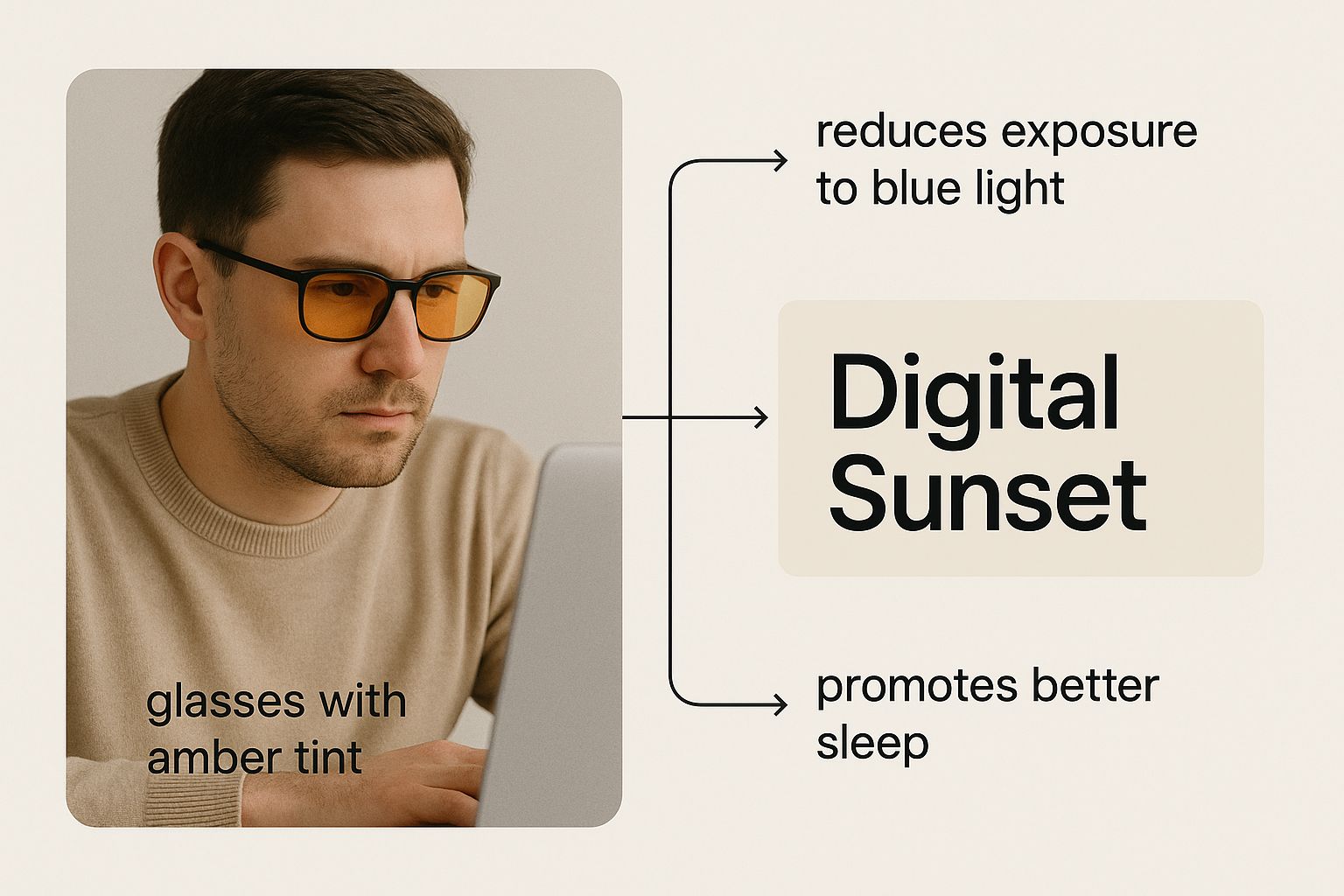
As you can see, the amber tint cuts right through the harsh glare, leaving a much softer light that helps your body recognize it's time to power down.
This kind of light-filtering tech is becoming a necessity as our screen time continues to climb. In fact, the global market for blue light blocking glasses is expected to hit $3.0 billion by 2025, a jump that's almost entirely thanks to a growing awareness of digital eye strain and sleep problems.
By blocking the most disruptive wavelengths of light, amber tinted glasses help synchronize your internal clock with your desired bedtime, rather than with your screen time.
To put it simply, these glasses don't change the light coming from your screen. They change how your eyes and brain perceive that light. It’s a small adjustment that supports your natural biology, making it so much easier to relax, fall asleep, and get the deep, restorative rest you need.
For a deeper dive into how light affects your body and mind, check out our guide on the blue light blog.
Here's a quick look at the main reasons people are turning to amber-tinted glasses.
This table breaks down the primary advantages of wearing amber tinted glasses, especially as you wind down in the evening.
| Benefit | How It Works | Ideal For |
|---|---|---|
| Better Sleep Quality | Blocks over 90% of blue light, allowing your brain to produce melatonin naturally. | Anyone who uses screens (phone, laptop, TV) within 2-3 hours of bedtime. |
| Reduced Digital Eye Strain | The warm tint reduces harsh glare and high-energy light, relaxing your eye muscles. | People who experience dry eyes, headaches, or blurry vision after screen use. |
| Supports Circadian Rhythm | Mimics a natural sunset, signaling to your body that it's time to wind down. | Night owls, shift workers, or anyone with an irregular sleep schedule. |
Ultimately, whether you're looking to fall asleep faster or just make your evening screen time easier on your eyes, the science behind amber lenses offers a practical, effective solution.
If you've ever wrapped up a long day staring at a screen only to be rewarded with tired, aching eyes and a nagging headache, you know what digital eye strain feels like. The harsh, high-energy blue light from our devices is the main culprit, leading to dryness, blurred vision, and general discomfort.
This is where orange colored blue light glasses make a real difference. Think of the warm tint as a shock absorber for your eyes. It filters out the most aggressive blue light wavelengths, which immediately softens the harsh glare from your screen and sharpens contrast. This makes everything on the screen easier to read and cuts down on the visual "noise" that forces your eye muscles into overdrive. It's like wearing sunglasses on a painfully bright day, but tailored specifically for the artificial glow of our indoor world.
By creating a softer visual environment, amber lenses help your eyes finally relax—even when you’re pushing through a late-night work project or settling in for a movie marathon. It’s a simple change that lets you stay focused and comfortable without paying the price with eye fatigue later on.
Wearing amber glasses in the evening creates a warmer, more soothing visual experience, signaling to your eyes and nervous system that it's time to wind down from the day's stimulation.
The demand for glasses like these is definitely growing. While amber-tinted lenses have a specific job to do, they're part of a bigger trend toward eyewear that not only corrects vision but actively protects our eyes. This market is seeing huge growth, especially in the Asia-Pacific region.
Of course, amber lenses are a fantastic tool, but they work best as part of a complete routine. You can also explore other top tips for avoiding computer eye strain to build a solid defense against digital discomfort. Combining these strategies is your best bet for keeping your eyes happy.
Ever find yourself scrolling through your phone at 11 PM, only to feel wide awake when you finally try to sleep? That bright screen is blasting your brain with blue light, sending a powerful signal that it's the middle of the day.
This digital daylight completely throws off your internal clock, known as your circadian rhythm. It also slams the brakes on melatonin production—the essential hormone that tells your body it’s time to sleep. The result? You're left tossing and turning instead of drifting off peacefully.
This is where orange colored blue light glasses become a game-changer for your nightly routine. By wearing a pair for just 1-2 hours before bed, you’re creating a protective shield. The warm, amber-hued lenses filter out those confusing blue wavelengths, giving your brain the "all clear" to naturally begin its wind-down process and start producing melatonin.
You’ll find it much easier to fall asleep faster and get the deep, restorative sleep you need to feel energized the next day. It’s the key reason why they're so effective. To understand exactly how our glasses get the job done, you might be interested in our guide on how they help with sleep.
While amber blue light glasses are a powerful tool, they work best when paired with solid sleep habits. Think of it as a complete strategy for better rest.
For an even deeper dive into these strategies, check out our complete guide on achieving better sleep.
Beyond just prepping you for sleep, the warm tint of amber blue light glasses creates a calmer, more soothing visual environment. It helps turn down the mental noise from screens, making it easier to relax, de-stress, and let go of anxiety after a long day. This is a crucial part of any holistic wellness approach.
Shifting your mind from a state of high alert to one of calm is critical for your evening wind-down, and creating the right environment makes all the difference. The warm, gentle hue literally creates a more soothing visual world around you, helping to calm your nervous system.
When you pair your glasses with other proven relaxation techniques, you create a powerful nightly ritual. It's a holistic approach that sends a clear signal to both your mind and body that the day is officially over.
Ready to find the perfect pair? It's pretty simple once you know what to look for. The thing is, not all "blue light blocking" glasses are created equal. The real differences come down to the quality of the lens, the depth of the tint, and how comfortable the frames are—and these factors will make or break how well they work for you.
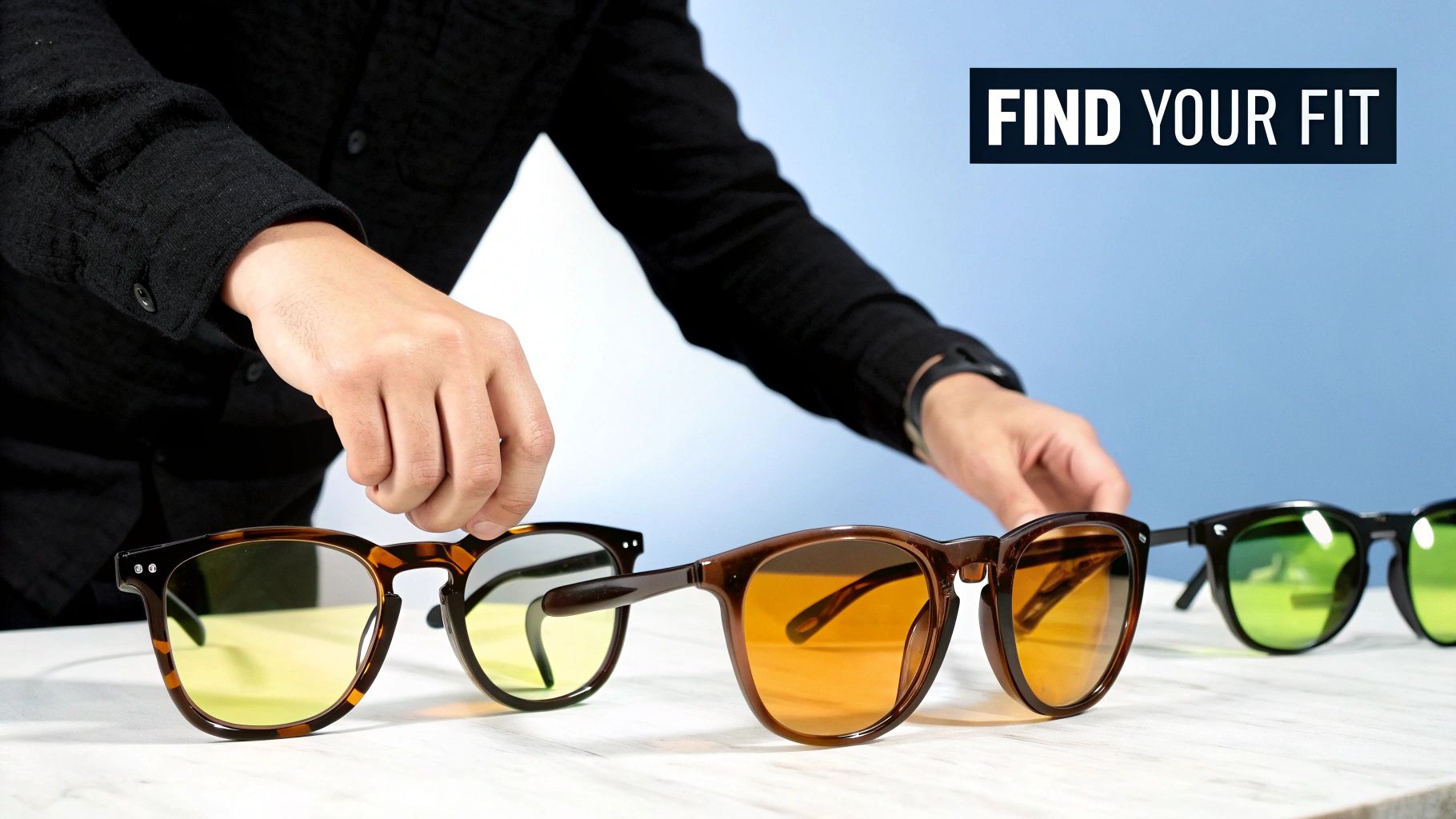
The single most important factor is the tint. If you’re serious about getting better sleep, a deep amber or orange-colored lens is non-negotiable. These darker shades are specifically designed to block over 99% of the most disruptive blue light wavelengths, which is what gives your brain the signal to start producing melatonin naturally.
Those lighter yellow or clear lenses might take the edge off eye strain during the day, but they just don't have the power to protect your circadian rhythm when the sun goes down.
Beyond the lens itself, you've got to think about comfort and quality. Look for lightweight frames you can actually wear for a few hours without them feeling like a chore. High-quality options, like the ones from Element Lux, deliver on both fronts: scientifically-backed lenses paired with frames that are both stylish and comfortable.
For the best results, get into the habit of putting your glasses on 1-3 hours before bed. This simple step creates that all-important buffer between your screen time and your sleep time.
Choosing the right amber glasses is an investment in your nightly wind-down routine. A quality pair will not only reduce eye strain but will actively support deeper, more restorative sleep by creating an ideal environment for relaxation.
Ultimately, the goal is to find a pair that fits so seamlessly into your evening that you forget you’re even wearing them. By focusing on a strong amber tint and a comfortable frame, you'll be well on your way to fighting off digital eye strain and getting your natural sleep cycle back on track.
Jumping into the world of blue light glasses can bring up a few questions. Let's tackle some of the most common ones so you can see exactly how amber lenses fit into your routine.
You could, but you’d be missing the point. Amber and orange lenses are specifically designed as an evening tool, meant to be worn for the 1-3 hours before you plan to go to sleep.
Wearing them all day isn’t ideal because it can throw off your color perception. More importantly, your brain actually needs some of that blue light from the sun during the day to feel awake and energized. Save these for when the sun goes down.
It really comes down to strength and purpose.
Think of yellow lenses as your daytime eye-strain relief. They take the harsh edge off your computer screen and cut down on glare without making the world look dramatically different.
Amber and orange lenses are the heavy-hitters for nighttime. They block a much, much larger slice of the blue light spectrum, which is exactly what you need to protect melatonin and signal to your body that it’s time to wind down for sleep.
For promoting genuinely restful sleep, amber tinted glasses are the clear winner. For simply making your workday screen time more comfortable, yellow lenses get the job done.
Night mode is a great start, but it's not the whole story. Those software filters on your phone and laptop do reduce some blue light, but they often don't block enough of the most disruptive wavelengths to make a real difference for your sleep.
A good pair of amber glasses, like the ones from Element Lux, creates a physical barrier. It's simply a more powerful and reliable way to stop that specific junk light from messing with your internal clock.
When it comes to eye comfort, a lot of people feel relief almost right away—that soothing, relaxed feeling as soon as you put them on.
For sleep, you'll likely feel a positive shift within the first few nights. The real magic happens with consistency. When you make wearing them every evening a habit, you’re helping to regulate your body's natural rhythm for better sleep and less eye strain long-term.
Ready to feel the difference for yourself? Element Lux offers premium amber tinted glasses designed to help you unwind, ease eye strain, and get your best night's sleep. Shop now and start your journey to better rest.
Ever get that dull, throbbing ache behind your eyes after a long day of Zoom meetings or a late-night scrolling session? If you've ever wondered if your screens are giving you a headache, you're not imagining things.
That nagging discomfort is what many of us have come to know as a blue light headache. While it's not an official medical term you'll find in a textbook, the experience is incredibly real for millions of people who spend hours staring at computers, phones, and tablets every single day.
The root of the problem isn't just screen time itself—it's the specific type of light our devices emit. The pain you feel is a direct result of how our eyes and brain react to the intense, high-energy light pouring out of our digital screens.
Think of it this way: your eye muscles are like tiny camera lenses, constantly working to focus. When you're looking at a screen, they’re trying to focus on a blurry, flickering image. This forces those muscles to work overtime just to keep things clear, leading to fatigue, strain, and eventually, that all-too-familiar headache. It's a physiological response, not just a feeling.
The main culprit here is High-Energy Visible (HEV) blue light. Unlike other colors on the light spectrum, blue light has a shorter, more scattered wavelength. This scattering creates a kind of visual "noise" or glare that makes it harder for your eyes to focus.
Your eye muscles are forced into a constant state of overexertion, and that's what triggers the strain and pain.
This infographic breaks it down at a glance.
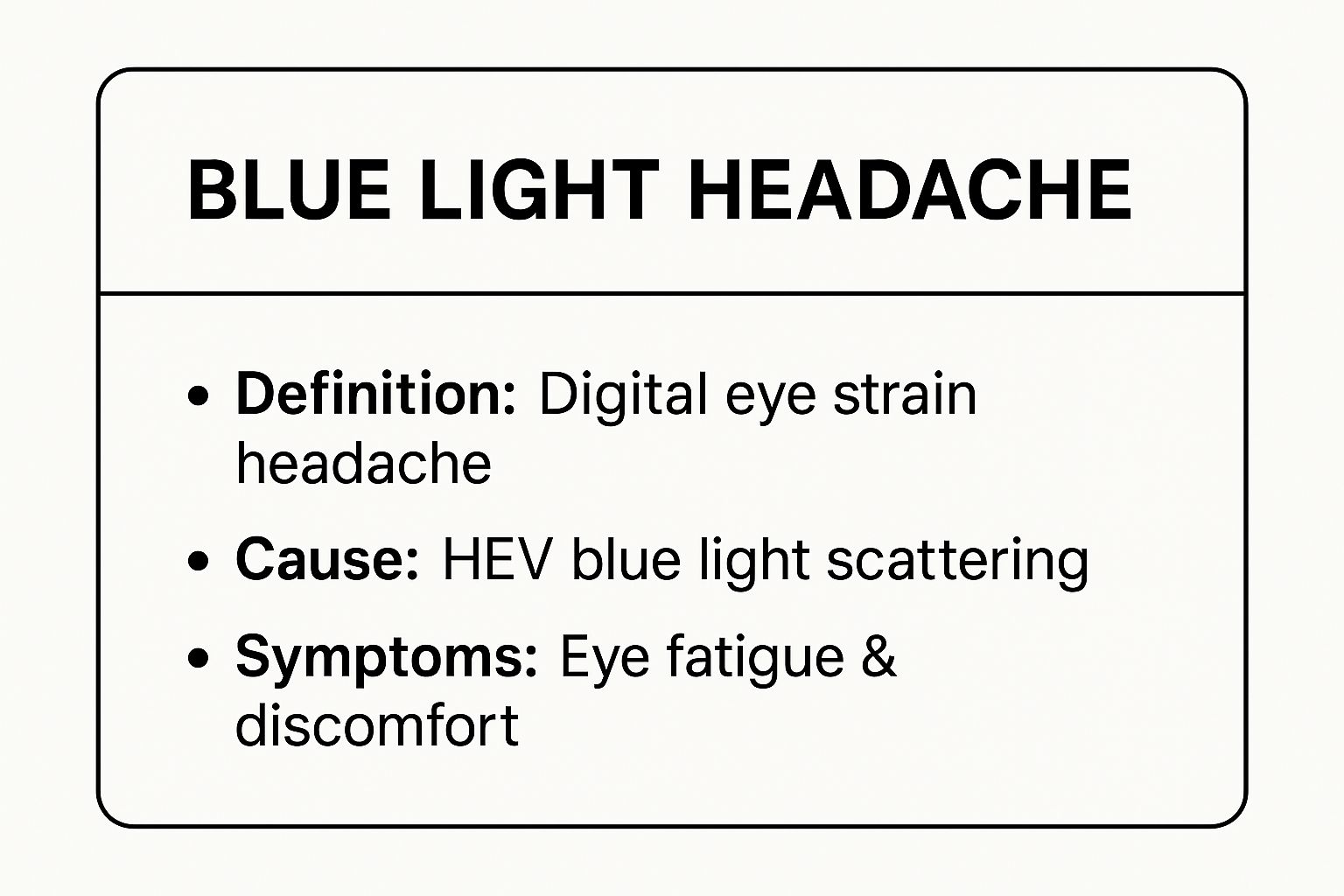
As you can see, the headache doesn't come out of nowhere. It's a direct result of digital eye strain, caused by the unique way HEV blue light behaves, and it leads to some very distinct symptoms.
The connection between our screens and head pain isn't just anecdotal, either. A study with 259 participants found a clear link between daily screen use and the frequency of headaches. Nearly a third of them (30.5%) spent 7–9 hours a day looking at screens, confirming what many of us already suspected: more exposure often means more pain.
To help you connect the dots, here’s a quick breakdown of common symptoms and what might be triggering them.
| Symptom | Common Digital Trigger | What It Feels Like |
|---|---|---|
| Dull, throbbing pain behind the eyes | Long hours staring at a computer monitor or laptop without breaks. | A constant, nagging pressure that seems to be centered right behind your eyeballs. |
| Sensitivity to light | Switching between a bright screen and a dark room. | Finding normal indoor lighting uncomfortably bright after looking at your screen. |
| Dry, itchy, or watery eyes | Reduced blinking rate while focused on reading or detailed work on-screen. | Your eyes feel gritty, tired, and irritated, like there's sand in them. |
| Neck and shoulder tension | Poor posture from hunching over a phone or laptop. | A stiff, aching feeling that radiates from your neck up to the base of your skull. |
| Difficulty focusing vision | Straining to read small text on a phone or tablet. | Your vision feels blurry or slow to adjust when you look away from the screen. |
Recognizing these signs is the first step toward getting relief. By understanding what's causing the pain, you can start taking simple, effective steps to protect your eyes and stop the headaches before they even start.
Want to learn more? You can dive deeper into related topics on our blue light blog.
When your eyes feel tired and overworked from staring at a screen, you need a real solution. That’s where orange-colored blue light glasses come in. These aren't just colored plastic; they're a precision tool engineered to tackle the root cause of digital eye strain and stop a nasty blue light headache before it even starts.
The screens we use all day blast out intense, scattered blue light wavelengths, mostly in the 380-450nm range. You can think of this as a kind of visual "noise." By filtering out that harsh visual static, orange-colored glasses give your eye muscles a much-needed break. Suddenly, the image on your screen seems clearer, the strain vanishes, and your eyes can finally relax and do their job without a struggle.
The magic of orange-colored blue light glasses doesn't stop at just reducing eye strain. They also play a crucial role in safeguarding your body's natural sleep-wake cycle. When you're exposed to blue light in the evening, it tricks your brain into thinking it's still daytime. This confusion causes your brain to suppress the production of melatonin—the very hormone that signals to your body that it's time for sleep.
Wearing orange-colored glasses for an hour or two before bed essentially creates a "digital sunset." By blocking those sleep-disrupting wavelengths, you’re telling your body it's safe to start winding down and produce melatonin naturally. This makes it far easier to fall asleep, stay asleep, and wake up feeling refreshed.
By managing your light exposure in the evening, you're not just preventing eye strain; you're setting the stage for a night of deep, restorative sleep that is essential for headache prevention.
Improving your sleep hygiene is one of the most powerful things you can do to prevent a blue light headache.
Stress is a major trigger for tension headaches, and screen time only makes it worse. Here’s how to unwind and protect yourself.
Ever found yourself staring at the ceiling at 2 AM, feeling completely wired but physically exhausted? That frustrating feeling often starts hours earlier, right when you're scrolling on your phone before bed. The link between that late-night screen time and waking up with a blue light headache is all about sleep quality—or the lack thereof.
Your body runs on a natural internal clock, the circadian rhythm, which uses a hormone called melatonin to signal when it's time to power down. As the sun sets, your melatonin levels are supposed to rise, making you feel sleepy. But here’s the problem: the artificial blue light from our screens is like a dose of midday sun, tricking your brain into slamming the brakes on melatonin production right when you need it most.
This disruption makes it harder to fall asleep and, more importantly, prevents you from getting the deep, restorative rest your body and mind need to repair. When you miss out on that, you’re far more likely to wake up groggy, unfocused, and with that familiar, nagging headache.
This is where slipping on a pair of orange-colored blue light glasses in the evening can make a world of difference. Think of them as creating a “digital sunset” for your eyes.
By filtering out the specific blue light wavelengths (380–500 nanometers) that halt melatonin, these glasses shield your brain from those confusing "stay awake!" signals.
This simple change allows your body's natural sleep processes to get back on track. Melatonin levels can rise as they should, helping you feel naturally sleepy at the right time. The result? You fall asleep faster and get the kind of high-quality rest that's essential for keeping a blue light headache at bay.
Improving your sleep hygiene is one of the most powerful things you can do to prevent headaches. When you pair healthy habits with the right tools, you build a powerful defense against poor rest.
To dive deeper into the science, check out our guide on how our glasses help with sleep.
Wearing amber or orange-lensed glasses is a key part of an effective wind-down routine, signaling to your brain that it’s time to relax and transition from a busy day to a restful night.
Wearing blue light blocking glasses is a huge first step, but the real secret to kicking a blue light headache for good is pairing them with solid daily habits. Think of it like this: building a consistent, relaxing evening routine sends a clear signal to your brain that it’s time to power down. This ensures you get the deep, restorative rest you need to wake up feeling great.
The cornerstone of this whole routine is managing your light exposure, especially in the hours before bed. Orange-colored blue light glasses are your best friend here, filtering out those specific wavelengths that mess with your melatonin and cause serious eye strain. Wearing them for at least 90 minutes before you plan to sleep creates a protective bubble against screens and harsh artificial lighting, letting your natural sleep cycle finally take over.
It's a simple change, but it helps you fall asleep faster and dramatically improves the quality of that sleep. For earlier in the evening, when you just want to relax without the intense sleep-inducing effect, amber blue light glasses are perfect. Their warm hue takes the edge off visual stress, helping you smoothly transition from a hectic day to a calm evening.
To really knock out those fatigue-related headaches, you need to weave your glasses into a bigger sleep hygiene strategy. It's the small, consistent changes that make a world of difference.
Stress is a massive headache trigger, and our constantly-on digital lives keep our nervous systems on high alert. Use these simple techniques to de-stress and stop that tension from building up in the first place.
Let’s be honest, we’re constantly wired. All that digital stimulation puts our nervous systems on high alert, leading to stress, anxiety, and tension headaches that feel eerily similar to a blue light headache. Decompressing isn't a luxury anymore; it’s a flat-out necessity. The good news is that working a few simple, proven strategies into your daily routine can make a world of difference.
This whole process is about calming down both your mind and your visual system. When you intentionally create moments of peace, you can shut down a stress-induced headache before it even gets started.
One of the best ways to tell your brain it’s time to chill out is by managing the light you’re exposed to in the evening. This is where amber blue light glasses become an absolute game-changer. Their warm hue filters out the harsh, alerting glare from screens and artificial lights, creating a much softer, more relaxing visual experience.
Unlike the more intense orange lenses meant for right before bed, amber glasses are perfect for those early evening hours when you just want to unwind. Think of them as creating a "digital sunset." They gently ease you out of a hectic day and cut down on the visual stress that fuels tension and eye fatigue.
Wearing amber or orange-lensed glasses is a key part of an effective wind-down routine, signaling to your brain that it’s time to relax and transition from a busy day to a restful night.
Building a solid evening routine is your best defense against both stress and those nasty sleep-related headaches. These four strategies work together beautifully to help you decompress and get ready for a night of truly restorative rest.
Wear Blue Light Blocking Glasses: Pop on your amber-lensed glasses in the early evening to start the wind-down process. Then, switch to orange lenses, like the ones from Element Lux, at least 90 minutes before bed. This will maximize melatonin production and set you up for deep, quality sleep.
Practice the 20-20-20 Rule: To fight back against digital eye strain during the day, get in the habit of taking a break every 20 minutes. Just look at something 20 feet away for at least 20 seconds. It’s a simple trick, but it gives your eye muscles a much-needed break from staring at a screen up close.
Integrate Mindfulness: You don’t need to meditate for an hour. Seriously, just taking five minutes to focus on slow, deep breathing can lower your heart rate, calm your nervous system, and release the physical tension that so often spirals into a headache.
Disconnect and Find a Hobby: Set aside dedicated time for activities that don't involve a screen. Pick up a physical book, listen to some music, sketch, or just go for a walk. Letting your mind truly disconnect from the non-stop digital buzz is incredibly powerful.
For more great ideas, check out this helpful video on managing your digital environment. By combining these habits, you’re not just coping—you’re creating a powerful system for managing stress and avoiding the painful side effects of our screen-heavy world.
A blue light headache rarely shows up alone. It’s usually the most painful part of a bigger pattern of discomfort that kicks in after you’ve been staring at a screen for too long. The real key is learning to spot the other signs that blue light is the culprit.
Lots of people deal with these issues without ever connecting them back to their phones or laptops. If you find yourself with constantly tired or sore eyes, blurry vision that comes and goes, or a gritty, dry feeling, those are classic signs of digital eye strain. You might also notice it’s hard to focus when you look away from your screen, or that normal lights suddenly seem way too bright.
These physical symptoms often go hand-in-hand with other problems, especially poor sleep. The connection is so common that one survey of university students found that 49.7% reported getting headaches from using their digital devices.
Of those students, over half also pointed to tired eyes (56.2%), while many others mentioned blurred vision (31.9%), dry eyes (30.8%), and even insomnia (30.3%) as related problems. You can dig into more of the insights about these findings on digital eye strain.
If that whole cluster of symptoms sounds familiar, it's a pretty strong signal that blue light is messing with you. The good news is, you can actually do something about it.
Ask yourself if you regularly experience any of these, especially after a long day in front of a screen:
When you see how these seemingly separate issues are all part of a larger pattern, you can finally pinpoint the true impact of blue light and start getting some relief.
We've unpacked a lot, but a few questions might still be floating around. Let's clear those up so you can move forward and find the relief you're looking for.
This is a great question. While they’re most powerful as a preventative shield, you can feel some immediate relief by putting on a pair of blue light glasses during an active headache. Filtering out that harsh, triggering light can instantly take the edge off and ease the strain that’s fueling the pain.
But the real game-changer is consistent, daily use. Think of it like this: the glasses are your best defense to stop headaches before they even get a chance to start.
It all comes down to what you need them for. Think of them as two different tools for two very different jobs.
Orange Lenses: These are your heavy-hitters, designed for maximum protection in the evening. Wear them for about 90 minutes before you plan to sleep. They block a huge amount of blue light, signaling to your brain that it's time to ramp up melatonin production for a great night's rest.
Amber Lenses: Consider these your all-day workhorses. They’re perfect for cutting down on digital eye strain while you’re at the computer, creating a warmer, more comfortable view without messing with colors too much. They're the ideal choice for daytime screen use.
It's a start, but it's definitely not a complete fix. Software filters like Night Shift on your phone or f.lux on your computer are better than nothing—they do reduce some blue light from that specific screen.
But high-quality lenses, like the ones in Element Lux glasses, offer far more consistent and powerful filtering across all sources of artificial light. They protect you from your laptop, your TV, and even the overhead LED lights in your office or kitchen. Software just can't compete with a true physical barrier.
Ready to finally break the cycle of eye strain and headaches? Element Lux offers premium blue light blocking glasses designed to give your eyes the protection they deserve and help you reclaim your sleep. Find the perfect pair and feel the difference for yourself.
If you're dealing with digital eye strain, nagging headaches, or just the overwhelming glare of indoor lighting, the best solution is often a pair of glasses for light sensitivity indoors, especially those with amber or orange lenses. These glasses are designed to filter out the harsh blue light pouring from our screens and lightbulbs. The result? Less visual stress and a more regulated sleep cycle, which means better, more restorative rest.
Ever get that tired, gritty feeling in your eyes after a long day staring at a computer? You're definitely not alone. We live our lives bathed in artificial light from laptops, phones, and bright overhead bulbs. This constant exposure is a sneaky source of discomfort, leading to everything from tension headaches to restless nights.
Thankfully, there’s a pretty straightforward fix: glasses designed specifically for indoor light sensitivity.
Think of them as a protective shield for your eyes. The tinted lenses, particularly in shades of orange and amber, are engineered to block the most aggressive wavelengths of blue light. By cutting out this high-energy light, they allow your eye muscles to finally relax, easing the strain and fatigue that builds up after hours of focused work.
Orange-colored blue light glasses are a game-changer for both daytime comfort and nighttime rest. During the day, they dramatically reduce the digital glare that makes you squint, helping to head off eye strain and those frustrating screen-induced headaches. This means you can focus for longer without feeling wiped out.
Then, as evening sets in, these same lenses send a crucial signal to your brain that it's time to wind down. They block the specific blue light that suppresses melatonin—the hormone that tells your body it’s time to sleep. This simple act helps keep your body's internal clock on track, making it easier to fall asleep and enjoy deeper rest. Amber-tinted glasses work much the same way, creating a warm, calming visual environment that's perfect for relaxing before bed.
Here's a quick look at how these specialized glasses can make a real difference in your daily life.
| Benefit | How It Helps |
|---|---|
| Reduces Eye Strain | Filters harsh blue light, allowing your eye muscles to relax during screen time. |
| Prevents Headaches | Lessens the visual stress and squinting that often trigger tension headaches. |
| Improves Sleep Quality | Blocks blue light that suppresses melatonin, helping you fall asleep faster and rest deeper. |
| Enhances Visual Comfort | Cuts down on glare from screens and artificial lighting, creating a softer, warmer view. |
Ultimately, wearing these glasses is a simple habit that can significantly improve your comfort during the day and your ability to rest at night.
A great night's sleep is built on healthy habits. Here are four key strategies:

Managing stress is crucial for your overall well-being. Try incorporating these effective techniques into your routine:
Our world is flooded with artificial light. From the bright LED bulbs in our ceilings to the ever-present glow of our phones and computers, our eyes are working overtime. But why does all this man-made light leave our eyes feeling so tired, strained, and even sensitive?
It all boils down to the light spectrum. Natural sunlight is balanced, containing all the colors of the rainbow. Artificial light, especially from energy-efficient LEDs and digital screens, is a different story. It's packed with a disproportionately high amount of blue light. This part of the spectrum is made of high-energy, short-wavelength light that scatters much more easily than other colors.
This scattering effect creates a kind of visual "noise," like a constant digital haze. When you're staring at a screen, your eyes have to work relentlessly to cut through that haze just to stay focused. This puts a massive load on your eye muscles, leading straight to the classic symptoms we all know too well: fatigue, dryness, blurry vision, and tension headaches.
This is exactly where specially tinted glasses for indoor light sensitivity come to the rescue. Orange-colored blue light glasses are engineered to target and filter out those harsh, high-energy blue light wavelengths before they hit your eyes.
Think of it as putting a calming filter over everything you see. By blocking this aggressive light, the glasses get rid of that digital haze. Your eye muscles can finally relax instead of constantly struggling to focus, which dramatically cuts down on the strain and discomfort from all that screen time. It’s a simple change that helps you feel more focused and comfortable all day long.
The problem with artificial light goes way beyond just eye comfort. It has a huge impact on our body's natural sleep-wake cycle, known as the circadian rhythm. Our brain uses light cues to keep this internal clock on track. For thousands of years, that cue was the sun—bright light meant "time to be awake," and darkness meant "get ready for sleep."
The trouble is, artificial blue light looks a lot like daylight to our brains. When you're bathed in it during the evening from watching TV, scrolling on your phone, or finishing up work on a laptop, you're sending a seriously confusing signal. This light exposure tricks your brain into thinking it's still daytime, which shuts down the production of melatonin—the essential hormone that tells your body it’s time to sleep.
Without that crucial melatonin signal, falling asleep becomes a battle. You might find yourself tossing and turning, unable to "switch off" your brain even when you feel completely exhausted.
This is precisely why wearing amber blue light glasses in the evening is such a game-changer. Amber lenses are specifically designed to block a wider spectrum of blue and even some green light—the exact frequencies most known for messing with melatonin production.
When you put on a pair of amber glasses an hour or two before you plan to go to bed, you’re essentially creating an artificial sunset for your eyes. This sends a clear signal to your brain that the day is winding down, allowing your melatonin production to kick in naturally. Your body finally gets the message that it’s time to relax, unwind, and prepare for a deep, restorative night’s sleep.
It’s a simple, powerful way to get your natural sleep cycle back on track. For more insights on how light impacts our well-being, you can explore the in-depth articles on the Element Lux blue light blog.
Think of it like this: you're in a room with a light so bright it's almost painful. You reach for the dimmer switch and turn it down to a soft, comfortable glow. That's exactly what orange-lensed glasses do for your eyes during the day. They take harsh, sterile indoor environments and transform them into spaces where your eyes can finally relax.
These aren't just tinted pieces of plastic; they're engineered to be a powerful shield against the most jarring wavelengths of blue light that cause so much visual stress. The science is simple but incredibly effective.
By filtering out the high-energy visible (HEV) blue light pouring from our screens and overhead lighting, they eliminate the visual "noise" that makes our eye muscles work overtime. This filtering isn't just a gimmick—it leads to real, tangible benefits you can feel almost right away, making them a must-have for anyone dealing with indoor light sensitivity.
One of the first things people notice when they slip on a pair of orange-colored blue light glasses is a massive reduction in digital eye strain. After hours of staring at a computer, you know the feeling all too well: that tired, gritty sensation, dryness, and trouble keeping things in focus.
Orange lenses act as a protective barrier, absorbing a huge chunk of that harsh, scattered light before it ever gets to your eyes. The result is a much more relaxed visual experience. You can stay focused for longer without the nasty side effects like discomfort and those killer mid-day headaches. It doesn't matter if you're working in an office, cramming for an exam, or locked into a gaming session—these glasses are your first line of defense against digital fatigue.
And it seems the word is out. The global market for non-prescription blue light blocking glasses, which are often used as glasses for light sensitivity indoors, was worth around $9.76 billion back in 2021. It's expected to climb to a staggering $14.45 billion by 2025. This explosion in popularity shows just how many people are desperate for relief and finding it with this solution. You can dig into more details about this growing market on cognitivemarketresearch.com.
While orange lenses are a game-changer for daytime comfort, their benefits don't stop when you clock out. That same blue light that strains your eyes also plays a nasty trick on your brain, telling it that it's still high noon. This suppresses the production of melatonin—the crucial hormone that signals your body that it's time to power down for sleep.
By wearing orange-lensed glasses for a few hours before bed, you effectively block those confusing signals. This gives your body the green light to produce melatonin naturally, keeping your internal clock running on schedule. The payoff? A much smoother transition into sleep, making it easier to fall asleep and dramatically improving the quality of your rest.
As the evening wears on, amber blue light glasses become an even more powerful tool for pure relaxation. With a slightly deeper, richer tint, amber lenses are designed to block an even wider spectrum of blue light, creating a wonderfully warm and serene visual world.
Putting on a pair of amber glasses is like creating your own personal sunset. It's a clear signal to your brain that the day is officially over and it's time to unwind. This simple habit can be a lifesaver for calming an overstimulated mind and clearing out the mental clutter from a day spent glued to screens. It's a simple, drug-free way to get your body and mind ready for a peaceful night.
When evening rolls around, your brain starts searching for cues that the day is winding down. Amber blue light glasses are designed to be that signal. Their deep, rich tint isn't just for looks; it’s specifically engineered to block nearly all blue light and even some green light—the exact frequencies that mess with your body's internal clock the most.
Putting on a pair is like creating a personal sunset just for your eyes. This simple act tells your brain that darkness is coming, giving it the green light to start producing melatonin right on schedule. Wearing them for just an hour or two before you plan to sleep is a powerful way to get your circadian rhythm back on track and ease into a truly relaxed state.
While amber lenses are the gold standard for evenings, orange-tinted glasses play a fantastic dual role. They're great for cutting down digital glare and reducing eye strain during the day, but they also double as an effective tool to kickstart your evening wind-down. They block a serious amount of the blue light that keeps your brain stuck in "daytime" mode.
This makes orange lenses incredibly versatile. By slipping them on as you wrap up your workday or settle in to watch TV, you're actively preventing the suppression of melatonin. It’s a simple habit that ensures when your head finally hits the pillow, your body is already biochemically prepped for a night of deep, restorative rest.
More and more people are catching on to these benefits. The market for protective eyewear, particularly glasses for light sensitivity indoors, was valued at a whopping $1.43 billion in 2023. It’s projected to explode to $3.57 billion by 2030, which tells you just how many people are looking for real solutions to digital fatigue. You can dive deeper into these market trends at cognitivemarketresearch.com.
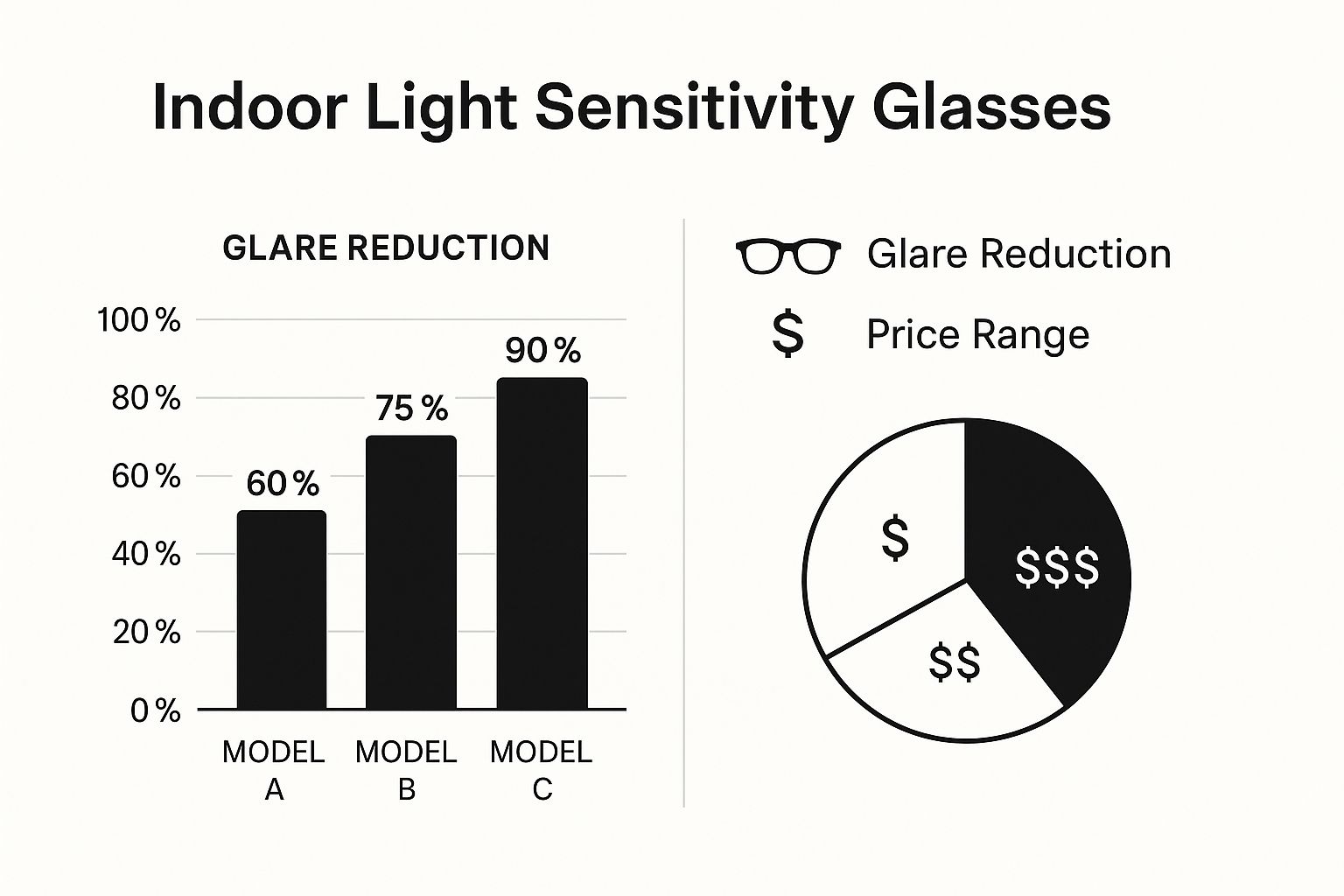
Amber lenses really take relaxation to the next level. Their warm, deep tint creates a visually calming environment that helps an overstimulated mind finally settle down. Think of it as turning down the visual "noise" after a long day spent staring at screens and sitting under harsh artificial lights.
This profound calming effect makes them a non-negotiable part of a healthy evening routine. They help clear out the mental clutter and agitation that can build up over the day, allowing for a smooth transition from productivity to peace. This is a game-changer for anyone who finds it hard to "switch off" their brain at night.
By creating a soft, warm visual world, amber lenses send a powerful message to your nervous system: it's safe to relax. This simple, non-pharmaceutical tool can significantly reduce feelings of stress and anxiety before bedtime.
Great sleep comes from building consistent, healthy habits. Blue light blocking glasses are a modern essential, but they work best when you pair them with the fundamentals.
Keeping daily stress in check is crucial for your overall health. Blue light glasses help by easing digital overstimulation, but don’t forget these other proven methods.
Sliding on a pair of light-filtering glasses is a simple, powerful move for your well-being. But to really unlock their benefits, you want to pair them with a smart wellness strategy. Making a few small, consistent tweaks to your daily habits can make a massive difference in your sleep quality and how much stress you carry around. This is exactly what modern tools like orange and amber blue light glasses are designed to help you do.
Think of it this way: orange-colored blue light glasses are fantastic for fighting back against digital eye strain during the day. By filtering out that harsh, high-energy blue light blasting from your screens, they give your eye muscles a chance to relax. This can head off those tension headaches and the mental fog that often creeps in after hours of focused work. Less physical strain means a calmer state of mind all day long.
Then, as evening rolls in, those same orange lenses keep working for you. They block the specific light frequencies that mess with your body's internal clock, signaling to your brain that it's time to wind down. This ensures you can produce melatonin right on schedule, making it so much easier to fall asleep and get the deep, restorative rest you need.
Getting consistently good sleep is a cornerstone of health. It’s about more than just hitting the sack on time; it's about creating an entire environment and routine that tells your body, "Hey, it's time to shut down." Today, adding glasses for light sensitivity indoors to your routine is a key part of modern, effective sleep hygiene.
Here are the top habits to lock in for better sleep:
Maintain a Consistent Sleep Schedule
Try to go to bed and wake up around the same time every single day—yep, even on weekends. This simple consistency reinforces your body's natural sleep-wake cycle, making it easier to drift off at night and wake up feeling refreshed.
Create a Calm, Dark, and Cool Environment
Your bedroom should be your sleep sanctuary. Use blackout curtains to kill any external light, keep the temperature on the cool side, and do what you can to minimize noise. You're aiming for an optimal setting for totally uninterrupted rest.
Power Down an Hour Before Bed
Give your brain a real chance to unwind. Turn off stimulating screens—phones, tablets, TVs—at least 60 minutes before you plan to sleep. This is crucial for reducing mental chatter and prepping your mind for relaxation.
Wear Amber or Orange Lenses Before Bed
In our modern world, this step is non-negotiable. Putting on a pair of amber or orange blue light blocking glasses in the evening effectively shields you from sleep-wrecking artificial light. This lets your body's melatonin production proceed just as nature intended. To get a deeper dive on this, you can check out our guide on how our glasses help with sleep.
Managing stress isn't just about weathering the big storms; it's about handling the small, daily pressures that build up. One of the biggest modern stressors is constant digital overstimulation, and that's precisely what amber blue light glasses are designed to combat by creating a calmer visual experience.
By softening the harsh glare from screens and artificial lights, amber lenses help create a more relaxing and tranquil environment. This simple change can reduce the subconscious agitation and mental fatigue that contribute to feelings of stress and anxiety, helping you unwind and relax more easily.
Here are the top 4 ways to dial down stress and truly relax:
Practice Mindfulness and Deep Breathing
Just a few minutes of focused, deep breathing can work wonders on your nervous system. Mindfulness practices help ground you in the present moment, quieting the mental noise that fuels anxiety.
Incorporate Regular Movement
Physical activity is a potent, proven stress reliever. You don't have to run a marathon; even a short walk or some gentle stretching can release physical tension and boost your mood with a hit of endorphins.
Set Boundaries with Digital Devices
This is huge. Create tech-free zones or dedicated times in your day to give your brain a break from the constant flood of information and notifications. It’s absolutely essential for preventing mental burnout.
Reduce Digital Overload with Blue Light Glasses
Make it a habit to wear your blue light blocking glasses during screen time, especially in the evening. This cuts down on the digital "noise" that can overstimulate your brain, helping you feel more relaxed, less visually tired, and much better prepared for a peaceful night.
Not all blue light glasses are created equal. Far from it. Choosing the right pair is the key to getting the relief you’re looking for, whether that’s finally kicking those afternoon headaches to the curb or reclaiming your natural sleep cycle.
It’s all about matching the lens to your specific goal. Think of it like this: you wouldn't wear sunglasses at night, right? The same logic applies here. Understanding what separates a truly effective pair from a cheap gimmick will make all the difference.
The market for this kind of protective eyewear has exploded, mostly because our lives are now flooded with artificial light from screens and overhead fixtures. The global spectacles market, which includes these blue-light-filtering glasses, was valued at nearly $90 billion in 2024 and is on track to hit $134.5 billion by 2033. You can read more about this massive growth at straitsresearch.com.
More options are great, but it also means you need to be a smart shopper. Things like anti-glare coatings, a comfortable frame, and the actual percentage of blue light being blocked are what really matter.
Think of orange lenses as your versatile, all-around workhorse.
During the day, they’re fantastic for dialing down digital eye strain. They filter out a big chunk of that harsh, high-energy blue light from your monitor that leads to tired eyes and tension headaches. The result? You can stay focused and comfortable, even during those marathon work sessions.
But they don't stop there. As evening rolls around, those same orange lenses keep working for you by blocking the specific wavelengths that tell your brain to stop producing melatonin. Wearing them in the hours before bed helps keep your internal clock ticking on schedule, making it easier to wind down, fall asleep, and get the restorative rest you need.
When your main goal is to seriously unwind and prime your body for a deep, restorative sleep, amber lenses are the undisputed champion.
Their deeper, richer tint is specifically engineered to block nearly all blue light and even some of the green light spectrum—the two biggest culprits when it comes to disrupting your natural sleep cycle.
Wearing amber lenses for an hour or two before bed is like creating your own personal sunset. It sends a powerful, undeniable signal to your brain: the day is done. This allows for maximum melatonin production, helping to quiet an overstimulated mind and ease you into a more profound state of rest. If you need more guidance on finding the perfect pair, check out the valuable information in our Element Lux resources.
The infographic below gives you a quick visual breakdown of how different types of glasses stack up in terms of glare reduction and price.
As you can see, while higher-end models might offer more advanced features, there are effective and affordable options for just about any budget.
Feeling a bit lost with all the color options? This table breaks it down to help you pick the perfect lens for your needs, whether you're tackling a spreadsheet or winding down with a book.
| Lens Color | Primary Use | Blue Light Blocked | Best For |
|---|---|---|---|
| Clear/Yellow | Daytime, computer work | 10-30% | Reducing mild digital eye strain without major color distortion. |
| Orange | All-day use, evening wind-down | 50-70% | Versatile protection for both work and preparing for sleep. |
| Amber/Red | Pre-sleep relaxation | 90%+ | Maximum melatonin support and signaling your body it's time for bed. |
Ultimately, the best choice depends on when and why you'll be wearing them. Many people find having a daytime pair and a separate evening pair gives them the best of both worlds.
Beyond just the color of the lens, here are a few other critical things to look for. These details are what separate high-quality glasses from the ones that end up collecting dust in a drawer.
Jumping into the world of blue light glasses usually brings up a few good questions. Getting the details straight is key to making sure you get the most out of your pair, whether you're trying to ease eye strain during the day or get some seriously restorative sleep at night.
A question I hear all the time is, "Can I wear these all day?" It really boils down to the lens. Lighter orange tints are perfect for daytime use when you're battling screen fatigue at the office. The darker amber lenses, though? You'll want to save those for the evening to help signal to your brain that it's time to wind down without making you drowsy during the day.
Another big one is about color distortion. "Will these glasses mess with how I see colors?" The short answer is yes, they will, and that's actually the point. The tint is what's doing the heavy lifting, filtering out the harsh blue light that causes discomfort and sleep problems. It's a necessary trade-off—the more protection the lens offers, the more you'll notice the color shift.
So, how can you be sure your glasses are actually doing their job? The clearest sign is a real reduction in your symptoms. After wearing them consistently, you should feel less eye strain and have fewer headaches after a long day of screen time. You should also find it much easier to relax and fall asleep at night.
The ultimate proof is in how you feel. Consistent use should lead to a clear decrease in digital eye strain and a more regulated sleep-wake cycle, making your evenings more relaxing and your nights more restful.
Finally, a lot of people wonder, "Can I get these in my prescription?" Absolutely. Plenty of companies, including those that specialize in glasses for light sensitivity indoors, offer prescription lenses. This way, you never have to choose between seeing clearly and getting that crucial blue light protection. It’s the best of both worlds in a single, comfortable pair.
Ready to feel the difference that premium blue light protection can make? Element Lux offers high-quality amber and orange lenses specifically designed to reduce eye strain and give you a huge boost in sleep quality.
Explore the Element Lux collection and find your perfect pair today!
Figuring out how to sleep through the night is about more than just a comfy mattress. It’s about taking control of your environment, your daily habits, and the signals you send your body.
The real keys are managing stress, getting a handle on your light exposure—especially from screens—and building a pre-sleep ritual that tells your brain it's officially time to power down.
Staring at the ceiling at 3 AM? You’re definitely not alone. It’s a common frustration, and more often than not, it's our modern habits and the pressures of daily life that are scrambling our natural sleep cycles.
The problem usually isn't the bed you're sleeping in. It's the invisible forces of stress and the constant glow of digital light that keep nudging you awake.
Our lives are saturated with screens. We're on laptops for late-night work and then switch to our phones for one last scroll. This non-stop exposure to artificial light, particularly blue light, completely fools our brains. It thinks it's still daytime, which slams the brakes on melatonin production—the very hormone that’s supposed to make you feel sleepy.
Beyond the digital disruption, there's a psychological hurdle that’s getting bigger and bigger: sleep anxiety. This is that awful, looping worry about not getting enough sleep, which, ironically, is the very thing that keeps you from sleeping.
This pressure to nail a "perfect" night's rest just creates a vicious cycle of wakefulness and worry. It's a very real challenge, and it’s on the rise. In fact, nearly 40% of Generation Z adults say they deal with sleep-related anxiety at least three times a week. You can read more about these emerging sleep and wellness trends on globalwellnessinstitute.org.
To fight back, you need a practical game plan. The strategies we're about to cover are all about making actionable changes to your routine, your space, and your mindset.
Before we dive deep, let's start with a high-level look at what works. Think of this as your cheat sheet for reclaiming your nights.
Here’s a snapshot of the core strategies this guide will cover to help you achieve deep, continuous sleep.
| Strategy | Primary Benefit | When to Do It |
|---|---|---|
| Control Light Exposure | Regulates your natural sleep-wake cycle (circadian rhythm) | Dim lights and wear blue light glasses 2-3 hours before bed |
| Build a Wind-Down Ritual | Signals to your mind and body that it's time to rest | For 30-60 minutes immediately before getting into bed |
| Manage Stress & Anxiety | Calms a racing mind and prevents middle-of-the-night waking | As needed in the evening or if you wake up during the night |
| Optimize Sleep Hygiene | Creates a consistent foundation for high-quality, restorative sleep | All day, every day |
These four pillars are the foundation of great sleep. By focusing on them, you're not just hoping for a better night—you're actively building one. Let's get into the specifics.
Ever wondered why you feel energized on a sunny day but sleepy on a gray one? It all comes down to your body's internal clock, a fascinating system called the circadian rhythm. This rhythm is what tells you when to feel awake and when it's time to wind down, and its number one cue is light.
When your eyes take in bright light—especially blue light—your brain gets a powerful signal that it’s daytime. This immediately slams the brakes on melatonin production, the hormone that makes you feel drowsy.

This system worked flawlessly for thousands of years. The problem is, modern life has thrown a massive wrench in the works. Our evenings are now flooded with artificial light from our phones, laptops, and TVs, which are all beaming blue light directly into our eyes.
This constant exposure tricks your brain into thinking it’s still the middle of the afternoon. As a result, the melatonin release you desperately need to fall asleep gets delayed, making it harder to learn how to sleep through the night.
If you spend your evenings staring at a screen, you know the feeling all too well: tired, dry eyes, a nagging headache, or even blurry vision. This is digital eye strain, and it’s one of the most immediate effects of late-night screen time.
This is where a good pair of orange-colored blue light glasses, like the ones from Element Lux, can be a game-changer. By filtering out harsh, high-energy light, they significantly reduce the discomfort that leads to eye strain, allowing your eye muscles to relax. This provides instant relief, especially at the end of a long day.
But their real magic is what they do for your sleep. By blocking the precise frequencies of blue light that stop melatonin production, orange-colored glasses give your body the green light to start its natural sleep preparation, right on schedule. It doesn't matter if you're still finishing up emails or watching one last episode.
Slipping on a pair of these glasses for just a couple of hours before bed sends a clear, unmistakable signal to your brain: it’s time to wind down. This simple tweak makes the whole process of falling asleep feel so much smoother and more natural.
It's important to know that not all blue light glasses are the same. When it comes to actually improving your sleep, the color of the lens is everything. Those clear lenses might help a little with eye strain during the day, but they just don't block enough of the disruptive light to make a real difference for your melatonin levels.
For sleep, you want to look for amber or orange-tinted lenses. Here’s a quick breakdown of why they work so well for helping you relax and get ready for bed:
This simple tool helps get your body's natural rhythm back on track, making it far easier to not only fall asleep but stay asleep. If you want to dive deeper into the science behind this, you can find a ton of great information on the Element Lux blue light blog.
While managing light exposure is a huge piece of the puzzle, improving your sleep is about more than just one thing. Integrating a few other key habits can make an incredible difference.
A solid wind-down ritual is your secret weapon for finally learning how to sleep through the night. It's not just a checklist of things to do before bed; it's a powerful, consistent signal you send to your brain and body that the day is over. It's time to switch off and prepare for deep, restorative rest.
The goal here is to build a personal routine that makes great sleep feel like the most natural conclusion to your evening.
This isn’t just about feeling relaxed—it's about actively pushing back against the stress and anxiety that keep so many of us staring at the ceiling. Global surveys show a massive struggle with sleep, with many adults losing a significant amount of rest each week. As you might guess, stress is one of the primary culprits. A dedicated wind-down routine is designed to tackle that head-on.
You can see just how common this is in ResMed's latest global sleep survey.
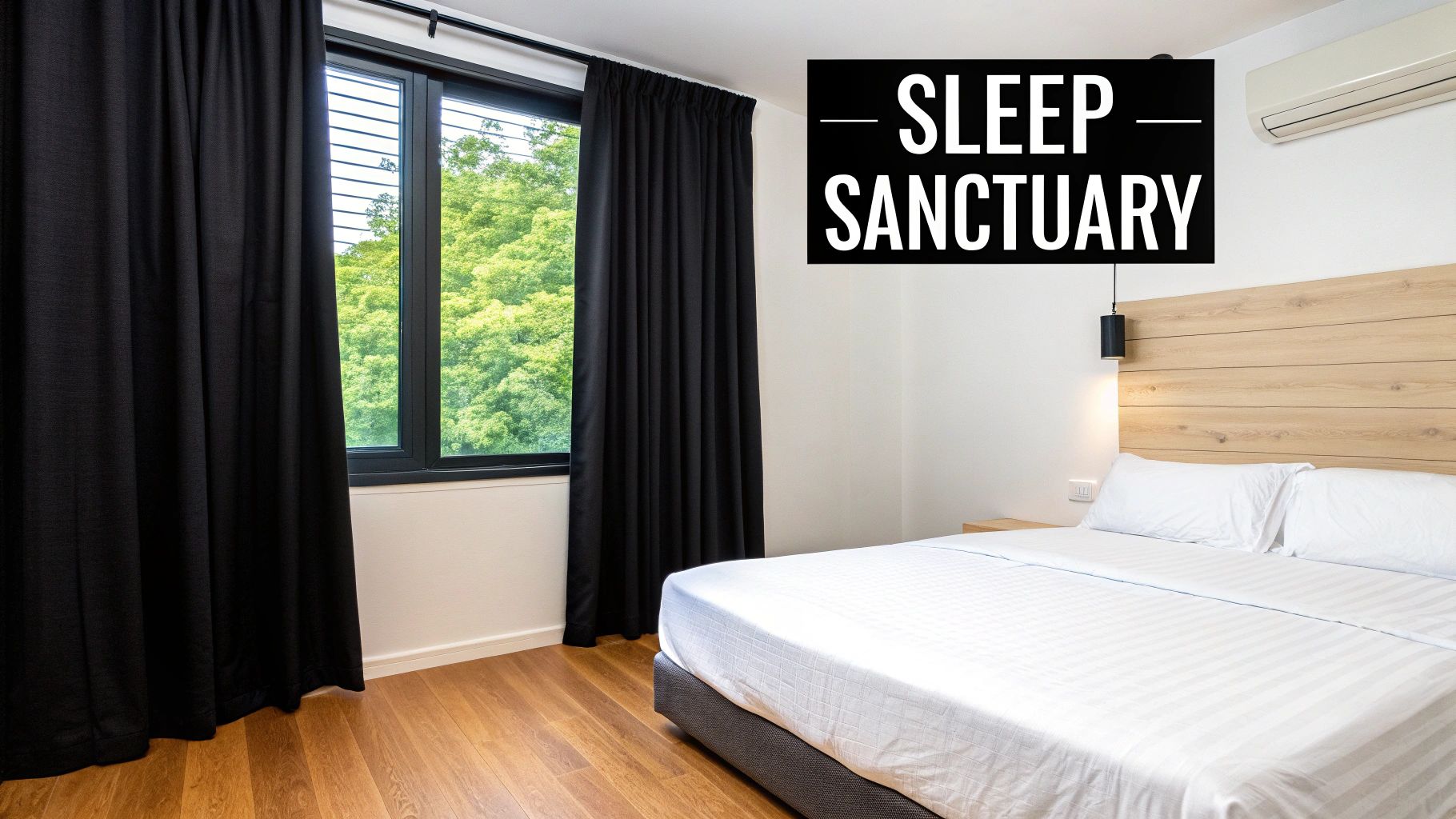
Your ideal ritual should kick off 1-2 hours before you plan to be asleep. The absolute key here is consistency. Night after night, repeating the same actions creates a powerful psychological trigger, telling your body it's time to shift gears into sleep mode.
For most of us, the cornerstone of a modern wind-down ritual has to be managing light exposure.
Slipping on a pair of amber or orange blue light blocking glasses, like ours from Element Lux, is probably the single most critical first step. Why? Because this one action stops the stimulating light from screens and overhead lighting from sabotaging all your other relaxation efforts.
Once your glasses are on, you can start layering in other calming activities without worrying that your environment is sending mixed signals to your brain.
A truly great wind-down ritual combines smart light management with other relaxing habits. Here are some of the most effective practices you can mix and match to build a routine that actually works for you:
The most effective routine isn't about cramming everything in at once. It's about choosing two or three things you genuinely enjoy and can stick with every single night. That consistency is what makes it work.
Think of your wind-down ritual as a team effort, where each activity plays a specific part. In this scenario, your amber blue light glasses are the team captain. They allow you to relax and unwind without the disruptive background noise of artificial light.
By filtering out the specific wavelengths that are notorious for suppressing melatonin, they let your body’s natural sleep processes take over.
This means your other relaxation techniques—like reading or meditating—can work much more effectively. You’re no longer fighting an uphill battle against your own light bulbs.
The calming visual tint of the amber lenses also helps reduce mental stimulation, making it easier for your mind to let go of the day's anxieties. Curious about the details? We break it all down in our guide on how our glasses help with sleep.
By making them a core part of your routine, you create a powerful, synergistic effect that paves the way for a night of deep, uninterrupted rest.
A powerful wind-down ritual is your best defense against a restless night, but truly mastering how to sleep through the night means building a solid foundation of daily habits. These broader lifestyle choices, collectively known as sleep hygiene, create the perfect conditions for your body to find deep, restorative rest consistently.
Think of it as setting the stage for a great performance long before the curtain rises. Just like a healthy diet supports you during the day, good sleep hygiene is what fuels your mental and physical recovery at night. It’s about more than just what you do in the hour before bed.
Let's start with a game-changing habit that bridges your daytime screen use with your evening wind-down: blue light blocking glasses. With screens being a constant in modern life, managing our light exposure is no longer just a good idea—it’s absolutely essential.
Orange-colored blue light glasses are especially effective for sleep because they block the specific wavelengths of light that tell your brain to stop producing melatonin. When you pop them on in the evening, you’re sending a clear signal that the day is over. This allows your natural sleep cycle to kick in right on schedule, helping with both falling and staying asleep.
Amber blue light glasses create a warm, calming visual filter, letting you relax and wind down without the harsh, stimulating glow of artificial light. It's like creating your own personal sunset, signaling to your brain that it’s time to shift from alert and "on" to relaxed and "off."
Great sleep hygiene is really built on a few core pillars. Once you start weaving these practices into your daily life, you'll find that falling—and staying—asleep becomes a whole lot easier.
Stress is sleep's worst enemy. If a racing mind is what’s keeping you awake, try building these simple relaxation techniques into your routine.
So, you’ve nailed your light exposure, you’ve got a solid wind-down routine, but you’re still staring at the ceiling at 2 AM. If that sounds familiar, the problem probably isn't your mattress—it's your mind.
Stress and anxiety are the ultimate enemies of sleep. They kickstart a vicious cycle of worry that makes it nearly impossible to truly relax and drift off. Learning how to sleep through the night often means learning how to quiet that internal monologue.
And it’s a huge issue for so many of us. According to the National Sleep Foundation, a staggering 60% of American adults don't get the recommended seven-plus hours of sleep, and a big reason for that is the struggle to stay asleep. You can dig into the full details in their Sleep in America Poll findings on thensf.org.
The infographic below breaks down a simple, practical flow for getting this nighttime stress under control.
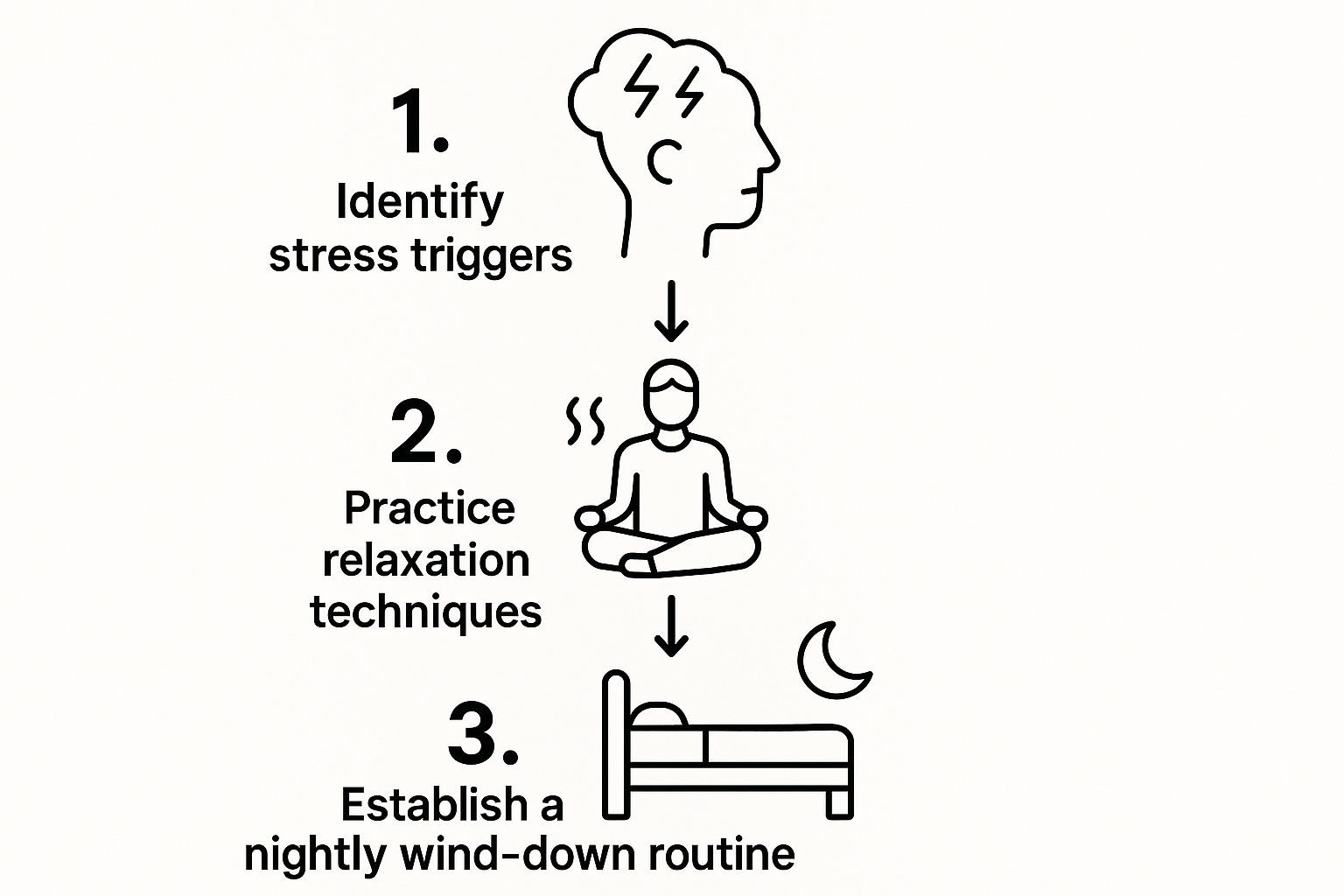
As you can see, it’s all about a clear, three-part process: figuring out what’s stressing you out, then building consistent, calming habits to counter it.
To break the cycle of nighttime anxiety, you need a toolkit of strategies that directly tackle both mental and physical tension. Instead of letting tomorrow's worries hijack tonight's rest, you can actively steer your mind toward a calmer state.
Here are four of my go-to methods for lowering stress before bed:
Perform a "Brain Dump." Before your head even hits the pillow, grab a notebook. Spend 10 minutes just writing down everything that's swirling around in your head—tomorrow's to-do list, that awkward conversation you had, random ideas, all of it. Getting it on paper tells your brain it can let go.
Practice Guided Breathing. You'd be amazed at what a few deep breaths can do for your nervous system. The 4-7-8 technique is a classic for a reason: inhale through your nose for 4 seconds, hold it for 7, and then exhale slowly through your mouth for 8. Do this three or four times, and you’ll feel a noticeable shift.
Use Calming Audio. Sometimes the best way to quiet a racing mind is to give it something else to latch onto. I’m a big fan of ambient sounds like rain, but a guided sleep meditation or even a familiar audiobook on low volume can work wonders. This gentle distraction keeps you from getting stuck in anxious thought loops.
Wear Blue Light Blocking Glasses. Putting on your amber or orange glasses in the evening reduces the overall mental stimulation from your environment, helping you feel calmer and making it easier to transition into a relaxed state ready for sleep.
The goal isn't to force your mind to go blank. It's to gently guide your attention away from stressful thoughts and toward something neutral and relaxing. Sleep will follow naturally.
Let's be honest: a huge source of modern evening stress comes straight from our screens. The endless notifications, the stimulating content, the harsh blue light—it all keeps our brains wired and on high alert.
This is where amber or orange blue light glasses become a non-negotiable part of your relaxation strategy.
Putting on a pair of Element Lux glasses for the last couple of hours of your day creates what I call a "digital sunset." The warm tint filters out the jarring, stimulating light from your devices and even overhead lighting.
This simple act helps you mentally disengage from the day's digital chaos, signaling to your brain that it's time to wind down. The amber lenses create a soft, calming visual field, letting you relax and de-stress without the harsh glare that fuels both eye strain and mental agitation.
Even when you're trying your best to build better sleep habits, a few questions always pop up. It's totally normal. Let's tackle some of the most common hurdles people run into when they’re trying to finally get a full night's rest.
Orange-colored blue light glasses pull double duty. For eye strain, they filter out the harsh, high-energy light from screens, reducing the glare that makes your eyes feel tired and gritty. This gives your eye muscles a much-needed break.
For sleep, they do something even more important. They are specifically designed to block the wavelengths of blue light that trick your brain into thinking it's still daytime. This stops the suppression of melatonin, your body's natural sleep hormone. Wearing them in the evening allows your melatonin levels to rise naturally, so you feel sleepy at the right time.
Think of it like putting on a personal sunset. The warm, amber tint of amber blue light glasses transforms your visual environment, cutting through the stimulating, bright artificial light that keeps us feeling alert and wired.
That gentle, warm glow is a powerful cue for your brain to relax and wind down. It signals that the day is ending, helping to quiet a racing mind and making it much easier to shift from that "on-the-go" feeling to a state of rest. You're creating a little pocket of calm in an otherwise brightly lit world.
Improving your sleep is a holistic process, but a few core habits provide the biggest return on your effort. These are my go-to recommendations for getting consistent, uninterrupted rest.
For more practical ideas, check out the articles in our sleep resources section.
Anxiety is sleep's worst enemy. If you lie in bed with a racing mind, you have to actively work on calming your nervous system. Try weaving these into your nightly wind-down ritual.
Ever find yourself lying in bed, mind racing, unable to switch off? You’re definitely not alone. The simple act of winding down is really about creating a buffer zone between your hectic day and a night of solid, restorative sleep. It’s all about sending clear signals to your body that it's finally time to relax, repair, and recharge.
In our constantly connected world, the line between a busy day and a restful night has all but disappeared. For so many of us, the stress from work, family duties, and that endless stream of phone notifications follows us right into the bedroom. This keeps our brains on high alert, making that shift into sleep mode feel next to impossible.
This isn't just a feeling; it's a widespread issue. Back in 2020, data showed that a staggering 14.5% of adults in the United States struggled to fall asleep most days. The problem was even more noticeable for younger and middle-aged adults, where 15.5% of those aged 18-44 reported the same trouble.
So, what's sabotaging our natural sleep cycles? More often than not, the culprits are digital. The glow from our phones, tablets, and TVs emits a specific type of blue light that cleverly mimics daylight. This exposure tricks our brains into thinking it's still daytime, which slams the brakes on melatonin production—the crucial hormone that tells your body it’s time for bed.
A deliberate ‘wind-down’ routine has become a non-negotiable part of a healthy lifestyle. It’s not about finding a magic bullet but about understanding the small, consistent actions that signal it's time for rest.
This is exactly why building a real wind-down routine is so important. It’s not just about feeling tired; it’s about actively prepping your mind and body for sleep with practical, science-backed steps. By managing your light exposure with simple tools like amber blue light glasses and adopting a few relaxation techniques, you can take back your evenings and seriously upgrade your sleep quality.
If you want to dig deeper into how light messes with your sleep, you might find the articles on our blue light blog really helpful.
Let's be honest about blue light. The light pouring from your phone, tablet, and TV is engineered to look like daylight, and it’s brilliant at tricking your brain into staying awake long after sunset. This artificial glow actively suppresses melatonin, the crucial hormone that tells your body it’s time to sleep.
This disruption to your internal clock, or circadian rhythm, is a huge reason why so many of us struggle to wind down. When your brain keeps getting "daytime" signals, it fights the natural urge to rest. This is where the color of the light you see makes all the difference.
Not all blue light glasses are the same. Those clear "computer glasses" might cut down on a bit of glare, but they do very little to block the specific wavelengths of blue and green light that slam the brakes on melatonin production. For nighttime, orange and amber-colored lenses are the undisputed champions.
Think of them as a protective shield for your brain. These specialized lenses filter out the exact parts of the light spectrum known to mess with your sleep cycle. You can still watch a movie or scroll through your feed, but your brain is finally protected from the confusing signals that lead to digital eye strain, headaches, and restless nights.
It’s a simple but powerful adjustment. You can be reading on your tablet in a dimly lit room without sabotaging your body's natural wind-down process.
This one change lets your body ease into sleep mode naturally, even while you’re still enjoying your evening routine.
Putting on a pair of amber glasses is a fantastic first step, but it’s even more effective when it’s part of a solid wind-down strategy. Here are a few more tips to lock in great sleep:
By filtering out disruptive light, amber blue light glasses help sync your internal clock with the actual time of day. This makes it so much easier to relax, feel sleepy, and drift off.
Anxiety is a sleep-killer. If your mind is buzzing at bedtime, try adding a few of these simple, stress-reducing practices to your routine:
By making just a few of these small changes, you can create a powerful routine that signals to your body and mind that it's time for a truly restorative night. You can find out more about how our glasses help with sleep and the science that makes them so effective.
A great bedtime routine isn't some rigid checklist you have to follow perfectly every night. Think of it more like a personal ritual—a set of simple, calming activities that signal to your brain and body that it's time to shift gears and prepare for sleep. Building this habit is one of the most powerful things you can do to learn how to wind down before bed and actually get the rest you need.
And let's be honest, most of us need it. The National Sleep Foundation's Sleep in America® Poll found a crystal-clear link between having a wind-down routine and getting good sleep. With 6 out of 10 American adults not getting enough sleep and almost 40% struggling to drift off multiple nights a week, being intentional about relaxation isn't a luxury—it's essential. You can dig into all the details in their full sleep health report.
So, where do you start? A solid routine is usually built on four key pillars that work together to get you ready for rest. The trick is to mix and match activities from each pillar to figure out what truly works for you.
You can think about it like building a custom routine from a simple menu.
Mix and match these activities to create a personalized routine that signals to your body it's time to rest and prepare for sleep.
| Pillar | Activity Examples | How It Helps You Unwind |
|---|---|---|
| Calm Your Mind | • Journaling a "brain dump" • Light, fiction reading • Guided meditation |
Quiets the mental chatter and helps you offload the day's worries so they don't follow you to bed. |
| Relax Your Body | • Gentle yoga stretches • A warm bath or shower • Foam rolling tight muscles |
Releases the physical tension and stress that can build up in your muscles throughout the day. |
| Optimize Your Environment | • Dimming the lights • Setting a cool room temperature • Playing soft, ambient music |
Creates powerful environmental cues that tell your brain it's time for sleep, not activity. |
| Engage Your Senses | • Sipping chamomile tea • Using a lavender diffuser • Listening to calming sounds |
Soothes your nervous system through calming sensory inputs like smell, taste, and sound. |
Just picking one or two things from this list to do consistently can make a huge difference in how quickly you're able to settle down.
This infographic shows just how simple it can be to layer these habits together for a powerful effect.
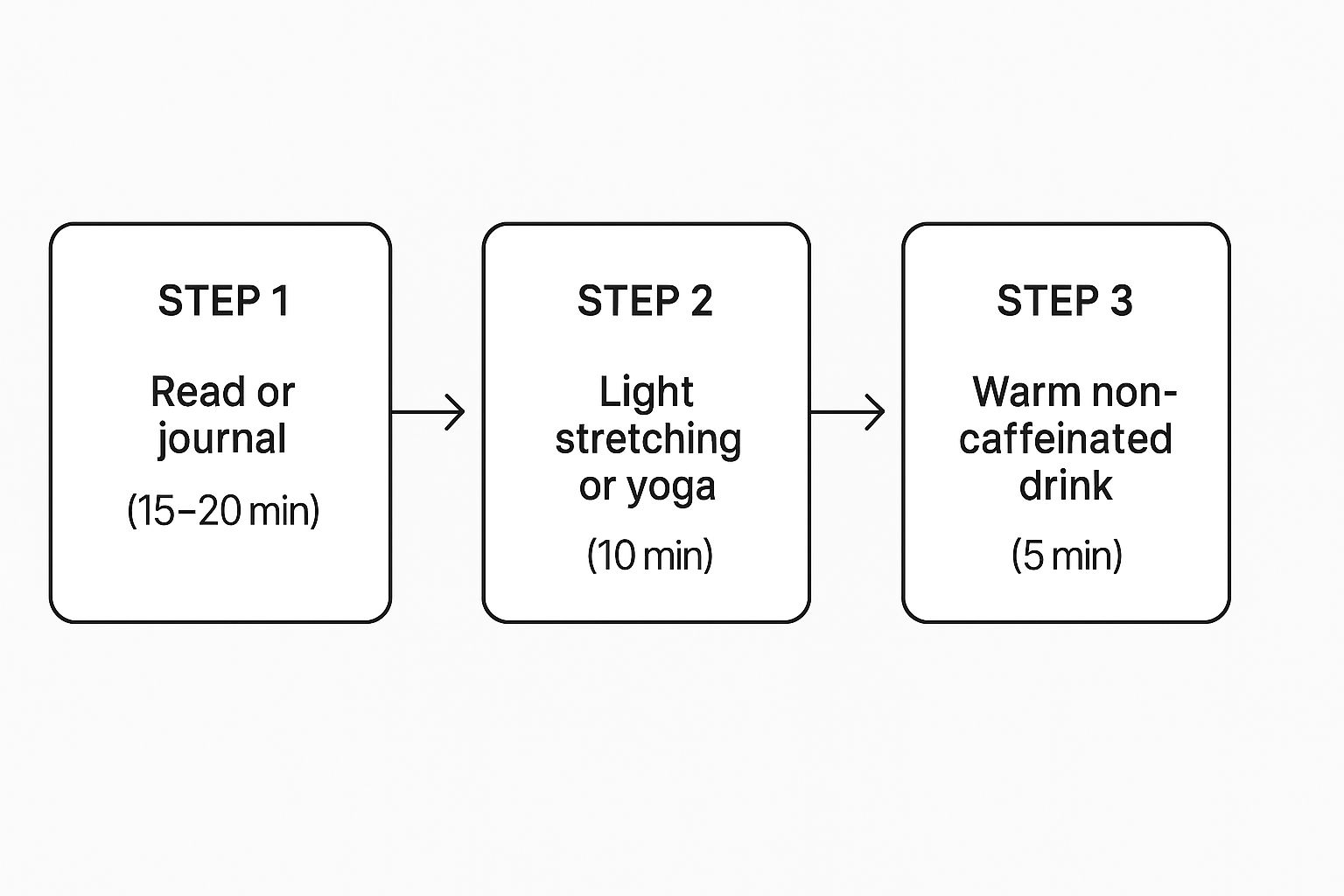
As you can see, it doesn't have to be complicated. The goal is to create a sequence that feels good and signals to your body that the day is officially over.
There's one non-negotiable element that ties this all together, especially if screens are part of your evening. For the last 90 minutes before bed, putting on a pair of amber blue light blocking glasses is absolutely foundational.
These orange-lensed glasses are specifically designed to filter out the disruptive light that kills melatonin production, making it much easier to relax and wind down.
Even if you’re catching up on a show or doing some late-night scrolling, Element Lux glasses shield your eyes, prevent that wired feeling, and allow your body’s natural sleep signals to kick in right on schedule. It's a simple step that makes every other part of your routine more effective and helps you build a practice you’ll actually look forward to each night.
It’s a familiar story: you finally get into bed, ready for a good night's sleep, and suddenly your brain decides to replay every worry from the day. Learning how to wind down before bed means learning how to quiet that mental chatter.
This isn't just you. Our hyper-connected lives are making sleep anxiety a huge barrier to rest. The Global Wellness Institute found that nearly 40% of Gen Z adults deal with this at least three times a week, often because of non-stop digital stimulation.
So, what actually works? You need a few go-to strategies that actively calm your nervous system. Think of these as powerful tools to help you reclaim your evenings and find some mental peace.
Schedule 'Worry Time.' This might sound strange, but it works. Set aside 15 minutes earlier in the evening to just sit and let yourself worry. Write it all down or just think it through. When you give those anxieties their own dedicated time slot, you train your brain not to ambush you with them the second your head hits the pillow.
Try Progressive Muscle Relaxation (PMR). Lie down and focus on tensing, then completely releasing, one muscle group at a time. Start with your toes, move to your calves, your thighs, and work your way up to your forehead. It’s a simple physical cue that helps dissolve tension you didn't even know you were carrying.
Create a 'Digital Sunset.' This is a non-negotiable for me. Put all your screens away at least an hour before you plan to sleep. The constant flow of notifications and information keeps your brain on high alert—the exact opposite of what you need to drift off.
Wear Blue Light Blocking Glasses. If you absolutely can't put the screen away, Element Lux amber glasses are a game-changer. Those deep orange lenses block the stimulating blue light that messes with your sleep hormones and contributes to eye strain, helping you relax even if you’re catching up on a show.
By creating a clear boundary between your active day and your restful night, you signal to your brain that it's safe to switch off. These techniques are your tools for building that boundary.
Getting a truly restful night of sleep isn't about some massive, complicated life overhaul. It's really about stringing together a few small, consistent habits. When you combine proactive ways to de-stress with smart light management, you create a powerful formula for winding down.
Your goal here is progress, not overnight perfection.
I can't overstate this: amber-lensed blue light blocking glasses are a non-negotiable part of my evening routine. They do more than just help with eye strain from screens. Their real power is in letting your body produce melatonin naturally, which is exactly what you need to feel sleepy.
Wearing them is like giving yourself permission to relax and wind down without the harsh digital light from your phone or TV messing with your internal clock.
Remember, the most impactful strategies are often the simplest. A consistent bedtime, a screen-free final hour, and protecting your eyes with quality blue light glasses form a powerful foundation for restorative sleep.
If your mind is still racing when your head hits the pillow, you need a way to offload that mental clutter. Here are four simple but effective techniques I rely on:
You don't have to do it all at once. Start small tonight by exploring more expert tips in our sleep resources.
It's one thing to know you need a wind-down routine, but it's another to get it just right. Let's tackle some of the common questions that pop up when you're trying to perfect your evenings for better sleep.
If you've ever ended a long day with that gritty, tired-eye feeling, you know digital eye strain is no joke. It's that lovely combo of dry eyes, headaches, and fuzzy vision from staring at screens. This is where orange-colored blue light glasses, like the ones from Element Lux, make a world of difference. They work by filtering out the harshest, highest-energy blue light that our devices pump out. This instantly creates a softer, warmer view, taking the edge off the screen's glare. Your eye muscles can finally relax, making that evening Netflix binge or late-night scrolling session way more comfortable.
Here’s where it gets really interesting. The main reason those orange lenses are so effective is how they protect your natural sleep cycle. When you're exposed to blue light after the sun goes down, it tricks your brain into thinking it's still daytime. This slams the brakes on your body's production of melatonin—the hormone that signals it's time to get sleepy. By blocking over 99% of that disruptive light, amber or orange glasses let your melatonin levels rise naturally, just as they're supposed to. This helps you feel tired at the right time, making it much easier to fall asleep and, more importantly, stay asleep.
By filtering out stimulating blue light, amber glasses remove a major source of digital stress. This has a direct calming effect on your brain and nervous system. It stops the constant "daytime" signal that keeps you feeling alert and wired. Instead, your body is allowed to follow its natural rhythm, making it easier to shift into a relaxed state. Think of it this way: amber lenses let you enjoy your evening without confusing your internal clock. It’s a simple switch that helps get your body back in sync and sets the stage for deep, restorative sleep.
Ready to take back your nights and wake up feeling incredible? The Element Lux blue light blocking glasses are designed to protect your sleep and perfect your wind-down. Shop now and feel the difference for yourself.
