So, are blue light glasses bad for your eyes? It’s not a simple yes or no, because the real issue is that not all blue light glasses are created equal.
The conversation gets muddy pretty quickly. While many clear-lensed glasses are sold to combat eye strain, the ones that really move the needle—especially for sleep—are the purpose-built amber and orange lenses designed to work with your body’s natural sleep-wake cycle.
A lot of people grab a pair of blue light glasses hoping to fix digital eye strain, but the science on that is murky at best. The far more important conversation is about how artificial blue light, especially after the sun goes down, tricks your brain into thinking it's still midday.
This is what messes with your internal clock, or circadian rhythm, and that’s where the real problem lies. And this is exactly where the color of the lenses becomes the make-or-break factor.
Your standard clear lenses only filter a tiny fraction of blue light. Frankly, it's often not enough to send a meaningful signal to your brain's sleep center.
This is where amber and orange-tinted lenses, like the ones we use at Element Lux, come in. They are engineered from the ground up to do a completely different job.
They’re designed to block a much, much wider spectrum of the most disruptive blue and even some green light. This drastic reduction in stimulating light sends an unmistakable message to your brain: it’s time to wind down.
By filtering out the specific wavelengths that slam the brakes on melatonin production, amber lenses help your body get back to its natural rhythm and prepare for truly restorative sleep. That's a game-changer for both your mental and physical health.
This chart really puts the difference into perspective, showing just how much more effective specialized amber lenses are compared to standard clear ones.
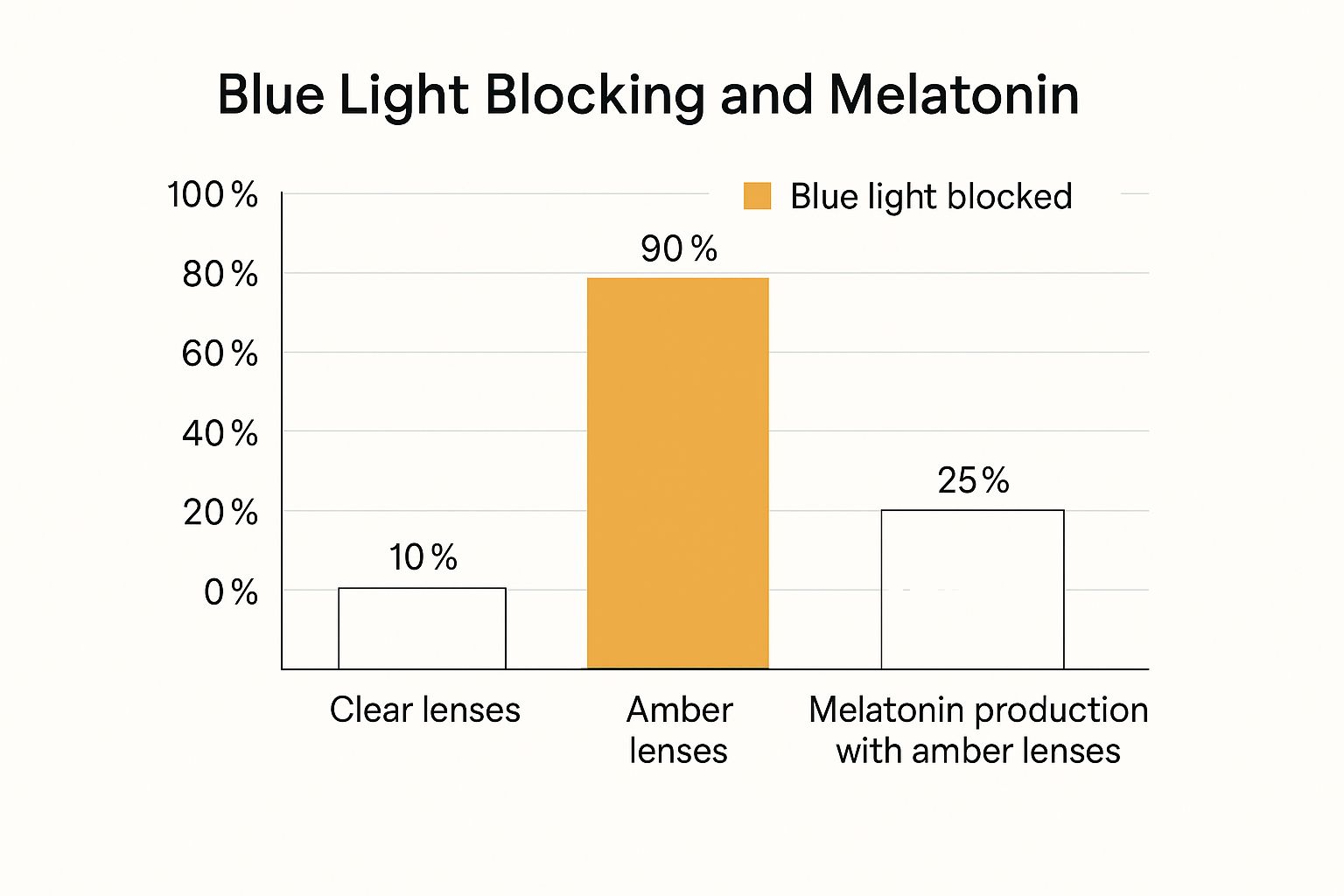
As you can see, the difference isn't small. Amber lenses offer a powerful filtering effect that’s specifically designed to support your natural sleep cycle, not just vaguely reduce screen glare.
Recent scientific reviews have started to question just how effective typical clear blue-light glasses are for computer-related eye strain.
A major 2023 systematic review looked at 17 different trials and ultimately found there just wasn't enough evidence to say that standard blue-light filtering lenses do much to reduce symptoms of eye strain. This is why it’s so critical to focus on the type of lens you’re using and what you want it to accomplish.
The goal should shift from vaguely "fighting eye strain" to actively managing your light exposure to protect your sleep. If you want to go deeper into the research and what to look for, this is a great resource on blue light glasses: do they really work and how to choose them for your own needs.
To clear things up, here’s a quick table breaking down the common claims you’ll see versus what the science actually supports for different types of lenses.
| Lens Type | Common Claim | Scientific Consensus | Primary Benefit |
|---|---|---|---|
| Clear Lenses | Reduces digital eye strain. | Weak to inconclusive evidence for eye strain; minimal impact on melatonin. | May slightly reduce glare from screens. |
| Amber/Orange Lenses | Supports better sleep by blocking blue light at night. | Strong evidence that blocking blue light in the evening supports natural melatonin production. | Helps regulate the body's sleep-wake cycle (circadian rhythm). |
Ultimately, choosing the right glasses comes down to understanding your goal. If you want to help your body wind down naturally for a great night's sleep, amber lenses are the clear winner.
To really get why some blue light glasses are more effective than others, you have to understand what we're up against. Think of light as a rainbow of different wavelengths. Blue light is made of high-energy, short waves—it’s the kind of intense light our biggest natural source, the sun, puts out.
When the sun is up, that blue light hits our eyes and sends a powerful signal to our brain: "Hey, it's daytime! Time to be awake and alert."
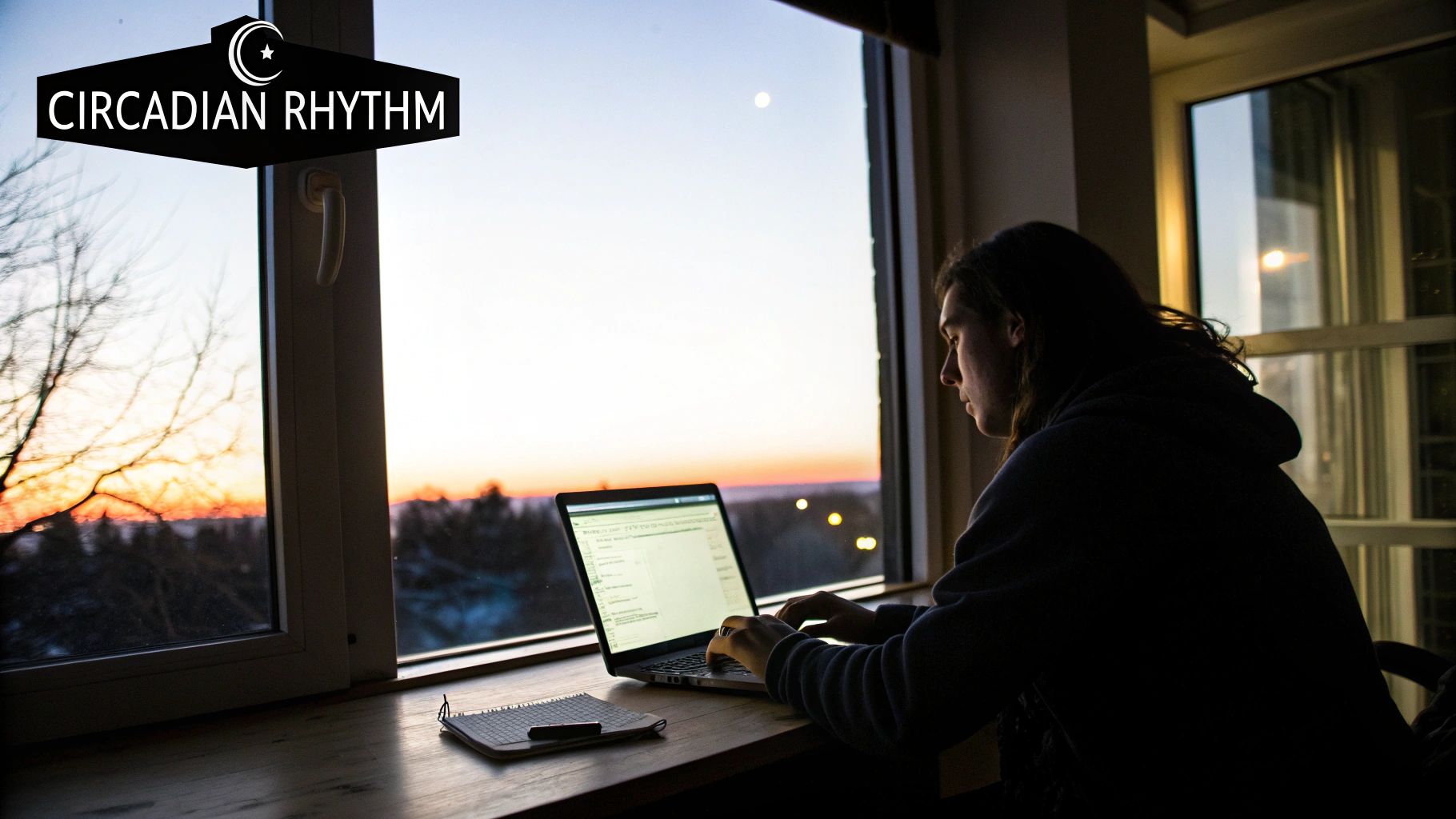
This signal is the master controller for your circadian rhythm, which is basically your body's built-in 24-hour clock. When your brain senses blue light, it hits the brakes on melatonin—the hormone that makes you sleepy. During the day, that's exactly what you need to stay focused and energized.
But the trouble starts when we're blasted with artificial blue light from our phones, laptops, and TVs long after sunset. That exposure tricks our brains into thinking it’s still high noon, completely messing with our natural wind-down process and making it so much harder to get the deep, restorative sleep we need.
This is where orange and amber lenses come into play. They’re designed specifically to tackle that nighttime disruption. By filtering out the most stimulating blue and even some green light, they send a clear, unmistakable signal to your brain: "Okay, the sun has set. It's evening now."
This immediately helps calm your visual system down from that harsh, alerting light, which is what helps reduce that gritty, tired feeling of digital eye strain.
Even more importantly, this filtering allows your body to start producing melatonin right on schedule. That hormonal shift is absolutely crucial for letting you relax, feel sleepy, and ultimately fall asleep faster and stay asleep longer. You can dive deeper into how light messes with our biology over on our blue light blog.
While you might hear claims about blue light causing retinal damage, the scientific evidence that glasses prevent this is still up in the air. If you want to get into the weeds, you can read the full research about these findings. For now, the most proven, undeniable benefit of amber lenses is their power to help you manage your body clock.
Getting a fantastic night's sleep is about more than just your glasses—it's about building a solid, consistent routine.
When you're trying to manage your sleep and actually relax at night, not all blue light glasses are created equal. Sure, those clear-lensed ones might cut down on a bit of screen glare, but amber and orange-tinted lenses from brands like Element Lux are engineered for a much more specific and powerful job: helping your brain and body wind down.
The real difference comes down to the amount of blue light they block. The effectiveness of a lot of glasses on the market varies wildly, and some clear versions only filter a tiny fraction of the light that messes with your sleep. You can dive deeper into these blue light facts and fictions to see just how different they are. A weak filter just isn't enough to trigger the biological "it's time for bed" response. High-quality amber lenses, on the other hand, are designed to filter out a much broader and more impactful spectrum of that disruptive light.
Think of the bright, harsh light from your phone or laptop as a constant visual "noise." Orange colored blue light glasses work like noise-canceling headphones for your eyes. They dramatically dial down those harsh, high-energy wavelengths that lead to digital eye strain. By softening all that visual input, your eyes don't have to work nearly as hard, which is a huge help in getting rid of that tired, gritty feeling after a long evening staring at a screen.
But the effect on your sleep is even more profound. By blocking the specific blue and green light that shuts down melatonin production, orange colored blue light glasses essentially give your brain the "all-clear" signal to start preparing for rest. This lets your melatonin levels rise naturally, making it much easier to feel sleepy and fall into a deeper, more restorative sleep.
Here’s a perfect example of Element Lux amber blue light blocking glasses designed for exactly this.
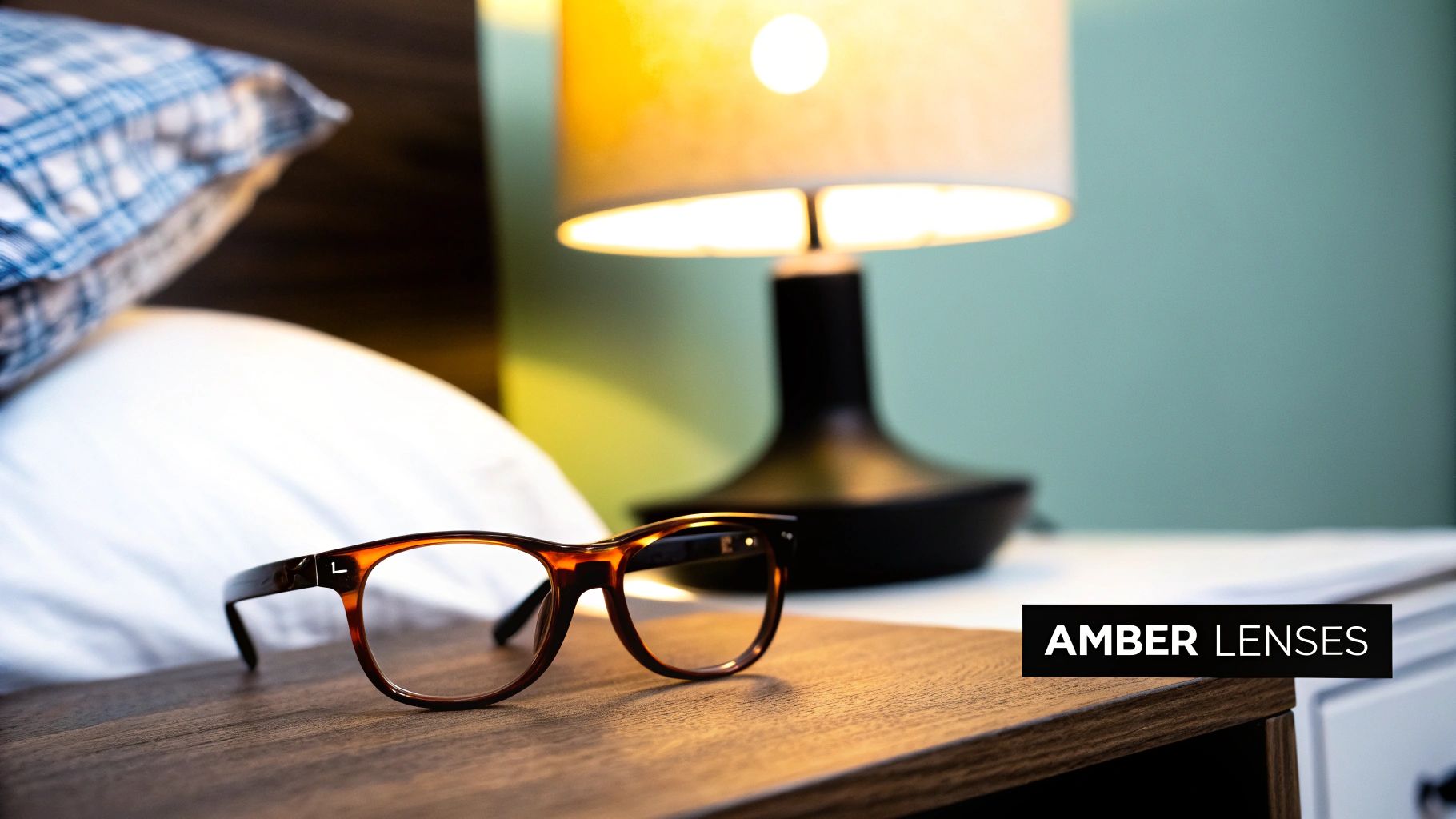
That distinct amber tint isn't just for looks; it’s a clear sign of their function—filtering out disruptive light so you can get ready for a truly restful night.
The calming effect of amber lenses goes beyond just sleep prep; they're a fantastic tool for daily relaxation. Putting them on in the evening helps create a clean boundary between your active "day mode" and your restful "night mode."
This simple habit can become a powerful part of your wind-down ritual. It signals to your body that the demanding part of the day is officially over, helping you shift into a state of calm. This is a game-changer for anyone who feels wired or anxious after a late night of work or scrolling.
By dialing down the alerting signals from your environment, amber blue light blocking glasses help lower the mental and physiological stimulation that keeps you from truly relaxing. It’s a simple, passive way to support your body's natural relaxation response.
Pairing amber glasses with a solid relaxation strategy can make a huge difference. Here are four of our top ways to de-stress in the evening:
Getting better sleep isn't about chasing a single magic bullet. It’s about building a powerful, consistent evening routine that signals to your body that it's time to wind down.
A crucial part of any modern sleep strategy is managing your light exposure, which is exactly where a quality pair of amber or orange blue light blocking glasses becomes your most important tool.
Slipping on a pair of Element Lux glasses 1-2 hours before you plan to go to sleep is one of the simplest and most effective things you can do. It immediately starts filtering out the harsh, artificial light from your screens and overhead lighting, sending a clear message to your brain: the day is done. This one small action kickstarts the natural process of preparing for deep, restorative sleep.
Building a great routine around your glasses can seriously amplify their effects. Here are the top ways to reclaim your nights and wake up feeling like a new person.
Wear Amber or Orange Lensed Glasses: This is your non-negotiable first step. Make it a habit to put them on every single evening. This simple trigger helps your body start producing melatonin while also easing the digital eye strain that comes from late-night screen time. You can learn more about how our glasses help with sleep and get your circadian rhythm back on track.
Stick to a Consistent Schedule: Your body absolutely thrives on consistency. Going to bed and waking up at roughly the same time every day—yes, even on weekends—is a game-changer. It reinforces your internal clock, making it far easier to fall asleep and wake up naturally.
Optimize Your Bedroom Environment: Your bedroom should be a sanctuary for sleep, not a multi-purpose room. The goal is cool, completely dark, and quiet. Things like blackout curtains, a white noise machine, or a simple eye mask can make a world of difference.
Avoid Late-Night Stimulants: That evening cup of coffee, a heavy meal, or a glass of wine too close to bedtime can wreak havoc on your sleep quality. Try to finish eating at least two to three hours before you turn in. This lets your body focus on rest and repair, not digestion. To go even deeper, check out these eight science-backed ways to fall asleep faster.
What you do in that last hour before bed matters immensely, and it goes beyond just blocking blue light. This is your time to consciously disconnect from the day's stress and prepare your mind for rest.
A dedicated wind-down routine isn't a luxury; it's a crucial practice that helps transition your brain from an active, problem-solving state to a calm, restful one. Wearing your amber glasses during this time enhances the entire process.
Here are a few powerful ways to build a relaxing ritual into your evening, with your blue light blocking glasses as the foundational piece.
Mindful Disconnection: Put on your Element Lux glasses and put your phone away. Seriously, put it away. Spend 15-20 minutes reading a physical book (not an e-reader!), listening to calming music, or journaling.
Gentle Stretching: Let go of the day's physical tension. Focus on light stretches for your neck, shoulders, and back. A few simple yin yoga poses can also help your body signal it’s time to rest.
Deep Breathing Exercises: Try a simple box breathing technique. Inhale for four counts, hold for four, exhale for four, and hold again for four. This is a remarkably effective way to calm your entire nervous system.
Prepare for Tomorrow: Get tomorrow's to-do list out of your head and onto paper. This simple act of "brain dumping" can prevent that late-night mental chatter and worry that keeps so many of us awake.
To help you put it all together, here’s a sample routine you can adapt to fit your own schedule.
| Time Before Bed | Action Item | Purpose |
|---|---|---|
| 2-3 Hours | Finish your last meal or snack. | Prevents digestive issues from interfering with sleep. |
| 1-2 Hours | Put on your Element Lux amber glasses. | Blocks disruptive blue light to allow natural melatonin production. |
| 1 Hour | Turn off bright overhead lights; use dim lamps instead. | Reduces overall light exposure, signaling your brain it's nighttime. |
| 45 Minutes | Turn off all screens (TV, phone, computer). | Eliminates mental stimulation and the last sources of blue light. |
| 30 Minutes | Engage in a calming activity: read a book, journal, meditate. | Shifts your brain from an active to a restful state. |
| 15 Minutes | Do some gentle stretching or deep breathing exercises. | Releases physical tension and calms the nervous system. |
| Bedtime | Get into a cool, dark, and quiet room. | Creates the ideal physical environment for deep, restorative sleep. |
Sticking to a schedule like this, even just for a week, can have a profound impact on how quickly you fall asleep and how refreshed you feel in the morning. Consistency is your best friend when it comes to sleep.
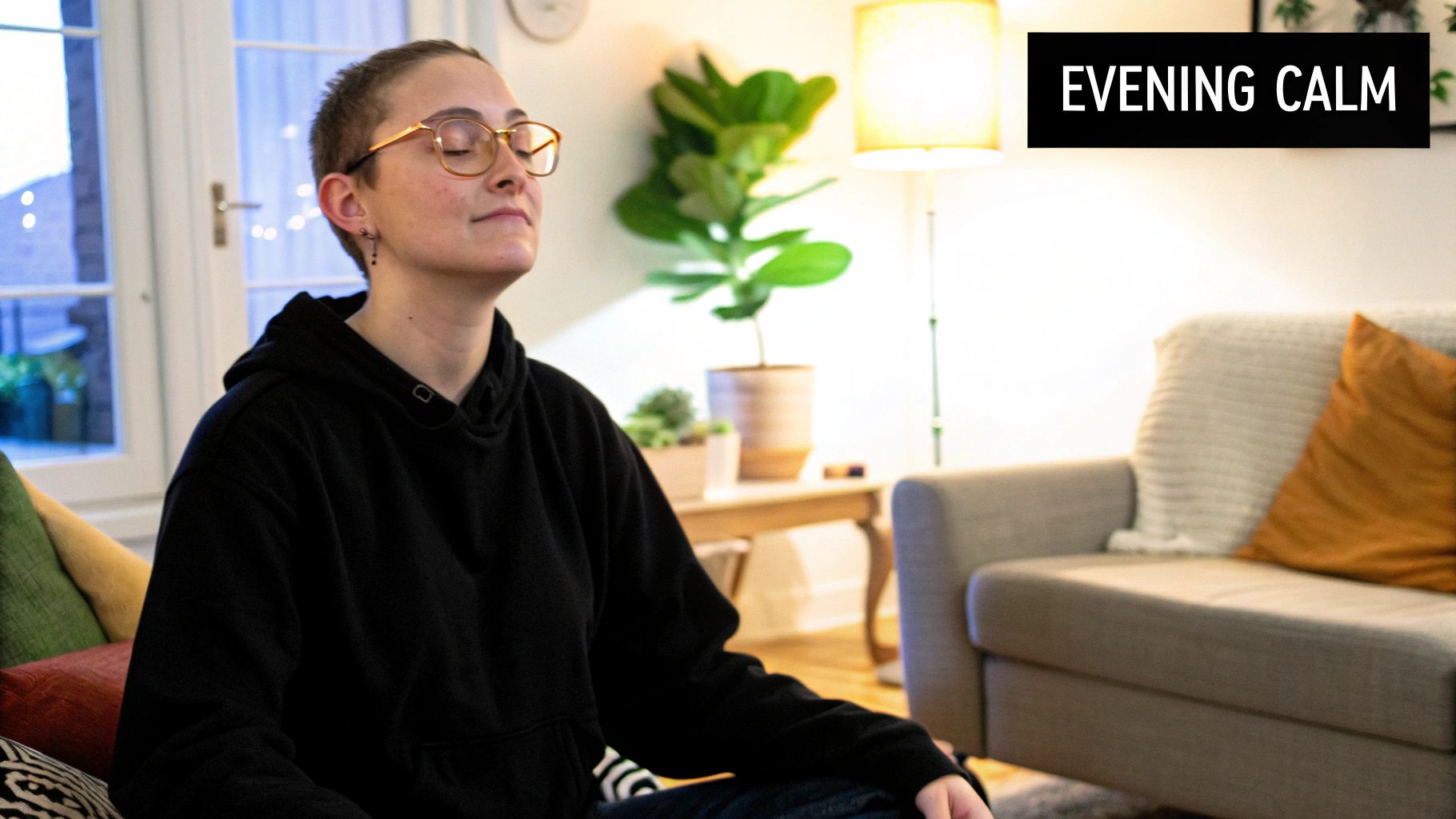
The image above nails the goal of a wind-down ritual. It’s all about creating a calm, screen-free space to get your mind and body ready for rest. Slipping on a pair of amber glasses during this time makes a huge difference, filtering out the harsh, stimulating light that keeps your brain stuck in "day mode."
But it's about more than just sleep. Managing your evening light exposure with amber lenses is a game-changer for your overall mental well-being. In our hyper-connected lives, finding ways to genuinely de-stress is non-negotiable. The right pair of glasses can become the cornerstone of an evening routine that actively dials down anxiety and brings on a sense of calm.
Think of it this way: by filtering out the high-energy blue light that screams "wake up!" to your brain, amber lenses help turn down the volume on the day's stimulation. This simple switch helps lower cortisol (the stress hormone) and nudges your nervous system from a frantic "fight or flight" state to a much-needed "rest and digest" one. They're not just a sleep aid; they're a daily tool for your mental toolkit.
When you pair your amber glasses with other proven relaxation techniques, you create a powerful synergy for your mental health. Here are four effective methods to beat back stress and anxiety in our digitally-drenched world.
Wear Amber Blue Light Blocking Glasses: Make this your first move every single evening. Pop on your Element Lux glasses for 1-2 hours before you plan to go to bed. This filters out the stimulating artificial light from all your screens and lightbulbs. It’s the easiest, most passive way to send a clear signal to your body and mind that the day is officially done.
Practice Mindfulness and Deep Breathing: Once your glasses are on, set aside just five or ten minutes for a mindfulness exercise. Don't overthink it. Just focus on your breath—a slow inhale through your nose, a long exhale through your mouth. This simple practice is scientifically proven to calm the nervous system and quiet those feelings of anxiety.
Incorporate Gentle Stretching: Let go of the physical tension that builds up from sitting at a desk or running around all day. A few light stretches for your neck, shoulders, and lower back can provide immediate relief. This physical release sends signals of safety and relaxation to your brain, perfectly complementing the calming visual effect from the amber lenses.
Establish a Screen-Free Wind-Down Ritual: For the final 30-60 minutes before sleep, put all your screens away. For real. Use this protected time—while still wearing your amber glasses—to do something genuinely calming. Read a physical book, listen to some chill music, or journal about your day. This helps you unplug from daily stressors and truly prepare your mind for a peaceful night.
So, how do you pick the right pair? It really just boils down to one simple question: What are you trying to accomplish? Figuring that out is the key to separating the gimmicks from the genuinely effective tools.
If all you're worried about is a bit of screen glare during the day, standard clear-lensed glasses might give you a little relief. But let's be honest—major studies have shown they don’t really do much for digital eye strain. They block a tiny fraction of blue light, which is nowhere near enough to make a real difference to your body's internal clock.
Now, if your goal is to protect your natural sleep cycle, get better quality rest, and actually relax in the evening, then amber and orange lenses are the only choice with real science behind them. Their job isn't just to cut down on glare; it's to filter out the exact, disruptive wavelengths of blue and even some green light that slam the brakes on your body's melatonin production.
This powerful filtering sends a clear "it's nighttime" signal to your brain, letting you wind down naturally instead of feeling wired. Brands like Element Lux have engineered their glasses specifically for this. That deep amber tint isn't just a style choice—it's a functional feature designed to help you get ready for a night of deep, restorative sleep. For anyone serious about their evening wind-down routine, the difference is night and day.
Choosing the right glasses is an investment in your health. For evening screen use and sleep preparation, amber lenses are the clear winner, offering a powerful way to manage your relationship with technology and protect your well-being.
Ready to find a pair that actually works for you? See how different styles fit and discover what a difference amber lenses can make when you shop the Element Lux collection. The right glasses don't just change what you see; they change how you feel.
Getting the hang of how and when to use your blue light glasses is key to unlocking their benefits. Let's run through a few questions we hear all the time so you can get the best results for your sleep and relaxation.
Definitely not. Think of amber lenses, like ours at Element Lux, as your evening ritual tool. They’re designed to be worn for 1-3 hours before you plan to go to sleep.
Your body actually needs natural blue light during the day to feel awake and keep your internal clock on schedule. Wearing heavy-duty amber lenses all day would mess with those important signals and could leave you feeling sluggish.
Many people find they do. Those screen-time headaches are often a classic sign of digital eye strain.
High-quality orange and amber lenses work by softening the harsh, stimulating light from screens, which can feel incredibly calming to your eyes and brain. While it’s not a guaranteed cure-all (you should still check your posture and screen brightness), many users tell us it significantly eases those headache symptoms.
We built Element Lux for people who are serious about their sleep. Our premium amber lenses are engineered to zero in on the exact wavelengths of blue and green light that are notorious for wrecking melatonin production.
You'll see a lot of clear or lightly-tinted lenses out there that only block a tiny fraction of disruptive light. We focus on providing a powerful, targeted filtering effect so you can actually wind down at night and get the restorative sleep you need.
Ready to stop feeling so wired and tired? The Element Lux collection is specifically designed to filter the disruptive light that messes with your sleep. Experience the difference for yourself and shop the collection.
