Imagine your eyes having their own personal sunset, even when you're still scrolling on your phone or finishing up work on your laptop. That's the best way to think about amber tinted glasses. They're far more than a fashion statement; they're a smart tool designed to help you navigate our modern, artificially lit world by filtering out the exact kind of light that messes with your body's natural clock.
The real genius behind amber lenses is their ability to be selective about which parts of the light spectrum they let through. All our favorite devices—smartphones, tablets, TVs, and computers—blast out a ton of blue light. This is a type of high-energy visible (HEV) light that our brains have been hardwired for millennia to interpret as one thing: the bright midday sun. That signal tells your body, "Stay awake! Be alert!"
When you slip on a pair of amber glasses in the evening, they act like a filter, stopping a huge portion of that stimulating blue light from ever reaching your eyes. This simple act mimics the way light naturally changes at dusk, as the harsh blue tones of daylight fade into the warmer, redder hues of sunset.
This "digital sunset" is what helps reset your body's internal clock. It’s the cue your brain needs to start producing melatonin, the hormone that basically tells your body it's time to start winding down for bed. By creating this calming visual environment, the glasses help you ease out of a hyper-connected day and into a truly restful night.
This infographic does a great job of showing what we mean by a "digital sunset" and how these glasses can create a warmer, more relaxing view of your screens.
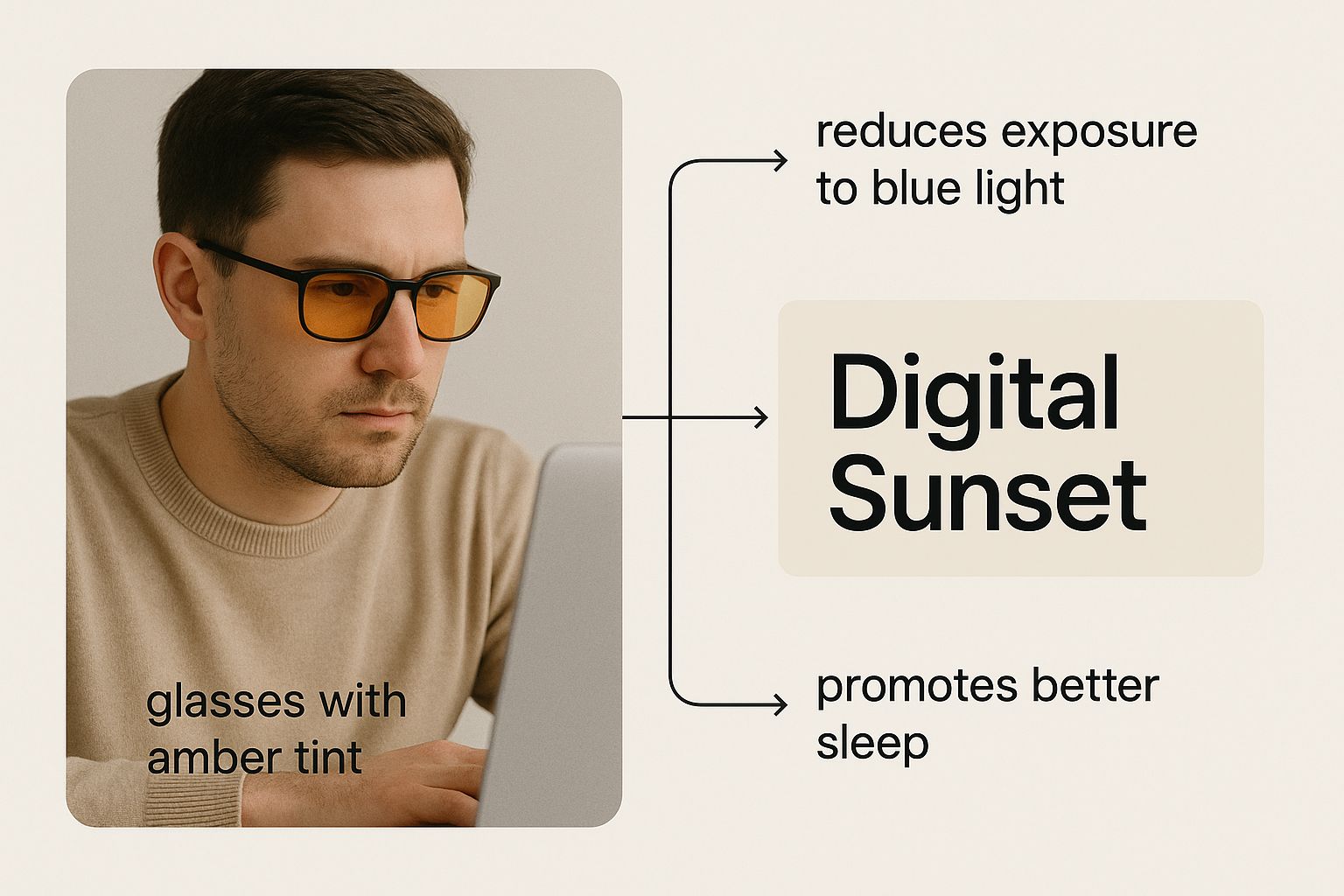
As you can see, the amber tint cuts right through the harsh glare, leaving a much softer light that helps your body recognize it's time to power down.
This kind of light-filtering tech is becoming a necessity as our screen time continues to climb. In fact, the global market for blue light blocking glasses is expected to hit $3.0 billion by 2025, a jump that's almost entirely thanks to a growing awareness of digital eye strain and sleep problems.
By blocking the most disruptive wavelengths of light, amber tinted glasses help synchronize your internal clock with your desired bedtime, rather than with your screen time.
To put it simply, these glasses don't change the light coming from your screen. They change how your eyes and brain perceive that light. It’s a small adjustment that supports your natural biology, making it so much easier to relax, fall asleep, and get the deep, restorative rest you need.
For a deeper dive into how light affects your body and mind, check out our guide on the blue light blog.
Here's a quick look at the main reasons people are turning to amber-tinted glasses.
This table breaks down the primary advantages of wearing amber tinted glasses, especially as you wind down in the evening.
| Benefit | How It Works | Ideal For |
|---|---|---|
| Better Sleep Quality | Blocks over 90% of blue light, allowing your brain to produce melatonin naturally. | Anyone who uses screens (phone, laptop, TV) within 2-3 hours of bedtime. |
| Reduced Digital Eye Strain | The warm tint reduces harsh glare and high-energy light, relaxing your eye muscles. | People who experience dry eyes, headaches, or blurry vision after screen use. |
| Supports Circadian Rhythm | Mimics a natural sunset, signaling to your body that it's time to wind down. | Night owls, shift workers, or anyone with an irregular sleep schedule. |
Ultimately, whether you're looking to fall asleep faster or just make your evening screen time easier on your eyes, the science behind amber lenses offers a practical, effective solution.
If you've ever wrapped up a long day staring at a screen only to be rewarded with tired, aching eyes and a nagging headache, you know what digital eye strain feels like. The harsh, high-energy blue light from our devices is the main culprit, leading to dryness, blurred vision, and general discomfort.
This is where orange colored blue light glasses make a real difference. Think of the warm tint as a shock absorber for your eyes. It filters out the most aggressive blue light wavelengths, which immediately softens the harsh glare from your screen and sharpens contrast. This makes everything on the screen easier to read and cuts down on the visual "noise" that forces your eye muscles into overdrive. It's like wearing sunglasses on a painfully bright day, but tailored specifically for the artificial glow of our indoor world.
By creating a softer visual environment, amber lenses help your eyes finally relax—even when you’re pushing through a late-night work project or settling in for a movie marathon. It’s a simple change that lets you stay focused and comfortable without paying the price with eye fatigue later on.
Wearing amber glasses in the evening creates a warmer, more soothing visual experience, signaling to your eyes and nervous system that it's time to wind down from the day's stimulation.
The demand for glasses like these is definitely growing. While amber-tinted lenses have a specific job to do, they're part of a bigger trend toward eyewear that not only corrects vision but actively protects our eyes. This market is seeing huge growth, especially in the Asia-Pacific region.
Of course, amber lenses are a fantastic tool, but they work best as part of a complete routine. You can also explore other top tips for avoiding computer eye strain to build a solid defense against digital discomfort. Combining these strategies is your best bet for keeping your eyes happy.
Ever find yourself scrolling through your phone at 11 PM, only to feel wide awake when you finally try to sleep? That bright screen is blasting your brain with blue light, sending a powerful signal that it's the middle of the day.
This digital daylight completely throws off your internal clock, known as your circadian rhythm. It also slams the brakes on melatonin production—the essential hormone that tells your body it’s time to sleep. The result? You're left tossing and turning instead of drifting off peacefully.
This is where orange colored blue light glasses become a game-changer for your nightly routine. By wearing a pair for just 1-2 hours before bed, you’re creating a protective shield. The warm, amber-hued lenses filter out those confusing blue wavelengths, giving your brain the "all clear" to naturally begin its wind-down process and start producing melatonin.
You’ll find it much easier to fall asleep faster and get the deep, restorative sleep you need to feel energized the next day. It’s the key reason why they're so effective. To understand exactly how our glasses get the job done, you might be interested in our guide on how they help with sleep.
While amber blue light glasses are a powerful tool, they work best when paired with solid sleep habits. Think of it as a complete strategy for better rest.
For an even deeper dive into these strategies, check out our complete guide on achieving better sleep.
Beyond just prepping you for sleep, the warm tint of amber blue light glasses creates a calmer, more soothing visual environment. It helps turn down the mental noise from screens, making it easier to relax, de-stress, and let go of anxiety after a long day. This is a crucial part of any holistic wellness approach.
Shifting your mind from a state of high alert to one of calm is critical for your evening wind-down, and creating the right environment makes all the difference. The warm, gentle hue literally creates a more soothing visual world around you, helping to calm your nervous system.
When you pair your glasses with other proven relaxation techniques, you create a powerful nightly ritual. It's a holistic approach that sends a clear signal to both your mind and body that the day is officially over.
Ready to find the perfect pair? It's pretty simple once you know what to look for. The thing is, not all "blue light blocking" glasses are created equal. The real differences come down to the quality of the lens, the depth of the tint, and how comfortable the frames are—and these factors will make or break how well they work for you.
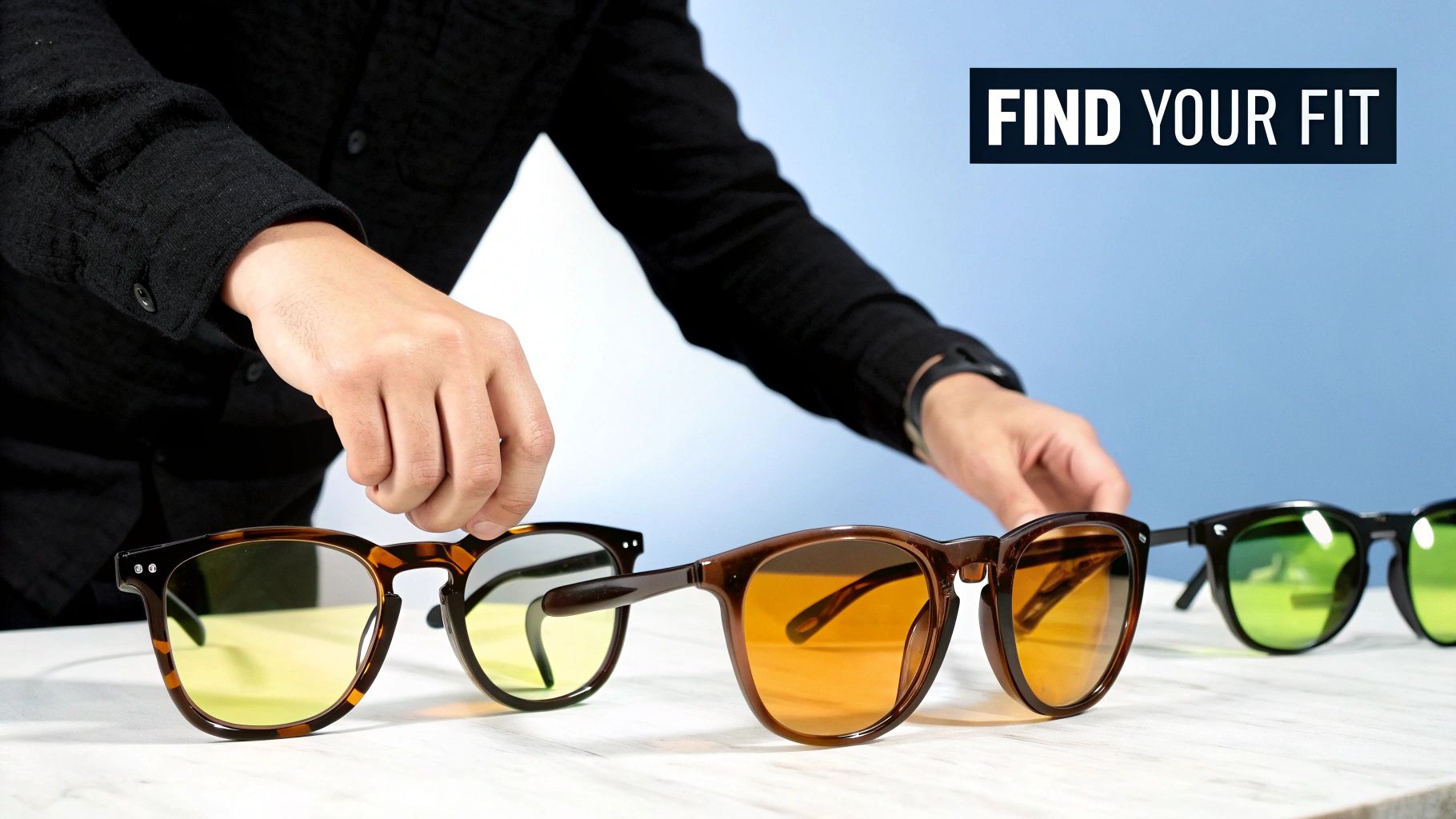
The single most important factor is the tint. If you’re serious about getting better sleep, a deep amber or orange-colored lens is non-negotiable. These darker shades are specifically designed to block over 99% of the most disruptive blue light wavelengths, which is what gives your brain the signal to start producing melatonin naturally.
Those lighter yellow or clear lenses might take the edge off eye strain during the day, but they just don't have the power to protect your circadian rhythm when the sun goes down.
Beyond the lens itself, you've got to think about comfort and quality. Look for lightweight frames you can actually wear for a few hours without them feeling like a chore. High-quality options, like the ones from Element Lux, deliver on both fronts: scientifically-backed lenses paired with frames that are both stylish and comfortable.
For the best results, get into the habit of putting your glasses on 1-3 hours before bed. This simple step creates that all-important buffer between your screen time and your sleep time.
Choosing the right amber glasses is an investment in your nightly wind-down routine. A quality pair will not only reduce eye strain but will actively support deeper, more restorative sleep by creating an ideal environment for relaxation.
Ultimately, the goal is to find a pair that fits so seamlessly into your evening that you forget you’re even wearing them. By focusing on a strong amber tint and a comfortable frame, you'll be well on your way to fighting off digital eye strain and getting your natural sleep cycle back on track.
Jumping into the world of blue light glasses can bring up a few questions. Let's tackle some of the most common ones so you can see exactly how amber lenses fit into your routine.
You could, but you’d be missing the point. Amber and orange lenses are specifically designed as an evening tool, meant to be worn for the 1-3 hours before you plan to go to sleep.
Wearing them all day isn’t ideal because it can throw off your color perception. More importantly, your brain actually needs some of that blue light from the sun during the day to feel awake and energized. Save these for when the sun goes down.
It really comes down to strength and purpose.
Think of yellow lenses as your daytime eye-strain relief. They take the harsh edge off your computer screen and cut down on glare without making the world look dramatically different.
Amber and orange lenses are the heavy-hitters for nighttime. They block a much, much larger slice of the blue light spectrum, which is exactly what you need to protect melatonin and signal to your body that it’s time to wind down for sleep.
For promoting genuinely restful sleep, amber tinted glasses are the clear winner. For simply making your workday screen time more comfortable, yellow lenses get the job done.
Night mode is a great start, but it's not the whole story. Those software filters on your phone and laptop do reduce some blue light, but they often don't block enough of the most disruptive wavelengths to make a real difference for your sleep.
A good pair of amber glasses, like the ones from Element Lux, creates a physical barrier. It's simply a more powerful and reliable way to stop that specific junk light from messing with your internal clock.
When it comes to eye comfort, a lot of people feel relief almost right away—that soothing, relaxed feeling as soon as you put them on.
For sleep, you'll likely feel a positive shift within the first few nights. The real magic happens with consistency. When you make wearing them every evening a habit, you’re helping to regulate your body's natural rhythm for better sleep and less eye strain long-term.
Ready to feel the difference for yourself? Element Lux offers premium amber tinted glasses designed to help you unwind, ease eye strain, and get your best night's sleep. Shop now and start your journey to better rest.
