If you've ever ended a long workday with dry, scratchy eyes, a dull headache, or blurry vision, you know exactly what digital eye strain feels like. It’s that nagging discomfort that comes from staring at screens for hours on end. The good news is, relief can be surprisingly simple.
The easiest trick in the book is the 20-20-20 rule. All you have to do is this: every 20 minutes, look at something 20 feet away for at least 20 seconds. That’s it. This tiny habit gives the focusing muscles in your eyes a much-needed break and, when paired with a good desk setup, can make a world of difference almost immediately.
What we call "digital eye strain" is actually a group of issues officially known as computer vision syndrome. It’s not just one symptom—it’s a whole collection of them, from achy, tired eyes and blurry vision to headaches and even neck pain. And if you think you're the only one, you're definitely not alone.
The problem is incredibly widespread. According to the 2025 Workplace Vision Health Report from VSP Vision Care, nearly 60% of employees globally deal with digital eye strain. It’s why experts are constantly recommending simple, repeatable habits like the 20-20-20 rule. It works because it forces the muscles inside your eyes to relax, preventing them from getting locked into that intense, up-close focus for too long.
This chart breaks down just how common the main symptoms are.
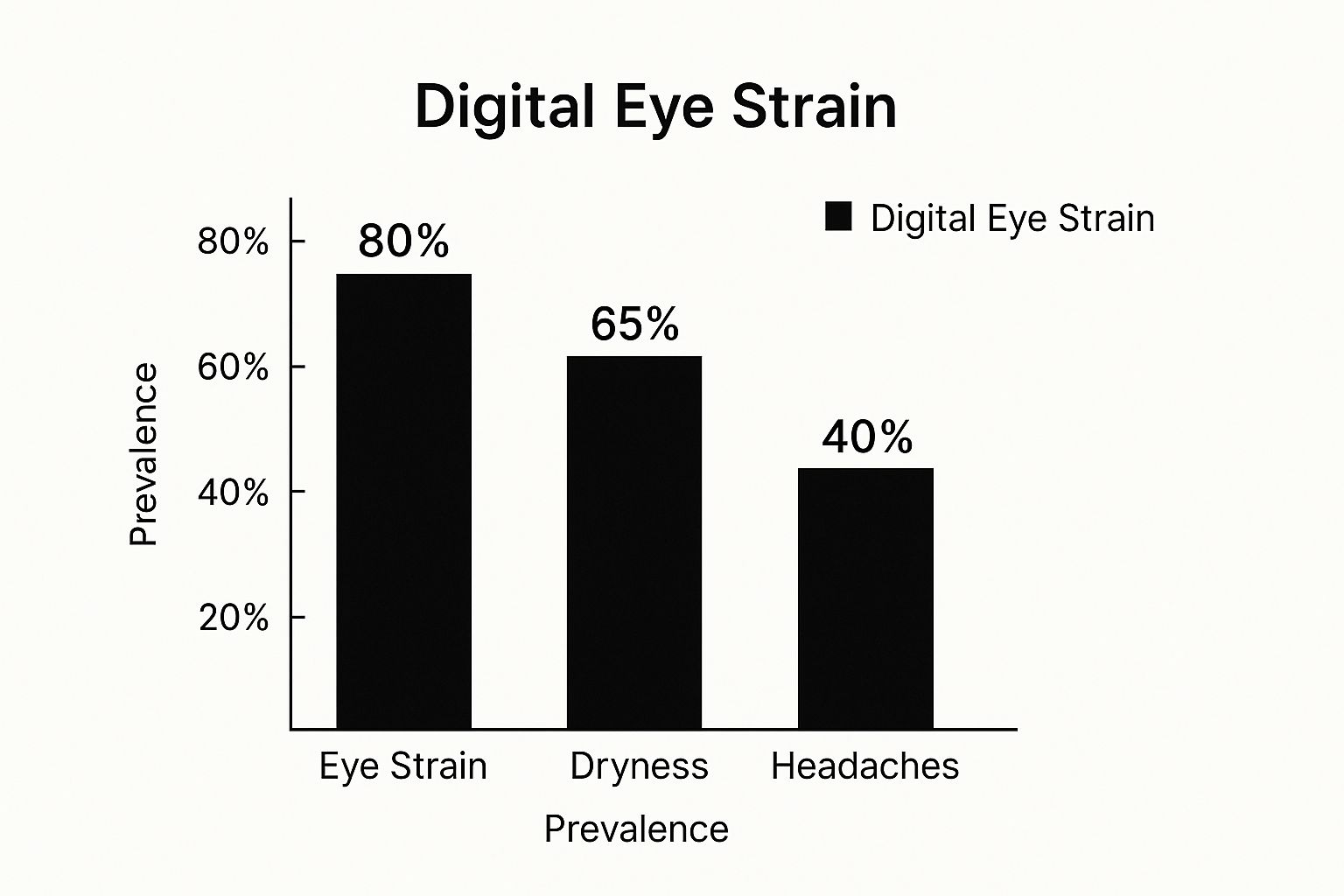
While general eye strain takes the top spot, you can see that dryness and headaches are right behind. Pinpointing what triggers these issues for you is the first step toward getting some real relief.
So many of our daily habits contribute to tired eyes, but the fix is often just as simple as the cause. Here's a quick look at common triggers and some immediate solutions you can try right now.
| Cause of Eye Strain | Immediate Solution |
|---|---|
| Prolonged Screen Time | Practice the 20-20-20 rule to give your eyes regular breaks from close-up focus. |
| Poor Screen Contrast/Brightness | Adjust your display settings to match the ambient light in your room. Avoid glare from windows. |
| Incorrect Desk Ergonomics | Position your monitor an arm's length away and ensure the top is at or slightly below eye level. |
| Infrequent Blinking | Make a conscious effort to blink fully and often to keep your eyes lubricated naturally. |
These small adjustments don't require a lot of effort but can add up to a significant reduction in eye discomfort throughout your day.
Ever get that gritty, exhausted feeling in your eyes after a day spent staring at a screen? You can thank the high-energy blue light blasting from your devices. It digs deep into the eye, and that’s a big reason why you feel that all-too-familiar digital eye strain.
But it’s not just about tired eyes. That constant exposure, especially late at night, wreaks havoc on your ability to get a good night's sleep. Blue light basically tricks your brain into thinking it’s still daytime, which slams the brakes on your body's production of melatonin—the hormone that signals it's time to wind down.
This is where a good pair of orange or amber-tinted glasses really shines. Unlike those clear "computer glasses" that only filter out a tiny fraction of blue light, orange lenses are built to block the most disruptive wavelengths. The warm tint of orange colored blue light glasses filters out the harsh, high-energy light from screens, giving the tiny muscles in your eyes a much-needed break. This significantly reduces the tired, gritty feeling associated with digital eye strain.
Pop on a pair of Element Lux orange-colored glasses in the evening, and you're protecting your natural melatonin production. By blocking the blue light that suppresses this key sleep hormone, they help you feel genuinely sleepy when you should be, paving the way for a deeper, more restorative night's rest.
Amber blue light glasses work in a similar way, wrapping your vision in a warm, calming glow that helps you relax and wind down. I like to think of it as creating your own "digital sunset." This small ritual signals to your brain that the day is over, helping you shift from that wired, alert state to a much more relaxed one. If you want to dig deeper into the science, you can explore the benefits of blue light glasses and how they boost eye comfort.
By filtering out stimulating blue light, amber glasses help ease the transition into a restful state, reducing the "wired" feeling many of us experience after evening screen time.
Of course, great sleep is about more than just blocking blue light. Building a solid nighttime routine is key.
When you combine these habits with the right eyewear, you’re creating a powerful recipe for truly restorative sleep. To learn more about how it all works, check out the resources on our blue light blog.
Think of it like creating your own personal sunset, even when you're burning the midnight oil. That's exactly what wearing amber or orange-tinted blue light glasses does in the evening. They create a "digital sunset" that cues your brain to start winding down and gives your eyes a much-needed break.

This isn't just a psychological trick; it has real physiological benefits. Filtering out that harsh blue light helps your body regulate its natural sleep-wake cycle, which can even help dial down feelings of stress and anxiety. When your mind is calm, your body tends to follow, making it far easier to fall asleep and stay that way.
Pairing blue light blocking glasses with a few other simple habits can completely transform your evening routine and your sleep. To really unwind, give these a try.
Here are four of my go-to ways to de-stress before bed:
By building a consistent, screen-smart evening ritual, you’re essentially training your body to transition smoothly from "on" to "off." This preparation is absolutely key to getting the deep, restorative sleep your eyes and mind are craving.
Ultimately, the goal is deep, uninterrupted sleep. That’s when your eyes truly get to recover and repair themselves. Orange and amber glasses are an incredibly powerful tool to help you get there. You can dig deeper into how our glasses help with sleep and the science behind it.
To start getting the best sleep of your life, focus on these habits:
One of the best things you can do to help your eyes recover from daily strain is, quite simply, to get better sleep. A solid nightly routine is your roadmap to that kind of restorative rest, and orange-colored blue light glasses are a surprisingly critical first step.
Think of these glasses as more than just an accessory—they're a tool. By filtering out the stimulating blue light that pours out of our screens, they give your brain the signal to start producing melatonin naturally. This is the hormone that tells your body it's time for bed, helping you not only fall asleep faster but also enjoy deeper, more restful sleep cycles.
There's also the calming effect of the orange and amber lenses. When you slip on a pair of Element Lux amber glasses, the warm tint feels a bit like a "digital sunset." It’s a simple visual cue that dials down the mental buzz from screens, making that transition from "on" to "off" feel so much easier. This simple wind-down is key for allowing your eyes to truly rest overnight.
A consistent evening routine built around blue light blocking glasses can significantly reduce stress and prepare your mind and body for high-quality, restorative sleep.
To really get the most out of your glasses, weave them into a broader relaxation routine. Here are four easy ways to de-stress before you turn in for the night:
With that foundation, you can start fine-tuning your sleep hygiene to maximize your eye recovery. For a much deeper dive, you can check out our proven strategies for better sleep.
Here’s a quick checklist to get you started:
Beyond special eyewear, you have the power to combat eye strain with simple, free techniques. Think of this section as your daily toolkit for eye care, focusing on small habits that deliver some serious relief.
It's a huge issue, too. Globally, over 2.2 billion people live with vision impairment, and for nearly 1 billion of them, the problem was either preventable or hasn't been addressed. A lot of these issues stem from things that could be managed with simple measures—like taking screen breaks or fixing your lighting.
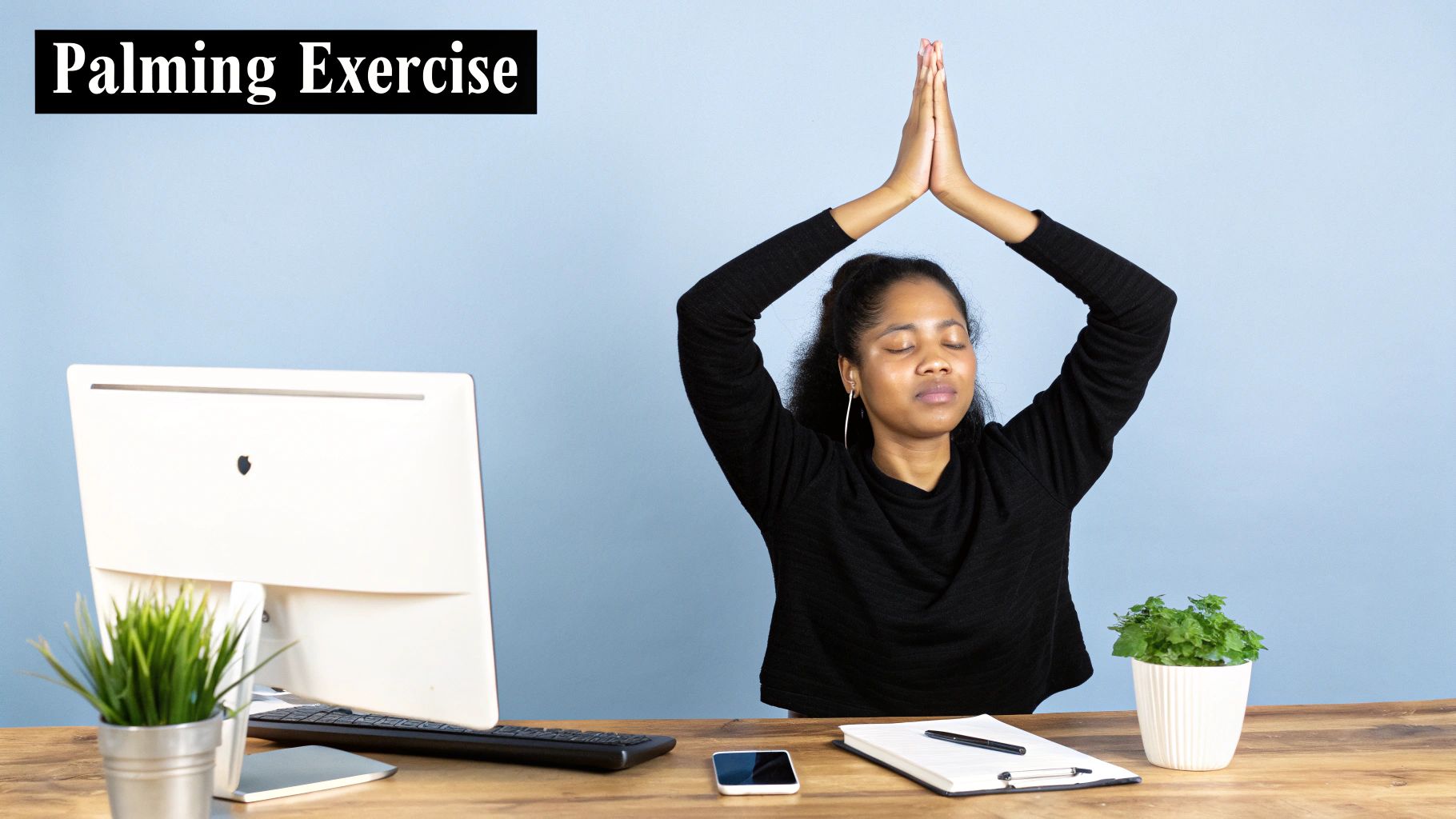
Weaving a few quick drills into your day can keep your eye muscles flexible and cut down on that end-of-day fatigue.
These exercises are like a reset button for your eyes' focusing system. They stop the muscle fatigue that builds up from staring at a fixed distance for hours on end.
How you set up your desk plays a massive role in how your eyes feel after a long day. A few small tweaks can make a world of difference.
Try to position your monitor about an arm's length away, with the top of the screen sitting at or just below your eye level. This simple adjustment stops you from craning your neck or straining your eyes upward.
Also, take a second to adjust your screen’s brightness to match the light in your room. A screen that’s way brighter than its surroundings is a major source of glare and discomfort. If you're looking for more great ideas, check out these further tips on avoiding computer eye strain.
A lot of people ask me if those orange-tinted blue light glasses really work. The short answer is yes, and they're especially effective for tackling digital eye strain.
Here's why: orange colored blue light glasses are specifically designed to filter out the most intense blue light wavelengths that our screens blast at us all day. Blocking that light gives the tiny muscles in your eyes a much-needed break, which helps get rid of that tired, gritty feeling you get after a long day in front of the computer.
But it's not just about eye strain. That powerful filtering is also a game-changer for your sleep. By blocking all that disruptive blue light in the evening, orange colored blue light glasses help with sleep by allowing your body to naturally produce melatonin—the hormone that tells your brain it's time to power down. This makes it so much easier to fall asleep and actually stay asleep.
I've found that amber blue light glasses let you relax and wind down by creating a similar, deeply calming effect. Slipping on a pair of Element Lux amber glasses in the evening really does feel like creating your own personal "digital sunset." It's a simple visual cue that signals to your brain that the day is over and it's time to unwind.
This simple habit helps you shift gears from that hyper-alert, screen-focused state to one of genuine relaxation. For me, they’ve become an essential part of my nightly wind-down routine.
To get the most out of your glasses, you need to build them into a consistent pre-bed ritual. Here are a few top ways to get good sleep:
And if you need to reduce stress or anxiety, here is a list of the top 4 ways to relax:
Ready to transform your evenings and get the restorative sleep your eyes are crying out for? Explore the collection of high-quality, effective blue light blocking glasses from Element Lux. Shop now and start your journey to better rest and happier eyes!
