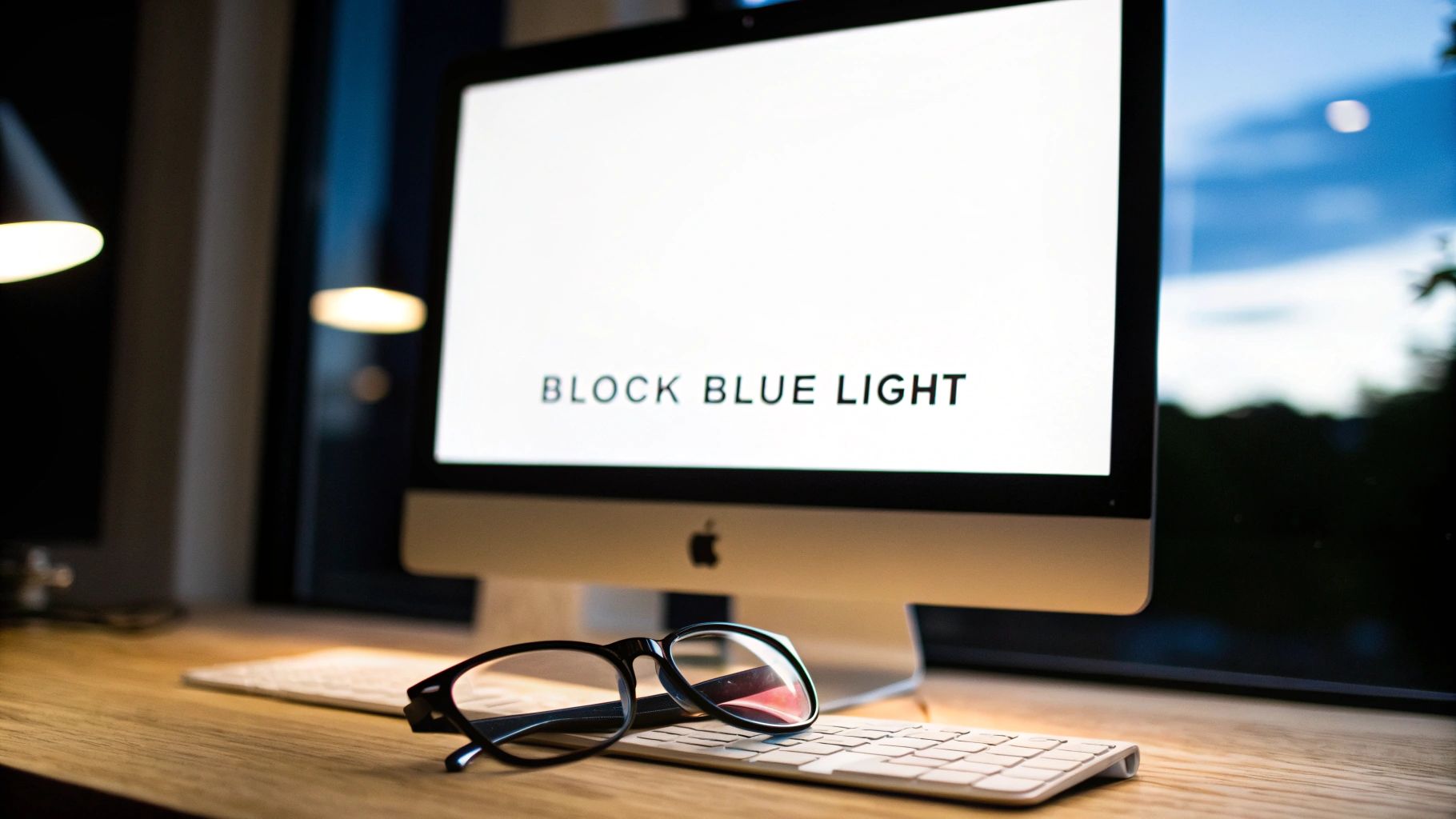
Yes, computer glasses absolutely block blue light to a significant degree. Think of them as a protective shield for your eyes, filtering out the harsh, high-energy light from your screens to help cut down on digital eye strain and support healthier sleep cycles, especially when you're working late.
If you spend your days staring at a screen, you know the feeling all too well: that gritty, tired-eye sensation, maybe a dull headache creeping in, and a mind that just won't shut off when it's time for bed. That isn't just you being tired—it's the direct result of all the high-energy blue light our devices pump out.
This guide will walk you through exactly how computer glasses offer a simple but powerful solution to this modern problem.
We'll dive into how different lens colors are actually targeted tools for your well-being. For example, orange-colored glasses are incredibly effective at relieving eye strain and signaling your brain that it's time to start producing melatonin—your body's natural sleep hormone. Amber blue light glasses offer a slightly softer approach, perfect for helping you relax and wind down in the evening without making you feel sleepy too early.
Getting deep, restorative sleep is about more than just flipping the light switch. A solid, consistent routine can make a world of difference. Here are a few strategies that genuinely work:
For a deeper dive, check out these comprehensive strategies to reduce digital eye strain and protect your vision.
In the same way, calming down after a long day involves being proactive about soothing your nervous system.
To really get why computer glasses that block blue light work so well, we first have to understand the light itself.
Think of light as a rainbow. On one end, you have gentle, long waves like red light. On the other end, you have short, high-energy waves—and that's where you'll find blue light. Our screens are constantly blasting our eyes with this high-energy stuff.
Because its waves are so short and scattered, your eyes have a tough time focusing on it. All that extra effort is what leads to the digital eye strain we all know and hate: dryness, blurry vision, and tension headaches. But the effects go way beyond just eye comfort.
When your brain sees blue light late at night, it gets a confusing signal that it’s still the middle of the day. This unwanted exposure slams the brakes on melatonin production, the hormone your body needs to feel sleepy. Without enough melatonin, falling asleep is a struggle, and the sleep you do get just isn't as deep.
When it comes to protecting your sleep, orange-colored blue light glasses are the heavy hitters. They’re designed to block the most disruptive wavelengths of blue and even some green light, which can also mess with your melatonin.
By filtering out this intense light, orange lenses essentially create a personal sunset for your eyes. They send a clear, powerful signal to your brain that it's time to wind down and prepare for rest. This not only eases eye strain but also triggers a natural, healthy release of melatonin, setting you up for deeper, more restorative sleep.
Amber blue light glasses strike a great balance, making them perfect for relaxing in the hours before bed. They filter out a serious amount of blue light—enough to protect your melatonin and reduce eye fatigue—but they do it without distorting your color perception as much as darker orange lenses.
This makes amber glasses the ideal tool for creating a “digital dusk.” They help your mind and body transition smoothly from a state of high alert to one of calm relaxation, preparing you for a good night's rest without making you immediately drowsy.
To dive deeper into the connection between light and your body's internal clock, you can learn more about how circadian lighting principles are used to support natural well-being.
Let's be clear: not all blue light glasses are the same. If you're serious about ending screen-induced eye strain and getting a great night's sleep, orange-colored blue light glasses are the heavyweights you want in your corner.
Think of them as a complete blackout curtain for your eyes when you're using screens at night. Orange-tinted lenses are built to block nearly all blue light. Crucially, they also filter a big chunk of the green light spectrum right next to it, which we now know can also mess with melatonin.
This intense filtering brings immediate relief. It cuts out the high-energy visual 'noise' that makes your eye muscles work overtime, finally letting them relax while you’re still scrolling, reading, or watching. This is how orange-colored glasses directly help reduce eye strain.
This image shows a pair of Element Lux orange-lensed glasses, specifically designed to provide the strongest blue light filtering possible.
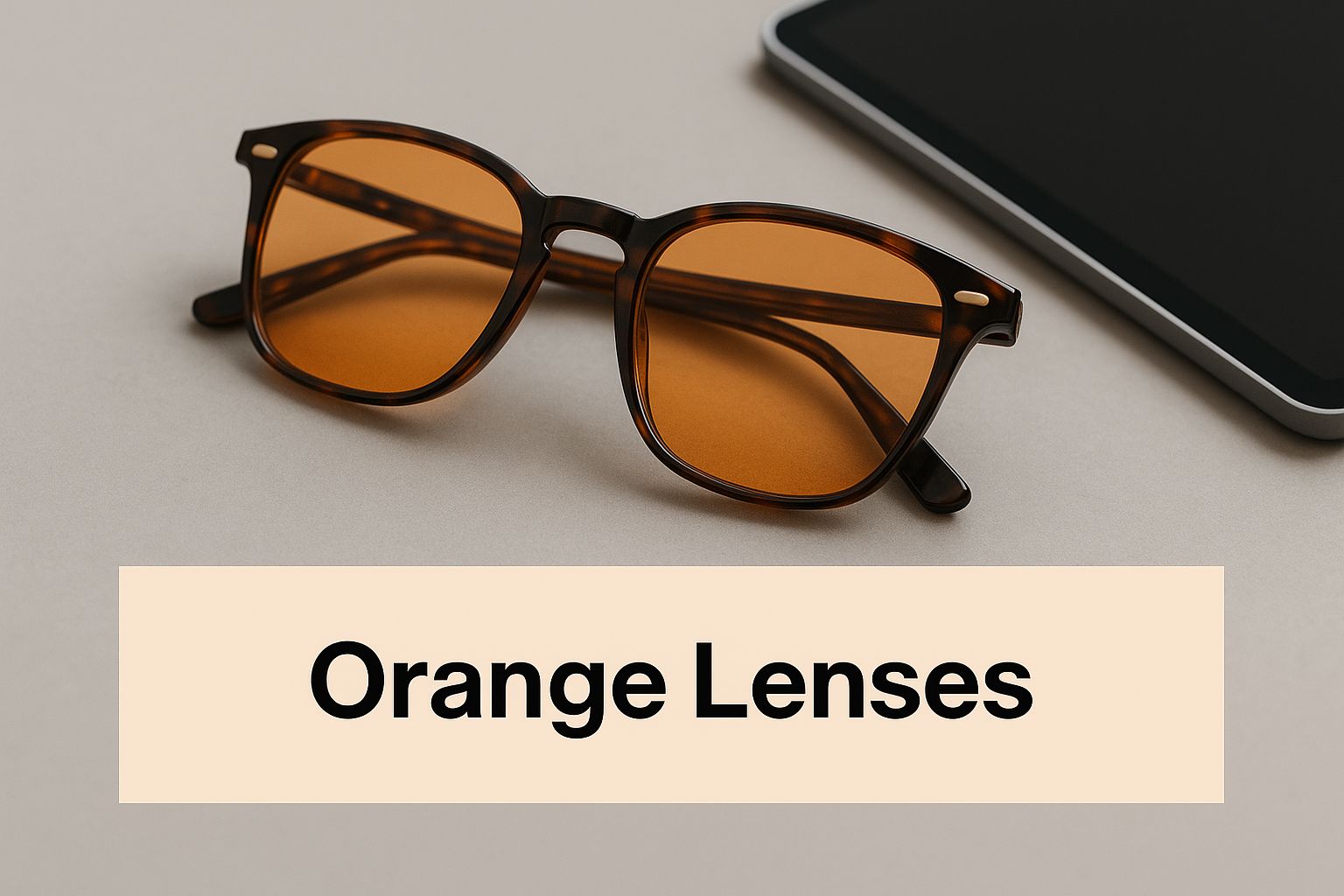
That deep orange color isn't just for looks—it's what makes them so powerful at getting your body ready for bed.
The real magic of orange-colored blue light glasses is what they do for your sleep. By blocking the most disruptive light wavelengths, they essentially create a personal "sunset" for your brain, sending a powerful signal that the day is done and it's time to start making melatonin. This is how they help with sleep.
This triggers a natural and strong hormonal response. People who use them often report falling asleep faster, staying in deeper sleep cycles, and waking up feeling truly refreshed—not just less tired.
And it’s not just a niche trend. The blue light blocking glasses market is booming, expected to hit $2.5 billion by 2025 and grow at a 15% clip through 2033. This growth is all thanks to people like us who are tired of letting screens ruin our sleep and strain our eyes. You can discover more insights about this growing market trend.
While orange lenses are for serious sleep prep, amber blue light glasses are a more balanced option for general evening use. They're perfect for when you want to chill out without your brain immediately getting the signal to pass out.
Amber lenses still filter a good amount of blue light, protecting your melatonin and easing eye fatigue. But they don't distort color as much, which makes them great for watching a movie or casually scrolling an hour or two before you plan to sleep. They help ease your mind and body from a wired, alert state into a calm, relaxed one.
Wearing the right computer glasses is more than just protecting your eyes; it’s about actively managing your body's natural rhythms to improve how you feel, relax, and sleep every single night.
If orange lenses are your go-to for serious sleep prep, think of amber lenses as your evening wind-down partner. They strike that perfect balance for the hours when you’re not quite ready for bed but want to start signaling to your body that the day is over. It’s like creating your own personal “digital dusk.”
Amber blue light glasses filter out a serious amount of blue light—enough to stop melatonin from being suppressed and to give your eyes a noticeable break from fatigue. But they don't distort color as much as their darker orange cousins. This makes them perfect for watching a movie, a bit of casual scrolling, or reading on your tablet in the hours before you turn in.
That balance is precisely what makes them so effective. Instead of hitting the brakes hard, they gently ease your brain and body from a state of high alert into one of calm relaxation. This transition doesn't just protect your eyes; it helps your mind disconnect and get ready for a night of quality sleep. This is how amber glasses let you relax and wind down.
Using computer glasses that block blue light has become a pretty common wellness practice, and for good reason. The market for these glasses is blowing up as more people get wise to the effects of digital eye strain. By 2025, it's expected to hit $2.626 billion, with Europe leading the charge. This isn't just a fad; it's a reflection of a growing understanding of how much light management matters for our health. You can dig deeper into the trends in the anti-blue light glasses market to see just how big this is getting.
Amber lenses are a huge part of this shift. They’re the perfect tool for creating a buffer zone between a hectic, screen-heavy day and a truly restful night.
Amber-lensed glasses are less about forcing sleep and more about inviting relaxation. They gently dial down the visual stress that keeps your nervous system fired up, letting you unwind naturally without feeling like you have to go to bed immediately.
Amber lenses help you create a gradual transition from the stimulation of the day to the calm needed for sleep. They’re practical for anyone who still needs to see their screen clearly but wants to do so without the harsh, sleep-disrupting effects of unfiltered blue light. Below, we've put together a quick comparison to help you decide between orange and amber.
| Feature | Orange Lenses | Amber Lenses |
|---|---|---|
| Primary Use | Pre-sleep ritual; intense blue light blocking | Evening relaxation; moderate blue light blocking |
| Blue Light Blocking | Highest (98-99%+) | High (around 90-95%) |
| Color Distortion | Significant; everything appears very warm/orange | Moderate; colors are warmer but more recognizable |
| Best For | Last 1-2 hours before bed to maximize melatonin | 2-4 hours before bed for movies, reading, general use |
| Effect on Alertness | Can make you feel sleepy quickly | Promotes relaxation without immediate drowsiness |
Ultimately, amber is for unwinding, while orange is for shutting down. Many people find having a pair of each gives them the flexibility to manage their light exposure perfectly throughout the evening.
Simply popping on a pair of glasses is a great start, but truly restorative sleep comes from building smart habits around them. Think of it as a total system reset. The most powerful signal you can send your brain to wind down is managing your light exposure.
This is where being strategic with your eyewear pays off. For general evening relaxation, like watching a movie, amber-lensed glasses are perfect for easing eye strain and getting your body into a "pre-sleep" mode.
Then, about 1-2 hours before you want to be asleep, it’s time to bring out the big guns. Switch over to your heavy-duty orange-lensed glasses to block out as much disruptive light as possible, giving your melatonin production the green light it needs for deep, restful sleep.
Once you’ve nailed your light management, a few other consistent habits will amplify the benefits. A solid routine is like training for your internal clock, making it far easier to fall asleep and wake up feeling genuinely refreshed.
Here are the most effective habits to build into your nightly routine:
A relaxing pre-sleep ritual is the final cue you can give your body that it’s time to rest. Ditching your phone for a real book, doing some light stretching, or taking a warm bath can make all the difference.
Combining these simple adjustments creates a powerful foundation for consistently great sleep. If you want to dive even deeper, check out our complete guide to achieving better sleep.
Let's be honest, modern life is stressful. Between work, family, and the constant pings from our devices, our nervous systems are often stuck in a low-grade state of alert. It's no wonder that "unwinding" feels like another task on the to-do list.
The first step to actually relaxing is tackling the source of all that digital stimulation. One of the simplest and most effective ways to do this is by putting on a pair of computer glasses that block blue light once the sun goes down. Think of it like turning down the volume on your brain. The amber lenses dial back the harsh visual noise from screens, which helps calm your body's "fight or flight" response and lets you unwind naturally.
Beyond managing the light hitting your eyes, a few simple practices can make a world of difference. You don't need a lot of time, just consistency.
Here are four of the best ways to reduce stress and relax:
Wear Blue Light Blocking Glasses: After dinner, make it a habit to put on a pair of amber-lensed glasses, like the ones from Element Lux. This one small change signals to your brain that the day is over, helping your nervous system shift from "go mode" into a much-needed "relax mode."
Practice Mindful Minutes: You don't need an hour-long session. Just set aside 5-10 minutes a day for a quick guided meditation or just to sit in silence. This practice is incredible for grounding you in the present moment and quieting the frantic thoughts that love to race through our minds at night.
Get Some Light Physical Activity: A brisk 20-minute walk is one of the best-kept secrets for stress relief. It gets you outside, clears your head, and releases mood-boosting endorphins that help melt away the physical tension stress builds up in your body.
Disconnect for a Hobby: Intentionally put your phone away and spend a little time on something you enjoy just for the sake of it. Maybe it's listening to an entire album without skipping tracks, sketching in a notebook, or journaling. These screen-free activities can dramatically lower your stress levels and just make you feel more like you.
By actively managing the stimulating inputs from our digital environment, we give our minds the quiet space needed to properly rest and recover from the day's demands.
You’ve got questions, we’ve got answers. Let's tackle some of the most common things people ask about blue light glasses and how they fit into real life.
Not necessarily. It really depends on the type of lens you have.
Lenses that are clear or have a very light yellow tint are designed to take the edge off glare and mild eye strain during the day. But the heavy-hitters—the amber and orange lenses—are strictly for evening and nighttime use.
Think of it this way: wearing those darker tints during the day is like telling your body it's nighttime when the sun is still out. It can actually throw off your internal clock by blocking the beneficial blue light you need to feel alert and awake.
Yes, absolutely. Most optometrists can add blue light filtering technology directly into your prescription lenses. It’s a common request these days, so you can get your vision correction and blue light protection all in one.
And if you have perfect vision? No problem. Non-prescription versions, sometimes called "plano" lenses, are easy to find. This means everyone can get the same relief from digital eye strain and sleep disruption.
Forget the online tests for a minute. The real proof is how you feel.
The two biggest signs that your glasses are doing their job are a noticeable reduction in eye strain, dryness, and headaches after a long day of screen time, and finding it much easier to fall asleep at night. For many, the improvement in sleep is the most dramatic and welcome change.
If you want to dive deeper into the science behind it, you can learn more about how these glasses help with sleep in our detailed guide.
The ultimate proof is in your personal experience. Less eye fatigue by day and deeper, more restful sleep by night are the clearest signs that your computer glasses are doing their job effectively.
It really boils down to three things:
Ready to protect your eyes and improve your sleep? The Element Lux collection offers premium amber and orange lenses designed for maximum effectiveness and comfort. Shop now and feel the difference tonight.
