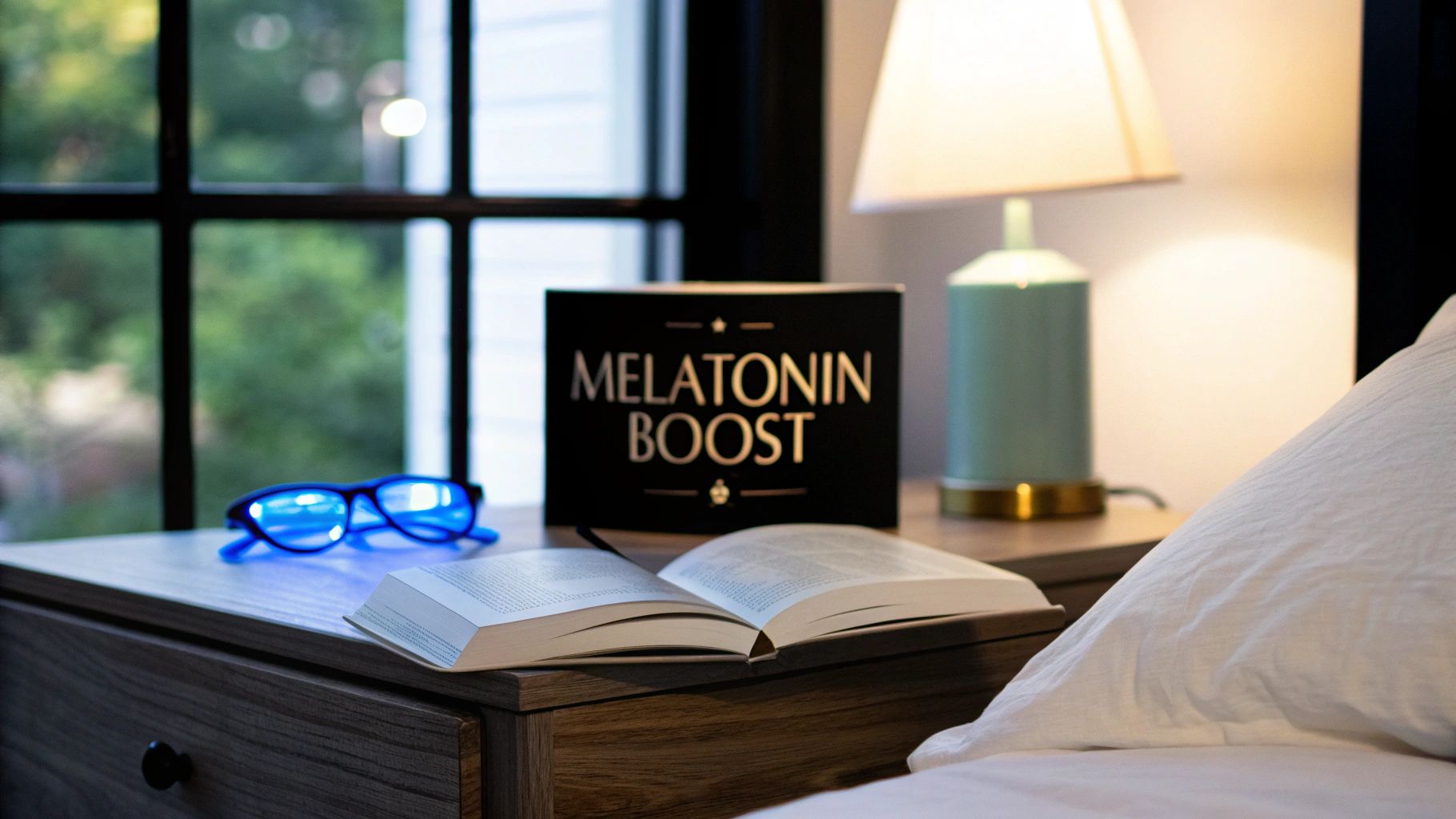
If you've ever struggled to fall asleep, managing your light exposure is one of the most powerful changes you can make. This is especially true in the evening. A simple strategy is to dim your lights and put away screens before bed, but using orange or amber-lensed blue light blocking glasses can be a total game-changer. They work by filtering out the specific wavelengths of light that stop your body from producing its natural sleep hormone.
So, what is this "sleep hormone"? It's melatonin, your body's own built-in sleep signal. This hormone is produced by a tiny gland in your brain, and its job is to regulate your sleep-wake cycle.
Think of it like a natural sunset happening inside your head. As it gets dark outside, your brain gets the memo and starts releasing melatonin, telling your body it's time to wind down and prepare for rest. This entire process is orchestrated by your internal clock, which you might know as the circadian rhythm.
The problem is, our modern lives can easily throw this delicate system out of whack.
Late-night scrolling on your phone, binge-watching a series, or even just sitting under bright indoor lights can trick your brain into thinking it's still high noon. This confusion slams the brakes on melatonin release, leaving you in that frustrating state of feeling tired but wired, unable to drift off.
This visual gives you a great overview of how melatonin acts as the key to your internal clock, signaling when it's time for your body to rest.
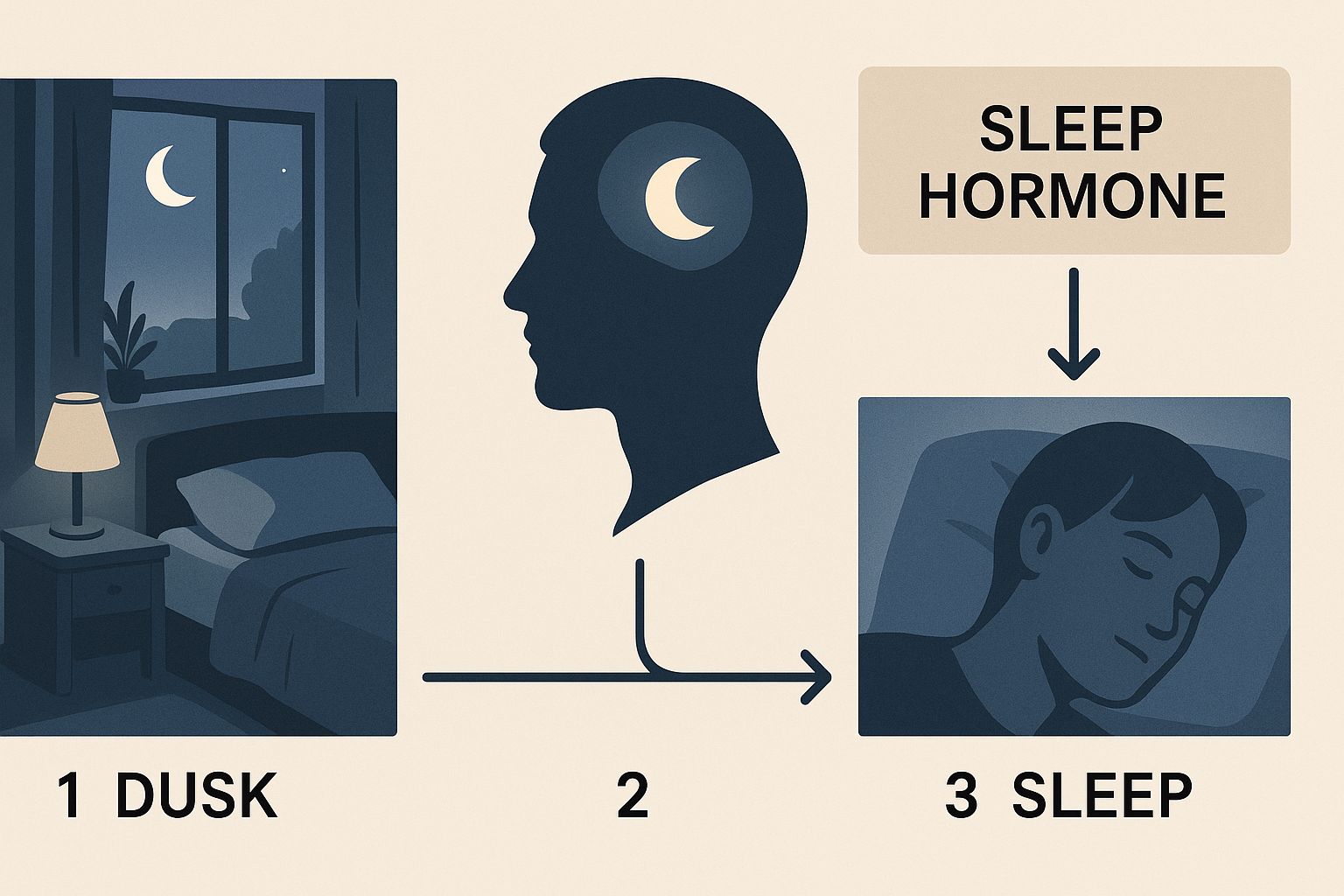
As the infographic shows, supporting this natural signal is fundamental to getting the kind of deep, restorative sleep we all need.
Before we dive into the specific "how-tos," here’s a quick snapshot of the strategies we're about to cover.
Here is a quick summary of the most effective strategies we'll cover for naturally increasing melatonin production, giving you a scannable overview before we dive into the details.
| Strategy | Primary Benefit | When to Do It |
|---|---|---|
| Manage Light Exposure | Prevents melatonin suppression | 2-3 hours before bed |
| Optimize Your Diet | Provides building blocks for melatonin | Throughout the day & evening |
| Smart Supplementation | Offers targeted support when needed | As directed, typically before bed |
| Use Blue Light Glasses | Blocks disruptive light from screens | In the evening, when using devices |
| Establish a Routine | Reinforces your natural sleep-wake cycle | Consistently, every day |
This table lays out the core pillars of a sleep-friendly lifestyle. Now, let's get into the specifics of making them work for you.
When it comes to better sleep, helping your body produce its own melatonin is a much more sustainable approach than simply relying on supplements. While a melatonin pill might help in a pinch, it's often just a temporary fix that doesn't get to the root of the problem. To really get a handle on this, it’s worth understanding the science of sleep and its cycles.
There’s no doubt that people are waking up to the importance of good sleep. The global melatonin market was valued at around USD 2.06 billion in 2024 and is projected to skyrocket to nearly USD 9.8 billion by 2033. This isn't just a trend; it's a major shift in how we prioritize our health.
By making a few small, consistent changes to your daily habits, you can empower your body to regulate its own sleep cycle effectively. The following sections are packed with practical, real-world strategies to help you do just that, laying the foundation for better sleep, night after night.
Your body's ability to produce melatonin is incredibly sensitive to light. The real secret to boosting it naturally isn't just about what you do at night—it’s about managing your light environment all day long. This is how you make light work for you, not against you.
It all starts the moment you wake up. Getting bright, natural sunlight first thing in the morning is a non-negotiable for locking in your internal clock. This powerful signal tells your brain, "Hey, the day has officially started," which in turn sets a timer for melatonin release later that evening.
As day turns to night, your strategy has to flip. Instead of seeking light, you need to start avoiding it. The artificial blue light pouring out of our phones, laptops, and TVs is especially disruptive because it tricks your brain into thinking it's still high noon. This constant, late-night exposure is one of the biggest reasons people struggle to wind down and have their melatonin suppressed.
This is where a simple but incredibly effective tool comes into play: orange-lensed blue light blocking glasses.
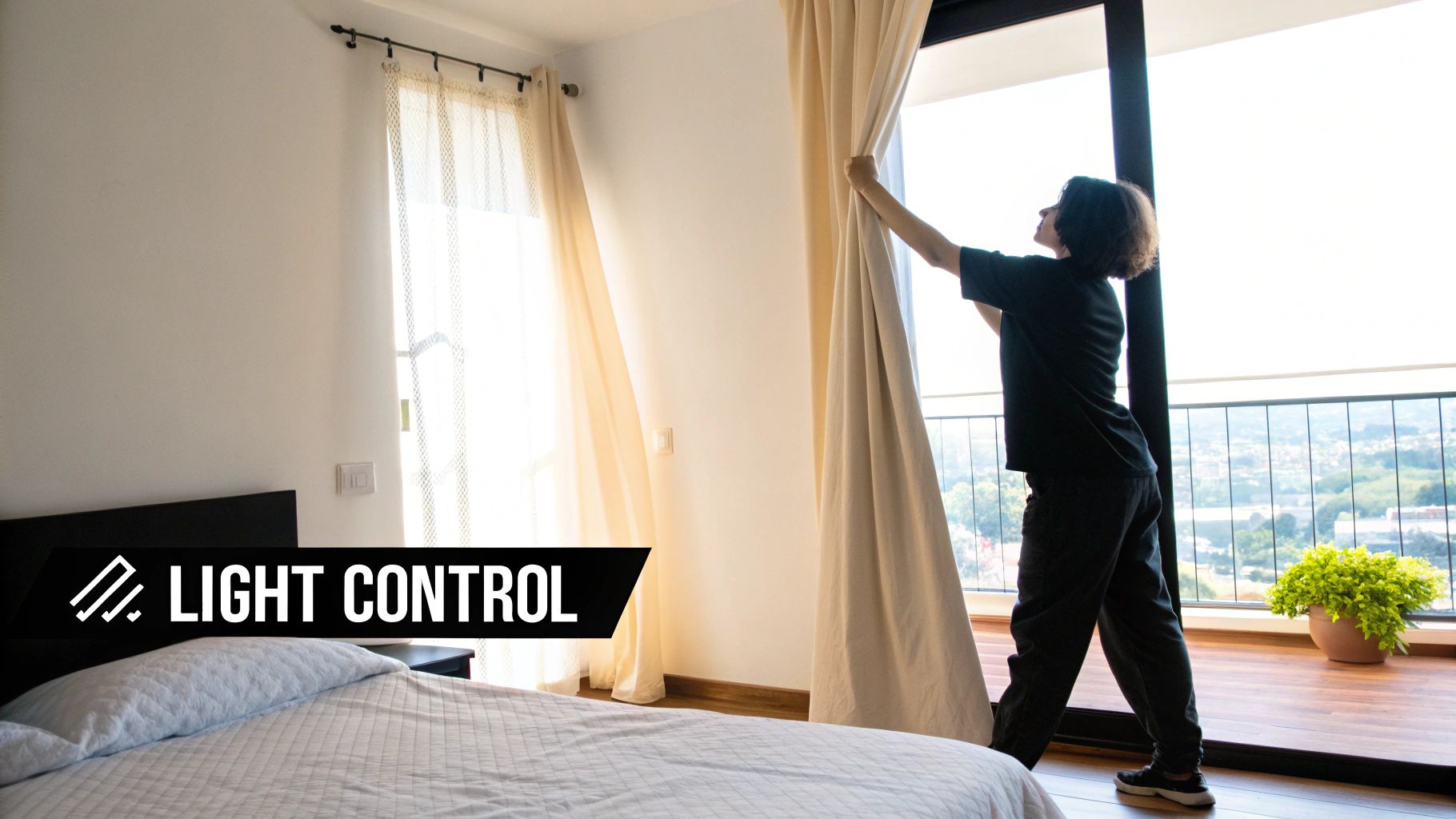
Think of these glasses as a filter for the modern world, protecting your eyes and letting your brain know it's actually time to prepare for sleep.
Slipping on a pair of orange or amber-tinted glasses in the evening does more than just block a little light; it actively supports your body's natural sleep processes. If you've ever felt that gritty, tired-eye feeling after a long day of screen time, you know what digital eye strain is. Orange colored blue light glasses help with eye strain by cutting that harsh glare, often providing immediate relief and reducing symptoms like dry eyes and headaches.
More importantly, orange colored blue light glasses help with sleep. By filtering out the specific wavelengths of blue and green light that slam the brakes on melatonin production, these glasses give your body the "all clear" to let sleep hormone levels rise naturally. This is the key to improving melatonin without a single supplement. You're just removing the obstacle.
The result is a gentle, natural onset of sleepiness. Instead of feeling exhausted but wired, you start to feel genuinely relaxed and ready for bed, making the entire process smoother and more effective.
A holistic approach is always the most effective. You can't just rely on one thing.
Stress is melatonin's worst enemy. When your cortisol (the stress hormone) is high, it's nearly impossible to fall asleep. Weaving in some simple relaxation techniques can make a huge difference.
By mastering your light environment and layering in these supportive habits, you create the perfect conditions for your body to do what it does best: produce melatonin and get you the rest you need. For more insights on this topic, check out our guides on the Element Lux blue light blog.
When it comes to glasses that actually help you sleep, not all lenses are created equal. Clear lenses might take the edge off digital eye strain during the day, but if you’re serious about boosting your natural melatonin, orange and amber-tinted glasses are the real MVPs for your evening wind-down.
These darker, warmer tints are engineered to do one thing exceptionally well: filter out the specific wavelengths of blue and even green light that slam the brakes on your body’s melatonin factory. Slipping them on an hour or two before bed sends a powerful, undeniable signal to your brain—the day is done, and it's time to prepare for real rest.
We’ve all been there. After a few hours of watching a movie, scrolling on your phone, or finishing up some late-night work, your eyes feel gritty and tired. That’s digital eye strain, and orange colored blue light glasses help with eye strain by offering immediate relief. They cut down the harsh glare from your screen, which can ease those familiar symptoms like dry eyes, blurry vision, and tension headaches.
But the real magic happens beyond just physical comfort. The warm hue of amber blue light glasses lets you relax and wind down. It’s a visual cue that tells your body to move out of its alert, "daytime" mode and into a more relaxed, pre-sleep state. This makes falling asleep feel like a gentle, natural drift rather than a battle.
Here’s a perfect example of what high-quality, sleep-focused blue light blockers look like.
That deep amber tint is the key. It's designed to specifically block the light frequencies that throw your sleep cycle into chaos at night.
Ultimately, the biggest win from wearing these glasses in the evening is their direct effect on melatonin. By blocking the disruptive light from screens and overhead lighting, you’re literally removing the single biggest obstacle that prevents your brain from producing its natural sleep hormone. Before you know it, you start to feel genuinely sleepy—not just bone-tired.
It’s this natural approach that has so many people turning away from supplements and looking at their environment first. The melatonin market is expected to balloon from USD 1.89 billion in 2025 to USD 3 billion by 2030, which shows just how many of us are struggling with sleep. But fixing the root cause—your light exposure—is a far more sustainable path. You can read more about melatonin market trends and what’s driving them.
Wearing amber or orange glasses is like creating your own personal sunset. You're giving your body the ancient, primal signal that it's nighttime, allowing your internal clock to sync up and release melatonin right on schedule. It's the simplest way to get back in tune with your natural rhythm.
A solid pre-sleep routine will amplify the benefits of your blue light glasses ten-fold. Think of these as your non-negotiables for a great night's rest:
Want to dive deeper into the science? Check out our full guide on how blue light glasses help with sleep.
Beyond just managing light, your daily habits create the real foundation for healthy melatonin release. These strategies all work together, reinforcing your body's natural sleep-wake cycle and making it far easier to fall asleep and stay asleep.
It all starts with transforming your bedroom into a sleep sanctuary. I'm talking about making it as cool, dark, and quiet as humanly possible. Think of it like a cozy cave where your body instinctively knows it's time to shut down and recover.
This kind of environment minimizes disruptions and supports the continuous, steady production of melatonin all through the night.
Your evening wind-down routine is absolutely crucial, and this is where orange or amber blue light glasses become such a powerful tool. The warm tint does way more than just block disruptive light from your phone or TV; it has a genuinely calming effect that helps ease the digital eye strain you feel after a long day. How amber blue light glasses let you relax and wind down is by softening harsh artificial light, creating a soothing visual environment that signals it's time to destress.
That physical relief helps your mind shift gears from an alert, "on" state to a relaxed, pre-sleep mode.
By wearing them for an hour or two before bed, you're giving your natural melatonin levels a chance to rise without interruption. This helps you feel genuinely sleepy and ready for bed, making the transition to sleep feel effortless instead of forced. You can find a style that fits your routine and learn more about achieving better sleep with Element Lux.
Think of your amber glasses as the official start of your bedtime routine. Slipping them on is a clear signal to your brain and body that the day is over, and it's time to prepare for restorative rest.
Consistency is everything. Just integrating a few of these habits can make a huge difference in how your body produces melatonin naturally. Here are the top ways to get good sleep, including our favorite tip.
Stress and anxiety are melatonin's worst enemies. High levels of cortisol, the stress hormone, actively suppress its release. Here is our top 4 list of ways to reduce stress or anxiety and relax, including a key tool for modern life.
https://www.youtube.com/embed/eGVWRvNe1-A
Stress is melatonin's worst enemy. When your body is flooded with the stress hormone cortisol, your natural sleep hormone production takes a nosedive. You're left feeling completely exhausted but unable to switch off your brain.
The good news? You don't need complicated solutions. Simple, accessible techniques can calm your mind and body, paving the way for the deep, restorative sleep you’ve been missing. These practices work by getting cortisol levels down, which finally allows your natural melatonin to take center stage.
Adding a pair of amber blue light glasses into these rituals creates a powerful pre-sleep routine, sending a clear signal to your brain that it's safe to rest.
Think about how your eyes feel after a long day of staring at screens—strained, gritty, and just plain tired. The moment you slip on a pair of orange colored blue light glasses, you feel immediate relief as the harsh glare of artificial light softens. That physical comfort is the first step toward true relaxation.
But it goes beyond just easing eye strain. The warm, amber tint helps your nervous system shift from a state of high alert into a relaxed, wind-down mode. It's a powerful visual cue that the day is over and it's time to prepare for sleep, making the transition feel natural instead of forced.
Wearing amber glasses in the evening is like creating your own personal sunset. It’s a simple, powerful way to tell your body that it's time to let go of the day's stress and prepare for a night of deep rest.
Weaving just a few calming activities into your evening can dramatically improve your ability to fall asleep. By making these part of your nightly routine, you're actively helping your body improve melatonin levels.
Here are four simple but effective practices to try tonight:
As more people look for natural ways to improve their sleep, the market for convenient aids has grown. For instance, melatonin sleep gummies have become a go-to for many who prefer non-pharmaceutical options for managing sleep issues like insomnia. You can find more insights about this growing trend on coherentmarketinsights.com.
When you combine these stress-reduction techniques with the melatonin-protecting power of Element Lux blue light blocking glasses, you create an unbeatable combination for finally getting the deep, restorative sleep you deserve.
When you're trying to improve your sleep, a few questions always seem to pop up. Let's clear the air on some of the most common ones so you can get started with confidence.
This is a great question, and the answer has two parts. First off, amber and orange colored blue light glasses help with eye strain. After a long day staring at a screen, that harsh glare can leave your eyes feeling tired, dry, and gritty. The warm tint on these lenses cuts right through that high-energy light, giving your eyes some much-needed relief.
But the real magic is how orange colored blue light glasses help with sleep. Those same lenses are specifically designed to block the blue and green light wavelengths that tell your brain to stop making melatonin. By popping on a pair of Element Lux glasses an hour or two before you plan to sleep, you're essentially giving your brain the "all clear" to release melatonin right on schedule. It's a simple change that helps you feel naturally sleepy, making it so much easier to wind down and drift off.
Great sleep isn't about one magic bullet; it's about building a solid, consistent routine. Here are the top ways to get good sleep by stacking a few small, smart habits together.
Stress is melatonin's worst enemy. When your stress hormone, cortisol, is high, your sleep hormone simply can't do its job. Here is our top 4 list of ways to reduce stress or anxiety and relax.
Ready to finally take control of your sleep cycle and wake up feeling incredible? The most impactful first step is protecting your evenings from all that junk light. Element Lux offers premium blue light blocking glasses engineered to help you relax, wind down, and get your natural melatonin production back on track.
Explore our collection and start your journey to better sleep tonight.
