If you spend a lot of time staring at a screen, you know the feeling all too well: tired, aching eyes and a restless night of sleep. The culprit is a constant stream of high-energy blue light beaming from our phones, laptops, and tablets.
This isn’t just any light. It’s a specific wavelength that our bodies interpret in a very powerful way.
Think of the natural blue light from the sun. It's the ultimate "daytime" signal, telling your brain to be awake, alert, and ready to go. The problem is, when we expose ourselves to artificial blue light from screens—especially late at night—we're sending our brain a confusing message.
This constant exposure tricks your brain into thinking it's still daytime, long after the sun has set.
That persistent "daytime" signal forces our eyes to work overtime just to focus, leading to a condition many of us are painfully familiar with: digital eye strain. The symptoms probably sound familiar: dry or watery eyes, headaches, blurred vision, and just general discomfort.
Specially tinted computer glasses that block blue light act like a shield, filtering out this disruptive light before it ever hits your eyes.
This infographic really puts it into perspective, showing the direct link between more screen time, higher rates of eye strain, and the suppression of melatonin—our natural sleep hormone.
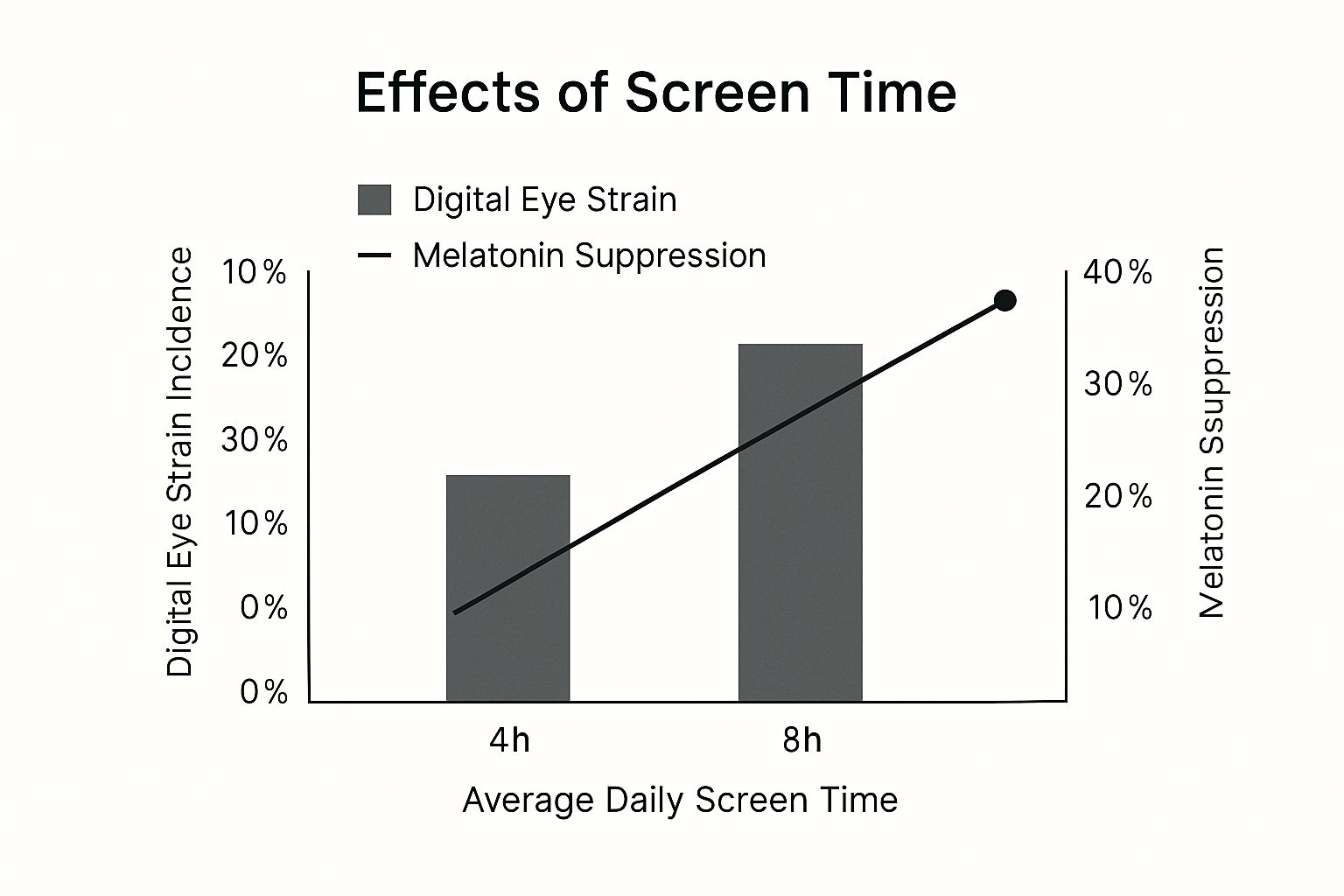
As you can see, even a couple of hours of screen time in the evening can seriously delay your body's ability to wind down for sleep. And as daily screen time goes up, the chances of experiencing eye strain skyrocket.
To give you a clearer picture, here's a quick breakdown of where this artificial light is coming from and what it's doing to us.
| Source of Blue Light | Primary Impact on Health | When Exposure is Most Harmful |
|---|---|---|
| Smartphones & Tablets | Suppresses melatonin, causes eye strain | 2-3 hours before bedtime |
| Laptops & Computers | Headaches, dry eyes, focus issues | During long, uninterrupted work sessions |
| LED & Fluorescent Lights | Can disrupt circadian rhythm, add to total daily exposure | Evening and nighttime hours |
| Televisions | Delays sleep onset, reduces sleep quality | Binge-watching late into the night |
This table is a simple reminder of how easily our modern habits can throw our natural rhythms out of whack.
Beyond just eye comfort, the most significant impact of evening blue light is on our sleep. It directly messes with our body’s production of melatonin, the hormone that manages our sleep-wake cycle.
When melatonin gets suppressed, it becomes much harder to fall asleep, stay asleep, and get the deep, restorative rest our bodies and minds crave. You can dive deeper into this science by exploring our extensive blue light blog resources.
This growing awareness has kicked off a major trend. In 2023, the market for non-prescription blue light blocking glasses was already valued at around $3.5 billion, and it's expected to keep climbing through 2030. That's a clear sign that people are starting to take action to protect their eyes and sleep from the side effects of our digital lives.
Ever feel like your eyes are buzzing after a long day of screen time? Think of the blue light from your devices as a kind of visual static. It’s a harsh, scattered light that makes the tiny muscles in your eyes work overtime just to stay focused. After a few hours, that constant effort adds up to digital eye strain—the familiar headaches, fatigue, and blurry vision we all know too well.
This is where computer glasses that block blue light with orange lenses come in. Orange-colored blue light glasses act as a powerful filter, slicing through that static. By absorbing the most disruptive high-energy wavelengths, they create a cleaner, higher-contrast image on your screen. This allows your eye muscles to relax, significantly reducing the symptoms of digital eye strain.
It’s this reduction in muscle tension that explains why so many people notice their headaches and blurry vision start to fade shortly after they begin wearing orange lenses for screen work.
The magic of orange lenses isn’t just about eye comfort—it’s also about preparing your body for a great night's sleep. How orange-colored blue light glasses help with sleep is by blocking the specific light frequencies that suppress melatonin. When your eyes are exposed to screens at night, your brain thinks it's still daytime and halts melatonin production. By filtering out this aggressive blue light, the glasses send a clear signal to your brain that the day is winding down, allowing your body to start its natural sleep cycle. The result? A much smoother transition into a relaxed state, making it easier to fall asleep and stay asleep.
And people are catching on. The global market for these specialized lenses is booming. By 2023, it was already a massive industry, with projections showing a compound annual growth rate of 15% from 2025 to 2033. It's clear there's a huge demand for better eye health and sleep. You can discover more insights about this market growth on archivemarketresearch.com.
While orange lenses are the heavy hitters for maximum blue light blocking before bed, amber lenses offer the perfect middle ground for evening relaxation. Think of them as a gentle transition tool.
How amber blue light glasses let you relax and wind down is by filtering a good portion of blue light, creating a warmer, softer visual experience. This calming tint is perfect for casual evening activities like watching a movie or scrolling on your tablet. It dials down the mental stimulation from harsh screens without completely changing your color perception.
Wearing amber glasses in the evening helps shift your mind and body away from the high-alert state caused by screens. It’s a simple yet effective way to signal to your nervous system that it’s time to relax and prepare for sleep.
Making computer glasses that block blue light part of your routine is a game-changer for better rest. But for the best results, you'll want to pair them with other proven sleep hygiene habits. Here are the top ways to get good sleep.
Tackling evening stress is crucial for unlocking deep, restful sleep. Here are four strategies that pair perfectly with your blue light blocking glasses.
Ever wondered why that late-night scroll on your phone leads to a restless night? It’s not just in your head. Your body runs on an internal clock, known as the circadian rhythm, and its main cue is light. When your eyes are flooded with intense blue light from screens, it sends a powerful "wake up!" signal to your brain, slamming the brakes on melatonin—the hormone that tells your body it's time to sleep.
This constant stream of artificial daylight messes with your natural sleep-wake cycle, making it harder to fall asleep and torpedoing the quality of your rest. It's like trying to get some shut-eye while your brain is convinced the sun is still high in the sky.
This is where a good pair of orange-lensed computer glasses that block blue light can be a total game-changer. How orange-colored blue light glasses help with sleep is by filtering out those confusing signals from your screens. Popping these on in the hours before bed lets your brain get back to its natural nighttime routine, producing melatonin just as it should.
The result? A much smoother transition into sleep. Instead of tossing and turning, you'll find it easier to drift off, hit those deeper, more restorative sleep stages, and wake up feeling genuinely refreshed. We dive deep into the science behind this on our guide about how Element Lux glasses help with sleep.
While orange lenses are your heavy-hitter for pre-sleep protection, amber-lensed glasses are perfect for winding down. How amber blue light glasses let you relax and wind down is by filtering a significant chunk of blue light, creating a warm, calming vibe that’s ideal for watching a movie or some casual browsing in the evening.
That warmer light helps your nervous system shift gears from high alert to a more relaxed state. It dials down the mental buzz from harsh screen light, making it easier to de-stress after a long day and get your mind ready for rest.
Pairing your blue light glasses with a few other solid habits creates a powerful sleep-promoting routine. Here are the top ways to get good sleep.
By proactively managing your light exposure in the evening, you are directly supporting your body's innate ability to prepare for deep, restorative sleep. It's one of the most effective changes you can make for your overall wellness.
Taming evening stress is a huge piece of the sleep puzzle. Here are four strategies to help you find your calm.
While those powerful orange lenses are the heavy hitters for maximizing melatonin right before bed, there's another key player for your evening routine: amber-lensed glasses.
Think of them as the perfect way to transition from a chaotic day to a calm evening. They’re designed to help you relax and wind down, offering a much gentler approach to managing your light exposure.
How amber blue light glasses let you relax and wind down is by filtering out a good chunk of the most disruptive blue light without the intensity of orange lenses. This creates a warm, soothing visual environment that’s just right for casual evening activities. Whether you're watching TV, reading on a tablet, or scrolling on your phone, amber lenses cut the screen's harshness without making your color perception go haywire.
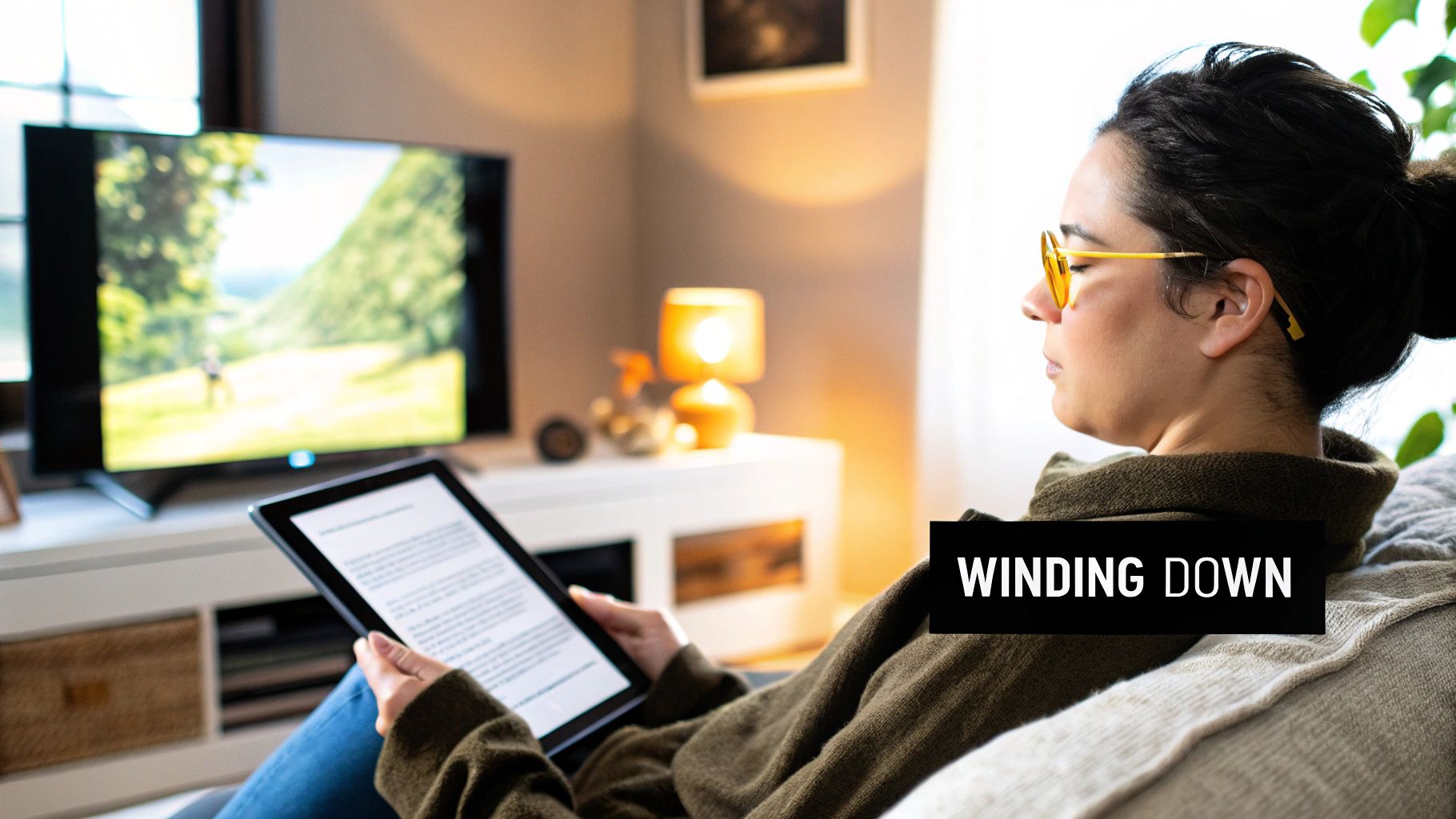
This gentle filtering helps your nervous system shift from the high-alert, "fight or flight" mode that bright screens love to trigger, down into a more relaxed, "rest and digest" state. It’s a simple change, but it dials down the mental buzz from artificial light, making it so much easier to unwind after a long day.
Making blue light blocking glasses a part of your nightly routine is a game-changer. But for truly deep, restorative sleep, you'll want to combine this habit with other proven sleep hygiene practices. Here are the top ways to get good sleep.
Tackling evening stress is crucial if you want to unlock deep, restful sleep. Amber-lensed glasses are a fantastic tool for this, but they're even better when paired with other relaxation techniques.
By actively managing your light exposure, you are directly reducing one of the most common environmental stressors of modern life. It’s a passive yet powerful way to calm your nervous system.
Here are four simple strategies to help you find your calm in the evening.
While computer glasses that block blue light are a game-changer for our modern, screen-filled lives, they work best as part of a smart, consistent sleep strategy. Think of them as one powerful piece of a bigger puzzle. When you build a solid nightly routine, you’re sending clear signals to your mind and body that it’s time for deep, restorative rest.
This guide is all about actionable habits you can build into a sleep plan that actually works, with light management as the cornerstone. Each tip is designed to stack on the others, creating a complete toolkit for reclaiming your nights and waking up feeling recharged.
Improving your sleep doesn't mean you have to overhaul your entire life overnight. It’s about making small, consistent changes that really add up. The single most impactful habit you can start tonight is managing your light exposure after the sun goes down, because it directly controls your body's natural sleep-wake cycle.
And don't forget about your daytime habits! Getting plenty of natural sunlight during the day is just as crucial for regulating your circadian rhythm. Learn more about the health benefits of natural light from skylights.
Let's be honest: stress and anxiety are sleep's worst enemies. When your mind is racing, your body stays on high alert, making it feel impossible to actually rest. Bringing a few simple relaxation techniques into your evening can make a world of difference.
By actively managing your light environment with blue light blocking glasses, you reduce a major source of physiological stress that many people overlook. It’s a passive yet powerful way to promote calm.
Here are four simple but incredibly effective strategies for dialing down that evening stress.
To make this all a bit more concrete, here's a simple routine you can follow to wind down effectively and prepare your body for a great night's sleep.
| Time Before Bed | Action Item | Benefit |
|---|---|---|
| 2-3 Hours | Put on your amber blue light blocking glasses. | Signals your brain to start producing the sleep hormone, melatonin. |
| 1 Hour | Set a digital curfew—no more phones, tablets, or TV. | Reduces mental stimulation and gives your mind a break. |
| 45 Minutes | Do a light activity like gentle stretching or tidying up. | Eases physical tension and calms the body. |
| 30 Minutes | Read a physical book or listen to calming music. | Lowers stress and helps you transition into a relaxed state. |
| Just Before Bed | Ensure your bedroom is completely dark and cool. | Creates the ideal physical environment for deep, quality sleep. |
Sticking to a routine like this helps train your body and mind, making it easier to fall asleep faster and wake up feeling ready to take on the day.
Let's be honest, modern life can leave you feeling wound up and overstimulated, especially by the time evening rolls around. When you're in that constant state of high alert, it’s almost impossible to actually unwind, relax, and get the kind of restorative sleep your body and brain are crying out for.
The good news is you don’t have to just accept this as your new normal. You can actively manage that stress and create a calming evening routine, starting with the one thing you might be overlooking: your lighting. By making a few key changes, you can send a clear signal to your nervous system that it’s time to shift from a hectic day to a peaceful night.
This is the most important step you can take. Your evening stress is often amplified by your exposure to artificial light, especially from screens. All that bright, blue light is like a shot of espresso for your brain, telling it to stay awake and alert, which keeps your body in a subtle but persistent state of stress.
The simplest way to fight back is by wearing computer glasses that block blue light in the evenings. Popping on a pair with orange or amber lenses filters out those stimulating wavelengths, creating a much warmer, calmer visual world that helps your nervous system take a breath and relax. It's a small change that dramatically reduces the stressful signals your screens are sending, making it so much easier to wind down.
People are catching on to this. The market for anti-blue light glasses in Europe alone jumped from $435.05 million in 2021 and is on track to hit $605.37 million by 2025, with similar growth happening across Asia. It's a clear sign that more and more of us are looking for tools to help us manage our digital lives. You can read the full research about these market dynamics if you're curious.
Once your light is under control, the next step is to quiet your mind. Stress loves to show up as a racing brain, replaying the day's worries and making true relaxation feel like a distant dream.
A short mindfulness or meditation practice can be a game-changer here. Just 10-15 minutes of focused breathing or a guided meditation helps lower your heart rate, settles your nervous system, and creates a little mental space between you and your stressors. It’s a powerful way to shift from a "doing" state to simply "being," prepping your mind for rest.
Stress isn't just in your head; it builds up as physical tension in your body. Releasing that tension is a huge part of feeling truly relaxed.
You don't need a grueling workout—in fact, that can backfire in the evening. Instead, think gentle. A light walk around the block, some slow stretching, or a few simple yoga poses will do the trick. This helps release endorphins (your body’s natural mood-lifters) and eases muscle tightness, leaving you feeling calmer both physically and mentally.
Finally, give your brain a real break from the non-stop flood of information. It's not just the blue light; the content we consume on our screens is often highly stimulating and can ramp up anxiety right before bed.
Setting a firm "no-screen" rule for the last 30-60 minutes before you sleep is one of the most powerful things you can do for your peace of mind. Use that time for a relaxing, screen-free ritual like reading a physical book, listening to calm music, or journaling. This digital boundary is essential for letting your mind fully disconnect and unwind before you sleep.
When you're trying to find the right computer glasses that block blue light, it's easy to get a little lost. Which color lens is best? When should you wear them? Getting the right pair for your specific needs is what makes the real difference in cutting down eye strain and finally getting better sleep.
Here are some of the most common questions we get.
Think of orange-colored lenses as your heavy-hitters, especially for late-night work or gaming sessions. How orange-colored blue light glasses help with eye strain is by filtering out the harsh blue light that makes your eye muscles work overtime, which is a big reason you get screen-induced headaches and fatigue.
Their real superpower is helping you sleep. How orange-colored blue light glasses help with sleep is by protecting your body's melatonin production. Wearing them for 2-3 hours before bed lets your brain know it’s actually nighttime, helping you fall asleep faster and get the deep, restorative rest you need.
Amber lenses are your perfect go-to for winding down in the evening. How amber blue light glasses let you relax and wind down is by blocking plenty of blue light to create a softer, warmer visual environment than the more intense orange lenses. This makes them absolutely ideal for chilling out while watching TV or scrolling on your tablet.
That warm tint from amber blue light glasses helps nudge your nervous system out of that "on-alert" daytime mode. It dials down the mental stimulation from screens, making it much easier to de-stress after a long day.
Getting consistently great sleep is all about building a solid routine. While blue light glasses are a game-changer for modern sleep hygiene, they work best when you pair them with other healthy habits. Here are the top ways to get good sleep.
You can’t sleep if your mind is racing. Managing stress in the evening is absolutely critical for getting restful sleep. Here are the top 4 ways to reduce stress or anxiety and relax.
By proactively managing your evening light exposure, you are addressing a major physiological stressor that many people overlook. It’s a passive but powerful way to signal calm to your nervous system.
Ready to reclaim your evenings and wake up feeling genuinely refreshed? Element Lux offers premium blue light blocking glasses designed to protect your eyes and get your natural sleep cycle back on track.
