Figuring out how to sleep through the night is about more than just a comfy mattress. It’s about taking control of your environment, your daily habits, and the signals you send your body.
The real keys are managing stress, getting a handle on your light exposure—especially from screens—and building a pre-sleep ritual that tells your brain it's officially time to power down.
Staring at the ceiling at 3 AM? You’re definitely not alone. It’s a common frustration, and more often than not, it's our modern habits and the pressures of daily life that are scrambling our natural sleep cycles.
The problem usually isn't the bed you're sleeping in. It's the invisible forces of stress and the constant glow of digital light that keep nudging you awake.
Our lives are saturated with screens. We're on laptops for late-night work and then switch to our phones for one last scroll. This non-stop exposure to artificial light, particularly blue light, completely fools our brains. It thinks it's still daytime, which slams the brakes on melatonin production—the very hormone that’s supposed to make you feel sleepy.
Beyond the digital disruption, there's a psychological hurdle that’s getting bigger and bigger: sleep anxiety. This is that awful, looping worry about not getting enough sleep, which, ironically, is the very thing that keeps you from sleeping.
This pressure to nail a "perfect" night's rest just creates a vicious cycle of wakefulness and worry. It's a very real challenge, and it’s on the rise. In fact, nearly 40% of Generation Z adults say they deal with sleep-related anxiety at least three times a week. You can read more about these emerging sleep and wellness trends on globalwellnessinstitute.org.
To fight back, you need a practical game plan. The strategies we're about to cover are all about making actionable changes to your routine, your space, and your mindset.
Before we dive deep, let's start with a high-level look at what works. Think of this as your cheat sheet for reclaiming your nights.
Here’s a snapshot of the core strategies this guide will cover to help you achieve deep, continuous sleep.
| Strategy | Primary Benefit | When to Do It |
|---|---|---|
| Control Light Exposure | Regulates your natural sleep-wake cycle (circadian rhythm) | Dim lights and wear blue light glasses 2-3 hours before bed |
| Build a Wind-Down Ritual | Signals to your mind and body that it's time to rest | For 30-60 minutes immediately before getting into bed |
| Manage Stress & Anxiety | Calms a racing mind and prevents middle-of-the-night waking | As needed in the evening or if you wake up during the night |
| Optimize Sleep Hygiene | Creates a consistent foundation for high-quality, restorative sleep | All day, every day |
These four pillars are the foundation of great sleep. By focusing on them, you're not just hoping for a better night—you're actively building one. Let's get into the specifics.
Ever wondered why you feel energized on a sunny day but sleepy on a gray one? It all comes down to your body's internal clock, a fascinating system called the circadian rhythm. This rhythm is what tells you when to feel awake and when it's time to wind down, and its number one cue is light.
When your eyes take in bright light—especially blue light—your brain gets a powerful signal that it’s daytime. This immediately slams the brakes on melatonin production, the hormone that makes you feel drowsy.

This system worked flawlessly for thousands of years. The problem is, modern life has thrown a massive wrench in the works. Our evenings are now flooded with artificial light from our phones, laptops, and TVs, which are all beaming blue light directly into our eyes.
This constant exposure tricks your brain into thinking it’s still the middle of the afternoon. As a result, the melatonin release you desperately need to fall asleep gets delayed, making it harder to learn how to sleep through the night.
If you spend your evenings staring at a screen, you know the feeling all too well: tired, dry eyes, a nagging headache, or even blurry vision. This is digital eye strain, and it’s one of the most immediate effects of late-night screen time.
This is where a good pair of orange-colored blue light glasses, like the ones from Element Lux, can be a game-changer. By filtering out harsh, high-energy light, they significantly reduce the discomfort that leads to eye strain, allowing your eye muscles to relax. This provides instant relief, especially at the end of a long day.
But their real magic is what they do for your sleep. By blocking the precise frequencies of blue light that stop melatonin production, orange-colored glasses give your body the green light to start its natural sleep preparation, right on schedule. It doesn't matter if you're still finishing up emails or watching one last episode.
Slipping on a pair of these glasses for just a couple of hours before bed sends a clear, unmistakable signal to your brain: it’s time to wind down. This simple tweak makes the whole process of falling asleep feel so much smoother and more natural.
It's important to know that not all blue light glasses are the same. When it comes to actually improving your sleep, the color of the lens is everything. Those clear lenses might help a little with eye strain during the day, but they just don't block enough of the disruptive light to make a real difference for your melatonin levels.
For sleep, you want to look for amber or orange-tinted lenses. Here’s a quick breakdown of why they work so well for helping you relax and get ready for bed:
This simple tool helps get your body's natural rhythm back on track, making it far easier to not only fall asleep but stay asleep. If you want to dive deeper into the science behind this, you can find a ton of great information on the Element Lux blue light blog.
While managing light exposure is a huge piece of the puzzle, improving your sleep is about more than just one thing. Integrating a few other key habits can make an incredible difference.
A solid wind-down ritual is your secret weapon for finally learning how to sleep through the night. It's not just a checklist of things to do before bed; it's a powerful, consistent signal you send to your brain and body that the day is over. It's time to switch off and prepare for deep, restorative rest.
The goal here is to build a personal routine that makes great sleep feel like the most natural conclusion to your evening.
This isn’t just about feeling relaxed—it's about actively pushing back against the stress and anxiety that keep so many of us staring at the ceiling. Global surveys show a massive struggle with sleep, with many adults losing a significant amount of rest each week. As you might guess, stress is one of the primary culprits. A dedicated wind-down routine is designed to tackle that head-on.
You can see just how common this is in ResMed's latest global sleep survey.
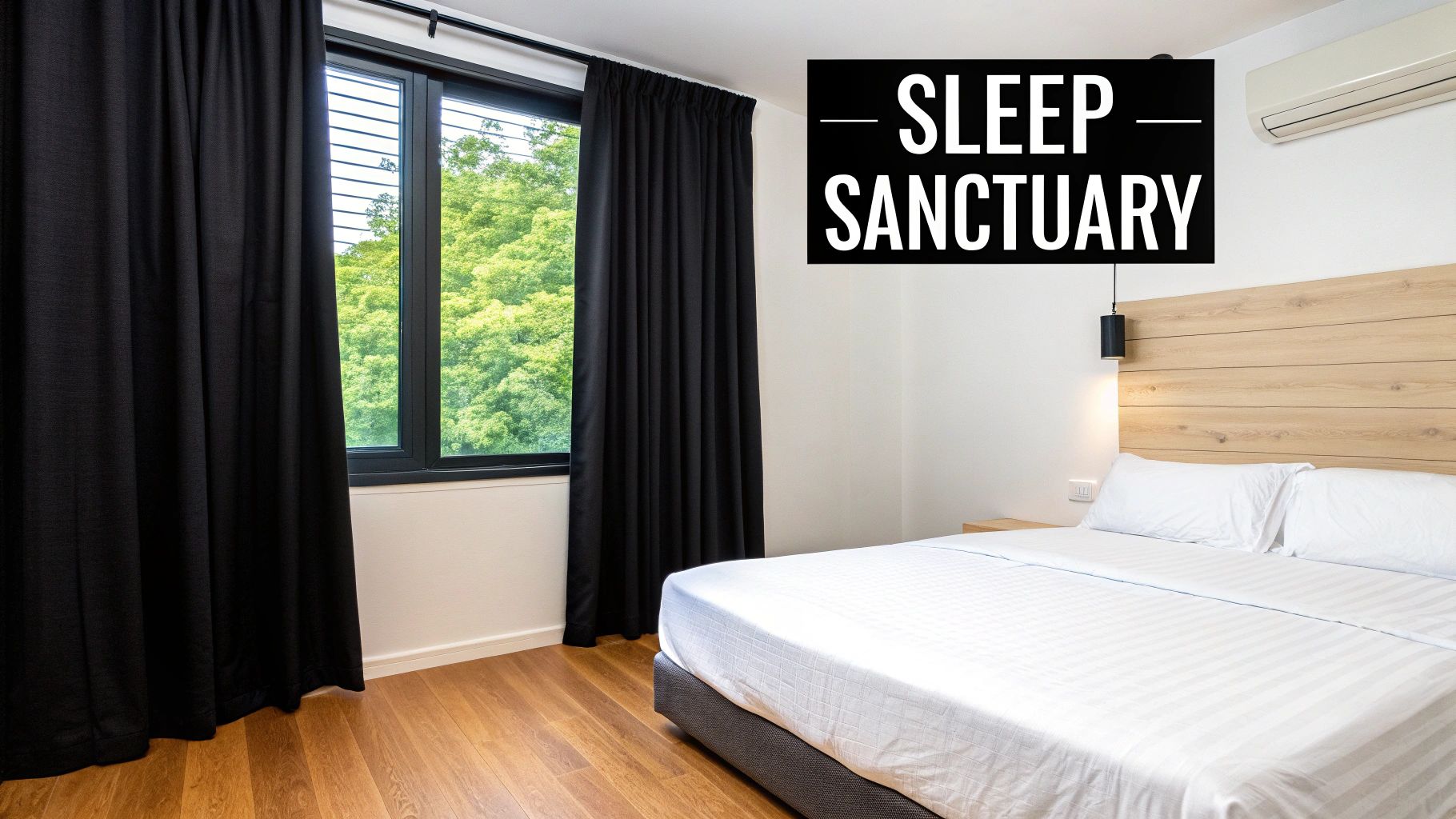
Your ideal ritual should kick off 1-2 hours before you plan to be asleep. The absolute key here is consistency. Night after night, repeating the same actions creates a powerful psychological trigger, telling your body it's time to shift gears into sleep mode.
For most of us, the cornerstone of a modern wind-down ritual has to be managing light exposure.
Slipping on a pair of amber or orange blue light blocking glasses, like ours from Element Lux, is probably the single most critical first step. Why? Because this one action stops the stimulating light from screens and overhead lighting from sabotaging all your other relaxation efforts.
Once your glasses are on, you can start layering in other calming activities without worrying that your environment is sending mixed signals to your brain.
A truly great wind-down ritual combines smart light management with other relaxing habits. Here are some of the most effective practices you can mix and match to build a routine that actually works for you:
The most effective routine isn't about cramming everything in at once. It's about choosing two or three things you genuinely enjoy and can stick with every single night. That consistency is what makes it work.
Think of your wind-down ritual as a team effort, where each activity plays a specific part. In this scenario, your amber blue light glasses are the team captain. They allow you to relax and unwind without the disruptive background noise of artificial light.
By filtering out the specific wavelengths that are notorious for suppressing melatonin, they let your body’s natural sleep processes take over.
This means your other relaxation techniques—like reading or meditating—can work much more effectively. You’re no longer fighting an uphill battle against your own light bulbs.
The calming visual tint of the amber lenses also helps reduce mental stimulation, making it easier for your mind to let go of the day's anxieties. Curious about the details? We break it all down in our guide on how our glasses help with sleep.
By making them a core part of your routine, you create a powerful, synergistic effect that paves the way for a night of deep, uninterrupted rest.
A powerful wind-down ritual is your best defense against a restless night, but truly mastering how to sleep through the night means building a solid foundation of daily habits. These broader lifestyle choices, collectively known as sleep hygiene, create the perfect conditions for your body to find deep, restorative rest consistently.
Think of it as setting the stage for a great performance long before the curtain rises. Just like a healthy diet supports you during the day, good sleep hygiene is what fuels your mental and physical recovery at night. It’s about more than just what you do in the hour before bed.
Let's start with a game-changing habit that bridges your daytime screen use with your evening wind-down: blue light blocking glasses. With screens being a constant in modern life, managing our light exposure is no longer just a good idea—it’s absolutely essential.
Orange-colored blue light glasses are especially effective for sleep because they block the specific wavelengths of light that tell your brain to stop producing melatonin. When you pop them on in the evening, you’re sending a clear signal that the day is over. This allows your natural sleep cycle to kick in right on schedule, helping with both falling and staying asleep.
Amber blue light glasses create a warm, calming visual filter, letting you relax and wind down without the harsh, stimulating glow of artificial light. It's like creating your own personal sunset, signaling to your brain that it’s time to shift from alert and "on" to relaxed and "off."
Great sleep hygiene is really built on a few core pillars. Once you start weaving these practices into your daily life, you'll find that falling—and staying—asleep becomes a whole lot easier.
Stress is sleep's worst enemy. If a racing mind is what’s keeping you awake, try building these simple relaxation techniques into your routine.
So, you’ve nailed your light exposure, you’ve got a solid wind-down routine, but you’re still staring at the ceiling at 2 AM. If that sounds familiar, the problem probably isn't your mattress—it's your mind.
Stress and anxiety are the ultimate enemies of sleep. They kickstart a vicious cycle of worry that makes it nearly impossible to truly relax and drift off. Learning how to sleep through the night often means learning how to quiet that internal monologue.
And it’s a huge issue for so many of us. According to the National Sleep Foundation, a staggering 60% of American adults don't get the recommended seven-plus hours of sleep, and a big reason for that is the struggle to stay asleep. You can dig into the full details in their Sleep in America Poll findings on thensf.org.
The infographic below breaks down a simple, practical flow for getting this nighttime stress under control.
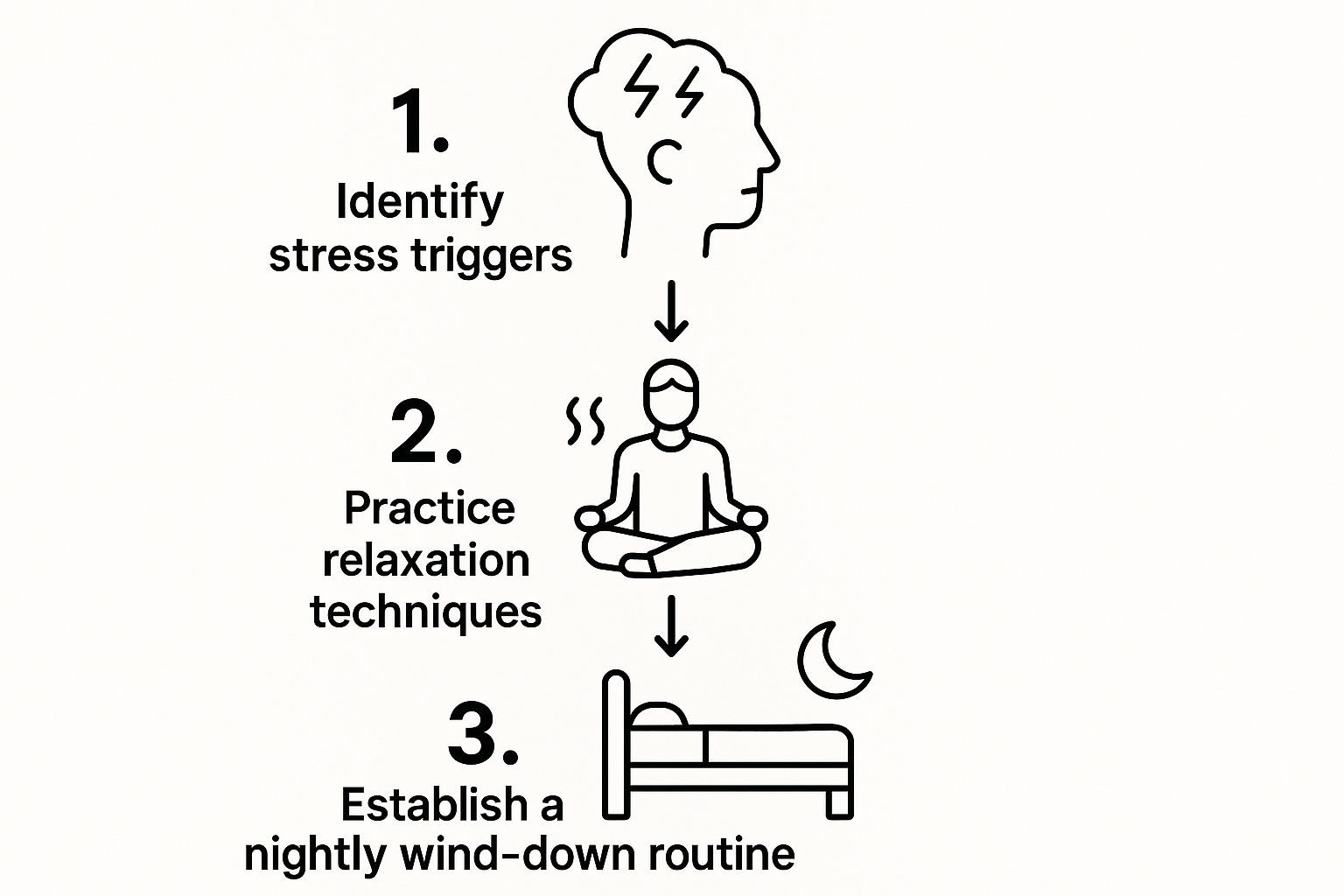
As you can see, it’s all about a clear, three-part process: figuring out what’s stressing you out, then building consistent, calming habits to counter it.
To break the cycle of nighttime anxiety, you need a toolkit of strategies that directly tackle both mental and physical tension. Instead of letting tomorrow's worries hijack tonight's rest, you can actively steer your mind toward a calmer state.
Here are four of my go-to methods for lowering stress before bed:
Perform a "Brain Dump." Before your head even hits the pillow, grab a notebook. Spend 10 minutes just writing down everything that's swirling around in your head—tomorrow's to-do list, that awkward conversation you had, random ideas, all of it. Getting it on paper tells your brain it can let go.
Practice Guided Breathing. You'd be amazed at what a few deep breaths can do for your nervous system. The 4-7-8 technique is a classic for a reason: inhale through your nose for 4 seconds, hold it for 7, and then exhale slowly through your mouth for 8. Do this three or four times, and you’ll feel a noticeable shift.
Use Calming Audio. Sometimes the best way to quiet a racing mind is to give it something else to latch onto. I’m a big fan of ambient sounds like rain, but a guided sleep meditation or even a familiar audiobook on low volume can work wonders. This gentle distraction keeps you from getting stuck in anxious thought loops.
Wear Blue Light Blocking Glasses. Putting on your amber or orange glasses in the evening reduces the overall mental stimulation from your environment, helping you feel calmer and making it easier to transition into a relaxed state ready for sleep.
The goal isn't to force your mind to go blank. It's to gently guide your attention away from stressful thoughts and toward something neutral and relaxing. Sleep will follow naturally.
Let's be honest: a huge source of modern evening stress comes straight from our screens. The endless notifications, the stimulating content, the harsh blue light—it all keeps our brains wired and on high alert.
This is where amber or orange blue light glasses become a non-negotiable part of your relaxation strategy.
Putting on a pair of Element Lux glasses for the last couple of hours of your day creates what I call a "digital sunset." The warm tint filters out the jarring, stimulating light from your devices and even overhead lighting.
This simple act helps you mentally disengage from the day's digital chaos, signaling to your brain that it's time to wind down. The amber lenses create a soft, calming visual field, letting you relax and de-stress without the harsh glare that fuels both eye strain and mental agitation.
Even when you're trying your best to build better sleep habits, a few questions always pop up. It's totally normal. Let's tackle some of the most common hurdles people run into when they’re trying to finally get a full night's rest.
Orange-colored blue light glasses pull double duty. For eye strain, they filter out the harsh, high-energy light from screens, reducing the glare that makes your eyes feel tired and gritty. This gives your eye muscles a much-needed break.
For sleep, they do something even more important. They are specifically designed to block the wavelengths of blue light that trick your brain into thinking it's still daytime. This stops the suppression of melatonin, your body's natural sleep hormone. Wearing them in the evening allows your melatonin levels to rise naturally, so you feel sleepy at the right time.
Think of it like putting on a personal sunset. The warm, amber tint of amber blue light glasses transforms your visual environment, cutting through the stimulating, bright artificial light that keeps us feeling alert and wired.
That gentle, warm glow is a powerful cue for your brain to relax and wind down. It signals that the day is ending, helping to quiet a racing mind and making it much easier to shift from that "on-the-go" feeling to a state of rest. You're creating a little pocket of calm in an otherwise brightly lit world.
Improving your sleep is a holistic process, but a few core habits provide the biggest return on your effort. These are my go-to recommendations for getting consistent, uninterrupted rest.
For more practical ideas, check out the articles in our sleep resources section.
Anxiety is sleep's worst enemy. If you lie in bed with a racing mind, you have to actively work on calming your nervous system. Try weaving these into your nightly wind-down ritual.
