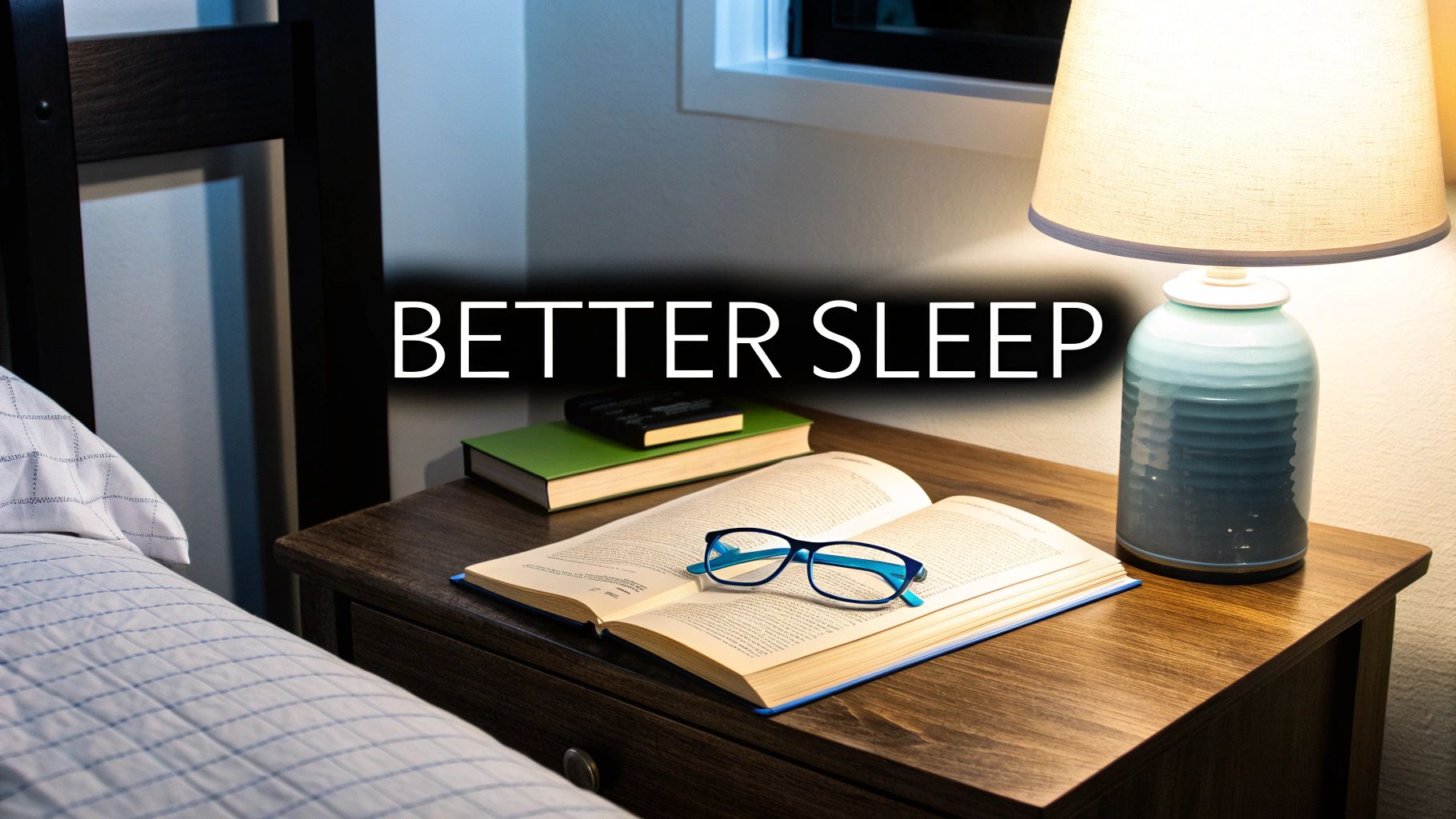
If you're finding it harder than ever to get a truly good night's sleep, you're not just imagining it. Our modern lives are practically designed to work against our body's natural sleep rhythms, and the biggest culprit is staring us right in the face: our screens.
Think about it. From firing off late-night work emails to one last scroll through social media, we're soaking in artificial light long after the sun has set. This isn't just a minor habit; it's sending a powerful—and very confusing—signal straight to our brains.
Your body runs on an internal clock called the circadian rhythm, which manages your sleep-wake cycle. A key player in this system is melatonin, often called the "hormone of darkness." As evening rolls in and the world gets darker, your brain starts releasing melatonin, making you feel drowsy and priming your body for rest.
But the bright, blue-toned light from our phones, tablets, and computers is a dead ringer for daylight. When your eyes take in that light at night, your brain gets tricked. It thinks it's still daytime and slams the brakes on melatonin production. This leaves you in that frustrating "wired but tired" state, where you know you need to sleep, but your mind is still buzzing.
This constant disruption is a primary reason why so many people struggle to fall asleep, stay asleep, and wake up feeling refreshed. Managing your light environment is the foundational step in learning how to improve sleep quality naturally.
This struggle is a worldwide issue. According to data from Sleep Cycle, which tracked over 105 million nights of sleep, the global average sleep quality actually dipped from 74.26% in 2023 to 73.92% in 2024.
This small but significant drop shows how modern pressures and habits—especially our evening screen time—are slowly chipping away at our collective ability to rest.
The connection is crystal clear: what we do in the evening directly sabotages our ability to sleep well. To start reclaiming your rest, you have to get a handle on the light in your environment. For a deeper dive into how different types of light mess with your biology, you can explore our comprehensive blue light blog. Once you understand the why, making small but powerful changes becomes a whole lot easier.
We live our lives in front of screens, but our biology just hasn't kept up. That constant stream of blue light from our phones, laptops, and TVs directly messes with our ability to get deep, restorative sleep. The good news? Taking back control of your natural sleep cycle is simpler than you might think, and it all starts with managing light in the evening.
Think of blue light blocking glasses as a shield. They filter out the specific wavelengths of light that tell your brain to stop making melatonin, the hormone that signals it's time for bed. Even if you're still finishing up work or watching a movie, slipping on a pair of these glasses helps your body start its natural transition toward rest.
Ever finish a late-night work session with tired, dry, or aching eyes? That’s digital eye strain, and it’s no joke. The high-energy visible (HEV) blue light from screens is harsh, causing a physical discomfort that makes it tough to truly relax.
This is where orange-colored blue light glasses really shine. By filtering out a huge chunk of the blue spectrum, they cut down on the visual "noise" that's constantly bombarding your eyes. Your eye muscles can finally relax, giving you immediate relief from strain and helping you properly wind down after a long day of screen time.
Not all blue light glasses are the same, especially when getting better sleep is your main goal. The color of the lens tells you exactly how much of that sleep-disrupting light it’s blocking.
This infographic breaks down some of the other core pieces of a solid bedtime routine.
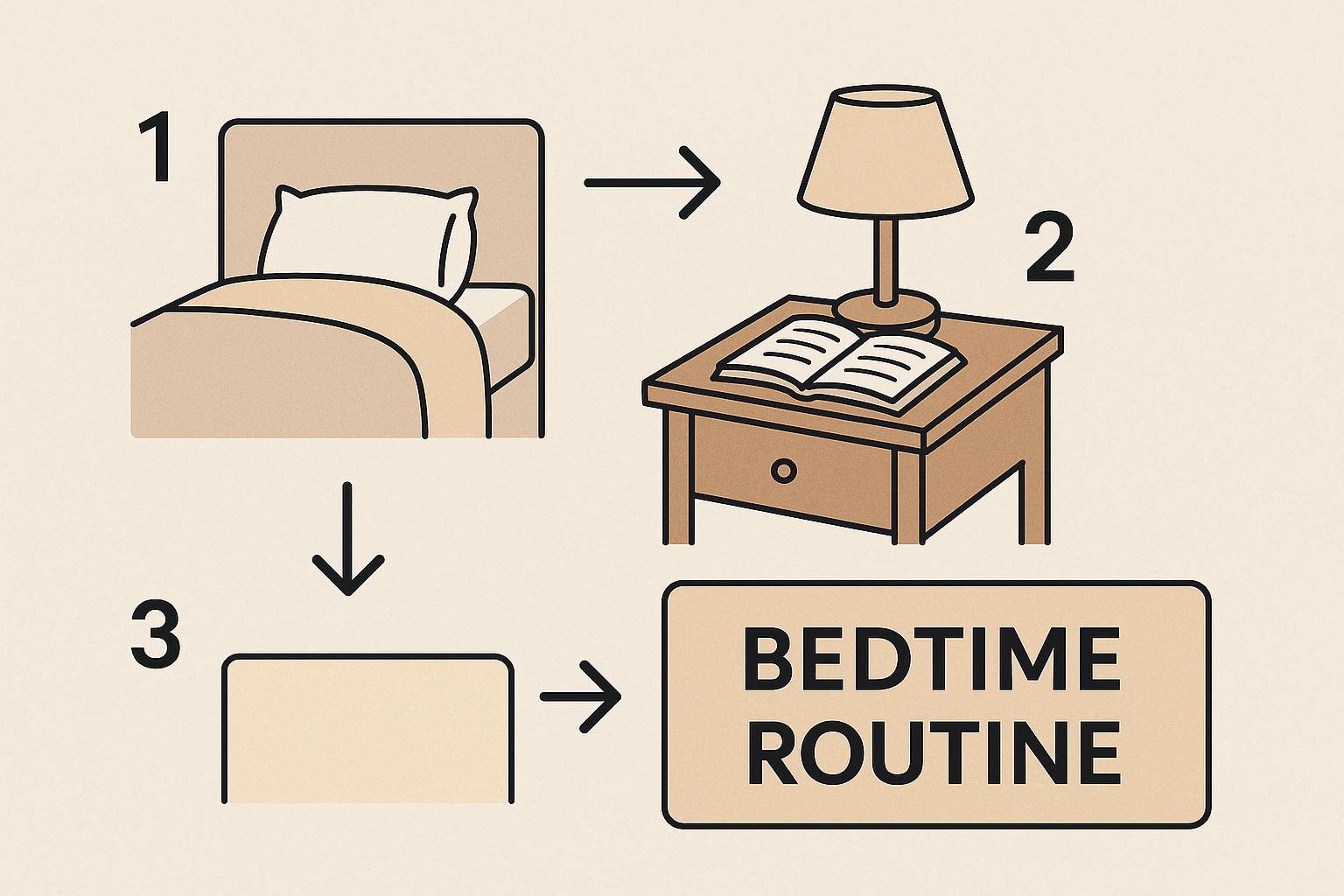
As you can see, creating a calm environment is foundational, and managing your light exposure with tools like blue light glasses is a huge part of that.
Honestly, the most effective way to improve your sleep is to build a consistent routine. When you combine a few proven strategies, you create a powerful system that gets your body’s internal clock back on track.
A racing mind is probably the biggest hurdle to falling asleep. Here are four practical things you can do to calm your nervous system, with your blue light blocking glasses playing a key supportive role.
If you want to dive deeper into the science behind this, you can learn more about how our glasses help with sleep and see the direct impact they have on melatonin production.
A solid pre-sleep ritual is your secret weapon for learning how to improve sleep quality naturally. And forget the generic advice—the key is to build a personalized routine you actually look forward to. For me, and countless others, the cornerstone of this ritual is making blue light blocking glasses a non-negotiable part of the last 90 minutes of my day. It's a small habit that powerfully trains your brain to associate them with shutting down for the night.
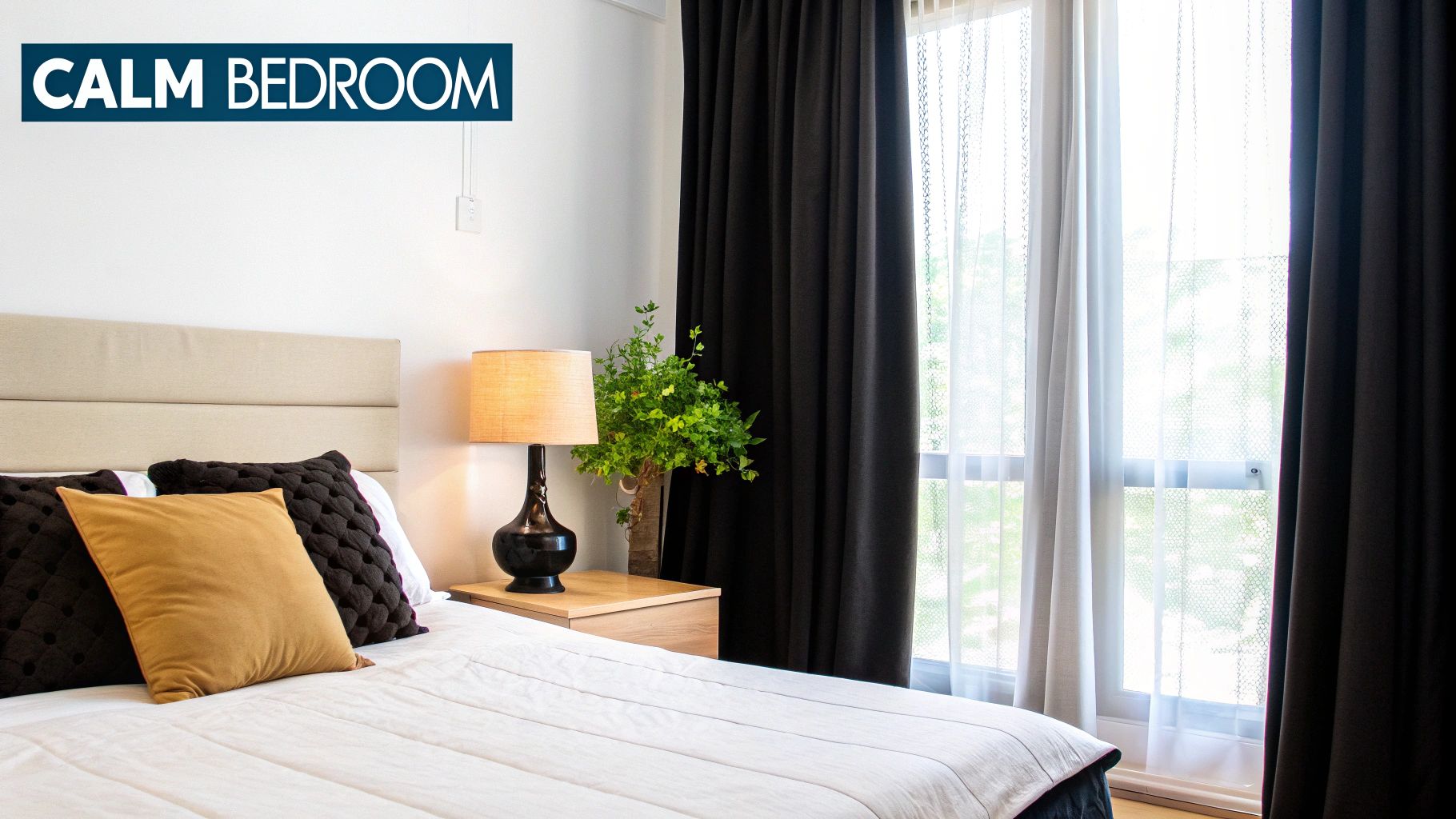
Let's face it, after a full day staring at screens, your eyes are just plain tired. The constant glare and high-energy light create a physical tension that makes it tough to shift into a relaxed state.
This is where you'll feel the immediate relief of amber-lensed glasses. They filter out that aggressive, harsh light, finally allowing your eye muscles to unclench and relax. This physical comfort is the first step toward mental calm. By dialing down that constant, low-level stimulation, you’re sending a clear signal to your nervous system that the day is over and it's safe to wind down.
Think of your amber blue light glasses as creating a warm, cozy visual environment, almost like candlelight or a sunset. This gentle filter helps you settle in, whether you're reading a book, watching a bit of TV, or just chilling on the couch.
They take the sharp, stimulating edge off of all the artificial lighting in your home, making it much easier to transition from the busyness of the day into a peaceful, pre-sleep mindset. Amber blue light glasses let you relax and wind down effectively.
A consistent pre-sleep ritual doesn't just happen; it's built. The goal is to create a sequence of calming activities that signals to your body and mind that sleep is coming. Wearing blue light glasses is a powerful first step in that sequence.
Building an effective sleep routine is all about layering a few proven habits. When you combine them, the effect is far greater than any single action on its own.
A busy mind is one of the biggest roadblocks to a good night's sleep. Here are four strategies to help you find some tranquility.
Even if you’ve nailed the perfect pre-sleep ritual, a racing mind can still be the single biggest obstacle to deep, restorative rest. When stress and anxiety kick in, your body stays on high alert, making it nearly impossible to drift off.
If this sounds familiar, you’re not alone. A global sleep survey from ResMed found that 57% of people blame stress for their sleep problems, with another 46% pointing to anxiety. The study, which covered over 30,000 adults, revealed that most people lose nearly three nights of good sleep every single week.
Tackling that mental chatter is a non-negotiable part of getting better sleep. Here’s how to start.
One of the fastest ways to tell your nervous system it's safe to power down is by controlling your breath. The 4-7-8 breathing technique is a deceptively simple tool that does just that.
Here’s the rundown:
Just repeat this cycle three or four times. This rhythmic pattern physically lowers your heart rate and signals to your brain that the day's threats are over. It's time to rest.
Trying to hold onto every to-do, worry, and random thought is a recipe for a sleepless night. The solution is a "brain dump"—the simple act of getting all that noise out of your head and onto paper.
Before you get into bed, grab a notebook. Spend just five minutes writing down everything that’s on your mind. Don’t worry about grammar or making it neat; just let it flow. This act of externalizing your thoughts helps you let them go, clearing up the mental space you need for rest.
By physically writing down your concerns, you give your brain permission to stop rehearsing them. It's a surprisingly effective way to quiet the internal noise that keeps you awake.
You don’t need a meditation cushion or a quiet room to be mindful. You can do it right in bed. Try a simple body scan once you’re under the covers.
Start by bringing your attention to your toes. Just notice any sensations—warmth, coolness, the pressure from the blankets—without judgment. Then, slowly move your awareness up through your feet, ankles, legs, and the rest of your body. This exercise grounds you in the present moment, pulling your focus away from anxious, looping thoughts.
Finally, don't forget how much your physical environment impacts your mental state. The harsh, stimulating light from screens contributes to both eye strain and mental alertness, which can easily fuel anxiety.
This is where slipping on a pair of orange colored blue light blocking glasses can make a huge difference. The soft, warm tint of the lenses from a brand like Element Lux physically calms your sensory system by reducing the jarring visual input that keeps your brain buzzing.
When you cut down on that digital stimulation, it becomes far easier for your mind to follow suit, relax, and finally wind down for a peaceful night’s sleep.
Great sleep doesn't come from a single magic bullet. It’s built on a foundation of solid, healthy habits. While managing your light exposure with the right glasses is a huge leap forward, mastering the fundamentals of sleep hygiene is what ties it all together for consistent, restorative rest.
Think of these habits as the non-negotiables. They’re what set the stage for your body to do what it’s naturally meant to do every night.
The single most powerful habit you can adopt? Consistency. Seriously. Try to go to bed and wake up at roughly the same time each day—and yes, that includes weekends. This simple act is like setting a reliable schedule for your body’s internal clock, also known as your circadian rhythm. When your body knows what to expect, it becomes so much easier to fall asleep and wake up feeling refreshed instead of groggy.
It’s easy to forget, but what you consume and how you move your body during the day have a direct line to how well you rest at night. A heavy meal or a high-intensity workout too close to bedtime can completely backfire, leaving you feeling wired and uncomfortable just when you should be winding down.
A good rule of thumb is to finish your last meal at least two to three hours before you plan to hit the hay. Similarly, get your more vigorous exercise in earlier in the day. In the evenings, switch to gentle, relaxing activities like light stretching or a casual walk.
Small, consistent daily actions are the key to long-term, restorative sleep. It's not about being perfect every night but about building a supportive routine that works for you.
Your bedroom environment sends powerful signals to your brain. To make sure it’s sending the right ones, focus on three things: making it cool, dark, and quiet.
Use blackout curtains to get rid of every last bit of light. If you live in a noisy area, a white noise machine can be a game-changer. And don't forget the thermostat—a comfortably cool temperature is best for sleep.
This is where the environment you create works hand-in-hand with your orange colored blue light glasses. By filtering out the harsh, stimulating artificial light from screens and bulbs, they help shield your eyes from digital strain and, more importantly, give your brain the "all clear" to start producing melatonin—the hormone that makes you feel sleepy. The physical relief from eye strain alone helps your whole body begin to relax.
Combining a pitch-dark room with the filtered, gentle light from glasses like the ones from Element Lux creates the ideal one-two punch to help you fall asleep faster.
Ultimately, learning how to improve sleep quality naturally is all about layering these simple but powerful strategies. Together, they create a routine that prepares your body and mind for the deep rest you need.
It's one thing to read about sleep strategies, but it's another to feel confident putting them into practice. Let's clear up a few of the most common questions I hear about how this all works in the real world.
I get this one a lot. It's simple, really. Orange-lensed glasses do two key things to fight back against the biggest sleep disruptors of our modern world: digital eye strain and melatonin suppression.
First, think about how your eyes feel after staring at a screen for hours. That harsh, focused glare makes your eye muscles clench up, leading to fatigue and tension headaches. The glasses soften that light, giving your eyes an immediate sense of relief. It’s a physical relaxation that helps the rest of your body follow suit. This is how orange colored blue light glasses help with eye strain.
But the real magic is in how the orange tint filters out specific wavelengths of blue and green light. These are the exact frequencies that scream "it's daytime!" to your brain. By blocking that signal, you allow your body to get on with its natural job of producing melatonin, the hormone that makes you feel sleepy. This is how orange colored blue light glasses help with sleep.
Think of it as creating a "virtual sunset" for your brain. While amber lenses are a great starting point for easing into the evening, the deeper orange lenses give you the serious protection you need in those final hours before bed to truly safeguard your sleep cycle.
Honestly, the secret isn't some magic pill—it's building a solid, consistent routine. Small actions, repeated night after night, build powerful momentum for better rest.
A racing mind is often the last hurdle to a good night's sleep. There's even a growing phenomenon called "sleep anxiety," with research showing nearly 40% of young adults experience it multiple times a week, largely thanks to digital overload and modern stress.
Here are four simple but effective ways to quiet your mind:
Ready to take back control of your sleep? The science is crystal clear—managing your light environment is the most powerful first step you can take. Element Lux glasses are specifically engineered to filter the most disruptive wavelengths, helping you wind down naturally and wake up feeling truly refreshed.
Shop the collection now and start your journey to better sleep tonight.
