Tackling shift work sleep disorder starts with getting to the heart of the problem: your work schedule is in a head-to-head battle with your body’s internal 24-hour clock. The entire goal of any treatment plan is to get that clock back on your side using practical, proven strategies.
This isn't just about willpower. It’s about creating the perfect sleep environment, knowing exactly when and how to use tools like blue light blocking glasses, and manipulating light exposure to wrestle back control over your sleep.
Working nights, early mornings, or rotating shifts is like putting your body through a constant state of jet lag. You're fighting to stay alert when your internal clock—your circadian rhythm—is screaming at you to go to bed. Then, when your shift ends, you’re trying to force sleep when your body is biologically programmed to be wide awake, often with daylight and daytime noise as unwelcome intruders.
This chronic mismatch is the very definition of Shift Work Sleep Disorder (SWSD). It's more than just feeling tired; it’s a recognized medical condition that brings on debilitating fatigue, insomnia, and a brain fog that’s hard to shake.
Your body's production of melatonin, the hormone that tells your brain it's time to sleep, gets thrown into total chaos. Instead of rising naturally in the evening, its release is crushed by the bright artificial lights at your workplace or the morning sun hitting your windshield on the drive home.

If you're going through this, you are far from alone. Around 20% of the global workforce are shift workers. Of that group, studies estimate that SWSD affects a staggering 20% to 30% of them. That's millions of people stuck in the same exhausting cycle you are.
The fallout from SWSD goes way beyond the bedroom. When your circadian rhythm is constantly out of whack, the effects bleed into every part of your life. It’s that desperate struggle to stay sharp during a critical task at 3 AM. It’s the utter frustration of lying in bed at 9 AM, bone-tired but unable to drift off.
You might be experiencing:
Key Takeaway: Shift Work Sleep Disorder isn't a character flaw or a lack of discipline. It is a completely natural biological response to an unnatural schedule. Understanding and accepting this is the first real step toward managing it.
The good news is that there are very real, tangible steps you can take to manage SWSD. This guide is your complete toolkit, filled with practical strategies to help you reclaim your sleep, your energy, and your life.
Before we dive into the details, here’s a quick overview of the key strategies we'll be covering. Think of this as your roadmap for the journey ahead.
| Treatment Strategy | Primary Goal | Best For |
|---|---|---|
| Sleep Hygiene | Create a pro-sleep environment. | All shift workers, as a foundational practice. |
| Light Therapy | Reset the body clock with bright light. | Workers on stable night or early morning shifts. |
| Melatonin | Signal sleep time to the brain. | Night shift workers trying to sleep during the day. |
| Blue-Light Blockers | Prevent light from suppressing melatonin. | Night shift workers during the commute home. |
| Scheduling | Minimize circadian disruption. | Workers with some control over their shift patterns. |
Each of these elements plays a crucial role, and we'll break down exactly how to implement them.
We're going to cover everything from turning your bedroom into the ultimate sleep sanctuary to using powerful tools like blue light blocking glasses and targeted light therapy. You can find more in-depth articles and supporting materials at https://element-lux.com/resources/. My goal is to give you a clear, actionable path forward so you can start working with your body instead of constantly fighting against it.
Your bedroom needs to be your sanctuary, a place dedicated solely to rest. But for a shift worker, it often feels more like a battleground against daylight and daytime noise. The very first step in any effective shift work sleep disorder treatment is to transform this space. You're essentially building a sleep cave—an environment so perfectly optimized for rest that it tells your body it's time to shut down, even when the sun is high in the sky.
This isn't just about being comfortable; it's about seizing control of your environment to support your body's need for sleep. And the challenge is huge. Research shows that about 50% of night workers scrape by on six hours of sleep or less, a massive jump from the 26% of their daytime counterparts. Even more telling, a staggering 51% of night shift workers screen positive for at least one sleep disorder. You can dig deeper into these findings on sleep disruption in shift workers.
Your first mission, should you choose to accept it, is to wage war on light and sound. These are the primary enemies of daytime sleep. Your brain is hardwired to associate light with being awake, so creating total darkness is non-negotiable.
This one-two punch creates a powerful sensory deprivation chamber, signaling to your brain that it's nighttime and safe to rest, no matter what the clock says. This step alone can make a world of difference.

Consistency is your most powerful weapon. A structured wind-down routine, performed before every single sleep period—whether that’s at 9 AM or 9 PM—is how you train your body to anticipate rest. Think of it as a sacred, non-negotiable part of your day.
This is where blue light blocking glasses become your secret weapon. As you start to wind down, the artificial light from lamps and screens is screaming "wake up!" to your brain. Amber blue light glasses are perfect for this phase. Wear them while you read, watch a little TV, or just tidy up. They filter out just enough of that stimulating blue light to help your mind and body start to relax and wind down.
Then, for that final hour before you hit the pillow, switch to orange colored blue light glasses. These are the heavy hitters, blocking a much wider spectrum of the light that sabotages melatonin production. This does more than just ease eye strain from your phone; it gives your brain the all-clear to ramp up melatonin, paving the way for deep, restorative sleep.
Creating the perfect environment and routine is the foundation. Here's a quick rundown of the essentials for high-quality sleep:
By making your bedroom a no-work, no-stress zone, you reinforce the mental association between that room and sleep. This psychological cue is a powerful part of managing SWSD.
It's nearly impossible to switch off your mind when the stress from a demanding shift follows you home. That’s why integrating relaxation techniques into your pre-sleep ritual is absolutely critical.
Here are four simple but powerful ways to de-stress and quiet your mind:
Getting your bedroom pitch-dark is a great first step, but the real battle against SWSD is won by managing your light exposure before you even hit the pillow. This is where blue light blocking glasses become your secret weapon. Think of them as a personal bodyguard for your melatonin, the crucial sleep hormone that gets absolutely decimated by artificial light.
For anyone working the night shift, the most destructive part of your "day" isn't the noisy afternoon—it's the commute home. That morning sun, even on an overcast day, is a firehose of high-energy blue light that screams "WAKE UP!" to your brain. Just that one drive can slam the brakes on melatonin production, making it almost impossible to fall asleep once you're finally in bed.
When you need serious, heavy-duty sleep defense, you grab the orange colored blue light glasses. These are specifically engineered to block a massive amount of blue light and even some of the neighboring green light spectrum, both of which are notorious for throwing your circadian rhythm into chaos.
After a long shift under harsh fluorescent lights or staring at computer screens, your eyes are fried. Popping on a pair of orange glasses brings instant relief. It’s like turning down the visual volume on the world, easing that overstimulated feeling and helping with eye strain, which gives your eyes a much-needed break.
Here's a look at the ELEMENT LUX glasses, designed to do just that.

The wrap-around design offers full coverage, blocking disruptive light from all angles—a critical feature for preserving your sleep hormones after a night shift.
More importantly, these glasses create a biological bubble around you. By wearing them on your commute home and for the last hour or so before you plan to sleep, you're essentially telling your brain it's already dark out. This helps with sleep by allowing your melatonin levels to rise naturally, prepping you for deep, restorative rest.
While orange lenses are for that critical final stretch before bed, amber blue light glasses are perfect for the longer "wind-down" period. They block a good amount of blue light but are less intense, casting the world in a warm, calming glow instead of a deep orange.
This makes them ideal for wearing in the first few hours after your shift as you decompress. You can wear your amber glasses while making a meal, watching a bit of TV, or reading. They take the sharp, stimulating "edge" off of artificial lighting, helping you transition from a state of high alert to one of relaxation. This gentle reduction in stimulating light allows your nervous system to calm down, making it much easier to relax and wind down when bedtime rolls around.
Want to dive deeper? You can explore our detailed guide on how our glasses help with sleep.
Knowing when to use each pair is what unlocks their full power. Here’s a simple, real-world plan for a typical night shift worker:
My Pro Tip: Treat your blue light glasses like any other essential part of your sleep routine. I always tell people to keep a pair in their car or work bag so they're never caught without them. It's the consistency that really trains your body to respond to this powerful new sleep cue.
Stress and sleep are terrible bedfellows. A racing mind can ruin even the most perfectly prepared sleep environment. Integrating your glasses into a broader relaxation routine can make a world of difference.
Perfecting your sleep sanctuary is a great first step, but to really get a handle on shift work sleep disorder, you need to get a little more hands-on. This means actively resetting your body’s master clock. Think of it like manually overriding your internal programming to fit your work schedule.
The whole concept boils down to this: your brain is hardwired to associate bright light with “wake up time” and darkness with “sleep time.” By strategically controlling when you see light and when you don’t, you can trick your body into feeling alert or sleepy on command—even when that command is the total opposite of a normal day.
One of the most powerful things you can do to kickstart your alertness at the beginning of a night shift is to give yourself a dose of bright light. A light therapy box, which blasts out a very bright, full-spectrum light (around 10,000 lux), is perfect for this.
Sitting in front of one for just 20-30 minutes signals to your brain that it’s morning. This stops the production of any lingering melatonin that’s making you feel groggy and gives you a clean burst of energy to start your shift, no caffeine required. Timing is everything, though. Use the light box early in your shift, never towards the end, or you’ll find it impossible to wind down later.
Of course, what you do after your shift is just as important—maybe even more so.
Once you clock out, light is the enemy. Your mission is to avoid bright light, especially the morning sun, on your way home. This is where your blue light blocking glasses become your most essential piece of gear.
Melatonin can be an incredible ally, but most people use it wrong. It’s not a sleeping pill that just knocks you out. It’s what’s known as a chronobiotic, meaning it helps shift the timing of your internal clock. For a night worker, taking it at the right time is like telling your brain, “Okay, nighttime starts now.”
A small dose—typically 0.5 to 3 mg—taken about 30-60 minutes before you plan to go to bed can help you fall asleep much faster and stay asleep longer. But again, the timing has to be precise. Taking it too early or too late can mess up your rhythm even more.
For more deep dives into how light impacts sleep and overall wellness, the articles on the Element Lux blue light blog are a fantastic resource.
It’s always a good idea to chat with a doctor before starting melatonin. They can help you figure out the exact dose and timing that works for your unique schedule and make sure there isn’t another sleep issue at play.
This infographic breaks down what getting professional help for SWSD typically looks like.
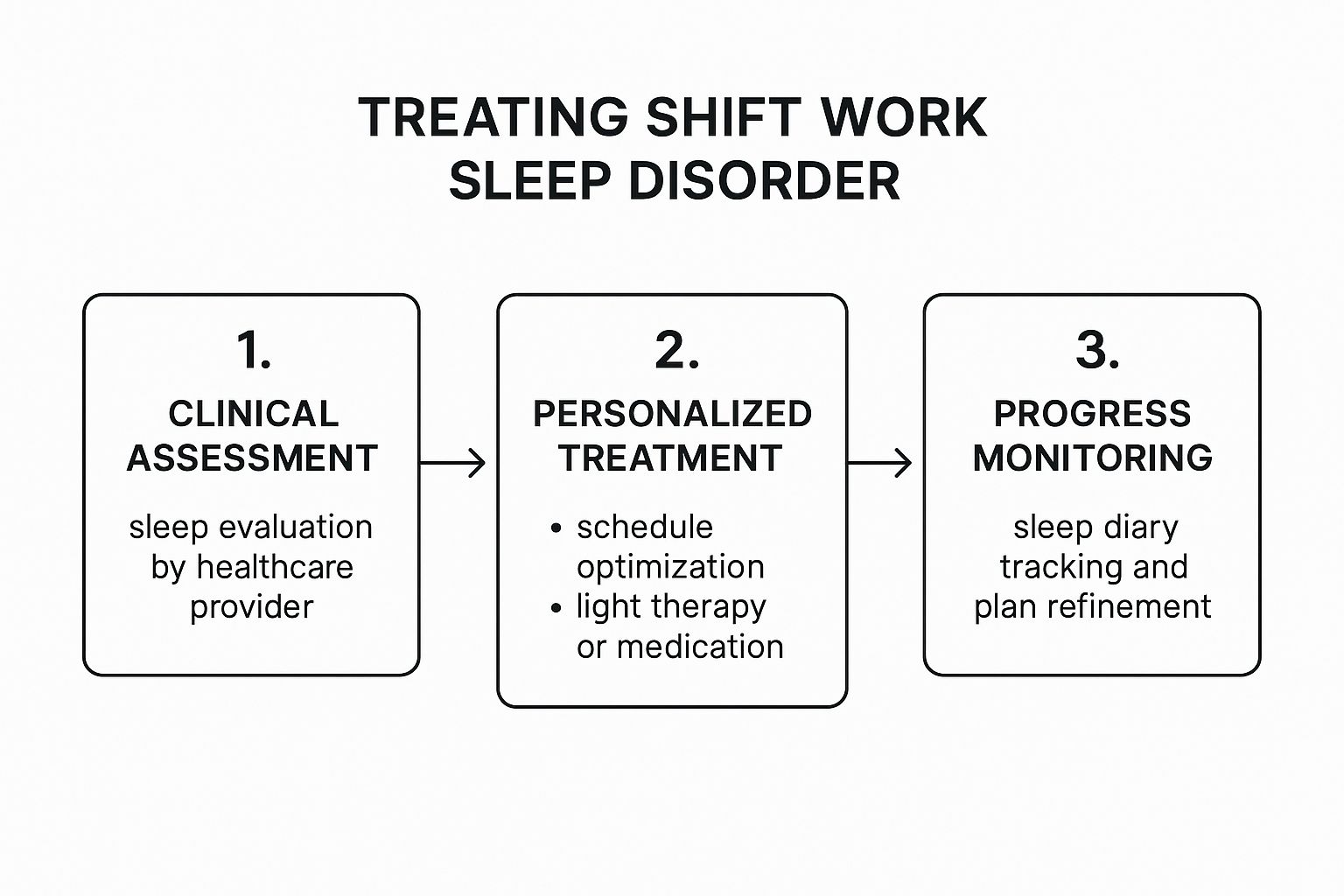
From the initial assessment to a personalized treatment plan and regular check-ins, you can see that managing SWSD is a deliberate, structured process—not just a guessing game. And powerful tools like light therapy and melatonin are key parts of that personalized plan.
Shift work is stressful. There's no getting around it. After a long, demanding shift, your mind is often still racing, making it nearly impossible for your body to switch off and get the restorative sleep it desperately needs. This isn't just a minor annoyance; it's a huge hurdle for the more than one in four shift workers who may be struggling with this condition.
In fact, a massive meta-analysis of 29 different studies found the prevalence of shift work disorder to be around 26.5%. That’s a staggering number of people whose health is at risk. If you want to dive deeper, you can read the full research on the global health burden of shift work.
So, how do you combat this? Managing stress isn't just a nice-to-have; it's a non-negotiable part of any effective shift work sleep disorder treatment plan. Let's walk through some practical, real-world strategies to quiet your mind and set the stage for deep, quality sleep.
Your brain thrives on routine. A consistent wind-down ritual is one of the most powerful signals you can send it, telling it that the day is over and it’s time to prepare for sleep—no matter what the clock on the wall says. Think of this as a mandatory buffer zone between the chaos of your job and the calm of your bedroom.
This is where you bring in your secret weapon: blue light blocking glasses. As soon as you begin your wind-down period, put on a pair of amber blue light glasses. The warm tint instantly softens the harsh glare of artificial lighting, helping you de-stress. They work by gently dialing down the mental stimulation from screens and overhead lights, allowing your brain to shift gears from high alert to a state of calm.
These glasses do more than just protect your melatonin production; they actively help your body and mind relax. Specifically, orange colored blue light glasses are your best friend when fighting the mental and physical fatigue that builds up over a long shift.
Think about it: after hours under intense workplace lighting or staring at monitors, your eyes feel strained and fried. Slipping on a pair of orange lenses provides immediate visual relief. It cuts through that feeling of overstimulation that keeps your mind buzzing long after you've clocked out. This physical comfort is a direct signal to your nervous system that it's okay to power down.
This reduction in eye strain is a direct pathway to better sleep. When your eyes can finally relax, the rest of your body tends to follow. The deep orange tint creates a kind of "digital sunset," a calming visual cue that primes your brain for rest, making it much easier to fall asleep faster and sink into those deeper, more restorative sleep cycles.
By making blue light blocking glasses part of your evening, you're not just blocking light—you're creating a powerful ritual. The simple act of putting them on can become a psychological trigger, signaling that the workday is officially done and your relaxation time has begun.
A great wind-down routine is only as good as the sleep hygiene it's built on. Here are some of the most impactful habits you can adopt to ensure you're getting the highest quality sleep possible.
You can't be anxious and relaxed at the same time. To truly unwind, you need to actively push stress out of the picture. Here are four simple but effective ways to do just that.
Starting a treatment plan for shift work sleep disorder always brings up a lot of questions. It's completely normal to wonder what to expect as you start making these changes. Let's tackle some of the most common questions I hear from people who are new to managing SWSD.
Honestly, it varies for everyone, but you can feel some immediate wins. Simple changes to your sleep hygiene—like making your room pitch black with blackout curtains—can make a difference in your very first week. You might notice you're falling asleep a little faster or feeling a bit more rested.
The bigger changes, like fully resetting your internal clock using light therapy, take more time and patience. We're talking several weeks of consistent, dedicated effort. The key is to not give up. For instance, putting on a pair of orange colored blue light glasses after your shift might immediately make your eyes feel less strained, but their real power to improve your sleep quality builds up over many nights. Stick with it.
As long as you’re working shifts, a permanent "cure" isn't really the right way to think about it. The disorder is a direct result of the conflict between your work schedule and your body's natural rhythm. The real goal is to manage it so effectively that it no longer runs your life.
By combining the right strategies—carefully timed light exposure, rock-solid sleep habits, and tools like blue light blocking glasses—you can seriously improve how you feel, both when you're sleeping and when you're awake. Think of it less as a cure and more as a successful long-term management plan that puts you back in control.
This is a great question. Both are effective, but they play slightly different roles in helping you wind down.
A fantastic strategy many shift workers use is to wear amber blue light glasses for a couple of hours post-shift to ease into relaxation, then switch to the stronger orange colored blue light glasses for that last 30-60 minutes before hitting the pillow. This two-step approach can work wonders.
If you’ve been trying these strategies consistently and you're still struggling, it's time to bring in a professional. Don't wait.
See a doctor if you're experiencing any of these:
A doctor can make sure there isn’t another underlying issue, like sleep apnea, contributing to your problem. They can also discuss prescription options or help create a more personalized plan based on your specific health and work schedule. It's the right move for your long-term health.
Ready to get a handle on your light exposure? The team at Element Lux has created blue light blocking glasses specifically for the challenges shift workers face.
Explore our collection and find the perfect pair for your wind-down routine.
