When you wear a pair of blue light glasses, you're doing two key things for your body: improving your sleep quality and cutting down on digital eye strain. These glasses are designed with special lenses that filter out the high-energy blue light blasting from our screens, which can mess with our natural sleep cycle and make our eyes feel tired and achy.
Think of blue light as your brain's morning shot of espresso. It's fantastic for waking you up and making you feel alert, but it's the last thing you want when you're trying to wind down for bed.
Light is made up of a whole spectrum of colors, and blue light just happens to have one of the shortest, most powerful wavelengths. Its main source is the sun, which our bodies have used for millennia to set our internal clock, also known as our circadian rhythm. When sunlight hits our eyes, it sends a clear signal to our brain: "Time to be awake!"
The problem is, we're no longer just getting that signal from the sun. We're getting it all day—and all night—from our digital screens. Every time you glance at your phone, work on your laptop, or watch TV, you're sending that same "wake-up" call to your brain.
This constant stimulation, especially in the evening, creates a huge disconnect. Your body might feel exhausted, but your brain is getting signals that it's the middle of the afternoon. This mix-up can lead to a few major issues:
As more people have become aware of these effects, the demand for protective eyewear has skyrocketed. The global market for anti-blue light glasses is booming, a clear sign that consumers are getting serious about protecting their eye health and sleep.
Getting a handle on our blue light exposure is becoming essential for modern well-being. Understanding how it all works is the first step toward getting your natural rhythm back on track.
If you want to dive deeper into this topic, we have plenty of other articles on our blue light blog.
If you’ve ever ended a long day staring at a screen with tired, achy eyes and a nagging headache, you know exactly what digital eye strain feels like. It’s a super common problem these days, but understanding the why behind it is the key to finding some real relief. And the answer is all about the unique way blue light from our devices behaves.
High-energy blue light has a short wavelength, which means it scatters more easily than other colors in the light spectrum. Think of it like trying to focus on a slightly fuzzy image—your eyes are constantly making tiny, non-stop adjustments to try and get a sharp picture. That sustained effort is what leads to muscle fatigue, dryness, and the all-around discomfort we call eye strain.
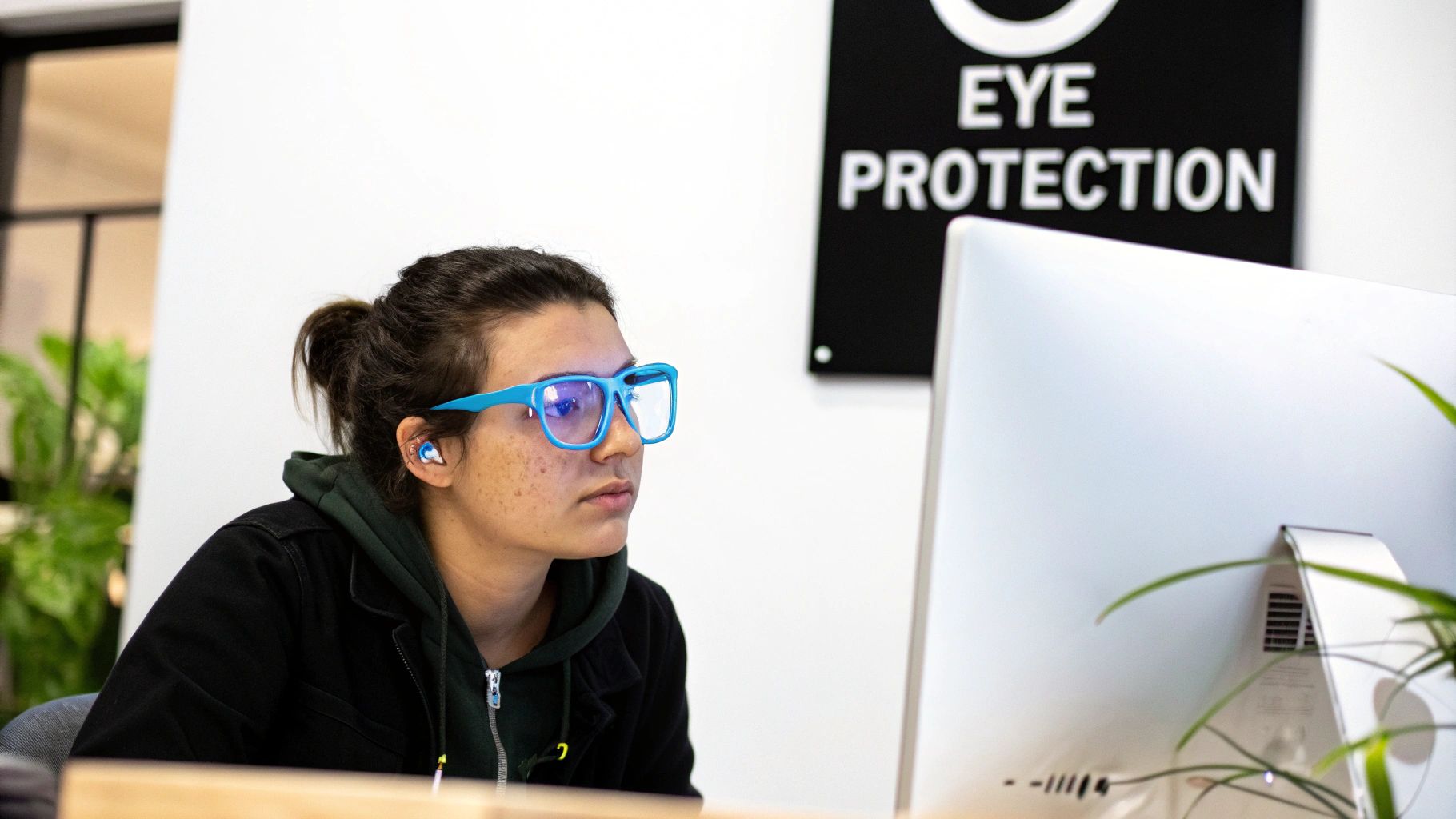
This is where a pair of orange colored blue light glasses really makes a difference. Unlike clear or lightly tinted lenses, orange lenses are specifically designed to filter out the most aggressive part of the blue light spectrum. They target those high-energy wavelengths that cause the most scattering and visual "noise."
By blocking this harsh light before it even hits your eyes, the glasses completely change the way you see your screen. Suddenly, glare is softened and contrast is sharpened, making text pop. This lets your eye muscles finally relax because they no longer have to fight to hold focus. The benefits of wearing blue light glasses with orange lenses are often felt almost immediately, making for a much more comfortable screen experience.
Wearing orange-lensed glasses is like putting a calming filter over the digital world. By removing the most jarring light, you reduce the workload on your eyes, which can alleviate headaches and soreness linked to screen use.
That shift from straining to relaxing is a game-changer. It’s not just about dodging discomfort; it’s about creating an environment where you can work or unwind without your eyes paying the price later. Amber-colored lenses offer a similar, though less intense, effect that's perfect for more casual evening use.
But for those deep-focus work sessions or late-night projects, orange lenses offer maximum protection. They create a really noticeable shift in visual comfort, turning a harsh, bright screen into a soft, warm display. This simple change helps your brain wind down much more naturally, even if you still need to be in front of a screen.
Managing digital discomfort is a huge piece of the puzzle when it comes to lowering your overall stress. Here are four simple strategies that work even better when you add blue light glasses into the mix:
Your body runs on an internal clock, a natural rhythm that tells you when to feel tired and when to be alert. This system is deeply connected to light. Think about it: as the sun goes down, the growing darkness is a powerful signal to your brain to start producing melatonin, the essential hormone that helps you wind down and drift off to sleep.
But our modern evenings are rarely dark. We’re surrounded by bright screens—phones, laptops, TVs—blasting out blue light that sends a very different message. This artificial daylight tricks your brain into thinking it's still midday, hitting the brakes on melatonin production and messing up your entire sleep-wake cycle. The result? You’re left tossing and turning, wide awake when you should be resting.
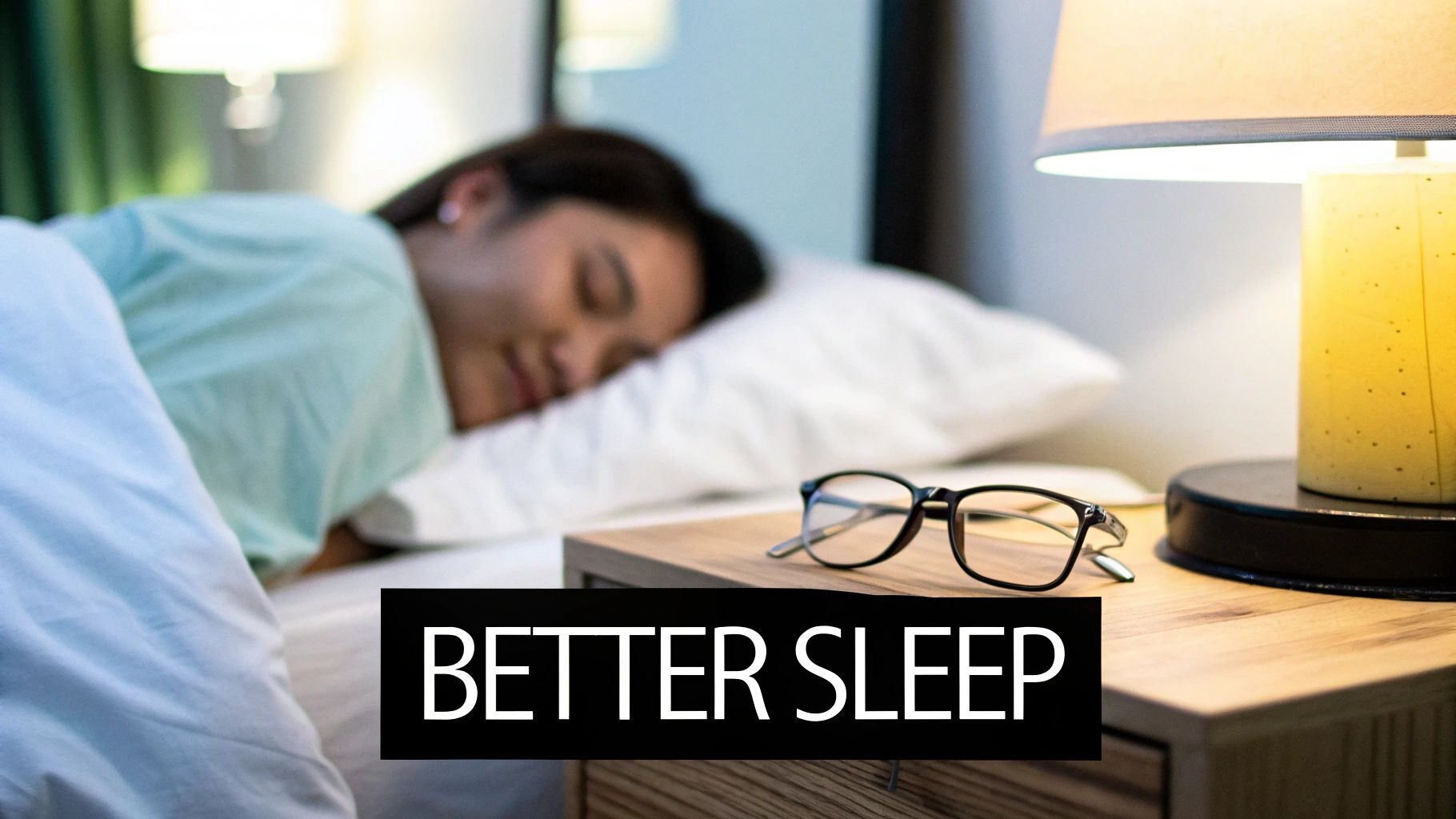
This is where orange colored blue light glasses can be a total game-changer for your nightly routine.
When you put on a pair of orange-lensed glasses for an hour or two before bed, you're essentially creating a shield against those disruptive light waves. They filter out the specific blue light that stops melatonin in its tracks, allowing your body’s natural sleep signals to work as intended. This simple habit can help you fall asleep faster and get the kind of deep, restorative rest that leaves you feeling genuinely refreshed the next morning.
It’s not just about melatonin, either. These glasses also tackle evening eye strain. The soft orange tint cuts the harsh glare from digital screens, making your wind-down time—whether you’re reading on a tablet or watching a movie—far more comfortable and relaxing. You get a one-two punch: protecting your sleep hormone production while soothing tired eyes.
And this isn't just anecdotal. The science is compelling.
A 2020 trial with hospitalized patients, for example, found that those who wore blue-blocking glasses for just seven days had significantly better sleep efficiency and woke up less during the night compared to a group wearing clear glasses. Learn more about how blue light filtering impacts sleep patterns.
For the best results, you'll want to combine your glasses with other solid sleep habits. Think of it as creating a powerful, sleep-friendly environment. Here are a few tips to get you started:
By making these practices a part of your routine, you can seriously upgrade your sleep quality. You can dive deeper into how our glasses support this process by exploring our guide on achieving better sleep.
If intense orange lenses are the heavy hitters for getting your brain ready for sleep, think of their softer counterpart—amber blue light glasses—as your perfect companion for winding down after a long day. While orange lenses are a powerful tool for sleep induction, amber lenses are like a dimmer switch that eases you out of go-mode and into a state of relaxation.
The real difference is how much filtering they do. Amber lenses block a more moderate, but still significant, amount of blue light. This makes them the ideal choice for those casual evening hours when you want protection without a drastic change in how you see the world.
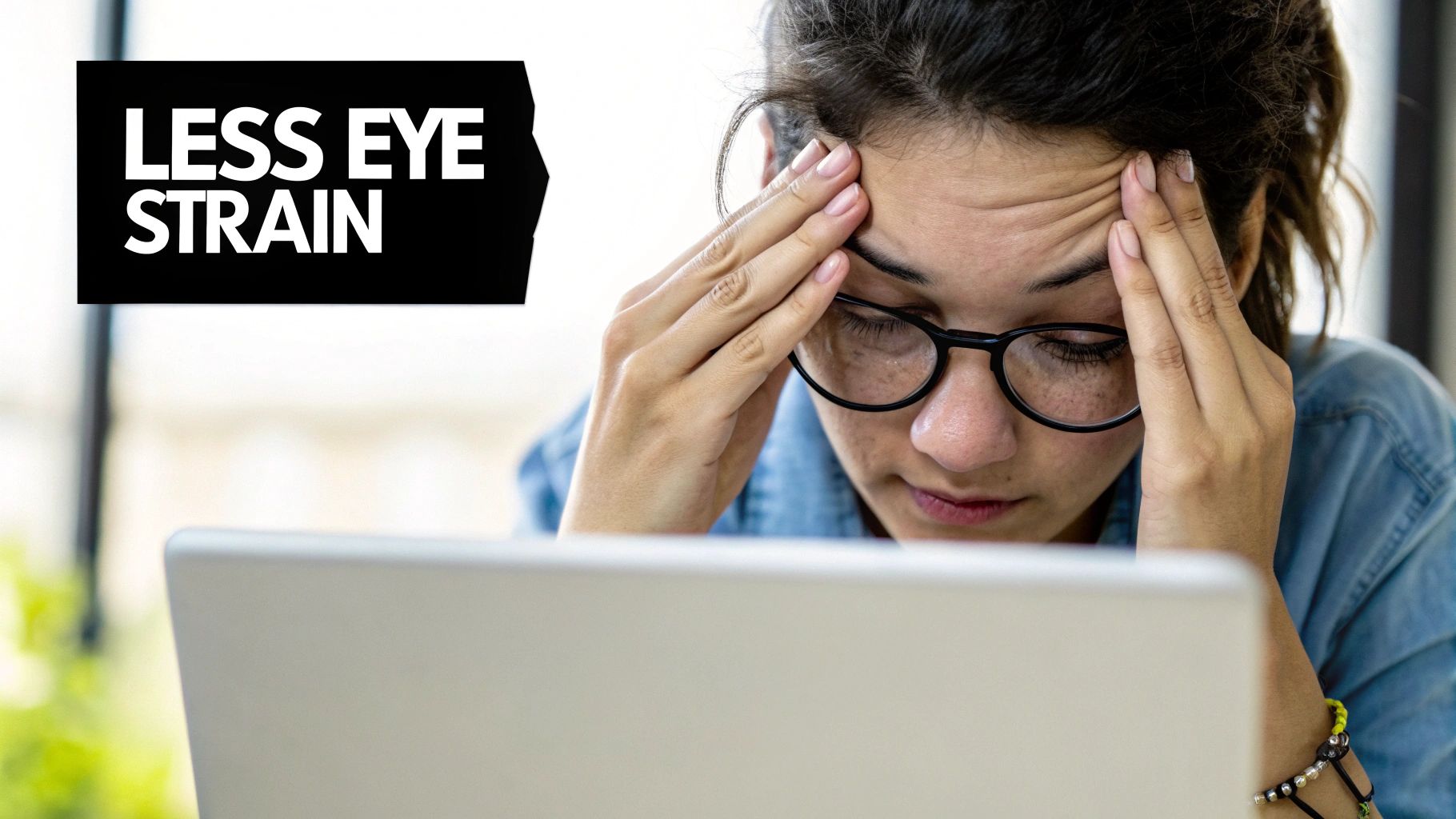
This level of filtration is perfect for unwinding with a movie, reading on your tablet, or catching up on a few last emails. You get the benefits of blocking that harsh screen glare and artificial light without signaling to your brain that it's bedtime just yet.
The warm, gentle tint of amber lenses completely transforms your surroundings. That harsh, cool-toned glare from screens and overhead LEDs is softened into a calming, gentle glow. It's a simple change, but it sends a powerful signal to your nervous system: it's time to shift from a state of productivity to one of peace.
By taking the edge off the most jarring visual input, amber lenses make it easier to de-stress long before your head even hits the pillow. They create a buffer between your eyes and the stimulating modern world, helping you find a natural sense of calm.
Wearing amber glasses in the evening is a simple act of self-care. It's an easy way to reduce the invisible stress that digital light places on your brain, helping you feel more relaxed and present.
You can get even more out of your amber glasses by making them part of a broader relaxation routine. Here are four great ways to unwind in the evening, with your glasses playing a key role in your digital downtime.
Think of your blue light glasses as a crucial piece of gear, but not the whole game. They're like a shield, protecting you from the light that messes with your internal clock. But for truly restorative rest, that shield needs to be part of a bigger strategy. A solid routine is the foundation, sending clear signals to your body that it’s time to wind down.
When you get this synergy right, the results are powerful. You fall asleep faster, sleep deeper, and wake up feeling ready to go.
This isn't just about feeling less tired. It's about how that translates into real-world performance. Better sleep and less eye strain mean you're more focused and productive the next day.
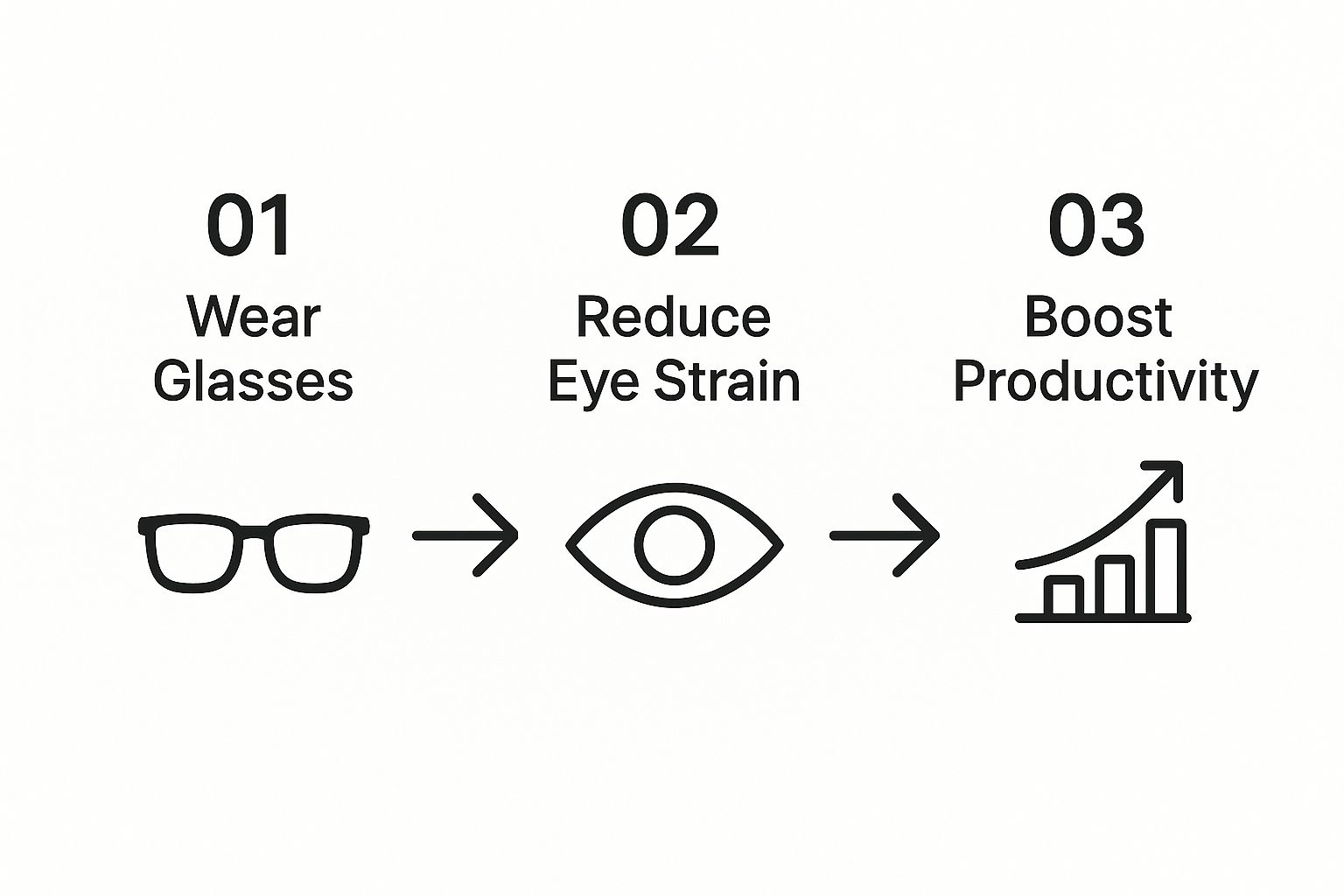
Creating a powerful pre-sleep ritual is all about consistency. While your orange colored blue light glasses are essential for blocking the light that kills melatonin and strains your eyes, they work best when you pair them with other proven techniques. It’s about building a fortress of good habits.
Here are the non-negotiables for a better sleep routine:
Want to dive deeper into sleep strategies? We've got a ton of great information on our resources page.
A racing mind is the enemy of good sleep. It’s no surprise that the same screen time that hurts our eyes can also ramp up our anxiety. Your amber blue light glasses do more than just block light; they create a visually calming, warm environment that helps your brain shift into a lower gear.
Combine them with these practices for the ultimate wind-down:
To really lock in these habits, a simple checklist can make a huge difference. Here's a step-by-step guide to structure your evening for optimal sleep.
| Time Before Bed | Action Item | Why It Works |
|---|---|---|
| 2-3 Hours | Finish your last meal and avoid heavy snacks or alcohol. | Gives your digestive system time to work, preventing disruptions to your sleep cycle. |
| 90 Minutes | Put on your Element Lux blue light blocking glasses. | Starts protecting your melatonin production from screen light, signaling to your brain it's time to get sleepy. |
| 60 Minutes | Power down all screens (phone, TV, laptop). | This "digital sunset" removes the biggest source of mental stimulation and disruptive blue light. |
| 45 Minutes | Dim the lights and do some light stretching or read a physical book. | Lowers overall light exposure and releases physical tension, promoting relaxation. |
| 15 Minutes | Practice deep breathing or write in a journal. | Calms the nervous system and clears your mind of lingering worries or to-do lists. |
| Bedtime | Ensure your room is cool, dark, and quiet. | Creates the ideal sensory environment for deep, uninterrupted sleep. |
Following a consistent checklist like this takes the guesswork out of winding down. It trains your body and mind, making the transition to sleep smoother and more natural every night.
All that screen time doesn't just tire out our eyes. It can actually put our nervous systems on high alert, feeding feelings of stress and anxiety. The intense blue light from our devices basically sends a non-stop "wake up!" signal to the brain, making it tough to truly relax in our always-on world.
The good news is, you don't need a total digital detox to find some calm. A few smart strategies can make a huge difference. By creating some healthy boundaries with your tech, practicing a little mindfulness, and tweaking your environment, you can take back control. And a great pair of blue light blocking glasses is a key part of that modern toolkit, giving you a direct way to curb the mental strain of our digital lives and actually unwind.
When you combine blue light glasses with other calming habits, you create a powerful effect. The real goal is to cut down on overstimulation from every angle, letting your mind and body chill out naturally.
Here are four of the best ways to find your calm in the evening:
Wear Blue Light Blocking Glasses: About an hour or two before you plan to sleep, make it a habit to pop on your amber or orange blue light glasses. This one simple move filters out all that jarring, stimulating light. It creates a warm, soft visual world that turns down the mental "noise" from screens and harsh indoor lighting.
Create a "Digital Sunset": Set a clear rule: the last hour before bed is a screen-free zone. If you absolutely have to look at a device, your glasses are non-negotiable. This simple boundary is a powerful signal to your brain that it's time to shift gears and move away from the constant input that fuels anxiety.
Take Mindful Breaks: Eye doctors are big fans of the ‘20-20-20 rule’. Every 20 minutes, you look away from your screen at something 20 feet away for at least 20 seconds. When you pair simple behavioral tricks like this with a tool like blue light glasses, you build a really solid defense against digital burnout. You can find more great info on the evidence behind blue light protection here.
Make Your Environment Calm: As the evening goes on, start dimming the lights around your home. When you pair that soft, warm ambient light with the gentle tint of your amber lenses, you create a deeply relaxing atmosphere. It’s like telling your nervous system it’s finally safe to power down for the night.
By filtering out the most agitating wavelengths of light, amber lenses help dial down your brain's alertness level. This encourages a state of calm, making it much easier to de-stress and get ready for a great night's sleep long before your head hits the pillow.
Ready to reduce eye strain and improve your sleep? The Element Lux collection offers premium blue light blocking glasses designed to help you unwind and rest better. Shop Now to find your perfect pair.
