
That glare staring back at you from your screen? It's more than just a minor annoyance. It’s a direct cause of digital eye strain, headaches, and a serious dip in focus. Tackling it for good means looking at a few key areas: your workspace, your device settings, and a few smart tools like anti-glare filters or specialized glasses.
When light from a window or an overhead lamp bounces off your screen, it creates a kind of visual static. Your eyes have to work overtime just to see the content, and that constant struggle leads to physical discomfort that can completely derail your productivity and well-being.
This isn't just a niche complaint; it's a massive, shared problem.
The global market for anti-glare screen protectors was already valued at around USD 1.2 billion in 2024. Projections show it’s on track to more than double, hitting USD 2.5 billion by 2033. That number tells a story: millions of us are looking for a real solution. You can dig deeper into the anti-glare market growth and its drivers if you're curious.
Glare isn't just a surface-level issue. A huge part of what makes it so harsh is the high-energy visible (HEV) blue light blasting from our screens. This specific wavelength is notorious for causing eye strain, but its biggest impact often comes after the sun goes down.
When you're bathed in blue light in the evening, it sends your brain a very confusing signal: "It's still daytime!" This directly suppresses the production of melatonin, the hormone that tells your body it’s time to sleep. This is where a targeted fix can make all the difference.
Orange and amber-lensed blue light glasses are designed specifically to filter out these disruptive wavelengths. By popping them on in the hours before bed, you’re basically telling your brain it's okay to wind down. This simple habit helps you relax, fall asleep faster, and get the kind of restorative rest your body craves.
By blocking the harshest light wavelengths, orange-lensed glasses don't just reduce glare—they help realign your body's natural rhythm for better sleep and less stress.
Think of these glasses as a tool to reclaim your evenings. They make your screen time more comfortable while actively supporting your body's natural sleep cycle, turning your device from a source of stimulation back into a tool for relaxation.
To give you a head start, here's a quick reference table with a few things you can do right now to start fighting back against screen glare.
This table gives you a quick overview of actionable strategies you can implement right now to start minimizing screen glare and its effects.
| Strategy Area | Quick Action | Why It Works |
|---|---|---|
| Environment | Position your screen at a 90-degree angle to windows. | This avoids direct light reflection, which is the primary cause of intense glare. |
| Device Settings | Increase your screen's contrast and lower its brightness. | Higher contrast makes text easier to read, while lower brightness reduces the light intensity hitting your eyes. |
| Protective Gear | Apply a matte-finish anti-glare screen protector. | It diffuses reflected light, turning sharp, mirror-like reflections into a soft, manageable glow. |
These small adjustments can add up to a significant improvement in your daily comfort and focus, making your screen a much more friendly place to be.
Before you spend a dime, your first line of defense against screen glare is your physical space. And the best part? The most effective solutions are often completely free. It’s about more than just yanking the blinds shut; it's about making a few smart, strategic tweaks to how you manage the light sources around you.
The goal isn't to work in a cave—it's to control the light.
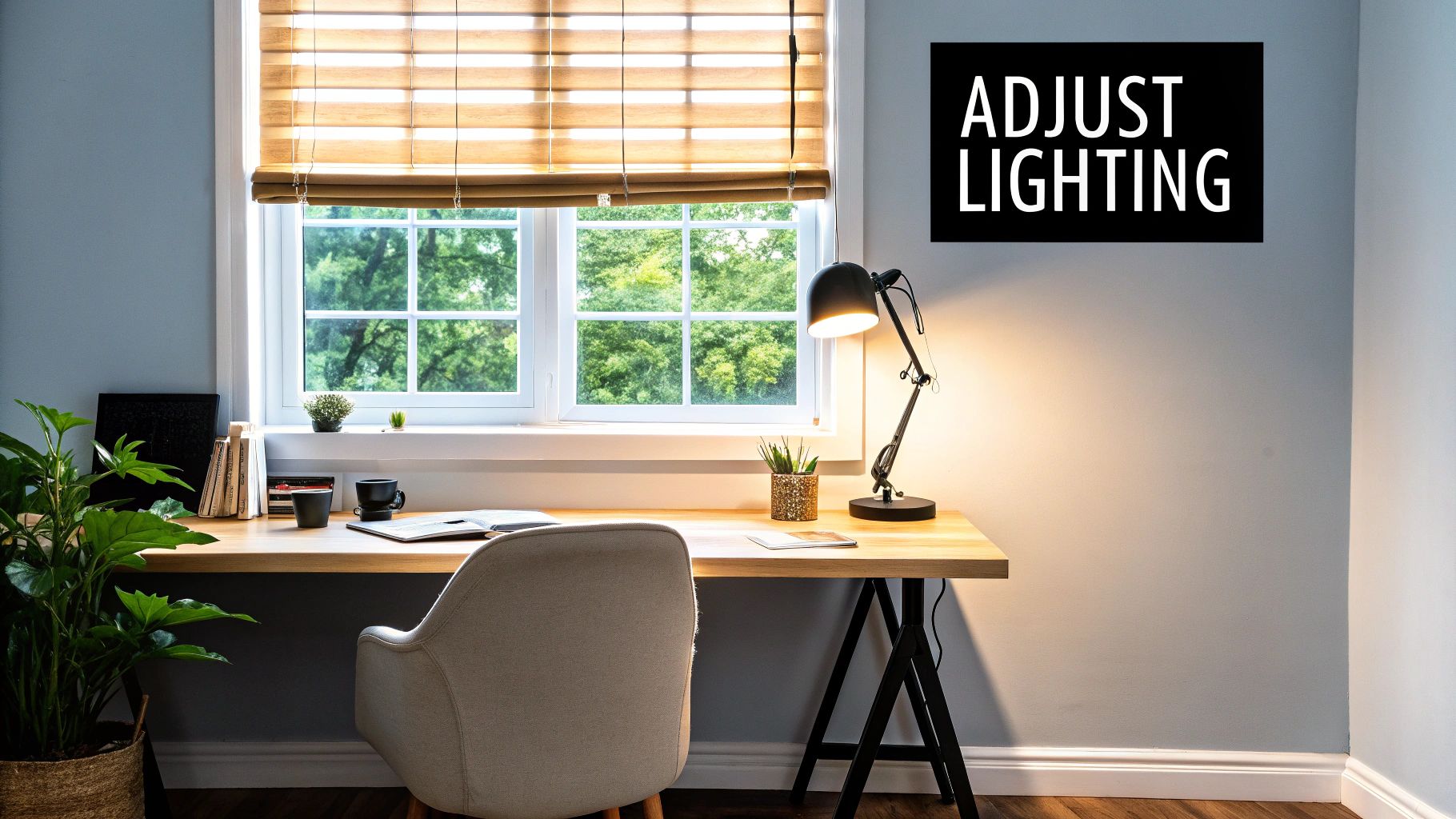
The single most effective thing you can do is place your monitor perpendicular to any windows. Think about it: if a window is directly behind you or in front of you, your screen basically becomes a mirror for all that incoming light.
By turning your setup to a 90-degree angle, you make sure the sunlight hits a wall instead of blasting directly onto your display. So if you have a big window in your home office, don't set up your desk facing it or with your back to it. Put it on an adjacent wall. This one simple change can wipe out the worst of the glare.
Your battle with glare doesn’t end when the sun goes down. Artificial lights can be just as annoying.
A great way to counter this is with bias lighting. This is just a soft, indirect light that you place behind your monitor. It works wonders by reducing the harsh contrast between a bright screen and a dark room, which helps your eyes relax and makes glare feel less intense.
Another culprit we often overlook is the wall right behind the screen. If it has a glossy or even a semi-gloss paint finish, it’s just bouncing light right back into your face.
A simple coat of matte-finish paint on the wall behind your monitor can absorb stray light instead of reflecting it, creating a more comfortable viewing environment with less ambient glare.
It’s clear more people are catching on to these issues. The market for anti-glare filters, for example, was valued at USD 2.1 billion in 2023 and is projected to hit USD 3.64 billion by 2032. That kind of growth shows just how much demand there is for products that cut down on the eye strain we all feel from staring at screens all day.
If you want to dive deeper into how to set up an eye-friendly workspace, check out the Element Lux collection of helpful resources.
Before you spend a dime on accessories, take a look at the device you’re already holding. Your phone, tablet, and computer all have settings designed to make the screen more comfortable to view, but most of us never touch them. Mastering these is the fastest, free-est way to start winning the war against glare.
The two most important settings are brightness and contrast. It’s a common reflex to crank up the brightness to overpower glare, but that’s a recipe for eye strain. It just floods your eyes with more harsh light.
Instead, try the opposite. Lower the brightness a bit and bump up the contrast. This simple tweak makes text and images pop, making them easier to see without overwhelming your eyes.
Another game-changer is Dark Mode. It's not just for looks—it fundamentally changes how your screen works by swapping the usual white background for a dark one with light text. This drastically cuts down on the amount of light your screen pumps out, which means less glare, especially when you’re in a dimly lit room.
Once you've got the basics down, dig a little deeper into your settings. Look for features like 'Night Shift' on Apple devices, 'Night Light' on Windows, or 'Eye Comfort Shield' on Android phones.
These aren't just simple screen dimmers. They actively filter out blue light, shifting your screen's colors toward a warmer, amber tone.
Why does that matter? That amber tint is key for anyone using screens in the evening. It mimics the way natural light changes as the sun goes down, signaling to your brain that it’s time to wind down. It’s the same science behind why amber blue light blocking glasses are so effective for getting your body ready for a good night's sleep.
If you’re looking for a physical fix, an anti-glare screen protector is a great option. Applying one is pretty straightforward, as this graphic shows.
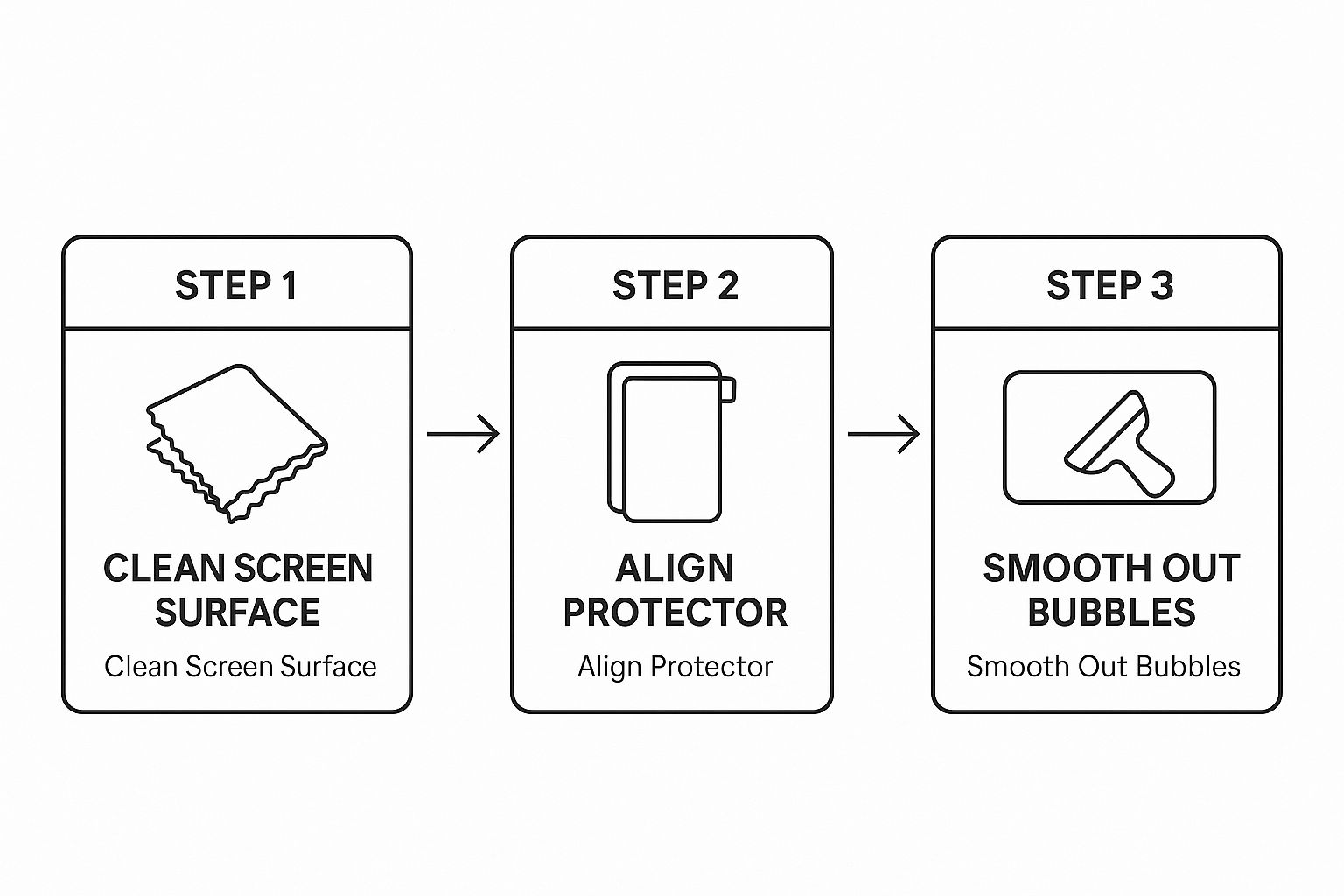
The key is a clean screen and careful alignment to get a bubble-free finish that diffuses those annoying reflections.
For a more permanent solution, you can look into anti-glare films. These are designed to scatter reflected light directly at the source. The demand for these is huge—the market was valued at around USD 1.2 billion in 2024 and is expected to hit USD 2.5 billion by 2033. If you're interested in the numbers, you can read the full research about the anti-glare film market to see just how fast it's growing.
So, you’ve repositioned your desk, fiddled with your monitor’s brightness, and still, that nagging eye fatigue just won’t quit. When you’ve done all the environmental tweaks you can, it’s time to bring in the heavy hitters: specialized eyewear.
Blue light blocking glasses, particularly those with orange or amber lenses like the ones we make at Element Lux, are a direct and powerful tool against screen-related discomfort. They go straight to the source of the problem.
It’s not complicated science. Our screens blast out high-energy visible (HEV) blue light, a harsh wavelength that forces us to squint and puts a ton of strain on our eye muscles. The orange tint in these lenses is specifically engineered to filter out that intense light, giving you a softer, warmer view that lets your eyes finally relax.
The result is almost immediate. Whether you're burning the midnight oil on a project or just kicking back with a movie, your screen time becomes far more comfortable.
The perks of orange and amber lenses don't stop at your eyes—they’re a game-changer for your sleep cycle. When you’re exposed to blue light in the evening, it basically tells your brain, "Hey, it's still daytime!" This confusion suppresses the production of melatonin, the hormone that signals your body it’s time to sleep.
By popping on a pair of orange-colored blue light glasses a couple of hours before you plan to hit the hay, you effectively block those disruptive signals. This allows your body's natural melatonin production to kick in on schedule, making it easier to fall asleep and get the deep, restorative rest you need. Amber blue light glasses are fantastic for this too, helping you relax and wind down after a long day. If you want to dive deeper into how this all works, check out our in-depth blue light blog.
When you filter out stimulating blue light, amber and orange lenses help get your internal clock back in sync with the actual time of day. It’s a natural way to ease your body into sleep mode.
Adding blue light blocking glasses to your nightly routine is a simple change with a massive impact on your overall wellness. They are an essential tool for anyone serious about improving their sleep hygiene or just dialing down daily stress levels.
Ready to build a better evening routine? Here’s what works.
Top Ways to Get Good Sleep:
Top 4 Ways to Reduce Stress and Relax:
Tackling screen glare isn't just about making your eyes feel better in the moment. It's a huge piece of a much bigger puzzle: getting quality sleep and dialing down your daily stress. When you start managing the light you’re exposed to, you're doing more than just finding visual comfort—you’re actually working with your body's natural clock.
This is exactly where tools like Element Lux blue light blocking glasses make a real difference. They bridge the gap between our modern digital lives and our fundamental physical needs.
By filtering out the most disruptive blue light, orange-colored glasses give your eyes a much-needed break from the harsh light that causes digital eye strain, especially when you're looking at a bright screen in a dim room. Your eye muscles finally get a chance to relax, which helps prevent that all-too-familiar tension headache at the end of the day.
The benefits go way beyond just your eyes. When you pop on a pair of orange or amber blue light glasses in the evening, you’re sending a clear signal to your brain: it's time to wind down. This is crucial for kickstarting your body's production of melatonin, the hormone that governs your sleep-wake cycle, allowing for better sleep.
This one simple habit makes amber blue light glasses an incredible tool for decompressing. The world takes on a warmer, softer glow, creating a calmer visual space that helps you shift from a state of "go-go-go" to one of genuine rest. You can dive deeper into how our glasses help with sleep and the science behind it.
Blocking the most stimulating wavelengths of light with amber and orange lenses helps get your internal clock back in sync with the actual time of day. It’s a simple, natural nudge to tell your body it’s time to rest.
Making these glasses part of your evening routine is an easy, powerful step toward better overall wellness. To get you started, here are a few proven strategies I recommend.
When you're trying to solve screen glare and eye strain, a few questions always seem to pop up. Whether you're curious about different lens colors or just want to sleep better, let's clear things up with some straightforward answers.

Orange-colored blue light glasses are the heavy hitters when it comes to blue light. They're designed to filter out the most intense, high-energy wavelengths that our screens blast out. This gives your eyes a much-needed break from the harsh light that causes them to overwork, which is what leads directly to that familiar feeling of digital eye strain and tension headaches.
But the real magic happens at night. By blocking the specific blue light that messes with your melatonin production, orange-colored blue light glasses help your body get ready for rest. This allows your natural sleep cycle to take over, making it easier to fall asleep and stay asleep for a more restorative night.
They sure can. Think of amber blue light glasses as a way to change the "mood" of your environment. They transform the sharp, stimulating light from your screen into something much warmer and softer, almost like the gentle glow of a sunset.
It’s a subtle shift, but it has a powerful calming effect. It helps you ease out of that high-alert, work-focused mindset and into a more relaxed state. Putting on a pair of amber lenses in the evening is a fantastic way to start your wind-down routine and de-stress after a day of staring at screens.
By softening your visual input, amber lenses help your nervous system shift gears, making it easier to decompress after a long day of screen time and mental effort.
Looking for a few more practical steps to get better rest? Here are some proven methods that work wonders:
Ready to feel the difference for yourself? Less eye strain and better sleep are just a click away. Check out the collection of scientifically-designed eyewear at Element Lux to find the perfect pair for your evening routine.
Discover your solution at the Element Lux shop.
