Tackling computer vision syndrome isn't just about one quick fix. It's about combining a few smart workspace adjustments, taking regular screen breaks, and using the right tools—like blue light blocking glasses—to dial down the symptoms. For most of us, the constant glare from our digital screens is the real culprit behind the headaches, dry eyes, and neck pain that sneak up on us.
If you spend your days staring at a screen, you know the feeling. That creeping discomfort of digital eye strain. It’s way more than just tired eyes; it’s a whole collection of symptoms we now call Computer Vision Syndrome, or CVS. This condition pops up because of the intense, prolonged focus our eyes have to maintain on our devices, often in less-than-ideal lighting or with wonky screen settings.
And it's not a niche problem. This is incredibly widespread. A huge meta-analysis that looked at over 66,000 people found that the prevalence of CVS is around 66%. Think about that—it means roughly two out of every three people glued to a screen are probably feeling its effects.
The first step to feeling better is recognizing what's going on. The signs of CVS can be both visual and physical, and they can seriously mess with your productivity and just how you feel day-to-day.
Sometimes it's tough to pin down exactly what's wrong. This quick-reference table breaks down the most common symptoms to help you see if digital eye strain is the issue.
| Symptom Category | Specific Symptoms |
|---|---|
| Ocular (Eye-Related) | Dryness, redness, itching, burning sensation, blurred vision, double vision. |
| Visual | Difficulty refocusing, increased light sensitivity, seeing afterimages. |
| Musculoskeletal | Headaches (especially around the temples), neck pain, shoulder stiffness, backaches. |
| General | Mental fatigue, reduced concentration, increased irritability. |
The tricky part is that these symptoms don't just clock out when you do. They can linger into your evening and even wreck your sleep. All that eye strain and blue light exposure can make it much harder to wind down, creating a nasty cycle of fatigue that you carry right into the next morning.
Here's the thing: our eyes work completely differently when we're looking at a screen versus reading a book. The pixels that make up text on a screen don't have the same sharp contrast or well-defined edges as ink on a page. This subtle difference forces our eyes to work much harder just to stay in focus, which leads to that all-too-familiar muscle fatigue.
On top of that, we have a bad habit of forgetting to blink when we're zoned in on our devices. Studies show we blink up to 60% less often in front of a screen. Blinking is your eye's natural way of keeping itself moist and clean by spreading tears across the surface. When you don't do it enough, you get the dryness and irritation that are hallmark signs of CVS.
Getting a handle on these root causes is the key to putting together a plan that actually works. If you're looking for more tips, you can explore the digital wellness info over at our resources page.
The space you work in has a massive impact on how your eyes feel at the end of the day. A few smart tweaks to your setup can bring almost immediate relief from that nagging eye fatigue and set you up for better long-term eye health.
The idea is to create an environment where your eyes can work comfortably, not harder than they have to. Let's start with your monitor. It should be about an arm's length away—that’s usually somewhere between 20 and 30 inches. This sweet spot keeps your eyes from constantly straining to focus.
Also, check the height. The top of your screen should sit right at or just a hair below your eye level. A classic mistake is having the monitor too high, which forces you to crane your neck back. Instead, you want a slight downward gaze of about 15 to 20 degrees. It feels much more natural and puts less stress on both your eyes and neck.
Beyond just where you put your monitor, your posture and daily habits are just as critical. A truly ergonomic setup isn't just about feeling comfortable; it's about minimizing the physical stress that leads to eye fatigue and muscle aches.
This simple infographic breaks down the three core pieces of proper workstation ergonomics.
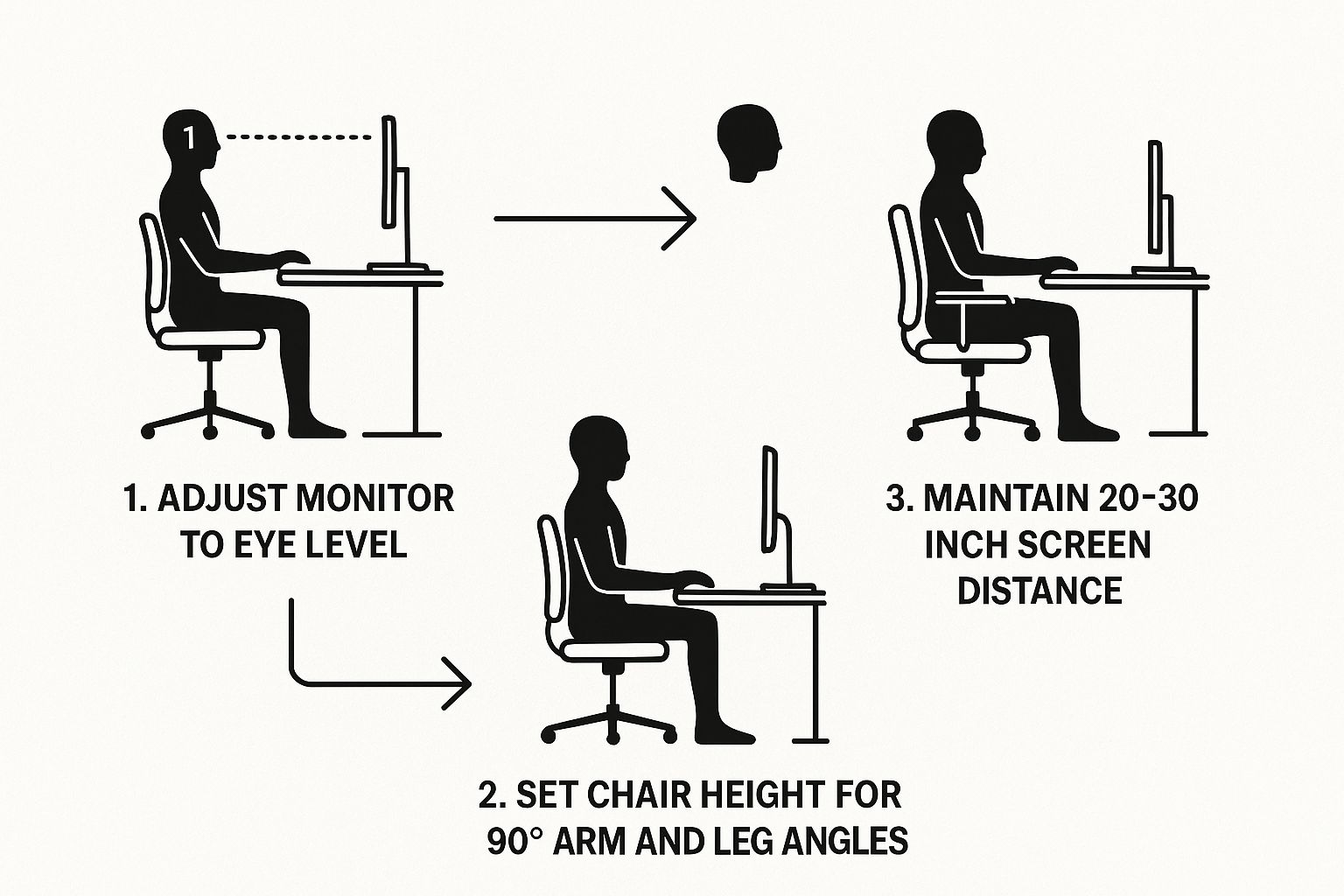
As you can see, getting your monitor, chair, and viewing distance in sync creates a balanced system that supports your body instead of fighting against it.
One of the best habits you can build is the '20-20-20 rule'. It sounds simple, but it’s a powerful way to treat computer vision syndrome. Every 20 minutes, take a 20-second break and look at something 20 feet away. That small action gives your eye muscles a much-needed chance to relax from the constant close-up work screens demand.
Don't forget to blink! When we're glued to a screen, our blink rate can plummet by as much as 60%. Making a conscious effort to blink more often keeps your eyes lubricated, fighting off the dryness and irritation that are hallmarks of digital eye strain.
Lighting is another huge piece of the puzzle. Try to position your desk so windows are to your side, not directly in front of or behind your screen. This cuts down on the harsh glare and reflections that are a major source of eye fatigue. If you can't move your desk, an anti-glare screen filter is a great investment.
Ultimately, managing Computer Vision Syndrome really comes down to these kinds of ergonomic and behavioral adjustments. Research even shows that simply reducing how long you use a computer without a break is a huge factor in easing symptoms. Interestingly, one study found that things like screen distance or font size weren't nearly as important as just breaking up those long stretches of screen time. You can dig into the full research on these findings over at oftalmoloji.org.
The artificial light pouring from our screens does more than just light up our faces—it's sending powerful signals straight to our brains, and it can throw our natural rhythms completely out of whack. This is especially true for the high-energy blue light that our devices emit in massive amounts.
When that light hits your eyes, particularly in the evening, it tricks your body into thinking it's still daytime. This constant exposure is a huge contributor to digital eye strain and a major roadblock in getting computer vision syndrome under control. It also directly interferes with your body's production of melatonin, the hormone that tells you when it’s time to sleep.
The result? You feel wired at night and completely groggy in the morning, stuck in a frustrating cycle of fatigue.
To fight back, one of the most powerful tools you have is a pair of orange colored blue light glasses, especially in the hours leading up to bed. Think of these lenses as a serious shield for your eyes. By blocking a massive spectrum of blue light, orange lenses reduce the visual noise and harsh glare that cause your eye muscles to overwork. This leads to a significant decrease in eye strain, headaches, and general fatigue after a long day of screen use.
Their deep orange tint is also specifically engineered to help with sleep. By filtering out over 99% of disruptive blue light wavelengths, wearing them for a couple of hours before bed creates an artificial sunset for your eyes. This sends a clear signal to your brain that the day is ending, allowing your body to naturally produce melatonin without interference. The result is an easier transition into deep, restorative sleep.
While orange lenses are the heavy-hitters for sleep prep, sometimes you need a less intense option for earlier in the evening. That's where amber blue light glasses come in. Their lighter, yellowish tint offers a more moderate level of blue light filtration, perfect for helping you relax and wind down.
Amber lenses take the harsh, glaring edge off screen light, which helps reduce eye strain and lets your mind and body ease into a more relaxed state. You'll notice a real reduction in digital fatigue, but without the significant color shift you get from darker orange lenses. This makes them ideal for watching a movie or reading on a tablet. For a deeper dive into the science, you can find more information on our blue light blog.
Wearing the right type of blue light blocking glasses at the right time is a simple yet incredibly effective strategy. It helps protect your eyes from strain and aligns your body's internal clock with your desired sleep schedule—a true cornerstone of managing computer vision syndrome.
Improving your sleep is all about building a solid, relaxing evening routine. Blue light blocking glasses are a fantastic start, but you can amplify the benefits by combining them with other healthy habits.
The mental fatigue from constant screen time can be just as draining as the physical eye strain. Taking active steps to lower your stress and anxiety in the evening is critical for both your mind and your sleep.
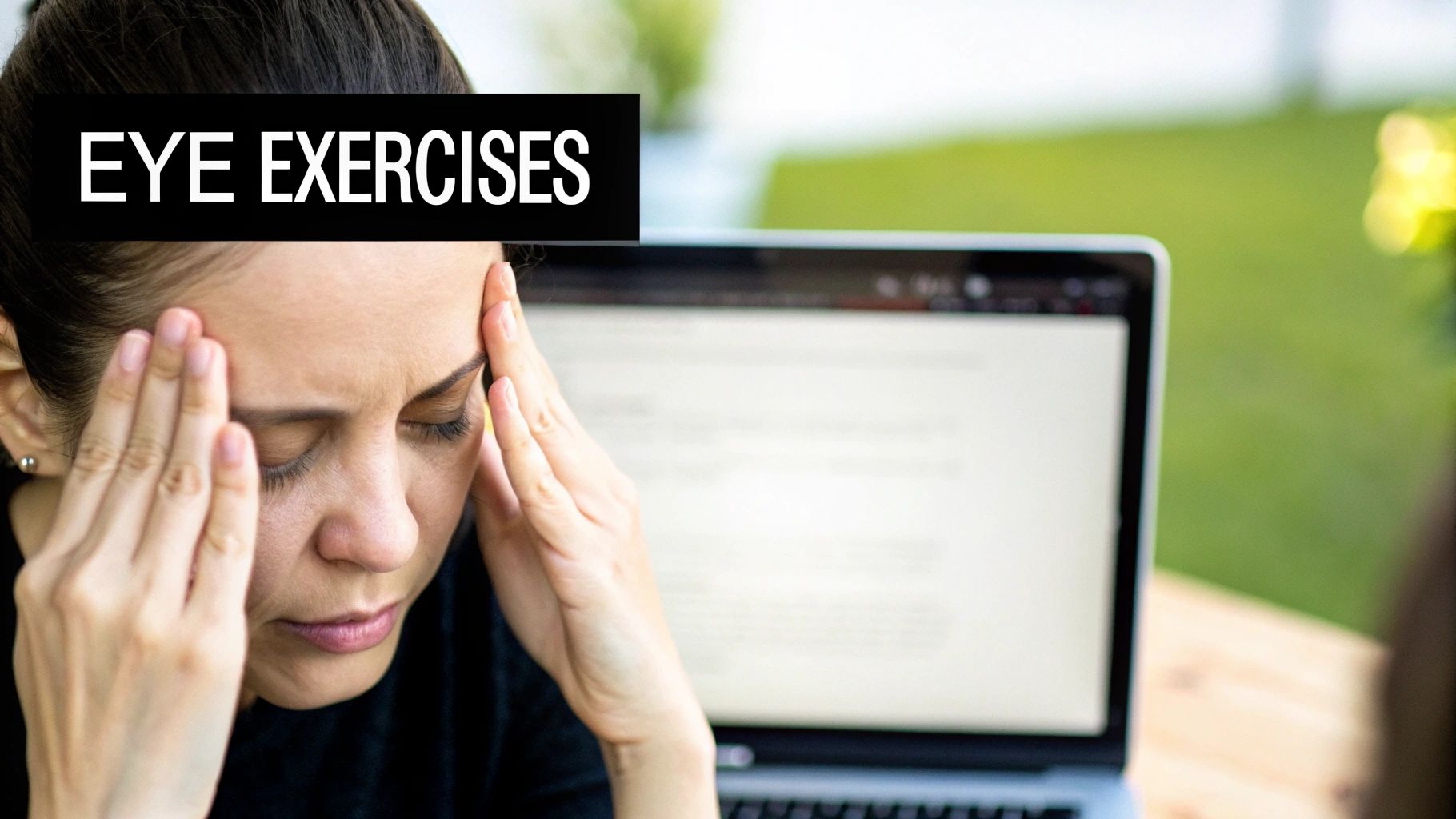
Fixing computer vision syndrome is about more than just managing daytime eye strain. It’s about getting your body’s natural rhythms back on track, and that starts with a good night's sleep. The constant flood of blue light from our screens can seriously mess with our internal clock, making it tough to fall asleep and stay asleep. It's a nasty cycle of poor rest and digital fatigue that hits both our productivity and our quality of life.
This isn't just a minor annoyance; it's become a major occupational hazard. An estimated 60 million people worldwide suffer from CVS, and about 1 million new cases pop up every year. The condition impacts nearly 70% of people who use computers regularly, often triggering sleep disruptions that just make the symptoms worse. You can read more about the research on the PMC website. Taking back control of your nights is a crucial first step to feeling better.
One of the simplest and most effective things you can do is manage your light exposure in the evening. Think of it this way: slipping on a pair of orange-colored blue light glasses for a couple of hours before bed is like sending a direct signal to your brain that the day is over. These lenses are specifically designed to filter out the exact wavelengths of blue light that stop melatonin production, letting your body prepare for sleep the way it's supposed to.
Amber blue light glasses play a similar role, but they’re perfect for earlier in the evening when you just want to start relaxing. The amber tint knocks the harsh, stimulating edge off your screen's light, helping both your muscles and mind unwind after a long day of staring at pixels.
When you make blue light blocking glasses part of your evening routine, you're essentially creating an artificial sunset for your brain. This simple habit helps reset your circadian rhythm, making it easier to drift off and get the deep, restorative rest your body needs to recover.
A consistent, relaxing nightly routine is the foundation for better sleep. While blue light blocking glasses are a huge part of the puzzle, pairing them with other healthy habits is what really makes the difference. If you're curious about the science behind it all, our detailed guide explains how these glasses can help with sleep.
The mental drain from constant screen time can be just as exhausting as the physical symptoms. Actively calming your mind in the evening is essential for both your mental health and your sleep quality.
The constant stream of information from our screens doesn't just wear out our eyes. It completely overloads our minds, leaving us in a state of digital stress and anxiety. If you really want to tackle computer vision syndrome, you have to address that mental fatigue, too. Learning to intentionally unplug is one of the most powerful skills you can develop for bringing back a sense of calm.
A great place to start is by creating a "digital sunset" for your evenings. This just means committing to turning off all your screens at least an hour or two before you actually plan to sleep. That simple boundary gives your brain a much-needed chance to switch off, process the day, and start unwinding without constant pings and notifications.
That screen-free window is the perfect opportunity to lean into hobbies that give both your eyes and mind a real break from pixels.
As you're winding down, wearing a pair of amber blue light glasses can make a huge difference in how relaxed you feel. The gentle, warm tint of amber lenses takes the harsh, stimulating edge off of both screen light and ambient light from around your home. It’s a subtle but effective signal to your nervous system that the day's demands are over and it's time to de-stress.
This calming effect on your visual system often translates into an overall feeling of ease, making it much simpler to disconnect from work thoughts and daily anxieties. It helps you build a bridge between a chaotic day and a peaceful evening.
Think of amber lenses as a filter for your entire environment. They soften the visual "noise" that contributes to mental fatigue, making it easier to slip into relaxing activities like reading a book or listening to music, fully preparing your mind for deep, restorative rest.
A solid night’s sleep is hands-down one of the best forms of computer vision syndrome treatment. By combining a few smart habits, you can build a powerful routine that genuinely promotes restorative rest.
Lowering your stress isn't something that just happens; it requires a bit of intentional practice. Here are four techniques that can help you calm your mind and reduce anxiety, especially after a long day staring at screens.
To tie this all together, here’s a quick look at how these strategies work in tandem to help you feel your best.
| Technique | Primary Benefit | How Blue Light Glasses Help |
|---|---|---|
| Digital Sunset | Gives the brain a break from constant stimulation to reduce mental fatigue. | Softens ambient light, making the screen-free transition feel more natural and less jarring. |
| Wind-Down Ritual | Signals to your body that it's time to sleep, promoting relaxation. | Filters out stimulating blue light, supporting the body's melatonin production for better sleep. |
| Mindful Breathing | Calms the nervous system and lowers heart rate, reducing immediate feelings of stress. | Reduces visual "noise" and eye strain, making it easier to focus inward on your breath. |
| Screen-Free Hobbies | Shifts focus from digital input to tactile, creative, or physical engagement. | The warm tint creates a cozier, more relaxing atmosphere for activities like reading or journaling. |
By actively managing your evening routine and using tools like blue light glasses, you can effectively combat digital stress and protect both your eyes and your mind.
Okay, so we've covered a lot of ground. Now, how do all these strategies actually work together in real life? It's one thing to know the individual steps, but it's another to see how they fit into a routine that brings real relief.
A big piece of the puzzle is understanding how different colored lenses can—and should—be used throughout your day and night. This isn't just about dimming the lights; it's about giving your brain the right cues at the right time.
Think of orange colored blue light glasses as your dedicated sleep-prep tool. Their deep, heavy tint is specifically designed to filter out the most disruptive blue light wavelengths, which helps reduce eye strain and fatigue. But their primary benefit is for sleep. By blocking the light that slams the brakes on melatonin production, wearing them an hour or two before bed sends a powerful signal to your brain: "Hey, the day is over." This makes it so much easier to not just fall asleep, but to get that deep, restorative rest your body craves.
Amber blue light glasses, on the other hand, are your evening wind-down companion. They offer a more moderate filter, perfect for softening the harsh glare from artificial lights and screens as you transition out of work mode. This gentle filtering helps your mind and body relax, shifting you out of that high-alert state and into a calmer one. They're ideal for those hours after dinner when you want to de-stress from the day.
Using blue light glasses is a fantastic start, but building a solid sleep routine around them is what truly locks in the benefits. Consistency is everything here.
Let’s be real: managing stress is just as crucial as managing screen time. Weaving some simple relaxation techniques into your evening can make a world of difference.
Ready to take control of your sleep and finally ease that eye strain? The science-backed lenses from Element Lux are designed to help you unwind and rest deeply. Explore our collection and find the perfect pair to start your journey toward better nights and brighter days.
