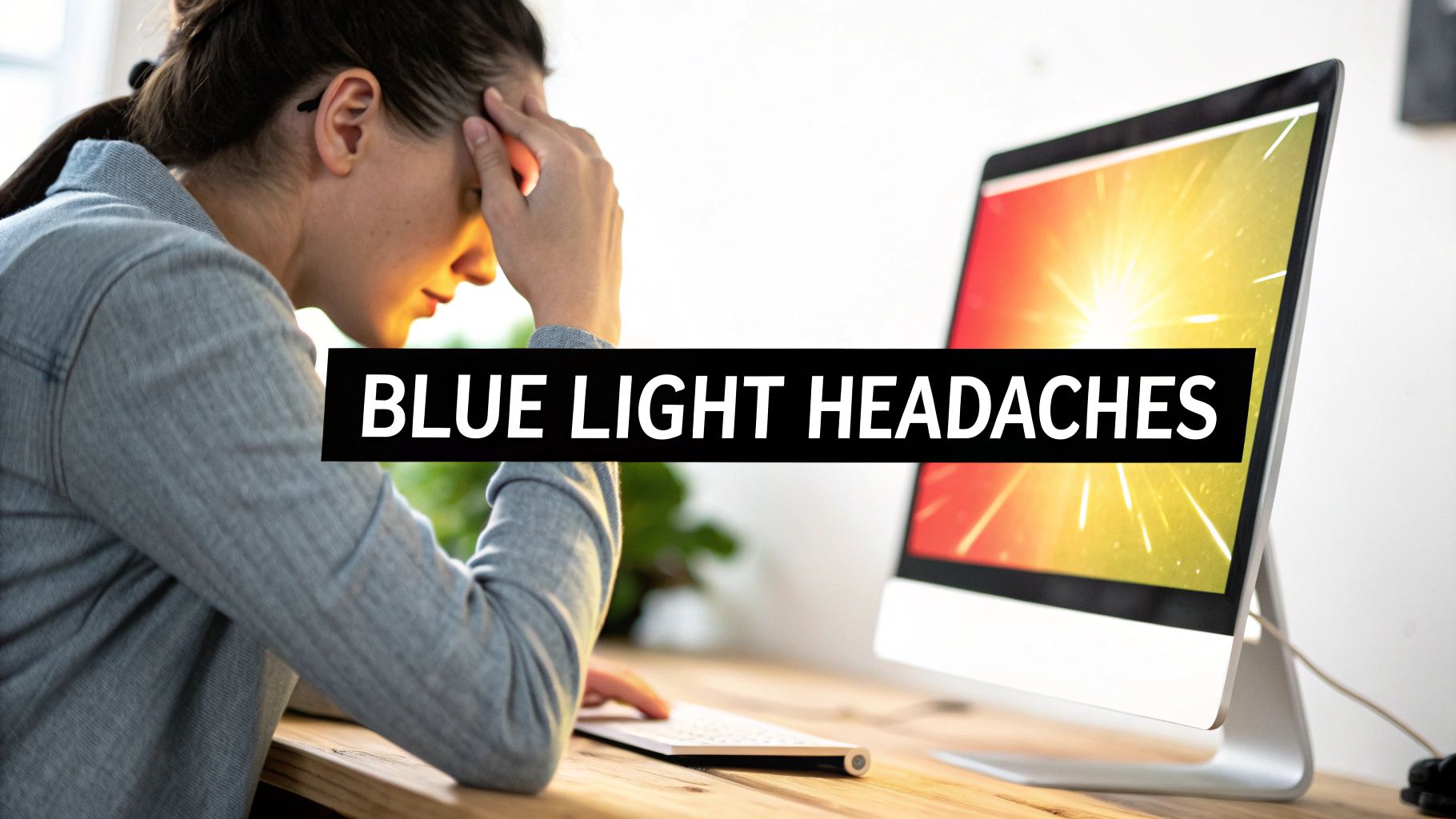
If you’ve ever wrapped up a long day staring at your computer only to be hit with a pounding headache, you're definitely not alone. This is the all-too-common reality of a blue light headache, often triggered by spending hours in front of our digital devices. The intense, high-energy light blasting from your phone, laptop, and TV can seriously overstimulate your eyes and brain, leading straight to discomfort.
You can think of the blue light from your screens like a constant, high-frequency "buzz" that your eyes just weren't designed to deal with for hours on end. This constant stimulation is a major cause of digital eye strain, a condition whose symptoms are becoming more and more familiar to all of us.
When your eyes are fighting to focus on the scattered, high-energy light from a screen, the tiny muscles in them go into overdrive. That relentless effort can directly cause tension headaches—that classic tight, squeezing pain you feel around your forehead.
It’s not just how long you stare at a screen, but the intensity of that use, that fuels the pain. The link between digital screens and headaches is undeniable, especially for young adults who are glued to their devices. One study highlighted that 30.5% of participants were on screens for 7–9 hours a day, and most of them directly connected their screen time to how often they got headaches.
The takeaway is pretty clear: more screen time often leads to more frequent, more intense headaches. Your brain gets stuck in a state of high alert from the nonstop barrage of blue light, which makes it tough to wind down and leads to mental fatigue that shows up as very real, physical pain.
The pain from a blue light headache isn't just in your head. It often brings along other symptoms that are clear signals your eyes are overworked and desperately need a break.
Besides the headache itself, you might notice a whole host of other uncomfortable symptoms. These are all signs that your eyes are being pushed well beyond their limits by your screens.
Recognizing these symptoms is the first step toward getting real relief. If you're curious and want to dive deeper, you can learn more about blue light on our blog.
For a lot of us, that throbbing headache after a long day of screen time is more than just a minor annoyance. For some, it’s the first warning sign of a full-blown migraine. There’s a surprisingly direct connection here, and it often starts with something we all take for granted: sleep.
Your brain has a clever way of telling you it’s time to wind down. It releases a hormone called melatonin, which is basically the "go to sleep" signal. But when you're scrolling on your phone or finishing up work late at night, the intense blue light from the screen acts like a blaring alarm, telling your brain to stop making melatonin. This makes it harder to fall asleep and seriously messes with the quality of the rest you do get.
This is where things get serious for migraine sufferers. A lack of deep, restorative sleep is one of the biggest, most well-documented migraine triggers out there. Migraines are a deeply disruptive neurological condition that affects over 1 billion people globally, and anything that throws off your body's internal clock—your circadian rhythm—can set one off.
By disrupting melatonin, blue light directly sabotages your sleep-wake cycle. This creates a vicious pattern: more screen time leads to worse sleep, and worse sleep makes you far more likely to suffer a painful migraine. You can dive deeper into the science behind sleep disruption and migraines on ncbi.nlm.nih.gov.
If you’ve ever had a migraine, you know all about photophobia. It’s that extreme, painful sensitivity to light where even a dim lamp feels like a spotlight. For many, blue light is the absolute worst offender.
This means the very devices we rely on for work, connection, and entertainment can turn into instruments of torture during an attack. They don’t just trigger the migraine; they can make it feel a thousand times worse and drag out the recovery process. If you want to get a better handle on managing light sensitivity, we’ve got some great info in our online resources.
Think of it this way: when you have a migraine, your brain is already in a state of high alert. Blasting it with high-energy blue light is like pouring gasoline on a fire. It just amplifies the pain and keeps the attack going longer.
Taking control of your blue light exposure, especially in the evening, is one of the most practical things you can do to break this cycle. When you shield your eyes, you're not just reducing eye strain—you're protecting your sleep and giving your brain a fighting chance to stay calm and migraine-free.
Okay, so we know what’s causing the problem. Let's talk solutions. One of the most direct and effective ways to fight back against blue light headaches is to use specially tinted glasses. Think of them as a personal shield for your eyes, filtering out the most aggressive wavelengths of light before they have a chance to trigger strain and pain.
But here’s the thing: not all blue light glasses are the same. The color of the lens makes all the difference. Orange and amber lenses are engineered to block a much wider spectrum of high-energy blue light than their clear or lightly tinted counterparts. This powerful filtration is exactly what you need to reduce the digital eye strain that so often leads to a nagging tension headache after hours in front of a screen.
This protection is even more critical if you're sensitive to light. Photophobia is a brutal symptom for over 92% of people who suffer from migraines, and blue light is a major offender. In fact, research shows that exposure to bright blue light can make migraine pain worse for up to 80% of subjects, making it a powerful trigger to avoid. You can dig into the full study on migraines and light sensitivity on headachejournal.onlinelibrary.wiley.com if you want to see the science for yourself.
Beyond just preventing eye strain during the day, orange colored blue light glasses are a game-changer for your sleep. By blocking the disruptive blue light that suppresses melatonin—the hormone that signals "it's time for bed"—they help your body's natural sleep-wake cycle function properly. Wearing them in the evening allows your body to produce melatonin naturally, making it easier to fall asleep and stay asleep. This leads to the deep, restorative rest your brain needs to prevent headaches.
Similarly, amber blue light glasses create the perfect environment for you to relax and wind down. They cast a warm, soothing glow that helps your brain shift from a state of high alert to one of calm. This mental transition is crucial for reducing the stress and tension that often contribute to blue light headaches, allowing you to decompress after a long day.
By making tinted glasses part of your daily routine, you give your eyes and brain the protection they need to navigate a world full of screens without the painful consequences.
This isn't just about managing symptoms; it's a proactive step that gets to the root cause of screen-induced discomfort. Pair it with other healthy habits, and you’ll be amazed at the difference it can make.
If you want to fight back against blue light headaches, the battle often starts with winning the war for better sleep. This isn't just about what happens when your head hits the pillow; it’s about building a solid routine in the hours leading up to bedtime, with blue light management at its core.
The single most powerful habit you can adopt is slipping on a pair of orange or amber colored blue light blocking glasses about one to two hours before you plan to sleep. Think of it as creating your own personal sunset. These glasses filter out the harsh, stimulating blue light from all your screens and indoor lighting, giving your brain the signal it needs to start producing melatonin—the hormone that says, "Hey, it's time to wind down."
Orange colored blue light glasses are a game-changer for reducing digital eye strain when you're on your phone or laptop in the evening. They block a huge chunk of that high-energy light that makes your eye muscles tired and achy, which is a classic trigger for tension headaches. They are just as crucial for sleep, as they protect the melatonin your brain needs to produce for a night of deep rest.
Amber blue light glasses do a similar, equally important job. They cast everything in a warm, soothing hue that helps your brain switch from its frantic "day mode" to a much calmer "night mode." This simple shift is vital for preparing your mind and body for a night of truly restorative rest.
Beyond just wearing the right eyewear, layering in a few other habits can make a massive difference in your sleep quality and how often you get headaches. These practices work together to get your body's internal clock back on track.
Here’s what you can start doing tonight:
This simple visual breaks down a few key steps for preventing digital eye strain during the day, which makes your nighttime routine even more effective.
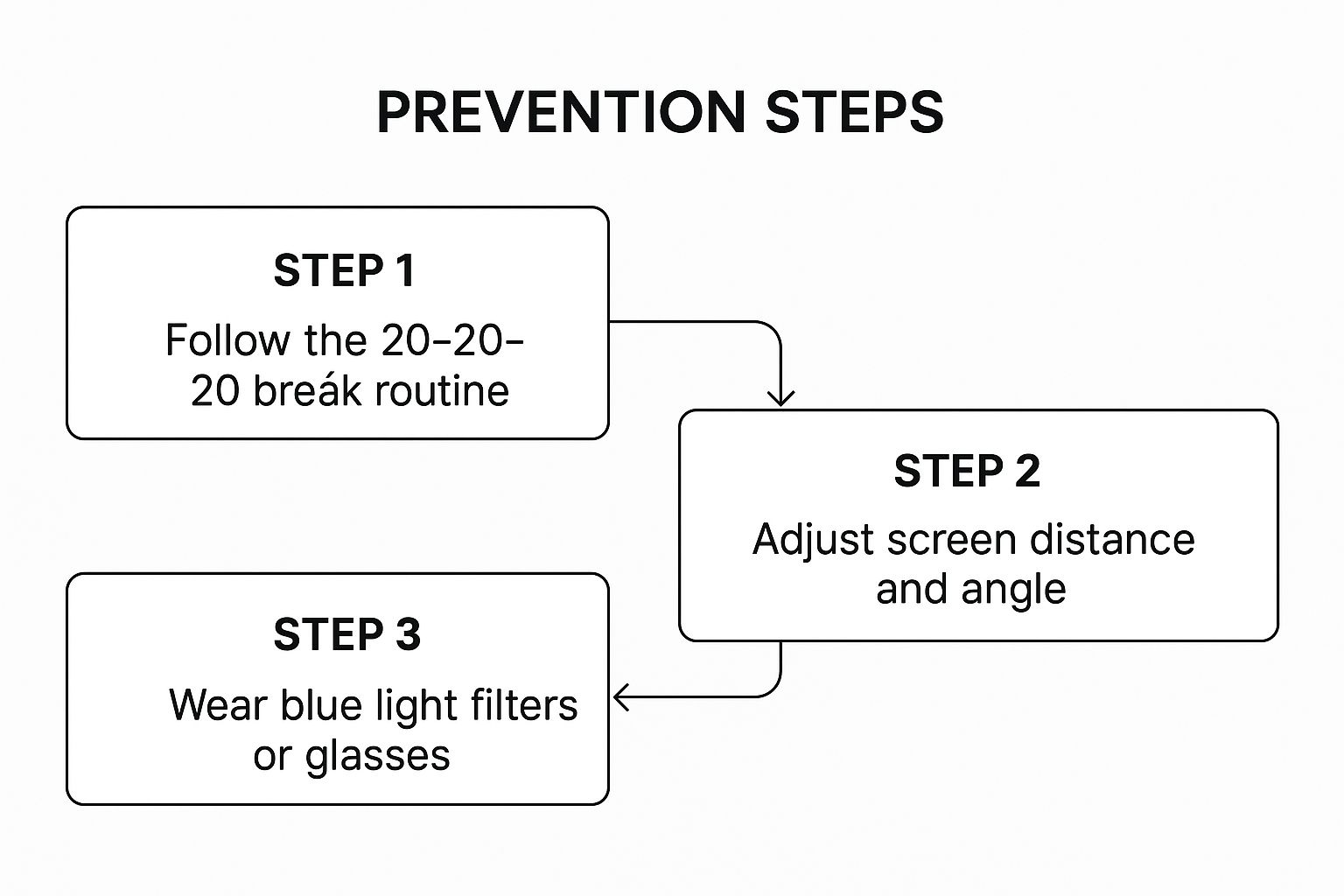
By tackling these things during the day, you’re reducing the cumulative strain that so often builds into an evening headache.
| Strategy | How It Helps | When to Do It |
|---|---|---|
| Wear Amber/Orange Glasses | Blocks stimulating blue light to allow natural melatonin production. | 1-2 hours before bedtime. |
| Set a Consistent Sleep Schedule | Reinforces your body's internal clock (circadian rhythm). | Every day, including weekends. |
| Optimize Your Bedroom | Creates an environment conducive to deep, uninterrupted rest. | Every night. |
| Avoid Late-Night Stimulants | Prevents interference with your natural sleep cycle. | No caffeine after 2 p.m.; no heavy meals/alcohol 2-3 hours before bed. |
| Establish a "Wind Down" Routine | Signals to your brain and body that it's time to prepare for sleep. | The last 30-60 minutes before bed. |
By adopting these habits, you aren't just dodging headaches—you're making a real investment in your overall health and well-being.
Stress and anxiety are like fuel for headaches and migraines. That constant tension doesn't just stay in your head—it often shows up as real, physical pain. Learning how to manage that daily pressure is one of the best things you can do to prevent a blue light headache from taking hold. It's all about intentionally creating moments of calm and giving your brain a much-needed break from all the stimulation.
A surprisingly simple but effective habit is making blue light blocking glasses part of your evening routine. Think of it as drawing the curtains on your digital day. The modern world inside your home, lit by bright LEDs and filled with screens, is constantly telling your brain to stay on high alert.
Slipping on a pair of orange or amber colored blue light glasses in the evening sends a powerful signal to your brain: it's time to wind down.
Orange colored blue light glasses are your best defense against the digital eye strain that builds up after a long day of screen time. They filter out the harsh, high-energy light that forces your eye muscles to work overtime, stopping the tension that so often escalates into a headache. They also protect your melatonin production, which is crucial for getting the deep, restorative sleep that keeps headaches at bay.
In the same way, amber blue light glasses help you relax and decompress. They wrap your surroundings in a warm, gentle light, which can have an almost immediate calming effect on your entire nervous system. This helps your mind transition from a state of focus and alertness to one of rest and recovery.
By creating a less stimulating visual environment, you give your mind the space it needs to decompress. This simple act can significantly lower your stress levels, making you far more resilient to headache triggers.
Getting better sleep is one of the most powerful moves you can make to slash both your stress and headache frequency. A well-rested brain is just less reactive to triggers. Weaving a few quick relaxation habits into your day can stop stress from spiraling out of control.


We've explored the deep connection between our screens, our sleep, and that nagging pain of a blue light headache. To finish up, let's tackle some of the most common questions that pop up when people are trying to find relief.
Think of this as a quick-reference guide. These are the key takeaways to help you feel confident in your plan for managing screen time and protecting your well-being.
The color of your blue light glasses really does matter, especially when your goal is to prevent headaches and get better rest. It all comes down to filtering out specific wavelengths of light that cause the most trouble.
Orange colored blue light glasses are your heavy hitters for fighting digital eye strain. They block a huge chunk of the high-energy blue light that forces your eye muscles into overdrive—a major cause of tension headaches. This filtering is just as important for sleep, as it stops blue light from shutting down melatonin, the hormone that tells your brain it's time for bed.
In the same vein, amber blue light glasses are fantastic for helping you relax and wind down. Their warm tint creates a much calmer visual environment. It’s like a signal to your brain, telling it to switch from an alert, "daytime" mode to a restful, "evening" state. Easing that mental tension is a huge step in preventing headaches.
Boosting your sleep quality is one of the single most effective things you can do to prevent headaches. When your brain is well-rested, it's just plain better at handling triggers. Here are the habits that make the biggest impact:
Stress is a massive headache trigger for so many people. Getting a handle on it is essential for finding any kind of long-term relief.
Building small, consistent habits to unwind each day can dramatically reduce how susceptible you are to both stress headaches and migraines. You're basically giving your nervous system a chance to hit the reset button.
Here is a top 4 list of ways to reduce stress or anxiety and relax:
Ready to take back control of your sleep and finally say goodbye to blue light headaches? Element Lux offers high-quality, scientifically designed glasses that block over 99% of disruptive blue light. Protect your eyes, improve your sleep, and feel your best.
