It’s a story we all know too well. You're scrolling on your phone late at night, and suddenly, sleep feels like a distant memory. This isn't just a lack of willpower; it’s your biology getting tricked. The connection between blue light and circadian rhythm is the real culprit here, as the glow from our screens fools your brain into thinking it's still daytime.
Ever felt tired but completely wired after an evening glued to your laptop? You can thank your body's internal 24-hour clock, known as the circadian rhythm. Think of it as a master conductor for your body, signaling when it's time to feel alert and when it's time to wind down.
For thousands of years, this internal clock was perfectly in sync with the sun. Bright morning light was the cue to wake up, and the growing darkness of night was the signal to prepare for sleep. Simple.
But modern life threw a wrench in the works: artificial light from our screens. Our smartphones, tablets, and TVs blast out a high concentration of blue light, which happens to look a lot like the bright midday sun to our brains. When your eyes pick up this light late at night, they send a powerful "it's daytime!" alert straight to your brain.
That "daytime" signal triggers one critical problem: it slams the brakes on melatonin production. Melatonin is the hormone that essentially tells your body, "Hey, it's time for bed."
Blue light is especially good at shutting this process down. Research has shown that specific blue light wavelengths don't just delay the release of melatonin; they can shift your entire sleep cycle by up to three hours. That's roughly double the impact of green light.
You're essentially giving yourself a case of "digital jet lag." Your body knows it's late, but your brain, confused by the constant stream of blue light, refuses to send out the "sleep messenger."
This disruption does more than just make it harder to fall asleep. It chips away at the quality of the rest you finally get. Your body’s natural rhythm is absolutely essential for physical repair, mental clarity, and emotional balance.
Understanding this biological hack is the first step toward taking back your nights. By getting smart about your light exposure, you can help your internal clock get back on schedule, paving the way for deeper, more restorative sleep.
For more insights into how light impacts your well-being, explore our comprehensive blue light blog.
Ever wondered why a late-night scroll through your phone leaves you feeling wired, even when you're exhausted? To figure that out, we need to take a quick trip deep inside your brain.
Tucked away in there is a tiny but powerful region called the suprachiasmatic nucleus, or SCN. You can think of it as your body's master clock. It's the central command center in charge of keeping your entire system running on a 24-hour schedule.
Every morning, sunlight hits your eyes and sends a powerful "wake up!" signal straight to this master clock. The SCN then gets to work, coordinating everything from your metabolism and hormone levels to your body temperature. It makes sure every part of you is in sync with the day.
But as evening rolls in and the natural light outside fades, the master clock starts preparing your body for shutdown. It sends out a critical message to start producing melatonin, the hormone that acts as your body's "sleep messenger." That rising melatonin level is what makes you feel drowsy and ready for bed.
This is where artificial blue light from our screens completely sabotages the entire process.
Your eyes have specialized cells that aren't for seeing in the way you might think. These cells contain a unique photopigment called melanopsin, which happens to be extremely sensitive to blue light.
When melanopsin detects the blue wavelengths pouring out of your devices, it sends an emergency alert right back to your master clock: "The sun is still up! Stay alert!"
This creates a frustrating state of digital jet lag. Your body is physically tired and knows it's nighttime, but your brain, tricked by all that artificial light, refuses to release the sleep messenger. The result is that awful feeling of being exhausted but unable to fall asleep, all thanks to the disrupted relationship between blue light and your circadian rhythm.
Wearing orange-lensed blue light glasses, like those from Element Lux, acts as a protective shield. By filtering out these disruptive wavelengths, they prevent the "daytime" signal from ever reaching your brain, allowing your body to produce melatonin naturally.
So we know that blue light can throw your internal clock into a state of "digital jet lag." What's the most direct way to fight back? It's simple, really: stop the disruptive light from ever reaching your eyes in the first place.
This is exactly what amber and orange-lensed glasses were designed to do. Think of them as a specialized shield for your eyes, built for nighttime. Unlike those clear or faintly yellow daytime lenses that only filter a tiny fraction of blue light, these darker tints are serious about protection. They are engineered to block the intense blue and even some green light wavelengths—the very ones that scream "it's daytime!" to your brain.
We’ve all been there. After hours glued to a screen, your eyes feel gritty and tired, your vision gets a little blurry, and a dull headache starts to creep in. That’s digital eye strain, and it happens because your eyes are working overtime to process the harsh, high-energy visible (HEV) light blasting from your devices.
Orange-tinted lenses work by absorbing a huge chunk of that aggressive HEV light. This immediately softens the screen's glare and reduces the stark contrast, making everything look a little warmer and calmer. Your eye muscles can finally relax. For many people, the relief from fatigue and strain is almost immediate.
This isn't just about physical eye comfort. Putting on a pair of amber-lensed glasses sends a powerful signal to your entire nervous system. By cutting off that constant stream of "stay awake!" blue light, you're giving your brain the message it's been waiting for.
It's like flicking a switch from a high-alert, ready-for-anything state to a calm, restorative one. You’re essentially telling your body, "The day is done. Time to power down and prepare for sleep." This mental shift is a game-changer for anyone who has trouble switching off their brain at night.
The data below paints a clear picture of the problem these glasses solve, connecting screen time directly to poor sleep and suppressed melatonin.
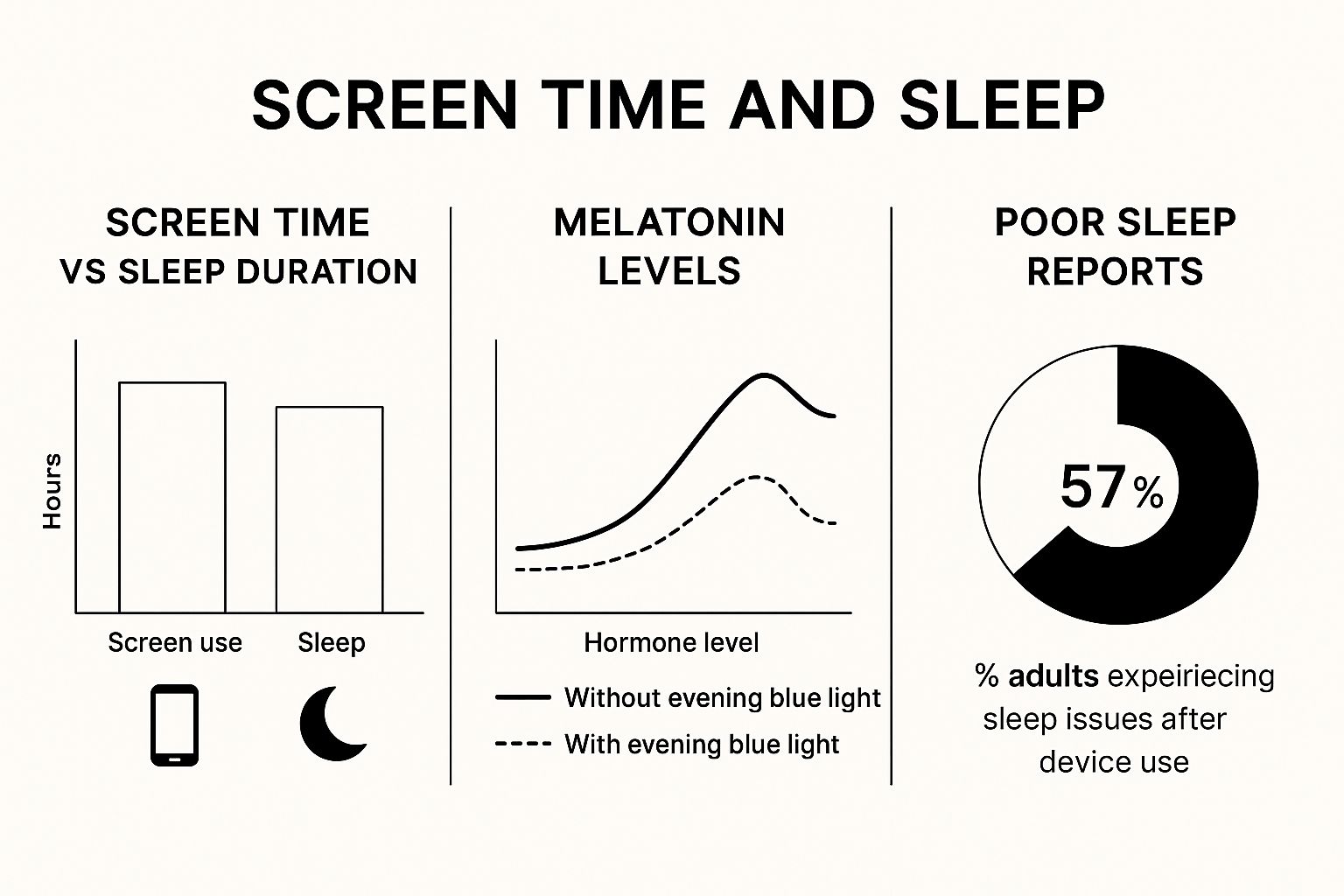
The takeaway is undeniable: more screen light at night equals less quality sleep.
Not all blue light glasses are the same. The color of the lens tells you a lot about its purpose and how much protection it offers. Choosing the right pair depends entirely on when you'll be using them and what you're trying to achieve.
| Lens Color | Blue Light Blocked | Best For | Ideal Use Case |
|---|---|---|---|
| Clear | 10% – 30% | Daytime screen use, reducing digital eye strain at the office. | Professionals who work on a computer all day and want to reduce eye fatigue without color distortion. |
| Yellow | 40% – 70% | Late afternoon, overcast days, or heavy indoor screen use. | Gamers, designers, or anyone needing a bit more protection and contrast enhancement during the day. |
| Amber | 90% – 98% | Evening use, 2-3 hours before bed. | Winding down after work, watching TV, or casual evening screen use while protecting your melatonin. |
| Orange | 99%+ | Maximum nighttime protection for sleep. | Anyone serious about optimizing their sleep, worn 2-3 hours before bed to block virtually all disruptive light. |
Ultimately, amber and orange lenses are your best bet for sleep, while clear and yellow are better suited for daytime eye strain. For a complete wind-down routine, a darker tint is non-negotiable.
Here’s the main event: the real magic of true orange-lensed glasses is how they protect your melatonin production. By blocking over 99% of the blue light spectrum that messes with your sleep, these glasses let your brain receive the "darkness" signal it needs to start releasing this crucial sleep hormone.
Consistent use for two or three hours before you hit the pillow helps get your internal clock back on track. This makes it far easier to fall asleep naturally and, more importantly, stay asleep for that deep, restorative rest your body craves.
You can think of it this way: orange lenses don't make you sleepy. They simply remove the artificial barrier—blue light—that's preventing your body from doing what it naturally wants to do at night: sleep.
If you’re curious about the deeper science, we break it all down in our detailed guide on how these glasses improve sleep.
Knowing the science behind blue light is one thing, but actually doing something about it is what gets results. The good news? You don't need a total life overhaul to reclaim your natural sleep cycle. A few smart, consistent habits can make a massive difference in how fast you fall asleep and how deeply you rest.
The single most effective tool you can use is a quality pair of orange-lensed blue light blocking glasses. Think of them as a fortress for your eyes. When you wear them for just 2-3 hours before bed, you’re creating a personal sanctuary from the melatonin-killing signals blasted by screens, lightbulbs, and every other artificial light source. This simple habit lets your brain start its natural wind-down process, just like it's supposed to.
Orange-tinted glasses do more than just protect your melatonin. They provide immediate relief from digital eye strain by cutting the harsh, high-energy glare from your screens. This visual noise reduction helps your eye muscles relax, easing that tired, gritty feeling and the tension headaches that come with too much screen time.
More importantly, this preps your mind for sleep. Once your brain is no longer getting hit with stimulating light, your nervous system can finally shift from that alert, "fight-or-flight" state into a calm, "rest-and-digest" mode. It's a crucial transition for anyone who struggles to quiet a racing mind at the end of the day.
Amber lenses work in a similar way, acting as a powerful shield against disruptive light. They’re perfect for your evening wind-down routine. By filtering out a huge chunk of the blue light spectrum, they send a clear signal to your body that the day is over. This creates a psychological cue to relax, making it far easier to detach from the day's stressors and get ready for a peaceful night.
Study after study shows the damage evening screen use can cause. One found that just two hours of blue light exposure at night pushed participants' internal clocks back by an average of 1.1 hours—a massive disruption.
While glasses are your secret weapon, layering in other healthy habits will fast-track your journey to better rest. A holistic approach makes the benefits from blocking blue light really stick.
Managing evening light is just as much about managing stress as it is about sleep. After all, a calm mind falls asleep much easier. Here are four ways to build a relaxing pre-sleep ritual.
By combining these strategies, you can build a powerful evening routine that protects your blue light and circadian rhythm connection from modern-day disruptions. To dive deeper into sleep science and optimization, check out the valuable information in our Element Lux resources.
Managing your light exposure in the evening does more than just get you ready for sleep—it’s a powerful way to bring down stress and anxiety. After a long day, it's easy for your nervous system to get stuck in high gear. By taking control of your environment, you can gently guide your body and mind toward genuine relaxation, making it much easier to unwind and recover.
The most important piece of any effective evening routine is physically blocking the stimulating light that keeps you feeling wired. This is where a quality pair of amber or orange blue light glasses becomes your best friend. They’re a direct intervention, cutting off the frantic "daytime" signals that modern lighting beams into your brain.
If you deal with digital eye strain, orange-tinted glasses can be a game-changer. They work by absorbing the harsh, high-energy visible (HEV) light blasting from your screens, which softens the glare and cuts down on the visual "noise" that forces your eye muscles to work overtime. You’ll often feel almost immediate relief from that tired, gritty feeling and the tension headaches that come with too much screen time.
This physical relief is just the first step. More importantly, by blocking the specific wavelengths that slam the brakes on melatonin, orange lenses let your body start its natural sleep prep right on schedule. This keeps your blue light and circadian rhythm in sync, paving the way for a night of deep, uninterrupted rest.
In the same way, amber-lensed glasses are a fantastic tool for encouraging relaxation. When you put them on in the evening, they create a warm, calm visual environment that signals to your brain that the day is officially done. It's a simple act that helps you transition from a state of active stress to one of peaceful rest.
By filtering out the most disruptive light, amber glasses allow your nervous system to shift from its alert, "fight-or-flight" mode into its restorative "rest-and-digest" state. This mental downshift is crucial for anyone who has trouble switching off their thoughts and truly unwinding before bed. It’s the key to letting go of the day's anxieties.
The real magic of wearing amber or orange lenses isn't just about what they do—it's about what they prevent. They stop artificial light from hijacking your biology, allowing your body's natural relaxation and sleep processes to take over just as they were always meant to.
While glasses are your most direct tool for managing light, you can amplify their benefits by building a solid routine around them. A consistent evening ritual trains your body and mind to recognize when it's time for sleep.
A calm mind is the foundation of good sleep. The same strategies that protect your sleep cycle also work wonders for dialing down evening stress and anxiety.
When you start digging into the world of blue light, a lot of questions pop up. We've compiled the most common ones here to give you clear, straightforward answers you can actually use to sleep better, cut down on eye strain, and just feel better overall.
You know that tired, gritty, headache-y feeling you get after staring at a screen all day? That's digital eye strain, and it’s a direct result of the harsh, high-energy visible (HEV) light blasting from our devices.
Orange-tinted lenses, like the ones from Element Lux, are a game-changer here. They act as a powerful shield, absorbing a huge chunk of those aggressive blue wavelengths. This immediately cuts down on screen glare and visual static, allowing your eye muscles to finally relax. The relief from that built-up fatigue and tension is almost instant.
The single biggest reason orange lenses improve sleep is by protecting your body's melatonin production. Melatonin is the hormone that basically tells your body it's time to wind down for sleep, but its release is incredibly sensitive to light.
By blocking over 99% of the blue and green light that tricks your brain into thinking it's still noon, orange glasses let your body produce and release melatonin on a natural schedule. Wearing them for two or three hours before you plan to sleep is the best way to ensure the connection between blue light and circadian rhythm stays intact. It makes falling asleep—and staying asleep—so much easier.
Amber lenses are perfect for easing into your evening. They work much like orange lenses by filtering out a lot of that stimulating blue light, but their slightly lighter tint makes them great for general evening activities like watching a movie or reading.
By shutting off the constant "stay alert!" signals from your lamps and screens, amber glasses help your nervous system shift gears from a high-stress day mode to a more relaxed state. It's a powerful psychological cue that the day is over, helping both your mind and body unwind naturally for a restful night.
Think of it this way: amber and orange glasses don't force you to relax. They simply remove the artificial light signals that are actively preventing you from relaxing.
Great sleep is all about building a solid routine. While wearing blue light blocking glasses is probably the most effective hack for our modern environment, you can create a powerful synergy by pairing them with other healthy habits to reset your sleep cycle.
A calm mind is a prerequisite for good sleep. The very same strategies that protect your circadian rhythm are also incredibly good at dialing down evening stress and anxiety.
Ready to take back your evenings and finally get the rest you deserve? The Element Lux blue light blocking glasses are scientifically designed to filter out the exact wavelengths of light that sabotage your sleep.
