If you’ve ever finished a long day at your desk with tired, scratchy, or blurry eyes, you’re in good company. The usual suspect is digital eye strain, a condition officially known as Computer Vision Syndrome (CVS). It's the direct result of our screen-saturated lives, and recognizing the signs is the first step to feeling better.
That nagging headache behind your eyes or the fuzzy vision that creeps in after a few hours on your laptop isn't just a minor inconvenience. It's a clear signal from your body that your eyes are overworked. Digital eye strain kicks in when you focus intently on a screen for extended periods, causing the tiny muscles in your eyes to get seriously fatigued.
This is a far more widespread issue than most people think, and it’s not just about computers. It’s the hours we spend on our tablets, phones, and even binge-watching our favorite shows. We also tend to blink a lot less when we're staring at a screen, which is a fast track to dryness and irritation.
To make matters worse, a bad ergonomic setup—like a monitor that's too high or low—can compound the problem, leading to neck and shoulder pain as you instinctively contort your body to compensate for tired eyes.
The problem has become so common that experts are now tracking it on a global scale. A comprehensive 2025 study, which analyzed data from over 66,000 workers across more than 20 countries, found that about 69% of workers experienced some degree of CVS. That's a huge slice of the modern workforce.
This really highlights how crucial it is to learn practical ways to reduce eye strain in our day-to-day. You can find out more about how digital habits impact eye health in this comprehensive guide on our blue light blog.
The key takeaway is that digital eye strain isn't just a temporary discomfort—it's a chronic issue affecting a majority of the modern workforce. Recognizing common symptoms is crucial for taking preventative action.
You might be brushing off some of these common symptoms:
Understanding these signs and connecting them to your screen habits is the foundation for protecting your long-term eye health and, frankly, just getting through your workday without feeling drained.
Lasting relief from digital eye strain isn’t about quick fixes. It’s about being intentional with your environment and daily routines. When you create a workspace that works for you instead of against you, you're laying the foundation for real, long-term comfort. Even small, consistent adjustments can make a huge difference in how your eyes feel at the end of the day.
A great place to start is the famous 20-20-20 rule. It’s simple but incredibly effective. Every 20 minutes, take a 20-second break to look at something about 20 feet away. This little pause gives the tiny, hard-working muscles in your eyes a much-needed chance to relax, stopping that slow burn of fatigue from constant, close-range focus.
Beyond just taking breaks, the physical setup of your screen plays a massive role. You want your monitor positioned about an arm's length away—that’s roughly 20 to 26 inches—with the top of the screen at or just slightly below your eye level. This simple ergonomic tweak keeps you from craning your neck or straining your eyes up or down.
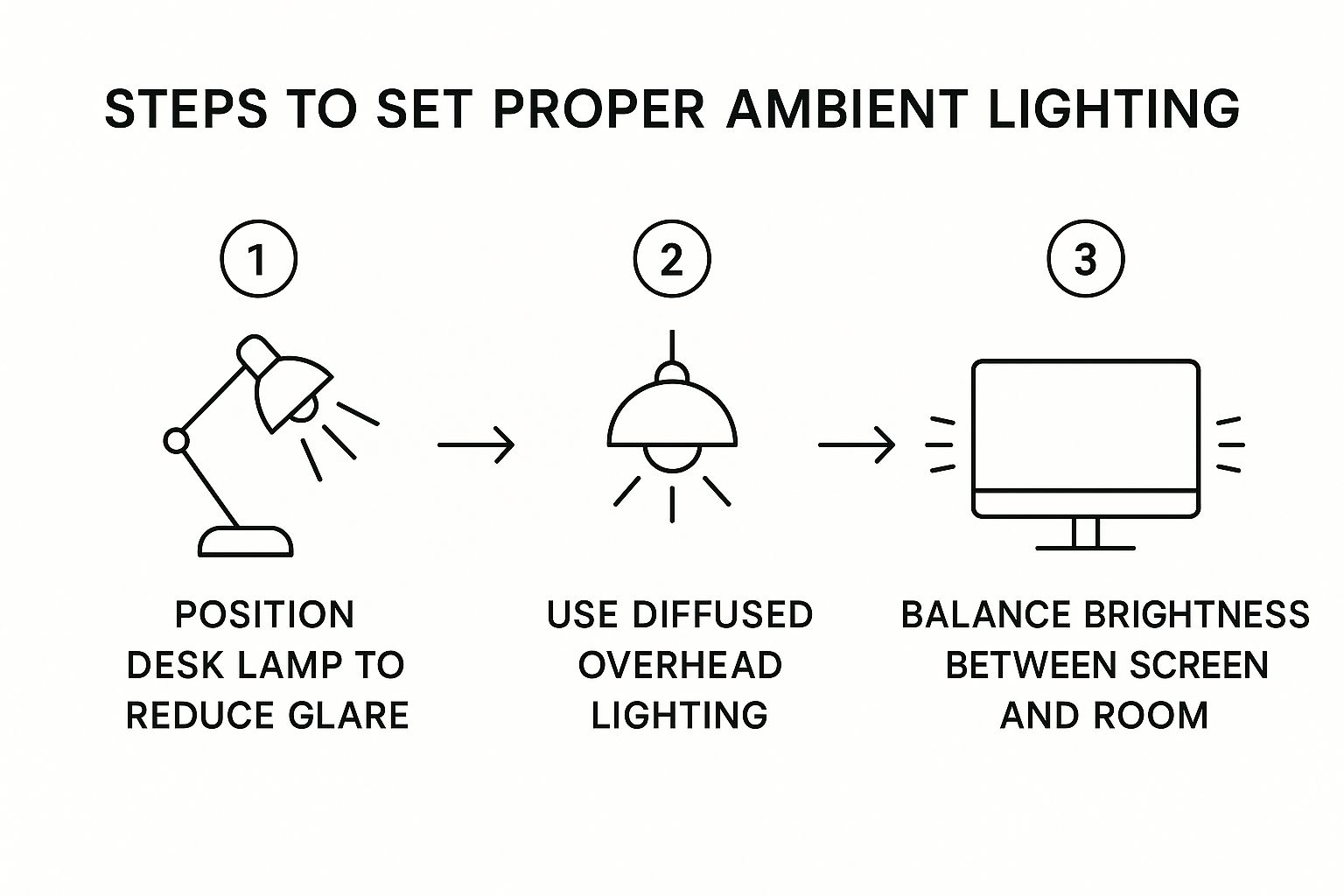
Just as important is getting your screen’s brightness and contrast right. They should match the ambient light in your room. If your screen is way brighter than your surroundings, it’s like staring into a lightbulb. If it’s too dim, your eyes have to work overtime just to see what's on the screen.
This image breaks down a super simple three-step process for getting your lighting right to cut down on glare and balance the brightness.
Here's another trick that’s easy to forget: just blink! When we stare at screens, our blink rate can drop by more than half, which is a fast track to dry, irritated eyes. Making a conscious effort to blink fully and often helps keep your eyes naturally lubricated. If they still feel dry, a few drops of artificial tears can provide immediate relief.
For a deeper dive into other helpful habits and tools, explore the valuable information available in our Element Lux resources section.
This is where blue light blocking glasses come in. Integrating them into your routine, especially in the evening, is a powerful strategy for both eye comfort and better sleep. The high-energy visible (HEV) light blasting from our screens is a major contributor to digital eye strain, leaving our eyes feeling tired and wired.
By filtering out these harsh wavelengths, orange-colored blue light glasses reduce glare and visual noise, allowing your eye muscles to relax. This can make extended screen time feel significantly more comfortable.
But the benefits go way beyond just immediate eye relief. When you wear them in the hours before bed, these glasses block the specific blue light frequencies known to suppress melatonin—that’s the hormone that tells your body it's time to sleep. This helps your brain naturally wind down, making it easier to fall asleep and get the deep, restorative rest you need.
Amber blue light glasses serve a similar, crucial purpose. They create a calming visual environment that helps you relax and de-stress after a long day of screen exposure. Think of them as a signal to your brain that the stimulating part of the day is over, paving the way for a peaceful transition into your evening and, eventually, a great night's sleep.
Okay, so you've nailed the ergonomic adjustments and you're taking regular screen breaks. That’s foundational stuff. But sometimes, you need a more direct tool in your corner to fight back against digital eye strain.
This is where orange-lensed blue light blocking glasses come in. Think of them as a powerful ally, specifically built to filter out the high-energy visible (HEV) light that our screens blast at us all day. This is the aggressive, harsh light that's largely responsible for that gritty, tired-eye feeling you get after a long day at the computer.
Unlike clear or even some yellow lenses that only catch a tiny fraction of blue light, a good pair of orange lenses are designed to block a significant portion of the most intense, problematic wavelengths. By cutting down on all that harsh visual "noise," they ease up the glare and finally let those tiny muscles in your eyes relax. It makes hours of screen time feel much more comfortable and sustainable.
Picture this: you're on a tight deadline, staring down a massive spreadsheet for hours. The numbers start to swim, and that familiar dull headache starts creeping in behind your eyes. This is the exact scenario where orange-lensed glasses can provide real, tangible relief, helping to sharpen your focus and ease the visual fatigue that just kills productivity.
Here’s a great example—the Element Lux blue light blocking glasses are designed specifically for this.
You can see that distinct orange tint in the Element Lux lenses. That’s the key to their power in filtering out all that disruptive blue light.
The benefits don't just stop at eye comfort during the day. One of the biggest wins with these glasses is their ability to support better sleep. When you're exposed to blue light in the evening, it basically tricks your brain into thinking it's still daytime. This messes with your body's natural production of melatonin—the crucial hormone that tells your body it’s time to wind down and rest.
When you pop on a pair of orange or amber blue light glasses for an hour or two before bed, you’re creating a protective shield. It's a simple habit that helps your brain transition into sleep mode naturally, which often means falling asleep faster and getting more of that deep, restorative sleep we all need.
By blocking the specific blue light that suppresses melatonin, orange-lensed glasses help recalibrate your internal clock. It’s a small step that can lead to deeper, more refreshing sleep, which is critical for everything from your mood to your cognitive function.
On top of the sleep benefits, amber and orange blue light glasses are fantastic for helping you relax and decompress after a mentally draining day. The warm tint creates a much calmer visual environment, toning down the stimulating effects of bright screens and harsh overhead lighting.
Think of it as a clear signal to your brain: the high-alert, work-focused part of the day is officially over.
Adding them to your evening routine helps draw a real boundary between your "on" time and "off" time. In a world where it's so easy to stay connected 24/7, that separation is essential for managing stress and anxiety.
Here are a few top ways to get better sleep and reduce stress, with blue light blocking glasses as a cornerstone of your routine.
Top Ways to Get Good Sleep
Top 4 Ways to Reduce Stress and Relax
We've all been there. It's late, you're physically exhausted, but after an hour of scrolling on your phone or finishing up some work on the laptop, your brain just feels… wired. That's not just in your head—it's a biological response to blue light.
Evening exposure to blue light from screens sends a jolt to your brain, tricking it into thinking it's still daytime. This suppresses the production of melatonin, the crucial hormone that signals your body it's time to wind down. When melatonin is out of whack, you're left tossing and turning, unable to get the restorative sleep you desperately need.
This is where slipping on a pair of orange or amber blue light glasses a couple of hours before bed can be a total game-changer. These aren't just tinted lenses; they're specifically engineered to filter out the exact wavelengths of blue and green light that are most notorious for messing with melatonin.
By blocking those disruptive signals, you're essentially creating an artificial sunset for your eyes. This simple act allows your brain to get back on track with its natural sleep-wake cycle, making the transition into sleep feel smooth and effortless. The result? You fall asleep faster and get more of that deep, refreshing sleep your body craves.
If you're interested in the nitty-gritty science, you can learn more about how our glasses help with sleep and support your body's natural rhythms.
Think of it this way: by blocking the light frequencies that halt melatonin production, orange and amber lenses help you hit the reset button on your internal clock. It's a small tweak to your evening routine that can pay huge dividends for your sleep quality and overall well-being.
There's also a psychological benefit. The warm, soft tint of amber glasses has a noticeable calming effect on the nervous system. It creates a gentler, less stimulating visual environment that signals to your mind that the high-alert part of your day is officially over.
This mental shift is huge for managing the day-to-day stress and anxiety that so many of us carry into the evening. It paves the way for a more peaceful, relaxing end to your day. The Element Lux amber glasses pictured here are designed precisely for this—to create a soothing effect while blocking all that junk light.
The distinct amber tint is what makes the magic happen, filtering out harsh blue light and creating a visual experience that's perfect for evening use.
Pairing blue light glasses with a few other smart habits can create a powerful evening routine. Here are a few of our favorites.
Top Habits for Great Sleep:
Top 4 Ways to De-Stress Before Bed:
Let's be honest, winding down after a long day is tough. The world wants us to stay plugged in, but our minds and bodies are begging for a break. Creating a solid pre-sleep routine is one of the best things you can do to fight back against daily stress and signal to your body that it's time for deep, restorative rest.
The real game-changer in a modern evening ritual? Managing your light exposure. The first, most powerful step is shielding your eyes from the stimulating glow of screens with a good pair of amber or orange blue light glasses. These are specifically designed to filter out the exact light frequencies that keep your brain buzzing long after you’ve logged off.
When you slip on a pair of orange-colored blue light glasses in the evening, you’re doing more than just giving your tired eyes a break. You're actively supporting your body's natural sleep cycle. That blue light from screens and overhead lighting is notorious for suppressing melatonin—the hormone that tells your body it's time for bed. Blocking it makes falling asleep (and staying asleep) so much easier.
Similarly, amber blue light glasses create an instantly warm, calming visual environment. It's like drawing the curtains on the day's mental chaos. Putting them on helps you ease out of that high-alert state and into one of peaceful rest.
Making blue light blocking glasses a non-negotiable part of your evening is a proactive move for better sleep, less stress, and an end to that all-too-familiar end-of-day eye fatigue.
With smart light management as your foundation, a few other habits can seriously upgrade your sleep quality. Think of them as reinforcing the message to your body that it's time to power down.
Your wind-down routine isn't just about preparing for sleep; it's about actively calming a stressed-out mind. Here are four simple but effective ways to find your chill before bed.
| Activity | Benefit | Recommended Timing |
|---|---|---|
| Put on Amber/Orange Glasses | Blocks sleep-disrupting blue light | 1-2 hours before bed |
| Dim Household Lights | Reduces overall light stimulation | 1 hour before bed |
| Read a Physical Book | Calms the mind without screen glare | 30-45 minutes before bed |
| Gentle Stretching or Yoga | Releases physical tension | 15-20 minutes before bed |
| Deep Breathing/Meditation | Lowers heart rate and reduces anxiety | 5-10 minutes before bed |
| No Screens in Bed | Keeps the bedroom a sleep-only zone | Final hour before bed |
Consistency is everything. It might feel a little strange at first, but stick with it for a week, and you’ll start to notice a real difference in how quickly you can relax and how refreshed you feel in the morning.
If you’re just diving into the world of eye care, it’s easy to get bogged down with questions. Let’s tackle some of the most common ones so you can feel confident you’re making the right choice for your eyes.
A big one I hear all the time is about the difference between lens colors. It's actually pretty simple. Orange-colored blue light glasses are your heavy hitters. Think of them as your nighttime shield, designed to block a massive amount of blue light. They’re ideal for protecting your sleep hormones in the evening or for anyone who spends long hours staring at a screen after sundown.
Then you have amber blue light glasses. These offer a softer, warmer tint that creates a much more calming visual environment. I like to think of them as the perfect accessory for winding down after a long, stimulating day—great for relaxing without feeling like you're in total darkness.
So, how does this actually help you sleep? By wearing orange or amber glasses in the evening, you're blocking the specific light that tricks your brain into thinking it's still daytime. This stops the suppression of melatonin—your body's natural sleep signal—and allows your internal clock to do its job. It’s a surprisingly simple habit that can make falling asleep easier and help you get that deep, restorative rest we all need.
Better sleep naturally leads to less stress. When you're well-rested, you’re just better equipped to handle whatever the day throws at you. It’s the foundation for emotional resilience.
If you want to make your blue light glasses a core part of your sleep routine, here’s how:
When you manage blue light exposure and stick to a solid routine, you’re hitting the problem from both sides. You’re tackling the physiological triggers (light) and the psychological ones (habit) that mess with sleep and drive up stress.
And it's not just about sleep. These glasses can be a game-changer for your whole relaxation routine.
Ready to feel the difference for yourself? The science-backed lenses from Element Lux are specifically designed to cut down on eye strain, help you relax, and support the deeper sleep you deserve.
