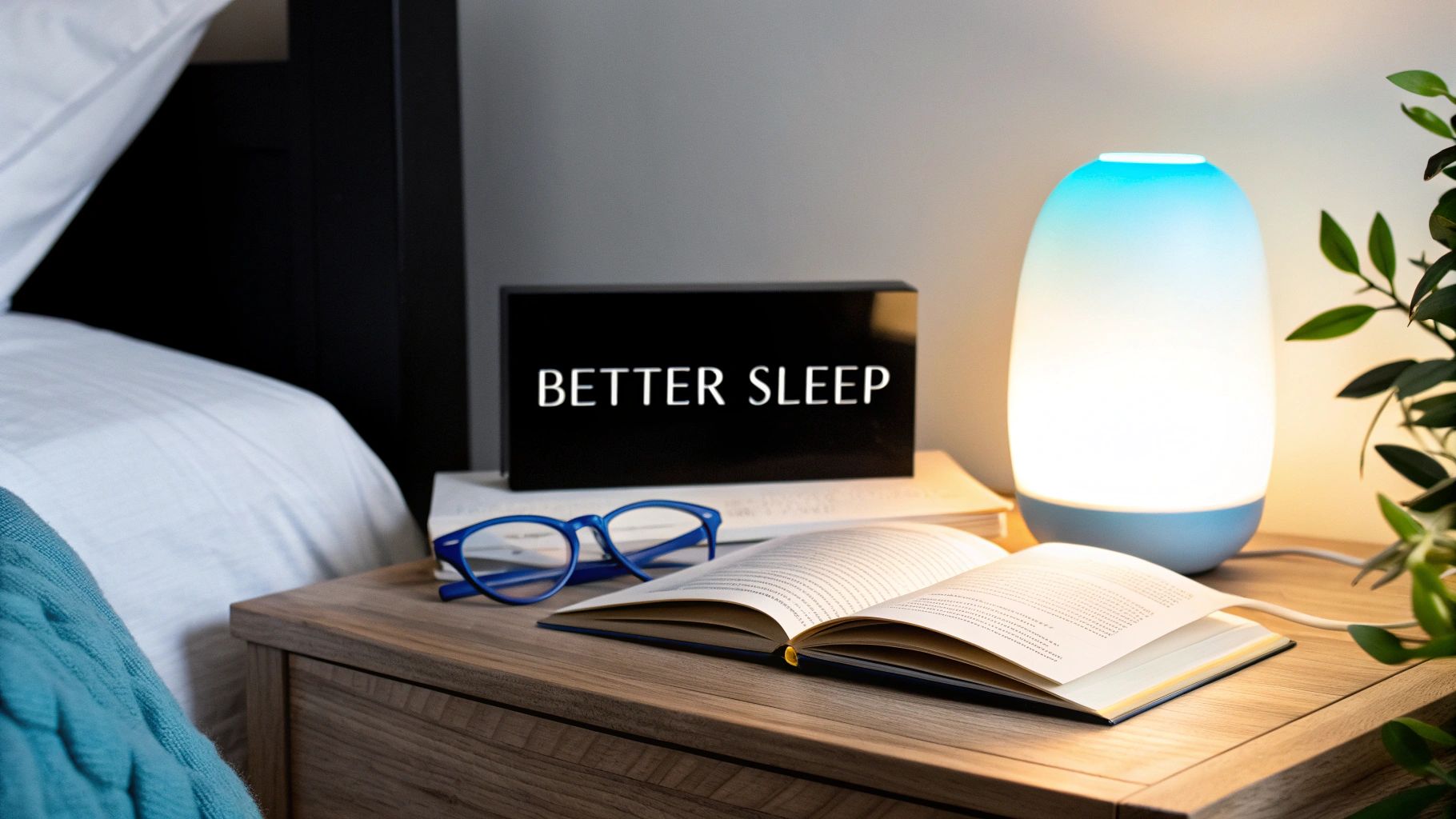
It feels like getting a truly great night's sleep is a thing of the past, doesn't it? If you're tired of waking up feeling like you've barely slept, you're not alone. Figuring out how to improve sleep quality can feel overwhelming, but it usually boils down to a few powerful changes. The real secret is creating a consistent routine, making your bedroom a true sleep sanctuary, and getting smart about your light exposure at night.
Making small, dedicated adjustments in these areas can completely change how rested you feel.
That feeling of running on empty has become a shared modern experience. For so many of us, restful nights are just a distant memory. We get caught in a vicious cycle of stress, late-night screen time, and chaotic schedules that actively sabotage our ability to get the deep, restorative sleep our bodies and minds are desperate for.
This isn't just a hunch; it's a documented crisis. A recent global survey found that people are losing, on average, nearly three nights of quality sleep every single week. The top culprits? Stress, anxiety, and financial worries—a perfect storm that keeps your mind racing long after the lights are out. You can read the full sleep survey findings to see just how common these sleep roadblocks have become.
The journey back to better nights starts with something called sleep hygiene. It sounds clinical, but all it really means is the collection of habits and practices you follow that are essential for good sleep and feeling alert during the day. Think of it just like dental hygiene—small, consistent actions every day add up to long-term health.
The good news is that improving your sleep hygiene doesn't mean you have to overhaul your entire life overnight. It’s all about making small, intentional tweaks to your daily and nightly routines.
The goal is to create a powerful and consistent signal for your brain and body that it's time to wind down and prepare for rest. Even minor tweaks can have a major impact.
To help you get started, we've put together a quick guide to the most effective strategies you can try. Sometimes, just pinpointing one or two areas to focus on first can make the whole process feel much more manageable.
Here's a snapshot of the top strategies we'll be diving into. Use this table to identify which area might give you the biggest win right away.
| Strategy | Primary Benefit | Key Action |
|---|---|---|
| Wind-Down Routine | Signals to your brain it's time for sleep | Wear blue light glasses and disconnect from screens. |
| Sleep Sanctuary | Creates a distraction-free rest environment | Keep your room dark, quiet, and cool. |
| Mind Management | Calms stress and pre-sleep anxiety | Practice journaling or deep breathing exercises. |
| Lifestyle Habits | Supports your natural sleep-wake cycle | Get morning sunlight and maintain a regular schedule. |
By tackling just one of these, you’re already on your way to reclaiming your rest. Now, let’s dig into the details.
The last couple of hours before you hit the pillow can make or break your night's sleep. Seriously. What you do during this time sends powerful signals to your brain, telling it to either power down for the night or stay revved up and alert. Creating a consistent wind-down routine is one of the single most effective things you can do to improve your sleep, and it all starts with light.
As the sun sets, your brain is cued to start producing melatonin—the hormone that makes you feel drowsy. But the bright, artificial blue light blasting from our phones, tablets, and TVs throws a massive wrench in that natural process. This specific wavelength of light is a lot like daylight, which tricks your brain into thinking it should still be wide awake, slamming the brakes on melatonin production.
This is where a good pair of blue light blocking glasses becomes a total game-changer. Think of them as a protective filter, shielding your eyes from the very light that's keeping you wired.
If you spend your evenings scrolling social media, finishing up work, or binging a new series, you know the feeling: tired, gritty eyes, maybe even a dull headache. Orange-colored lenses are fantastic for combating that digital eye strain. They soften the harsh glare from screens by filtering out the most intense blue light wavelengths, making your evening screen time far more comfortable.
Want to go deeper into the science? You can explore the connection between blue light and sleep right here on our blog.
The image below really drives home how crucial a consistent schedule is for healthy sleep, which often starts with managing your light exposure in the evening.
It’s a simple reminder that our bodies thrive on predictability. Give your body a consistent pattern, and it will learn to follow it right into a better night's sleep.
While orange lenses are great for eye strain, amber blue light glasses are specifically designed to help your mind and body relax and prepare for sleep. These lenses, like the ones from Element Lux, filter out a much wider spectrum of blue and even some green light—the two wavelengths most guilty of messing with your melatonin.
By blocking over 99% of blue light, amber lenses give your body the green light to produce melatonin naturally, even if you’re still looking at a screen. This simple change makes the transition from alert and awake to relaxed and sleepy feel so much easier.
Putting on blue light glasses is just one piece of the puzzle. Here are a few other simple, powerful habits to build into your evening ritual.
If it's your brain that won't shut off, you need to actively work on calming your nervous system. Here’s what works for me.
Think of your bedroom as a space dedicated entirely to rest and rejuvenation. When it's cluttered, bright, or noisy, it's basically telling your brain to stay on high alert. Nailing your sleep environment is one of the most fundamental parts of learning how to improve sleep quality, and it all comes down to the big three: light, sound, and temperature.
Controlling light is probably the most important piece of the puzzle. Even a tiny bit of ambient light sneaking in from streetlamps or glowing electronics can mess with your melatonin production and lead to choppy, unsatisfying sleep. The goal here is to get your room as close to pitch-black as you possibly can.
Blackout curtains are a fantastic investment for this, but honestly, a simple, high-quality sleep mask can work wonders, too.

Once you've handled the darkness, a quiet and cool room really sets the stage for deep, uninterrupted rest. Building these habits into your routine can make a huge difference in how fast you fall asleep and how refreshed you feel when you wake up.
A restful environment isn't a luxury; it's a biological necessity. By consciously curating your bedroom for sleep, you give your body the best possible chance to repair and recharge each night.
Let's be real: stress and anxiety are two of the biggest culprits behind bad sleep. Creating a relaxing atmosphere is just as crucial as managing the physical environment. Here are four simple but powerful ways to calm your mind before hitting the pillow.
Lying in bed while your mind cycles through to-do lists, worries, and random thoughts is one of the most frustrating roadblocks to a good night's sleep. You know you need to rest, but your brain just won't get the memo.
The good news? You can absolutely learn to pump the brakes, calm your nervous system, and manage the stress that’s keeping you wide awake.
And it’s not just you. This is a global issue. A massive report analyzing over 105 million nights of sleep revealed a worldwide dip in sleep quality, with daily stress being a primary culprit. This really underscores how vital it is to have a few tools in your back pocket to quiet your mind. You can dig into the full global sleep trends report if you want to see the bigger picture.
One of the most powerful things you can do to stop thoughts from spinning on a loop is to get them out of your head and onto paper. This simple practice, often called a "brain dump," only takes 10-15 minutes before bed.
Just grab a notebook and jot down everything that's taking up mental space. It could be your to-do list for tomorrow, a nagging worry, or even a great idea you don't want to forget. The simple act of writing it down signals to your brain that the thought has been captured, which frees it from the need to keep reminding you.
Deep, controlled breathing is a direct line to your body's relaxation response. When we're stressed, our breath gets shallow and fast. By intentionally slowing it down, you activate the parasympathetic nervous system—your body’s "rest and digest" mode.
A ridiculously simple but effective technique is box breathing.
Repeat this cycle for just a few minutes. You’ll be genuinely surprised at how quickly it can slow a racing heart and settle a busy mind.
Mental stress and physical tension are two sides of the same coin. A few gentle, restorative yoga poses before bed can work wonders to release the tightness that builds up in your muscles all day—especially in the neck, shoulders, and back.
This isn't about a full workout. Think simple, feel-good poses like Child's Pose, Cat-Cow, or Legs-Up-The-Wall. These movements ease muscle strain and bring on a sense of calm. The focus here is on slow, mindful movements synced with your breath, which is the perfect prep for deep rest.
This is a cornerstone habit for me. Consistently wearing amber blue light blocking glasses every evening is a non-negotiable part of my wind-down routine. The warm, orange-hued lenses from Element Lux do more than just block over 99% of disruptive blue light—they create a calming visual bubble around you.
The amber tint acts as a powerful psychological cue. It creates a tranquil buffer between the chaos of your day and the quiet of your night. It’s like telling your brain, “Okay, the day is officially done.”
When you make these glasses a firm part of your evening, you're getting a one-two punch: the physiological benefit of protecting your melatonin production, plus the psychological comfort of a consistent, relaxing ritual. It’s a powerful combination that helps quiet a racing mind and guide you toward a much more peaceful night.
Fantastic sleep doesn’t magically happen the moment your head hits the pillow. It’s actually the direct result of conscious, healthy choices you make all day long, starting from the moment you wake up. If you really want to learn how to improve sleep quality, you have to look at your entire 24-hour cycle, not just that last hour before bed.
Your daily habits—what you eat, when you move, and how you manage light exposure—play a massive role in setting your body up for a successful night of rest.
One of the most powerful things you can do is lock in a consistent sleep-wake cycle. That means going to bed and waking up at roughly the same time every single day. Yes, even on weekends. This simple discipline reinforces your body's natural circadian rhythm, making it far easier to fall asleep when you want to and wake up feeling refreshed.
To really anchor that internal clock, get outside for at least 10-15 minutes of bright, natural sunlight first thing in the morning. This direct light exposure sends a clear signal to your brain to shut down melatonin production (the sleep hormone) and essentially starts the countdown for its release later that evening. Think of it as hitting the "start" button on your sleep cycle for the day.
Movement is another critical piece of the puzzle. Regular physical activity can dramatically improve sleep depth and duration. The key is all in the timing—try to wrap up any intense workouts at least three hours before you plan to go to sleep. This gives your body plenty of time to cool down and your heart rate to return to a resting state.
What and when you eat has a direct line to your sleep quality. A heavy, rich meal too close to bedtime can trigger indigestion and keep you up. A good rule of thumb is to have your last big meal 2-3 hours before you turn in for the night.
And then there's caffeine. It's the most obvious sleep disruptor, and its long half-life means it can hang around in your system for hours. To keep it from messing with your ability to fall asleep, make a hard-and-fast rule: no caffeine after 2 p.m.
Similarly, while a glass of wine might make you feel drowsy at first, alcohol seriously fragments your sleep later in the night. It actively prevents you from getting the restorative deep sleep your body and brain desperately need.
The struggle for quality sleep is a massive global issue. It's estimated that a staggering 852 million adults worldwide suffer from insomnia, a condition that torpedoes both health and productivity. You can read more about the global prevalence of insomnia to see just how widespread this problem is.
By making mindful choices throughout your day—from getting that morning sun to timing your last coffee—you create the ideal conditions for your body to wind down naturally when night falls.
When you combine these lifestyle habits with a solid evening routine—which should absolutely include wearing your Element Lux blue light blocking glasses—you create a powerful, multi-pronged strategy for reclaiming your rest and boosting your energy all day long.
Diving into a new routine to improve your sleep can bring up a lot of questions. Let's tackle some of the most common ones to help you fine-tune your approach and build confidence in your new habits.
If you spend your evenings staring at screens, you know that tired, gritty feeling your eyes get. Orange-colored blue light glasses are designed specifically to reduce this digital eye strain by filtering out the harshest, highest-energy wavelengths of light.
This filtering takes the edge off the sharp glare from your devices, making screen time a lot more comfortable and cutting down on those nagging end-of-day headaches.
The real magic for sleep is how these glasses interact with your brain's melatonin production. When your eyes are exposed to blue and green light at night, your brain gets tricked into thinking it's still daytime. This suppresses the release of melatonin, the hormone that tells your body it’s time to sleep.
Orange colored blue light glasses, like the ones from Element Lux, block over 99% of this disruptive light. This sends a clear signal to your brain that it's nighttime, allowing melatonin to be produced naturally so you can actually feel sleepy when you're supposed to.
Wearing amber blue light glasses for 90-120 minutes before bed is one of the most effective ways to protect your natural sleep cycle while still using modern technology.
Great sleep isn't about one magic trick; it's about building a solid, multi-faceted routine. For a deeper dive, you can find a ton of valuable information in our sleep improvement resources.
A racing mind is the enemy of good sleep. If you have trouble shutting off your brain at night, here are four proven strategies to help you find some calm.
Ready to transform your nights and energize your days? The single best step you can take is to protect your eyes from disruptive blue light in the evening. Discover how the expertly designed amber lenses from Element Lux can help you relax, wind down, and achieve the deep, restorative sleep you deserve.
