If you're like most of us, your days are bookended by screens. From the morning scroll to the late-night Netflix binge, our eyes are constantly bathed in the glow of digital devices. The result? That all-too-familiar feeling of tired, achy eyes and a brain that just won't switch off when it's time to sleep.
This isn't just in your head. It’s a real phenomenon called digital eye strain, and it's becoming a bigger problem as our lives move more and more online. Thankfully, there’s a straightforward tool that can help: glasses that block blue light.
Think of these glasses as a key part of your digital wellness toolkit, helping you protect your eyes and get your rest back on track. It's no surprise that as more people become aware of digital eye health, the demand for these glasses is skyrocketing. The global market, valued at around USD 35.26 million in 2025, is expected to jump to nearly USD 65.61 million by 2034. That’s a huge leap, all driven by our screen-filled lives.
So, how do these glasses actually work? It's all about filtering out the specific type of light that causes the most trouble, especially after the sun goes down.
Glasses with orange-colored lenses are your best friend for evening screen time. They are specifically designed to filter out the most disruptive blue light, which can dramatically reduce the eye fatigue and tension that builds up after a long day. The intense glare from screens forces your eye muscles to work overtime, but orange lenses cut through that harshness, allowing your eyes to finally relax and making screen time far more comfortable.
Even more importantly, this powerful filtering process sends a crucial signal to your brain: it's nighttime. Blue light from screens tricks your brain into thinking it's still daytime, suppressing the production of melatonin—the hormone that tells you it's time for sleep. By wearing orange lenses for 2-3 hours before bed, you block these confusing signals, allowing your body to produce melatonin naturally so you can fall asleep faster and get deeper, more restorative rest.
While deep orange lenses are perfect for the last few hours before bed, amber blue light glasses are ideal for relaxing and winding down earlier in the evening. They block a significant amount of stimulating blue light, which helps calm your nervous system without the intense color shift of their orange counterparts. This helps you transition from a high-alert, productive mindset to a more relaxed state, making them a great choice for watching a movie or reading on your tablet when you’re looking to de-stress.
Of course, glasses are just one piece of the puzzle. For a truly restful evening, it's best to build a routine around them. You can find more tips and tricks over on our blue light blog.
A simple yet effective evening routine can make all the difference. Combining blue light glasses with other relaxation techniques creates a powerful signal to your body that it's time to rest and recover.
Ready to build a better wind-down routine? Here are a few simple, practical steps you can take.
Not all blue light glasses are created equal. You might think the color of the lens is just a style choice, but it’s actually the key to how they work. The specific tint determines which wavelengths of light get filtered out, making some glasses perfect for daytime use and others essential for nighttime.
Think of it like this: you have sunglasses for the day and a different pair for driving at dusk. In the digital world, you need a similar approach. Understanding this difference is critical if you want to crush those screen-induced headaches during the workday or finally get that deep, restorative sleep you’ve been chasing.
When your main goal is prepping your body for sleep, orange-colored blue light glasses are your secret weapon. These lenses are engineered to be heavy hitters, blocking a huge chunk of the light spectrum—we’re talking nearly all blue light and a good amount of green light, too. This powerful filtration is what you need in the hours leading up to bed.
See, evening exposure to blue and green light tricks your brain into thinking it’s still high noon. This confusion slams the brakes on melatonin, the hormone that signals your body it’s time to sleep. By popping on a pair of orange lenses for two or three hours before you turn in, you’re basically creating a personal sunset that shields your eyes from those disruptive signals. This lets your melatonin levels rise naturally, making you feel sleepy right on schedule.
Beyond sleep, this intense filtering also brings immediate relief from digital eye strain. After a long day staring at screens, your eyes can feel fried. The deep orange tint cuts through the harsh, high-energy glare, letting your eye muscles finally relax and making your evening screen time feel so much more comfortable.
While orange lenses are the champs for nighttime, amber blue light glasses play a different, but equally important, role. These are your go-to for relaxing and winding down during the day or in the early evening. They filter out a solid amount of the most intense blue light without making your world look completely different.
This makes amber lenses perfect for when you need to dial down the mental stimulation and ease into a calmer state. By toning down the intensity of the light from your devices, these glasses help settle your nervous system. This can be a game-changer on stressful workdays or when you're trying to shift from a high-alert mindset to one of relaxation. Many people find that wearing amber glasses helps them feel less anxious and more centered.
The right lens at the right time is the foundation of effective blue light management. Amber lenses help you find calm during the day, while orange lenses prepare you for deep, restorative sleep at night.
Using the correct glasses is a cornerstone of a healthy routine. Here are some of the best strategies for improving sleep and cutting stress, with blue light management as a key player.
If you've ever found yourself doom-scrolling on your phone late at night, only to toss and turn for hours when you finally try to sleep, you know exactly what blue light disruption feels like. It’s not just a feeling of being “wired”; it's your biology at work. Your brain is literally being tricked into thinking it's still daytime, sabotaging your chances of getting truly restorative sleep.
The main culprit here is the suppression of melatonin, the hormone your body releases to signal that it's time to wind down. The specific blue and green light wavelengths blasting from our screens hit the brakes on this crucial process. But there's a simple, incredibly effective way to fight back and reclaim your sleep cycle.
This is where a good pair of orange-colored blue light glasses becomes a game-changer for modern life. By popping on a pair for just two to three hours before bed, you're essentially creating a personal shield against the most disruptive artificial light. These lenses are specifically engineered to block nearly all blue and green light, stopping those confusing "it's daytime!" signals from ever reaching your brain.
This simple act allows your body’s melatonin production to kick in naturally, helping you feel sleepy when you're supposed to. The result? You don't just fall asleep faster—you also achieve a higher quality of deep sleep throughout the night. It's a foundational step for building a solid evening routine.
While orange lenses are the heavy hitters for pre-sleep prep, amber blue light glasses are perfect for relaxing earlier in the evening. Their tint filters out a significant amount of stimulating blue light, which helps calm your nervous system and dial down the mental alertness that screens always seem to cause.
This makes them ideal for kicking back with a movie or reading on a tablet when you want to de-stress but aren't quite ready for bed. They help create a smoother transition from a hectic day to a restful evening, setting the stage for a peaceful night ahead.
By filtering out the artificial 'daylight' from our screens, blue light blocking glasses give your brain the clear signal it needs: it's time to wind down. This one simple habit can be the key to unlocking consistent, high-quality sleep.
It's clear people are catching on. The anti-blue light glasses market was valued at USD 1.43 billion in 2023 and is expected to rocket to USD 3.57 billion by 2030. This boom shows just how many of us are looking for a real solution to the screen-time struggle.
Crafting a smart evening routine is key to maximizing your sleep quality. Integrating blue light glasses is a powerful first step, but pairing them with other healthy habits will take your rest to the next level. Here’s a simple timeline to follow.
| Time Before Bed | Recommended Action | Primary Benefit |
|---|---|---|
| 2-3 Hours | Put on your orange-lensed blue light glasses. | Protects melatonin production from all screen light. |
| 1-2 Hours | Switch to relaxing, non-screen activities. | Allows your mind to disengage and begin winding down. |
| 1 Hour | Prepare your bedroom: dim the lights, cool the room. | Creates an environment conducive to deep sleep. |
| 30 Mins | Practice mindful breathing or light stretching. | Lowers your heart rate and calms the nervous system. |
By following a simple plan like this, you create a powerful ritual that signals to your body that it’s time for restorative rest.
Wearing blue light blocking glasses is a huge leap forward, but it works best as part of a complete sleep-hygiene strategy.
A calm mind is a sleepy mind. If you struggle to switch off your thoughts at night, try incorporating these relaxation techniques.
Being constantly plugged in can leave your nervous system feeling like it’s always on high alert. That relentless stream of notifications and the stimulating glare from our screens creates a low-grade hum of stress that, unfortunately, many of us now mistake for normal.
The good news is that reframing your approach to screen time is a powerful way to reclaim your calm. A cornerstone of this strategy is managing your exposure to blue light. By consciously filtering the light you see, you can directly influence your body's stress and sleep responses. This one habit, paired with a few other mindful practices, gives you a practical toolkit for finding balance.
Think of the bright, blue-rich light from your screens as a digital shot of espresso for your brain. That’s great during the day, but in the evening, it keeps your system revved up and on edge. This is exactly where different types of glasses that block blue light become essential tools for unwinding.
Orange colored blue light glasses are fantastic for tackling the physical symptoms of digital stress. After a long day, they dramatically cut down on screen glare, which helps soothe tired eye muscles and ease the tension that often builds into headaches. This physical relief is often the very first step toward feeling mentally calm.
Meanwhile, amber blue light glasses are perfect for dialing down the mental buzz. They filter a significant amount of the most intense blue light, helping your nervous system shift out of a high-energy "work mode" and into a more relaxed state. They're ideal for winding down in the evening without feeling overstimulated by your devices.
Your bedroom should be a sanctuary for rest, not just another room to work or scroll in. The habits you build around your sleep space have a massive impact on your ability to disconnect and recharge. The single most important piece of this puzzle is protecting your melatonin production.
Wearing orange lenses for two to three hours before bed is the most effective way to shield your melatonin from the disruptive glare of screen light. This allows your body's natural sleep signals to do their job, making it much easier to fall asleep and stay asleep.
By creating a clear boundary between your active day and your restful night, you give your mind and body the unambiguous signal they need to power down. This simple consistency can dramatically reduce feelings of nighttime anxiety and stress.
To build on this foundation, try incorporating these other proven strategies for crafting a sleep-promoting environment.
Reducing stress isn't just about what you do at night; it's also about how you manage your energy throughout the day. Building small, intentional breaks into your screen time can prevent mental and physical tension from building up in the first place.
The goal here is simply to interrupt the constant focus that screens demand. These brief pauses give your eyes a much-needed rest, release physical tension, and help you reset your focus.
So, you're ready to find the perfect pair? Choosing the right blue light blocking glasses isn't just about picking a frame you like. To really get the benefits, you have to think about how the lenses, the fit, and the overall quality will work with your daily life. This is about finding a tool that fits seamlessly into your routine, whether you're trying to beat that afternoon eye strain or prepping for a night of deep, restorative sleep.
The demand for these glasses has exploded, which shows just how many of us are looking for some relief. The global market for non-prescription blue light blocking glasses was valued at around USD 9.76 billion in 2021 and is on track to hit USD 14.45 billion by 2025. That's a huge jump, and it points to a major shift in how we think about our digital wellness.
This is the most critical decision you'll make: choosing the right lens for the right time of day. Your needs at 2 PM during a heavy workday are completely different from your needs at 10 PM when you're trying to wind down.
Orange lenses are your ultimate nighttime shield. They're engineered to block nearly all blue light and a good chunk of green light, too. This is crucial because it protects your body's natural production of melatonin, the sleep hormone. Wearing a pair for two or three hours before bed is one of the best ways to signal to your brain that it's time to sleep—even if you're still looking at a screen. They also give you maximum relief from that harsh glare that causes end-of-day headaches and tired eyes.
For daytime use or those early evening hours when you're relaxing, amber lenses are the way to go. They filter out the most intense, high-energy blue light to ease eye fatigue and help calm your nervous system, all without messing up your color perception too much. This makes them perfect for working on your computer or watching a movie when you want to feel more relaxed and less mentally wired.
This image breaks down some of the key benefits people report after making blue light blocking glasses a part of their routine.
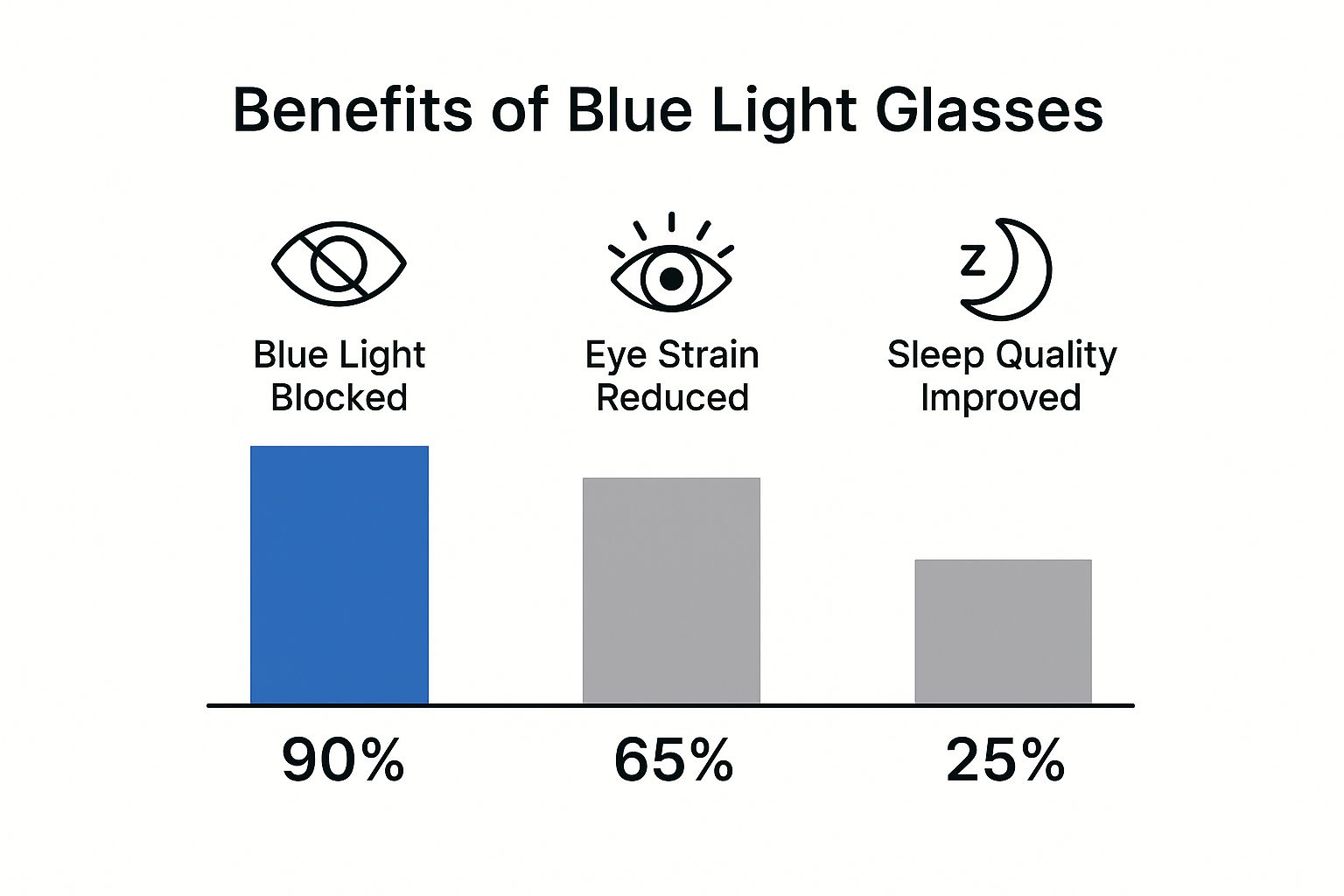
As you can see, the goal is to significantly cut down on blue light exposure to reduce eye strain and, most importantly, set yourself up for better sleep.
Choosing between amber and orange can feel tricky, but it really comes down to what you're doing and when. Think of it as having different tools for different jobs. This table breaks it down to help you decide.
| Feature | Amber Lenses | Orange Lenses |
|---|---|---|
| Best Time of Day | Daytime & Early Evening | 2-3 Hours Before Bed |
| Primary Goal | Reduce eye strain, calm nervous system | Maximize melatonin production, promote deep sleep |
| Blue Light Blockage | Blocks most high-energy blue light (400-455nm) | Blocks nearly all blue & some green light (400-550nm) |
| Color Perception | Minimal distortion, colors remain recognizable | Significant color shift, world appears very orange |
| Ideal Activities | Computer work, studying, watching TV, gaming | Reading on a tablet, scrolling on phone before sleep |
Ultimately, amber lenses help you manage your day, while orange lenses help you own your night.
Let's be honest—even the most effective lenses won't do you any good if the glasses are too uncomfortable to wear. You'll just end up leaving them on your desk.
High-quality frames are lightweight and designed for you to wear for hours, so you barely even notice they're on. Look for durable materials that can handle being tossed in a bag or accidentally dropped.
On top of that, premium lenses often have extra features that make a huge difference. An anti-glare coating cuts down on those annoying reflections from your screen and overhead lights, while a scratch-resistant coating helps keep your vision crystal clear. Investing in a well-made pair means you get both the protection you need and an experience that feels good. You can check out a range of high-quality options when you decide to shop now for your perfect pair.
Choosing the right glasses is all about matching the technology to your routine. Use amber lenses to find calm and focus during the day, and switch to orange lenses at night to protect your sleep.
When you align your choice with your daily habits, these glasses stop being a simple accessory and become a powerful tool for your well-being.
Thinking about adding a pair of blue light blocking glasses to your daily kit? It's smart to have questions. You want to know when to wear them, what they actually do, and how to pick the right pair for you. Let's get into some of the most common questions we hear and clear things up.
Absolutely. That intense, high-energy glare blasting from your screens makes your eye muscles work overtime, leading to that all-too-familiar feeling of fatigue, dryness, and even tension headaches.
Think of orange colored blue light glasses as a powerful shield. They dramatically cut down on the harshest light wavelengths hitting your eyes. This gives your eye muscles a chance to relax, and the relief can feel almost immediate. Slipping on a pair after a long day in front of the computer can feel like a deep sigh of relief for your eyes, making your evening screen time so much more comfortable.
This is where orange lenses are a complete game-changer. Your body's internal clock runs on a hormone called melatonin—it’s the signal that tells your brain it’s time to wind down and sleep. The problem is, blue and green light from screens slams the brakes on melatonin production, tricking your brain into thinking it's still the middle of the day.
By blocking nearly all of that disruptive blue and green light, orange colored blue light glasses protect your body's natural process. When you wear them for 2-3 hours before bed, you allow your melatonin levels to rise as they should, helping you feel tired at the right time. The result? You don't just fall asleep faster; you get deeper, more restorative sleep all night long.
While orange lenses are your go-to for serious sleep prep, amber blue light glasses are your perfect partner for unwinding earlier in the evening. They filter a big chunk of the stimulating blue light but without the intense color shift you get from orange lenses.
This filtering helps calm your nervous system, which often gets stuck in "go-mode" from constant screen use. By toning down that digital buzz, amber lenses help you shift from a state of high alert to one of relaxation. They're ideal for watching a movie or reading on your tablet when you just want to chill out.
The secret is using the right tool for the job. Think of amber lenses as your 'relax mode' for the evening and orange lenses as your 'sleep mode' for those final hours before hitting the pillow.
Getting consistently great sleep is about building a solid routine, and managing blue light is a huge piece of that puzzle. When you combine smart habits, you create powerful signals that tell your body it's time for deep rest.
Stress and sleep are deeply connected. If you can manage your stress, your sleep will almost certainly improve. Weaving a few simple relaxation techniques into your day and night can make a world of difference.
By layering these strategies, you can take back control from our screen-filled world. The payoff is better rest, less stress, and a healthier, happier you.
Ready to feel the difference that reduced eye strain and deeper sleep can make? The right pair of glasses is a powerful first step. Check out the high-quality, scientifically-designed options from Element Lux to find the perfect fit for your routine.
