
Let's cut right to the chase: Yes, blue light blocking glasses work. But there’s a big "but" involved. Their effectiveness really hinges on what you’re trying to achieve.
If you’re looking to improve your sleep, the science is pretty solid. Studies consistently show that glasses with orange and amber lenses are fantastic at filtering out the specific light that messes with your body's internal clock. For tackling digital eye strain, however, the picture is a bit more complicated. Strain often comes from a mix of things—like screen glare and just not blinking enough—not only from blue light.
The most important thing to understand is that not all blue light glasses are the same. The color of the lens is everything. Different tints are designed for different jobs, whether it's for daytime eye comfort or getting your brain ready for bed. This guide will walk you through the science so you can pick the right pair for your needs.
This image gives a great snapshot of how blue light impacts us and what these glasses are designed to do.
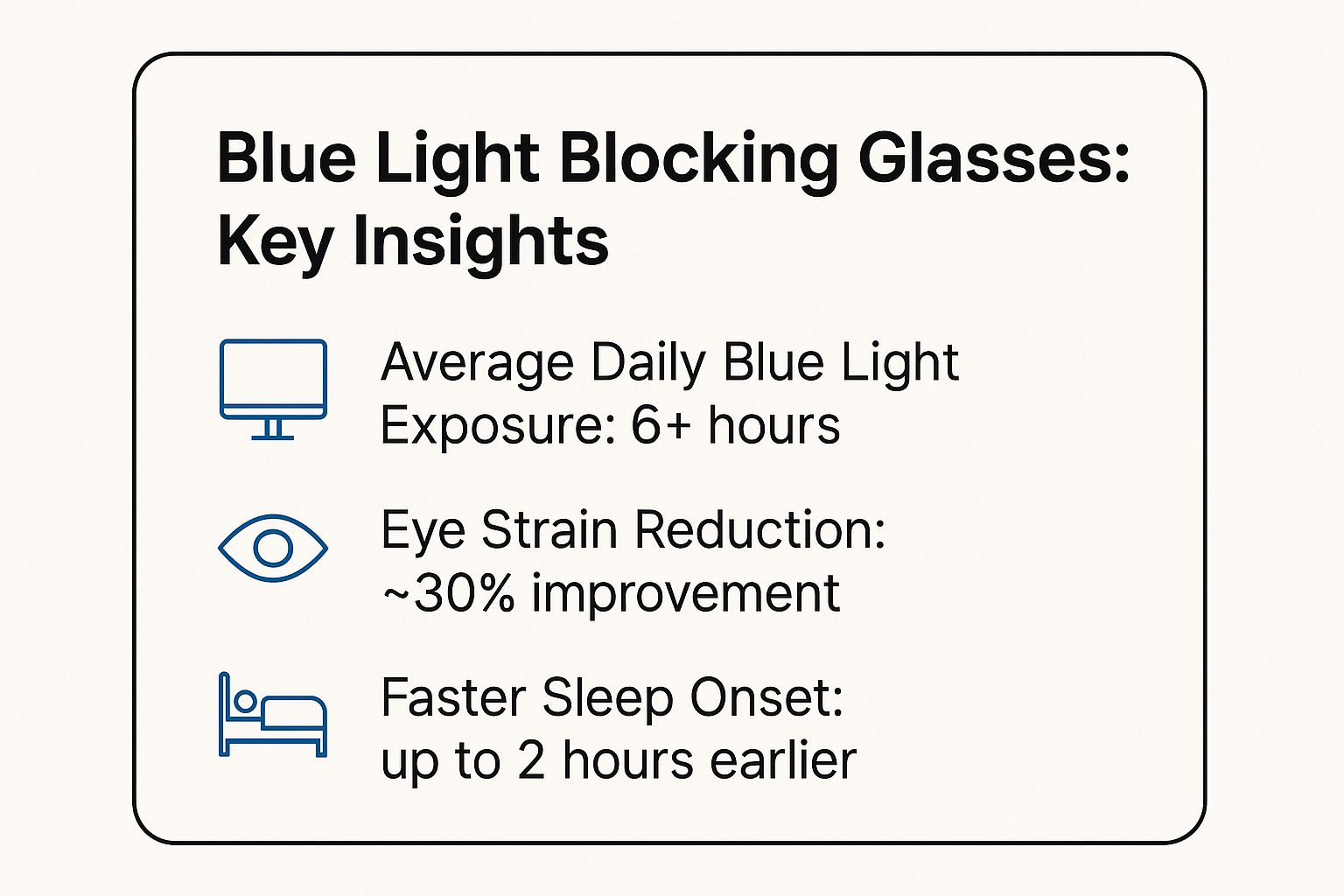
When you consider how much time we spend in front of screens, even a small improvement in eye comfort and falling asleep faster can make a huge difference in your day-to-day life.
To make it easier to see which glasses might work for you, here’s a quick breakdown of how different lenses stack up against common goals.
| Goal | Best Lens Type | How It Works | General Effectiveness |
|---|---|---|---|
| Improve Sleep Quality | Orange Lenses | Blocks nearly all blue and green light to allow natural melatonin production. | Very High |
| Reduce Digital Eye Strain | Clear or Amber Lenses | Filters a smaller percentage of blue light and reduces screen glare. | Moderate |
| Wind Down in the Evening | Amber Lenses | Softens harsh screen light to help your mind and eyes relax before bed. | High |
| General Daytime Use | Clear Lenses | Provides minimal filtering to take the edge off screen light without color distortion. | Low to Moderate |
Ultimately, the right lens depends entirely on your lifestyle and what you’re hoping to fix—whether it’s late-night scrolling or all-day work meetings.
Think of orange lenses as your "night mode" glasses. These are built specifically for evening and pre-bedtime use. They are heavy-hitters, blocking a huge chunk of the blue and green light wavelengths known to shut down your body's production of melatonin (the sleep hormone). When you pop them on an hour or two before you plan to sleep, you’re basically telling your brain, "Hey, it's nighttime," making it much easier to drift off naturally. The deep color of orange glasses is a clear sign they are working to protect your melatonin, which directly helps you get better, more restorative sleep.
Amber lenses are a bit more of a middle-ground option. They filter enough blue light to cut down on that harsh digital glare from your screen, which helps you feel less wired and more relaxed. This makes them perfect for unwinding in the evening while you’re catching up on a show or reading on a tablet. It's a less intense approach than the deep orange lenses, but still highly effective at helping you relax and wind down before bed.
Here’s how a good pair of blue blockers can help you build a better pre-sleep routine:
To figure out if blue light glasses actually work, we first need to get something straight: what’s really causing that screen-related discomfort? While blue light gets all the blame, the tired, achy feeling you get after hours staring at your monitor is often something else entirely: digital eye strain.
Think of your eye muscles like any other muscle. If you held a small weight straight out in front of you for hours on end, your arm would start to burn. Your eyes do the same thing. When you stare at a screen up close, your eye muscles are constantly flexed to keep everything in focus.
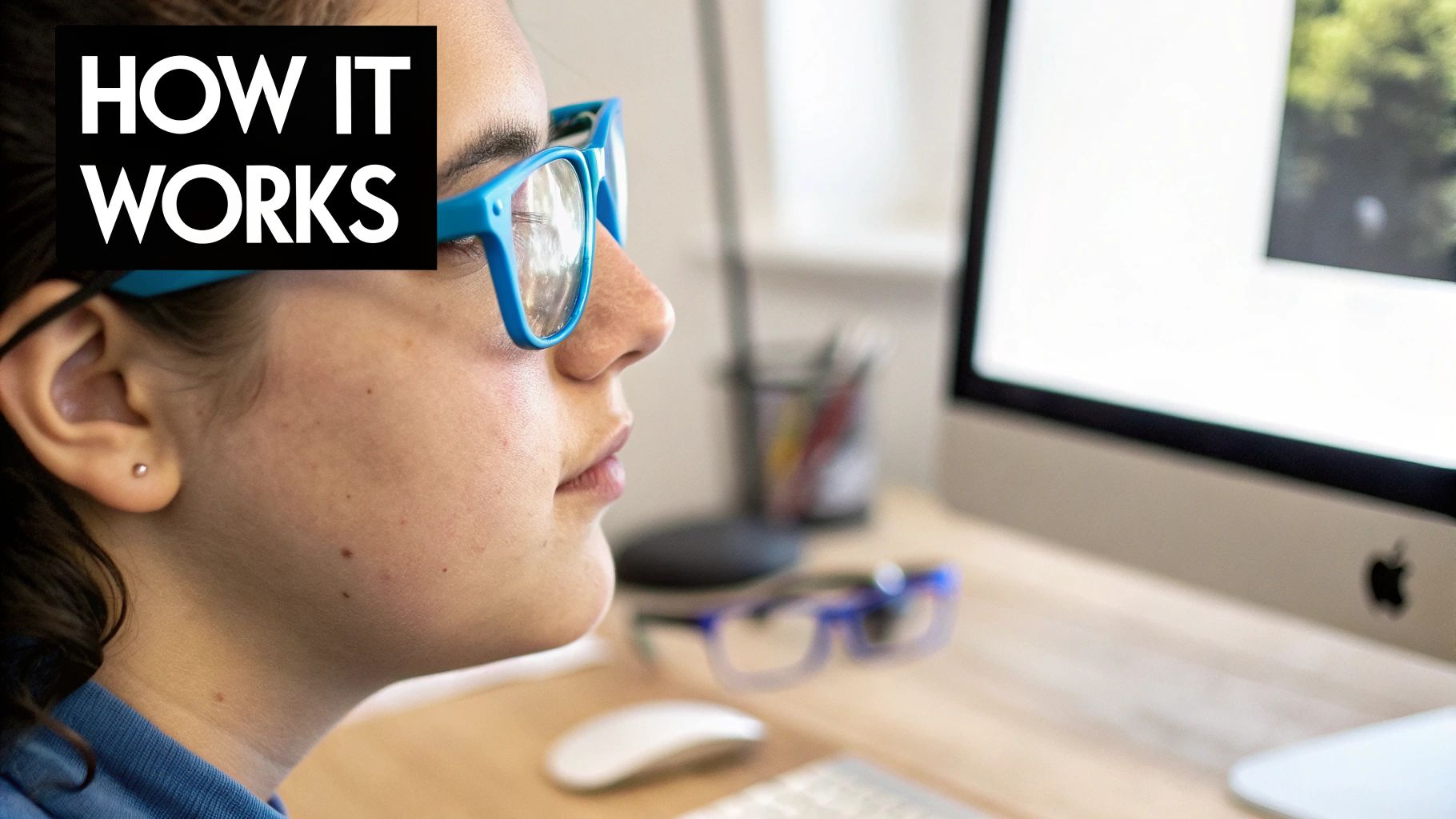
This non-stop effort, mixed with harsh screen glare and the fact that we blink way less, is the real driver behind digital eye strain—not just blue light on its own.
With screen time on the rise, digital eye strain is a bigger issue than ever. When we’re glued to a screen, our natural blink rate can plummet from around 22 blinks per minute down to just 7.6. That’s a massive drop, and it leads directly to the dryness and irritation so many of us feel after a long day at the computer.
This is where blue light blocking glasses, especially those with a noticeable orange or amber tint, really make a difference. They cut down on the harsh, high-energy glare from your screen that forces your eye muscles into overdrive. By softening that light, the glasses give your eyes a chance to relax, easing the tension that builds into strain.
Think of it this way: by filtering out the most intense wavelengths, these glasses essentially lower the "weight" your eye muscles have to hold, providing almost immediate relief during long screen sessions.
While reducing glare is great for comfort, the real magic of orange-lensed glasses is how they help you sleep. Getting blasted with blue light in the evening messes with melatonin—the hormone that signals your body it’s time to wind down. Orange lenses are specifically designed to block those disruptive wavelengths, letting your brain produce melatonin on its natural schedule. Similarly, amber blue light glasses let you relax and wind down by creating a sense of visual calm, dialing back the stimulating effect of screens and helping your mind shift into a more relaxed state. You can dive deeper into practical tips and info over on our blue light blog.
Of all the claims you hear about blue light glasses, the link to better sleep is by far the most solid. It all comes down to your body's internal clock, also known as your circadian rhythm. This internal clock relies on light cues from your environment to figure out when you should be awake and when it’s time to wind down.
The problem is, our modern lives are filled with bright, artificial light, especially in the evening. The blue and green wavelengths pouring out of our phones, laptops, and TVs send a powerful and confusing signal to our brains. It’s like telling your body it's the middle of the afternoon when you're actually trying to get ready for bed. This trickery messes with the natural production of melatonin, the crucial hormone that makes you feel sleepy.
When melatonin production gets pushed back, you end up tossing and turning, feeling wired even when you’re physically exhausted. This is where orange-lensed glasses become a game-changer. They’re specifically designed to filter out nearly all of that disruptive blue light—and even some of the problematic green light—that gets in the way of your body's natural sleep process.
Think of it this way: putting on a pair of orange glasses for an hour or two before you hit the hay acts like a protective shield for your melatonin. It lets your body wind down naturally, on its own schedule, making it much easier to fall asleep and stay asleep.
You can see this in action with glasses like the ones from Element Lux, which have a very noticeable orange tint made for maximum blue light blocking at night.
That deep color is a dead giveaway of their purpose—they prioritize protecting your sleep hormones over perfect color vision.
While best known for sleep, orange lenses also provide significant relief from digital eye strain. By blocking the most intense, high-energy visible (HEV) light, they drastically reduce the harsh glare from screens. This filtering effect acts like a shield for your eyes, preventing your eye muscles from having to work so hard to stay focused. The result is less tension, fewer headaches, and a more comfortable viewing experience, even after hours in front of a computer.
Simply throwing on a pair of glasses is a fantastic start, but they’re most effective when you pair them with other smart sleep habits.
In a similar vein, amber and orange lenses can also help you de-stress and manage anxiety before bed.
While the deep orange lenses are the heavy hitters for sleep, amber glasses have a different—but just as critical—job. Think of them as your personal sunset, helping you transition from a busy, screen-heavy day into a calm, restful evening.
Amber lenses are engineered to filter out a solid amount of stimulating blue light, but without the intense color distortion you get from their orange cousins. The result is an immediate feeling of "visual calm" that just feels good on your eyes.
This makes them perfect for those evening wind-down activities where you still want a fairly normal viewing experience. You can catch a movie, read on your tablet, or scroll through your phone without that harsh, brain-jolting glare that keeps you wired.
That gentle filtering effect does more than just relax your eyes. It sends a powerful signal to your brain that the day is over and it's time to start powering down. By taking the edge off the most intense light from your devices, these glasses help dial back the mental buzz that often leads to evening stress and anxiety.
This gradual shift helps you feel more relaxed and mentally prepped for bed. For anyone asking does blue light blocking glasses work for relaxation, the subtle but very real reduction in visual stress from amber lenses is a game-changer.
Putting on a pair of amber glasses in the evening can become a powerful daily ritual. It’s a simple, effective cue that tells your body and mind the productive part of the day is over, and it's time to rest and recharge.
Because they strike that perfect balance between blue light protection and color clarity, amber lenses are incredibly versatile. They're the go-to tool for anyone looking to build a healthier relationship with their screens in the hours leading up to bedtime.
For an even more powerful wind-down routine, try pairing your amber glasses with other relaxing habits:
Knowing that orange lenses protect your melatonin is one thing, but actually using that knowledge is what really transforms your sleep. While blue light blocking glasses are a game-changer, they're most powerful when you pair them with other solid sleep habits. Think of it as a team effort—when you combine them, you send an undeniable signal to your body that it's time for deep, restorative rest.
Building a better sleep routine really boils down to managing your light exposure. From nagging eye strain to a night of tossing and turning, the right pair of glasses makes a difference you can feel.
This is the single most impactful step you can take. Period.
Putting on a pair of orange-lensed blue light blocking glasses for one to two hours before you plan to sleep is the best way to shield your eyes from those melatonin-killing wavelengths pouring out of your screens. This simple habit tells your brain, "Hey, it's nighttime," allowing your natural sleep hormones to rise and help you fall asleep faster and get much higher-quality rest.
That deep orange tint you see isn't just for style. It's a visual cue that these glasses are serious about blocking the maximum amount of disruptive blue and green light, putting your sleep quality first.
Your body’s internal clock—your circadian rhythm—absolutely thrives on routine. Try to go to bed and wake up around the same time every day. Yes, even on weekends. This simple discipline anchors your natural sleep-wake cycle, making it so much easier to feel sleepy at night and genuinely refreshed in the morning.
A regular sleep schedule acts like an anchor for your circadian rhythm, preventing the "social jetlag" so many of us feel after sleeping in on the weekend. This consistency is fundamental to long-term sleep health.
The environment in your bedroom plays a massive role in how well you sleep. To really optimize it for rest, focus on making it dark, cool, and quiet.
Use blackout curtains to kill any outside light. Set your thermostat to a comfortable, slightly cool temperature. And if you're a light sleeper, a white noise machine or a good pair of earplugs can be a lifesaver for masking disruptive sounds.
You wouldn't jump into a hard workout without warming up, right? The same logic applies to sleep. You need a "wind-down" period.
In the last 30-60 minutes of your day, switch to calming, screen-free activities. Reading a real book, doing some gentle stretching, taking a warm bath, or listening to quiet music are all great ways to signal to your body that the day is over. This ritual helps you mentally unplug from the day's stressors, prepping you for a peaceful night.
For more ideas and info on building these kinds of healthy habits, check out our helpful sleep resources.
In our screen-saturated world, stress isn't just a mental game—it's a visual one, too. The non-stop glare and stimulating light from our devices can keep our brains firing on all cylinders long after we've clocked out for the day. Learning how to truly unwind is critical, and it often starts with giving your eyes a much-needed break.
This is where blue light blocking glasses come in. They're a fantastic tool for managing this very modern, digitally-driven stress. While most people ask does blue light blocking glasses work for sleep, their power to dial down visual stress is a huge piece of the puzzle.
Here are four simple, practical ways to ease daily stress, starting with the easiest one of all.
Think of a pair of amber-lensed glasses as your personal "off switch" for digital overstimulation.
When you slip them on to watch TV or scroll through your phone at night, they immediately soften the harsh screen glare. This simple change creates a sense of visual calm, cutting down on the "it's daytime!" signals being blasted to your brain and making it much easier for your mind and body to shift into relaxation mode.
You don't need a full hour on a meditation cushion to feel the benefits. Just taking five to ten minutes for a quick mindfulness session can do wonders for your nervous system.
Focus on your breath—a slow inhale, a long exhale. This incredibly simple practice helps to quiet those racing thoughts, pulling your attention back to the present moment. In turn, this can help lower cortisol levels and foster a genuine sense of peace.
Pro-tip: Try combining these first two steps. Putting on your amber glasses and then doing a brief meditation creates a powerful evening ritual. It sends a clear message to your body that the day's work is done and it's time to wind down.
Stress has a sneaky way of storing itself as physical tension, usually camping out in our neck, shoulders, and back. A little gentle movement before bed is a great way to show it the door.
Things like light yoga or simple stretching can release that pent-up tension. It not only feels amazing physically but also helps soothe your mind, setting the stage for a much more restful night.
To give your eyes and your brain a real break, you need to disconnect completely. Find a hobby that doesn’t involve a glowing screen.
Whether you're cracking open a physical book, sketching, listening to a podcast, or playing an instrument, stepping away from your devices is essential. It allows your brain to finally disengage from the constant flood of information and notifications, giving you a much-needed mental reset before you hit the pillow.
So, you're thinking about trying blue light glasses, but you've got questions. That's a good thing. Let's tackle some of the most common ones so you can feel confident you're using them the right way.
One of the first things people ask is, "Can I wear blue light glasses all day?" The answer really comes down to the color of the lens. If your glasses have clear or very light yellow lenses, they’re designed for daytime use to help with screen glare. But the darker amber and orange lenses? Those are strictly for evening use. Wearing heavy-duty, sleep-promoting lenses during the day can mess with your body's natural clock, which is the last thing you want.
This brings up another great question: what's the real difference between amber and orange lenses?
Think of it this way. Amber lenses are your "wind-down" glasses. They're perfect for relaxing in the evening while you watch TV or read on a tablet, blocking enough blue light to ease eye strain and help your brain start shifting toward rest.
Orange lenses, like the ones we've perfected at Element Lux, are the heavy hitters. They are specifically engineered for sleep, blocking almost all blue and green light to give your melatonin production the biggest possible boost before you get into bed.
But are they safe? People worry if filtering light could harm their eyes. The answer is a clear and simple no. These glasses are just filters; they don't negatively affect your eye health in any way. In fact, a major review by the Cochrane Collaboration confirmed that these devices have little to no effect on your visual sharpness. If you want to dive into the details, you can read more about these findings and put your mind at ease.
Finally, everyone wants to know, "How quickly will I notice better sleep?" While some people feel a difference the very first night, it's more common to see results after a few days to a week of consistent use.
Consistency is everything. The key is to wear your orange-lensed glasses for 1-2 hours before bedtime every single night. This steady routine is what helps regulate your circadian rhythm for real, lasting improvements.
Once you understand how the different lenses work and when to use them, you can easily make them a part of your daily life. For a little more guidance on picking the right style, check out our helpful videos.
Ready to take back your evenings and get the restorative sleep you deserve? The science is solid, and the right pair of glasses can make all the difference. Discover the visual calm and deep rest that Element Lux glasses provide by exploring our collection today.
