If you're looking for better sleep and a way to combat that tired, gritty-eyed feeling after a long day on the computer, you'll want to focus on blue light glasses with amber or orange lenses. These are designed specifically for evening use, and they're incredibly effective at filtering out the exact type of light from screens that messes with our sleep and causes eye strain.
Before we get into picking the right pair, let's quickly break down what blue light actually is. Think of the light you see as a rainbow, with colors from red all the way to violet. Blue light is at the high-energy, more intense end of that spectrum, packing a much bigger punch than warmer colors like yellow or orange.
This high-energy light is all around us in nature—the sun is our biggest source, by far. It's not inherently bad; in fact, it plays a vital role in setting our internal body clock, what scientists call our circadian rhythm. During the day, sunlight hits our eyes and tells our brain it's time to be awake, alert, and productive. It’s nature’s alarm clock.
The problem is, our modern lives have us staring at artificial sources of blue light long after the sun has set. Our phones, laptops, and TVs are constantly blasting out these high-energy waves, essentially sending a non-stop "it's daytime!" signal to our brains, even late at night.
This constant exposure throws our natural cycles out of whack in two major ways. First, it slams the brakes on melatonin production, the hormone that signals to your body that it's time to wind down and sleep. It's like trying to fall asleep in a bright room with someone flicking the lights on and off—your brain just stays wired.
Second, the intense, flickering light from screens leads directly to digital eye strain. If you've ever experienced these symptoms, you know what I'm talking about:
Our bodies simply aren't built to handle this much bright, blue-rich light after dark. This fundamental mismatch between our ancient biology and modern technology is why managing your light exposure has become so important for overall wellness. For a deeper dive, you can explore the articles in our online resources.
Once you grasp this conflict, it becomes clear why filtering blue light isn't just a gimmick for comfort—it's about helping your body get back to its natural, healthy rhythm.
When it comes to protecting your eyes at night, not all blue light glasses are created equal. If you're looking for serious protection, orange-colored lenses are the heavyweights. They're specifically engineered to filter out the most disruptive wavelengths of light, bringing immediate relief from eye strain and setting you up for a great night's sleep.
This powerful filtration is a game-changer for digital eye strain. By cutting down the harsh glare and flickering from screens, orange lenses allow your eye muscles to finally relax. The high-energy blue light that forces you to squint and strain is significantly reduced, which can alleviate the tired, blurry, or dry feeling you get after hours in front of a computer. It’s a feeling of visual comfort you'll notice right away.
But the real magic happens when it's time for bed. The primary benefit of orange-colored glasses is their ability to protect your body’s natural sleep cycle. By blocking nearly all blue and green light from reaching your eyes for just 1-2 hours before bed, you send an undeniable signal to your brain to start producing melatonin. This is the essential hormone that governs your sleep-wake cycle, and wearing these glasses helps your body produce it on schedule, making it easier to fall asleep and stay asleep.
While orange lenses offer the ultimate nighttime protection, their slightly lighter amber counterparts are perfect for helping you relax and wind down. Think of them as creating a "digital sunset." They block enough blue light to safeguard your melatonin and ease eye strain but let more color through, which is ideal for watching a movie or browsing online without a major color shift.
Amber lenses create a gentle transition, easing your mind from an alert, daytime state into a calm, pre-sleep mode, making them a fantastic tool for your evening relaxation ritual.
By filtering the specific light that keeps you feeling "wired and tired," blue light glasses help your body and mind relax naturally. This makes them a crucial tool for anyone looking to improve their evening routine and get more restorative rest.
It's clear people are catching on. The global market for blue light blocking glasses was valued at USD 35.26 million in 2025 and is expected to hit USD 65.61 million by 2034. This boom is fueled by professionals, students, and gamers all looking for relief from spending so much time in front of screens.
Adding blue light glasses to your routine is a cornerstone of better sleep and relaxation, but it works best when combined with other healthy habits.
Top Ways to Get Good Sleep:
Top 4 Ways to Relax and Reduce Anxiety:
Ready to see the difference for yourself? You can explore a collection of effective amber and orange lenses in the Element Lux shop.
While the heavy-duty orange lenses are fantastic for maximum nighttime protection, they aren't always what you need. Sometimes, a softer touch is better, especially for casual evening activities. This is where amber-lensed glasses really shine as the perfect choice for winding down.
Amber lenses hit a sweet spot. They block a serious amount of sleep-disrupting blue light but still let more color through than their darker orange cousins. That subtle difference makes them ideal for watching a movie or browsing your favorite sites, where seeing colors as they're meant to be seen just makes the experience better.
Think of amber glasses as creating a "digital sunset" for your eyes. They gently filter out the harsh, stimulating light from your screens, helping your brain ease from an alert, daytime state into a calm, pre-sleep mode without completely changing your vision. This makes them an excellent tool for anyone looking to relax and de-stress at the end of the day.
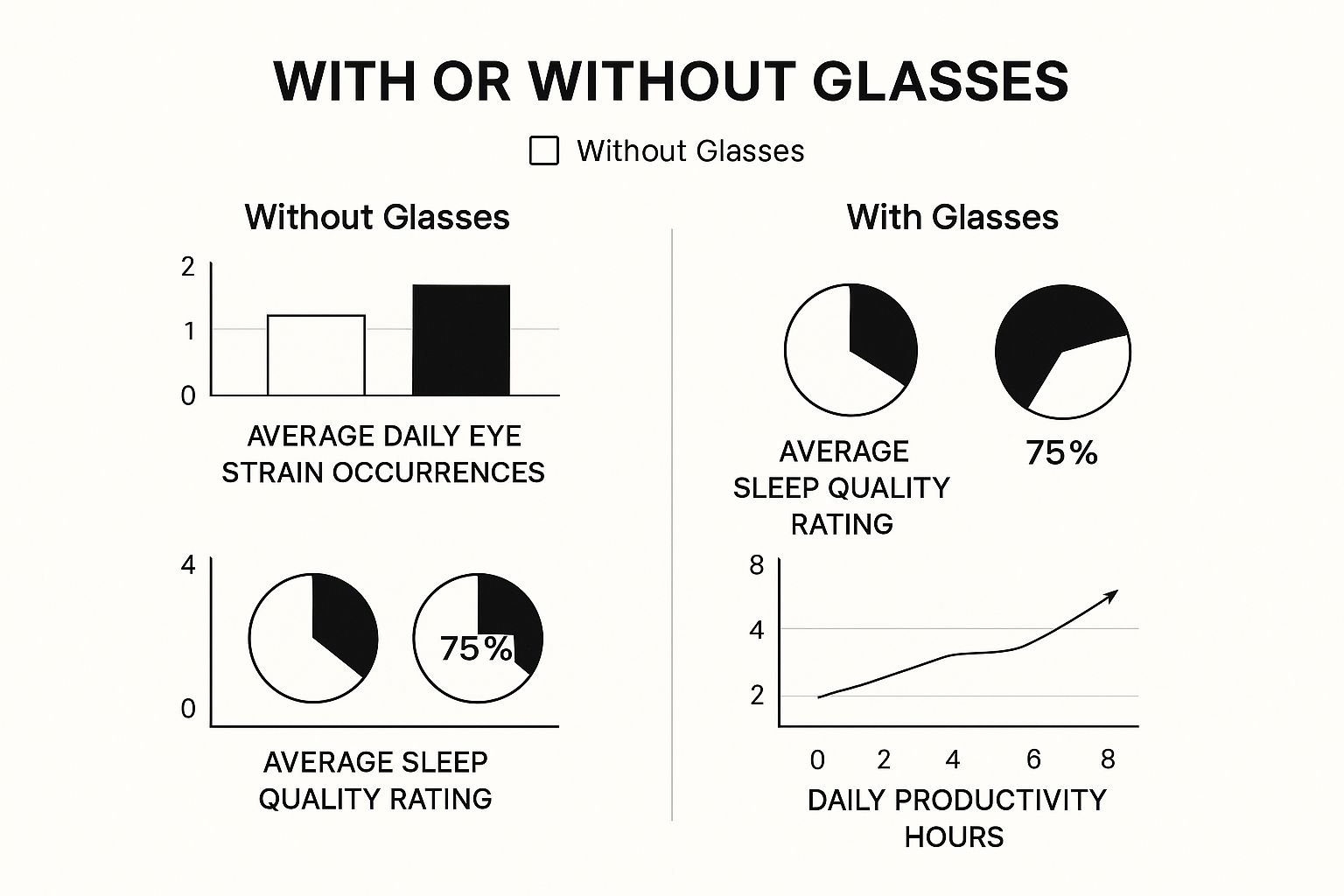
The infographic below shows the huge difference in daily eye strain, sleep quality, and even productivity between people who use blue light glasses and those who don't.
As you can see, consistently wearing the right lenses can lead to a real drop in eye strain and a major boost in how well-rested people feel.
So, how do you choose between the two main players in nighttime blue light protection? This table breaks down the key differences to help you decide which tint is right for your evening routine.
| Feature | Orange Lenses | Amber Lenses |
|---|---|---|
| Blue Light Blocking | Maximum (99%+) | High (90-98%) |
| Color Distortion | High (world looks orange) | Moderate (warms colors) |
| Best For | Pre-sleep wind-down, reading, combating insomnia | Watching TV, casual browsing, gaming |
| Ideal Time to Wear | 1-2 hours before bed | 2-3 hours before bed |
Ultimately, both are great tools. Orange is your go-to for serious sleep preparation, while amber offers a more versatile, relaxed experience for general evening screen time.
Making amber lenses part of your nightly routine is a huge first step, but you can get even more out of them by pairing them with other relaxation strategies. When you combine them, you send a powerful signal to your body that it's officially time to rest.
By filtering the specific wavelengths that keep your mind buzzing, amber glasses help your body and mind relax naturally. This makes them a vital tool for anyone looking to improve their evening routine and get more restorative rest.
Here are a few simple ways to build a powerful relaxation ritual:
Finding a great pair of blue light glasses is a fantastic first step, but they really shine when they're part of a bigger sleep strategy. Think of them as a key player on a team dedicated to getting you deep, restorative rest. When you combine them with other proven habits, you create a powerful routine that signals to your body it’s time to power down for the night.
The market for these glasses is exploding, which tells you just how many people are looking for better sleep solutions. Market data projects the global anti-blue light glasses industry will grow to USD 1,839.55 million in 2025, with a forecast CAGR of 7.90%. North America is leading the charge, holding about 37.85% of the market—a share driven by our growing health awareness and near-constant use of digital devices. You can learn more about the anti-blue light glasses market growth here.
Improving your sleep routine doesn't have to be complicated. By focusing on a few core habits, you can dramatically boost your sleep quality and start waking up refreshed. Here are the most effective strategies to try tonight.
Wear Blue Light Blocking Glasses: This is your first line of defense against nighttime light. Pop on your amber or orange glasses 1-2 hours before bed to block the specific wavelengths that crush melatonin production. It's the clearest signal you can send your brain that it's nighttime.
Create a Sleep Sanctuary: Your bedroom should be a haven for rest, not a multi-purpose room. Keep it cool, pitch-black, and quiet to minimize disruptions and create the perfect environment for deep sleep.
Stick to a Consistent Schedule: This one is a game-changer. Try to go to bed and wake up around the same time every single day—yep, even on weekends. That consistency is what trains your body's internal clock, or circadian rhythm.
Watch What You Consume: Be mindful of stimulants like caffeine or nicotine, especially in the afternoon and evening. It’s also smart to skip heavy meals or too much alcohol right before bed, as both can seriously mess with your sleep quality.
Here are four ways you can start dialing down evening stress and anxiety.
We all know the feeling. Staring at screens late into the night, followed by restless sleep and a lingering sense of stress. That constant blast of bright blue light can leave you feeling "wired and tired"—your body is exhausted, but your brain just won't shut off. The good news is that with a few simple evening habits, you can calm your mind and body, setting the stage for truly restorative sleep.
It all starts with managing your light exposure. Think of it as the foundation of a calming evening routine. When you wear the best blue light glasses—the ones with orange or amber lenses—you effectively lower the physiological "alarm" that screens trigger in your brain. It's a clear signal that it's time to unwind.
This isn't just a niche idea anymore; people are catching on. The global market for anti-blue light glasses is expected to jump from USD 1.43 billion in 2023 to a whopping USD 3.57 billion by 2030. Why? Because more and more of us are looking for real solutions to the eye strain and sleep problems caused by our devices. You can read more about the global trends in anti-blue light glasses to see how big this shift is.
Simply putting on your glasses is a great start, but pairing them with other calming activities sends an even stronger signal to your body to de-stress. Here are four effective strategies to work into your evening.
Wear Blue Light Blocking Glasses
This is your most powerful first step. By putting on a quality pair 1-2 hours before bed, you're shielding your melatonin production from the disruptive effects of screens. This makes it far easier to actually feel calm and ready for sleep.
Practice Gentle Movement or Mindfulness
This doesn't mean you need an intense workout. We're talking about a short, gentle walk, a few simple stretches, or just five minutes of deep breathing. The goal is to release physical tension and quiet down a busy mind.
Journal to Offload Mental Clutter
If your thoughts are racing, get them out of your head and onto paper. Spending a few minutes writing about your day or jotting down tomorrow's to-do list can create a sense of closure and mental peace.
Set Firm Digital Boundaries
This one takes discipline, but it's a game-changer. Make a conscious choice to disconnect from stressful content. Close the work laptop. Stop the endless news scroll. Put your phone away an hour before you plan to sleep.
By combining these simple yet effective habits, you create a holistic approach to managing evening anxiety. Wearing blue light glasses becomes the cornerstone of a routine that supports both your mental and physical well-being.
As you start looking for the right pair of blue light glasses, a few questions are bound to pop up. Let's tackle some of the most common ones so you can feel confident you're making the best choice for your eyes and your sleep.
Lots of people ask how a simple pair of colored lenses—especially orange ones—can have such a big impact. It’s pretty simple, actually. When you put on a pair of orange-colored blue light glasses, they filter out the most intense, high-energy light blasting from your screens. This instantly cuts down on glare and boosts the contrast, letting your eye muscles finally relax. That digital eye strain—the dryness, the blurriness, the headaches—starts to fade away.
When it comes to sleep, the effect is even more profound. By blocking the specific blue wavelengths that shut down your body's melatonin production, orange-colored glasses send a powerful signal to your brain: it's nighttime. Your body gets the hint and starts producing the hormones you need for a deep, restorative night's rest. Amber lenses do a great job here too, being perfect for winding down with a movie or some casual scrolling.
Think of wearing the right blue light glasses in the evening as more than just an eye comfort trick. It's a core part of a healthy sleep routine that works with your body's natural rhythm, not against it.
While glasses are a fantastic tool, they're most effective when you pair them with other smart sleep habits.
We all know that anxiety and a racing mind are sleep's worst enemies. A calming evening ritual can make all the difference.
By putting these simple practices into place, you're building a powerful routine for both your mind and body. If you want to take a deeper dive, you can learn more about how our glasses help with sleep on our blog.
Ready to feel the difference for yourself? Element Lux offers high-quality amber and orange lenses designed to crush eye strain and help you get the rest you deserve. Find your perfect pair today and take back your evenings.
