
Real relief from an eye strain headache means tackling what's actually causing it in the first place—think prolonged screen use, poor lighting, and not enough rest. The good news is that simple, immediate actions can make a huge difference. Taking intentional screen breaks, tweaking your environment, and getting quality sleep are the foundations for letting your overworked eye muscles finally recover. And don’t forget: prioritizing sleep hygiene is key to keeping those headaches at bay.
If you’ve ever finished a long day at the computer with a dull, throbbing ache behind your eyes, you know the feeling. It’s a uniquely modern problem tied directly to our digital lives, and it's more than just a nuisance—it’s a physical sign that your eyes are being pushed to their limit.
This problem is so common that eye strain headaches, often a type of tension-type headache (TTH), have become a major health concern worldwide. Just how common? About 78% of the population has experienced TTH at some point. Unsurprisingly, the prevalence of these headaches shot up by around 38% globally between 1990 and 2021, a period that perfectly mirrors the explosion of digital devices in our homes and workplaces.
To get a better handle on the pain, let's look at what's really going on behind the scenes. The table below breaks down the main culprits.
A quick look at the primary factors that trigger or worsen headaches from screen use.
| Factor | How It Contributes to Headaches |
|---|---|
| Constant Muscle Focus | Your ciliary muscles are in a constant state of tension to keep close-up text sharp, leading to fatigue and pain. |
| Reduced Blink Rate | Staring at screens causes us to blink up to 66% less, leading to dry, irritated eyes that have to work harder. |
| Screen Glare | Reflections from overhead lights or windows force your eyes to struggle to see past the glare, adding another layer of strain. |
| Poor Sleep | Without enough restorative sleep, your eye muscles don't get a chance to recover, starting the next day already fatigued. |
These factors often work together, creating the perfect storm for a headache that just won't quit. Always remember, consistent, restorative sleep each night gives your eyes the downtime they need to recover and helps prevent that perfect storm from ever forming.
It’s easy to focus on what happens during screen time, but one of the most critical recovery tools kicks in long after you’ve logged off: sleep.
Good, quality sleep is non-negotiable for your eye health. It’s the only time your eye muscles get to fully relax, repair, and recover from the day's strain. Think of good sleep as the cornerstone of eye health—without it, no other strategy can fully protect you.
When you don't get enough restorative sleep, you start the day with already fatigued eyes, making them far more susceptible to strain and pain. Think of it as starting a marathon without any rest—your eyes are set up to fail.
You can discover more about how light exposure impacts your natural sleep cycle on our blue light blog.

Lasting relief from eye strain headaches often starts with your environment, not your eyes. Your workspace can either be a source of constant, low-level strain or a foundation for comfort. Making a few intentional tweaks to your desk setup can dramatically cut down on the physical stress that builds into a painful headache. Combined with a solid sleep routine, these ergonomic adjustments become even more powerful.
Most people think "ergonomics" means dropping a ton of cash on specialized equipment, but that’s rarely the case. In my experience, simple, practical changes are what really move the needle. By optimizing your monitor placement, lighting, and chair height, you can tackle the root causes of eye and muscle fatigue head-on.
One of the most common mistakes I see is a monitor that's at the wrong height or distance. When your screen is too low, you naturally hunch forward, which strains your neck and shoulders. If it's too high, your eye muscles have to work overtime just to focus. It's a lose-lose situation.
The fix can provide immediate relief. The very top of your screen should be at or just slightly below your eye level. A simple way to get this right is by stacking a few sturdy books under your monitor until it feels perfect. You really don't need a fancy stand to get the job done.
Distance matters, too. Your screen should be about an arm’s length away from you—roughly 20 to 24 inches. This sweet spot lets your eyes focus comfortably without forcing you to squint or lean in, which is a key part of preventing the muscle tension that leads to headaches.
Screen glare is a sneaky culprit behind eye strain. Reflections from windows or harsh overhead lighting force your eyes to constantly readjust, fighting to distinguish what's on the screen. The tiny muscles around your eyes get exhausted from this continuous effort.
Here's a quick trick I use to spot glare: turn your monitor off. The black screen instantly becomes a mirror, revealing any reflections from light sources behind or above you. Once you see them, you can take action.
To fight back against glare, try these simple adjustments:
Your posture is directly connected to the tension in your upper body, which can easily trigger a headache. An improperly adjusted chair forces your neck and shoulder muscles to compensate, leading to stiffness and pain that radiates right up to your head.
The goal is to find a relaxed, neutral posture. Adjust your chair so your feet are flat on the floor and your knees are bent at a comfortable 90-degree angle. Let your arms rest easily on your desk or armrests, and make sure your shoulders are relaxed—not hunched up by your ears. This alignment minimizes physical stress and creates a solid foundation for keeping those headaches at bay.
Optimizing your workspace is a huge step, but what you do in that space matters just as much. Lasting relief from eye strain headaches often comes down to small, consistent habits. This isn't about some massive life overhaul; it's about building smart routines that protect your eyes from the constant demands of digital screens. And again, these habits pair best with a regular sleep schedule to give your eyes the solid rest they need.
You've probably heard of tricks like the 20-20-20 rule, but the real key is turning that advice into an unbreakable habit. It's surprisingly easy to forget until that all-too-familiar headache is already brewing. By using simple timers or browser extensions, you can automate these crucial breaks and make them a natural part of your day.
The 20-20-20 rule is brilliantly simple yet incredibly powerful: every 20 minutes, look at something 20 feet away for at least 20 seconds. This simple action gives the tiny ciliary muscles in your eyes a chance to relax from their constant close-up focus, which is a primary driver of eye strain.
Here's how to make it stick:
For maximum benefit, follow this rule throughout the day and ensure you’re also clocking enough quality sleep at night. This tiny interruption is one of the most effective ways I've found to prevent the muscle fatigue that snowballs into a nasty headache.
Beyond taking breaks, a couple of other simple habits can bring significant relief.
First, match your screen's brightness to the ambient light in your room. A screen that's blazing bright in a dark room is like staring into a lightbulb. On the flip side, a dim screen in a bright room forces you to squint. Tweak the setting until it feels comfortable and blends in with your surroundings.
Second, make a conscious effort to blink more. It sounds silly, but we naturally blink far less when we're focused on a screen, which leads to dry, gritty, and strained eyes. Consciously blinking fully and often is like a mini-rinse for your eyes, keeping them moist and reducing irritation.
It's a proven cycle: the more hours we pour into our screens, the higher the risk of headaches. One study found that a staggering 62.4% of IT professionals reported headaches linked directly to their computer use, showing a clear dose-response relationship between screen time and pain. Interestingly, the study found recreational screen time was an even bigger culprit than work-related use. You can dive into the full research on screen time and ocular pain to see the data for yourself.
Finally, don't forget the ultimate eye-saving habit: prioritizing sleep. Adequate nightly rest makes these daytime habits even more effective, giving your eyes the recovery they crave.
Think about the tiny muscles in and around your eyes. Just like any other muscle in your body, they get exhausted from constant use. When you’re locked onto a screen for hours, these muscles are held in a state of tension, leading to that all-too-familiar fatigue that can quickly morph into a headache.
The good news? A few targeted exercises can offer surprisingly fast relief, right from your desk. Pair these exercises with consistent sleep habits to give your eye muscles the best chance to recover overnight.
Think of these as a quick "stretch break" for your eyes. They don't require any fancy equipment and take just a few minutes, but they're fantastic for releasing built-up tension and bringing immediate comfort. Weaving them into your daily routine is even better—it helps build up your eyes' resilience over time, making them less prone to strain in the first place.
This visual guide breaks down a few simple but effective steps you can take to prevent eye strain before it starts.
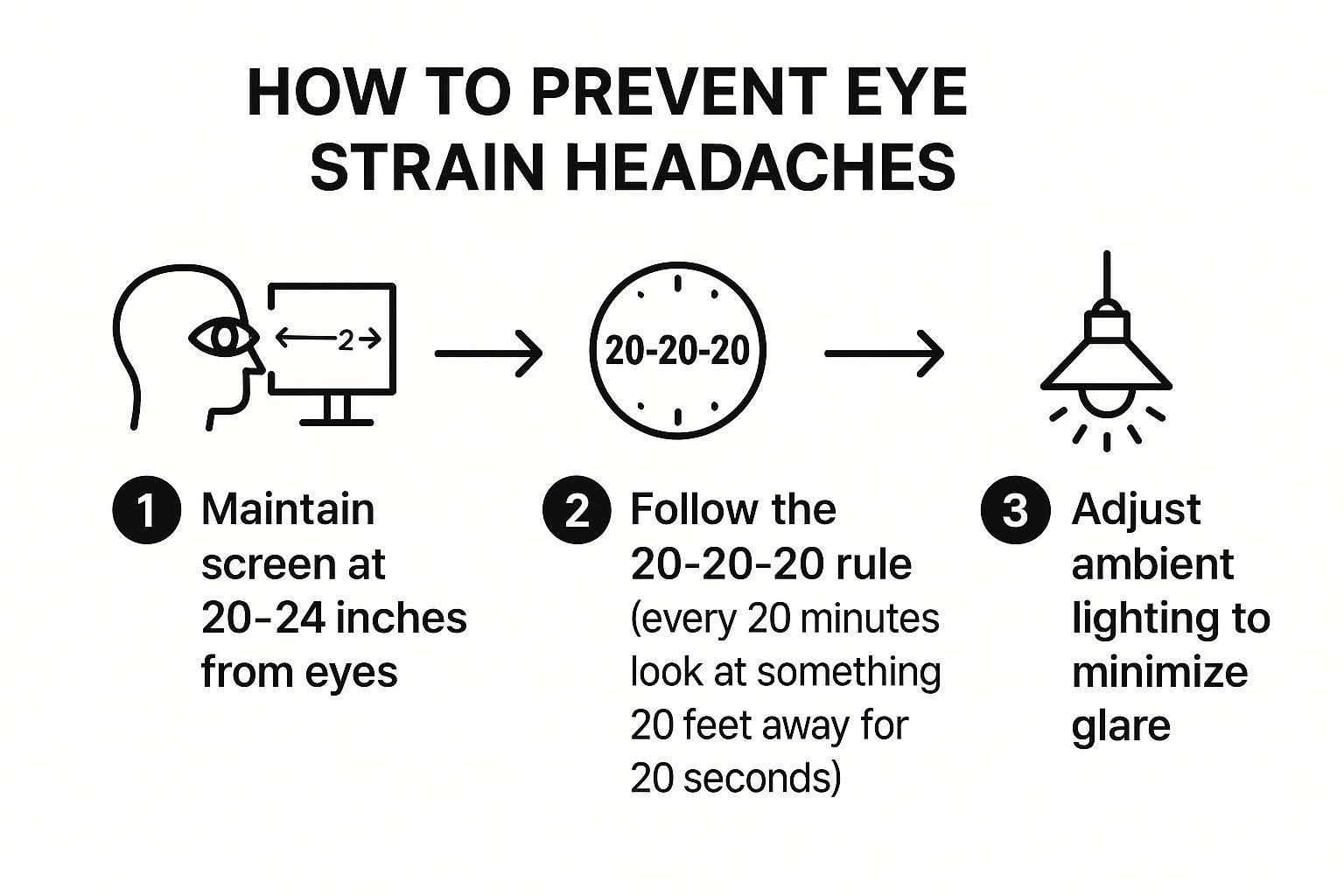
As the infographic shows, proactive habits like proper screen distance and lighting, combined with the 20-20-20 rule, form a powerful defense against digital eye strain.
Here are a few practical exercises you can start using today to fight off eye fatigue and stop headaches before they even get started.
While these exercises provide fantastic daytime relief, their benefits are amplified when paired with proper rest. Quality sleep is the ultimate reset button for your eyes. It’s during these crucial hours that your eye muscles fully recover, repair, and prepare for the next day. Without quality sleep, even these soothing breaks will have limited impact.
Honestly, you can do all the eye exercises in the world, but if you're not getting enough solid, restorative sleep, you're fighting an uphill battle.
Skimping on sleep means your eyes start the day already tired, making them far more vulnerable to strain from the get-go. Prioritizing 7-9 hours of quality sleep is one of the most effective long-term strategies for preventing eye strain headaches. It allows your eyes to heal, reduces inflammation, and ensures they're actually ready for the demands of another day. Make sleep non-negotiable to truly reset your eyes every night.
Real, lasting relief from eye strain headaches isn't just about what you do during screen time—it's about the daily habits that support your eyes around the clock. Think of sleep, hydration, and nutrition as the foundation for keeping your eye muscles healthy and headaches at bay. Remember, prioritizing sleep underpins all of these lifestyle adjustments. Making a few small, consistent tweaks in these areas can pay off big time with fewer flare-ups and sharper, more comfortable vision.
Quality sleep is completely non-negotiable for eye health. It’s during those deep, restful hours that your eye muscles finally get to recover and repair from the constant tension of focusing on a screen.
When you skimp on 7–9 hours of uninterrupted sleep, your eyes start the day already tired, making them far more vulnerable to strain.
Ever wondered why that late-night scrolling session leaves you feeling groggy? Exposure to blue light at night can mess with your body's natural melatonin production, which is the hormone that signals it's time to rest. For a deeper dive into how blue light glasses can help you reclaim restorative sleep, check out our guide on how our glasses can support your sleep.
Here’s why quality sleep is so crucial:

It’s easy to forget, but how much water you drink has a direct impact on your eye comfort. When you're dehydrated, your eyes can feel dry and gritty, a sensation that can quickly activate headache pathways.
Staying hydrated supports both a healthy tear film and overall headache prevention. Aim for around 8 glasses of water a day, but don't be afraid to adjust based on your activity level or the climate. Good hydration at night can also improve sleep quality, creating a virtuous cycle for eye health.
A few simple tricks can help you hit your target:
Just like the rest of your body, your eyes need the right fuel to stay strong and repair themselves. Foods rich in vitamins A, C, E, and omega-3 fatty acids are fantastic for maintaining healthy blood flow and reducing inflammation around the ocular muscles. And eating a balanced diet helps you sleep better, further supporting your eye health.
You don't need a total diet overhaul. Just focus on adding a few powerhouse ingredients to your meals. For instance, a simple lunch of grilled salmon over a spinach salad delivers a potent anti-inflammatory combination that your eyes will love.
Here are a few things to add to your grocery list:
It’s no secret that the COVID-19 pandemic dramatically shifted our screen habits. One study found that daily screen time for children in the US jumped from 1.4 to 2.7 hours, which correlated with an increase in headache reports. You can read the full research on these screen time shifts here.
To make it easier, here’s a quick-glance table of daily habits that can make a huge difference.
Integrating proper sleep into this checklist is paramount for real relief.
| Habit | Target Goal | Why It Helps |
|---|---|---|
| Sleep | 7–9 hours nightly | Prevents morning fatigue and reduces muscle tension |
| Hydration | 8 glasses per day | Maintains tear film balance and prevents headache triggers |
| Nutrient-Rich Diet | Daily servings | Supplies vitamins and omega-3s for cellular repair |
Putting these pieces together is the key to a sustainable strategy for relief.
A combination of quality sleep, proper hydration, and nutrient-rich foods creates a powerful, sustainable defense against eye strain headaches.
These aren't quick fixes, but lifestyle changes that build resilience over time. Start by incorporating them gradually, and pay close attention to how your eyes feel. As you build consistency, you'll likely notice fewer headaches and better focus during your workday.
Even after you've started making changes, a few questions about eye strain headaches always seem to linger. Getting these common concerns sorted out can help you fine-tune your strategy and feel more confident that you're on the right track.
Let's dive into the questions we hear most often and get you some clear, straightforward answers.
For a lot of people, the answer is a definite yes. Blue light glasses can bring noticeable relief by filtering the high-energy visible (HEV) light that our digital screens blast out all day.
This specific type of light is a well-known culprit behind digital eye fatigue. It can also mess with your body's internal clock, especially if you're scrolling on your phone or working late into the night.
While the science is still catching up on all the benefits, countless people swear by them, reporting less strain and much better sleep after making them a part of their evening routine.
Think of them as one powerful tool in your toolkit, not a magic cure-all. They work best when you combine them with other good habits like taking frequent breaks, maintaining a consistent sleep schedule, and creating a multi-layered defense against eye strain.
The biggest clues are almost always the timing and location of the pain.
An eye strain headache usually shows up as a dull, nagging ache right behind or around your eyes. Sometimes that ache can creep into your forehead, temples, or even the back of your neck.
The dead giveaway? It almost always starts after you’ve been doing something visually demanding for a while—like staring at your monitor, driving long distances, or getting lost in a good book. The headache tends to get worse the longer you go and then fades away once you finally give your eyes a rest.
Unlike a migraine, it rarely brings along friends like nausea or intense light sensitivity. Of course, if any headache feels unusually severe or just different, it’s always smart to check in with a doctor.
As a general rule, adults should aim for a comprehensive eye exam every one to two years. These check-ups are critical for catching subtle vision changes you might not even be aware of.
Often, uncorrected vision problems like a minor astigmatism or slight farsightedness are the hidden villains behind chronic eye strain.
When you go, be sure to mention your daily screen time and the headaches you've been having. Your optometrist might even recommend computer glasses, which are prescribed specifically for the distance between your eyes and your screen. This small tweak can make a massive difference.
For more helpful articles and tips on keeping your eyes healthy, feel free to explore our Element Lux resources section. Getting the right prescription isn't just about seeing clearly—it's about feeling better, too.
At Element Lux, we’re all about creating high-quality blue light blocking glasses designed to dial down eye strain and protect your natural sleep cycle. Combined with 7–9 hours of quality sleep each night, our glasses become even more powerful in delivering eye strain headache relief. Our amber lenses are engineered to filter over 99% of disruptive blue light, helping you unwind and get ready for a truly restful night. Shop now to experience the difference and start your journey toward more comfortable days and better sleep.
