If you’ve ever finished a long day of work and felt that gritty, tired, or blurry sensation in your eyes, you know exactly what computer eye strain feels like. It’s not just in your head—it’s a real condition, officially called Computer Vision Syndrome (CVS), and it's the direct result of spending hours staring at digital screens.
Simply put, it’s the discomfort that creeps in when your eyes have been working overtime in a digital world they weren't built for. The cycle of strain is often made worse by poor sleep, which prevents your eyes from fully recovering overnight.
Think about your eye muscles the same way you’d think about any other muscle in your body. If you held a heavy dumbbell with your arm extended for hours without a break, your muscles would scream in protest. Staring at a screen is a similar kind of marathon workout for the tiny, delicate muscles responsible for focusing your eyes.
This effort gets even more intense because the text on a screen isn't solid like ink on a page. It’s made of tiny dots called pixels, which have fuzzy edges. Your eyes are forced to constantly readjust and refocus to keep things sharp, and that non-stop work leads to fatigue.
On top of that, we tend to blink way less when we're focused on a screen. The average person blinks about 18-22 times a minute, but that number plummets to just 5-7 times when we’re staring at a device. Blinking is how our eyes spread a fresh layer of tears to stay moist and clean. When we don't do it enough, our eyes become dry, irritated, and uncomfortable. This one-two punch of intense focus and reduced blinking is the main culprit behind digital eye strain.
Recognizing the signs of eye strain is the first step toward finding relief. This table breaks down the most common symptoms people experience after prolonged screen use.
| Symptom Category | Specific Signs to Watch For |
|---|---|
| Eye Discomfort | Dryness, burning, itching, or a feeling like something is in your eye. |
| Vision Issues | Blurred or double vision, difficulty refocusing from near to far. |
| Physical Strain | Headaches (especially around the temples), neck and shoulder pain. |
| Increased Sensitivity | Greater sensitivity to light, watery eyes, or eye redness. |
If you find yourself nodding along to several of these points, chances are your eyes are feeling the effects of digital fatigue.
This isn't some rare, isolated problem; it's a shared reality for most of us. A massive 2023 meta-analysis found that Digital Eye Strain impacts an estimated 69% of the global population.
That’s a staggering number. The condition, with its hallmark symptoms of burning, blurred vision, and headaches, has become so common it’s now considered a modern occupational hazard. Interestingly, the study noted that women reported a higher rate of eye strain at 71.4% compared to 61.8% for men, showing just how universal this issue is. Discover more insights from this extensive 2023 study.
The core problem is that our eyes were not designed for the demands of up-close, pixelated, and brightly lit screens for hours on end. The resulting strain is your body’s signal that it needs a break and better conditions.
The trouble doesn't stop with just tired eyes. The blue light emitted from our screens can mess with our body's internal clock by suppressing melatonin, the hormone that signals it's time to sleep. This can make falling asleep a real struggle.
When you don't get enough quality sleep, your eye muscles don't have a chance to fully rest and recover. This creates a vicious cycle where you start the next day with already-fatigued eyes, making them even more vulnerable to strain. Learn more about the link between blue light and sleep in our blog.
It usually starts small. A little dryness in the afternoon, maybe an urge to rub your eyes. These subtle nudges are your body’s way of saying, "Hey, we're working a little too hard here." Learning to spot these signals is the first real step toward getting some relief.
These symptoms aren't just random annoyances; they're direct, physical reactions to the way we stare at our screens all day. Once you can connect what you're feeling to what's causing it, you're on your way to feeling better. A good night's sleep is essential for this recovery process.
The image below shows a familiar reaction—that instinctive need to press on our eyes when they feel tired or strained.
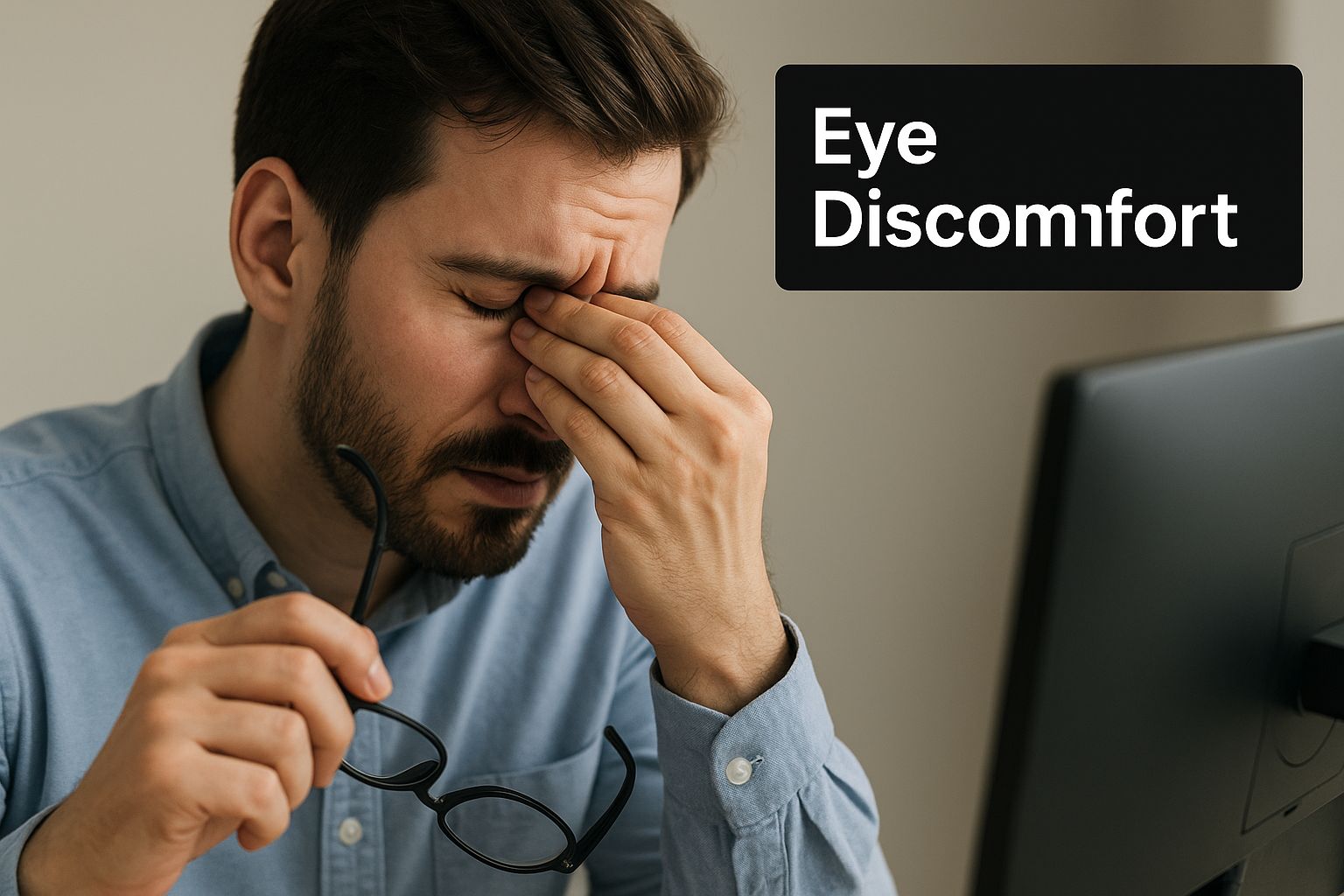
This feeling of discomfort is ground zero for computer eye strain, and it's where most people first notice something is wrong.
The most immediate computer eye strain symptoms are the ones you feel right in your eyes. A big reason for this is that our blink rate can drop by more than 50% when we’re locked into a screen. Blinking is your body's built-in cleaning and moisturizing system, and it's essential.
When you don't blink enough, the natural tear film that protects your eyes starts to evaporate. This kicks off a chain reaction of uncomfortable sensations.
You might feel:
Beyond just feeling bad, your eyes also start to see worse. The constant muscle work required to keep pixelated text in focus takes a serious toll. Think of it like holding a small weight out in front of you for hours on end—eventually, that muscle is going to get shaky and weak.
This constant flexing leads to some frustrating (though usually temporary) vision problems.
Your eye muscles have to stay contracted to focus on a nearby screen. After a while, they have trouble relaxing enough to refocus on things farther away. This focusing fatigue is the root cause of many vision symptoms.
Common vision issues include:
The strain rarely stays just in your eyes. It has a nasty habit of spreading, causing a ripple effect of aches and pains. When you squint to see a tiny font or lean your head toward the monitor, you’re creating tension in completely different parts of your body.
This can lead to a whole host of pains you might not realize are connected to your screen time. They're secondary symptoms, triggered by your body's attempt to compensate for tired eyes.
This whole cycle is made so much worse by a lack of good sleep. When you don't get enough rest, your muscles—including the tiny ones in your eyes—don't get a chance to recover. You start the next day already at a disadvantage, making you more prone to strain and locking you in a cycle of discomfort.
Ever notice how some days you can stare at your screen for hours and feel fine, but on others, your eyes start aching almost immediately? It’s not random. That inconsistency is a huge clue that specific things in your environment and your daily habits are creating the perfect storm for digital eye strain.
The real problem is a mismatch between what our eyes are built to do and what we’re asking of them. Staring at a bright screen for hours is already an intense workout for your eyes. When you pile on bad lighting, a wonky desk setup, or an uncorrected vision problem, you're essentially forcing your eyes to run a marathon uphill… in the dark.
Figuring out these triggers is the first real step toward relief. Let's break down the three main culprits: your workspace, your habits, and your own two eyes.
Your immediate surroundings play a massive role in how hard your eyes have to work. A poorly arranged desk or the wrong kind of lighting can crank up the physical stress on your visual system without you even realizing it.
Think of your eyes like a camera lens. If the lighting is terrible or there's a distracting glare, the camera struggles to capture a clear image. Your eyes are no different, and all that extra effort is what we feel as strain.
Beyond your physical setup, how you work is just as important as where you work. Uninterrupted screen time is a major offender. In fact, research shows a direct link between the number of hours you spend glued to a computer and how bad your eye strain symptoms get.
On top of that, poor ergonomic habits—like slouching in your chair all day—only make things worse. You can learn more here about how ergonomics and eye strain are connected.
Another piece of the puzzle is how you rest—or, more accurately, how you don't. A lack of quality sleep means your eye muscles never get the chance to fully recover overnight. When your eyes don't get that essential downtime, they start the day already tired, making them way more vulnerable to strain from the very first email you open. This kicks off a draining cycle: tired eyes lead to poor sleep, which then leads to even more tired eyes.

Knowing the symptoms and causes of digital eye strain is the first step, but now it's time to actually fight back. The good news is, you don't need a bunch of complicated tools or expensive gadgets to find relief pretty quickly. A few simple, consistent tweaks to your habits and your desk setup can make a massive difference in how your eyes feel at the end of the day.
The whole game is about reducing the workload on your eyes. By creating a more comfortable visual environment and forcing yourself to take regular breaks, you can stop many computer eye strain symptoms before they even get started. Let’s dive into some practical strategies you can start using today.
One of the best habits you can build is the 20-20-20 rule. It's a simple memory trick designed to combat the intense, non-stop focus that staring at a screen demands. The concept is straightforward, but it's incredibly powerful.
For every 20 minutes of screen time, you need to:
That’s it. This tiny exercise forces the focusing muscles in your eyes to relax, giving them a much-needed mini-break. It interrupts the cycle of constant strain and also reminds you to blink, which is key for keeping your eyes from getting dry. Set a timer on your phone or use a browser extension to nudge you until it becomes second nature.
Think of the 20-20-20 rule like a quick stretch for your eyes. You wouldn't sit in a chair for hours without stretching your legs; this rule gives your eye muscles that same chance to reset and recover throughout the workday.
Your physical setup plays a surprisingly huge role in eye comfort. An ergonomic workstation isn't just about your back and posture—it's absolutely essential for your vision. A few small adjustments can take a huge amount of strain off your eyes and neck.
Start by looking at your monitor. It should be about an arm's length away from you (roughly 20-28 inches) and positioned so the top of the screen is at, or just slightly below, your eye level. Looking slightly downward is a much more natural and comfortable angle for your eyes.
Next, fiddle with your screen's settings. The brightness should more or less match the light in your room. You don't want it so bright that it feels like a lightbulb, but not so dim that you have to squint to see. Bumping up the text size is another easy win that instantly makes your eyes work less. For more in-depth advice on office wellness, feel free to explore the articles and guides in our resource library.
Finally, don't forget to blink on purpose. When we get absorbed in our work, our blink rate can drop by more than half. Make a conscious effort to blink fully and often to keep your eyes lubricated. These simple steps create a strong defense against daily digital fatigue. And of course, nothing beats getting restorative sleep, which gives your eyes the time they need to truly repair and recharge overnight.
While adjusting your workspace and taking breaks are crucial for daytime relief, what you do at night is just as important. Sleep isn't just passive downtime; it’s an active maintenance period for your entire body, especially for your hard-working eyes.
Think of it as the ultimate repair cycle for your visual system. This nightly reset is your most powerful tool against the cumulative effects of digital eye strain. During those critical hours, the tiny muscles inside and around your eyes finally get a chance to completely relax after a long day of constant focusing, which helps reduce the fatigue that leads to blurry vision and headaches.
Your eyes also perform vital housekeeping tasks while you sleep. One of the most important is replenishing the natural tear film that keeps your eyes moist and protected. Since consistent screen use makes you blink less and leads to dry eyes, quality sleep is when your body works to restore this delicate balance.
Sleep also allows for the cellular repair of the cornea and other sensitive eye tissues. Without enough rest, this healing process gets cut short, leaving your eyes far more vulnerable to irritation the next day. This is exactly why a poor night's sleep can make your eyes feel gritty and tired before you even log on.
Think of sleep as the biological equivalent of taking your eyes to a repair shop. It’s when essential fluids are replenished, muscles are rested, and tissues are healed, preparing them for another day of visual demands.
The connection between screens and sleep is a two-way street. The blue light from our devices, especially in the evening, can suppress melatonin—the hormone that signals your brain it's time to rest. This disruption makes it harder to fall asleep, creating a vicious cycle.
Poor sleep worsens the computer eye strain symptoms you feel during the day, and the very blue light causing those symptoms also sabotages your sleep. Breaking this cycle is the key to finding lasting relief. If you're curious about how certain eyewear can support this, you can explore whether specialized glasses help with sleep in our detailed guide.
To really harness the restorative power of sleep, a dedicated wind-down routine is essential. The goal is simple: signal to your body that the day is over and it's time to prepare for rest.
This screen-free buffer gives your brain time to unwind and lets your melatonin levels rise naturally, paving the way for the deep, restorative sleep that your eyes are counting on.
While better habits and a few lifestyle tweaks can take care of most computer eye strain symptoms, there are times when you absolutely need to bring in a professional. Think of it like this: you know the difference between a muscle that’s just tired from a workout and needs some rest, and a deep, nagging ache that signals it’s time to see a doctor. The same logic applies to your eyes.
Trying to push through ongoing discomfort won’t just prolong the issue. It might also be masking a totally different problem, like an old glasses prescription that's no longer cutting it or another eye condition altogether. If you’ve made positive changes but aren’t feeling any relief, that’s your cue to get an expert opinion.
It’s also worth remembering that a lack of good, restorative sleep can crank up the intensity of eye strain, making it tough to figure out the root cause. If you've cleaned up your sleep routine but still wake up with that same tired, strained feeling in your eyes, a professional can help you dig deeper.
Don't put it off. If you’re dealing with any of these persistent issues, schedule an appointment with your optometrist or ophthalmologist right away:
During an exam, your eye doctor will do more than just check your prescription. They’ll assess how your eyes work together as a team and look for any signs of underlying conditions. This kind of professional evaluation gives you clarity and makes sure you’re on the right track for your long-term vision health.
If you're spending hours in front of a screen, you probably have a few questions. Let's clear up some of the most common concerns people have about digital eye strain.
This is a big one, and thankfully, the answer is usually no. Digital eye strain doesn't typically cause permanent vision damage. Think of it like muscle soreness after a good workout—it's a sign that your eye muscles are tired and overworked, not that they're permanently harmed.
That said, constant strain can make existing problems, like dry eye disease, feel a lot worse. If the discomfort just won't go away, it's your body's way of telling you to see an eye doctor. They can rule out any underlying issues and make sure your eyes stay healthy for the long haul.
Lots of people swear by them, but the science is still catching up. The biggest win for blue light blocking glasses seems to be in helping you sleep better. By filtering out the specific light that can mess with your body's melatonin production, they can help you get back to a natural sleep-wake cycle. A good night's rest is crucial for letting your eyes recover.
It's important to remember these glasses don't solve the core problems of eye strain, like not blinking enough, dealing with screen glare, or having a bad desk setup. At the end of the day, quality sleep is still the best tool you have for letting your eyes rest and repair themselves.
For most people, the nagging symptoms of computer eye strain get much better after just a few hours away from a screen. If your eyes still feel off after a full day or two of rest, it’s a good idea to get a professional opinion.
Ready to give your eyes the nighttime recovery they deserve? The amber lenses in Element Lux glasses are designed to block over 99% of sleep-disrupting blue light, helping you get the restorative rest needed to fight daily eye fatigue. Shop now and feel the difference.
