If you're staring at a computer screen all day, you've probably asked yourself if those blue light glasses are worth the hype. Are they the secret to getting rid of tired, achy eyes and finally getting a good night's sleep?
The short answer is they're a helpful tool, but not a miracle cure. Their biggest win is definitely in the sleep department, which is the foundation of good health.
Let's face it, spending hours glued to a screen is just part of modern life. But all that screen time exposes our eyes to a very specific kind of light. Blue light glasses for computer work are made with special lenses designed to filter out a portion of this high-energy visible (HEV) light that beams out from our digital devices.
Think of them like a bouncer for your eyes, selectively blocking the most disruptive light from getting in and interfering with your crucial sleep cycle.
In the same way sunglasses shield your eyes from harsh UV rays on a sunny day, these glasses reduce the amount of artificial blue light that hits your retina. This is a huge deal, especially in the evening when your body is trying to wind down for a restorative night of sleep.
The most proven benefit of wearing blue light glasses is improving your sleep. Our brains are hardwired to see blue light as a sign that it's daytime, which in turn slams the brakes on producing melatonin—the hormone that signals your body it's time to rest. Without quality sleep, our focus, mood, and overall health suffer.
By filtering out that light in the hours before bed, you’re basically helping your body stick to its natural sleep-wake schedule.
The whole idea is to send a clear message to your brain: "Hey, the day is over," even if you're still scrolling or finishing up one last email. This lets your body produce melatonin naturally, setting you up for a much deeper and more restorative night's sleep.
While a lot of people grab these glasses hoping to solve digital eye strain, their real superpower is regulating sleep. That screen-induced discomfort—like dry eyes, blurriness, or headaches—is often caused by other things, like glare, bad posture, or simply not blinking enough. Protecting your sleep is a more direct and scientifically supported benefit.
To put it all in perspective, here's a quick look at the common problems we face from staring at screens and how blue light glasses are meant to help.
This table breaks down the main issues and the role these glasses can play.
| Problem from Computer Work | How Blue Light Glasses Propose to Help |
|---|---|
| Digital Eye Strain | The science is a bit mixed here, but reducing screen glare and some of the intense, high-energy light might bring comfort and lessen visual fatigue for some people. |
| Disrupted Sleep Cycles | This is where they really shine. By filtering blue light at night, they help your brain produce the melatonin needed to fall asleep easier and get the quality rest your body needs to repair and recharge. |
Ultimately, while the jury is still out on how much they help with eye strain during the day, the evidence for protecting your sleep cycle—which impacts every aspect of your well-being—is much stronger.
To really get why blue light glasses for computer work are such a game-changer, we have to talk about the light they’re built to block. Think of visible light like a rainbow. At one end, you have blue light—it’s the most energetic part of that rainbow, a lot like the bright, crisp light you see on a clear morning.
The sun is our main source of this stuff. For thousands of years, it’s been the natural alarm clock for our brains, basically shouting, "Hey, it's daytime! Time to get stuff done." This is fantastic for setting our internal body clock, what scientists call our circadian rhythm, which governs our sleep patterns.
The real issue starts when the sun sets, but the blue light party keeps going. Our computers, smartphones, and TVs are all blasting our eyes with high-energy blue light long after it's gotten dark outside.
This constant flood of evening light sends some seriously mixed signals to our brain. Instead of getting the hint that it's time to wind down, our brain is tricked into thinking it's still the middle of the day. This completely messes with the delicate hormonal dance that needs to happen for us to get good, restorative sleep.
A healthy sleep cycle isn't just about feeling rested; it's a critical period for memory consolidation, cellular repair, and immune system function. When blue light interferes with this process night after night, the cumulative effect can impact everything from your mood to your long-term health.
The key hormone in this whole drama is melatonin, often nicknamed the "sleep hormone." As darkness falls, your brain is supposed to start pumping out melatonin, making you feel drowsy and ready for bed. But evening blue light acts like a kill switch, telling your brain to slam the brakes on melatonin production. Studies have shown that just a couple of hours of screen time before bed can seriously delay this natural process.
This is exactly why you might find yourself staring at the ceiling at midnight, feeling totally wired even though you’re physically exhausted from a long day at the computer. Your body is ready to clock out, but your brain never got the memo, preventing you from getting the essential sleep you need.
Here’s how it all goes down:
This is precisely where blue light glasses become an essential tool. By filtering out the most disruptive wavelengths before they even reach your eyes, they act as a shield for your body’s natural melatonin production. As you can see in our guide on how glasses help with sleep, this one simple step helps keep your natural sleep-wake cycle on track, making it way easier to get the deep, rejuvenating rest you need to be at your best.
So, you're looking at blue light glasses for computer work and wondering what the real story is. Do they actually live up to the hype? The truth is, it's not a simple yes or no. The answer really depends on what you're trying to fix. The claims for these glasses boil down to two big promises: cutting down on digital eye strain and, most importantly, helping you sleep better.
Let's tackle digital eye strain first—that gritty, tired, sandy feeling your eyes get after hours glued to a screen. It seems logical that blocking some of the light from your monitor would offer relief, but the science backing this idea is surprisingly thin.
In reality, most of the discomfort we blame on blue light is probably caused by something else entirely. Things like screen glare, the fact that we blink way less when we're focused, or even just slouching in our chair contribute a lot more to eye fatigue than the blue light itself.
When it comes to eye strain, the scientific community is still on the fence. For example, a major 2021 study with 120 people found no real difference in eye strain symptoms between those who wore blue light filtering lenses and those who wore fakes during a two-hour computer session.
This is why optometrists often point to simple, practical habits that can provide more immediate and reliable relief.
These small tweaks get to the root of the problem and are a fantastic first line of defense against tired eyes.
Now, when we start talking about sleep, the conversation completely changes. This is where the science behind using blue light glasses for computer work gets much stronger. As we’ve covered, blasting your eyes with blue light in the evening can slam the brakes on your body’s production of melatonin—the hormone that signals it's time to wind down for a good night's sleep.
By filtering out those specific, disruptive wavelengths in the hours before bed, you’re helping your body stick to its natural sleep-wake cycle, or circadian rhythm. This isn't about tired eyes; it's about protecting the crucial biological signals that govern your sleep.
Think of it this way: the glasses act as a strategic tool for better sleep hygiene, not a magic fix for tired eyes. They create a "digital sunset," signaling to your brain that the day is ending, even when you’re still working or scrolling. This is a critical step for anyone looking to improve their sleep quality.
Ultimately, this makes blue light glasses a powerful ally in your quest for a good night's rest. When you support your body’s natural melatonin production, you’re not just helping yourself fall asleep faster. You’re improving the quality of that sleep, which affects everything from your mood to how productive you are the next day.
To dig deeper into the science, feel free to explore more articles in our blue light blog.
Stepping into the world of blue light glasses for computer work can feel a bit overwhelming at first, but finding the right pair is simpler than you might think. The most important thing is to figure out why you need them. Your choice should fit your daily routine and, most importantly, help you protect your sleep.
Think of the lenses as having different strengths. Some are designed for daytime use to ease eye strain, while others are built specifically for the evening to help you wind down and prepare for sleep. It’s all about choosing the right tool for the job to keep your body’s natural rhythms in sync.
The color of the lens tells you everything you need to know about its filtering power. Not all lenses are created equal, and the tint directly controls how much blue light gets blocked before it ever reaches your eyes, which is vital for sleep protection.
The key is to match the lens to the time of day. You want to support your natural energy and sleep cycles, not work against them. Wearing heavy-duty amber lenses in the middle of the afternoon might just make you feel drowsy, while clear lenses won’t offer nearly enough protection when you're burning the midnight oil and want to secure a good night's sleep.
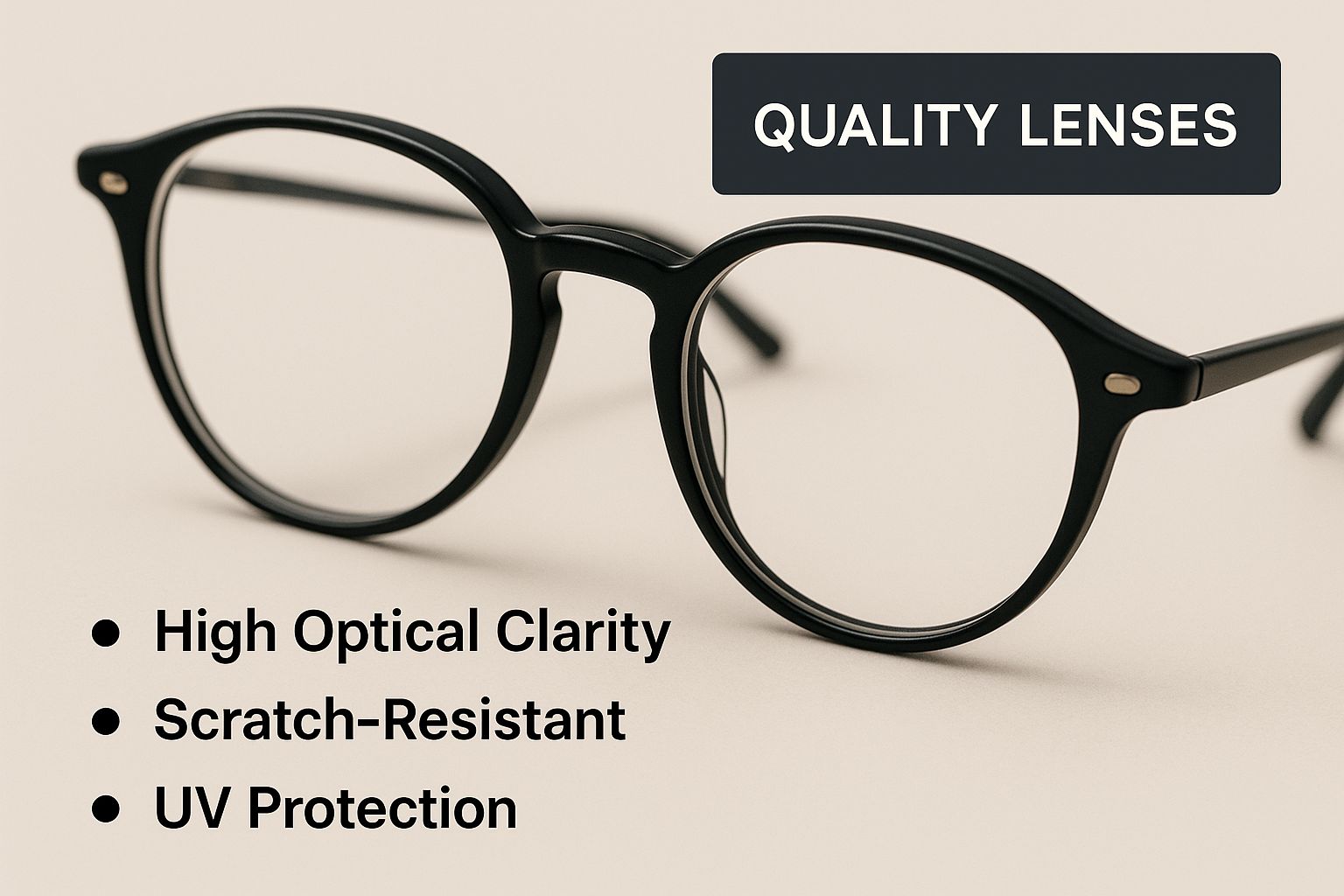
As you can see, the quality of the lens and its coatings are the foundation of any effective pair of blue light glasses.
Once you've picked a lens type, a few other features can make a huge difference in how comfortable and effective your glasses are.
First up, an anti-glare (or anti-reflective) coating is pretty much non-negotiable for computer work. It dramatically cuts down on those distracting reflections from your screen and overhead lights, which are a major cause of eye fatigue. This coating creates a much clearer, more comfortable viewing experience.
You also need to think about the frames. You'll be wearing these for hours on end, so comfort is key. Look for lightweight materials and a fit that doesn't pinch your nose or squeeze your temples. A comfortable pair is a pair you'll actually wear, which is essential for consistently protecting your sleep.
Blue light blocking glasses dominate the global computer glasses market, accounting for approximately 65% of the segment. These glasses utilize specialized coatings that filter blue light in the 415-455 nanometer range, a spectrum linked to potential sleep disruption. Recent product innovations include lenses with gradient blue light filtering that adjust based on time of day, clear lenses preserving natural color perception, and options compatible with prescription eyewear. Such advancements aim to balance protective functionality with everyday usability and visual clarity. Explore the full market analysis on Data Horizzon Research.
While blue light glasses for computer work are a fantastic tool, they aren't the only way to protect your eyes and sleep. In fact, some of the most powerful solutions are probably already built right into the devices you use every day—and they won't cost you a dime.
Your phone and computer likely have features designed specifically to do this. These tools work by automatically warming up your screen's colors after sunset, which dials down the amount of sleep-disrupting blue light hitting your eyes.
You can switch these settings on in just a few clicks. It's an easy way to create a healthier light environment without needing any extra gear, especially for safeguarding your sleep.
For anyone who wants even more control, dedicated apps like f.lux let you fine-tune your screen's color temperature throughout the day. This creates a much smoother transition from bright, energetic daylight to a warm, sleep-friendly glow.
Beyond tech, a few simple changes in your routine can make a huge difference for your sleep cycle. Think of these as the foundation for your overall digital wellbeing. One of the best habits you can adopt is creating a "digital sunset"—putting all screens away an hour or two before you plan to sleep.
This screen-free time is a clear signal to your brain that the day is over. It lets your body ramp up melatonin production without any interference, helping you reclaim your natural sleep rhythm. This is one of the most effective ways to ensure quality rest.
You can also manually dim your screen's brightness in the evening and adjust your workspace to cut down on harsh glare. Combining these free strategies with a good pair of blue light glasses creates a layered, powerful defense for your sleep. For even more tips on living a balanced digital life, feel free to explore our other helpful resources.
Many device makers now include these built-in filters because they're convenient and free, making them a popular alternative to buying glasses. You can learn more about how these built-in tools are impacting the blue light blocking glasses market on alliedmarketresearch.com.
In a world that runs on screens, protecting your sleep isn't just a nice-to-have—it's absolutely essential for your health. While the jury's still out on just how much blue light glasses for computer work reduce eye strain, their ability to help your natural sleep cycle is a powerful reason to give them a serious look.
Think about it: quality sleep is the foundation for everything. It shapes your mood, your focus, and your long-term wellness. But like with most things in life, a single gadget is rarely the whole solution. The best approach is a layered one, blending smart tech with mindful habits to ensure you get the rest you need.
Managing your digital life is a lot like building a solid fitness routine. You wouldn't just do one exercise and call it a day, right? You mix different movements to get the best results. The same logic applies to protecting your sleep.
Start by thinking of blue light glasses as a specific tool in your arsenal, especially for the hours leading up to bed. Wearing them at night helps shield your eyes from the high-energy light that can mess with your body's melatonin production.
By taking a proactive and informed approach, you can build a healthier, more intentional relationship with your screens. It's not about avoiding technology but using it in a way that prioritizes the restorative sleep you need to thrive.
But don't stop there. Pair the glasses with your device's built-in features. Turn on "night mode" or "night shift" to automatically warm up your screen's colors after sunset. And finally, bring in some simple, mindful habits like the 20-20-20 rule to give your eyes a much-needed break throughout the day. This comprehensive strategy is your best defense for getting consistently good sleep.
Of course. Here is the rewritten section, crafted to sound completely human-written and match the provided style guide.
Even after digging into the details, you might have a few more questions rattling around. That's totally normal. Let's tackle some of the most common ones people ask about using blue light glasses for computer work so you can feel confident you're making the right call for your sleep.
You can, but it’s not the most effective way to use them. Think of it this way: natural blue light from the sun is actually a good thing during the day. It’s what keeps you alert, focused, and in sync with the world.
The real magic happens when you filter out the artificial blue light in the late afternoon and evening. This is the crucial window where you need to protect your body's production of melatonin—the hormone that tells your brain it’s time to power down for sleep. A smart strategy is to use clear, low-filtering lenses for daytime computer work and then switch to stronger amber lenses a couple of hours before bed. This sends the right signals to your body to prepare for a great night's rest.
They might help, but they aren't a guaranteed silver bullet. Headaches from staring at a screen are tricky because they’re often caused by a cocktail of issues—things like an outdated vision prescription, annoying screen glare, or even just slumping in your chair. Blue light is only one piece of that puzzle.
While a lot of people feel a real sense of relief after wearing them, it's so important to look at the other potential culprits. Make sure your glasses or contacts prescription is up to date and that your desk setup isn't forcing you to crane your neck. Building good ergonomic habits is just as vital as filtering light for comfort and focus. That said, by improving your sleep, they can help reduce headaches caused by fatigue.
If there's one thing the science overwhelmingly supports, it's this: wearing blue light glasses in the evening has a massive positive impact on your sleep. By stopping blue light from messing with your melatonin, you let your body's natural sleep-wake cycle do its job, leading to deeper, more restorative rest.
Not always. A hefty price tag is often more about the fancy brand name or a trendy frame design than superior blue light filtering. You can find plenty of affordable glasses that offer fantastic protection.
The secret is to ignore the price and look at the specs. Check what percentage of blue light the lenses actually block—the manufacturer should tell you. Honestly, a good anti-glare coating is often a more valuable feature for computer work than the brand itself. Focus on the lens technology, and you'll get the best bang for your buck while protecting your eyes and your sleep.
Ready to protect your sleep and make your screen time more comfortable? Discover how Element Lux can help you get the restorative rest you deserve.
Explore our blue light blocking glasses now!
